Energy Efficiency In Horizontal Balers: Technical Tips Reduce Operating Cost

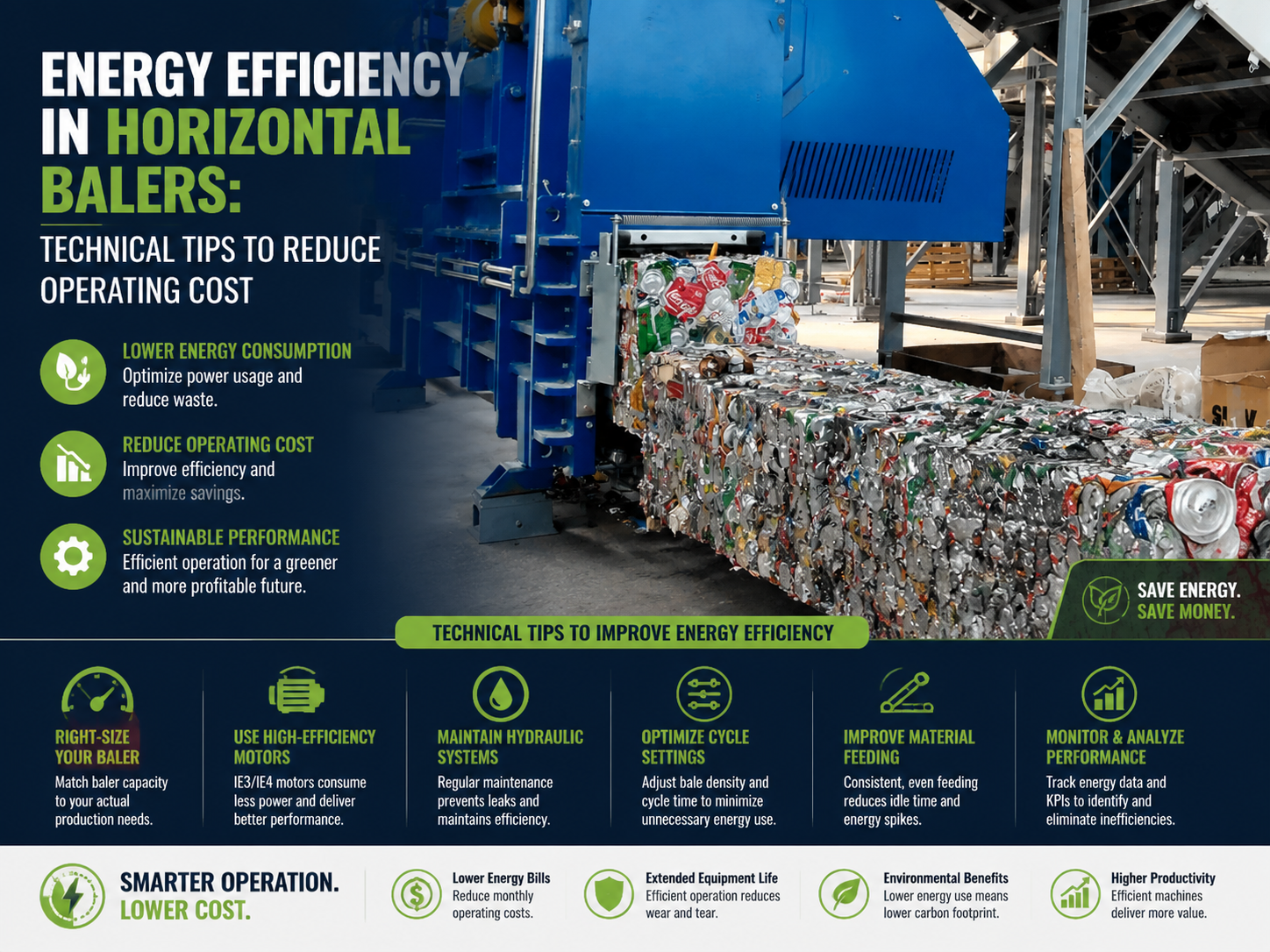
Technical Overview of Energy Efficiency in Horizontal Balers
In the modern industrial landscape, the drive toward sustainability is not merely a regulatory requirement but a core economic strategy. For facilities utilizing high-capacity waste processing equipment, understanding Energy Efficiency In Horizontal Balers: Technical Tips Reduce Operating Cost is paramount. Horizontal balers are the workhorses of the recycling and metal fabrication industries, designed to compress voluminous materials into dense, transportable units. However, their high-pressure hydraulic systems and large electric motors can be significant energy consumers if not managed with technical precision.
Energy efficiency in a horizontal baler is defined by the ratio of work performed (material compressed) to the energy consumed (kilowatt-hours). Traditional baler designs often relied on fixed-displacement pumps that ran at full speed regardless of the actual load requirement, leading to massive energy waste during idle times or low-pressure cycles. Modern engineering, championed by HARSLE, focuses on demand-driven power delivery. By integrating Variable Frequency Drives (VFDs) and high-efficiency IE3 or IE4 motors, manufacturers can ensure that the machine only draws the power necessary for the specific stage of the compression cycle.
Furthermore, the thermodynamics of the hydraulic system play a critical role. Energy that is not converted into mechanical work is often lost as heat in the hydraulic oil. This heat not only represents wasted electricity but also necessitates additional energy expenditure for cooling systems. Reducing internal friction, optimizing valve manifolds, and ensuring laminar flow within the hydraulic circuits are essential technical steps to minimize these losses. When we discuss Energy Efficiency In Horizontal Balers: Technical Tips Reduce Operating Cost, we are looking at a holistic approach that combines mechanical design, electrical control, and proactive maintenance.
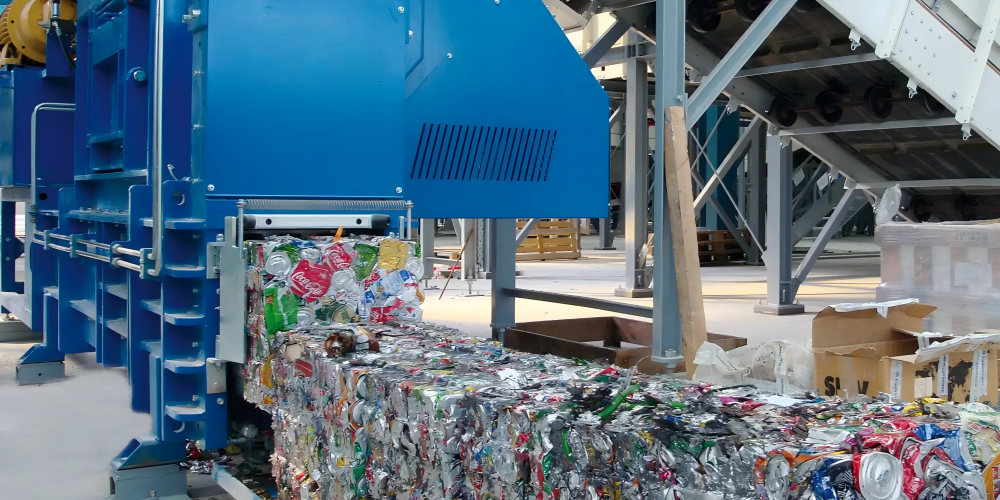
Finally, the structural integrity of the baler contributes to efficiency. A rigid frame prevents energy loss through structural deflection. If the machine frame flexes under pressure, a portion of the hydraulic energy is spent deforming the machine rather than compressing the material. HARSLE’s horizontal balers utilize FEA-optimized frames to ensure that every kilonewton of force is directed toward the bale, maximizing throughput while minimizing the energy footprint per ton of processed material.
Core Parameters Influencing Energy Consumption
To effectively implement strategies for Energy Efficiency In Horizontal Balers: Technical Tips Reduce Operating Cost, one must understand the core technical parameters that dictate power usage. The first and most obvious parameter is Motor Power (kW). While a larger motor provides higher throughput, an oversized motor running at low load factors is highly inefficient. The goal is to match the motor’s peak efficiency curve with the most frequent operating pressures of the baler.
System Pressure (Bar/PSI) is the second critical factor. The energy required to move the hydraulic ram is directly proportional to the pressure. Operating at unnecessarily high pressures for soft materials like cardboard or light plastics wastes energy. Intelligent PLC systems can now adjust the relief valve settings or pump displacement based on the material resistance sensed during the initial stroke, ensuring that the machine doesn’t work harder than necessary.
Cycle Time is often misunderstood in the context of efficiency. While a faster cycle time increases productivity, it requires higher flow rates (L/min), which can increase turbulence and heat generation. The key is to optimize the “fast-approach” and “high-pressure squeeze” phases. By using regenerative hydraulic circuits, the oil from the rod end of the cylinder can be redirected to the piston end during the approach phase, doubling the speed without increasing the pump’s energy draw.
Bale Density also impacts long-term energy costs. While higher density requires more energy during the baling process, it significantly reduces the energy and fuel costs associated with downstream logistics. A more efficient baler produces a denser bale with less electrical input, optimizing the entire supply chain’s carbon footprint. Monitoring the Specific Energy Consumption (SEC)—measured in kWh per ton—is the industry standard for benchmarking these parameters.
Calculation Method for Baler Efficiency
Quantifying energy usage is the first step toward reduction. To calculate the theoretical energy consumption of a horizontal baler cycle, engineers use the following formula for hydraulic power:
P (kW) = (p × Q) / (600 × η)
Where p is the operating pressure in bar, Q is the flow rate in liters per minute, and η (eta) is the overall efficiency of the pump and motor combination. By calculating this at various stages of the ram stroke, operators can identify where the most energy is being consumed. For instance, if the power draw remains high during the retraction phase, it indicates a hydraulic bottleneck or an inefficient return circuit.
To calculate the Operating Cost per Ton, use the following method:
- Measure the total kWh consumed over a 24-hour period using an industrial power meter.
- Record the total weight (in tons) of the bales produced during that same period.
- Divide the total kWh by the total tons to get the SEC (kWh/ton).
- Multiply the SEC by your local utility rate ($/kWh) to find the energy cost per ton.
By applying these calculations, facilities can perform a cost-benefit analysis on upgrades like VFD installations. Typically, a VFD can reduce idle energy consumption by up to 90% and total cycle energy by 20-40%, depending on the material type and feeding consistency. This data-driven approach is essential for any technical guide on Energy Efficiency In Horizontal Balers: Technical Tips Reduce Operating Cost.
Technical Parameter Table for HARSLE Horizontal Balers
The following table illustrates the relationship between machine capacity and energy-related specifications for standard HARSLE models. Note how the integration of high-efficiency components affects the power-to-output ratio.
| Model Series | Press Force (Tons) | Motor Power (kW) | Cycle Time (Sec) | Est. SEC (kWh/Ton) | Efficiency Features |
|---|---|---|---|---|---|
| HARSLE HBA-60 | 60 | 15 – 22 | 45 | 2.5 – 3.2 | Standard IE3 Motor |
| HARSLE HBA-100 | 100 | 30 – 37 | 35 | 2.1 – 2.8 | VFD Optional, Regenerative Circuit |
| HARSLE HBA-150 | 150 | 45 – 55 | 30 | 1.8 – 2.4 | Dual Pump System, VFD Standard |
| HARSLE HBA-200 | 200 | 75+ | 25 | 1.6 – 2.2 | Servo-Hydraulic Control |
As seen in the table, larger machines often achieve better SEC (Specific Energy Consumption) because they process larger volumes per stroke and utilize more advanced hydraulic management systems. When selecting a machine, the goal is to find the “sweet spot” where the machine’s capacity matches your facility’s throughput to avoid frequent idling or overloading.
Common Engineering Mistakes in Baler Operation
One of the most frequent mistakes in the pursuit of Energy Efficiency In Horizontal Balers: Technical Tips Reduce Operating Cost is neglecting hydraulic oil health. Contaminated or degraded oil increases internal friction and causes valves to stick or leak internally. When internal leakage occurs, the pump must work harder to maintain pressure, leading to a direct increase in energy consumption. Furthermore, oil that is too viscous in cold weather or too thin in hot weather reduces the volumetric efficiency of the pump.
Another common error is improper relief valve settings. If the relief valve is set too close to the operating pressure, it may crack open prematurely, bypassing high-pressure oil back to the tank. This is pure energy loss, converted entirely into heat. Engineers should ensure a sufficient margin between the working pressure and the relief setting, or better yet, use pressure-compensated pumps that destroke when the target pressure is reached.
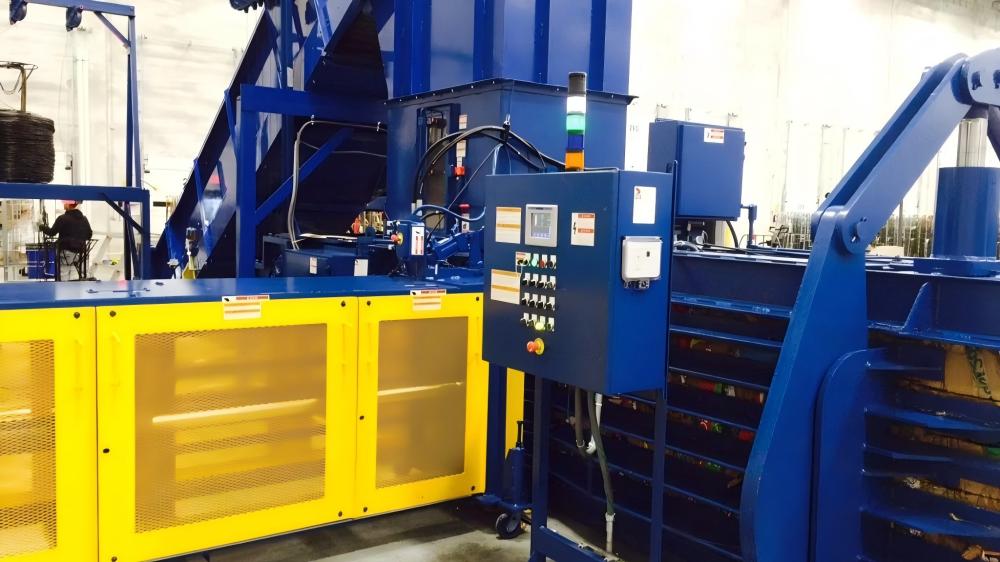
Oversizing the cooling system or running it continuously is also a hidden energy drain. Many older balers have cooling fans that run whenever the main motor is on. Modern HARSLE designs use thermostatic controls so that the cooling system only activates when the oil temperature exceeds a specific threshold (e.g., 45°C). This simple change can save thousands of kilowatt-hours annually in temperate climates.
Finally, inconsistent material feeding leads to “dry cycles” or partial bales. A horizontal baler is most efficient when the hopper is full and the ram can perform a complete compression stroke. Running the machine for a single small box or a handful of scraps is highly inefficient. Implementing a photo-eye sensor system that only triggers a cycle when the hopper reaches a certain level is a critical technical tip to reduce operating costs.
Selection Checklist for Energy-Efficient Horizontal Balers
When procuring new equipment or auditing existing machinery, use this checklist to ensure maximum energy efficiency:
- Motor Efficiency Class: Does the machine use IE3 (Premium) or IE4 (Super Premium) motors?
- Variable Frequency Drive (VFD): Is the main pump motor controlled by a VFD to reduce start-up current and idle power?
- Regenerative Hydraulics: Does the hydraulic circuit include a regenerative valve to speed up the ram approach without extra power?
- Automatic Shutdown: Does the PLC include an auto-sleep mode that turns off the main motor after a period of inactivity?
- Pressure-Compensated Pumps: Are the pumps variable-displacement type to minimize energy loss at full pressure?
- Oil Temperature Management: Is there a thermostatic control for the oil cooler?
- Bale Length Control: Can the machine adjust bale length to optimize truck loading and reduce transport energy?
- Remote Diagnostics: Does the system allow for monitoring of energy metrics and hydraulic performance remotely?
- Seal Quality: Are high-quality, low-friction seals used in the cylinders to reduce mechanical drag?
- Manifold Design: Is the hydraulic manifold designed for high-flow, low-turbulence operation?
Frequently Asked Questions (FAQ)
How much can a VFD actually save on a horizontal baler?
A VFD can save between 20% and 50% of total energy costs depending on the application. The highest savings are seen in operations with intermittent feeding, where the motor would otherwise spend significant time idling at full speed. By slowing the motor during idle and optimizing the ramp-up, the VFD eliminates peak demand charges and reduces heat generation.
Does bale density affect energy efficiency?
Yes, but in a counter-intuitive way. While it takes more energy to create a denser bale, the “system-wide” efficiency increases. Higher density means fewer bales to handle, fewer wires used, and fewer truckloads for transport. From a pure machine-operating cost perspective, the goal is to reach the required density with the minimum number of ram strokes.
What is the ideal hydraulic oil temperature for efficiency?
For most industrial horizontal balers, the optimal operating temperature for hydraulic oil is between 40°C and 55°C (104°F – 131°F). In this range, the oil’s viscosity is ideal for lubricating components while maintaining high volumetric efficiency in the pump. Temperatures above 60°C lead to rapid oil degradation and increased internal leakage.
Can I retrofit my old HARSLE baler for better energy efficiency?
Absolutely. Retrofitting an older machine with a VFD, upgrading to a high-efficiency motor, and replacing old gear pumps with modern piston pumps are common ways to extend the life of the machine while drastically reducing operating costs. HARSLE provides technical support for such upgrades to ensure compatibility with existing PLC logic.
How does material type impact energy consumption?
Materials with high “spring-back” or elasticity, like certain plastics, require more energy because the ram must hold pressure longer to set the bale shape. In contrast, materials like aluminum or heavy cardboard are more easily compressed. Adjusting the machine’s dwell time and pressure settings based on the material is a key technical tip for reducing waste.
Why is my baler consuming more energy than the manufacturer’s spec?
This is usually due to one of three factors: internal hydraulic leakage (worn seals or valves), mechanical friction (lack of lubrication on the ram guides), or poor material preparation (oversized items causing jams). Regular maintenance and monitoring the SEC (kWh/ton) will help identify the root cause of the deviation.
By focusing on these technical aspects of Energy Efficiency In Horizontal Balers: Technical Tips Reduce Operating Cost, industrial operators can significantly improve their bottom line. HARSLE remains committed to engineering solutions that balance raw power with sophisticated energy management, ensuring that your metal fabrication or recycling operation remains competitive in an energy-conscious market.