Double-Shaft Shredder Capacity Guide: How to Calculate Output for Your Material

Technical Overview of Double-Shaft Shredders
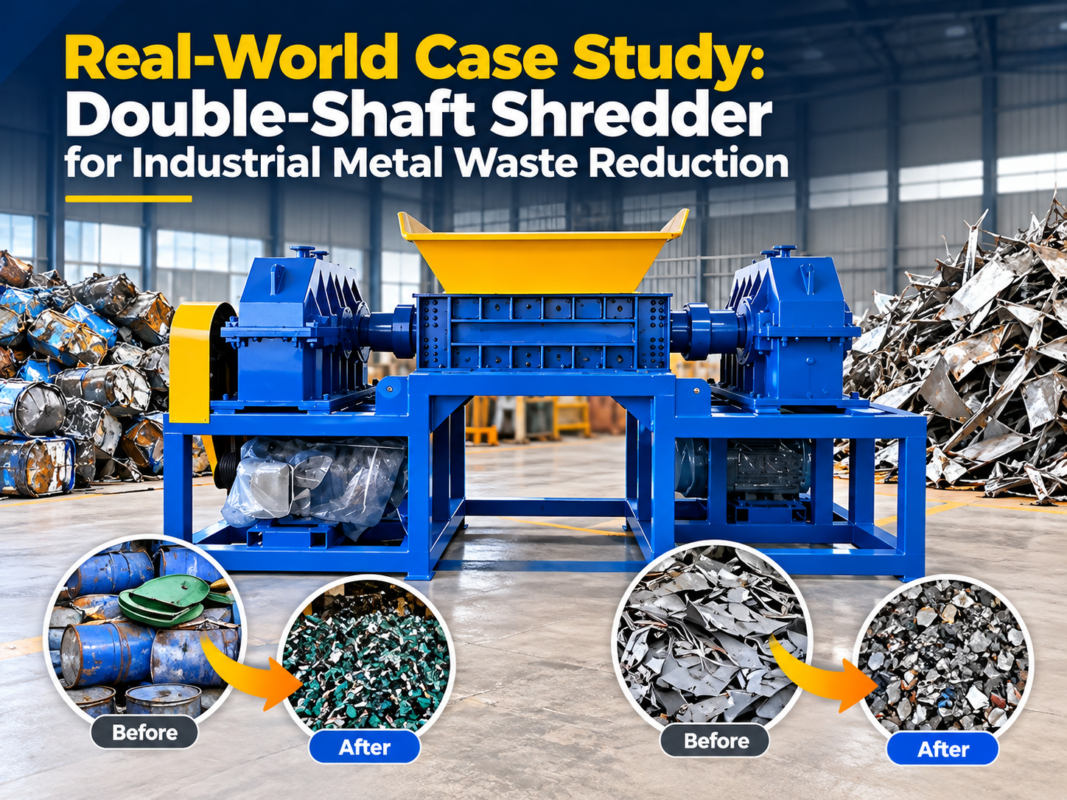
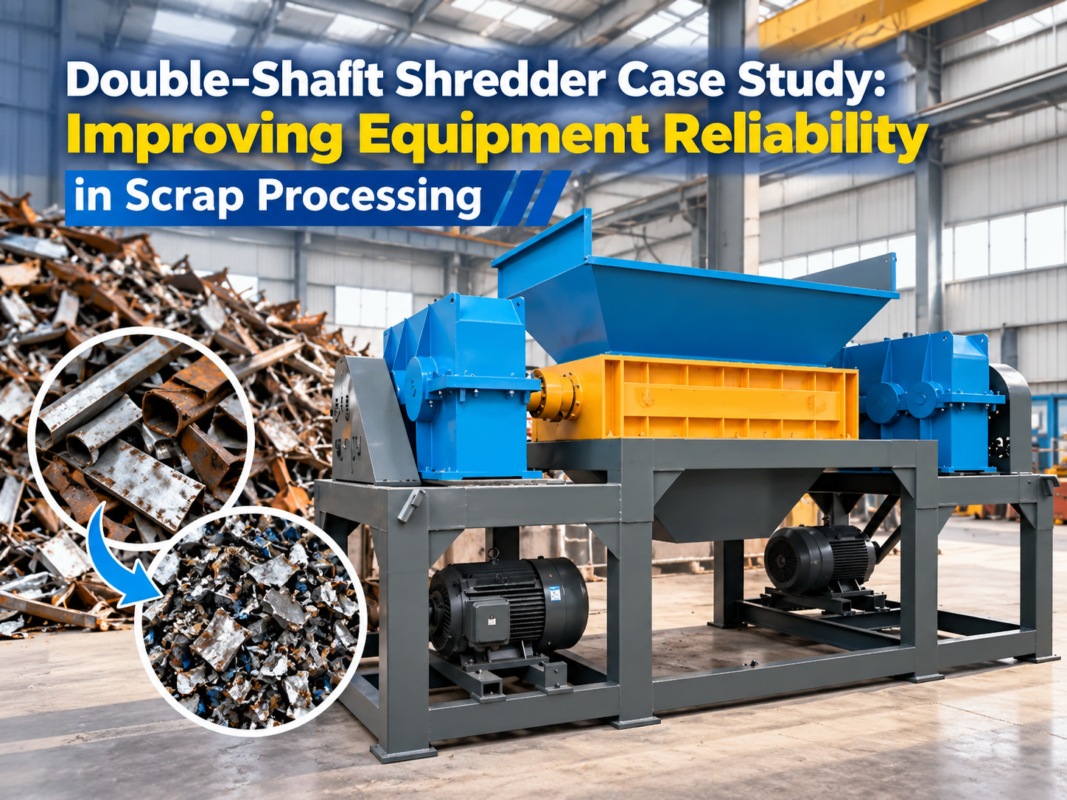
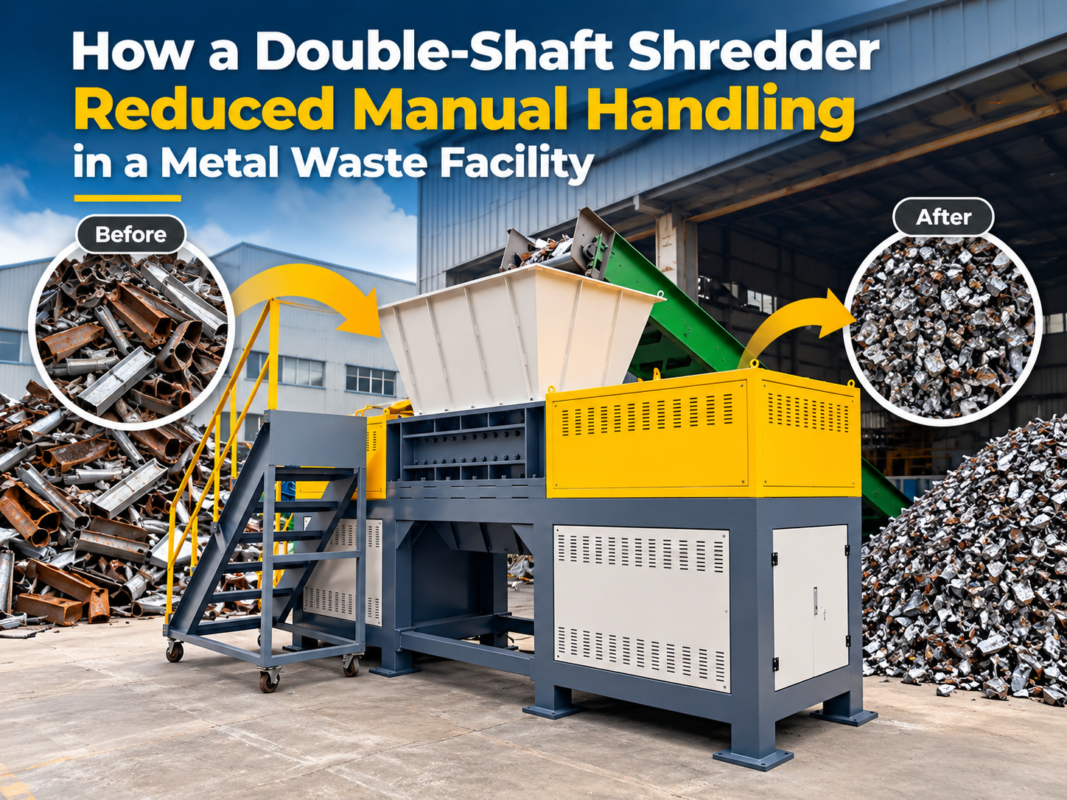
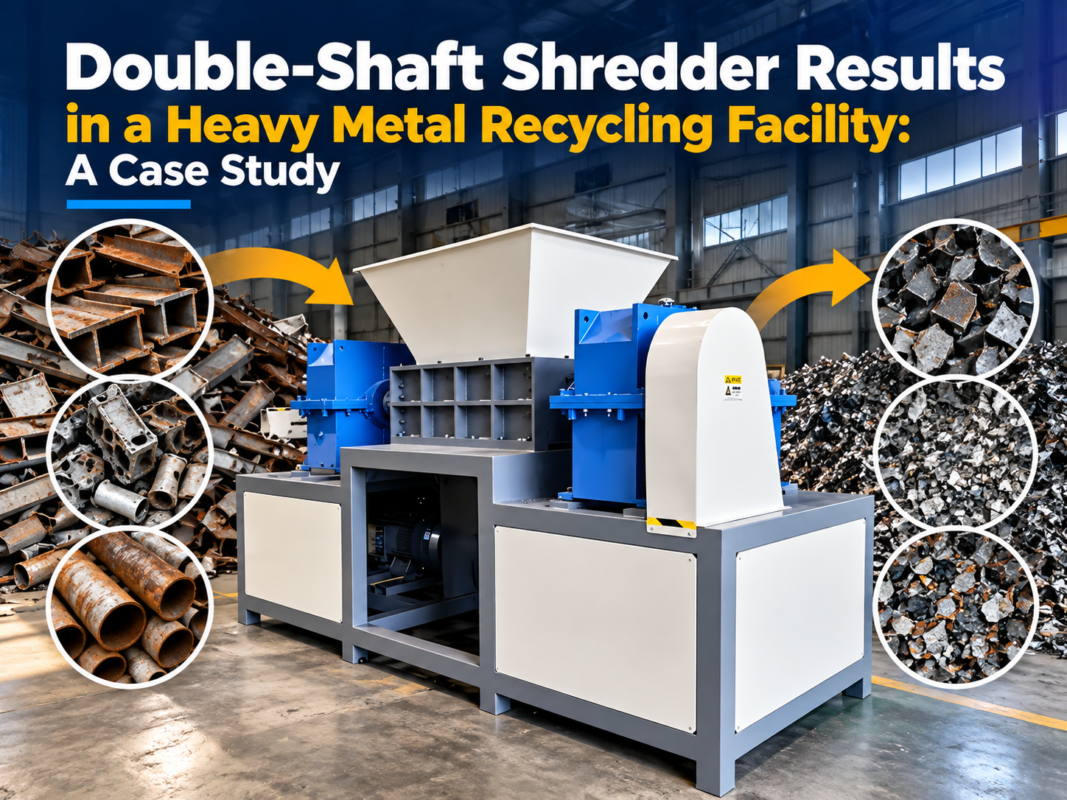
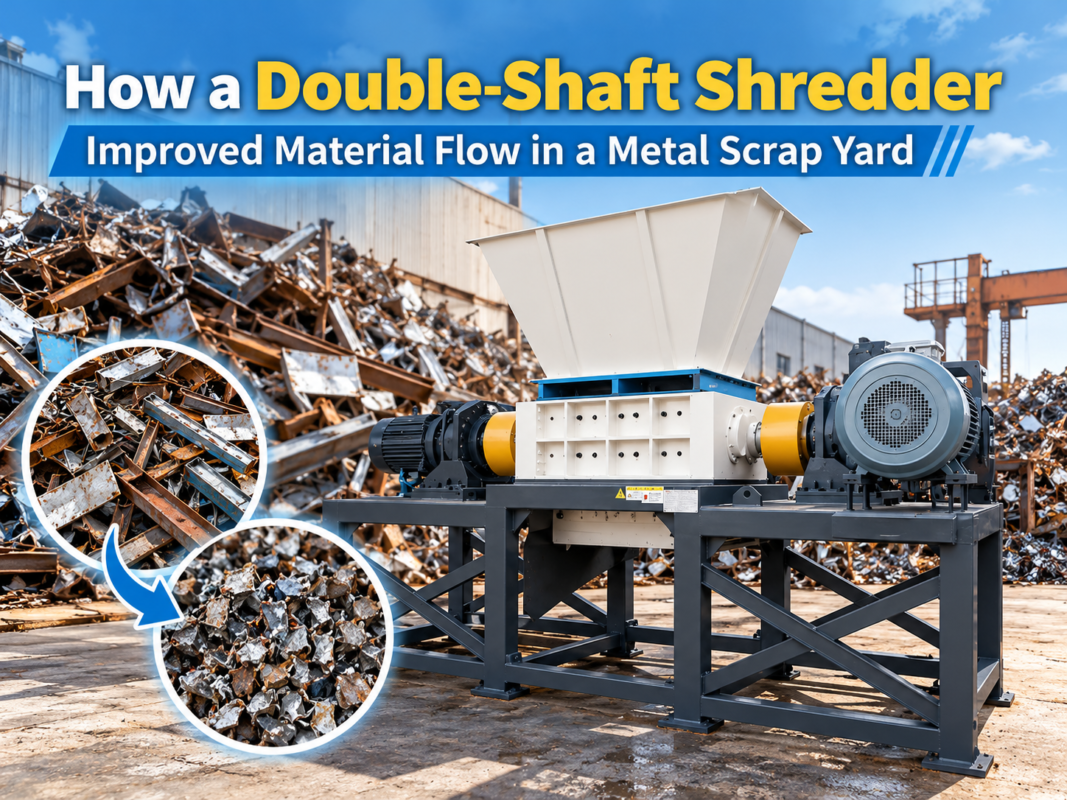
In the realm of industrial waste management and metal fabrication, the double-shaft shredder stands as a cornerstone of size reduction technology. Unlike high-speed granulators, these machines operate at low speeds with high torque, utilizing two counter-rotating shafts equipped with interlocking blades. This mechanism is specifically designed to handle bulky, tough, and diverse materials ranging from scrap metal and tires to plastics and electronic waste. Understanding the Double-Shaft Shredder Capacity : Calculate Output Material process is essential for any facility looking to optimize its production line and ensure a high return on investment.
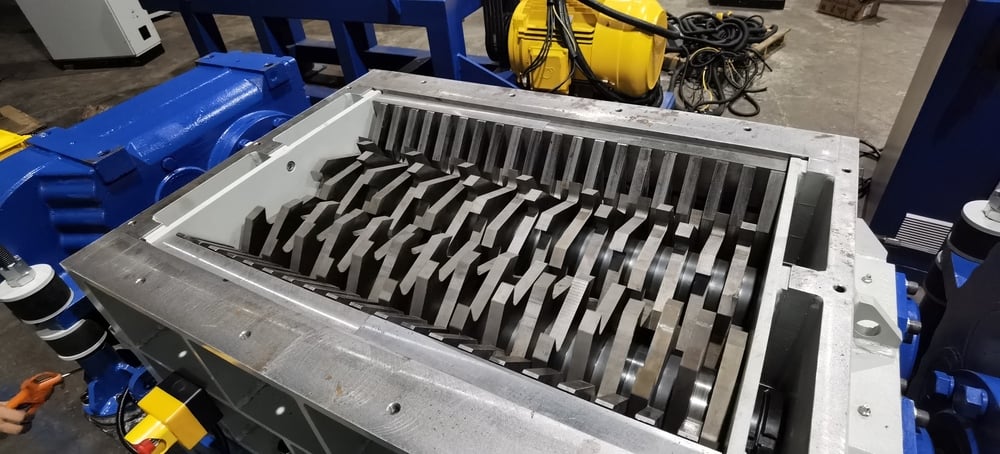
The fundamental principle of a double-shaft shredder is the shearing action. As the two shafts rotate toward each other, the hooks on the blades grab the material and pull it into the cutting chamber. The material is then sheared between the edges of the blades on opposing shafts. Because these machines do not typically rely on a screen to determine final particle size (though some configurations include them), the output capacity is largely determined by the physical dimensions of the blades, the speed of the shafts, and the density of the material being processed. HARSLE engineering focuses on maximizing this shearing efficiency to provide consistent throughput even under heavy loads.
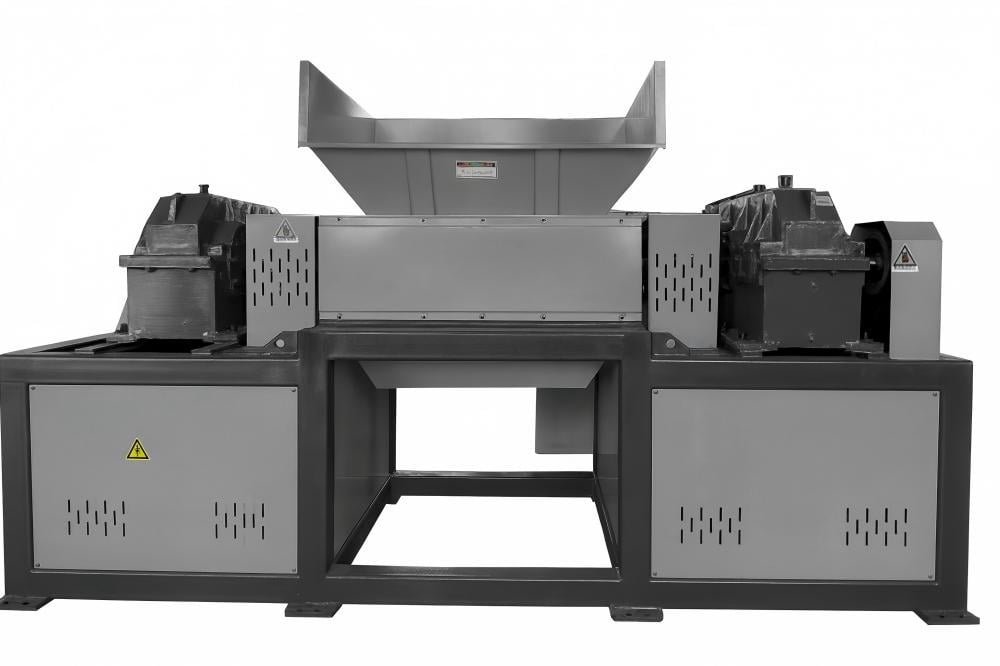
From a mechanical perspective, the capacity is not just a measure of weight per hour; it is a measure of volume displacement. The geometry of the cutting chamber and the arrangement of the blades create a specific volume that can be processed per revolution. When we discuss how to Calculate Output Material, we must look at the interaction between mechanical force (torque) and the physical properties of the input. A machine might have the physical space to process 10 tons of foam per hour but lack the torque to process 1 ton of reinforced steel in the same timeframe. Therefore, technical capacity is a balance of volume, power, and material resistance.
Core Parameters Influencing Shredder Capacity
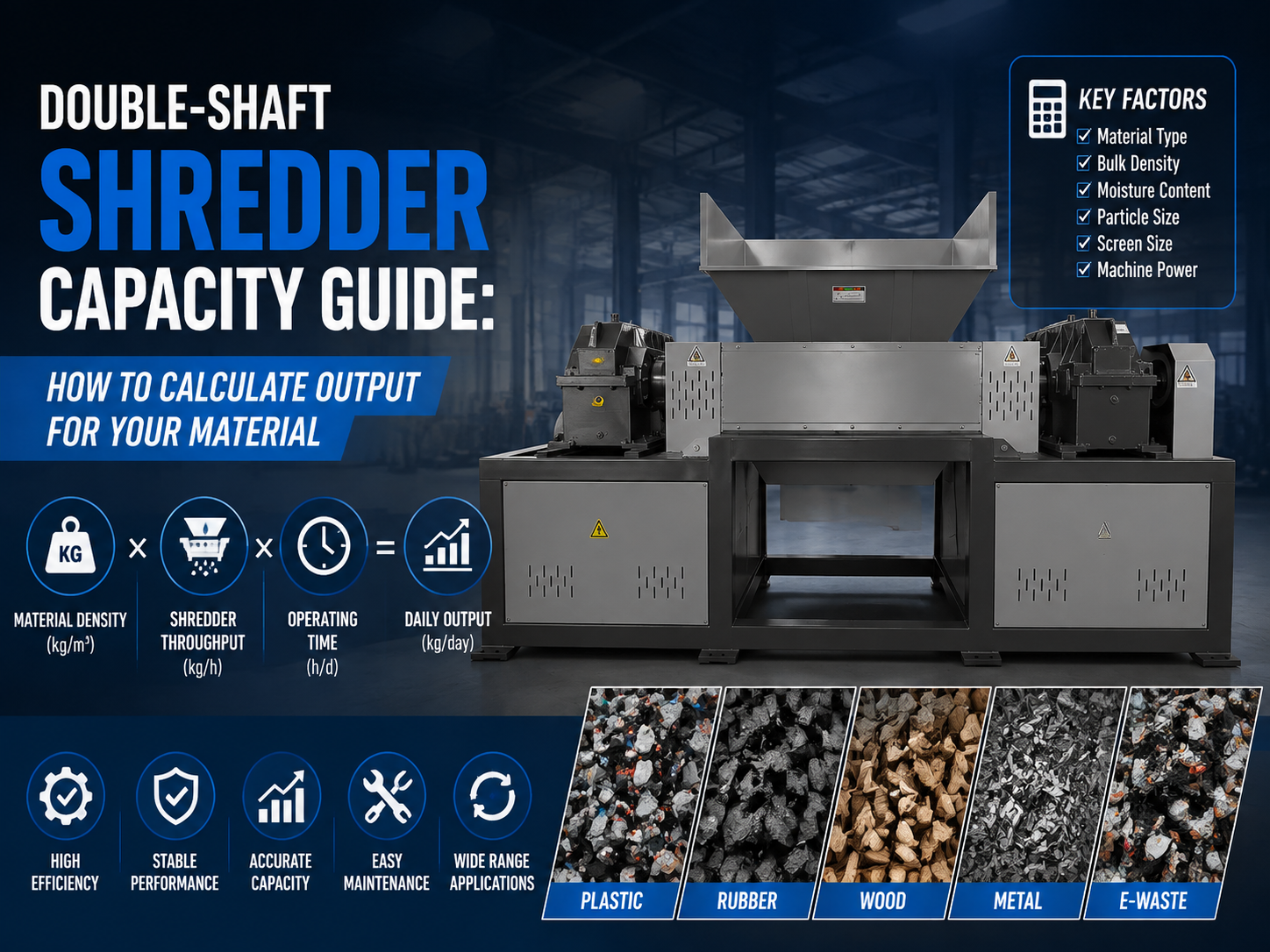
To accurately determine the capacity of a double-shaft shredder, several core parameters must be analyzed. The first and most critical is the Motor Power and Torque. In double-shaft systems, torque is the primary driver of throughput. High-torque motors allow the blades to bite through thicker materials without stalling. If the material is too tough for the available torque, the machine will frequently enter ‘reverse mode’ to clear jams, which significantly reduces the average hourly capacity. HARSLE machines are engineered with optimized gear ratios to ensure that motor power is converted into maximum shearing force.
The second parameter is the Rotor Speed (RPM). While double-shaft shredders are “low-speed” machines, typically operating between 10 and 40 RPM, the speed directly correlates to how many times the cutting hooks pass through the material per minute. However, increasing RPM isn’t always the solution for higher capacity. If the speed is too high, the blades may fail to ‘grab’ bulky items, causing them to bounce on top of the shafts rather than being pulled in. This phenomenon, known as “bouncing,” effectively reduces the capacity to zero for that specific moment.
The third parameter involves the Blade Geometry and Configuration. This includes the thickness of the blades, the number of hooks (teeth) per blade, and the diameter of the rotor. Thicker blades produce larger shreds and are generally used for heavier materials like metal scrap, whereas thinner blades are used for materials like paper or thin plastics to achieve a finer output. The number of hooks determines the ‘bite’ frequency. A blade with four hooks will grab material more frequently than a blade with a single hook, but each bite will be smaller. Finding the right balance is key to optimizing the Double-Shaft Shredder Capacity : Calculate Output Material equation.
Finally, the Material Bulk Density plays a massive role. Capacity is usually measured in kilograms or tons per hour (kg/h or t/h). However, shredders process volume. A shredder processing loose plastic bottles (low bulk density) will have a much lower weight-based capacity than the same shredder processing baled plastic or solid wood, even if the volume processed per hour is identical. Engineers must always convert the target weight capacity into a volumetric requirement based on the specific gravity and packing factor of the raw material.
Calculation Method: How to Calculate Output Material
Calculating the theoretical capacity of a double-shaft shredder involves a formula that combines mechanical dimensions with material characteristics. While real-world variables like operator efficiency and feeding consistency will affect the final number, the following method provides a reliable baseline for engineering planning. The basic formula for theoretical volumetric capacity (Vt) is:
Vt = Ac × L × n × η
Where:
- Ac is the cross-sectional area of the cutting zone (the space between the shafts where shearing occurs).
- L is the length of the cutting chamber.
- n is the rotational speed (RPM).
- η is the filling efficiency factor (usually between 0.2 and 0.6 depending on material type).
Once you have the volumetric capacity, you can calculate the mass capacity (Q) by multiplying by the material’s bulk density (ρ): Q = Vt × ρ. For example, if you are shredding scrap aluminum with a bulk density of 160 kg/m³, and your machine has a calculated volumetric throughput of 20 m³ per hour at a 30% filling efficiency, your estimated capacity would be 3,200 kg/h. It is vital to note that the “filling efficiency” is the most variable part of this equation. For bulky, hollow items like barrels, the efficiency is low. For dense, pre-crushed material, the efficiency is much higher.
Another method used by HARSLE engineers involves calculating the Displacement per Revolution. By measuring the volume of the space between the blade hooks and the opposing shaft, you can determine exactly how much material is “carried” through the cutting zone per turn. If a rotor has 20 blades, each with a displacement volume of 0.005 m³, one full revolution of one shaft moves 0.1 m³. With two shafts at 20 RPM, the theoretical maximum is 4 m³ per minute. Applying a realistic filling factor (e.g., 25% for mixed waste) gives a practical output of 1 m³ per minute, or 60 m³ per hour.
Parameter Table: Expected Throughput by Material
| Material Type | Bulk Density (kg/m³) | Typical Blade Thickness (mm) | Estimated Capacity (t/h) – 37kW Motor | Estimated Capacity (t/h) – 75kW Motor |
|---|---|---|---|---|
| Plastic Film (Loose) | 40 – 80 | 20 – 30 | 0.8 – 1.2 | 1.5 – 2.5 |
| Hard Plastics (Crates/Drums) | 150 – 250 | 30 – 40 | 1.5 – 2.5 | 3.0 – 5.0 |
| Wood Waste (Pallets) | 200 – 300 | 40 – 50 | 2.0 – 3.5 | 4.5 – 7.0 |
| Aluminum Scrap | 160 – 300 | 30 – 50 | 1.0 – 2.0 | 2.5 – 4.5 |
| Car Tires (Whole) | 300 – 500 | 50 – 75 | 1.5 – 2.5 | 3.5 – 6.0 |
| Electronic Waste (E-Waste) | 350 – 600 | 20 – 40 | 1.2 – 2.2 | 2.8 – 5.0 |
| MSW (Municipal Solid Waste) | 250 – 400 | 40 – 60 | 3.0 – 5.0 | 7.0 – 12.0 |
Note: The values in this table are estimates based on standard HARSLE double-shaft shredder configurations. Actual Double-Shaft Shredder Capacity : Calculate Output Material results may vary based on moisture content, feeding method (manual vs. conveyor), and specific blade wear status. For precise calculations, a material test at the HARSLE facility is recommended.
Common Engineering Mistakes in Capacity Estimation
One of the most frequent mistakes in calculating shredder output is ignoring the “Reversal Time.” Industrial shredders are programmed to reverse the shafts when they encounter an unbreakable object or a torque spike. In a poorly matched system where the motor is underpowered for the material, the machine might spend 20% of its operating time in reverse. This slashes the effective capacity. When you Calculate Output Material, you must factor in a “duty cycle” or “availability factor” that accounts for these interruptions. A high-quality HARSLE PLC system minimizes reversal time through intelligent torque sensing, but it cannot be ignored entirely.
Another common error is overestimating the Filling Factor (η). It is tempting to assume the cutting chamber will always be full. However, unless you have a sophisticated force-feeding hopper or a hydraulic pusher, the material often bridges or sits loosely. For example, when shredding large plastic tanks, the chamber is physically “full,” but the actual mass of the material is very low because the tanks are mostly air. Engineers must distinguish between the volume of the hopper and the volume of the material actually engaged by the blades.
Finally, many users fail to account for Blade Wear. As the edges of the double-shaft blades round off, the shearing action transitions into a “tearing” or “crushing” action. This requires significantly more torque and increases the likelihood of material slipping rather than being cut. A worn set of blades can reduce capacity by as much as 30-50% while simultaneously increasing energy consumption. Regular maintenance and hard-facing of blades are essential to maintaining the calculated output levels over the machine’s lifespan.
Selection Checklist for Optimal Capacity
Choosing the right machine involves more than just looking at a datasheet. Use this checklist to ensure your HARSLE shredder meets your Double-Shaft Shredder Capacity : Calculate Output Material requirements:
- Define the Input: What is the maximum size and toughest component of your material? (e.g., a 1-meter wide plastic roll with a steel core).
- Determine Target Output: Do you need a specific tons-per-hour rate, or a specific volume-per-day rate?
- Verify Power Requirements: Does your facility have the electrical infrastructure to support the necessary kW for the required torque?
- Blade Selection: Choose the number of hooks and blade thickness based on the desired final shred size. Remember: smaller output size usually means lower capacity.
- Feeding System: Will you use a conveyor, a grapple, or a forklift? Consistent feeding is the secret to reaching theoretical capacity.
- Discharge Method: Ensure your discharge conveyor can move material away faster than the shredder produces it to avoid back-ups.
- Maintenance Access: Ensure the machine design allows for easy blade inspection and tightening of the drive train.
Frequently Asked Questions (FAQ)
How does moisture content affect shredder capacity?
Moisture increases the weight of the material but often makes it “stickier” or more prone to clumping. For materials like wood or biomass, high moisture can increase the power required to shear the fibers, potentially slowing down the RPM and reducing the overall weight-based capacity despite the added water weight.
Can I increase capacity by simply installing a larger motor?
Not necessarily. While a larger motor provides more torque, the capacity is also limited by the physical size of the cutting chamber and the structural integrity of the shafts and bearings. Simply increasing motor size without upgrading the gearbox and shafts can lead to mechanical failure. It is better to optimize the blade geometry and feeding consistency first.
What is the difference between a single-shaft and a double-shaft shredder in terms of capacity?
Single-shaft shredders usually run at higher speeds and use a screen to control output size, making them better for precise granulating but slower for bulky waste. Double-shaft shredders are “high-volume” machines that excel at primary reduction. If your goal is tons-per-hour of bulky material, the double-shaft design is almost always superior.
How often should I sharpen the blades to maintain capacity?
This depends entirely on the material. Shredding clean plastic might allow blades to last for 2,000 hours, while shredding contaminated construction waste or abrasive glass-filled plastics might require maintenance every 500 hours. Monitoring the motor’s current draw is a good way to tell; if the amps are rising for the same material load, the blades are likely dull.
Does the hopper design impact the output calculation?
Yes, significantly. A hopper that encourages “bridging” (where material wedges itself above the shafts) will starve the shredder and drop capacity to near zero. HARSLE offers custom hopper designs and hydraulic rams to ensure material is constantly forced into the cutting zone, maximizing the filling efficiency factor (η).