How to Calculate Briquetting Machine Capacity for Your Scrap Metal Line: A Technical Guide

Technical Overview of Briquetting Systems
In the modern metal fabrication industry, the management of swarf, chips, and metal turnings represents a significant operational challenge. A briquetting machine serves as the critical link in a circular economy, transforming loose, voluminous metal waste into dense, high-value briquettes. By compressing metal scraps, manufacturers can recover expensive cutting fluids, reduce storage footprints, and significantly increase the market value of their scrap metal.
Understanding how to calculate briquetting machine capacity for your scrap metal line is not merely a mathematical exercise; it is a fundamental requirement for operational efficiency. If the machine is undersized, it creates a bottleneck that slows down your entire production line. Conversely, an oversized machine leads to unnecessary capital expenditure and higher energy consumption costs. HARSLE emphasizes that capacity planning must be integrated into the initial design phase of your scrap handling facility.
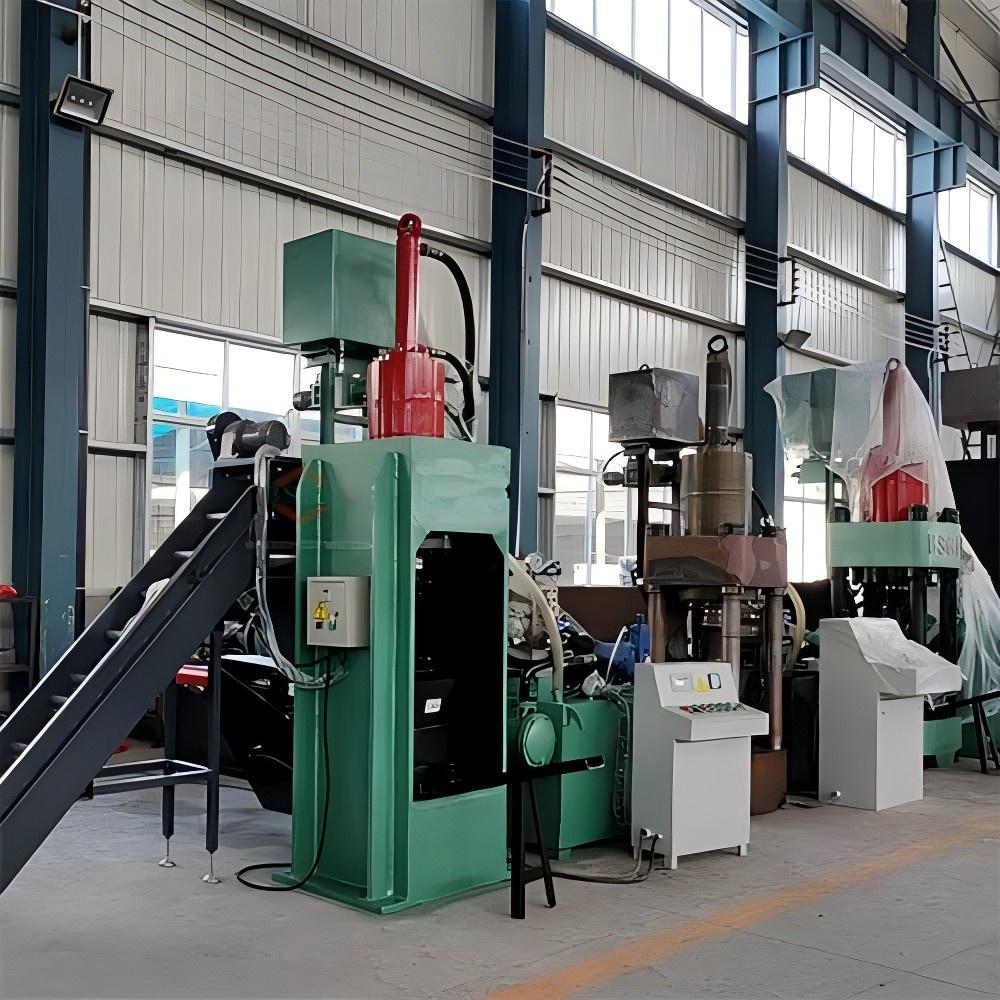
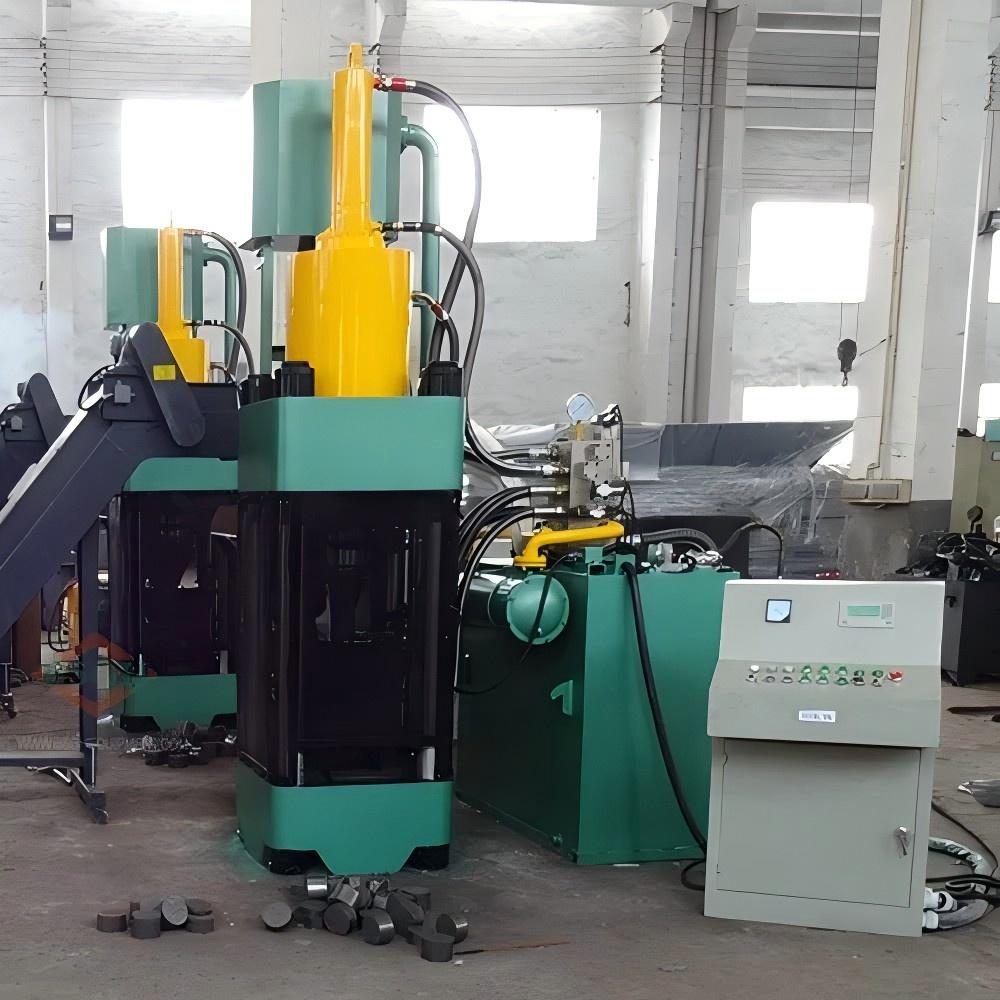
The briquetting process involves applying high hydraulic pressure to metal particles within a cylindrical die. This process forces the material to bond mechanically, creating a solid puck. The capacity of these machines is typically measured in kilograms or tons per hour (kg/h or t/h). However, this figure is highly dependent on the bulk density of the input material, the feed rate, and the cycle time of the hydraulic press.
When evaluating your scrap metal line, consider the physical state of your waste. Aluminum chips, steel turnings, and copper shavings all possess different bulk densities and flow characteristics. A machine that processes 500 kg/h of steel may only process 200 kg/h of light aluminum turnings due to the difference in volume. Therefore, the technical specification of the machine must be matched to the specific material stream being processed.
Core Parameters Influencing Throughput
To accurately calculate briquetting machine capacity for your scrap metal line, you must first identify the core parameters that dictate performance. The most critical factor is the cycle time of the hydraulic cylinder. The faster the cylinder can complete a compression stroke and return, the higher the potential throughput. However, this must be balanced against the time required for the material to be fed into the compression chamber.
Bulk density of the raw material is the second major variable. Bulk density refers to the weight of the material per unit volume in its loose, uncompressed state. Materials with low bulk density, such as long, stringy steel turnings, require more pre-compression or shredding before they can enter the briquetting chamber. If the material is not properly prepared, the machine will struggle to reach its rated capacity, leading to inconsistent briquette quality.
The compression force, measured in kilonewtons (kN) or tons, also plays a role in capacity. While higher force is necessary for harder metals like stainless steel or titanium, it often requires a longer dwell time to ensure the material bonds properly. If the dwell time is too short, the briquette may crumble upon ejection. Therefore, capacity is a trade-off between the force required for structural integrity and the speed of the machine cycle.
Finally, the automation level of the feeding system is a major determinant of real-world capacity. A manual feeding system is limited by the speed of the operator, whereas an automated conveyor or hopper system ensures a constant supply of material. When calculating capacity, always account for the ‘fill factor’—the percentage of the compression chamber that is effectively filled with material during each cycle. A low fill factor results in lower throughput, regardless of the machine’s theoretical maximum speed.
Calculation Method for Production Capacity
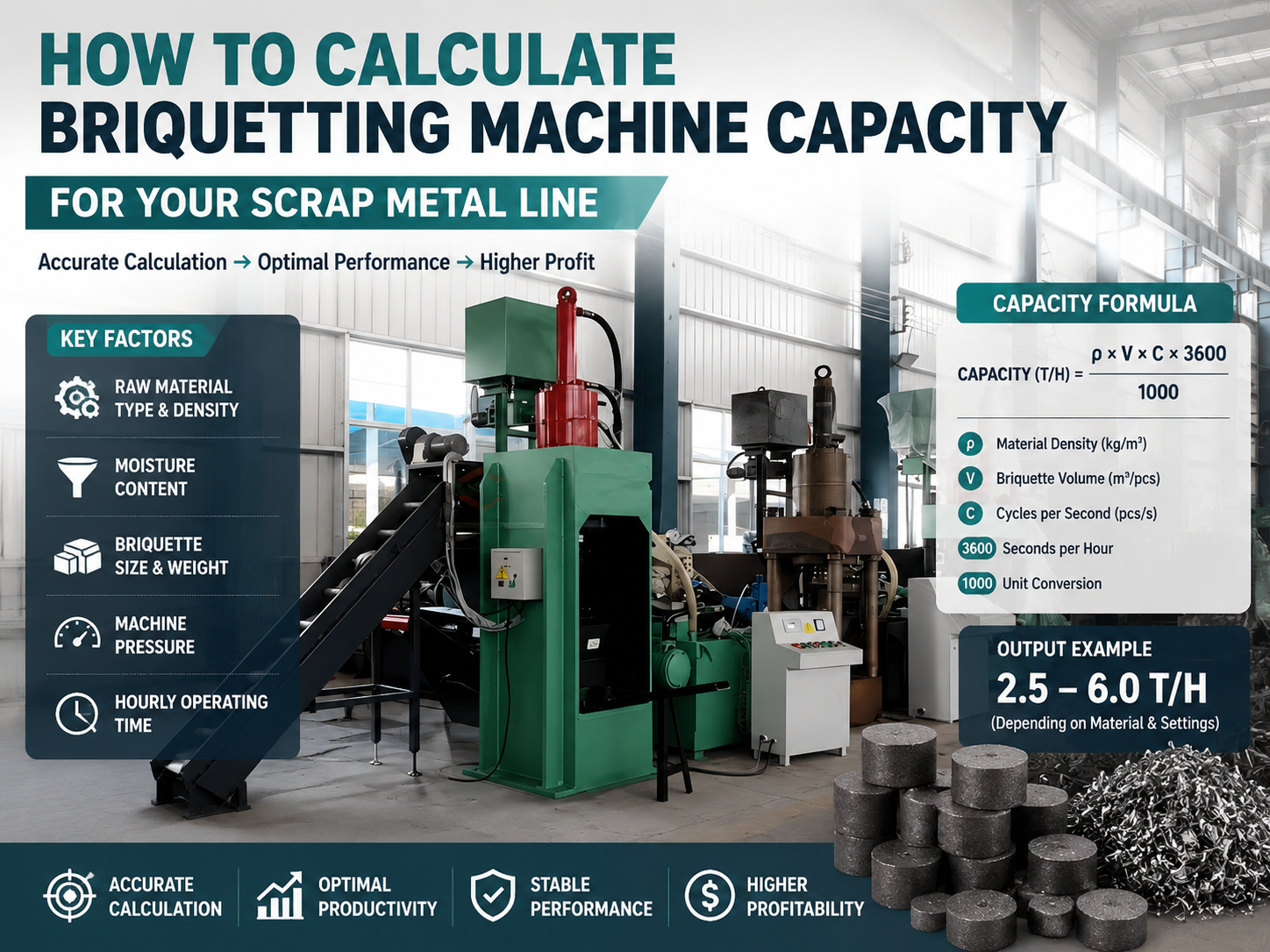
Calculating the capacity for your scrap metal line requires a systematic approach. The basic formula for theoretical capacity is: Capacity (kg/h) = (Weight of one briquette in kg) × (Cycles per hour). To find the weight of one briquette, you must know the volume of the compression chamber and the density of the final briquette. For example, if your briquette weighs 1.5 kg and the machine performs 300 cycles per hour, the theoretical capacity is 450 kg/h.
However, theoretical capacity rarely matches actual production. You must apply an efficiency factor to account for downtime, maintenance, and material flow interruptions. The formula for effective capacity is: Effective Capacity = Theoretical Capacity × Efficiency Factor (usually 0.75 to 0.85). This factor accounts for the time taken to clear jams, perform routine checks, and the variability in material feed rates.
When calculating for a scrap metal line, you must also consider the volume of waste generated by your CNC machines. If your facility produces 2,000 kg of aluminum chips per 8-hour shift, your briquetting machine must be able to handle at least 250 kg/h, plus a buffer for peak production periods. It is recommended to size the machine for 120% of your maximum expected output to ensure the system is not constantly running at its limit, which accelerates wear and tear.
Consider the following step-by-step calculation workflow:
- Step 1: Determine the total weight of scrap generated per hour.
- Step 2: Identify the bulk density of the material (e.g., steel chips vs. aluminum turnings).
- Step 3: Calculate the required briquette weight based on the die diameter and target density.
- Step 4: Determine the cycle time required for the specific material hardness.
- Step 5: Apply the efficiency factor to determine the realistic hourly output.
Parameter Table for Capacity Estimation
| Material Type | Typical Bulk Density (kg/m³) | Required Force (kN) | Expected Efficiency | Capacity Rating (kg/h) |
|---|---|---|---|---|
| Aluminum Chips | 150 – 300 | 100 – 200 | 85% | 300 – 500 |
| Steel Turnings | 300 – 500 | 250 – 400 | 80% | 400 – 700 |
| Copper Shavings | 400 – 600 | 200 – 350 | 82% | 500 – 800 |
| Brass Swarf | 350 – 550 | 200 – 300 | 80% | 450 – 750 |
Common Engineering Mistakes
One of the most frequent mistakes when calculating capacity is ignoring the ‘pre-processing’ requirement. Many engineers assume that raw, long-stringy turnings can be fed directly into a briquetting machine. In reality, these materials often bridge in the hopper, preventing consistent flow. Without a shredder or granulator, the machine’s capacity will drop significantly because the compression chamber will not fill completely.
Another common error is failing to account for fluid content. If your scrap is heavily saturated with cutting oil, the briquetting process will act as a centrifuge. While this is a benefit, the fluid drainage system must be sized correctly. If the drainage is restricted, the fluid will remain in the briquette, reducing its density and potentially causing the machine to stall due to hydraulic pressure spikes within the die.
Overestimating the duty cycle is also a major pitfall. Manufacturers often look at the ‘peak’ capacity of a machine and assume it can maintain that rate 24/7. Industrial briquetting machines require regular maintenance, including die cleaning, oil changes, and seal inspections. If you calculate your capacity based on 100% uptime, you will inevitably fall behind on your scrap processing goals when maintenance intervals occur.
Finally, ignoring the power requirements of the hydraulic system can lead to capacity issues. A machine might have the mechanical capability to process a certain volume, but if the hydraulic pump is undersized, the pressure will drop during the compression stroke, resulting in soft, low-quality briquettes. Always ensure that the motor power and hydraulic pump flow rate are matched to the throughput requirements of your specific scrap metal line.
Selection Checklist for Your Scrap Line
Before finalizing your purchase, use this checklist to ensure the machine meets your capacity needs:
- Material Analysis: Have you tested your specific scrap material for bulk density and compressibility?
- Throughput Requirements: Does the machine handle your peak hourly scrap generation with a 20% safety margin?
- Automation Integration: Will the machine be fed by a conveyor, or does it require manual loading?
- Fluid Recovery: Does the machine include an integrated oil collection and filtration system?
- Maintenance Accessibility: Are the die and punch easily accessible for quick replacement?
- Power Supply: Does your facility have the electrical capacity to support the motor requirements?
- Space Constraints: Does the machine footprint fit within your existing scrap line layout?
- After-Sales Support: Does the manufacturer provide local technical support and spare parts availability?
Frequently Asked Questions (FAQ)
How does material type affect the capacity of a briquetting machine?
Material type dictates the bulk density and the required compression force. Softer metals like aluminum require less force but may have lower bulk density, requiring a larger hopper. Harder metals like steel require higher force, which increases cycle time and reduces the total number of briquettes produced per hour.
Can I increase the capacity of my existing briquetting machine?
Increasing capacity is difficult once the machine is installed. However, you can improve throughput by installing a pre-shredder to increase the bulk density of the input material, or by optimizing the conveyor feed system to ensure the compression chamber is filled to its maximum capacity every cycle.
Why is my briquetting machine producing soft briquettes?
Soft briquettes are usually a sign of insufficient compression force or inadequate dwell time. Check the hydraulic pressure settings and ensure the material is not too contaminated with non-metallic debris. If the issue persists, the die may be worn and require replacement.
How often should I perform maintenance to ensure rated capacity?
To maintain rated capacity, perform daily checks on the hopper and feed system. Weekly maintenance should include cleaning the die and checking hydraulic fluid levels. Monthly, inspect the seals and the main hydraulic cylinder for any signs of wear or leakage.
What is the role of the efficiency factor in capacity calculations?
The efficiency factor accounts for real-world variables such as machine downtime, operator breaks, material flow inconsistencies, and maintenance. It is a realistic multiplier that prevents overestimating the machine’s performance in a production environment.