Best Practices for Operating a Vertical Baler in Industrial Waste Management

Technical Overview of Vertical Balers in Industrial Environments
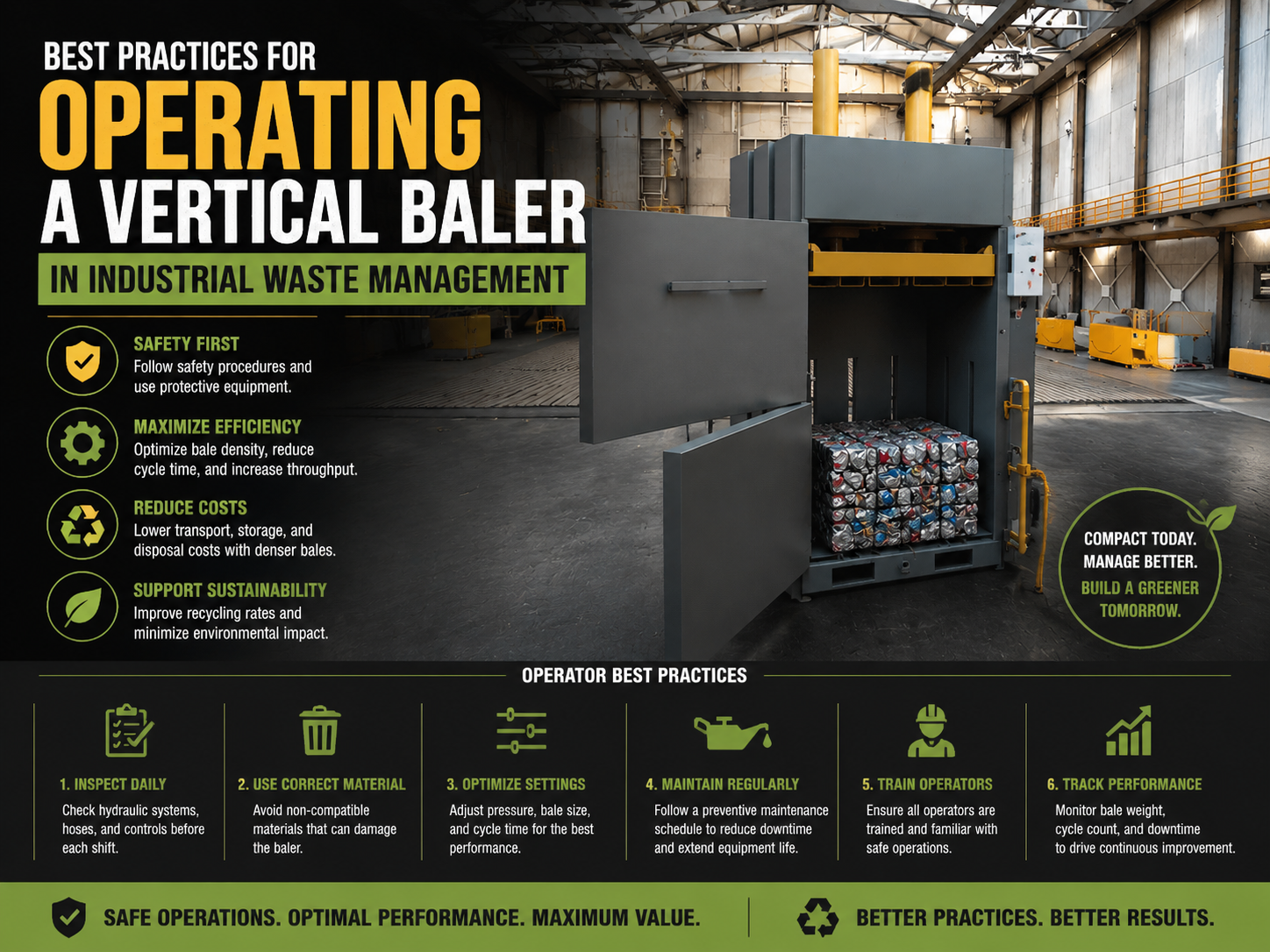
In the modern industrial landscape, efficient waste management is not merely a logistical necessity but a critical component of operational sustainability and cost control. A vertical baler is a specialized piece of hydraulic machinery designed to compress recyclable materials—such as cardboard, plastics, aluminum, and textiles—into dense, manageable blocks known as bales. Unlike horizontal balers, which require significant floor space, vertical balers operate on a top-down compression principle, making them ideal for facilities where space is at a premium. HARSLE vertical balers are engineered with high-grade structural steel and advanced hydraulic systems to withstand the rigorous demands of continuous industrial use.
The core mechanism of a vertical baler involves a heavy-duty platen driven by one or more hydraulic cylinders. When material is loaded into the chamber, the operator initiates the cycle, and the platen descends with immense force, crushing the material against the floor of the chamber. This process is repeated until the chamber is full and the desired bale density is achieved. The technical sophistication of these machines lies in their ability to balance pressure, cycle time, and energy consumption. Modern HARSLE units often feature PLC (Programmable Logic Controller) systems that monitor pressure thresholds and safety interlocks, ensuring that the machine operates within its designed mechanical limits while providing maximum throughput.
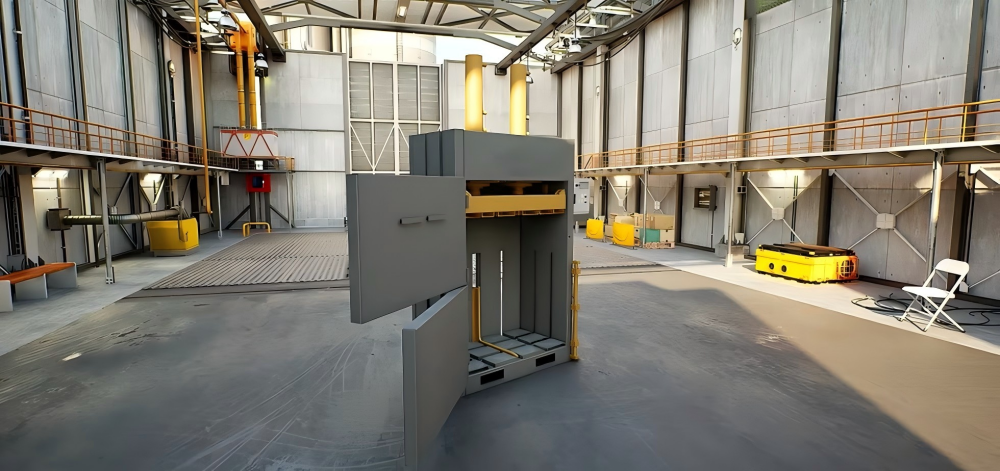
Understanding the physics of compaction is essential for best practices operating a vertical baler in industrial waste management. The material being compressed has an inherent ‘spring-back’ effect. Therefore, the hydraulic system must not only apply force but also hold that force momentarily to allow the material fibers to deform permanently. This is particularly important for plastics and high-density cardboard. By utilizing a vertical orientation, gravity assists in the initial loading phase, allowing for a more uniform distribution of material before the compression cycle begins, which results in more stable and stackable bales.
Core Parameters of Vertical Baling Machinery
To optimize the performance of a vertical baler, operators and facility managers must understand the core technical parameters that define the machine’s capability. The most prominent parameter is the Pressing Force, usually measured in tons. For standard industrial applications, this ranges from 10 tons for light packaging to over 100 tons for heavy-duty metal or plastic scrap. The pressing force determines the ultimate density of the bale; higher force allows for more material to be packed into the same volume, which directly reduces shipping costs by maximizing truckload weights.
Another critical parameter is the Cycle Time. This is the duration it takes for the platen to descend from its home position, reach maximum pressure, and return to the top. In a high-volume industrial setting, a shorter cycle time (typically between 30 to 50 seconds) is preferred to prevent bottlenecks in the waste stream. However, cycle time must be balanced against Motor Power (measured in kW or HP). A more powerful motor can drive the hydraulic pump faster, but it also increases energy consumption. HARSLE designs focus on high-efficiency motors that provide the necessary torque for heavy compaction without excessive power draw.
The Bale Dimensions and Bale Weight are parameters that dictate the logistics of the recycling process. Standard ‘mill-size’ bales (typically 60 inches wide) are the industry benchmark because they fit perfectly into standard shipping containers and trailers. Operating a baler that produces non-standard sizes can lead to increased handling costs and lower rebates from recycling centers. Furthermore, the Chamber Opening Size is vital for operational efficiency; a larger opening allows for bulky items like large appliance boxes to be loaded without manual pre-cutting, saving significant labor time.
Calculation Method for Baling Efficiency and Density
Calculating the efficiency of your baling operation is a fundamental best practice for operating a vertical baler in industrial waste management. The primary metric for success is Bale Density, which is calculated using the formula:
Density (ρ) = Mass of the Bale (m) / Volume of the Bale (V)
For example, if a bale of cardboard weighs 450kg and its dimensions are 1.5m x 0.75m x 1.0m (Volume = 1.125 m³), the density is 400 kg/m³. Monitoring this density ensures that the machine is operating at its peak hydraulic pressure and that operators are loading the chamber correctly. If density drops, it may indicate a leak in the hydraulic seals or that the material is being loaded too loosely.
Another important calculation is the Throughput Rate, which helps in labor planning. This is calculated as:
Throughput (kg/hr) = (Bale Weight / (Cycle Time + Loading Time)) * 3600
By analyzing the loading time versus the cycle time, managers can identify if the bottleneck is the machine’s speed or the operator’s manual loading process. In many cases, implementing a conveyor system or a specialized loading dock can double the throughput without changing the baler itself. HARSLE provides technical consultations to help clients calculate these metrics based on their specific material types and volume requirements.
Technical Parameter Table for HARSLE Vertical Balers
The following table outlines the typical specifications for various grades of vertical balers used in industrial waste management. These figures represent the standard benchmarks for high-quality metal fabrication machinery.
| Model Grade | Pressing Force (Tons) | Motor Power (kW) | Bale Size (L*W*H mm) | Cycle Time (sec) | Bale Weight (kg) |
|---|---|---|---|---|---|
| Light Duty | 10 – 20 | 2.2 – 5.5 | 800 x 600 x 600 | 35 – 45 | 100 – 200 |
| Standard Industrial | 30 – 50 | 7.5 – 11 | 1100 x 750 x 1000 | 40 – 50 | 300 – 500 |
| Heavy Duty (Mill-Size) | 60 – 100 | 15 – 22 | 1500 x 760 x 1000 | 45 – 60 | 500 – 900 |
| Specialty (Plastic/Metal) | 120+ | 30+ | 1200 x 800 x 1100 | 50 – 70 | 800 – 1200 |
Best Practices for Operating a Vertical Baler
To ensure longevity and safety, adhering to best practices operating a vertical baler in industrial waste management is non-negotiable. The first rule of operation is Material Sorting. While balers are powerful, they are designed for specific material types. Mixing wood pallets with cardboard can damage the platen or cause the bale to burst during tying. Operators should ensure that only compressible, non-hazardous materials enter the chamber. Contaminants like glass or heavy metal shards can score the hydraulic cylinders or damage the chamber walls over time.
Loading Techniques significantly impact bale integrity. It is a best practice to place a large, flat piece of cardboard at the bottom of the chamber before starting a new bale. This acts as a ‘base sheet’ that prevents smaller scraps from falling through the floor slots and makes the tying process much easier. Material should be distributed evenly across the chamber. ‘Bridging’—where material wedges against the sides and creates a hollow center—should be avoided, as it leads to unstable bales that can collapse during transport.
Safety Protocols are the most critical aspect of operation. Modern HARSLE balers are equipped with dual-hand controls and emergency stop buttons, but these should never be bypassed. Operators must ensure the loading door is fully latched before initiating a cycle. Furthermore, the ‘Lock-Out, Tag-Out’ (LOTO) procedure must be strictly followed during any maintenance or when clearing a jam. Never reach into the chamber while the motor is running, even if the platen is not moving. The stored energy in the hydraulic system can cause unexpected movement.
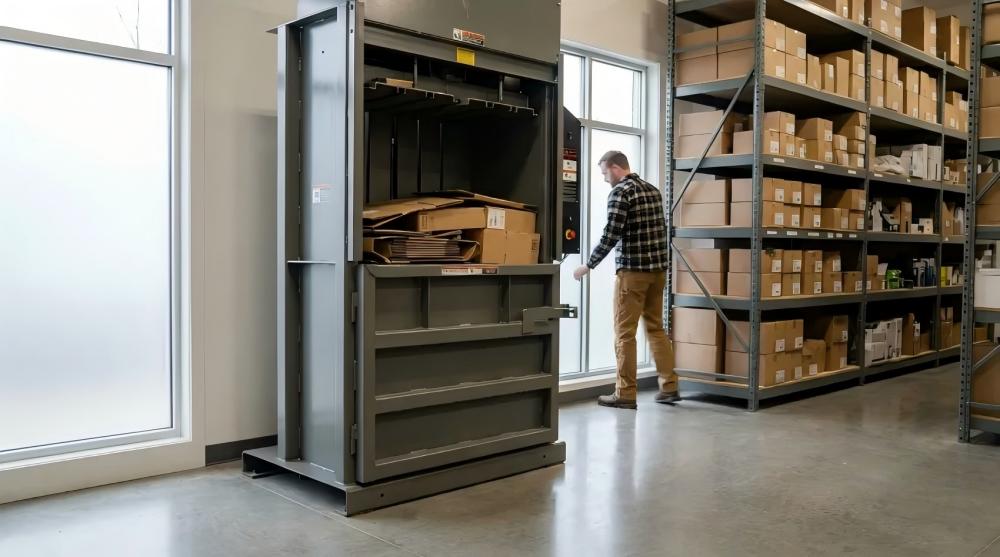
Finally, the Tying and Ejection Process requires precision. When the ‘Bale Full’ indicator lights up, the platen should be held in the down position (using the ‘stay-down’ feature) while the operator threads the bale wire or high-tensile plastic strapping through the rear slots. Tying the bale while it is under compression ensures that once the platen is raised, the bale remains dense. When ejecting the bale, ensure the area in front of the machine is clear, as a 500kg bale can cause significant injury or property damage if it tips over unexpectedly.
Common Engineering and Operational Mistakes
One of the most frequent engineering mistakes in waste management is Under-specifying the Machine. Purchasing a 20-ton baler for a facility that generates high volumes of PET plastic will lead to premature hydraulic failure. Plastic has high ‘memory’ and requires sustained high pressure to stay compressed. Using an underpowered machine results in ‘soft’ bales that expand after they are tied, often snapping the wires and creating a safety hazard and a mess.
Another common mistake is Neglecting Hydraulic Fluid Maintenance. The hydraulic oil is the lifeblood of the vertical baler. Over time, the oil can become contaminated with dust from cardboard or moisture from the air. This leads to internal abrasion in the pump and valves. Operators often forget to check the oil level or change the filters, leading to a loss of pressing force and increased cycle times. A scheduled oil analysis every 2,000 hours of operation is a recommended best practice to identify internal wear before a catastrophic failure occurs.
Incorrect Wire Tensioning is an operational error that affects the entire supply chain. If wires are tied too loosely, the bale will expand and may not fit in standard transport racks. If tied too tightly, the wire may snap under the pressure of the material’s natural expansion. Furthermore, failing to clean the area behind the platen (the ‘dead zone’) can lead to material buildup that eventually restricts the platen’s stroke, causing the motor to strain and potentially burn out. Regular cleaning of the internal tracks and sensors is essential for smooth operation.
Selection Checklist for Industrial Vertical Balers
When selecting a vertical baler for your facility, use the following checklist to ensure the machine meets your technical and operational requirements:
- Material Type: Does the machine have the specific pressure ratings for your primary waste stream (e.g., cardboard vs. plastic film)?
- Volume Requirements: Can the machine handle your peak daily waste generation within a single shift?
- Space Constraints: Does the ceiling height allow for the full extension of the hydraulic cylinder?
- Power Supply: Is your facility equipped with the necessary 3-phase power, or do you require a single-phase motor?
- Safety Certifications: Does the machine meet CE, UL, or OSHA standards for point-of-operation guarding?
- Ease of Tying: Does the design allow for easy access to the rear of the machine for threading bale wires?
- Ejection System: Is the bale ejection automated (hydraulic) or manual (chain-driven)? Hydraulic ejection is safer and more efficient for heavy bales.
- After-Sales Support: Does the manufacturer like HARSLE provide readily available spare parts (seals, sensors, buttons)?
Frequently Asked Questions (FAQ)
What is the average lifespan of a HARSLE vertical baler?
With proper maintenance, including regular oil changes and greasing of moving parts, a HARSLE vertical baler can last 15 to 20 years in an industrial environment. The structural frame is designed for long-term fatigue resistance, while hydraulic components are modular and easily replaceable.
Can I bale different materials together?
It is strongly discouraged to mix materials like plastic and cardboard in the same bale. Different materials have different compression ratios and expansion rates, which leads to unstable bales. Furthermore, recycling centers pay significantly less for ‘mixed’ bales as they require manual sorting later.
How often should the hydraulic oil be changed?
For most industrial applications, the hydraulic oil should be changed every 2,000 operating hours or once a year, whichever comes first. However, the oil filters should be checked monthly and replaced if they show signs of clogging or if the machine’s cycle time begins to slow down.
Why is my baler not reaching full pressure?
This is usually caused by one of three things: a low hydraulic oil level, a bypass in the relief valve, or worn-out piston seals. First, check the oil reservoir. If the oil is sufficient, the hydraulic pump or the cylinder seals may require professional servicing to restore the system’s integrity.
Is operator training required for a vertical baler?
Yes. While the machines are designed to be user-friendly, formal training is essential to ensure operators understand the safety interlocks, proper loading techniques, and the correct way to tie and eject bales. Most workplace safety regulations (like OSHA) require documented training for all operators of compaction equipment.