Aluminium Extrusion Press Temperature Control Problems and How to Resolve Them

Introduction to Temperature Dynamics in Aluminium Extrusion
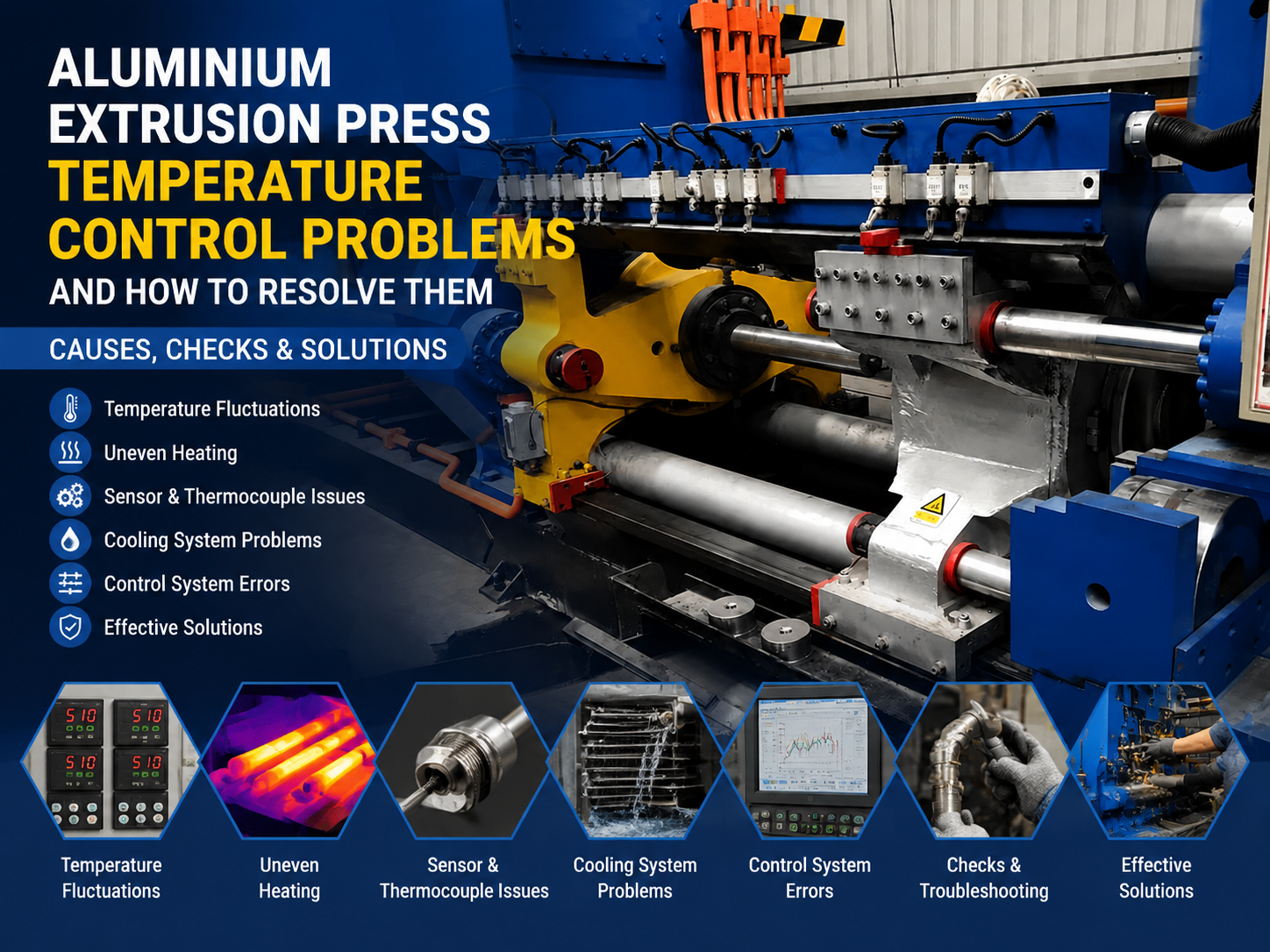
In the world of metal fabrication, the aluminium extrusion process stands as a cornerstone for producing complex profiles used in everything from aerospace components to architectural window frames. However, the success of this process is heavily dependent on a single, critical variable: temperature. Achieving the perfect balance between the billet temperature, the container temperature, and the die temperature is essential for maintaining product quality and operational efficiency. When these variables fluctuate, manufacturers face significant Aluminium Extrusion Press Temperature Control Problems that can lead to scrap, machine downtime, and financial loss.
Temperature control is not merely about heating the metal until it is soft enough to push through a die. It involves a sophisticated understanding of thermodynamics, friction, and material science. As the aluminium alloy is forced through the die aperture under immense hydraulic pressure, internal friction and deformation generate additional heat. If this heat is not managed, the exit temperature of the profile can exceed the alloy’s melting point or fall below the range required for proper metallurgical transformation. This guide explores how to Resolve Them effectively using modern technology and best practices.
HARSLE, a leader in industrial machinery, recognizes that precision is the hallmark of high-quality extrusion. By understanding the root causes of thermal instability, operators can implement corrective measures that ensure consistent mechanical properties and surface finishes. Whether you are dealing with “hot shortness” or incomplete grain recrystallization, mastering temperature control is the first step toward optimizing your production line.
Key Considerations for Thermal Management
The Extrusion Triangle: Temperature, Speed, and Pressure
The relationship between temperature, extrusion speed, and pressure is often referred to as the “Extrusion Triangle.” These three factors are inextricably linked. If the billet temperature is too low, the pressure required to extrude the metal increases, which can strain the hydraulic system and potentially break the die. Conversely, if the temperature is too high, the extrusion speed must be reduced to prevent surface defects, which lowers overall productivity. Finding the “sweet spot” where speed is maximized without compromising quality is the primary goal of temperature control.
To resolve imbalances in this triangle, operators must monitor the exit temperature of the profile in real-time. Modern systems use infrared sensors at the die exit to provide feedback to the press’s control unit. If the exit temperature rises too quickly due to frictional heat, the system can automatically slow down the ram speed. This process, known as isothermal extrusion, is the gold standard for high-end aluminium profile production.
Billet Pre-heating and Taper Heating
The initial state of the aluminium billet is the foundation of the entire process. Standard practice involves heating the billet to a specific temperature (usually between 400°C and 500°C, depending on the alloy). However, uniform heating is often not enough. As the extrusion progresses, the back end of the billet stays in the container longer and absorbs more heat from friction and the heated container walls.
To counteract this, many advanced facilities use “taper heating.” This involves creating a temperature gradient along the length of the billet, where the front end (entering the die first) is hotter than the rear end. As the extrusion continues, the mechanical heat generated compensates for the cooler rear end, resulting in a constant exit temperature. Resolving temperature control problems often starts with upgrading the billet furnace to allow for such precision.
Technical Details of Temperature Control Systems
Container Heating and Insulation
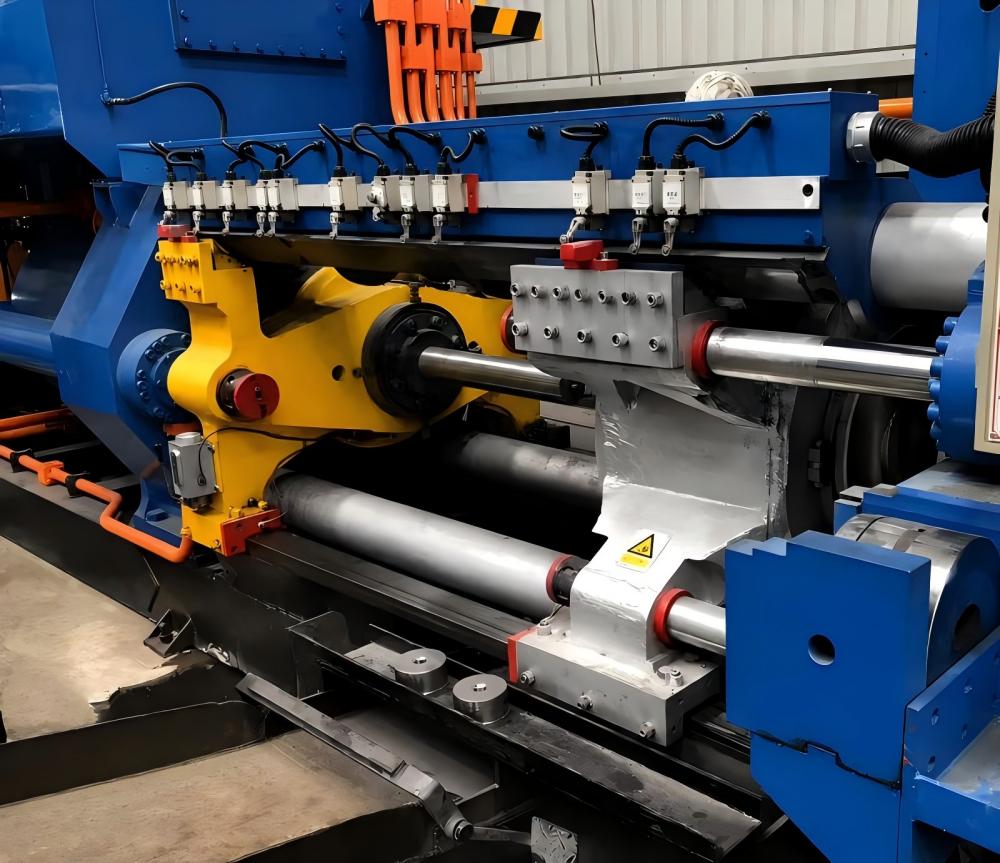
The container of an aluminium extrusion press is a massive steel component that holds the billet during the extrusion stroke. It must be heated to a temperature slightly lower than the billet to prevent the billet’s outer skin from chilling too rapidly, which could cause flow inconsistencies. Most containers are equipped with internal electrical resistance heaters or induction heating coils. These are divided into multiple zones (front, middle, and rear) to allow for localized adjustments.
A common technical failure occurs when the thermocouples inside the container fail or provide inaccurate readings. This leads to “cold spots” or “hot spots” that distort the flow of the aluminium. Regular calibration of these sensors and inspection of the heating elements are mandatory maintenance tasks. Furthermore, the insulation around the container must be intact to prevent heat loss to the press frame, which can cause thermal expansion of the machine itself, leading to misalignment.
Die Temperature and Cooling Strategies
The die is where the final shape is formed, and it is subject to the highest thermal and mechanical stresses. Before extrusion begins, the die must be pre-heated in a die oven to match the operating temperature. If a cold die is used, the first few meters of the profile will be scrap, and the die itself may crack due to thermal shock. However, during long production runs, the die can become too hot.
To resolve die overheating, manufacturers use various cooling methods:
- Nitrogen Cooling: Liquid nitrogen is injected into the die or around the die land. This not only cools the die but also creates an inert atmosphere that reduces oxidation and improves surface finish.
- Air Cooling: High-velocity air fans are used at the exit to cool the profile and the die face.
- Water Quenching: For specific alloys (like the 6000 series), immediate water quenching at the exit is necessary to lock in the metallurgical properties.
Common Aluminium Extrusion Press Temperature Control Problems and How to Resolve Them
1. Surface Tearing and “Hot Shortness”
Surface tearing occurs when the surface of the aluminium profile reaches a temperature where the low-melting-point phases of the alloy begin to melt. This results in small cracks or a “fir-tree” appearance on the edges of the profile. This is a classic example of Aluminium Extrusion Press Temperature Control Problems caused by excessive speed or an overly hot billet.
Resolution: Reduce the billet pre-heat temperature by 10-20°C or decrease the extrusion ram speed. Implementing a closed-loop control system that links the exit temperature sensor to the ram speed controller can automatically resolve this issue without manual intervention.
2. Inconsistent Mechanical Properties
If the temperature of the profile at the exit is too low, the alloying elements (like magnesium and silicon) may not stay in solid solution. This leads to a failure in the aging process, resulting in profiles that do not meet the required hardness or tensile strength specifications. This often happens at the start of a shift when the machine hasn’t reached thermal equilibrium.
Resolution: Ensure the die and container are fully soaked at the target temperature before starting. Use a “dummy” billet to bring the system to temperature if necessary. Check the accuracy of the exit pyrometer to ensure the metal is reaching the required solution heat treatment temperature.
3. Dimensional Instability and Die Deflection
Aluminium expands and contracts significantly with temperature changes. If the die temperature fluctuates, the dimensions of the profile will vary throughout the run. Excessive heat can also soften the die steel, leading to premature wear or permanent deformation (deflection), which ruins the profile’s tolerances.
Resolution: Use high-quality H13 tool steel for dies and ensure proper heat treatment. Implement stable die cooling (like nitrogen) to maintain a constant temperature. Regularly monitor the die oven’s performance to ensure every die starts at the exact same temperature.
Selection Advice for High-Performance Extrusion Presses
When purchasing a new aluminium extrusion press, the sophistication of the temperature control system should be a top priority. A machine that lacks integrated thermal management will cost more in the long run due to high scrap rates. Here is what to look for when evaluating equipment from manufacturers like HARSLE:
| Feature | Importance | Benefit |
|---|---|---|
| Multi-Zone Container Heating | High | Prevents cold spots and ensures uniform metal flow. |
| Infrared Exit Pyrometers | Critical | Enables real-time monitoring and isothermal extrusion. |
| PLC-Integrated Speed Control | High | Automatically adjusts ram speed based on temperature feedback. |
| Taper Heating Compatibility | Medium | Optimizes heat balance for long billets. |
| Advanced Hydraulic Cooling | High | Prevents oil degradation and maintains pressure consistency. |
Beyond the machine specs, consider the software. The best modern presses come with data logging capabilities. By recording the temperature profile of every extrusion cycle, engineers can perform root-cause analysis on defects and continuously refine their process parameters. HARSLE’s latest models emphasize this data-driven approach, allowing operators to visualize the thermal state of the press through intuitive HMI (Human-Machine Interface) screens.
Maintenance and Calibration Protocols
To prevent Aluminium Extrusion Press Temperature Control Problems, a rigorous maintenance schedule is required. Sensors are the eyes of the machine; if they are blind or inaccurate, the entire process fails. Pyrometers must be cleaned regularly, as dust and oil mist in an extrusion plant can coat the lenses, leading to false low-temperature readings. This causes the system to overheat the metal, thinking it is still too cool.
Similarly, the contact between thermocouples and the container or die must be secure. Vibration during the extrusion stroke can loosen these connections. A monthly calibration check using a secondary, handheld calibrated thermometer is a best practice. Furthermore, check the electrical contactors and relays for the heating elements. A single burnt-out heater in a multi-zone container can create a thermal imbalance that is difficult to diagnose without a thorough electrical inspection.
FAQ: Troubleshooting Thermal Issues
Why is my profile surface grainy or rough?
This is often due to the die being too hot or the extrusion speed being too high for the current billet temperature. The high temperature causes the aluminium to pick up on the die land, creating a rough surface. Try lowering the container temperature or increasing the cooling at the die exit.
How does ambient factory temperature affect the press?
Extreme changes in ambient temperature (e.g., winter vs. summer) can affect the cooling rate of the profile on the run-out table and the temperature of the hydraulic oil. Ensure your hydraulic cooling system is robust enough for summer peaks and that the quench area is shielded from drafts in the winter.
What is the ideal exit temperature for 6063 alloy?
For 6063 aluminium, the exit temperature should typically be above 500°C (932°F) to ensure the Mg2Si is in solid solution, followed by rapid quenching to achieve the desired T5 or T6 temper after aging.
Can I use water cooling on all dies?
No. Water cooling must be used carefully. Excessive or uneven water cooling can cause the die to crack due to thermal stress or cause the profile to warp. It is generally reserved for thicker sections or specific alloys that require a high quench rate.
Conclusion
Mastering Aluminium Extrusion Press Temperature Control Problems is an ongoing challenge that requires a combination of high-quality machinery, skilled operation, and meticulous maintenance. By focusing on the “Extrusion Triangle” and utilizing modern tools like infrared pyrometers and multi-zone heating, manufacturers can significantly reduce scrap and improve the mechanical integrity of their profiles. To Resolve Them effectively, one must look at the process holistically—from the billet furnace to the final quench.
HARSLE remains committed to providing the industry with advanced extrusion solutions that simplify these complex thermal dynamics. Investing in a press with superior control logic and robust thermal sensors is not just a capital expense; it is a commitment to quality and long-term profitability in the competitive world of aluminium fabrication. By following the strategies outlined in this guide, you can ensure your extrusion line runs at peak performance, delivering precision profiles every time.