How to Troubleshoot Extrusion Speed Problems on an Aluminium Extrusion Press

Introduction to Extrusion Speed Optimization
In the world of metal fabrication, the efficiency of an aluminium extrusion press is often measured by its ability to maintain a consistent and optimal extrusion speed. When you need to troubleshoot extrusion speed problems on an aluminium extrusion press, you are not just looking for a mechanical fix; you are looking to restore the delicate balance between hydraulic pressure, thermal dynamics, and material flow. For operators using HARSLE equipment, understanding these variables is key to reducing scrap rates and maximizing throughput.
Extrusion speed is the rate at which the aluminium profile emerges from the die. It is influenced by the ram speed, the extrusion ratio, and the alloy’s specific properties. If the speed is too slow, production costs soar; if it is too fast or inconsistent, the profile may suffer from surface defects, structural weaknesses, or dimensional inaccuracies. Troubleshooting these issues requires a systematic approach that examines the machine’s hardware, the control software, and the environmental factors affecting the billet.
This guide serves as a comprehensive technical resource for engineers and maintenance teams. We will delve into the complexities of hydraulic circuits, the importance of isothermal extrusion, and the mechanical bottlenecks that often go unnoticed. By the end of this article, you will have a clear roadmap to diagnose and resolve speed-related inefficiencies in your extrusion line.
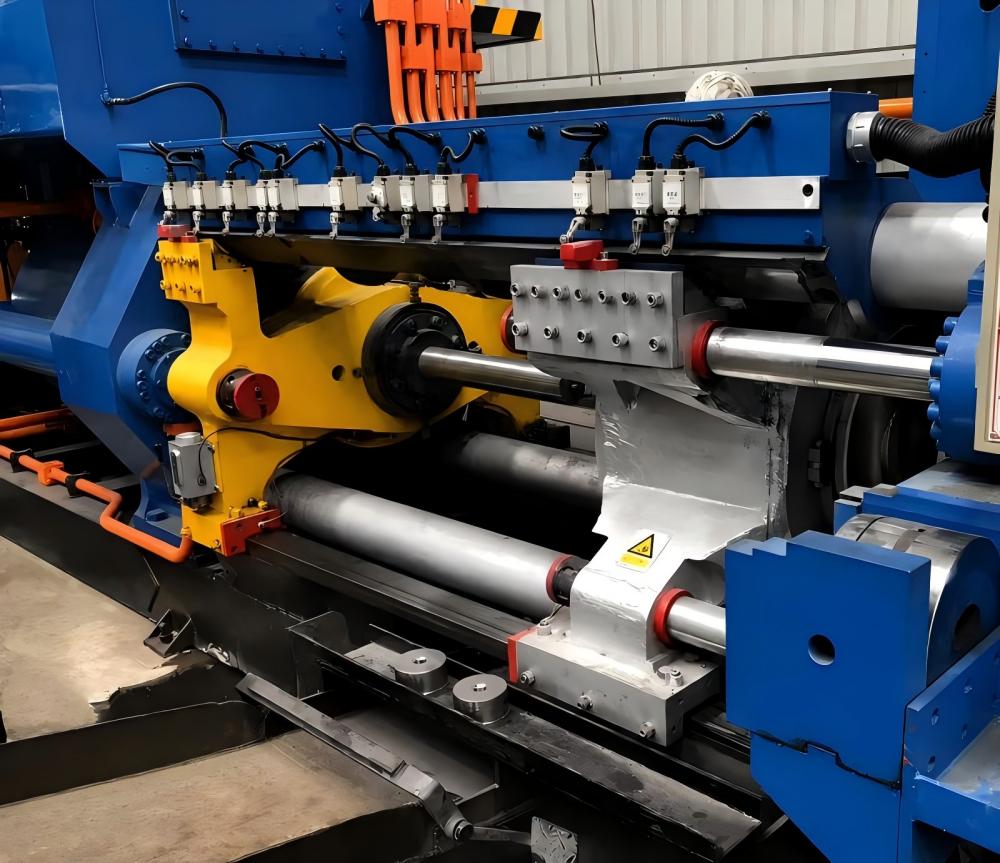
Key Considerations Before Troubleshooting
Before diving into the technical components, it is essential to understand the fundamental factors that dictate extrusion speed. The first consideration is the Alloy Type. Different aluminium alloys have different flow stresses. For instance, a 6000-series alloy is much easier to extrude at high speeds than a 7000-series alloy. If you have recently switched materials and noticed a speed drop, the issue may be the material’s resistance rather than a machine fault.
The second consideration is the Extrusion Ratio. This is the ratio of the cross-sectional area of the container to the cross-sectional area of the extruded profiles. A higher ratio requires more pressure and generally results in slower ram speeds. If the die design has changed, the press may be operating at its physical pressure limit, which naturally caps the speed.
Thirdly, Temperature Management is paramount. Aluminium extrusion is a thermal process. The billet, the container, and the die must all be at specific temperatures. If the billet is too cold, the press must work harder (higher pressure), which can slow down the ram. Conversely, if the billet is too hot, the speed must be limited to prevent the profile from tearing or melting at the die exit due to friction-generated heat.
Finally, consider the Age and Maintenance History of the press. Wear and tear on hydraulic pumps, internal leakage in cylinders, and clogged filters are common culprits for gradual speed degradation. Establishing a baseline of “normal” performance is vital for identifying when the machine is underperforming.
Technical Details: Troubleshooting the Hydraulic System
1. Pump Performance and Flow Control
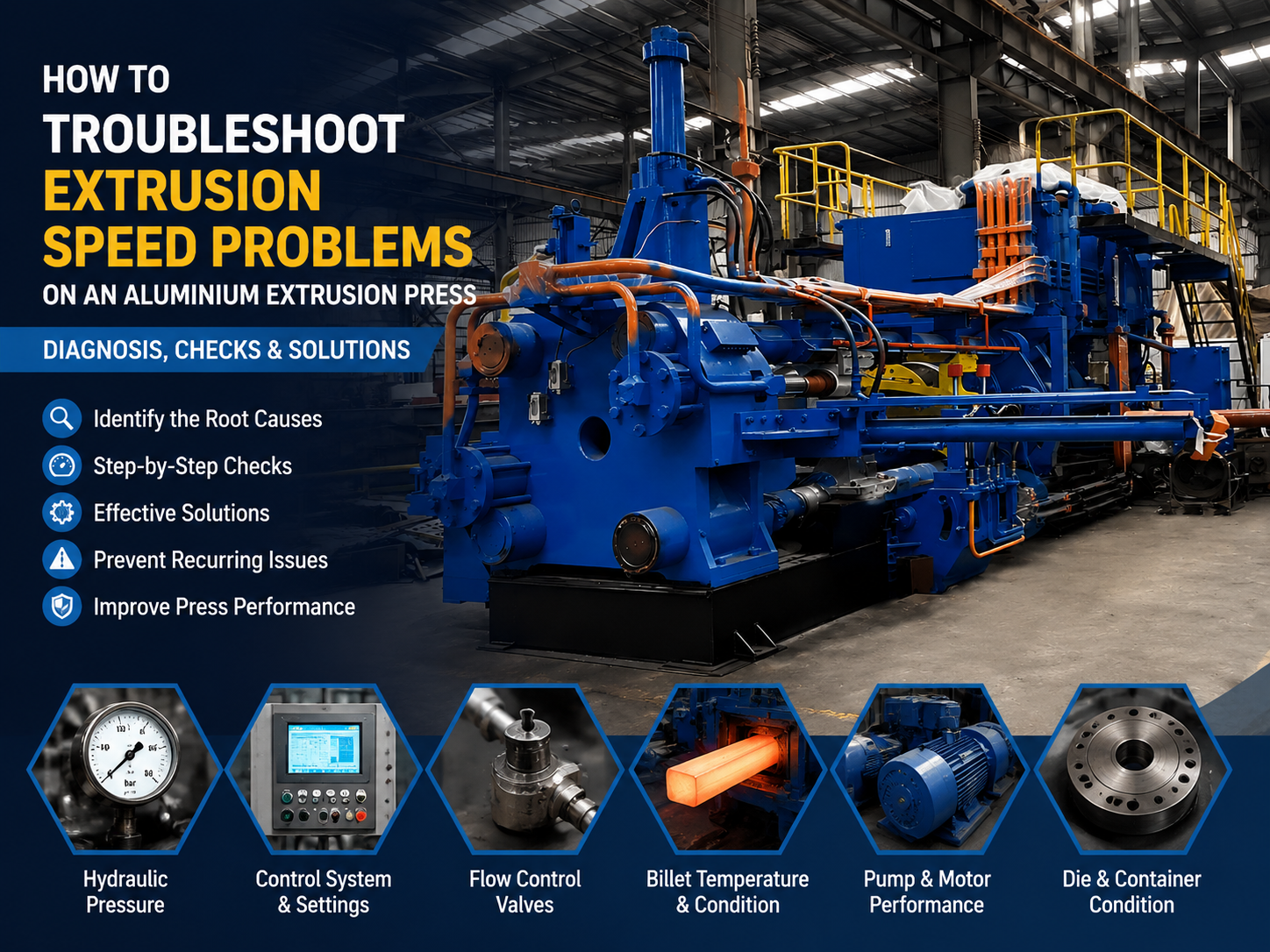
The heart of the aluminium extrusion press is the hydraulic system. To troubleshoot extrusion speed problems on an aluminium extrusion press, you must first inspect the main pumps. Most modern HARSLE presses use variable displacement axial piston pumps. If these pumps fail to reach their commanded displacement, the flow rate (and thus the ram speed) will drop.
Check for cavitation or unusual noise coming from the pump station. Cavitation often indicates a restricted suction line or a dirty intake strainer. If the pump cannot pull enough oil, it cannot push enough oil to move the ram at the desired speed. Additionally, check the proportional flow control valves. These valves translate electrical signals from the PLC into physical oil flow. If the valve spool is sticking due to oil contamination, the response will be sluggish or inconsistent.
2. Internal Leakage and Pressure Loss
Even if the pumps are delivering the correct flow, internal leakage can bleed off the energy required for speed. The main cylinder seals are a primary suspect. If oil is bypassing the piston seals inside the cylinder, the ram will lose velocity, especially under high-load conditions. This is often detectable by a rise in hydraulic oil temperature, as the energy of the pressurized oil is converted into heat during the bypass.
Check the logic valves and relief valves within the manifold. A relief valve that is set too low or is leaking will prevent the system from reaching the pressure necessary to overcome the billet’s resistance at high speeds. Use a flow meter to verify that the output at the pump matches the input at the cylinder.
3. Accumulator System Efficiency
Many high-speed presses utilize hydraulic accumulators to provide a burst of flow during the initial stages of the extrusion cycle. If the nitrogen pre-charge in the accumulators has leaked, the press will rely solely on the pumps, leading to a noticeable lag in speed during the start of the stroke. Regular testing of the pre-charge pressure is a critical maintenance step for maintaining cycle time consistency.
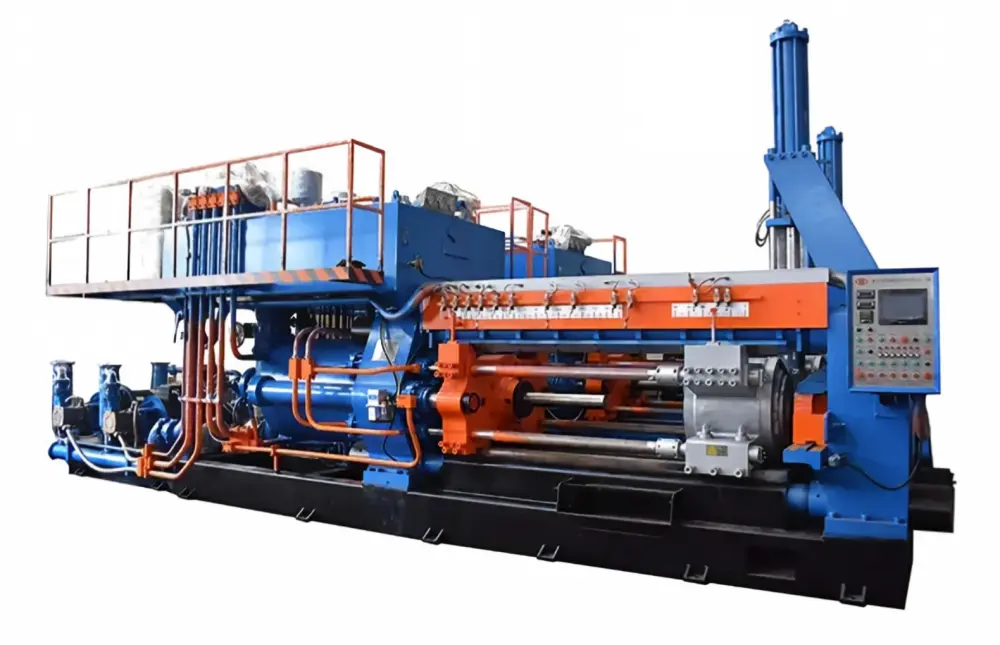
Technical Details: Control Systems and Sensors
1. Linear Transducer Accuracy
The PLC (Programmable Logic Controller) monitors the ram’s position and speed via a linear transducer. If this sensor is misaligned, dirty, or failing, it may send erratic data to the controller. The PLC might “think” the ram is moving faster than it actually is and prematurely throttle the flow. Ensure the transducer mounting is rigid and the cable shielding is intact to prevent electrical noise from interfering with the signal.
2. PID Tuning and Software Limits
The speed of the press is usually controlled by a PID (Proportional-Integral-Derivative) loop. If the PID parameters are not tuned correctly for the specific alloy or die being used, the press may hunt for the correct speed, causing oscillations or a slow ramp-up. Furthermore, check the HMI (Human Machine Interface) for any software-imposed speed limits or “eco-modes” that might be restricting the pump output.
3. Isothermal Extrusion Control
Advanced troubleshooting involves looking at the isothermal control system. As the extrusion progresses, friction increases the temperature of the aluminium. To maintain profile quality, the press may automatically slow down the ram to keep the exit temperature constant. If the temperature sensors (pyrometers) at the die exit are giving false high readings, the press will unnecessarily slow down. Clean the pyrometer lenses and verify their calibration against a manual probe.
Mechanical and Thermal Bottlenecks
Mechanical friction can also impede speed. If the container is not properly aligned with the die or the ram, the resulting friction consumes a significant portion of the press’s force. Check the wear plates and the alignment of the press frame. A misaligned press not only slows down production but also causes premature wear on expensive components.
Thermal issues are equally critical. If the container heating elements are failing, the outer layer of the billet will cool down rapidly upon loading. This creates a “hard shell” effect, requiring much higher pressure to extrude, which in turn limits the maximum achievable speed. Ensure that the container’s multi-zone heating system is functioning correctly and that the billet furnace is delivering billets at the precise target temperature.
Selection Advice for High-Speed Extrusion
When purchasing a new press or upgrading an existing one, certain features are non-negotiable for maintaining high extrusion speeds. Here is what to look for in a HARSLE aluminium extrusion press:
- High-Response Proportional Valves: These allow for millisecond adjustments to flow, ensuring the ram speed remains constant even as the billet resistance changes.
- Robust Frame Design: A rigid 4-column or prestressed frame minimizes deflection, which ensures better alignment and less mechanical friction.
- Advanced Cooling Systems: To maintain high speeds, the hydraulic oil must stay within a specific temperature range (usually 40-50°C). Look for oversized heat exchangers.
- Integrated Pyrometry: Systems that link die-exit temperature directly to ram speed (isothermal extrusion) are essential for modern high-speed production.
- Energy-Efficient Servo Motors: Modern HARSLE presses often use servo-driven pumps which offer much faster response times and better speed control than traditional induction motors.
Troubleshooting Summary Table
| Symptom | Potential Cause | Recommended Action |
|---|---|---|
| Slow Ram Speed at High Pressure | Internal Cylinder Leakage | Inspect piston seals and check oil temperature rise. |
| Inconsistent/Fluctuating Speed | Contaminated Proportional Valve | Clean or replace the valve; check oil filtration. |
| Speed Drops Mid-Cycle | Isothermal Control Intervention | Check pyrometer calibration and billet temp. |
| Slow Start of Stroke | Low Accumulator Pre-charge | Recharge nitrogen in the accumulator. |
| Sudden Stop or Jerking | Linear Transducer Failure | Check sensor alignment and signal integrity. |
Frequently Asked Questions (FAQ)
How does billet temperature affect extrusion speed?
Billet temperature is inversely proportional to the pressure required. A hotter billet is softer and can be extruded faster, but only up to the point where the exit temperature causes surface defects. Finding the “sweet spot” is essential for speed optimization.
Can a worn die cause speed problems?
Yes. As a die wears, the friction in the bearing area can increase, or the geometry can change, requiring more pressure to push the metal through. If the press reaches its pressure relief limit, it will not be able to maintain the commanded speed.
Why is my press slower in the winter?
Hydraulic oil viscosity changes with temperature. If your shop is cold and the oil hasn’t reached its operating temperature, the pumps will be less efficient and the valves may respond sluggishly. Most HARSLE presses include an oil pre-heating cycle to prevent this.
What is the role of the container seal in speed?
If the seal between the container and the die is leaking (flash), you are losing pressurized metal. This reduces the effective pressure on the billet and can cause the control system to fluctuate the speed to compensate for the loss of volume.
How often should I calibrate the speed sensors?
It is recommended to verify the calibration of the linear transducers and the PLC speed readouts every six months, or whenever a major hydraulic component is replaced.
Conclusion
To troubleshoot extrusion speed problems on an aluminium extrusion press effectively, one must look beyond the surface. It is a multi-disciplinary task that involves checking hydraulic health, ensuring thermal stability, and verifying electronic control accuracy. By following the systematic approach outlined in this guide, operators can identify the root causes of slowdowns—whether they are as simple as a dirty filter or as complex as a PID tuning mismatch.
HARSLE is committed to providing the metal fabrication industry with robust, high-performance machinery. However, even the best machines require diligent maintenance and expert troubleshooting to stay at peak performance. Regular audits of your hydraulic system, consistent monitoring of billet temperatures, and a proactive approach to mechanical alignment will ensure that your aluminium extrusion press operates at maximum speed with minimum downtime. Investing time in troubleshooting today will lead to significantly higher productivity and profitability in your extrusion operations.