What Causes Aluminium Extrusion Press Ram Stick-Slip and How to Fix It

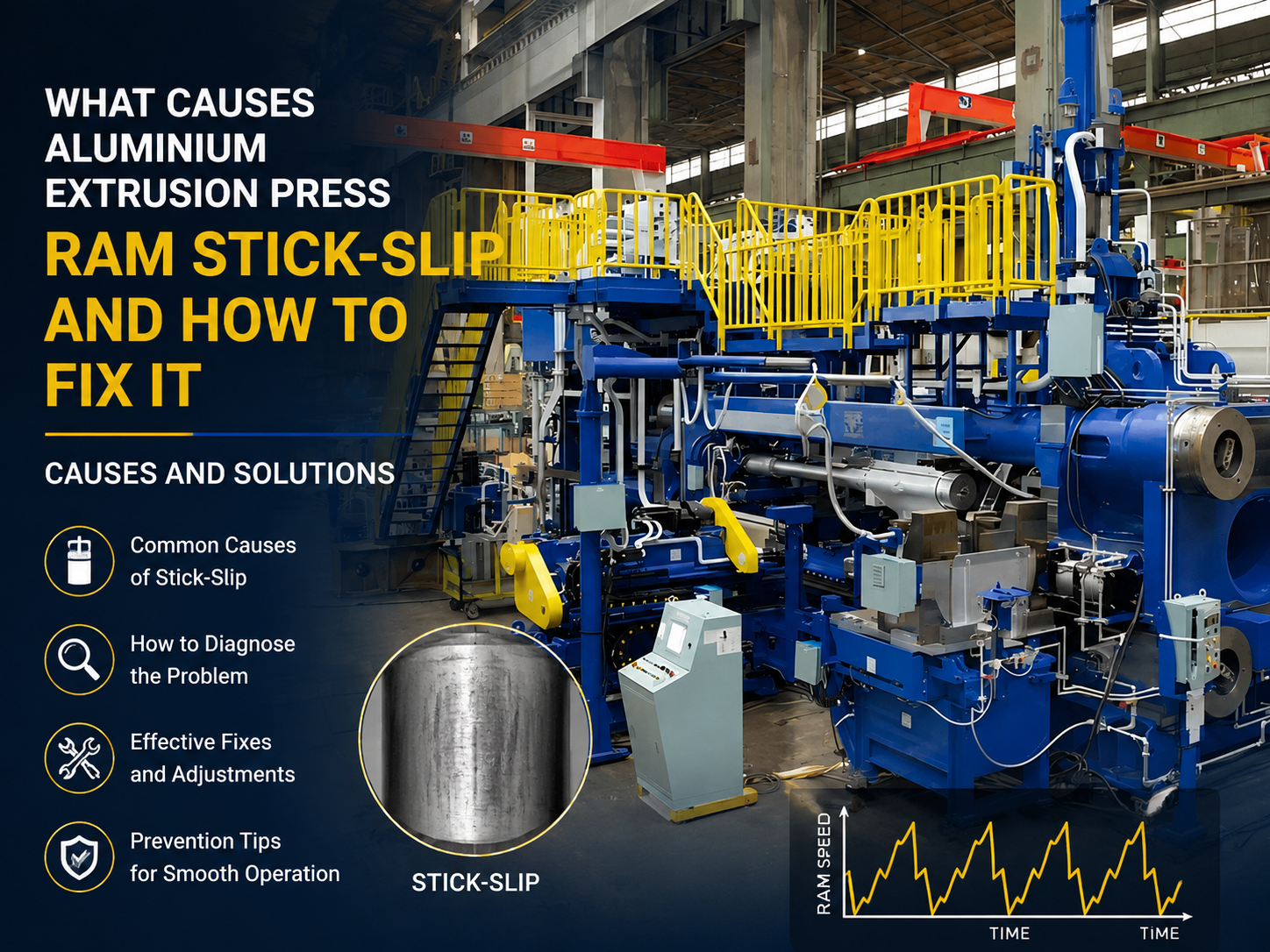
Introduction to Stick-Slip in Aluminium Extrusion
In the high-precision world of metal fabrication, the aluminium extrusion press is a cornerstone of production. However, operators and maintenance engineers often encounter a frustrating phenomenon known as “stick-slip.” This phenomenon manifests as a jerky, oscillating motion of the extrusion ram rather than a smooth, continuous stroke. When the ram experiences stick-slip, the quality of the aluminium profile is immediately compromised, leading to surface defects, inconsistent wall thickness, and potential damage to the press itself. Understanding the Causes Aluminium Extrusion Press Ram Stick-Slip Fix It is essential for maintaining a competitive edge in the industry.
Stick-slip is essentially a spontaneous vibration caused by the difference between static friction (stiction) and dynamic friction. In an aluminium extrusion press, the ram must overcome significant resistance to push a heated billet through a die. If the friction between the moving components—such as the ram, the cylinder seals, and the guide ways—is not managed correctly, the system enters a cycle of sticking and jumping. This not only affects the product but also places immense stress on the hydraulic pumps and structural components of the machine.
At HARSLE, we recognize that downtime is the enemy of profitability. A press that suffers from ram stick-slip is a press that is underperforming. This guide provides a deep dive into the mechanical and hydraulic nuances of this issue, offering actionable technical solutions to ensure your aluminium extrusion press operates with the fluid precision required for high-end architectural and industrial profiles. By addressing the root causes, you can extend the service life of your equipment and reduce the total cost of ownership.
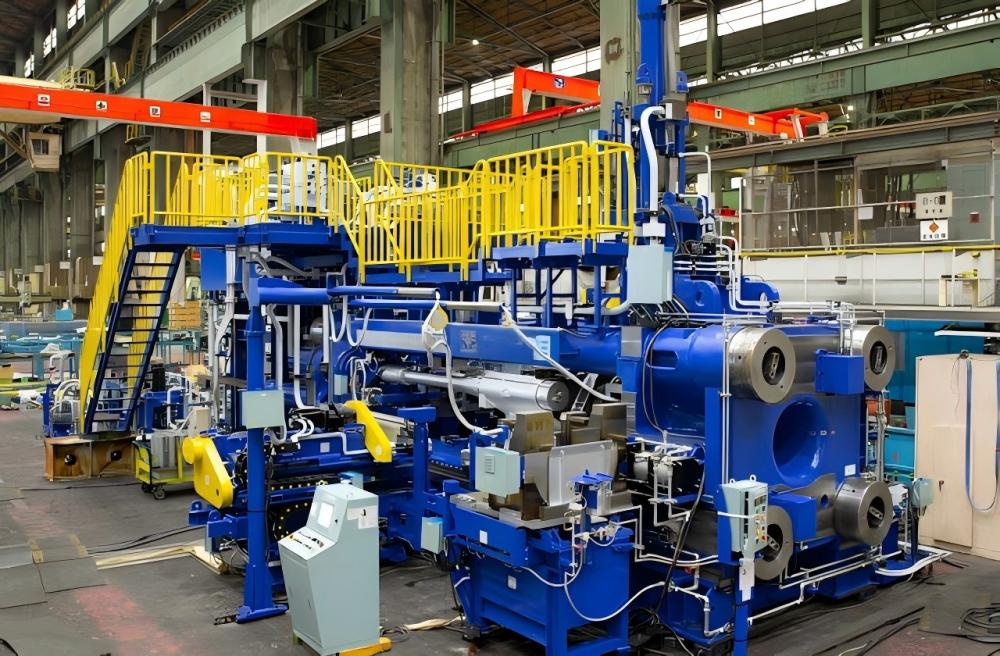
Key Considerations: Identifying the Symptoms of Ram Stick-Slip
Before diving into the fixes, it is crucial to accurately identify the symptoms of stick-slip. Often, operators mistake stick-slip for simple hydraulic surging or pump cavitation. However, stick-slip has distinct characteristics. The most common sign is a visible “chatter” or vibration in the ram as it moves forward during the extrusion cycle. This vibration often produces a high-pitched squealing or groaning sound, which indicates that the lubrication film between sliding surfaces has broken down.
Another key indicator is found in the finished product. Aluminium profiles extruded under stick-slip conditions often exhibit “stop marks” or transverse ridges on the surface. These marks correspond to the moments when the ram momentarily stuck and then slipped forward. In severe cases, the variation in pressure caused by the jerky motion can lead to inconsistent metal flow through the die, resulting in dimensional inaccuracies that fail quality control inspections.
Monitoring the hydraulic pressure gauges or the digital control interface can also reveal stick-slip. Instead of a steady pressure curve, you will see rapid, small-scale fluctuations in the system pressure. This is the control system attempting to compensate for the sudden changes in resistance. If left unaddressed, these pressure spikes can lead to premature seal failure and fatigue in the hydraulic piping. Identifying these symptoms early is the first step in applying the correct Causes Aluminium Extrusion Press Ram Stick-Slip Fix It strategy.
Technical Details: What Causes Aluminium Extrusion Press Ram Stick-Slip?
Friction Dynamics and the Stribeck Curve
The fundamental cause of stick-slip is the relationship between friction and velocity, often illustrated by the Stribeck Curve. In an ideal scenario, as the ram begins to move, a thin film of lubricant separates the moving parts, and friction decreases as speed increases (hydrodynamic lubrication). However, in an aluminium extrusion press, the ram often moves at very low speeds under extremely high loads. This puts the system in the “boundary lubrication” or “mixed lubrication” regime.
In these regimes, the static friction is significantly higher than the kinetic friction. When the hydraulic force builds up enough to overcome the static friction, the ram “slips” forward. As it moves, the friction drops, the ram accelerates, and the stored elastic energy in the hydraulic fluid and the machine frame is released. The ram then moves faster than the fluid supply can support, the pressure drops, and the ram “sticks” again. This cycle repeats rapidly, creating the stick-slip effect.
Hydraulic Fluid and Viscosity Issues
The condition and type of hydraulic fluid play a massive role in ram stability. If the oil viscosity is too low, the lubricant film becomes too thin to support the load, leading to metal-to-metal contact. Conversely, if the viscosity is too high, the fluid may not flow quickly enough into the expanding cylinder volume, causing localized pressure drops. Furthermore, contaminated oil containing particulates can act as an abrasive, increasing the friction coefficient and damaging the polished surfaces of the ram and cylinder.
Air entrainment in the hydraulic fluid is another critical factor. Hydraulic oil is relatively incompressible, but air is highly compressible. If air bubbles are trapped in the main cylinder, they act like a spring. This added elasticity in the system exacerbates the “slip” phase of the stick-slip cycle, as the compressed air expands rapidly once the static friction is overcome. Regular de-aeration and maintaining proper oil levels are vital technical requirements.
Mechanical Misalignment and Wear
The ram of an aluminium extrusion press must be perfectly aligned with the container and the die. Over time, the guide rails (ways) can wear down or shift due to thermal expansion and the massive forces involved in extrusion. If the ram is even slightly misaligned, it will exert uneven pressure on the wear plates and seals. This creates “high spots” of friction where the lubricant is squeezed out, triggering stick-slip.
Wear on the bronze or synthetic liners of the ram crosshead is a common mechanical cause. As these liners wear, the clearance between the ram and its guides increases, allowing for lateral movement or “cocking.” This misalignment increases the force required to move the ram, making the transition from static to dynamic friction much more violent. Regular measurement of clearances and inspection of wear patterns on the guides are necessary diagnostic steps.
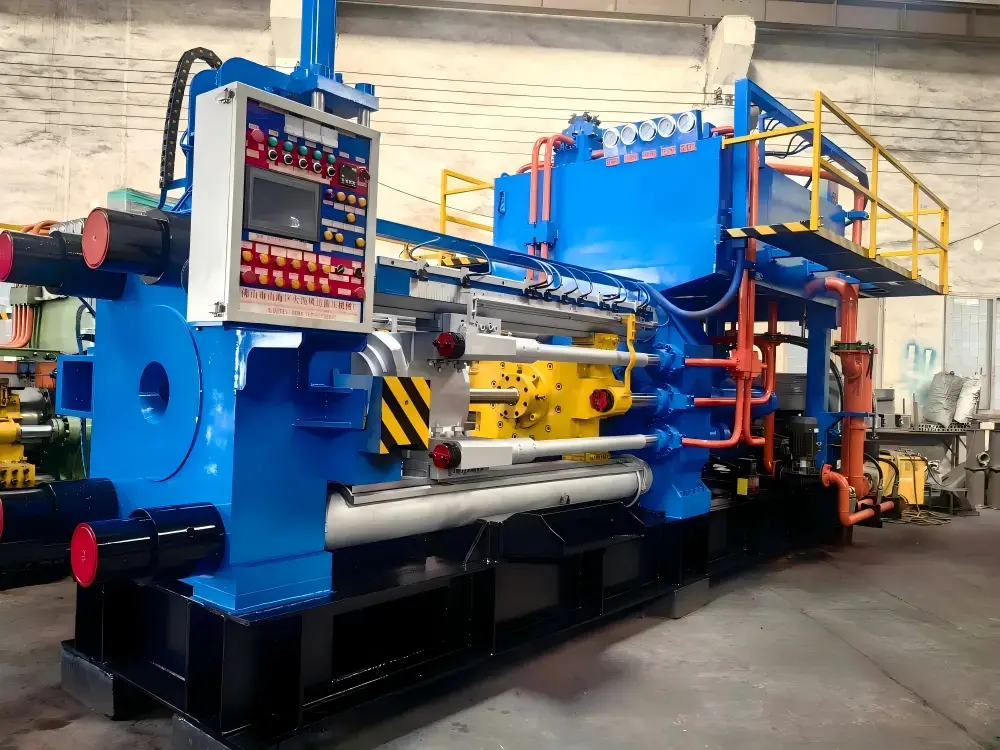
Seal Stiction and Material Degradation
The seals in the main hydraulic cylinder are designed to prevent leaks under immense pressure, but they are also a primary source of friction. “Stiction” is a term specifically used to describe the tendency of rubber or polymer seals to bond slightly to the metal surface when at rest. If the seal material is not compatible with the hydraulic fluid, or if the seals have hardened due to excessive heat, the stiction force increases dramatically.
Modern extrusion presses often use composite seals with PTFE (Teflon) components to reduce friction. However, if these seals are damaged by contaminants or if the cylinder bore is scored, the friction becomes inconsistent. The interaction between the seal lip and the cylinder wall is a delicate balance; too much friction causes stick-slip, while too little leads to internal leakage and loss of extrusion power.
How to Fix It: Comprehensive Solutions for Smooth Ram Operation
Optimizing Lubrication Systems
The first and often most effective fix for stick-slip is to optimize the lubrication of the ram guides and the hydraulic system. Using a high-quality hydraulic oil with friction-modifying additives can significantly reduce the gap between static and kinetic friction. These additives create a chemical bond with the metal surfaces, ensuring a slippery layer remains even when the ram is stationary or moving slowly.
For the external guide ways, an automated lubrication system should be employed to deliver precise amounts of grease or heavy oil at regular intervals. It is important to ensure that the lubricant used is specifically rated for high-pressure, high-temperature environments. If stick-slip persists, switching to a lubricant with solid additives like molybdenum disulfide (MoS2) or graphite can provide an extra layer of protection against boundary friction.
Hydraulic System Bleeding and Filtration
To address the elasticity issues caused by air, a thorough bleeding of the hydraulic system is required. This involves opening the bleed valves at the highest points of the main cylinder and the manifold blocks while the system is under low pressure. Additionally, checking the suction lines of the pumps for leaks is crucial, as even a tiny pinhole can draw air into the system without leaking oil out.
Improving the filtration system is equally important. Implementing kidney-loop filtration with high-efficiency (3-micron or 5-micron) elements can remove the microscopic particles that increase friction and wear out seals. Monitoring the oil’s ISO cleanliness code through regular laboratory analysis allows maintenance teams to catch contamination issues before they manifest as mechanical problems like stick-slip.
Precision Mechanical Realignment
If the cause is mechanical, a full alignment check is necessary. This involves using laser alignment tools or precision dial indicators to ensure the ram, container, and die holder are all on the same longitudinal axis. The guide rails should be checked for parallelism and flatness. If the wear plates are found to be outside of the manufacturer’s specified tolerances, they must be shimmed or replaced.
During realignment, it is also beneficial to inspect the main cylinder’s mounting bolts. If the cylinder is not perfectly rigid, it can shift slightly under load, contributing to the jerky motion. Ensuring that all structural fasteners are torqued to the correct specifications helps maintain the geometric integrity of the press during the high-pressure phase of the extrusion cycle.
Control System and PID Tuning
In modern CNC-controlled aluminium extrusion presses, the software can sometimes be used to mitigate stick-slip. The PID (Proportional-Integral-Derivative) loops that control the servo valves can be tuned to be more responsive to the onset of vibration. By adjusting the gain settings, the controller can “anticipate” the slip phase and momentarily adjust the flow rate to dampen the oscillation.
Some advanced HARSLE presses feature “active vibration damping” algorithms. These systems use high-speed pressure transducers to detect the frequency of the stick-slip and then oscillate the servo valve at an opposing frequency to cancel out the jerky motion. While this is a sophisticated solution, it is highly effective for maintaining ultra-smooth extrusion speeds in sensitive applications.
Selection Advice: Choosing a Press to Minimize Stick-Slip
When purchasing a new aluminium extrusion press, certain design features can inherently minimize the risk of stick-slip. At HARSLE, we emphasize the following technical specifications for buyers looking for long-term reliability:
- Rigid Frame Construction: A press with a heavy-duty, pre-stressed frame experiences less elastic deformation, which reduces the energy available to fuel the “slip” phase of stick-slip.
- High-Precision Linear Guides: Look for presses that utilize adjustable, hardened steel ways with replaceable bronze or composite liners. This allows for easy maintenance and precise alignment over the life of the machine.
- Advanced Hydraulic Manifolds: Systems that minimize the distance between the control valves and the main cylinder reduce the volume of oil that can compress, thereby increasing the stiffness of the hydraulic drive.
- Quality Seal Packages: Ensure the press uses multi-stage seal configurations from reputable brands like Trelleborg or Parker, specifically designed for low-friction extrusion applications.
- Integrated Diagnostics: A control system that monitors ram speed and pressure in real-time can provide early warnings of stick-slip, allowing for proactive maintenance.
| Component | Feature to Look For | Benefit for Stick-Slip Prevention |
|---|---|---|
| Main Cylinder | Forged steel with honed bore | Reduces seal friction and prevents scoring. |
| Hydraulic Valves | High-response servo valves | Allows for rapid compensation of pressure fluctuations. |
| Guide System | X-type or 4-point adjustable guides | Maintains perfect ram centering under thermal load. |
| Control Software | Closed-loop speed control | Ensures constant ram velocity regardless of resistance. |
FAQ
1. Can stick-slip happen even with a brand-new extrusion press?
Yes, stick-slip can occur in new presses if the initial alignment was not performed correctly during installation or if the hydraulic system was not properly bled of air. It can also happen if the wrong type of hydraulic fluid is used for the specific operating temperature of the facility.
2. How often should I check the alignment of my extrusion ram?
For high-volume production environments, a comprehensive alignment check should be performed at least once a year. However, if you notice changes in profile quality or hear unusual noises from the ram, an immediate inspection is warranted.
3. Is stick-slip more common with certain aluminium alloys?
While stick-slip is a mechanical/hydraulic issue of the press, harder alloys (like the 7000 series) require higher extrusion pressures. These higher pressures increase the friction on the seals and guides, making the press more susceptible to stick-slip if it is not perfectly maintained.
4. Can I fix stick-slip just by increasing the oil pressure?
Increasing the pressure might temporarily overcome the “stick” phase, but it usually makes the “slip” phase more violent. It is a “band-aid” solution that can lead to faster wear and potential safety hazards. It is always better to address the root cause of the friction.
5. What is the role of the container heater in ram stick-slip?
If the container is not heated uniformly, it can expand unevenly, leading to misalignment with the ram. This thermal distortion increases friction on one side of the ram, which is a common trigger for stick-slip during the start of a shift.
Conclusion
Addressing the Causes Aluminium Extrusion Press Ram Stick-Slip Fix It is a multi-faceted challenge that requires a blend of mechanical precision, hydraulic expertise, and diligent maintenance. By understanding the physics of friction and the critical role of hydraulic integrity, operators can transform a temperamental machine into a smooth, high-output production asset. Whether it is through upgrading your lubrication strategy, refining your hydraulic filtration, or investing in a high-quality HARSLE press designed to resist these issues, the goal remains the same: consistent, high-quality aluminium extrusion.
Regular monitoring and proactive care are the best defenses against the costly disruptions caused by ram stick-slip. By implementing the technical solutions outlined in this guide, you ensure that your aluminium extrusion press remains a reliable pillar of your manufacturing operations, delivering the precision and surface finish your customers demand. For more information on high-performance extrusion technology and maintenance support, consult with the experts at HARSLE to find the perfect machinery solutions for your needs.