
How to Troubleshoot Inconsistent Profile Dimensions From An Aluminium Extrusion Press

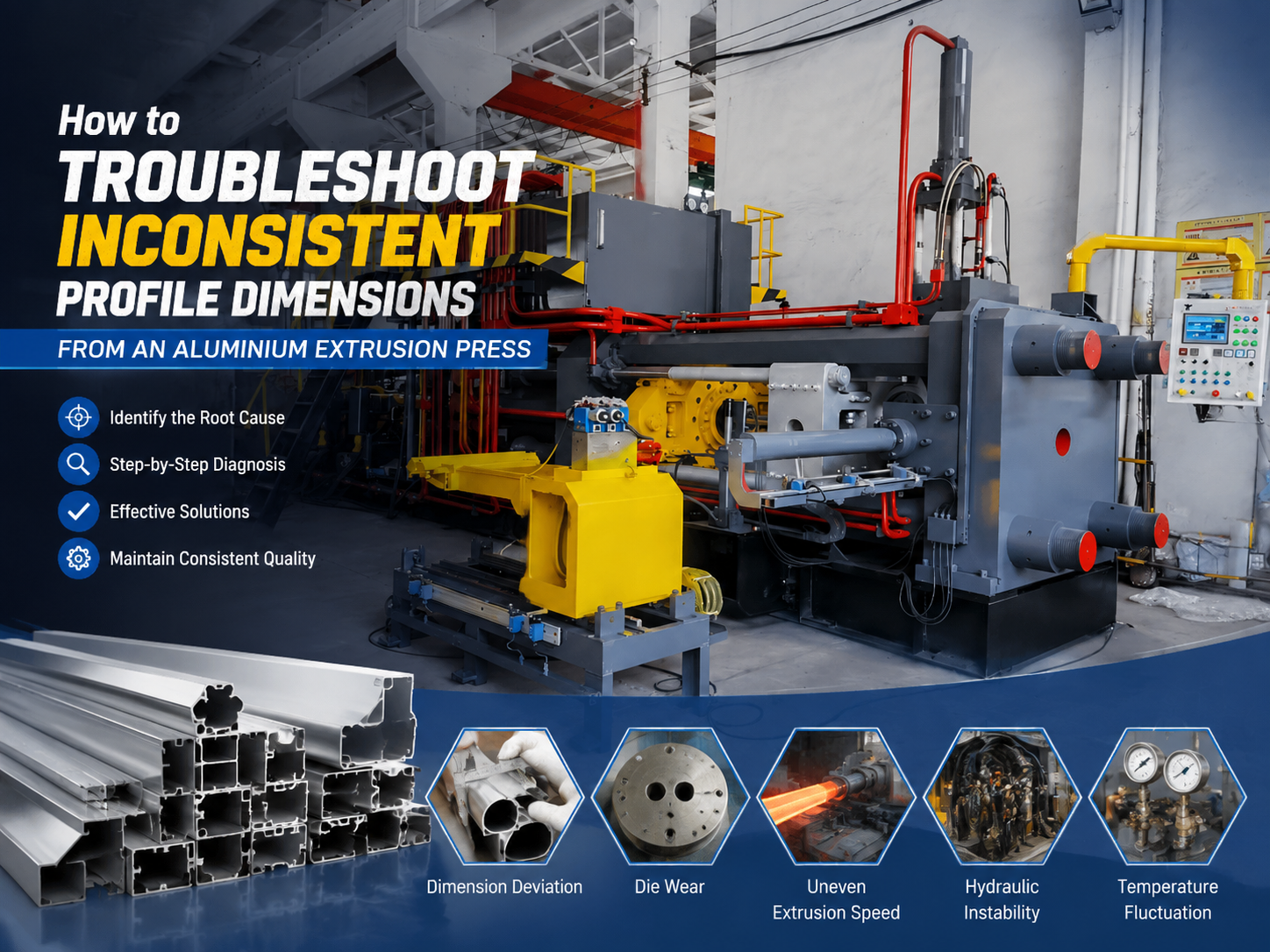
Introduction to Dimensional Consistency in Aluminium Extrusion
In the world of high-precision manufacturing, the aluminium extrusion press stands as a cornerstone of industrial production. From architectural frameworks to intricate automotive components, the demand for tight tolerances and dimensional accuracy has never been higher. However, one of the most frustrating challenges faced by operators and plant managers is the emergence of inconsistent profile dimensions. When a profile deviates from its specified cross-sectional geometry, it can lead to massive material waste, assembly failures, and significant financial losses.
Troubleshooting inconsistent profile dimensions from an aluminium extrusion press requires a holistic understanding of the extrusion process, which is a complex interplay of thermodynamics, fluid dynamics, and mechanical engineering. It is not merely a matter of checking a single setting; rather, it involves a systematic investigation into the raw materials, the tooling, the machine’s hydraulic and electrical systems, and the environmental conditions of the factory floor. HARSLE, a leader in metal fabrication machinery, emphasizes that maintaining a stable extrusion environment is the key to achieving repeatable, high-quality results.
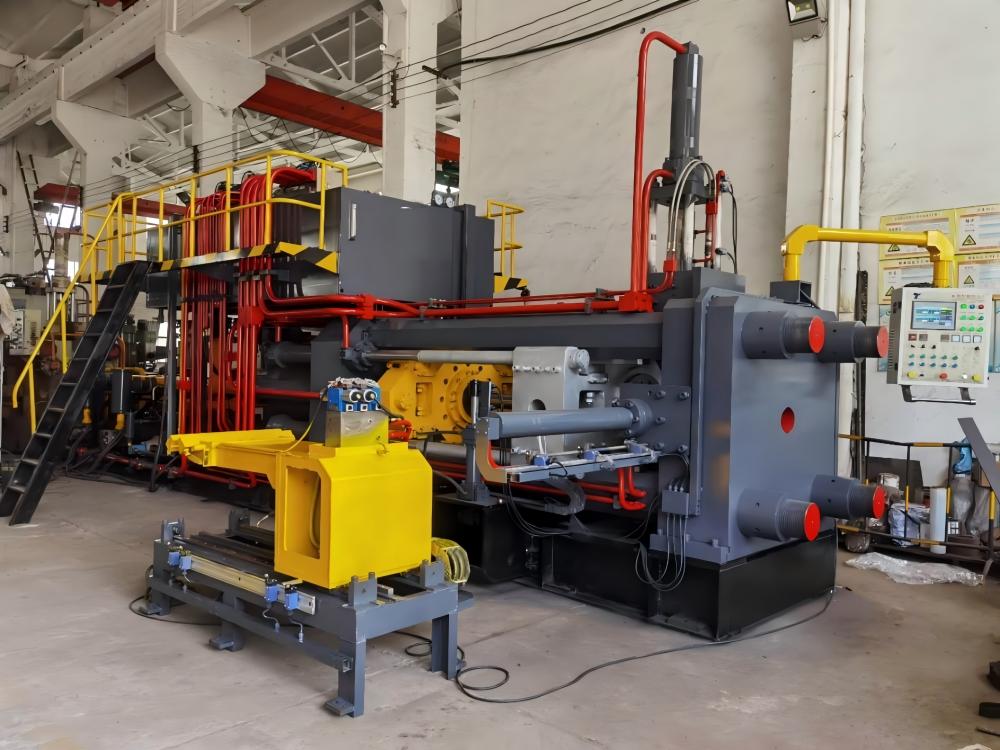
This guide is designed to provide a comprehensive roadmap for identifying and rectifying the root causes of dimensional instability. Whether you are dealing with wall thickness variations, twisting, or overall size fluctuations, the following sections will delve into the technical nuances of the extrusion press and offer actionable solutions to restore your production line to peak performance.
Key Considerations for Dimensional Stability
1. Billet Quality and Homogenization
The journey toward a perfect profile begins long before the metal reaches the die. The quality of the aluminium billet is a primary factor in dimensional consistency. If the billet has not been properly homogenized, the internal grain structure will be uneven. This leads to variations in flow stress as the metal is pushed through the die. Hard spots or inclusions in the billet can cause the metal to flow faster or slower in certain areas, resulting in uneven wall thicknesses or “wavy” edges on the profile.
Operators must ensure that billets are sourced from reputable suppliers and that the chemical composition matches the specific requirements of the alloy being extruded. For instance, 6061 and 6063 alloys have different flow characteristics. If a batch of billets has inconsistent magnesium or silicon levels, the extrusion speed and pressure required will fluctuate, making it nearly impossible to maintain steady dimensions throughout a production run.
2. Thermal Management: The Billet, Container, and Die
Temperature is perhaps the most critical variable in the extrusion process. Aluminium’s plasticity is highly dependent on its temperature. If the billet is too cold, the extrusion pressure increases, which can cause the die to deflect or “spring.” If the billet is too hot, the metal becomes too soft, leading to tearing or excessive flow in larger cavities of the die. To troubleshoot inconsistent dimensions, one must first verify the accuracy of the billet heater and the induction furnace.
Furthermore, the “thermal balance” between the billet, the container, and the die must be maintained. The container must be heated to a temperature slightly lower than the billet to prevent the outer skin of the billet from chilling too rapidly. If the container temperature fluctuates, the friction between the billet and the container wall changes, which directly impacts the flow rate of the metal into the die. Similarly, the die must be pre-heated in a die oven to a specific temperature to ensure that the first few meters of the extrusion are within tolerance.
3. Die Condition and Bearing Design
The die is the heart of the extrusion process. Over time, the high pressure and temperature of the extrusion process cause wear on the die bearings. The bearing is the flat surface of the die that controls the speed of the metal flow. If the bearing surface becomes eroded or if there is a buildup of aluminium (nitriding failure), the friction profile changes. This often manifests as one side of a profile being thicker than the other or the profile beginning to curve or twist as it exits the press.
Regular inspection and maintenance of the die are essential. Troubleshooting should include a check for “die deflection.” Under extreme pressure, the die and its supporting tools (bolsters and backers) can flex. If the support system is not rigid enough, the die opening will expand during the stroke, leading to profiles that are larger than intended. Using high-quality tool steel and ensuring proper heat treatment of the die components can mitigate these issues.
4. Press Alignment and Mechanical Integrity
An aluminium extrusion press is a massive piece of machinery that must maintain perfect alignment under thousands of tons of force. If the main ram, the container, and the die slide are not perfectly concentric, the metal will be forced into the die at an angle. This misalignment is a common cause of “eccentricity” in hollow profiles, where the wall thickness is uneven around the circumference of the shape.
Checking the alignment involves using precision laser tools or mechanical gauges to ensure that the centerlines of all major components coincide. Additionally, the condition of the guide rails and the wear plates must be monitored. Any “play” or looseness in the container housing can cause it to shift during the extrusion stroke, leading to sudden changes in the profile’s dimensions. HARSLE machines are engineered with robust frames to minimize this deflection, but regular calibration is still a necessity for any industrial press.
Technical Details: Deep Dive into Troubleshooting
Hydraulic System Stability and Flow Control
The consistency of the extrusion speed is directly linked to the stability of the hydraulic system. Modern presses use sophisticated variable-displacement pumps and servo-valves to control the movement of the ram. If there is air in the hydraulic fluid, or if a valve is sticking, the ram speed will pulse. This pulsing causes “chatter marks” on the profile and leads to variations in the cross-sectional area. Troubleshooting should involve checking the hydraulic filters, monitoring oil temperature (as viscosity changes affect flow), and using diagnostic software to track the ram’s velocity profile.
Isothermal extrusion is a technique where the ram speed is automatically adjusted to keep the exit temperature of the profile constant. If the PLC (Programmable Logic Controller) or the temperature sensors are malfunctioning, the press may fail to compensate for the heat generated by friction during the stroke. This results in the profile becoming hotter and thinner toward the end of the billet, a phenomenon known as “tapering.”
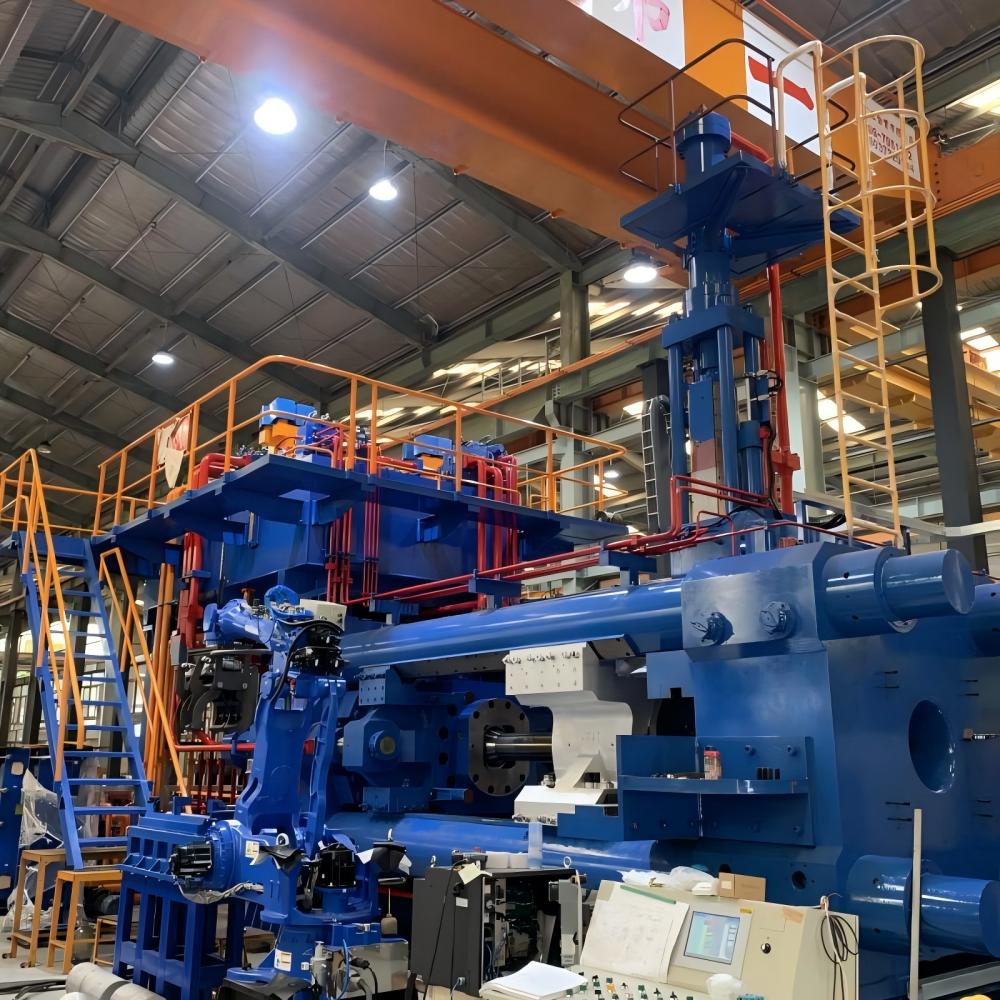
The Role of the Puller and Cooling System
Once the profile exits the die, it is handled by a puller. The puller’s job is to apply a consistent tension to the profile to keep it straight and guide it onto the cooling table. If the puller tension is too high, it can actually stretch the profile, reducing its cross-sectional dimensions (necking). If the tension is inconsistent, the profile may develop waves. Troubleshooting the puller involves checking the torque settings and ensuring the synchronization between the press speed and the puller speed is seamless.
Cooling, or quenching, is equally vital. Aluminium shrinks as it cools. If the cooling air or water spray is not applied uniformly around the profile, one side will shrink faster than the other, causing the profile to bow or twist. This is particularly problematic for asymmetrical shapes. Operators should inspect the spray nozzles for clogs and ensure that the cooling fans are providing balanced airflow across the entire run-out table.
Dead Cycle Time and Butt Thickness
The “dead cycle” is the time between the end of one extrusion stroke and the beginning of the next. During this time, the die is exposed to the air and begins to cool. If the dead cycle is too long or inconsistent, the die temperature will fluctuate, leading to dimensional variations in the first few feet of each new billet. Furthermore, the thickness of the “butt” (the unextruded portion of the billet) must be kept constant. The butt acts as a buffer; if it is too thin, impurities from the billet skin can enter the die, and the flow dynamics change, often causing a collapse in the profile’s internal dimensions.
Selection Advice: Choosing the Right Press for Precision
When investing in an aluminium extrusion press, selecting a machine that prioritizes structural rigidity and advanced control systems is paramount. Here are key factors to consider to ensure long-term dimensional consistency:
- Frame Design: Look for a pre-stressed frame or a heavy-duty four-column design. These structures are better at resisting the massive longitudinal and lateral forces generated during extrusion, reducing die deflection.
- Control Systems: A high-end PLC with a user-friendly HMI (Human Machine Interface) is essential. The system should offer real-time monitoring of ram speed, pressure, and temperature, with the ability to store “recipes” for different profiles and alloys.
- Hydraulic Components: Ensure the press uses world-class hydraulic valves and pumps (such as Rexroth or Parker). High-response valves are necessary for the fine-tuned speed control required for complex profiles.
- Container Heating: Multi-zone container heating allows for better control over the thermal gradient, which is crucial for preventing the billet from cooling unevenly.
- Supplier Reputation: Choose a manufacturer like HARSLE that provides comprehensive after-sales support, including calibration services and spare parts availability. A press is a 20-year investment, and the quality of the manufacturer’s engineering determines the machine’s precision over its lifespan.
| Feature | Impact on Dimensions | Recommended Specification |
|---|---|---|
| Ram Speed Control | Prevents tapering and surface defects | Closed-loop servo control |
| Die Oven Precision | Ensures consistent start-up dimensions | +/- 5°C accuracy |
| Alignment System | Prevents wall thickness eccentricity | Laser-guided centering |
| Cooling System | Controls shrinkage and prevents warping | Multi-stage air/water quench |
Frequently Asked Questions (FAQ)
Why does my profile dimension change from the front to the back of the billet?
This is usually due to “thermal drift.” As the extrusion progresses, the friction between the metal and the die generates heat, causing the aluminium to flow faster and become thinner. Implementing isothermal extrusion (slowing the ram down as the billet is consumed) or using a tapered-heated billet can solve this.
How often should I check the alignment of my extrusion press?
For high-precision operations, a basic alignment check should be performed monthly, with a comprehensive laser alignment conducted annually or whenever the press is moved or undergoes major hydraulic repairs.
Can a worn container liner cause dimensional issues?
Yes. If the container liner is worn or “belled” (larger in the middle than at the ends), the billet will not be compressed uniformly. This can lead to air entrapment and inconsistent pressure, resulting in variations in the profile’s wall thickness.
What is the most common cause of twisting in extruded profiles?
Twisting is typically caused by uneven metal flow through the die or unbalanced cooling. If one part of the profile is moving faster than the rest, it will create internal stresses that manifest as a twist. Adjusting the die bearings or the cooling fan orientation is the standard fix.
Does the alloy type affect how I troubleshoot dimensions?
Absolutely. Harder alloys (like the 7000 series) require much higher pressures and are more sensitive to temperature fluctuations than softer alloys (like the 6000 series). Troubleshooting must account for the specific flow stress and thermal properties of the alloy in use.
How do I know if the problem is the die or the press?
A simple test is to run the same die on a different press if possible. If the problem persists, it is likely a die design or wear issue. If the problem disappears, the original press likely has alignment or hydraulic stability issues. Alternatively, check if multiple different dies are producing the same type of error (e.g., all profiles are thicker on the left side); if so, the press is the culprit.
Conclusion: Mastering the Art of Precision Extrusion
Troubleshooting inconsistent profile dimensions from an aluminium extrusion press is both a science and an art. It requires a meticulous approach to data collection, an understanding of the physical properties of aluminium, and a well-maintained machine. By focusing on the “Big Three”—Temperature, Tooling, and Tension—operators can identify the vast majority of dimensional errors.
Consistency is not achieved by accident; it is the result of rigorous preventative maintenance and the use of high-quality equipment. HARSLE remains committed to providing the industry with robust extrusion solutions that simplify the troubleshooting process through advanced automation and superior mechanical engineering. When your press is aligned, your temperatures are stabilized, and your hydraulic systems are tuned, the result is a perfect profile, every time, billet after billet. Investing in these core areas will not only reduce scrap rates but also enhance your reputation as a provider of precision-engineered aluminium products.


