Scrap Metal Shear Blade Gap Adjustment Troubleshooting Guide

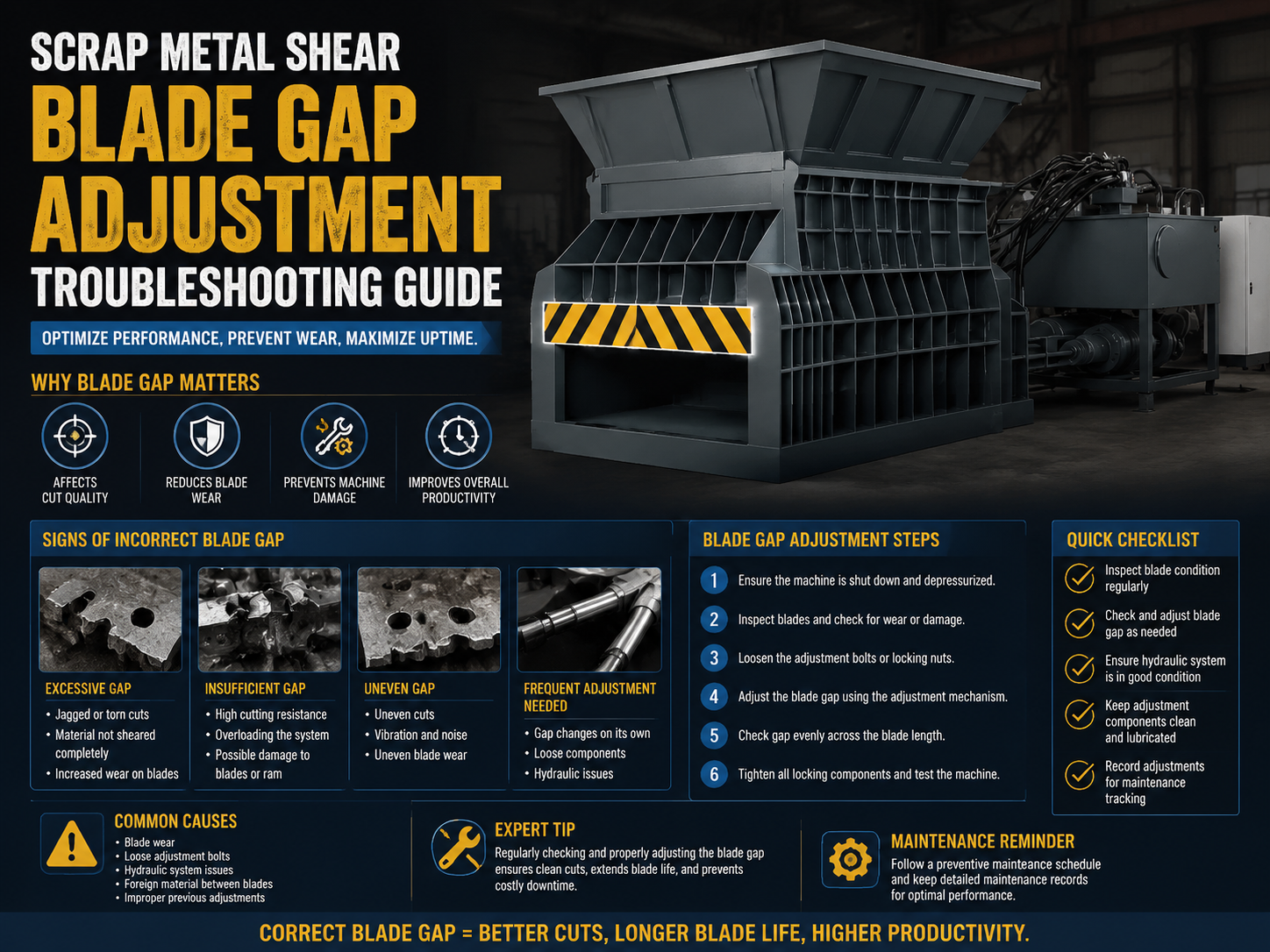
Introduction to Scrap Metal Shear Blade Gap Precision
In the high-intensity world of metal recycling and industrial fabrication, the scrap metal shear stands as a cornerstone of productivity. Whether you are operating a gantry shear, a container shear, or an alligator shear, the precision of the blade gap—often referred to as blade clearance—is the single most critical factor determining the quality of the cut and the longevity of the machine. Proper Scrap Metal Shear Blade Gap Adjustment Troubleshooting is not merely a maintenance task; it is an essential skill for operators to prevent catastrophic machine failure and ensure consistent output.
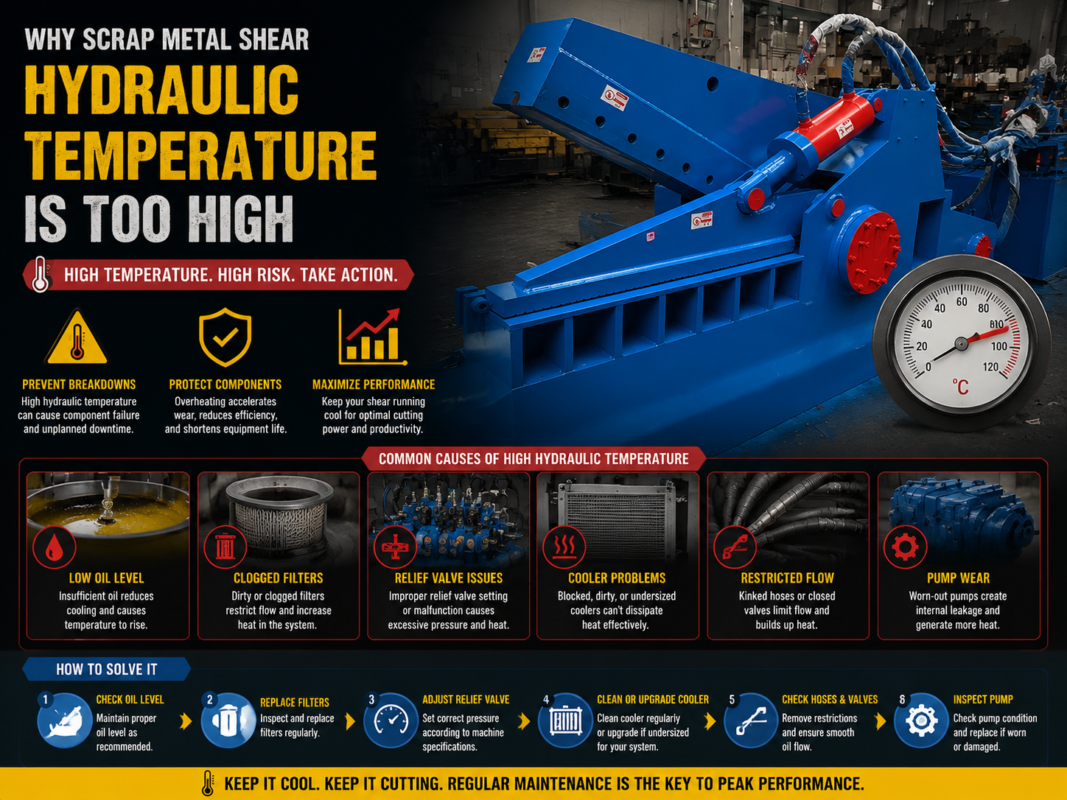
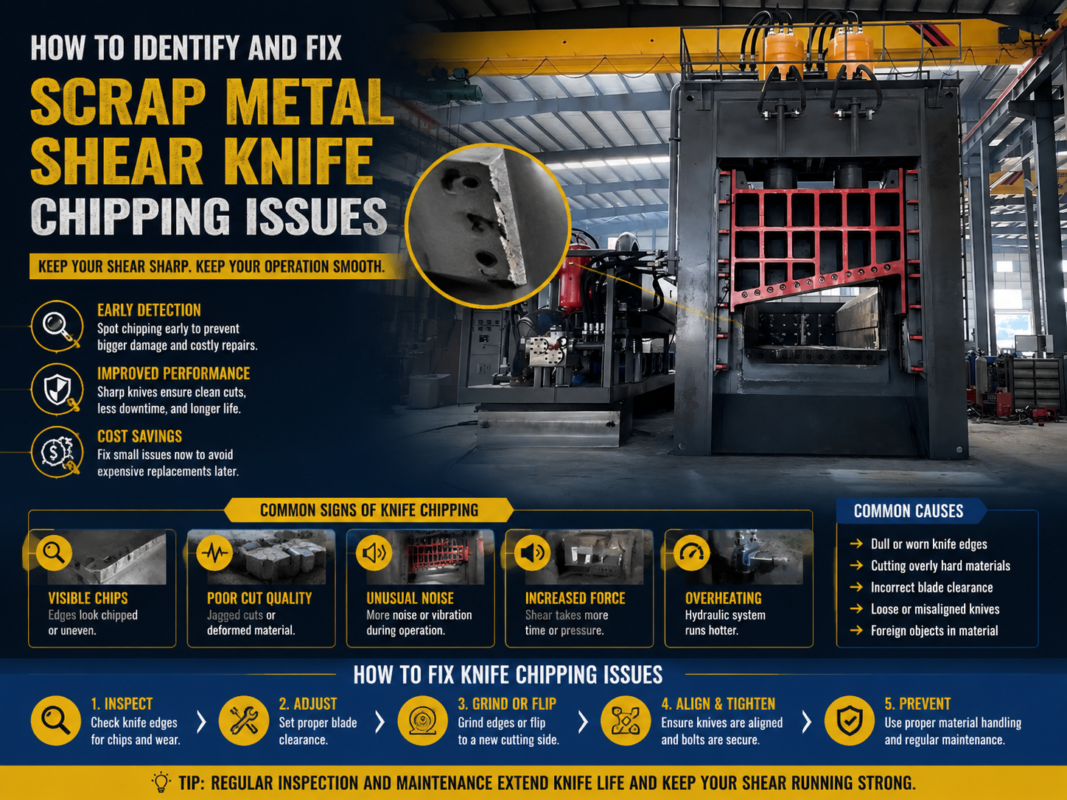
When the gap between the upper and lower blades is incorrectly set, the mechanical stresses on the shear increase exponentially. A gap that is too wide leads to ‘folding’ or ‘tearing’ of the metal rather than a clean shear, which can jam the throat of the machine and cause hydraulic overheating. Conversely, a gap that is too narrow risks blade-on-blade contact, leading to chipped edges, cracked blade seats, and expensive downtime. This guide provides a deep dive into the technical nuances of adjusting these clearances and troubleshooting common issues encountered in the field.
HARSLE understands that industrial environments demand rugged reliability. However, even the most robust machinery requires fine-tuning to handle varying grades of scrap, from thin aluminum sheets to heavy structural steel beams. By mastering the troubleshooting techniques outlined here, facilities can maximize their return on investment and maintain a safe working environment for all personnel involved in metal processing operations.
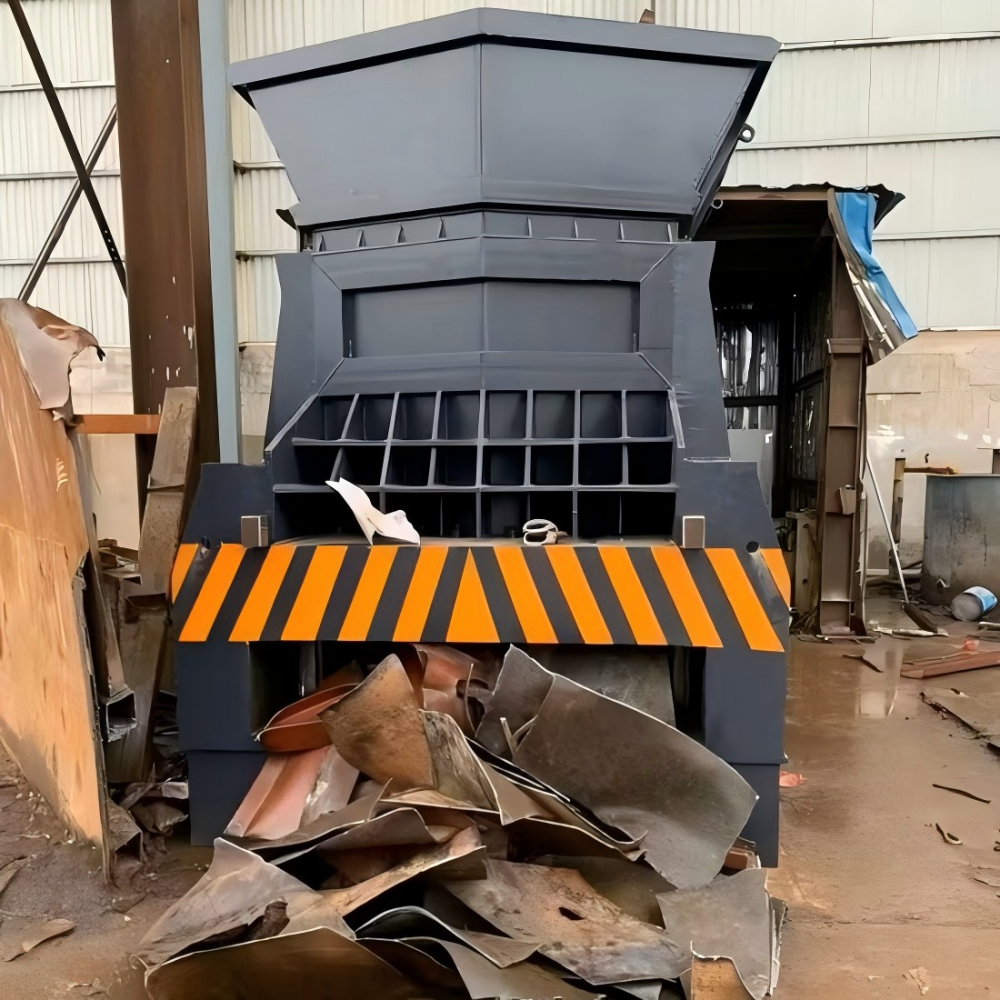
Key Considerations for Blade Gap Adjustment
Before diving into the mechanical adjustments, it is vital to understand the variables that dictate the ‘perfect’ gap. There is no one-size-fits-all measurement; instead, the gap must be calibrated based on the material’s physical properties and the shear’s design specifications. The following considerations are the pillars of effective Scrap Metal Shear Blade Gap Adjustment Troubleshooting.
Material Thickness and Tensile Strength
The primary rule of thumb in metal shearing is that the blade gap should typically be between 5% and 10% of the material thickness. For softer metals like aluminum, a tighter gap is often required to prevent the material from being drawn into the space between the blades. For high-tensile structural steel, a slightly wider gap allows the material to fracture cleanly after the initial penetration. If you are processing a mix of materials, the shear must be adjusted for the thickest or hardest material in the batch to prevent overloading the hydraulic system.
Blade Wear and Geometry
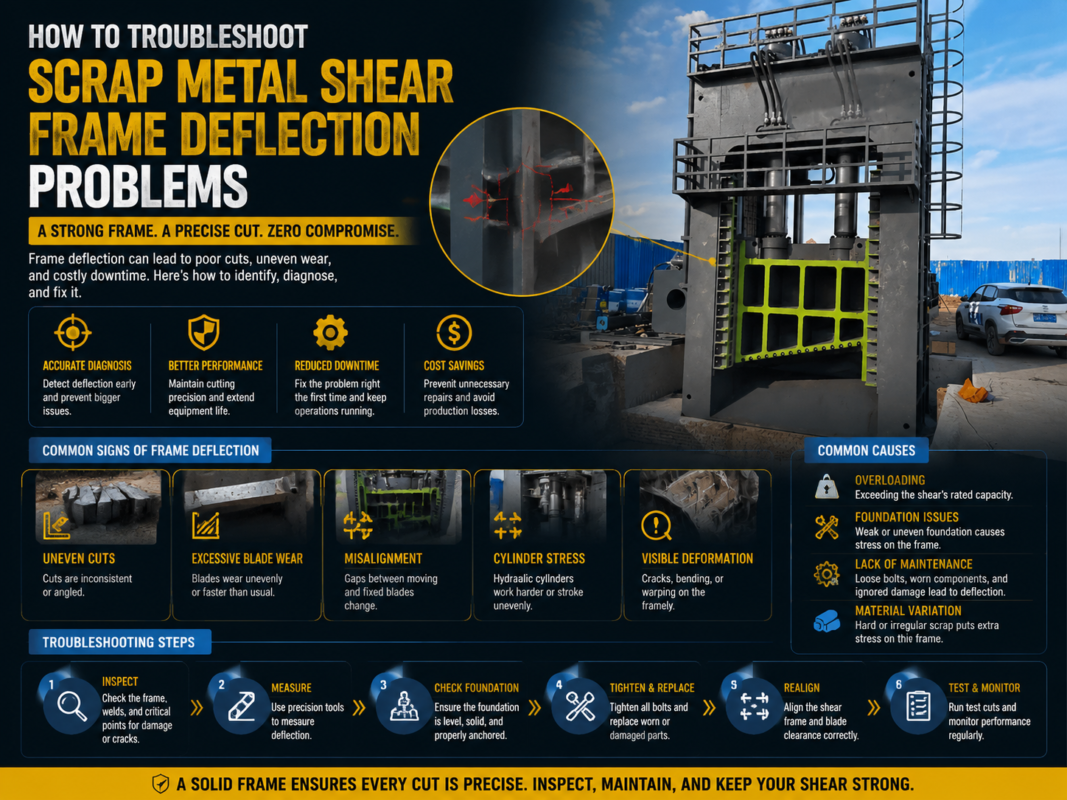
Blades do not wear evenly. The ‘sweet spot’ of the shear—usually the area that sees the most action—will dull faster than the ends. As blades dull, the effective gap increases because the rounded edges no longer provide a sharp shearing point. Troubleshooting often reveals that what appears to be a gap issue is actually a blade wear issue. Regular inspection of the blade radius is necessary; once the edge exceeds a certain radius (typically 0.5mm to 1mm depending on the machine size), the blades must be rotated or reground.
Thermal Expansion
In continuous shift operations, the friction generated by shearing hundreds of tons of metal causes the blades and the blade slide to heat up. Metal expands when hot. A gap that was perfectly set at 6:00 AM in a cold shop might become too tight by noon after hours of heavy use. Advanced operators monitor the temperature of the shear head and make micro-adjustments or allow for ‘cool-down’ periods to maintain the integrity of the blade clearance.
Technical Details: The Adjustment Process
Adjusting the blade gap on a heavy-duty scrap shear is a precise mechanical procedure that requires the right tools and a systematic approach. Most modern HARSLE shears utilize a combination of shim plates and adjustment bolts to set the clearance. Follow these technical steps for accurate Scrap Metal Shear Blade Gap Adjustment Troubleshooting.
Step 1: Cleaning and Inspection
Before any measurements are taken, the blade area must be meticulously cleaned. Scrap metal processing is inherently dirty; scale, rust, and metal slivers can lodge themselves behind blade seats or in the adjustment mechanism, leading to false readings. Use a wire brush and compressed air to clear the seatings. Inspect the bolts for signs of stretching or thread damage, as loose bolts are a primary cause of shifting gaps during operation.
Step 2: Measuring the Current Gap
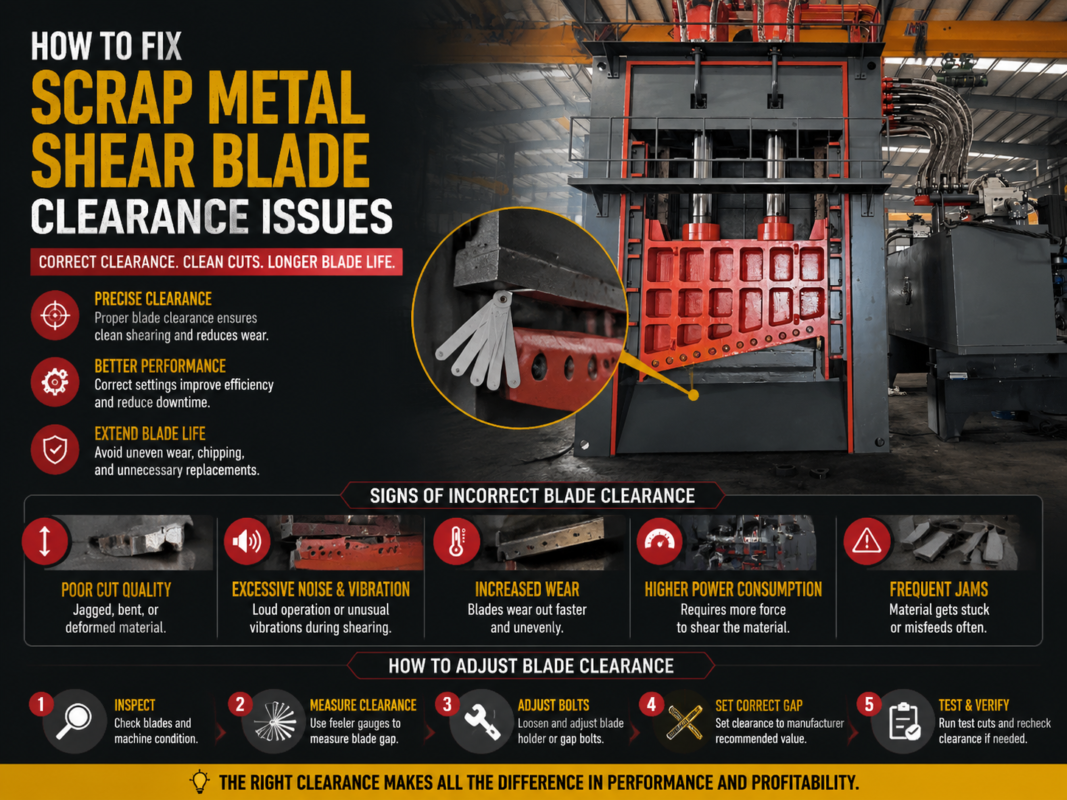
Using a long-reach feeler gauge, measure the gap at multiple points along the length of the blades. It is common to find that the gap is wider in the middle than at the ends—this is often due to ‘bowing’ of the blade carrier under pressure. Record these measurements. For a gantry shear, you should measure at the start, middle, and end of the stroke. If the variance is greater than 0.05mm, the blade seats may need to be machined or the shimming strategy revised.
Step 3: Adjusting the Shims or Jack Screws
Depending on the model, you will either add/remove metal shims behind the lower blade or turn heavy-duty jack screws to push the blade carrier closer to the fixed blade. When using shims, ensure they are made of high-carbon steel to prevent compression over time. If your machine features an automated gap adjustment system, verify that the hydraulic transducers are calibrated correctly by comparing the digital readout to your manual feeler gauge measurements.
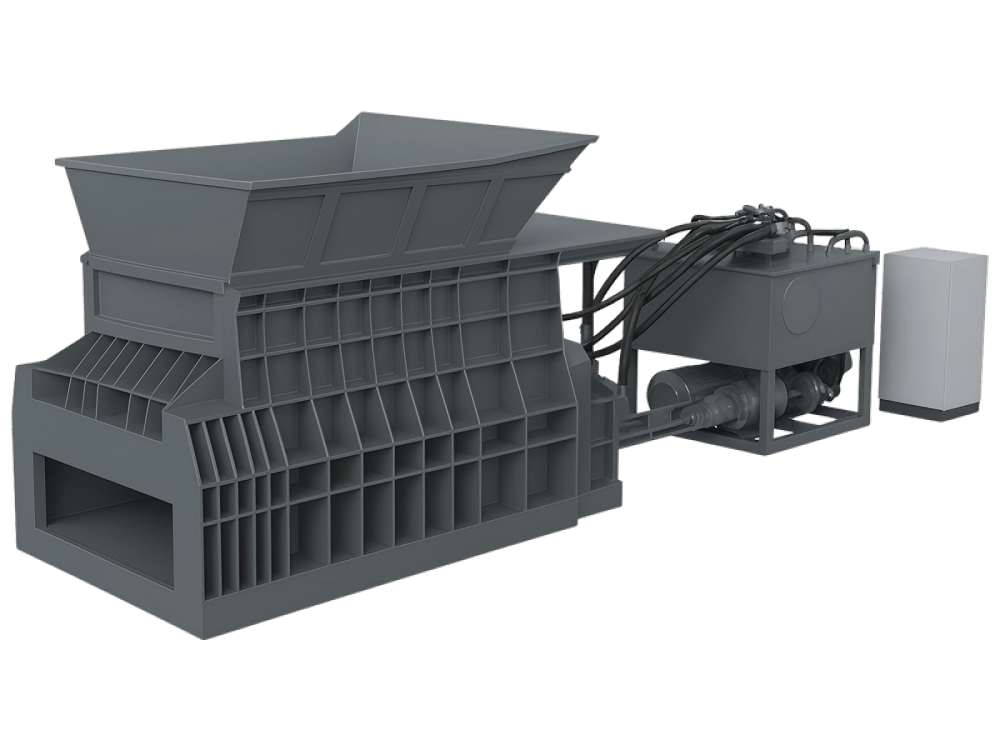
Troubleshooting Common Blade Gap Issues
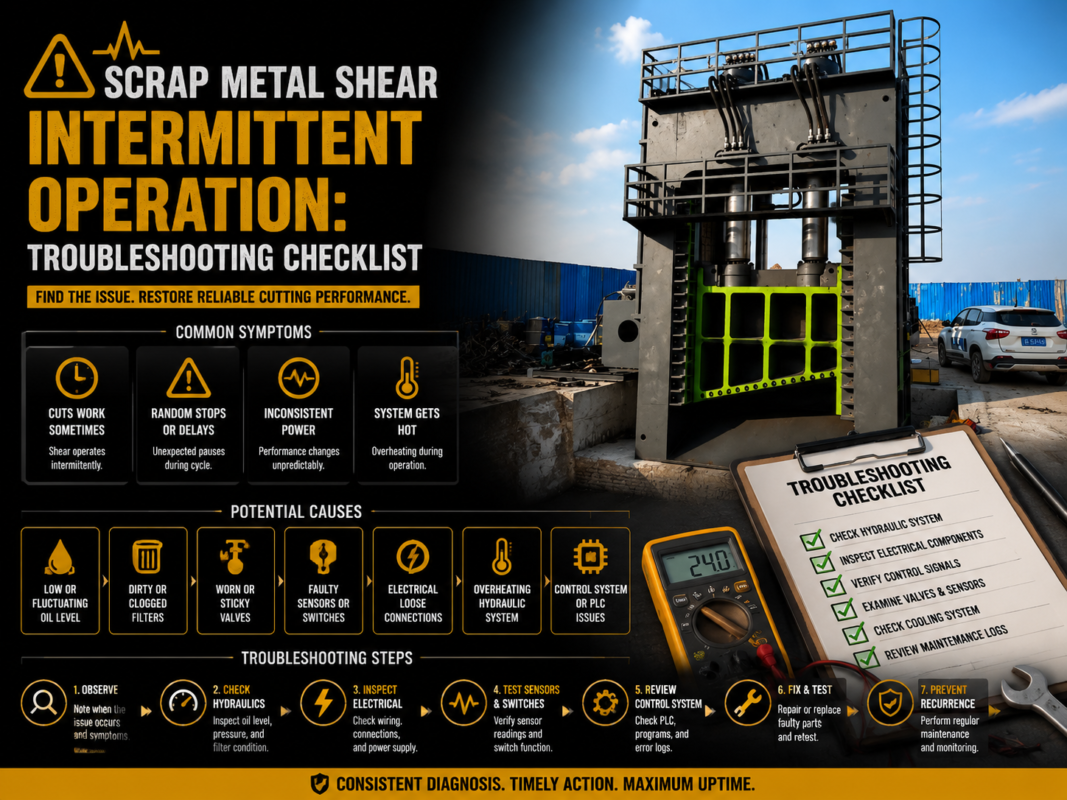
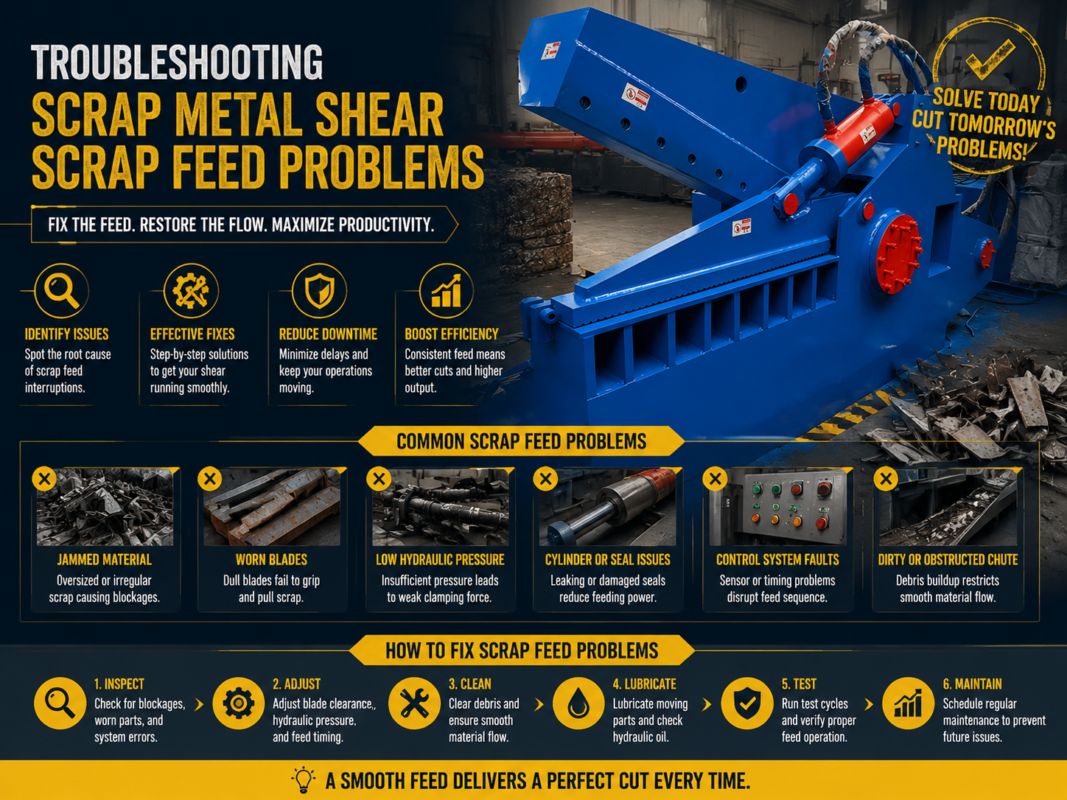
Even with regular maintenance, issues can arise. Effective Scrap Metal Shear Blade Gap Adjustment Troubleshooting involves identifying the symptom and tracing it back to the mechanical cause. Below are the most frequent problems encountered in scrap yards.
Problem: Excessive Burrs on Cut Material
If the scrap metal is leaving the machine with large, jagged ‘fins’ or burrs, the blade gap is almost certainly too wide. The material is being pushed and stretched before it finally breaks. This not only produces poor quality scrap but also puts lateral pressure on the blade bearings. Solution: Decrease the gap in increments of 0.02mm until the cut is clean. If the problem persists, check if the blades have become rounded and require flipping to a new edge.
Problem: Loud ‘Banging’ Noise During the Cut
A violent ‘bang’ or excessive vibration usually indicates that the gap is too tight or that the blades are misaligned. This noise is the sound of the blades potentially making contact or the hydraulic system hitting its relief pressure instantly because the material cannot fracture. Solution: Immediately stop the machine. Check for ‘shiny’ spots on the sides of the blades, which indicate metal-on-metal contact. Increase the gap and ensure the blade bolts are torqued to the manufacturer’s specifications.
Problem: The Shear ‘Stalls’ Mid-Cut
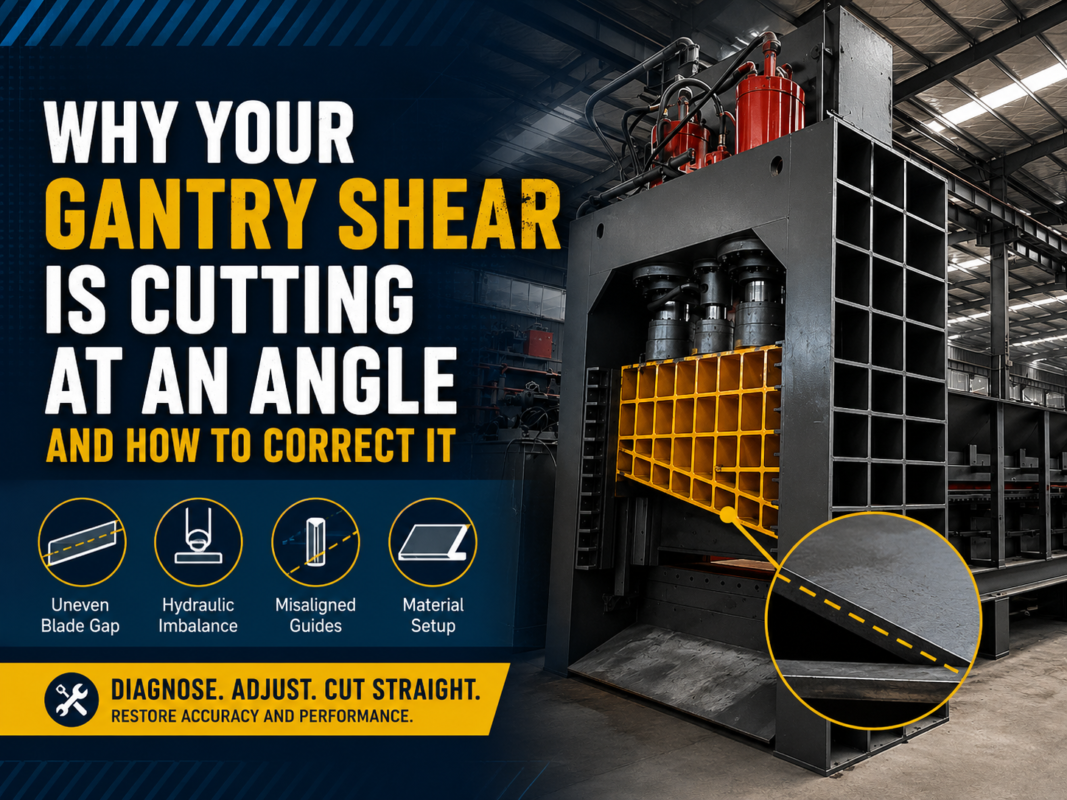
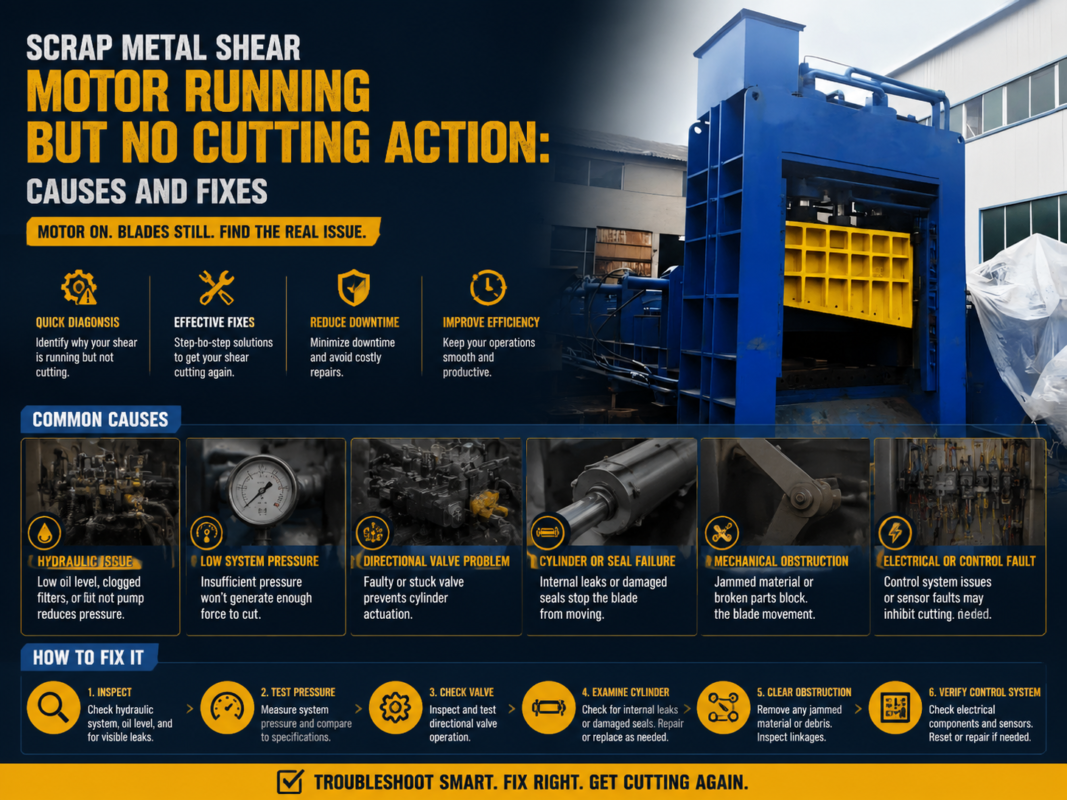
When a shear stalls, it means the resistance of the material exceeds the force of the hydraulics. While this can be a pump issue, it is often a gap issue. If the gap is uneven, the material can wedge itself between the blades, creating massive friction. Solution: Check the parallelism of the blades. If the gap is 1mm at the top and 1.5mm at the bottom, the wedging effect will stall the motor. Re-align the blade slide guides to ensure the upper blade travels perfectly vertical.
Selection Advice for Scrap Metal Shears
Choosing the right machine is the first step in avoiding adjustment headaches. When selecting a shear from HARSLE, consider the following factors to ensure the machine’s adjustment capabilities match your operational needs.
- Capacity vs. Material: Always choose a shear with a rated capacity 20% higher than your thickest material. This reduces the frequency of needing to adjust the gap for ‘extreme’ loads, which preserves the adjustment mechanism’s threads and seats.
- Adjustment Mechanism Type: For high-volume yards, look for shears with ‘Quick-Change’ blade systems and external adjustment bolts. These allow for faster Scrap Metal Shear Blade Gap Adjustment Troubleshooting without needing to dismantle the entire head.
- Blade Material: Ensure the blades are made of high-quality tool steel (like 6CrW2Si or Cr12MoV). Higher quality steel maintains its edge longer, meaning you have to adjust the gap less frequently due to wear.
- Automation Features: Modern HARSLE shears often come with PLC-controlled gap settings. While more expensive initially, these systems reduce human error and allow for ‘presets’ based on the type of scrap being loaded into the hopper.
Investing in a machine like a HARSLE Gantry Shear provides the structural rigidity necessary to maintain a consistent gap even under hundreds of tons of pressure. Cheaper, less rigid frames will flex during the cut, making any manual gap adjustment irrelevant as the frame ‘opens up’ under load.
Frequently Asked Questions (FAQ)
How often should I check the blade gap?
For single-shift operations, a weekly check is recommended. For 24/7 high-volume recycling centers, the gap should be inspected daily at the start of the first shift. Additionally, always check the gap after changing blades or if you notice a change in the sound of the machine.
Can I use the same gap for all types of scrap?
Ideally, no. While a ‘middle-ground’ setting works for general mixed scrap, you will get better performance and less wear if you adjust the gap when switching between significantly different materials, such as moving from thin sheet metal to heavy rebar.
What tools are required for troubleshooting?
You will need a high-quality set of feeler gauges (ranging from 0.05mm to 2.0mm), a torque wrench capable of reaching 500+ Nm (depending on bolt size), a dial indicator for checking slide parallelism, and basic hand tools for shim adjustment.
Why do my blade bolts keep loosening?
This is usually due to the vibration caused by an incorrect blade gap or worn-out lock washers. Ensure you are using the correct grade of bolts (usually 12.9 high-tensile) and that they are torqued while the machine is at operating temperature. Using a thread-locking compound can also help in high-vibration environments.
What is the ‘10% Rule’ in shearing?
The 10% rule suggests that the clearance between the blades should be 10% of the thickness of the metal being cut. For example, if cutting 10mm thick steel, the gap should be 1mm. This is a starting point and may need adjustment based on the hardness of the steel.
Conclusion: Maintaining Peak Performance
Mastering Scrap Metal Shear Blade Gap Adjustment Troubleshooting is a vital component of industrial metal fabrication and recycling. A well-adjusted shear operates more quietly, consumes less electricity, and significantly reduces the cost per ton of processed scrap. By understanding the relationship between material properties, blade wear, and mechanical clearance, operators can prevent the most common causes of machine failure.
HARSLE remains committed to providing the industry with high-performance shearing solutions that are both powerful and easy to maintain. Whether you are troubleshooting an older unit or considering the purchase of a new container shear, remember that precision is the key to productivity. Regular maintenance, proper tool usage, and a keen eye for the signs of misalignment will ensure your scrap metal shear remains a reliable asset for years to come. Always refer to your specific HARSLE model manual for exact torque specs and clearance charts, as these are engineered to provide the optimal balance between cutting force and component longevity.