What to Do When a Scrap Metal Baler Won’t Compress Material Properly: A Comprehensive Troubleshooting Guide

Introduction: Understanding the Importance of Baler Efficiency
In the high-stakes world of metal recycling and fabrication, the scrap metal baler serves as the backbone of operational efficiency. When your machinery functions at peak performance, it transforms loose, bulky scrap into dense, manageable bales that are ready for transport and smelting. However, operators often face the frustrating scenario where the machine fails to reach the desired density. Knowing what to do when a scrap metal baler won’t compress material properly is essential for maintaining throughput and preventing costly downtime.
At HARSLE, we understand that industrial machinery is a significant investment. A baler that fails to compress material effectively does more than just slow down production; it increases labor costs, complicates logistics, and can lead to premature wear on internal components. This guide is designed to help facility managers and maintenance technicians diagnose common compression issues, implement immediate fixes, and establish long-term maintenance protocols to ensure your equipment remains a reliable asset.
Whether you are dealing with a hydraulic pressure drop, mechanical obstructions, or electrical sensor malfunctions, the path to resolution begins with a systematic approach. By breaking down the machine into its core systems—hydraulic, mechanical, and electrical—you can isolate the root cause of the failure. This article will walk you through the diagnostic steps required to restore your baler to its full operational capacity.

Key Considerations: Identifying the Symptoms of Compression Failure
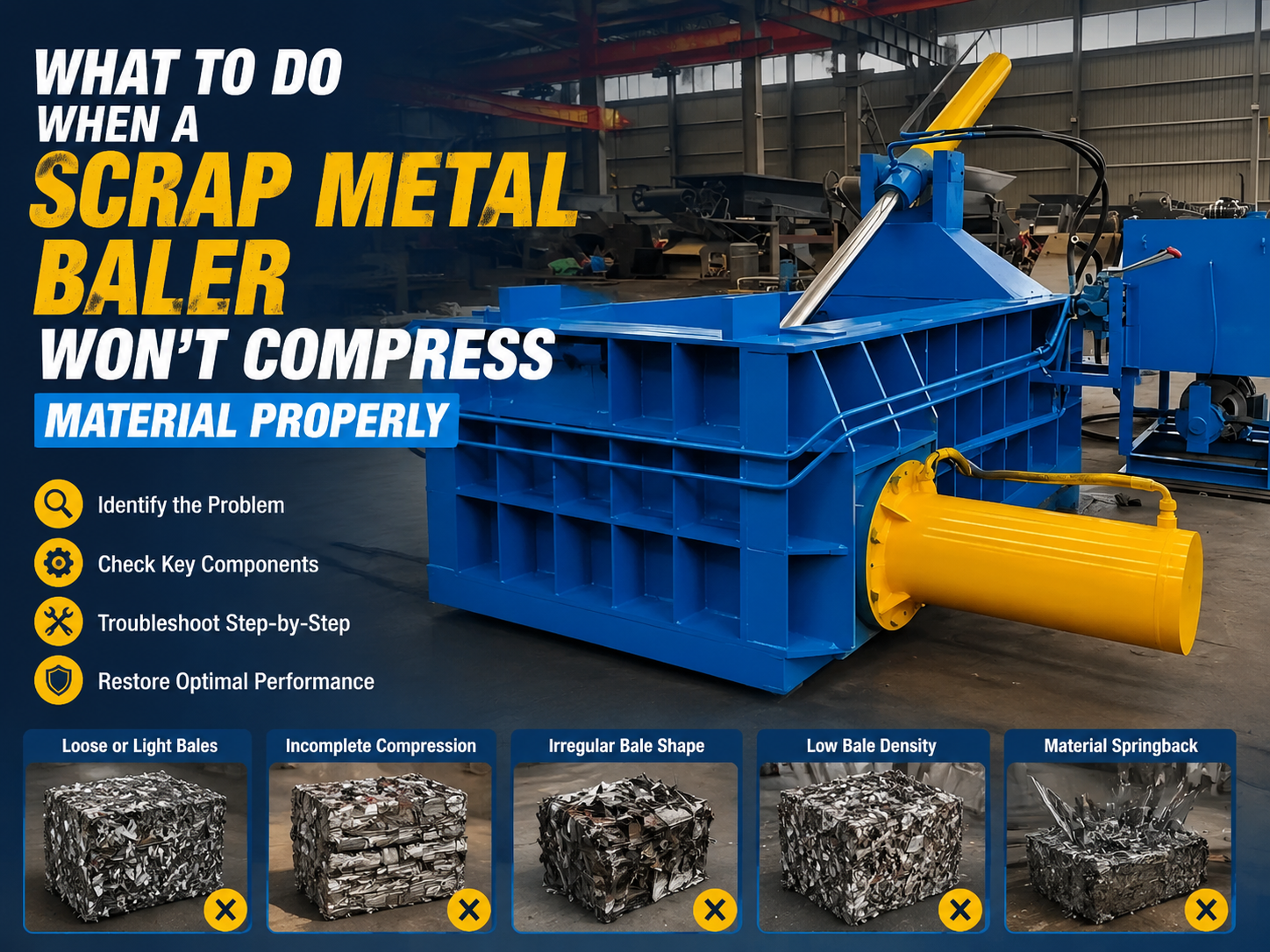
Before diving into complex repairs, it is vital to observe the specific symptoms of the compression failure. Is the ram moving slowly? Is it stopping before reaching the end of its stroke? Or is the bale simply coming out loose and misshapen? These distinctions are critical. A slow ram often points to hydraulic fluid issues, while a ram that stops prematurely may indicate a sensor or limit switch problem.
Another key consideration is the type of material being processed. Scrap metal balers are engineered for specific density ranges. If you are attempting to process high-tensile steel in a machine designed for aluminum or thin-gauge sheet metal, the machine will naturally struggle to achieve the required compression. Always verify that the material feed matches the machine’s specifications as outlined in your HARSLE operation manual.
Environmental factors also play a significant role. In colder climates, hydraulic oil viscosity can change, leading to sluggish performance. Conversely, in extremely hot environments, oil degradation can occur, reducing the efficiency of the hydraulic pump. Monitoring the temperature of your hydraulic reservoir is a simple yet effective way to rule out environmental variables before opening up the machine for internal repairs.
Finally, consider the human element. Have there been any recent changes in the loading procedure? Overloading the chamber or introducing oversized items can cause the ram to jam or the pressure relief valves to trigger prematurely. By documenting these variables, you can often identify the problem without needing to perform invasive mechanical work, saving your team valuable time and resources.
Technical Details: Troubleshooting Hydraulic and Mechanical Systems
The hydraulic system is the heart of any scrap metal baler. When the machine fails to compress material, the most common culprit is a loss of hydraulic pressure. Start by checking the hydraulic pump. If the pump is making unusual noises, such as whining or grinding, it may be failing or suffering from cavitation due to low fluid levels or a clogged intake filter. Ensure the hydraulic oil is at the correct level and that the filter has been changed according to the manufacturer’s schedule.
Next, inspect the pressure relief valves. These valves are designed to protect the system from over-pressurization, but if they are set too low or are stuck in the open position, the hydraulic fluid will bypass the cylinder, preventing the ram from exerting the necessary force. Adjusting these valves requires precision; always refer to the HARSLE technical documentation to ensure you are setting the pressure within the safe operating range of your specific model.
Mechanical obstructions are another frequent cause of compression failure. Over time, small pieces of metal, debris, or even welding slag can accumulate in the tracks or the compression chamber. This debris can prevent the ram from completing its full stroke. Perform a thorough inspection of the chamber walls and the ram face. If you notice significant gouging or buildup, clean the area thoroughly and check for any structural damage that might be hindering the movement of the ram.
The hydraulic cylinders themselves can also be a source of failure. Internal leakage, often caused by worn-out piston seals, allows fluid to pass from one side of the piston to the other, significantly reducing the force applied to the scrap. If you suspect an internal leak, you may need to perform a drift test or consult with a hydraulic specialist to inspect the cylinder seals. Replacing these seals is a standard maintenance procedure that can restore the baler to like-new performance.
Selection Advice: Choosing the Right Baler for Your Application
When you find yourself constantly asking what to do when a scrap metal baler won’t compress material properly, it may be a sign that your current equipment is undersized for your operation. Selecting the right metal fabrication equipment is a strategic decision that impacts your long-term productivity. If your volume has increased or the type of scrap has become more resilient, it might be time to upgrade to a higher-tonnage model.
Consider the feed opening size and the cycle time. A baler that is too small for your input volume will require constant clearing and manual intervention, leading to operator fatigue and increased wear on the machine. HARSLE offers a range of balers designed for different industrial scales, from compact units for small workshops to heavy-duty industrial balers for large-scale recycling centers. Matching the machine’s capacity to your daily throughput is the best way to avoid chronic compression issues.
Look for features like automated bale ejection, programmable logic controllers (PLC), and reinforced chamber walls. Modern balers often include diagnostic software that can alert operators to pressure drops or sensor failures before they result in a complete machine stoppage. Investing in technology-forward equipment reduces the guesswork involved in troubleshooting and allows for predictive maintenance, which is far more cost-effective than reactive repairs.
Finally, consider the support network. When purchasing industrial machinery, the availability of spare parts and technical support is just as important as the machine’s specifications. HARSLE provides comprehensive support to ensure that if you do encounter a problem, you have access to the parts and expertise needed to get back up and running quickly. Always prioritize manufacturers that offer clear documentation and responsive customer service.
FAQ: Frequently Asked Questions
- Q: How often should I change the hydraulic oil in my scrap metal baler?
A: Generally, hydraulic oil should be changed every 1,000 to 2,000 operating hours, or as specified in your HARSLE manual. Always check the oil clarity and viscosity during routine inspections. - Q: Why does my baler ram stop halfway through the compression stroke?
A: This is often caused by a tripped limit switch, a blockage in the chamber, or a pressure relief valve that is set too low. Check for debris first, then inspect the electrical sensors. - Q: Can I use a different grade of hydraulic oil than what is recommended?
A: No, you should always use the oil grade specified by the manufacturer. Using the wrong viscosity can lead to pump damage and poor compression performance. - Q: What should I do if the baler is leaking hydraulic fluid?
A: Immediately shut down the machine and identify the source of the leak. Leaks can lead to pressure loss and environmental hazards. Tighten fittings or replace damaged hoses as necessary. - Q: How do I know if my baler is overloaded?
A: If the machine struggles to complete a cycle, makes loud straining noises, or if the motor trips the circuit breaker, it is likely overloaded. Reduce the amount of material fed into the chamber per cycle.
Conclusion: Maintaining Operational Excellence
Addressing the question of what to do when a scrap metal baler won’t compress material properly requires a blend of technical knowledge, regular maintenance, and a proactive mindset. By systematically checking your hydraulic systems, ensuring the chamber is free of debris, and verifying that your machine is correctly sized for your material, you can resolve most compression issues quickly and effectively. Remember that the longevity of your HARSLE equipment depends on the care you provide it.
Consistent maintenance is the best defense against downtime. By establishing a daily, weekly, and monthly inspection schedule, you can catch minor issues before they escalate into major failures. Keep your operators trained on proper loading techniques and ensure they know how to identify the early warning signs of a struggling baler. When you treat your machinery with the respect it deserves, it will continue to provide the high-density output your business relies on.
If you find that your troubleshooting efforts are not yielding results, do not hesitate to reach out to the HARSLE technical support team. We are committed to helping you optimize your metal fabrication equipment for maximum efficiency. Whether you need replacement parts, technical guidance, or advice on upgrading your current system, we are here to support your operations and ensure your scrap metal processing remains a profitable and seamless part of your business.