What Materials Can a Horizontal Baler Process? A Technical Application Guide

Technical Overview of Horizontal Baling Systems
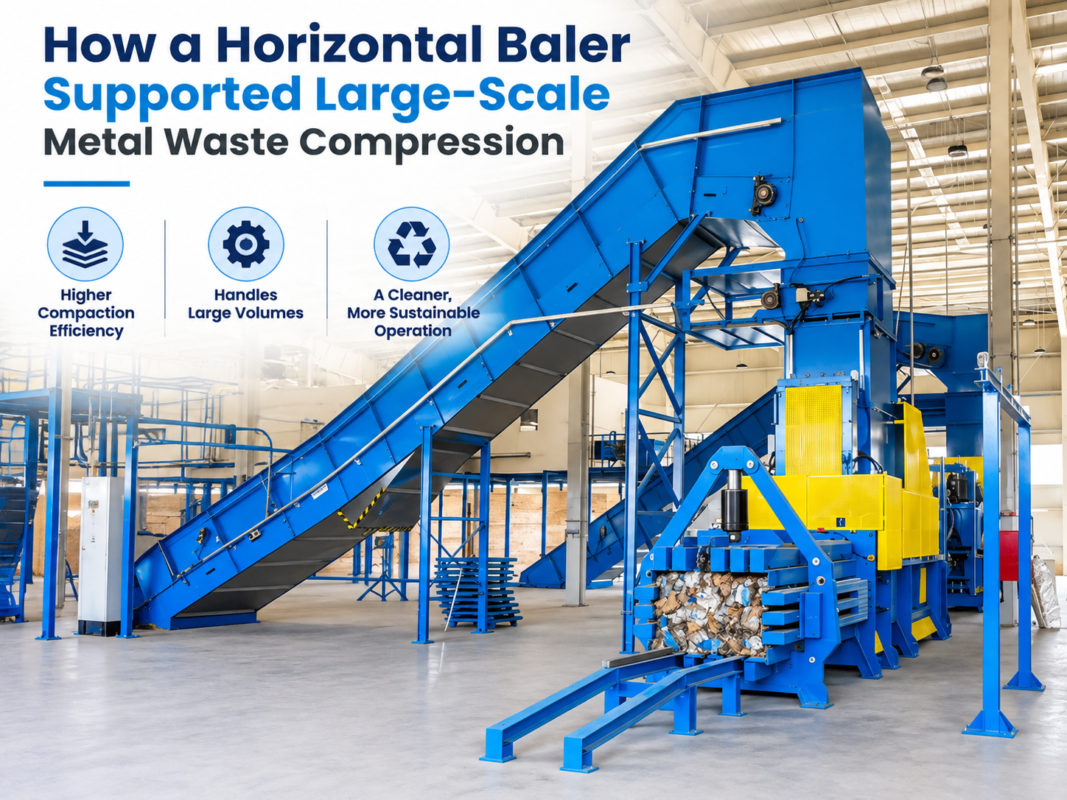
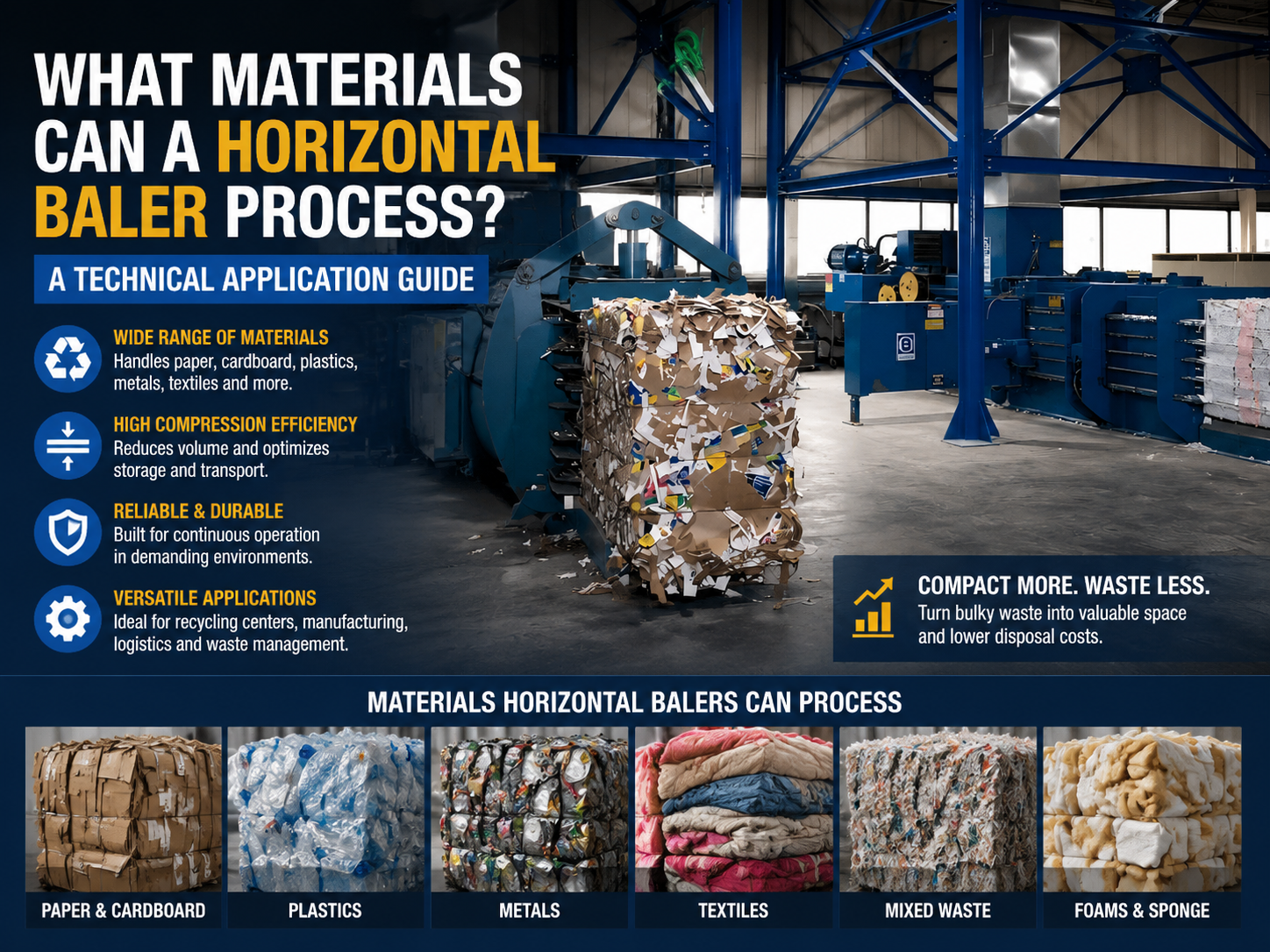
In the modern industrial landscape, the efficiency of waste management and material recovery is often dictated by the capabilities of the machinery employed. A horizontal baler stands as a cornerstone of high-volume recycling operations. Unlike its vertical counterpart, a horizontal baler is designed for continuous feeding, often integrated with conveyor systems or air-cyclone loaders. This allows for a significantly higher throughput, making it the preferred choice for distribution centers, manufacturing plants, and large-scale recycling facilities.
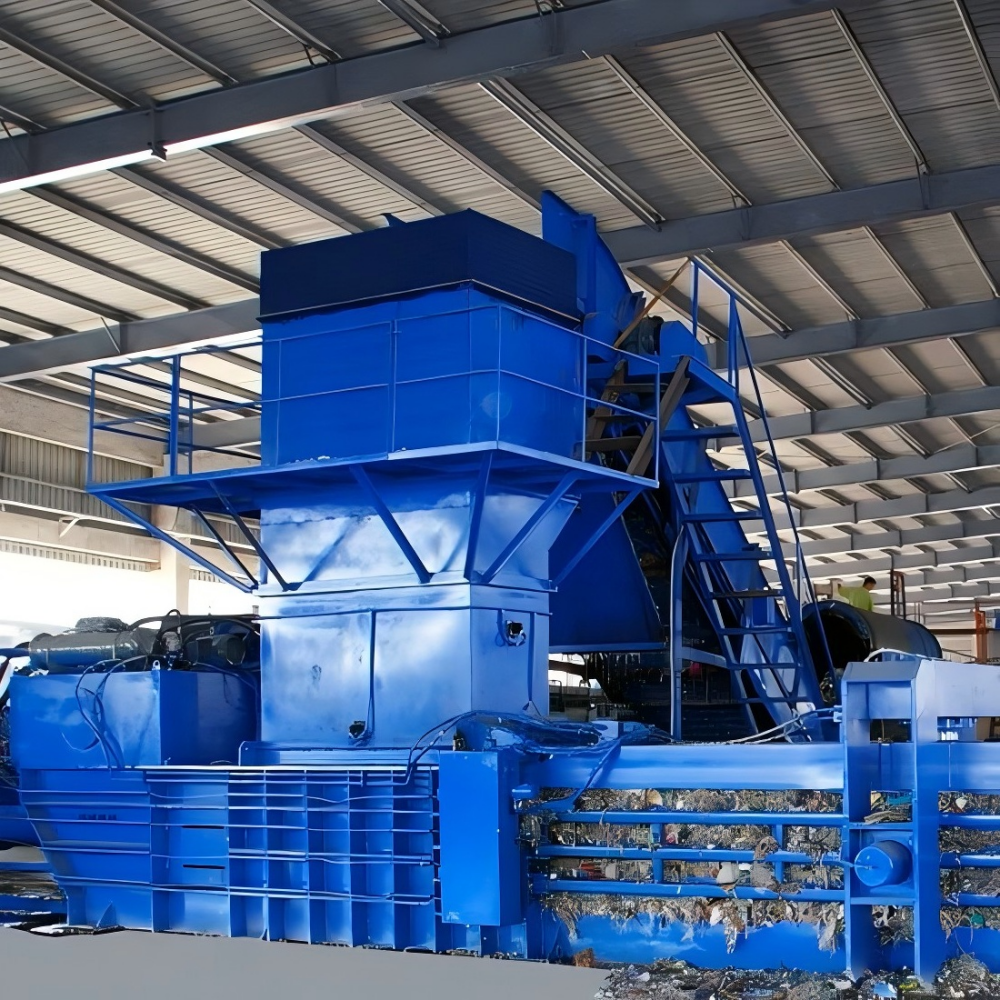
The core mechanism of a horizontal baler involves a large hydraulic ram that moves horizontally within a reinforced steel chamber. As materials are fed into the hopper, the ram compresses them against a tensioning system or a closed door. Once the desired bale length or density is achieved, an automated or manual tying system secures the material with wire or plastic strapping. The technical sophistication of these machines lies in their ability to handle varying material densities while maintaining structural integrity and consistent bale dimensions.
When asking Materials Can A Horizontal Baler Process? A Technical Application, one must consider the shear force, the hydraulic pressure (measured in tons), and the structural design of the compression chamber. HARSLE horizontal balers are engineered to provide maximum compaction force with minimal energy consumption, utilizing advanced hydraulic manifolds and PLC control systems to optimize the baling cycle based on the specific material being processed.
The Role of Shear Blades and Tensioning
A critical component in horizontal baling is the shear blade. As the ram moves forward, any material protruding above the compression chamber must be cut to ensure a clean stroke and prevent jamming. High-carbon steel blades are used to slice through tough materials like thick cardboard or plastic films. Furthermore, the ‘extrusion’ or ‘tension’ section of the baler—where the bale is formed—uses hydraulic cylinders to squeeze the sides of the bale path. This creates the necessary friction to allow the ram to compress the incoming material into a dense block.
Comprehensive List of Processable Materials
1. Paper and Cardboard (OCC)
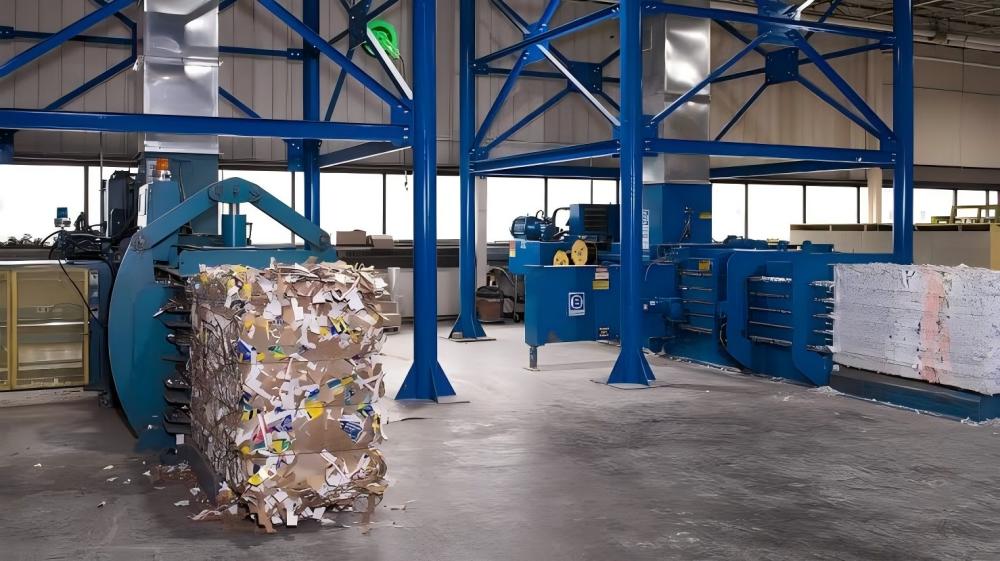
Old Corrugated Containers (OCC) are the most common materials processed by horizontal balers. Because cardboard is bulky and air-filled, it requires significant volume reduction for cost-effective transport. Horizontal balers excel here because they can handle large boxes without the need for manual pre-breaking. The fibers in the paper provide excellent interlocking properties, resulting in highly stable bales that can weigh upwards of 1,000 kg depending on the machine size.
2. Plastics (PET, HDPE, and Film)
Plastics present a unique challenge due to their ‘memory’—the tendency of the material to spring back after the ram retracts. Horizontal balers designed for plastics often feature longer stroke rams and specialized ‘retainer dogs’ (metal teeth inside the chamber) that hold the compressed plastic in place. PET bottles, HDPE containers, and LDPE stretch films are commonly processed. For PET bottles, many operators use a perforator before baling to release trapped air, ensuring maximum density.
3. Non-Ferrous Metals
While heavy steel scrap requires specialized scrap shears, horizontal balers are highly effective for non-ferrous metals. This includes aluminum cans (UBC), copper wiring, aluminum siding, and thin-gauge brass. The high hydraulic pressure of a HARSLE horizontal baler can compress these metals into dense, furnace-ready bricks. This is essential for scrap yards looking to maximize the value of their metal waste by reducing shipping costs.
4. Textiles and Fibers
Textile recycling involves processing used clothing, fabric scraps, and synthetic fibers. These materials are highly compressible but require careful handling to prevent the ‘mushrooming’ of the bale. Horizontal balers used for textiles often employ a full-enclosure design to ensure that no fibers escape during the compression process. The resulting bales are often wrapped in plastic or burlap to maintain cleanliness during export.
5. Solid Waste and Refuse-Derived Fuel (RDF)
In municipal solid waste (MSW) applications, horizontal balers are used to create bales of waste that can be wrapped and transported to landfills or incineration plants. By baling the waste, facilities can increase landfill lifespan and reduce the risk of litter dispersal during transport. This application requires heavy-duty liners within the baler to resist the abrasive and corrosive nature of mixed waste.
Core Parameters of Horizontal Balers
Understanding the technical specifications is vital when determining if a machine can handle a specific material. The following parameters define the performance envelope of a horizontal baling system:
- Pressing Force: Usually measured in metric tons (e.g., 60T, 100T, 120T). This determines the maximum density achievable for hard-to-compress materials like plastics and metals.
- Cycle Time: The time it takes for the ram to complete one full forward and backward stroke. Faster cycle times are necessary for high-volume facilities processing lightweight materials like paper.
- Motor Power: Measured in kW or HP. Higher power allows for faster hydraulic flow and higher pressure, directly impacting throughput.
- Bale Size: Standardized dimensions (e.g., 1100mm x 1100mm x Variable Length) ensure that bales fit perfectly into shipping containers or onto flatbed trucks.
- Feed Opening: The size of the hopper. A larger opening allows for bigger items (like large appliance boxes) to be fed without pre-shredding.
Calculation Method for Throughput and Density
To optimize a recycling line, engineers must calculate the expected throughput. The formula for hourly production is generally expressed as:
T = (V × D × η) / 1000
Where:
T = Throughput (Tons per hour)
V = Volume of the compression chamber per hour (Number of cycles × Volume per stroke)
D = Material density under pressure (kg/m³)
η = Efficiency factor (usually 0.6 to 0.8, accounting for loading delays and tying time)
For example, if a baler has a cycle time of 30 seconds (120 cycles/hour), a chamber volume of 1.5m³, and is processing cardboard with a compressed density of 400kg/m³, the theoretical throughput would be significant. However, the actual throughput is often limited by the speed of the conveyor feeding the machine. Calculating the ‘Specific Pressure’ (the force per square inch on the platen face) is also crucial for determining if the machine can successfully bale high-memory plastics.
Technical Parameter Table
| Material Type | Recommended Press Force (Tons) | Expected Bale Density (kg/m³) | Tying Method | Special Requirements |
|---|---|---|---|---|
| Cardboard (OCC) | 60 – 100 | 350 – 450 | Auto-Wire | Shear blades required |
| PET Bottles | 80 – 120 | 250 – 350 | Auto-Wire | Perforator recommended |
| Aluminum Cans | 100 – 150 | 400 – 600 | Manual/Auto | High-wear liners |
| Plastic Film (LDPE) | 60 – 80 | 300 – 400 | Auto-Wire | Retainer dogs essential |
| Mixed MSW | 120+ | 500 – 800 | Plastic Wrap | Corrosion resistance |
Common Engineering Mistakes in Baler Application
Even with high-quality equipment like HARSLE machinery, operational errors can lead to downtime and reduced lifespan. One of the most common mistakes is mismatched material density. Attempting to process heavy metal scrap in a baler designed for light cardboard can warp the ram or damage the hydraulic seals due to excessive pressure spikes.
Another frequent error is ignoring moisture content. Materials like paper and cardboard absorb water, which significantly changes their compression characteristics. Wet cardboard is much harder to shear and can cause the ‘bale expansion’ to exceed the limits of the tying wire, leading to broken wires and messy floors. Furthermore, moisture promotes corrosion within the chamber if the machine is not cleaned regularly.
Improper Tying Wire Selection: Using a wire gauge that is too thin for the material’s expansion force is a recipe for failure. For high-density plastic bales, a heavier gauge galvanized wire is typically required to withstand the internal pressure of the bale once it exits the tensioning chamber. Conversely, using overly thick wire on light paper bales is an unnecessary expense.
Finally, neglecting the hydraulic cooling system is a critical oversight. In high-volume operations, the hydraulic oil can reach temperatures that degrade its viscosity. If the oil becomes too thin, the pump efficiency drops, and wear on internal components increases exponentially. Always ensure the heat exchanger is functional and the oil is at the correct level.
Selection Checklist for a Horizontal Baler
Before investing in a horizontal baling system, use this checklist to ensure the machine meets your technical requirements:
- Volume Assessment: Does the hourly throughput of the machine exceed your peak waste generation by at least 20%?
- Material Versatility: Will you be processing a single stream (e.g., only cardboard) or a multi-material stream? (Multi-material requires PLC recipes for different pressures).
- Space Constraints: Horizontal balers have a large footprint. Is there enough room for the machine, the conveyor, and the finished bale storage?
- Automation Level: Do you need a fully automatic tying system to reduce labor costs, or is a manual-tie machine sufficient for your volume?
- Power Supply: Does your facility have the electrical infrastructure to support 30kW to 75kW motors?
- Maintenance Access: Is there sufficient clearance around the machine for hydraulic cylinder removal and shear blade sharpening?
Frequently Asked Questions (FAQ)
How long does a HARSLE horizontal baler typically last?
With proper maintenance, including regular oil changes, blade sharpening, and liner replacement, a high-quality horizontal baler can last 15 to 20 years in an industrial environment. The structural frame is often over-engineered to withstand decades of stress cycles.
Can I bale wood or heavy timber in a horizontal baler?
Generally, no. Standard horizontal balers are designed for compressible materials. Wood is rigid and can cause catastrophic failure of the shear blades or the ram. For wood waste, a wood crusher or chipper is the appropriate machinery.
What is the difference between a closed-end and an open-end horizontal baler?
A closed-end baler has a hydraulic door that stays shut until the bale is finished, allowing for higher density. An open-end baler (or extrusion baler) uses a long tensioning channel to create resistance, allowing for continuous, non-stop baling and automated tying.
How often should the shear blades be sharpened?
This depends entirely on the material. Cardboard is relatively soft, but the dust can be abrasive. If you notice ‘tails’ or uncut material hanging from the bales, it is time to inspect and likely rotate or sharpen the blades. Typically, this is done every 6 to 12 months in high-volume plants.
Is it possible to switch between plastic and cardboard on the same machine?
Yes, most modern HARSLE balers feature a PLC with touch-screen controls that allow operators to select ‘recipes.’ These recipes automatically adjust the ram pressure and tensioning settings to suit the specific material being loaded.