How to Improve Bale Density with a Horizontal Baler: A Technical Guide by HARSLE

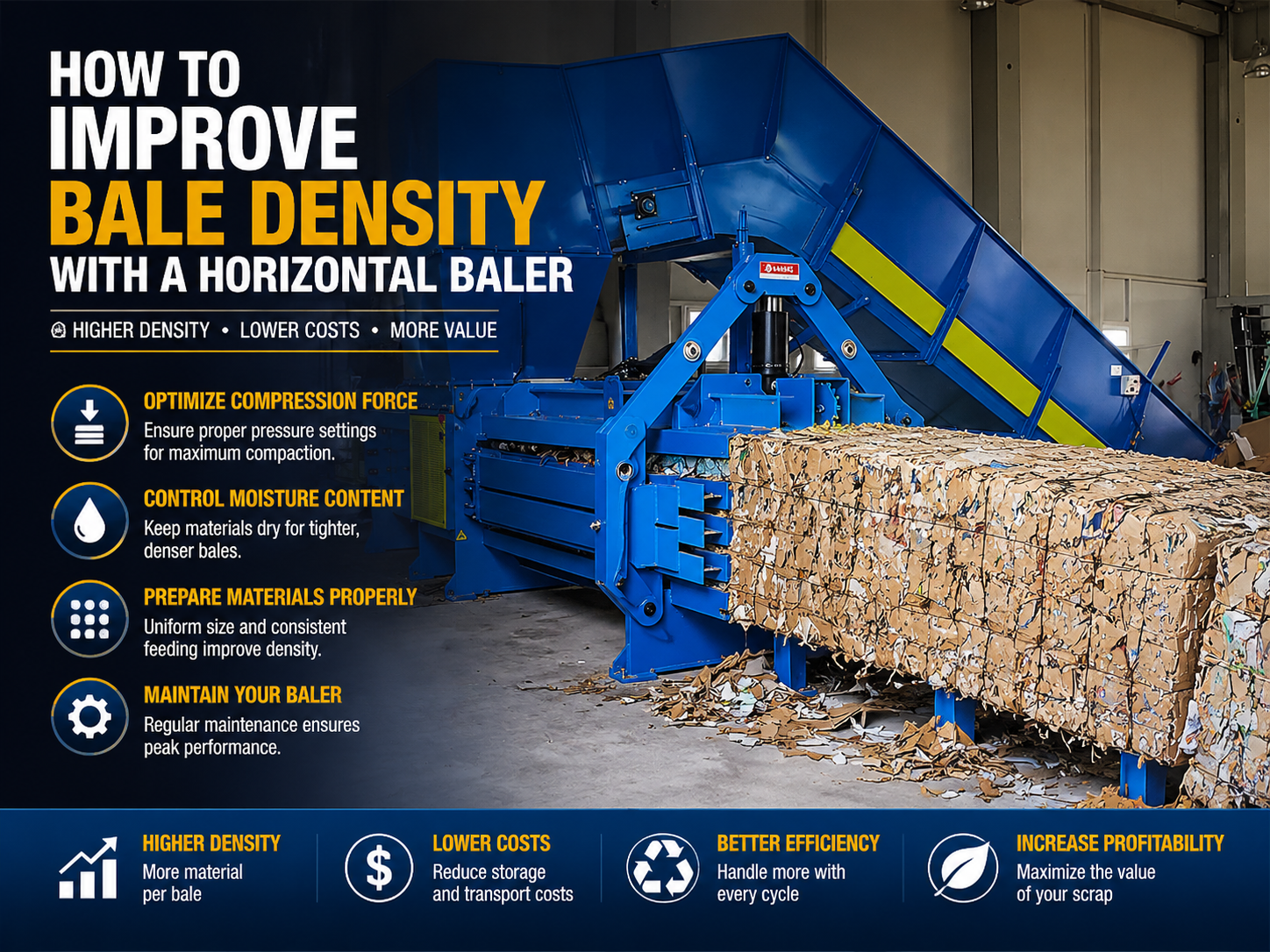
Technical Overview of Horizontal Baling Systems
In the world of industrial recycling and waste management, the efficiency of a facility is often measured by its ability to maximize throughput while minimizing logistics costs. The primary metric for this efficiency is bale density. When you aim to improve bale density a horizontal baler, you are essentially looking to pack more material into a smaller volume, which directly translates to fewer truckloads, lower storage requirements, and higher resale value for processed materials. HARSLE horizontal balers are engineered to provide the structural rigidity and hydraulic force necessary to achieve these high-density results across various materials, from OCC (Old Corrugated Containers) to non-ferrous metals.
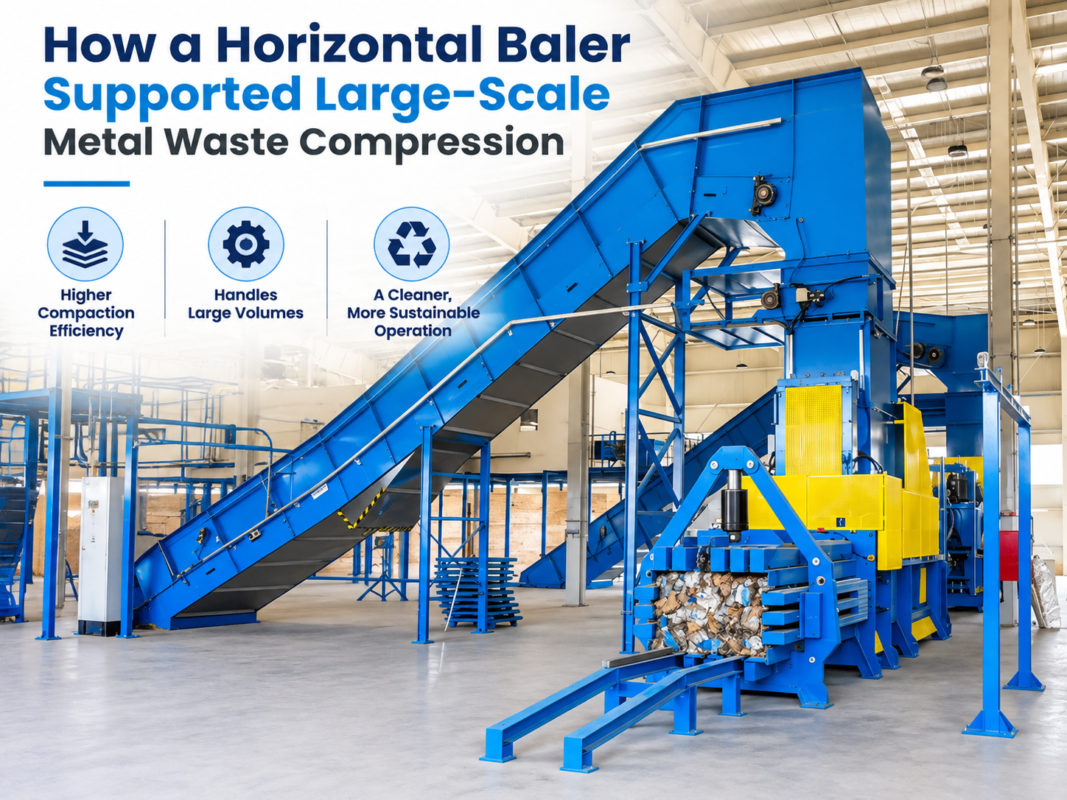
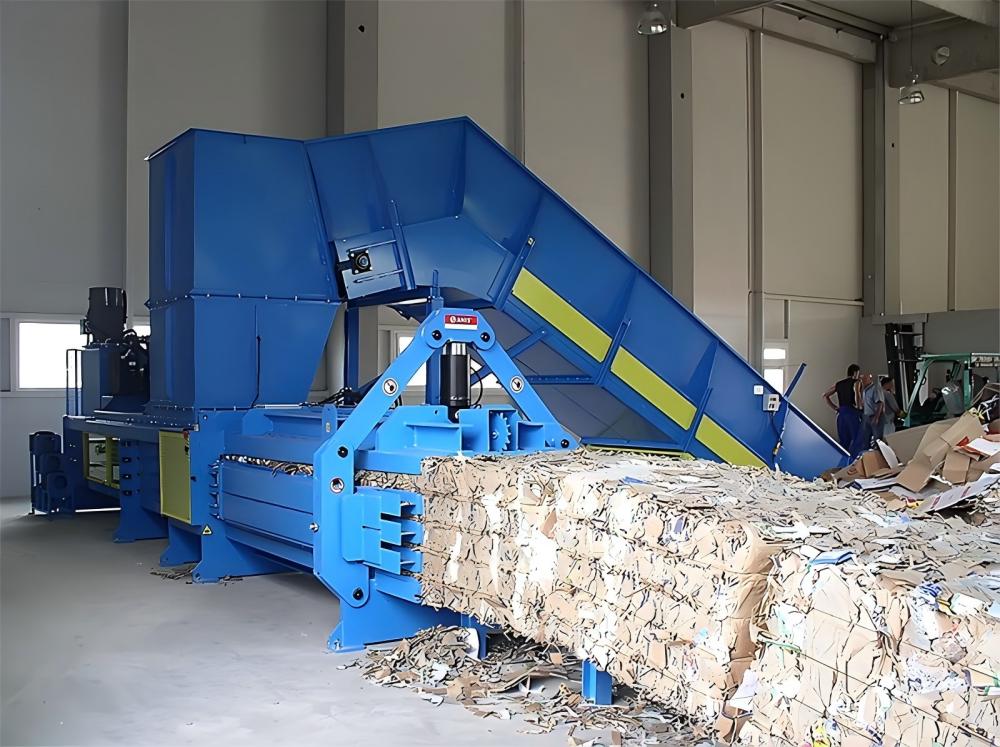
A horizontal baler operates on a continuous feed cycle. Unlike vertical balers, which are manually loaded and compressed, horizontal systems utilize a heavy-duty ram that moves horizontally within a compression chamber. The material is fed through a hopper, often via a conveyor or air-sort system, and is pushed against a tensioning gate or previously compressed material. The physics of this process involves overcoming the natural elasticity and structural resistance of the material. To achieve maximum density, the machine must apply sufficient force to reach the material’s plastic deformation point, ensuring that once the pressure is released, the material does not ‘spring back’ excessively.
The structural integrity of the baler frame is the foundation of density. Under high pressure, a poorly constructed frame will flex, dissipating the energy that should be directed into the material. HARSLE utilizes high-tensile steel and precision welding to ensure that 100% of the hydraulic force is utilized for compaction. Furthermore, the interaction between the ram and the chamber walls must be tightly controlled. Excessive gaps allow material to migrate behind the ram or wedge between the floor and the platen, causing friction that robs the system of its effective compression force.
Core Parameters Influencing Bale Density
To effectively improve bale density a horizontal baler, one must understand the interplay of several critical parameters. The most obvious is hydraulic pressure, but pressure alone is not the sole determinant. The total force exerted by the ram is a product of the system pressure (PSI/Bar) and the surface area of the hydraulic cylinder’s piston. However, the ‘face pressure’—the force distributed across the surface of the ram platen—is what the material actually experiences. A smaller platen with the same cylinder force will yield higher density but smaller bales, whereas a larger platen requires significantly more total force to achieve the same density.
Another vital parameter is the cycle time and dwell time. Dwell time refers to the duration the ram stays at full extension before retracting. For materials with high ‘memory’ or elasticity, such as certain plastics or springy metals, increasing the dwell time by just a few seconds can significantly improve the final density. This allows the air trapped within the material to escape and the fibers or structures to settle into their new compressed state. HARSLE’s advanced PLC systems allow operators to fine-tune these timings based on the specific material being processed.
The tensioning system at the discharge end of the baler is equally important. In an open-end horizontal baler, the density is created by the friction of the material against the chamber walls and the resistance of the tensioning cylinders. These cylinders squeeze the exit of the chamber, making it harder for the material to be pushed out. By increasing the tension, the ram must work harder to move the bale, thereby packing the material tighter. Modern HARSLE machines feature automatic tensioning systems that adjust in real-time based on the hydraulic back-pressure sensed during the stroke, ensuring consistent density even when material moisture or type fluctuates.
Calculation Method for Bale Density
Quantifying your success is essential when you want to improve bale density a horizontal baler. The standard calculation for bale density is the weight of the bale divided by its volume. For example, if a bale of cardboard weighs 1,500 lbs and its dimensions are 60″ x 30″ x 45″, the volume is 81,000 cubic inches, or approximately 46.87 cubic feet. The density would be 1,500 / 46.87 = 32 lbs per cubic foot. In the metric system, this is typically expressed in kg/m³.
To calculate the theoretical force required for a specific density, engineers use the formula: Force (F) = Pressure (P) × Area (A). However, for baling, we also look at the ‘Compaction Ratio’. This is the ratio of the loose material’s bulk density to the final bale density. If you are baling loose plastic bottles with a bulk density of 1.5 lbs/ft³ into a bale with a density of 15 lbs/ft³, your compaction ratio is 10:1. Understanding these ratios helps in selecting the right motor horsepower and pump displacement to maintain throughput while achieving the desired density.
Furthermore, the ‘Shear Force’ calculation is critical for horizontal balers equipped with a shear blade. As the ram moves forward, it must often cut through overhanging material at the top of the hopper. If the shear blades are dull or the clearance is too wide, the machine spends a significant portion of its hydraulic energy cutting rather than compacting. Calculating the energy loss due to inefficient shearing is a common step in troubleshooting low-density issues in high-volume operations.
Parameter Table for Common Materials
The following table provides a reference for the expected density and required settings for various materials when using a HARSLE horizontal baler. Note that these values can vary based on moisture content and material purity.
| Material Type | Typical Bulk Density (kg/m³) | Target Bale Density (kg/m³) | Recommended Face Pressure (PSI) | Compaction Ratio |
|---|---|---|---|---|
| OCC (Cardboard) | 40 – 60 | 350 – 450 | 80 – 100 | ~8:1 |
| PET Bottles (Perforated) | 25 – 35 | 250 – 320 | 110 – 130 | ~10:1 |
| HDPE (Plastic Jugs) | 30 – 45 | 280 – 350 | 100 – 120 | ~9:1 |
| Aluminum Cans (UBC) | 50 – 70 | 400 – 500 | 120 – 150 | ~7:1 |
| Mixed Paper | 60 – 90 | 450 – 550 | 90 – 110 | ~6:1 |
| Solid Waste (MSW) | 100 – 150 | 600 – 800 | 150+ | ~5:1 |
Common Engineering Mistakes in Baling Operations
One of the most frequent mistakes made when trying to improve bale density a horizontal baler is neglecting material pre-conditioning. For instance, attempting to bale large, intact plastic containers without a perforator or shredder results in ‘air pockets’ trapped within the bale. Even with high hydraulic pressure, the air cannot escape quickly enough, and the bale will expand significantly once it exits the chamber. Pre-conditioning ensures that the material can be packed tightly without structural voids.
Another common error is the improper maintenance of the hydraulic cooling system. As a baler works to achieve high density, the hydraulic oil generates significant heat. If the oil temperature exceeds the recommended operating range (usually 50-60°C), its viscosity drops. This leads to internal leakage within the pump and valves, reducing the effective pressure the ram can exert. Operators often wonder why their bale density drops in the afternoon during a long shift; the culprit is almost always oil thinning due to heat.
Furthermore, many facilities ignore the importance of the ‘wiper’ or ‘scraper’ on the ram. In a horizontal baler, small particles of dust and debris can accumulate between the ram and the floor. If this is not cleared, it creates a wedge effect that lifts the ram slightly, causing it to rub against the top of the chamber. This friction consumes a surprising amount of energy. A well-maintained HARSLE baler with clean tracks and sharp shear blades will always produce a denser bale than a neglected machine, even if they share the same hydraulic specifications.
Selection Checklist for High-Density Horizontal Balers
When purchasing a new machine with the goal to improve bale density a horizontal baler, use the following checklist to ensure the equipment meets industrial standards:
- Frame Construction: Is the frame made of solid plate steel or hollow tubes? Solid plate construction offers superior resistance to deflection under high-tonnage loads.
- Cylinder Bore and Rod Diameter: Ensure the cylinder is sized for the task. A larger bore allows for higher force at lower system pressures, which extends the life of the hydraulic components.
- Automatic Tensioning System: Does the baler have a 3-way or 4-way automatic tensioning system? This is crucial for maintaining density across different material batches.
- Shear Blade Quality: Look for hardened tool steel blades with adjustable clearance. This reduces energy waste during the compression stroke.
- PLC and Sensor Integration: Advanced HARSLE models include laser-guided ram positioning and pressure transducers to optimize the stroke length and compaction force.
- Cooling System: For high-volume operations, an air-over-oil or water-cooled heat exchanger is mandatory to maintain oil viscosity.
- Wire Tier Compatibility: Ensure the tying system can handle the high-tension wire required to hold high-density bales together without snapping.
Frequently Asked Questions (FAQ)
How does moisture content affect bale density?
Moisture can be a double-edged sword. For materials like paper and cardboard, a small amount of moisture can actually help fibers lubricate and pack tighter. However, excessive moisture increases the weight without increasing the actual material density, and it can lead to ‘bleeding’ or decomposition. In plastics, moisture has little effect on density but can cause slippage in the compression chamber.
Why are my bales expanding after they leave the baler?
This is known as ‘spring-back.’ It occurs when the material has high elastic memory or when the air trapped inside hasn’t been fully evacuated. To fix this, you can increase the dwell time at the end of the stroke, increase the number of ties (wires), or use a higher gauge wire to contain the internal pressure of the bale.
Can I bale different materials with the same settings?
While possible, it is not recommended if you want to improve bale density a horizontal baler. Different materials require different tension settings and ram speeds. HARSLE balers come with programmable logic controllers (PLCs) that allow you to save ‘recipes’ for different materials, making it easy for operators to switch between OCC, plastic, and aluminum with the touch of a button.
How often should I sharpen the shear blades?
In a high-volume facility, shear blades should be inspected weekly and typically rotated or sharpened every 3 to 6 months. Dull blades increase the load on the motor and reduce the force available for actual compaction, leading to lighter, less dense bales.
What is the ideal bale length for maximum density?
Bale length is usually a trade-off between density and transport efficiency. Shorter bales tend to be slightly denser because the ram force is concentrated over a smaller volume, but longer bales are more stable for stacking and maximize the space in a shipping container. Most industrial standards aim for a length of 60 to 72 inches.
Does the type of baling wire affect density?
The wire doesn’t create the density, but it is responsible for maintaining it. If you use a wire that is too thin for a high-density bale, it will stretch or break, allowing the bale to expand and lose its density. Always match the wire gauge to the target weight and expansion characteristics of the material.