Vertical Baler Capacity Guide: Matching Machine Size to Your Material Volume

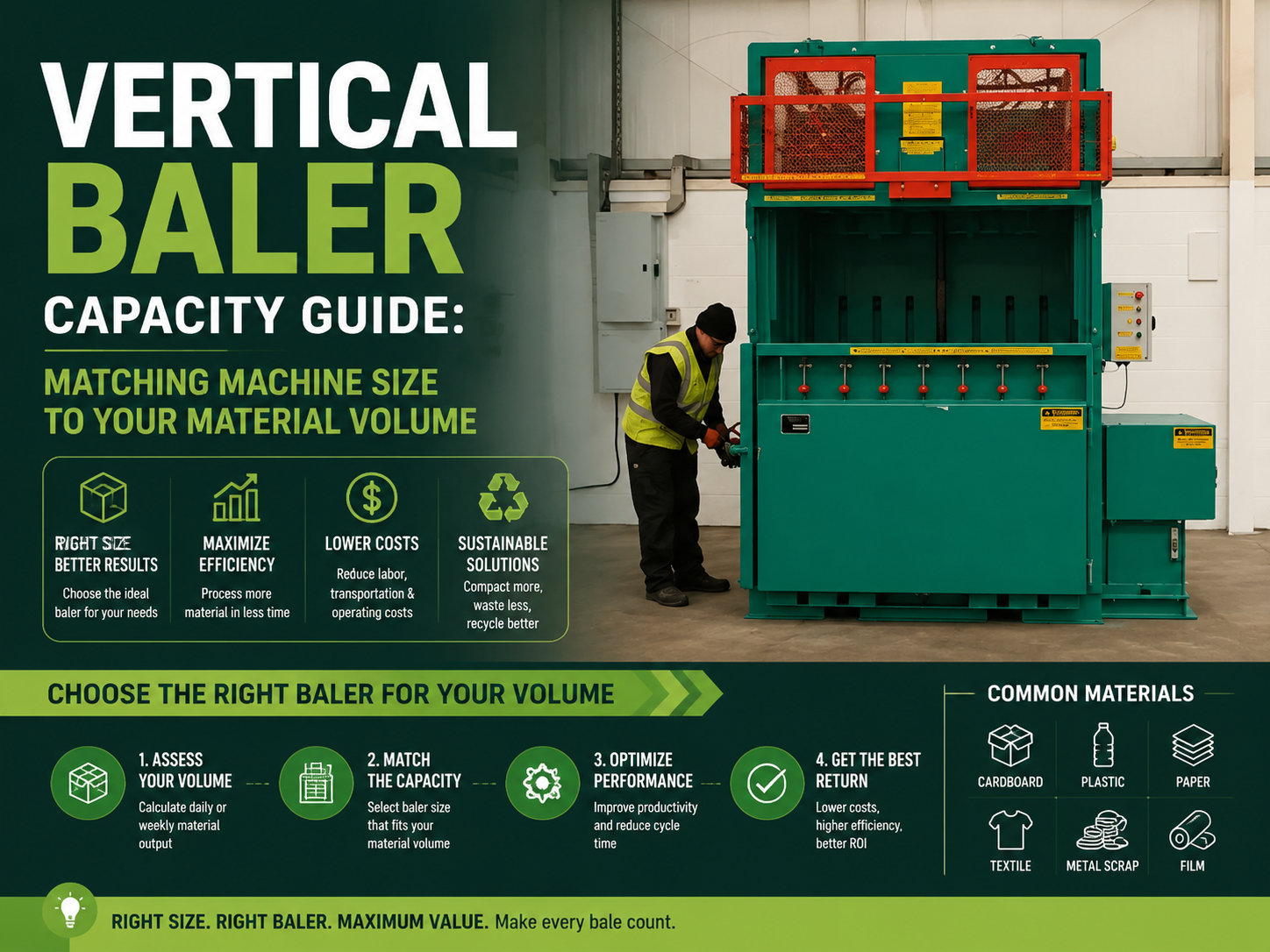
Technical Overview of Vertical Baler Systems
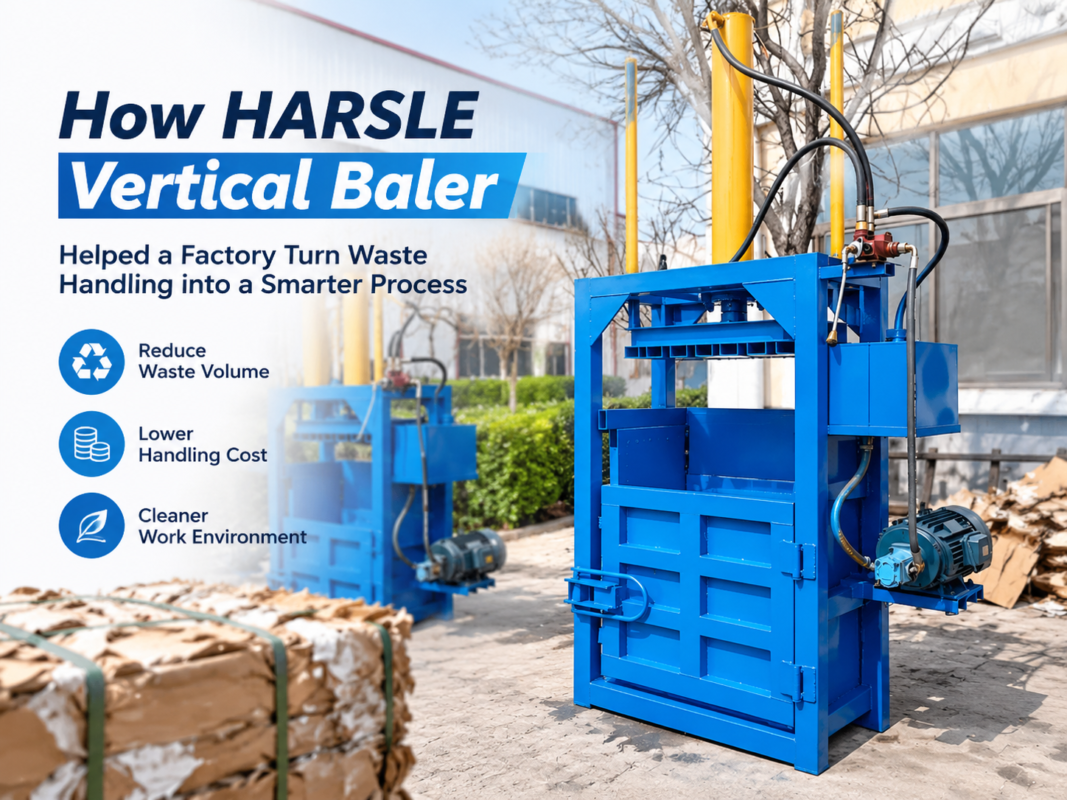
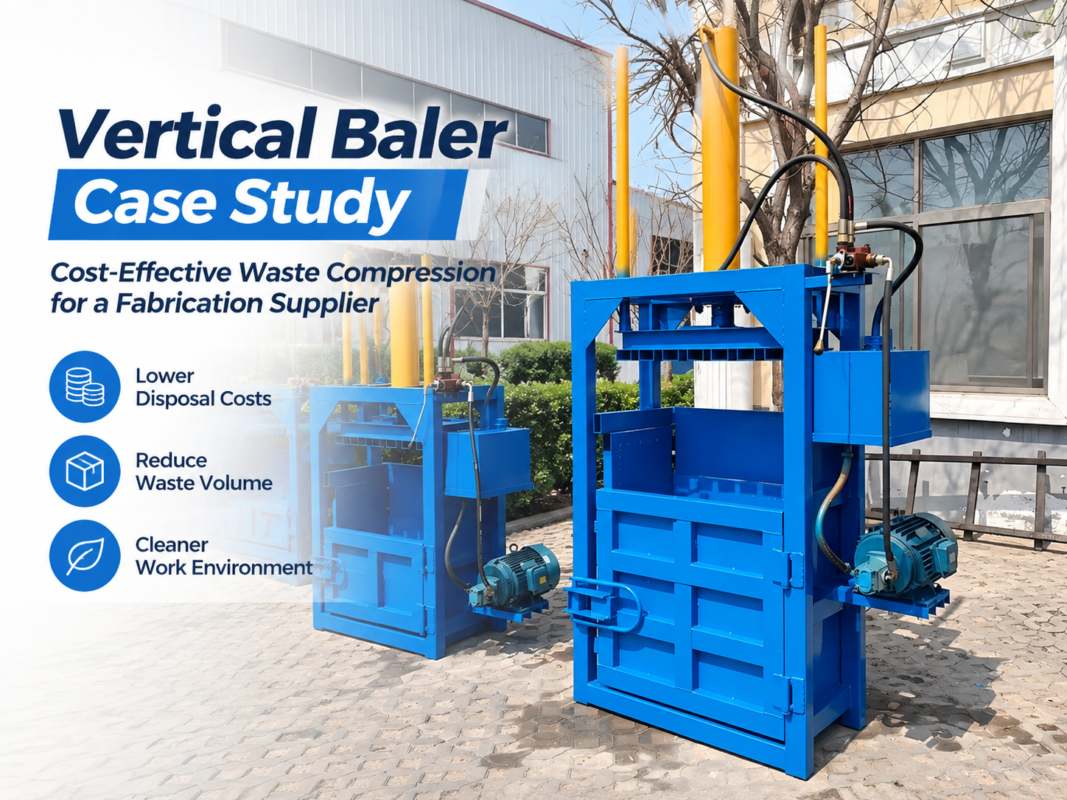
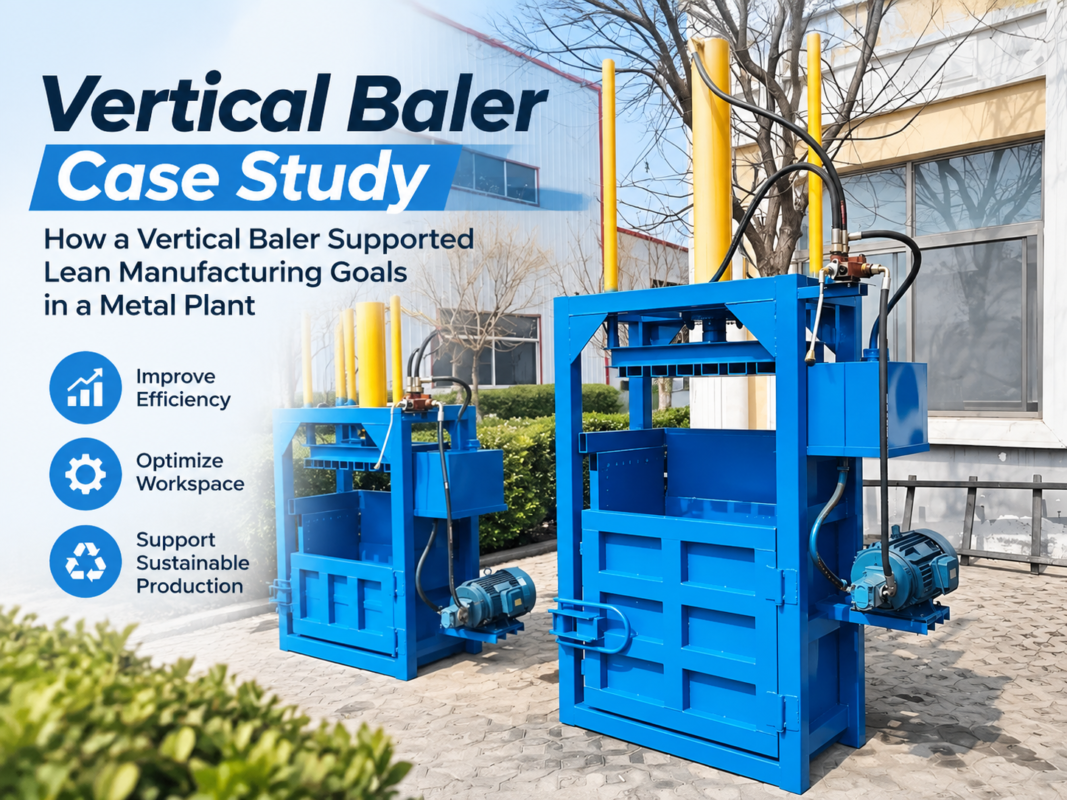
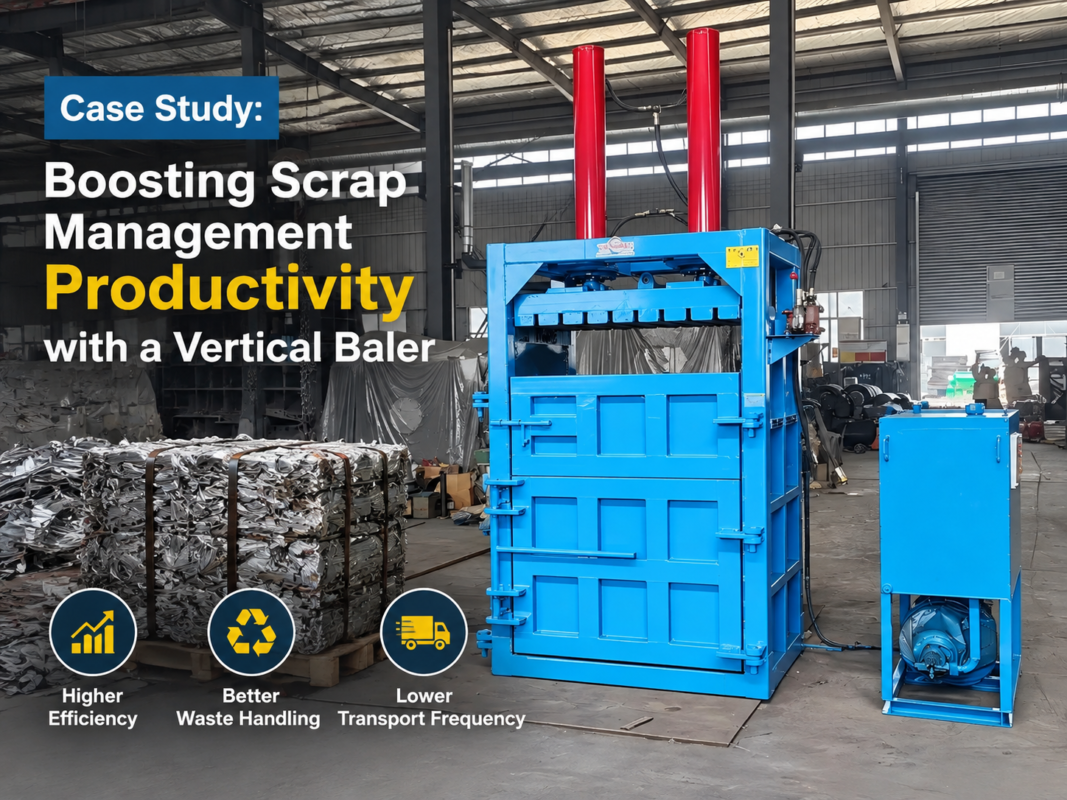
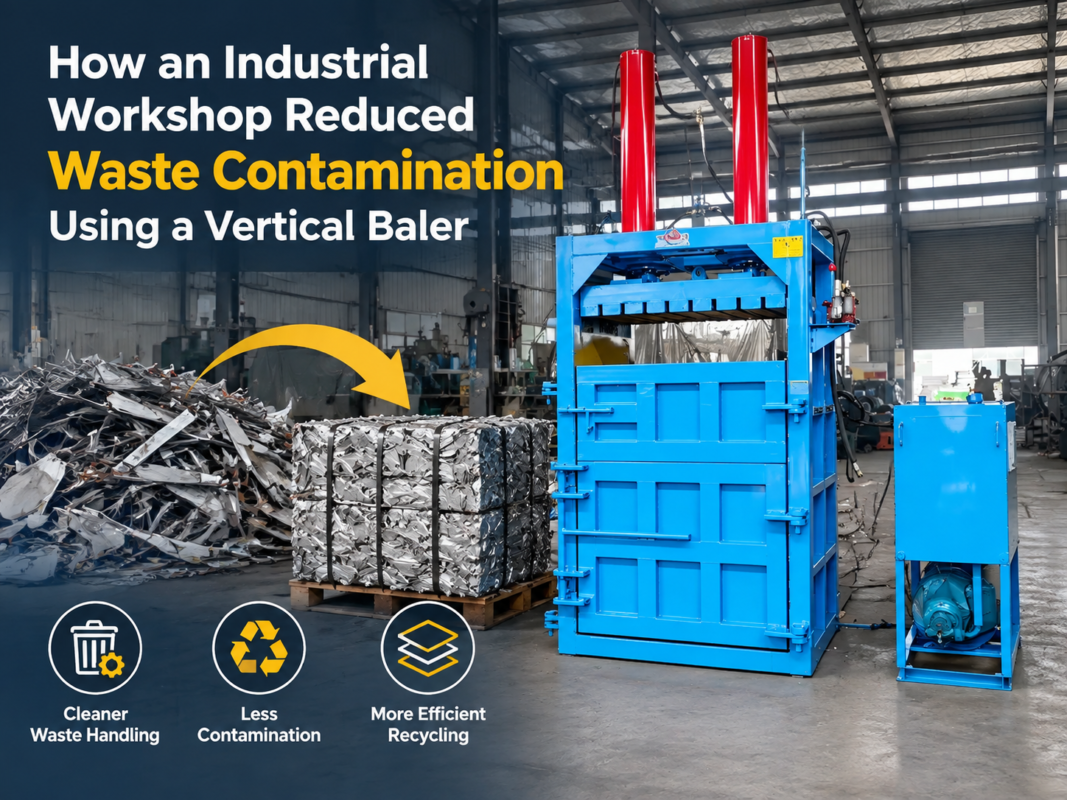
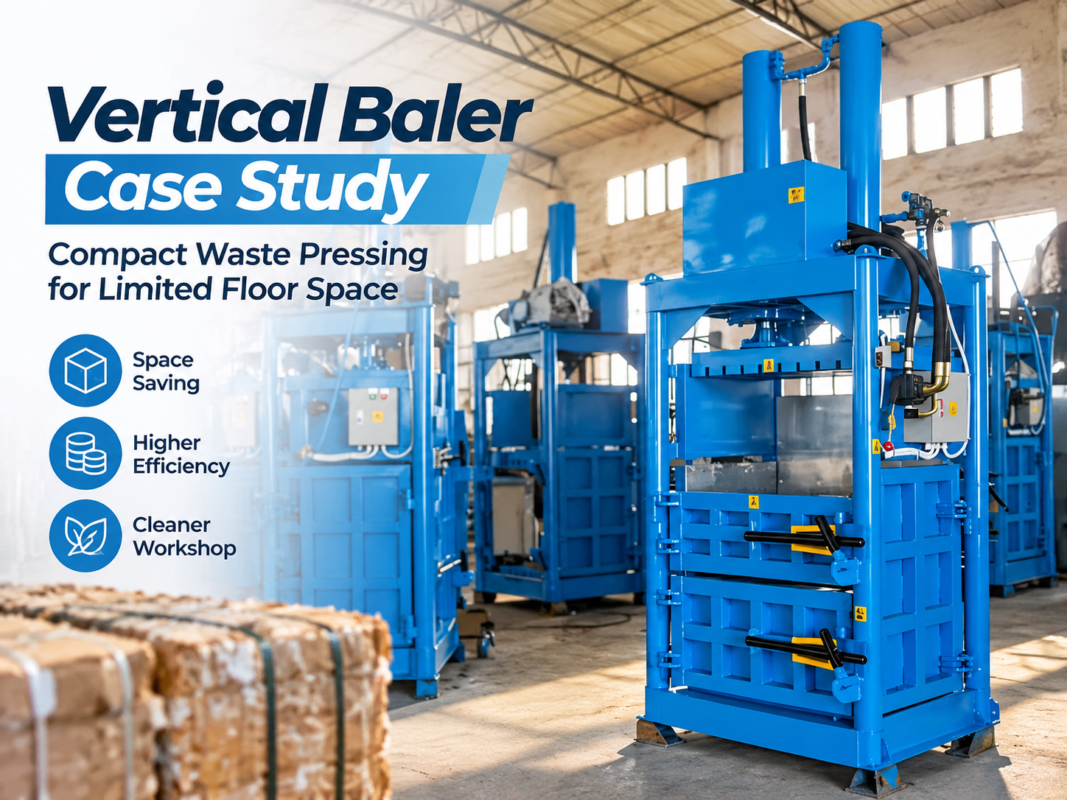
In the realm of industrial waste management and recycling, the vertical baler stands as a cornerstone for efficiency. A vertical baler is a hydraulic press designed to compress recyclable materials—such as cardboard, plastics, textiles, and light metal scraps—into dense, manageable blocks known as bales. Unlike horizontal balers, which require significant floor space and are often used for high-volume continuous processing, vertical balers operate on a top-down compression principle, making them ideal for facilities with limited space but consistent waste output.
The core mechanism involves a heavy-duty hydraulic ram that descends into a reinforced chamber. As material is fed into the chamber, the ram exerts thousands of pounds of pressure, forcing the air out and interlocking the fibers or structures of the material. Once the desired bale height is reached, the operator secures the bale with wire or plastic strapping before the machine’s ejection system pushes the finished product out. HARSLE vertical balers are engineered with high-tensile steel and precision hydraulic components to ensure that every cycle delivers maximum density, which is critical for reducing transportation costs and maximizing the resale value of the recycled material.
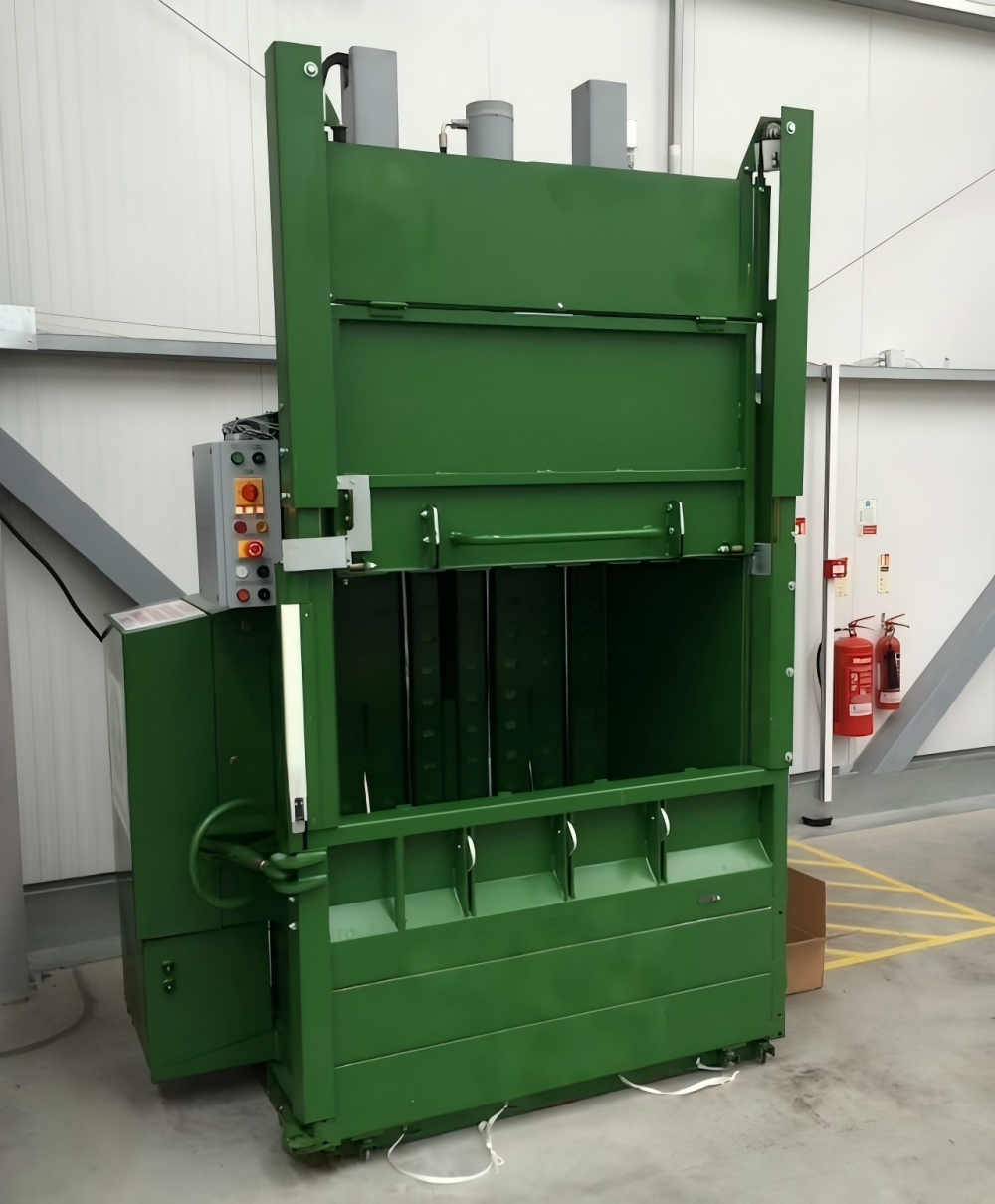
Understanding the technical nuances of these machines is the first step in optimizing your facility’s waste stream. The efficiency of a vertical baler is not just measured by its pressing force, but by how well its cycle time, chamber volume, and motor efficiency align with the specific physical properties of the material being processed. For instance, compressing loose plastic film requires a different pressure profile and retention system than compressing rigid corrugated cardboard. Modern HARSLE machines often incorporate PLC (Programmable Logic Controller) systems that allow operators to adjust these parameters, ensuring the machine operates within its peak performance envelope regardless of the material type.
Core Parameters Influencing Vertical Baler Capacity
When evaluating Vertical Baler Capacity : Matching Machine Size Material Volume, several technical parameters must be analyzed in tandem. The most prominent parameter is the ‘Pressing Force’ or ‘Tonnage.’ This refers to the total amount of pressure the hydraulic cylinder can apply. Common industrial sizes range from 10 tons for small retail applications to over 100 tons for heavy-duty industrial scrap. Higher tonnage allows for denser bales, which is essential for materials with high ‘memory’ or elasticity, such as certain plastics and rubber.
The second critical parameter is the ‘Bale Size’ and ‘Bale Weight.’ These are often dictated by the dimensions of the compression chamber. Standard bale sizes are designed to fit efficiently into shipping containers or onto flatbed trucks. For example, a ‘Mill-Size’ bale (typically 60 inches wide) is the industry standard for maximum transport efficiency. The weight of the bale depends on the material density; a 60-inch baler might produce a 1,000 lb bale of cardboard but only a 600 lb bale of plastic film due to the difference in material characteristics.
Cycle time is another vital metric. This is the duration it takes for the ram to descend and return to its starting position. A faster cycle time (e.g., 30-45 seconds) allows for higher throughput per hour. However, cycle time must be balanced with motor power. A high-horsepower motor can drive the hydraulic pump faster, but it also increases energy consumption. HARSLE focuses on ‘Smart Hydraulics,’ which optimize the flow rate to provide high speed during the initial descent and high torque during the final compression phase, maximizing throughput without unnecessary power draw.
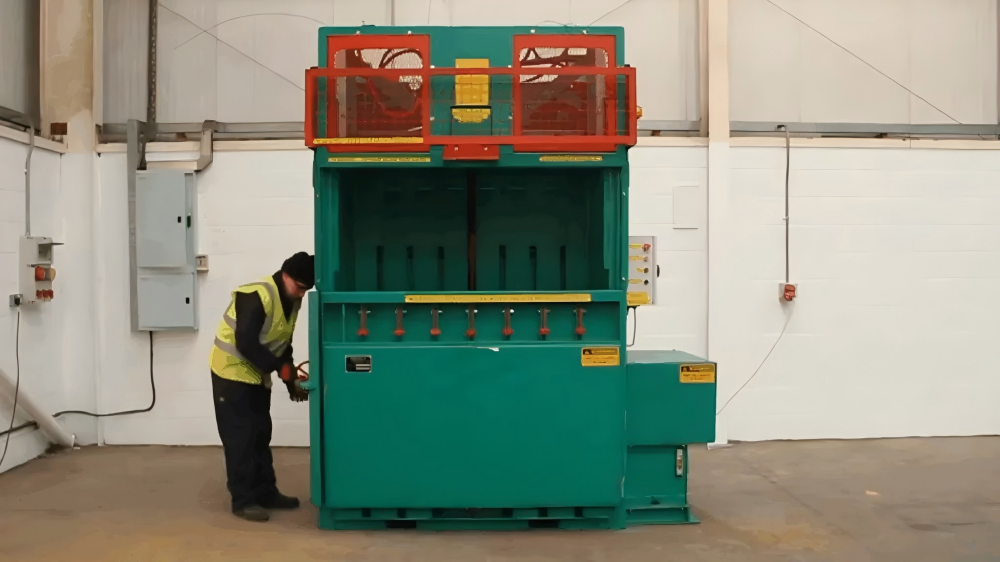
Calculation Method: Matching Machine Size to Material Volume
To accurately match a vertical baler to your needs, you must perform a volumetric analysis of your waste stream. The goal is to ensure the machine can handle the peak daily volume of material without creating a bottleneck in your operations. The basic formula for determining required capacity is: (Total Weekly Volume of Loose Waste / Compression Ratio) / Operating Hours = Required Hourly Throughput.
The compression ratio varies significantly by material. For example, loose cardboard typically has a compression ratio of approximately 10:1 to 15:1. If your facility generates 100 cubic yards of loose cardboard per week, a baler with a 10:1 ratio will reduce this to 10 cubic yards of baled material. You must then ensure that the machine’s cycle time and chamber size can process those 100 cubic yards within your allotted labor hours. If an operator spends 5 minutes loading and 1 minute for the cycle, you can calculate the total number of bales produced per shift.
Another factor is the ‘Feed Opening’ size. If you are baling large appliance boxes, a small baler with a narrow opening will require employees to manually break down boxes before feeding them, significantly increasing labor costs. In this case, a larger baler is justified not just by the volume of material, but by the physical dimensions of the waste. HARSLE recommends measuring the largest typical item in your waste stream and ensuring the baler’s feed opening is at least 20% larger to facilitate easy loading.
Vertical Baler Parameter Table
The following table provides a comparison of typical HARSLE vertical baler specifications to help you identify which category fits your material volume requirements.
| Model Category | Pressing Force (Tons) | Bale Dimensions (mm) | Average Bale Weight (kg) | Ideal Material Volume |
|---|---|---|---|---|
| Small Series (VB-10) | 10 – 20T | 800 x 600 x 600 | 50 – 150kg | Low (Retail/Small Shops) |
| Medium Series (VB-30) | 30 – 50T | 1100 x 700 x 900 | 250 – 400kg | Moderate (Warehouses) |
| Large Series (VB-60) | 60 – 80T | 1500 x 760 x 1000 | 450 – 600kg | High (Distribution Centers) |
| Heavy Duty (VB-100+) | 100T+ | 1800 x 1000 x 1200 | 800kg+ | Industrial/Scrap Yards |
Common Engineering Mistakes in Baler Selection
One of the most frequent mistakes in selecting a vertical baler is undersizing the machine based on average volume rather than peak volume. Industrial waste generation is rarely linear; it often comes in surges (e.g., after a large shipment arrival). An undersized baler will lead to a backlog of loose material, creating fire hazards and obstructing floor space. Furthermore, running a small machine at its absolute limit for extended periods accelerates wear on the hydraulic seals and structural frame, leading to premature failure.
Another common error is ignoring the ‘Material Memory’ or ‘Spring-back’ effect. Materials like PET bottles or heavy-duty plastics tend to expand once the pressure is released. If the baler does not have sufficient tonnage or a proper ‘retainer claw’ system, the bales will be loose and difficult to tie, or worse, they may burst after being ejected. Engineers must specify a machine that provides enough ‘dwell time’ (the time the ram stays at full pressure) to allow the material to take a permanent set.
Electrical compatibility is also frequently overlooked. Large vertical balers require three-phase power and significant amperage. Installing a high-capacity baler in a facility with inadequate electrical infrastructure can lead to voltage drops that damage the motor or PLC. Always consult with an electrician to ensure your facility can support the startup current (inrush current) of the baler’s hydraulic pump motor. HARSLE machines are designed with high-efficiency motors, but the fundamental power requirements must still be met for safe operation.
Selection Checklist for Vertical Balers
Before finalizing your purchase, use this checklist to ensure the machine matches your operational reality:
- Material Type: Is the material soft (cardboard), elastic (plastic), or rigid (metal)? Ensure the tonnage matches the material’s resistance.
- Volume Requirements: Calculate your peak daily waste volume. Does the baler’s cycle time allow for this volume to be processed within one shift?
- Space Constraints: Check the ‘Operating Height.’ Vertical balers require significant overhead clearance for the hydraulic ram when it is fully extended.
- Loading Method: Will you be loading by hand, via conveyor, or using a forklift? This determines the necessary feed opening height and safety gate configuration.
- Bale Handling: How will the finished bales be moved? Ensure you have a pallet jack or forklift capable of lifting the estimated bale weight.
- Safety Standards: Does the machine meet CE or OSHA requirements? Look for interlocked gates and emergency stop buttons.
- Maintenance Access: Ensure there is enough space around the machine for hydraulic oil changes and cylinder inspections.
Frequently Asked Questions (FAQ)
1. How do I know if I need a 30-ton or a 50-ton baler?
The choice depends on the density you want to achieve and the material type. If you are baling cardboard and want to reach ‘mill-size’ weights (approx. 400-500kg), a 50-ton baler is generally recommended to ensure the bale is tight enough for transport. A 30-ton baler is sufficient for smaller volumes or lighter materials where maximum transport weight isn’t the primary concern.
2. Can one vertical baler handle multiple types of material?
Yes, HARSLE vertical balers are versatile. However, you should not mix materials within a single bale. You can bale cardboard in the morning and plastic in the afternoon, but you must adjust the settings (if the machine has a PLC) to account for the different compression needs of each material.
3. What is the typical lifespan of a HARSLE vertical baler?
With proper maintenance—including regular hydraulic oil filtration, lubrication of moving parts, and inspection of the structural welds—a high-quality vertical baler can last 15 to 20 years in an industrial environment. The longevity is largely dependent on not consistently exceeding the machine’s rated capacity.
4. Why is bale density so important?
Bale density directly impacts your bottom line. Most recyclers pay by weight, but transport costs are often calculated by the load or the mile. Denser bales mean you can fit more weight into a single truck, reducing the number of trips required and increasing your overall profit margin on the recycled material.
5. Does the machine require a special foundation?
Most standard vertical balers can be installed on a level, reinforced concrete floor (typically 6 inches thick). However, for ultra-high tonnage machines (100T+), an engineering review of the floor’s load-bearing capacity is recommended to prevent cracking over time due to the vibration and concentrated weight.
6. How often should the hydraulic oil be changed?
For most industrial applications, we recommend checking the oil quality every 6 months and performing a full change every 2,000 operating hours. Using high-quality anti-wear hydraulic oil is essential for protecting the precision valves and the pump from internal friction and heat buildup.