Comprehensive Guide: How to Troubleshoot Hydraulic System Issues in an Industrial Shredder

Introduction to Hydraulic Systems in Industrial Shredders
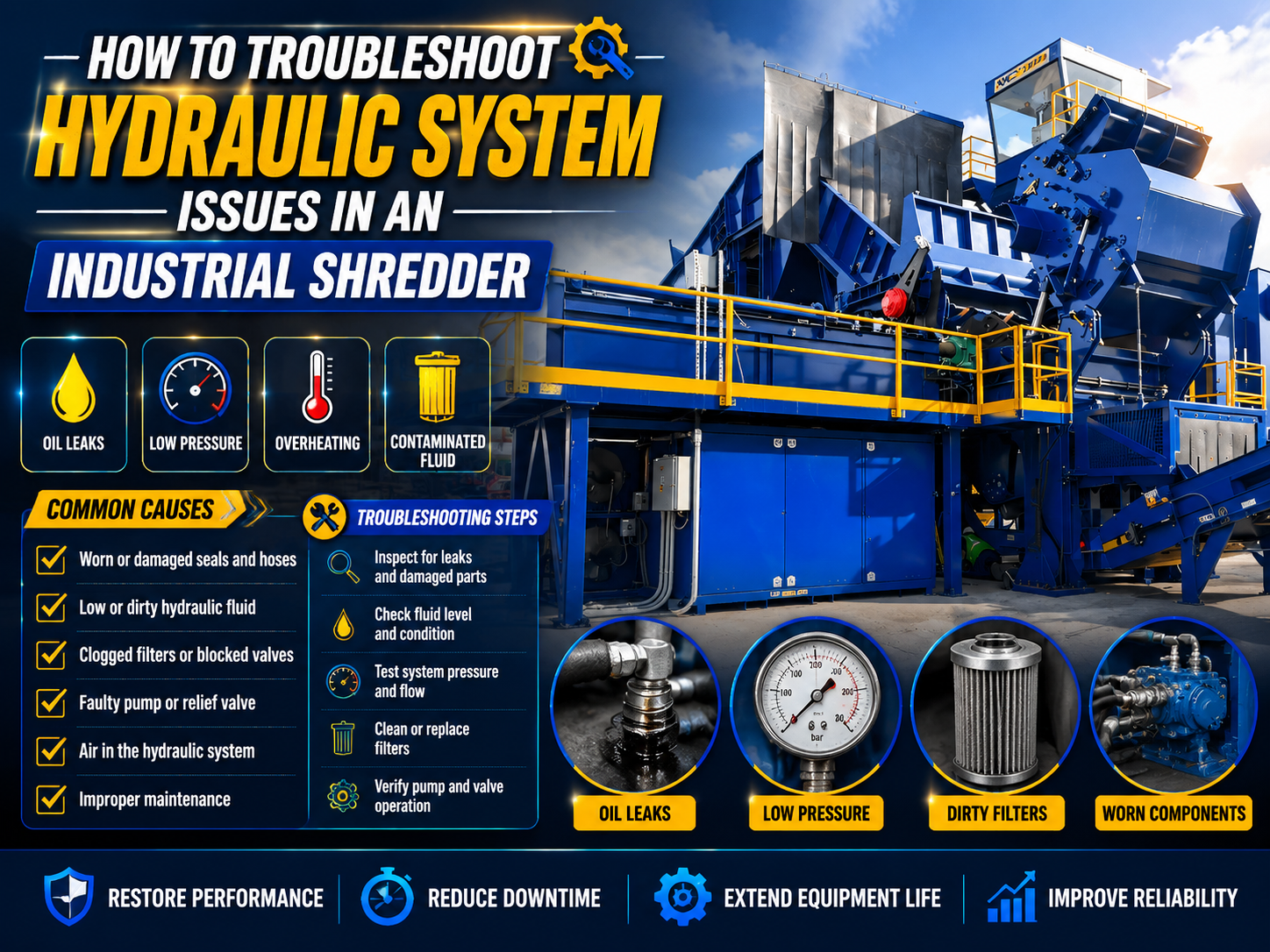
Industrial shredders are the workhorses of the recycling and waste management industries, tasked with breaking down everything from scrap metal and plastics to tires and electronic waste. At the heart of many high-torque, heavy-duty shredders lies a sophisticated hydraulic system. This system provides the necessary force to drive the cutting shafts through stubborn materials that would stall a standard electric motor. However, because these systems operate under extreme pressure and in harsh environments, they are susceptible to wear and tear. Knowing how to Troubleshoot Hydraulic System Issues In An Industrial Shredder is a critical skill for maintenance teams and facility managers to minimize downtime and prevent costly repairs.
A hydraulic system failure doesn’t just stop the machine; it can lead to safety hazards and significant financial losses. When a shredder loses power or begins to operate erratically, the culprit is often found within the hydraulic circuit—ranging from contaminated fluid to a failing pump or a sticking valve. Understanding the interplay between the hydraulic pump, the fluid reservoir, the control valves, and the hydraulic motors is the first step in effective diagnostics. In this guide, we will explore the systematic approach required to identify and resolve common hydraulic problems in industrial shredders, ensuring your HARSLE equipment remains at peak performance.
The complexity of these systems requires a blend of mechanical intuition and technical knowledge. Modern shredders often incorporate electronic sensors and PLC (Programmable Logic Controller) interfaces that provide error codes, but these codes only tell part of the story. A true technician must be able to look beyond the digital display and inspect the physical components. Whether you are dealing with a slow cycle time, excessive noise, or a complete loss of pressure, this article provides the technical depth needed to get your industrial shredder back online quickly and safely.
Key Considerations Before Troubleshooting
Before diving into the technicalities of hydraulic repair, safety must be the absolute priority. Industrial shredders are powerful machines capable of exerting thousands of pounds of force. When troubleshooting a hydraulic system, you are dealing with high-pressure fluid that can cause severe injury or death if a line bursts or if a component is disconnected while under pressure. Always follow Lock-Out Tag-Out (LOTO) procedures to ensure the machine cannot be accidentally started. Additionally, ensure that all stored energy in accumulators is safely discharged before opening any part of the hydraulic circuit.
Another key consideration is the environment in which the shredder operates. Shredding operations are inherently dusty and dirty. Contamination is the number one enemy of hydraulic systems. Even a microscopic particle of metal or grit can score a pump vane or jam a precision valve spool. Therefore, before opening any part of the system, the area must be cleaned thoroughly. Using lint-free rags and ensuring that all tools are clean will prevent introducing new problems while trying to fix existing ones. It is also essential to have the manufacturer’s hydraulic schematic on hand; without it, you are essentially flying blind through a maze of hoses and manifolds.
Temperature management is also a vital factor. Hydraulic systems generate heat as a byproduct of energy conversion. If the system is running too hot, the oil thins out, leading to internal leakage and reduced efficiency. Conversely, if the system is too cold, the oil may be too viscous to flow properly, causing pump cavitation. Monitoring the operating temperature and ensuring the cooling system (whether air-cooled or water-cooled) is functioning correctly is a fundamental part of the troubleshooting process. Often, what looks like a mechanical failure is simply a thermal issue affecting fluid dynamics.
Technical Details: Common Hydraulic Issues and Solutions
1. Pump Cavitation and Aeration
One of the most common and destructive issues in shredder hydraulics is pump noise, often caused by cavitation or aeration. Cavitation occurs when the pump cannot get enough oil, creating a vacuum that forms vapor bubbles. When these bubbles reach the high-pressure side of the pump, they implode with enough force to pit the metal surfaces. This sounds like marbles rattling inside the pump. Aeration, on the other hand, is when air enters the system through a leak in the suction line or a low fluid level in the reservoir, causing the oil to foam. Both issues lead to erratic operation and rapid pump wear.
To troubleshoot this, first check the fluid level in the reservoir. If it is low, air may be being sucked into the intake. Next, inspect the suction strainer or filter; a clogged filter is a primary cause of cavitation. If the noise persists, check all fittings on the suction side for tightness. Even a tiny air leak that doesn’t leak oil out can suck air in. Replacing worn seals and ensuring the intake line is unobstructed will usually resolve these issues and save the pump from catastrophic failure.
2. Pressure Drops and Loss of Torque
If your industrial shredder is stalling on materials it used to handle easily, you are likely experiencing a loss of hydraulic pressure or flow. This can be caused by a failing pump, but more often, it is due to an internal leak or a misadjusted relief valve. The relief valve is the safety gate of the system; if it is set too low or if the spring has weakened, it will bypass oil back to the tank before the required pressure is reached at the motor. Using a pressure gauge at various test points in the circuit can help isolate where the pressure is being lost.
Internal leakage in the hydraulic motor or cylinders is another culprit. As components wear, the tight tolerances between moving parts increase, allowing high-pressure oil to slip past the seals and return to the low-pressure side without doing work. This generates heat. A quick way to check for internal leakage is to use an infrared thermometer to find “hot spots” on the motor or valves. A component that is significantly hotter than the rest of the system is likely bypassing fluid internally. Replacing worn piston seals or motor rotating groups is the standard fix for this condition.
3. Directional Control Valve Malfunctions
The directional control valves are responsible for the shredder’s ability to reverse—a crucial function for clearing jams. If the shredder refuses to reverse or move forward, the solenoid-operated valves are the first place to look. Electrical failure is common; a burnt-out coil or a loose wire will prevent the valve from shifting. You can often manually override these valves with a small tool to see if the mechanical part of the valve is still functional. If the machine moves during a manual override but not via the control panel, the issue is electrical.
If the electrical system is fine, the valve spool may be physically stuck due to contamination. Small metal shavings from the shredding process can find their way into the hydraulic fluid and wedge themselves in the tight clearance of the valve body. In this case, the valve must be disassembled, cleaned, and inspected for scoring. If the spool or bore is damaged, the entire valve assembly usually needs replacement to ensure reliable operation.
4. Fluid Contamination and Degradation
Hydraulic fluid is not just a medium for power; it is also a lubricant and a coolant. Over time, the fluid breaks down due to heat and shear forces. It can also become contaminated with water, which turns the oil milky and leads to rust and poor lubricity. Regular oil analysis is the best way to monitor fluid health. If the oil appears dark or has a burnt smell, it has oxidized and lost its protective properties. This leads to increased friction and wear across all hydraulic components.
| Symptom | Potential Cause | Recommended Action |
|---|---|---|
| Slow Operation | Clogged Filters / Internal Leakage | Replace filters; check pump flow rate. |
| Excessive Heat | Low Oil Level / Cooling Failure | Top off oil; clean heat exchanger. |
| Erratic Movement | Air in System (Aeration) | Bleed air; check suction line seals. |
| No Pressure | Pump Failure / Relief Valve Open | Inspect pump coupling; reset relief valve. |
| High-Pitched Whine | Cavitation | Clean suction strainer; check oil viscosity. |
Selection Advice for Hydraulic Components
When it comes to maintaining or upgrading an industrial shredder, selecting the right hydraulic components is vital. Not all pumps and motors are created equal. For heavy-duty shredding, piston pumps are generally preferred over gear pumps because they can handle higher pressures and offer variable displacement, which allows for better control over the shredding speed and torque. When replacing a pump, ensure the displacement and pressure ratings match the original HARSLE specifications exactly to avoid overloading the motor or underpowering the shredder.
Filtration selection is another area where quality matters. Many operators try to save money by using cheaper, off-brand filters. However, a high-quality synthetic media filter with a low micron rating (typically 10 microns or less for high-pressure systems) is essential for protecting expensive pumps and valves. Look for filters with a high dirt-holding capacity and a bypass indicator that alerts you when the filter is reaching the end of its life. Investing in a better filtration system can extend the life of your hydraulic fluid and components by years.
Finally, consider the hydraulic fluid itself. In extreme climates, you may need a fluid with a high Viscosity Index (VI) to ensure it remains stable across a wide range of temperatures. For fire-prone environments, such as those shredding scrap metal with potential sparks, fire-resistant hydraulic fluids (like water-glycols or synthetic esters) should be considered. Always consult with HARSLE technical support before switching fluid types, as some seals may not be compatible with certain synthetic fluids.
Frequently Asked Questions (FAQ)
How often should I change the hydraulic oil in my shredder?
Generally, hydraulic oil should be changed every 2,000 to 4,000 operating hours, or at least once a year. However, this depends heavily on the operating environment and the results of regular oil analysis. If the oil shows signs of oxidation or high particle counts, it should be changed immediately regardless of the hour count.
Why is my hydraulic shredder running hot?
Overheating is usually caused by one of three things: a dirty or blocked heat exchanger, low oil levels, or internal leakage. When oil bypasses a seal or valve, the pressure energy is converted directly into heat. Check the cooling system first, then look for components that feel excessively hot to the touch.
Can I mix different brands of hydraulic oil?
It is not recommended to mix different brands or types of hydraulic oil. Different manufacturers use different additive packages that may not be compatible, potentially leading to foaming, sludge formation, or seal damage. If you must switch brands, it is best to perform a full system flush.
What does it mean if my hydraulic hoses are vibrating excessively?
Excessive vibration, or “hammering,” is often a sign of pressure pulsations. This can be caused by a failing pump, air trapped in the system, or a malfunctioning accumulator. It can also occur if the hose supports have come loose. If left unaddressed, this vibration will lead to fatigue failure of the hoses and fittings.
How do I know if my hydraulic pump is failing?
Signs of a failing pump include increased noise (whining or grinding), a gradual loss of cycle speed, and increased oil temperature. If you suspect the pump is failing, a flow meter test can confirm if the pump is still delivering its rated output at high pressure.
Conclusion: Maintaining Peak Performance
Troubleshooting hydraulic system issues in an industrial shredder requires a systematic approach, a keen eye for detail, and a commitment to safety. By understanding the common failure modes—such as cavitation, contamination, and valve malfunctions—operators can address problems before they lead to catastrophic machine failure. Regular maintenance, including oil analysis and filter changes, remains the most effective way to ensure the longevity of your HARSLE shredder. A well-maintained hydraulic system not only performs better but also operates more efficiently, reducing energy costs and maximizing the throughput of your recycling operation.
In the demanding world of metal fabrication and waste processing, equipment reliability is everything. When you take the time to properly diagnose and repair hydraulic issues, you are protecting a significant capital investment. Remember that while many issues can be handled on-site, complex problems involving internal pump wear or PLC integration may require professional service. By combining the technical insights provided in this guide with the robust engineering of HARSLE machinery, you can ensure your industrial shredder remains a productive asset for years to come. Keep your fluids clean, your filters fresh, and your pressures monitored, and your hydraulic system will provide the relentless power needed to tackle the toughest shredding challenges.