Single-Shaft Shredder for Plastic Recycling: Process Flow and Output Control

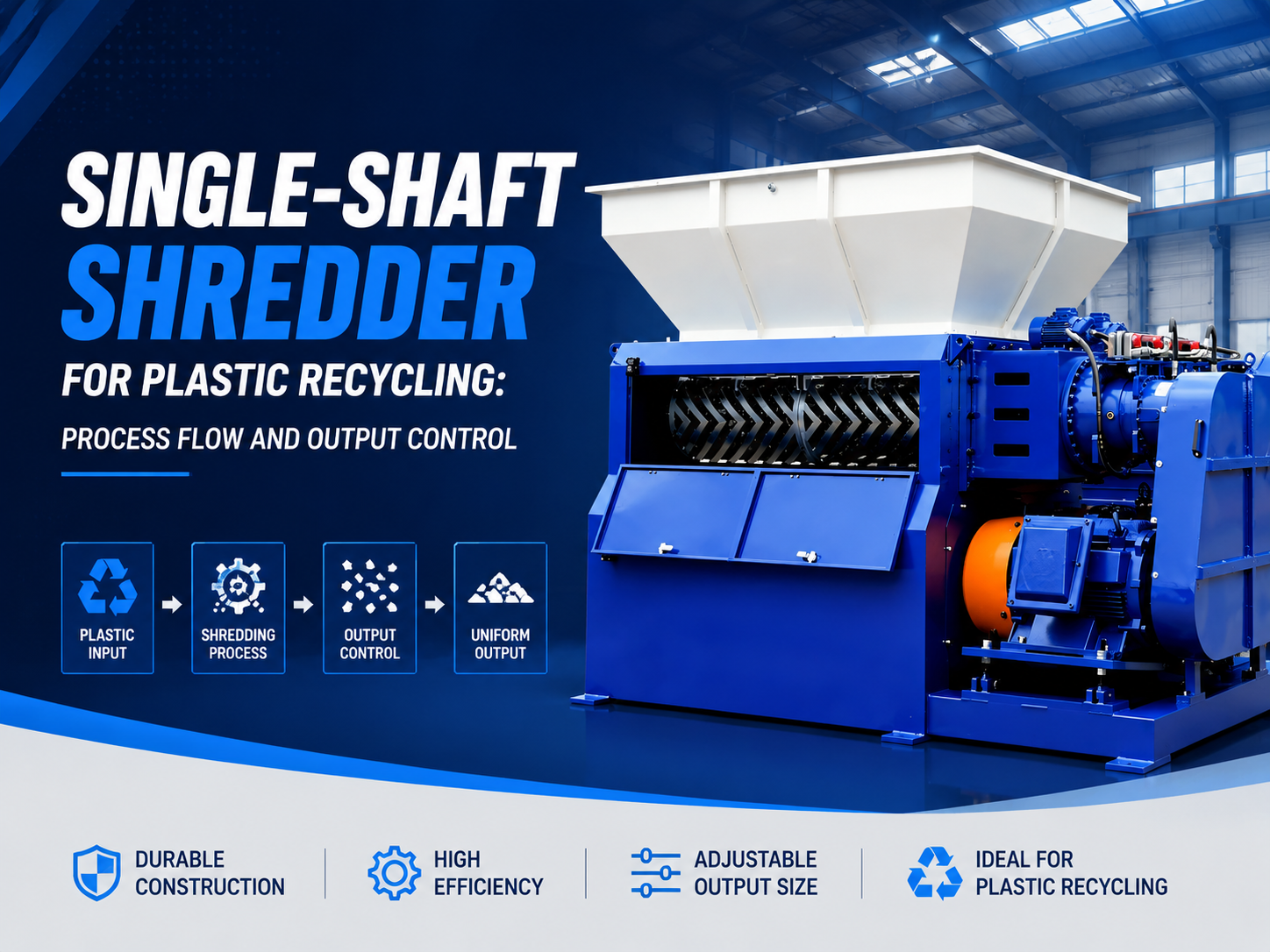
Technical Overview of Single-Shaft Shredders in Plastic Recycling
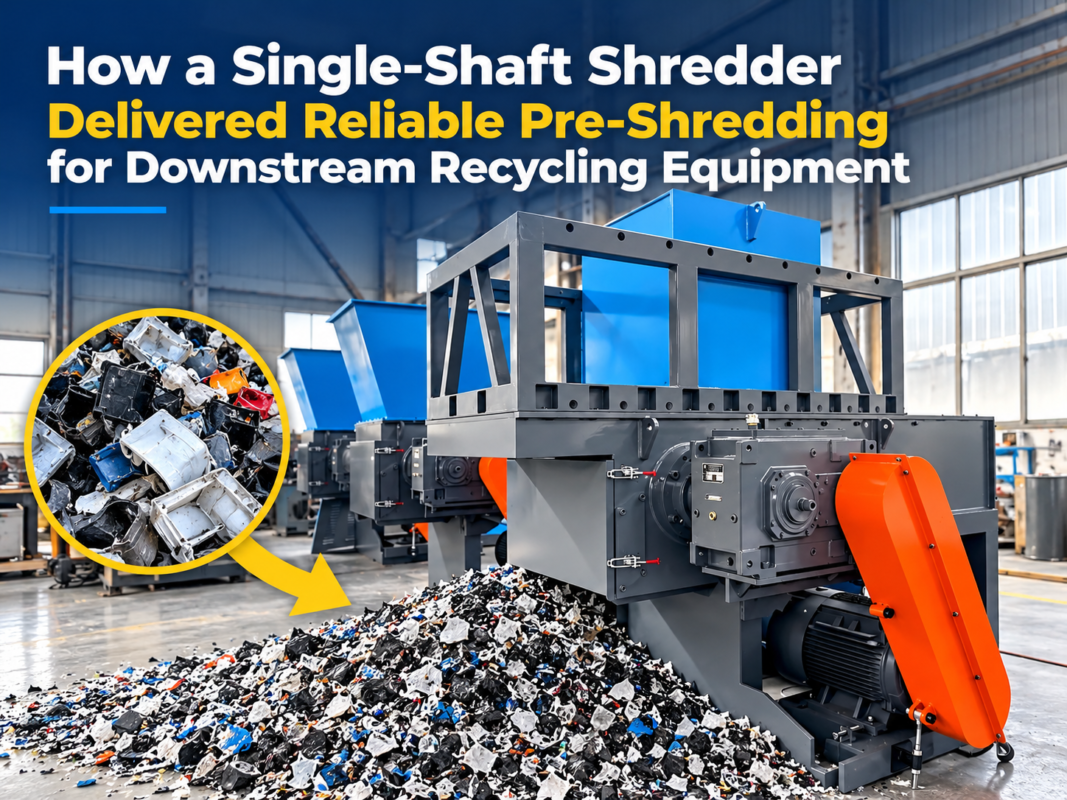
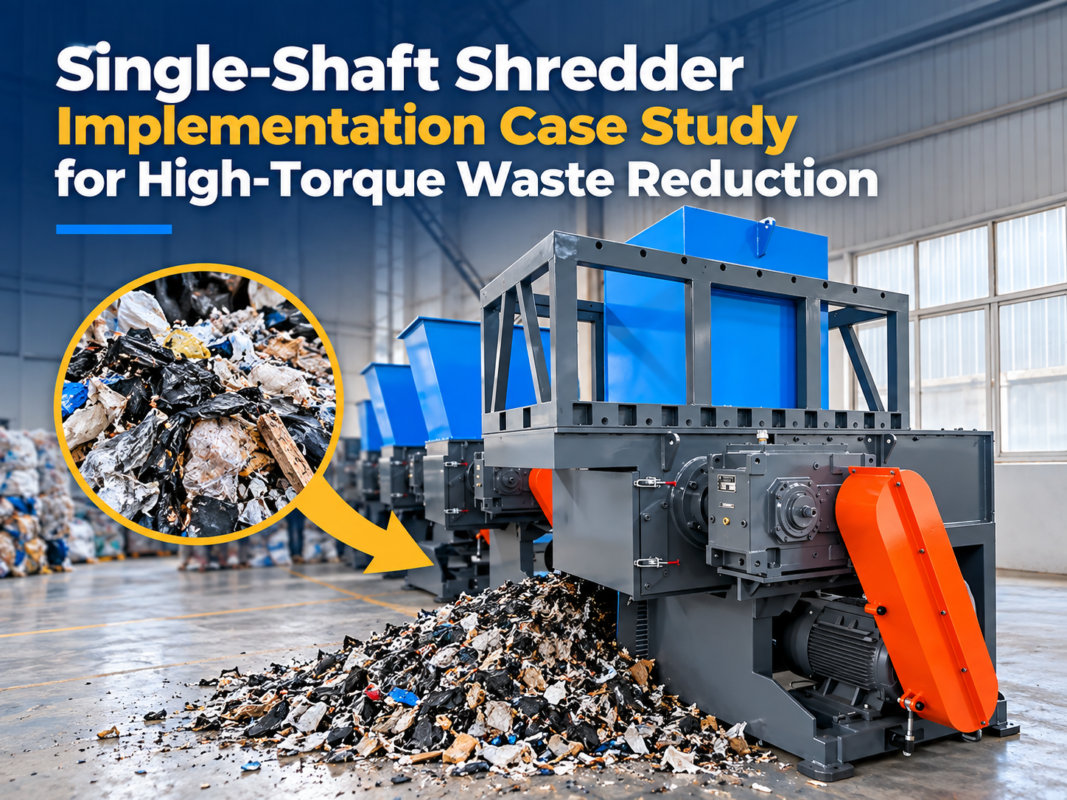
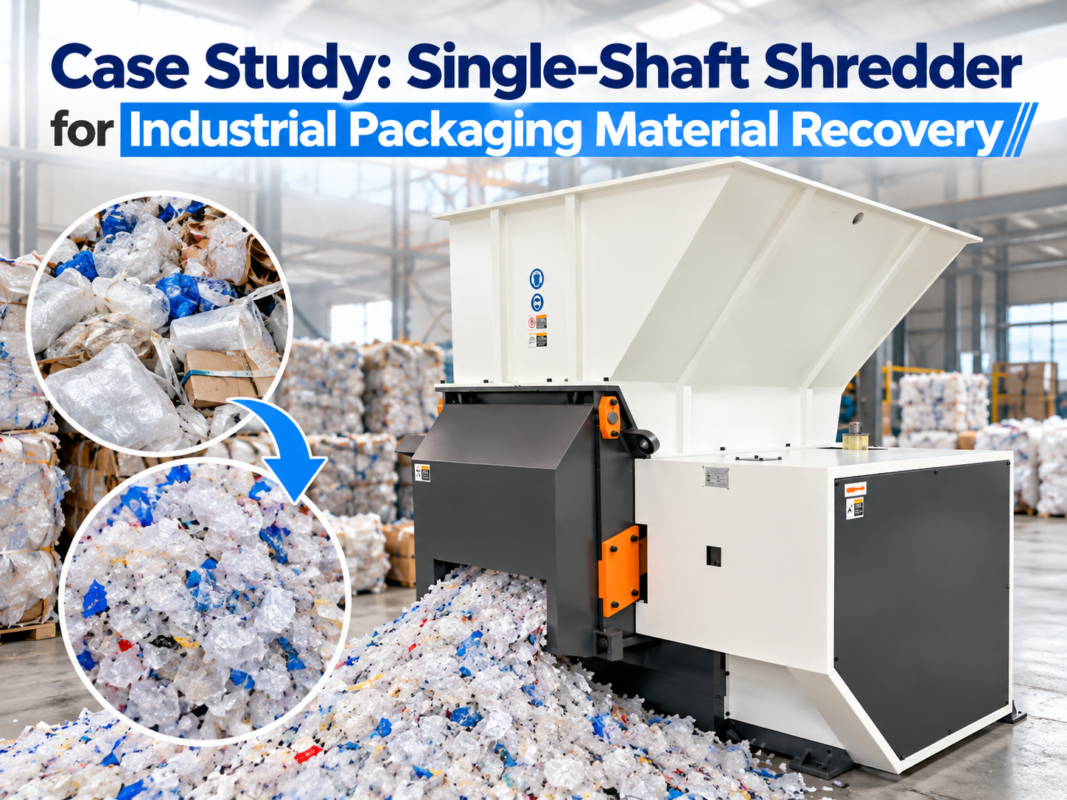
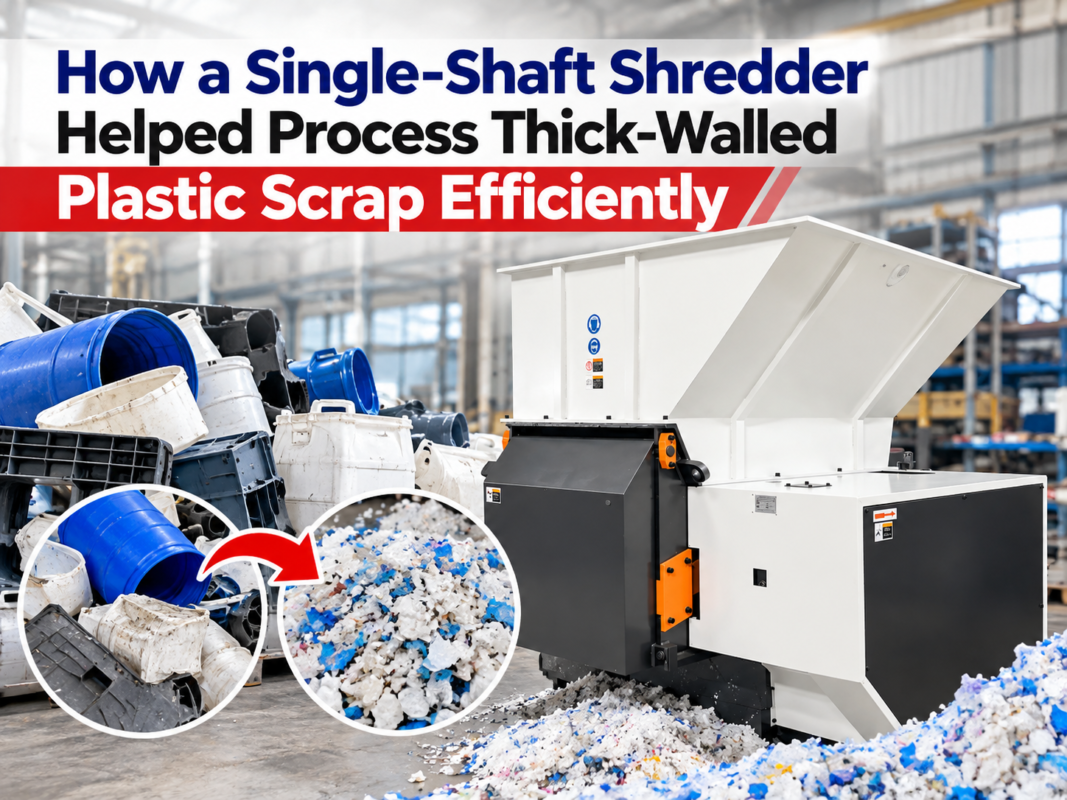
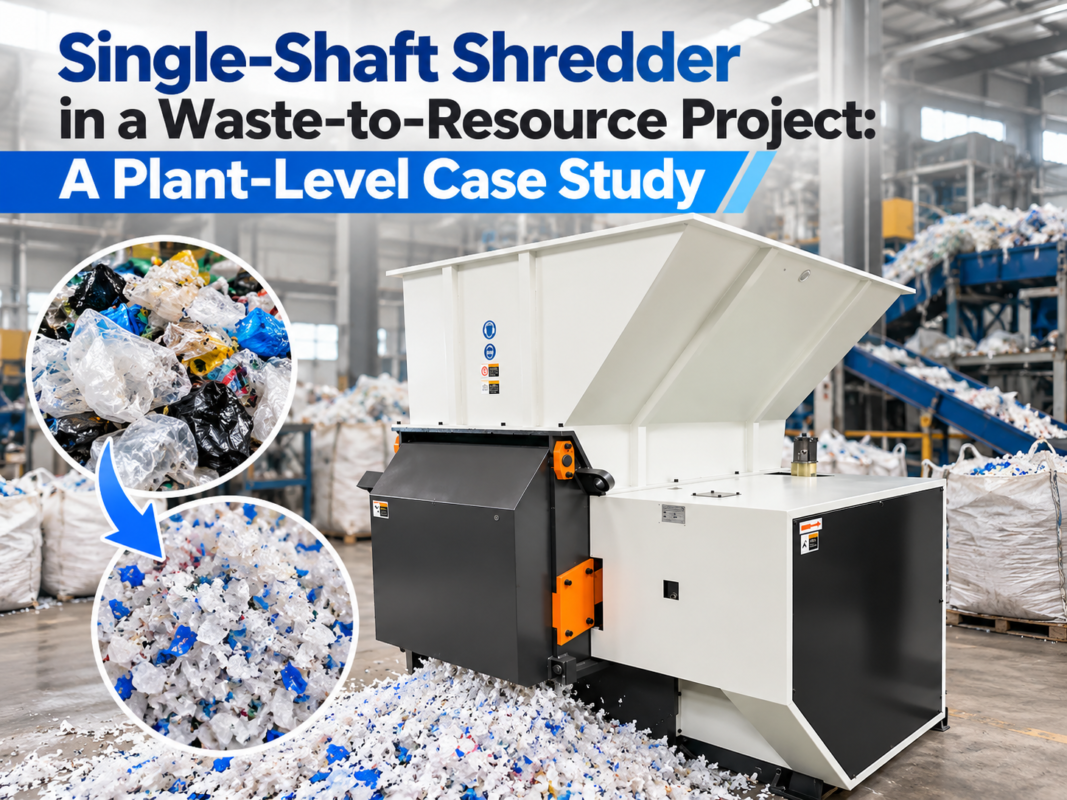
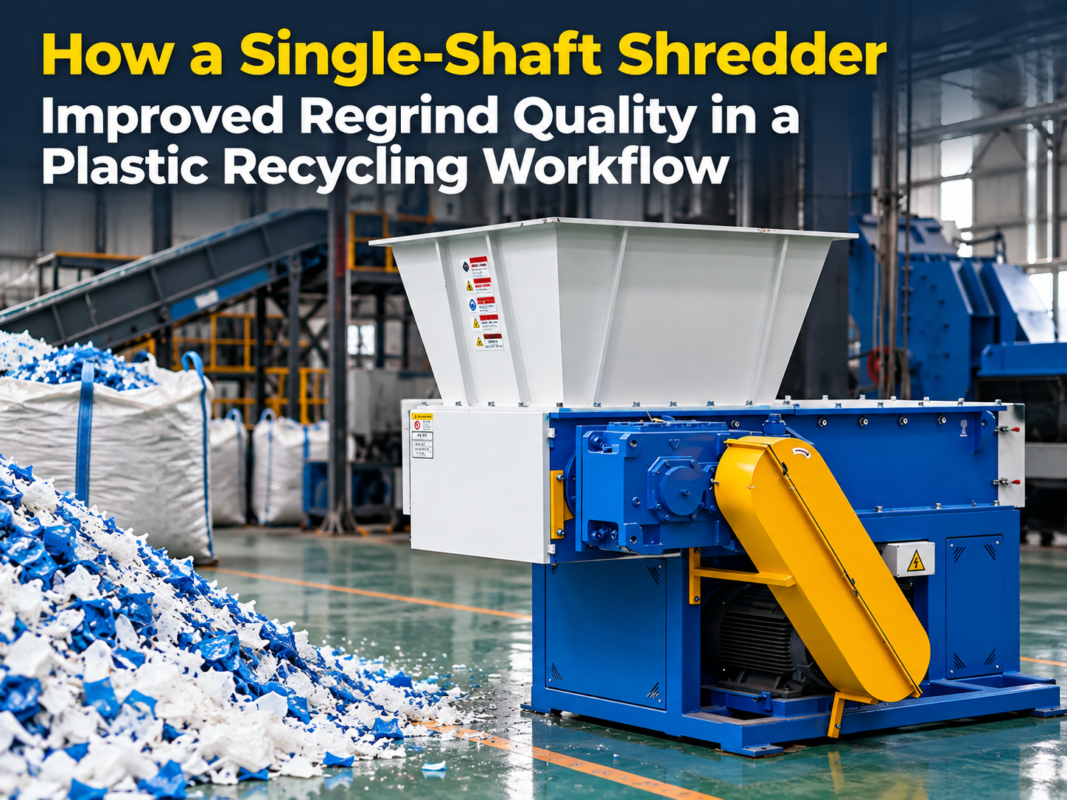
The single-shaft shredder stands as a cornerstone in the modern plastic recycling industry, offering a versatile and robust solution for reducing bulky plastic waste into manageable, uniform flakes. Unlike multi-shaft shredders that rely on high-torque shearing between two or more shafts, the single-shaft shredder utilizes a high-speed rotor equipped with replaceable cutting inserts that work against a stationary counter-knife. This design is particularly effective for processing tough materials like HDPE pipes, thick-walled purgings, PET bottles, and woven bags. The primary advantage of this technology lies in its ability to produce a specific, controlled output size in a single pass, thanks to the integration of a sizing screen located beneath the rotor.
At the heart of the single-shaft shredder is the hydraulic pusher or ram. This component is critical for maintaining a consistent feed rate. As material is loaded into the hopper, the hydraulic ram pushes the waste against the rotating shaft. The pressure exerted by the ram is often controlled by an intelligent PLC system that monitors the motor’s current load. If the motor encounters excessive resistance, the ram momentarily retracts to prevent stalling, ensuring a continuous and efficient shredding cycle. This automated feedback loop is essential for maximizing throughput while protecting the mechanical integrity of the drive system.
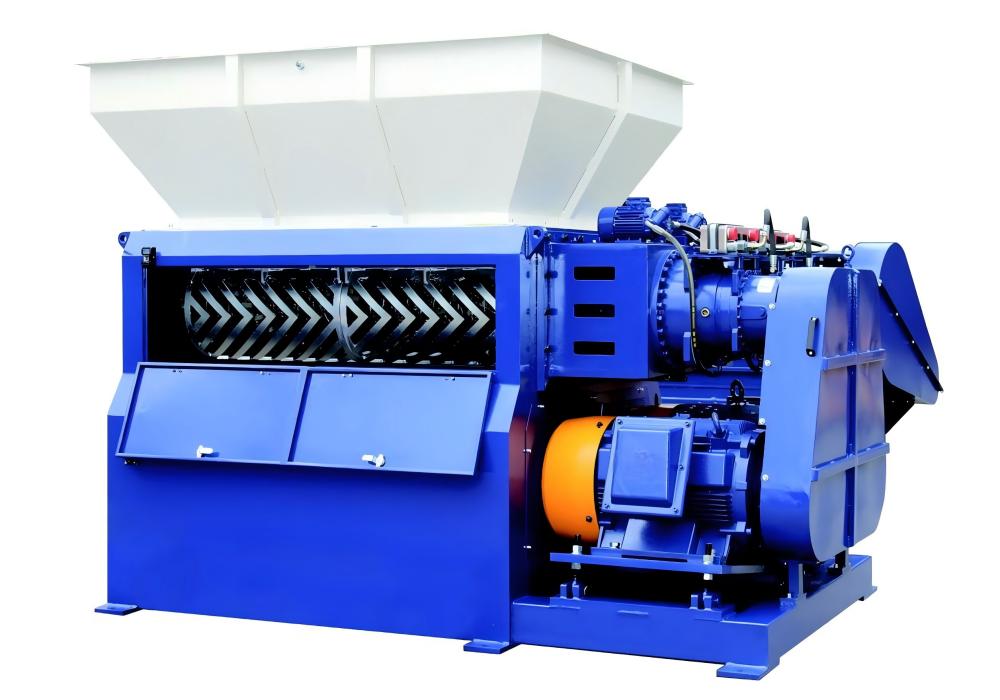
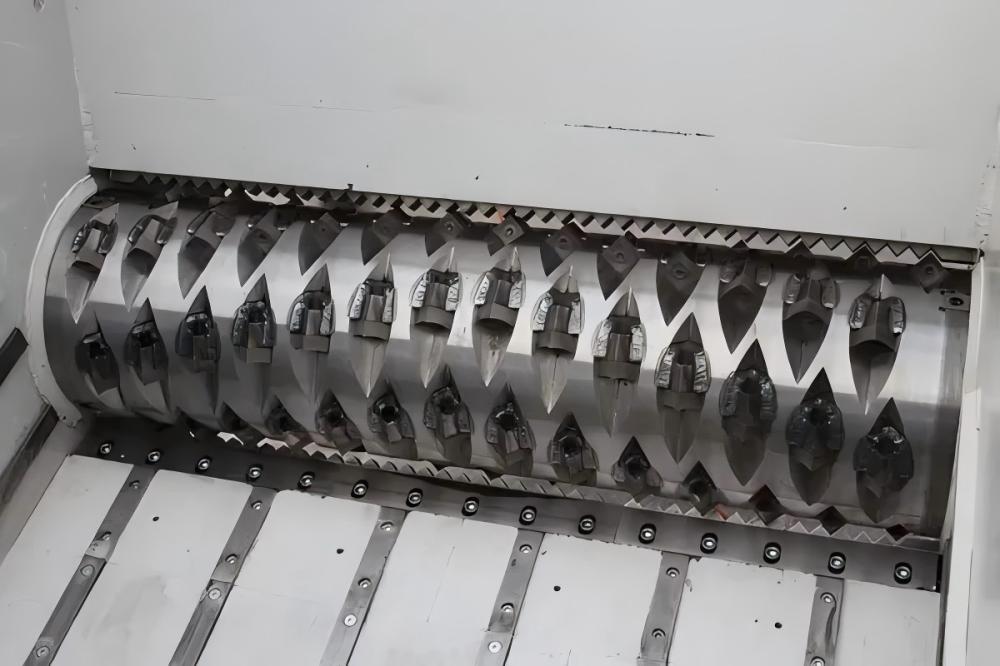
The rotor design itself varies based on the application. For plastic recycling, V-shaped or staggered blade arrangements are common. These configurations ensure that only a few blades are cutting at any given moment, which reduces the instantaneous torque requirement and minimizes heat generation. Heat control is vital in plastic recycling, as excessive friction can lead to the melting of polymers like LDPE or PP, which then clog the screen and reduce efficiency. Advanced single-shaft shredders often incorporate water-cooling systems within the rotor or the housing to mitigate these thermal issues during high-volume operations.
Process Flow: From Raw Waste to Uniform Flakes
The process flow of a single-shaft shredder for plastic recycling is a multi-stage operation designed for efficiency and safety. It begins with the Feeding Stage. Material is introduced into the large-volume hopper via a conveyor belt, forklift, or manual loading. The hopper is designed with steep walls to prevent ‘bridging,’ where material gets stuck and fails to reach the rotor. In high-capacity lines, sensors detect the level of material to automate the upstream conveyor, ensuring the shredder is never overfilled or running empty.
Once the material reaches the Shredding Zone, the hydraulic ram forces it into the path of the rotating blades. The blades, typically made of high-alloy steel like D2 or DC53, shear the plastic against the fixed bed knives. The clearance between the rotor blades and the bed knives is a critical adjustment point; a tighter gap results in cleaner cuts and less dust, while a wider gap may be necessary for contaminated materials to prevent excessive wear. The material is repeatedly cut until it is small enough to pass through the Screening Stage.
The Output and Discharge Stage involves the material falling through the screen mesh into a collection bin or onto a discharge conveyor. The screen size determines the final particle size, typically ranging from 20mm to 100mm for primary shredding. If the material is destined for an extruder, it may undergo secondary granulation. The discharge system often includes magnetic separators to remove any metallic contaminants that might have been hidden within the plastic waste, protecting downstream equipment like wash lines or pelletizers.
Output Control and Particle Size Optimization
Output control in single-shaft shredders is primarily governed by three factors: screen aperture size, rotor speed, and blade geometry. The screen is the final gatekeeper; no material leaves the cutting chamber until it is smaller than the screen holes. However, simply installing a smaller screen is not always the best solution, as it significantly reduces throughput and increases heat. Operators must balance the desired flake size with the physical properties of the plastic. For example, flexible films require a different screen configuration than rigid PVC to prevent ‘wrapping’ around the rotor.
Rotor speed (RPM) also plays a significant role in output quality. While higher speeds generally increase throughput, they also increase the kinetic energy transferred to the plastic, which can lead to thermal degradation. For heat-sensitive plastics, a lower RPM with higher torque is preferred. Furthermore, the number of blades on the rotor influences the ‘cut frequency.’ A higher density of blades produces a finer output but requires more power. Modern HARSLE shredders allow for fine-tuning these parameters through a centralized control panel, enabling operators to switch between different plastic grades with minimal downtime.
Core Parameters of Single-Shaft Shredders
Understanding the core parameters is essential for any facility looking to integrate a single-shaft shredder into their recycling line. These parameters dictate the machine’s capability, durability, and energy efficiency. The most critical specifications include:
- Motor Power (kW/HP): This defines the total energy available for shredding. For heavy-duty plastic purgings, high-torque motors are required to overcome the initial resistance of the solid mass.
- Rotor Diameter and Length: The rotor’s physical dimensions determine the ‘cutting window.’ A larger diameter provides more torque and allows for more blades, while a longer rotor increases the surface area for processing wide materials like plastic sheets.
- Rotor Speed (RPM): Typically ranging from 60 to 120 RPM for single-shaft models. Lower speeds are used for high-torque applications, while higher speeds are used for lighter, high-volume materials.
- Blade Count and Type: The number of rotating and stationary blades. Blades can be flat, concave, or four-way reversible to extend service life.
- Hydraulic Ram Stroke and Pressure: The force and distance the ram travels to push material into the rotor. Adjustable pressure is vital for handling materials of varying densities.
Calculation Method for Throughput and Efficiency
To accurately predict the performance of a single-shaft shredder, engineers use specific calculation methods. The theoretical throughput ($Q$) can be estimated using the following formula:
Q = V × ρ × η × 60
Where:
- V: The volume of material processed per rotor revolution (m³). This is influenced by the rotor length, the depth of the cut, and the number of blades.
- ρ: The bulk density of the plastic material (kg/m³). Note that loose bottles have a much lower bulk density than solid plastic blocks.
- η: The efficiency factor (usually 0.6 to 0.8), which accounts for the time the ram spends retracting and the percentage of material that passes through the screen on the first strike.
Another critical calculation is the Specific Energy Consumption (SEC), measured in kWh/ton. This helps in determining the operational cost. By dividing the total power consumed during a shift by the total weight of the output, managers can identify if the blades are becoming dull or if the machine is being fed inefficiently. A rising SEC is a primary indicator that maintenance is required.
Parameter Table for Standard Single-Shaft Shredders
| Model Series | Rotor Diameter (mm) | Motor Power (kW) | Blade Quantity (pcs) | Throughput (kg/h) | Typical Application |
|---|---|---|---|---|---|
| HSS-600 | 300 | 18.5 – 22 | 24 + 4 | 400 – 600 | Small plastic containers, crates |
| HSS-1000 | 450 | 37 – 45 | 48 + 6 | 800 – 1200 | HDPE pipes, thick sheets |
| HSS-1500 | 600 | 75 – 90 | 72 + 8 | 2000 – 3500 | Large purgings, baled film |
| HSS-2000 | 800 | 110 – 160 | 96 + 10 | 4000 – 6000 | High-volume industrial waste |
Common Engineering Mistakes in Shredder Operation
One of the most frequent mistakes in operating a single-shaft shredder is improper blade maintenance. Operators often wait until the throughput drops significantly before checking the blades. Dull blades do not cut; they tear and rub, which generates immense heat and increases the load on the motor. This not only wastes energy but can also lead to premature bearing failure due to excessive vibration. Implementing a strict rotation and sharpening schedule for the four-way reversible blades is the most effective way to maintain peak performance.
Another common error is incorrect screen selection. Using a screen with holes that are too small for the material type can lead to ‘over-grinding.’ This creates an excess of ‘fines’ or dust, which is often a wasted byproduct in plastic recycling and can even pose a fire hazard in the baghouse or collection system. Conversely, using a screen that is too large for the downstream wash line can cause blockages in friction washers or dryers. The screen should be chosen based on the requirements of the next step in the recycling process, not just the shredder’s maximum capacity.
Finally, neglecting the hydraulic system is a major oversight. The hydraulic ram is the ‘heartbeat’ of the single-shaft shredder. If the hydraulic oil is contaminated or the cooling system for the oil fails, the ram’s movement becomes erratic. This leads to inconsistent feeding, motor surging, and reduced throughput. Regular oil analysis and filter changes are just as important for the shredder as they are for a press brake or hydraulic press.
Selection Checklist for Single-Shaft Shredders
When purchasing a single-shaft shredder for plastic recycling, consider the following checklist to ensure the machine meets your specific industrial needs:
- Material Compatibility: Does the rotor design suit your specific plastic (e.g., film vs. rigid)?
- Throughput Requirements: Does the rated kg/h account for your specific material’s bulk density?
- Blade Material: Are the blades made of high-wear resistant alloy steel suitable for contaminated plastics?
- Ease of Maintenance: Is the screen cradle hydraulically operated for easy removal and cleaning?
- Safety Features: Does the machine include emergency stops, safety limit switches on access doors, and motor overload protection?
- Cooling System: Is a rotor cooling system necessary for your high-volume or heat-sensitive application?
- Drive System: Is a gearbox drive or a belt drive more suitable for your torque requirements?
- Footprint and Integration: Will the shredder fit into your existing line, and is the discharge height compatible with your conveyors?
Frequently Asked Questions (FAQ)
1. What is the difference between a single-shaft and a double-shaft shredder for plastic?
A single-shaft shredder uses a high-speed rotor and a screen to produce a precise, small output size, making it ideal for secondary recycling stages. A double-shaft shredder operates at lower speeds with higher torque, primarily used for primary volume reduction of very large or bulky items without a specific output size requirement.
2. How often should I rotate the blades on my shredder?
Blade rotation frequency depends on the abrasiveness of the plastic and the presence of contaminants (like sand or metal). On average, for clean industrial plastic, blades should be checked every 80-100 hours of operation. Most HARSLE blades are four-way reversible, allowing for four life cycles before replacement.
3. Can a single-shaft shredder handle plastic film and bags?
Yes, but it requires a specific rotor configuration. For films, a ‘film rotor’ with specialized blade angles and a tighter tolerance between the rotor and the bed knives is used to prevent the film from wrapping around the shaft. A cooling system is also highly recommended for film processing.
4. Why is my shredder’s throughput decreasing?
Decreased throughput is usually caused by dull blades, a clogged screen, or an improperly adjusted hydraulic ram. Check the blade edges first; if they are rounded, rotate or sharpen them. Also, ensure the screen is not blinded by melted plastic or debris.
5. What safety protocols should be followed during maintenance?
Always follow Lock-Out Tag-Out (LOTO) procedures before opening the shredder housing or screen cradle. Ensure the rotor has come to a complete stop. Use protective gloves when handling blades, as even dull blades can cause injury due to the weight and residual sharpness of the alloy steel.