How to Select Hammer Material for a High-Performance Hammer Shredder: A Comprehensive Technical Guide

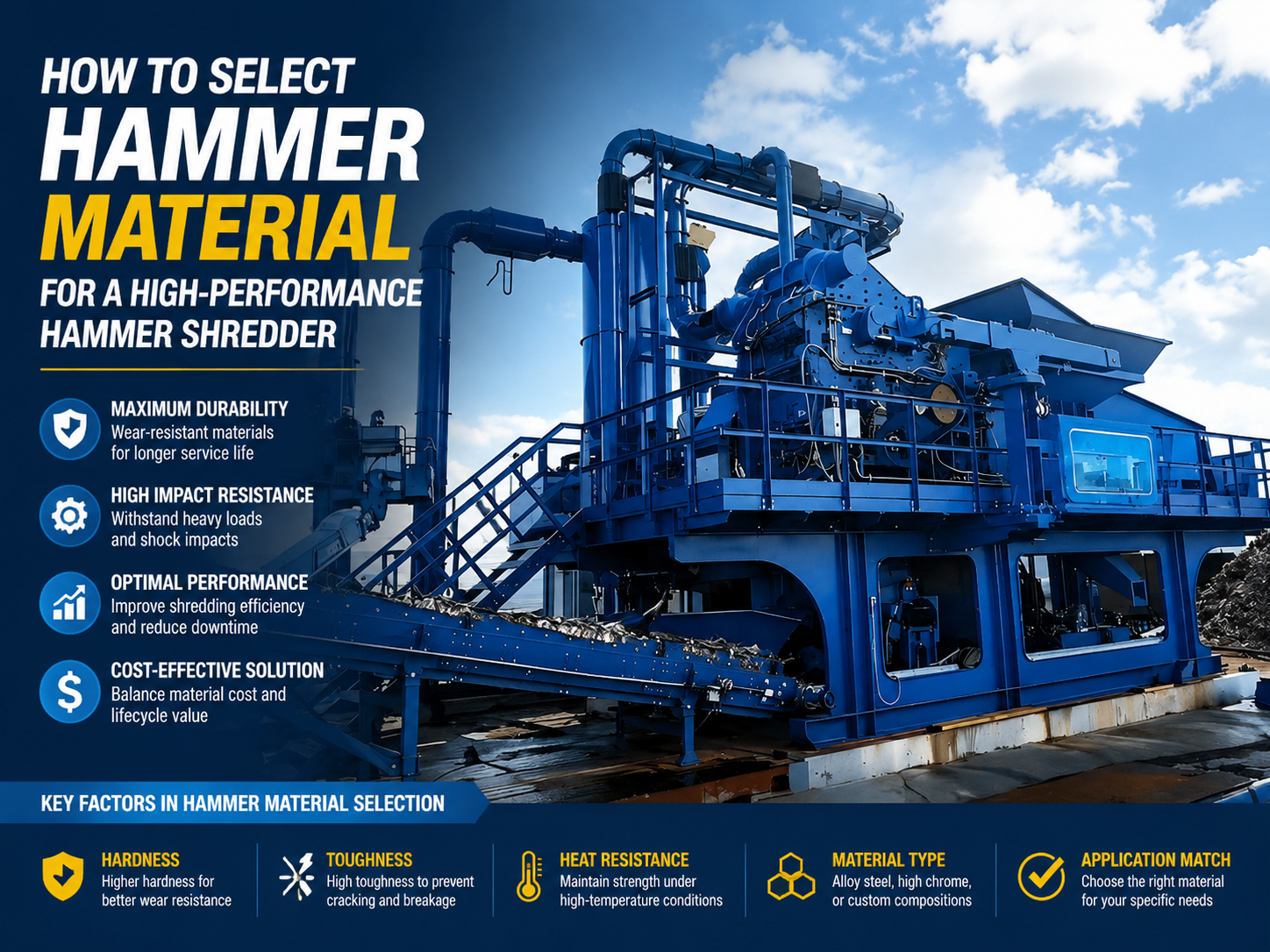
Technical Overview of Hammer Shredder Material Science
In the demanding world of metal recycling and industrial waste management, the hammer shredder stands as the workhorse of the facility. The efficiency, throughput, and operational cost of these machines are almost entirely dependent on the quality and composition of the hammers. When you set out to select hammer material a high-performance hammer shredder, you are not just buying a spare part; you are making a critical engineering decision that affects the kinetic energy transfer and the overall lifespan of your equipment.
The primary challenge in hammer design is the inherent conflict between hardness and toughness. Hardness is required to resist the abrasive wear caused by sand, glass, and hard metals, while toughness (impact resistance) is necessary to prevent the hammer from fracturing when it strikes heavy, non-shreddable objects. A hammer that is too hard will shatter like glass under high impact, while a hammer that is too soft will deform and wear down rapidly, leading to frequent downtime and increased labor costs for replacements.
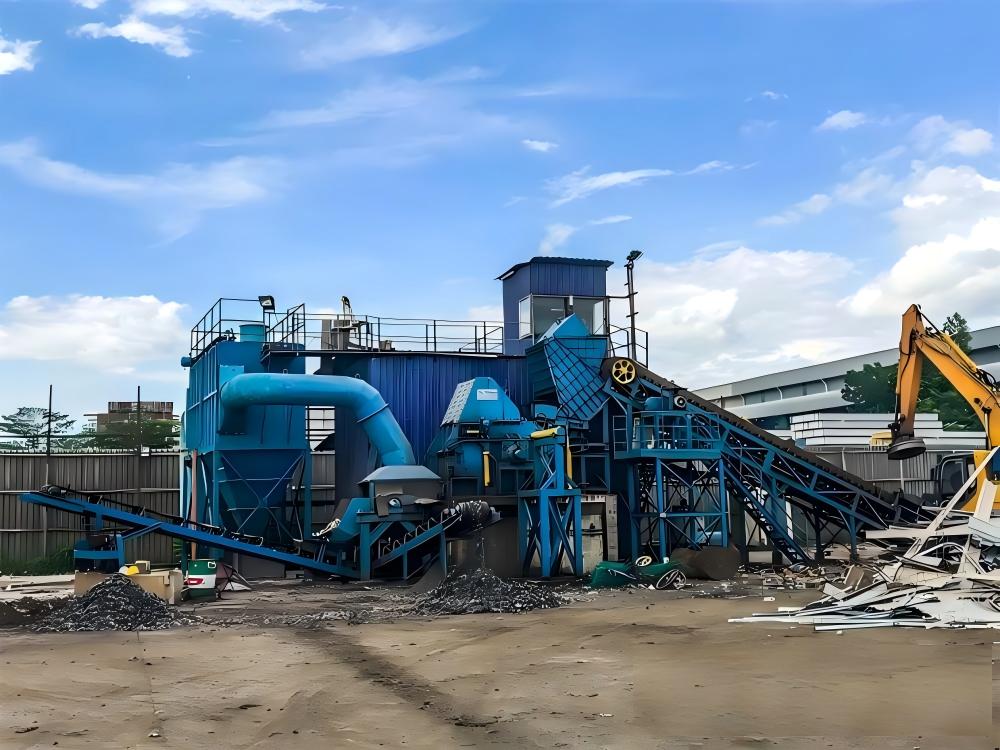
Modern material science has provided several solutions to this dilemma, ranging from traditional Hadfield manganese steel to advanced bimetallic composites. Understanding the microstructural behavior of these materials under high-strain conditions is the first step in optimizing your shredder’s performance. For instance, the phenomenon of ‘work hardening’ is central to the success of manganese alloys, where the surface of the metal becomes harder as it is repeatedly struck, while the core remains ductile and tough.
Furthermore, the geometry of the hammer and the rotational speed of the rotor play significant roles in how the material reacts. High-speed shredders generate immense centrifugal forces, meaning the hammer material must also possess high tensile strength to resist stretching or ‘necking’ at the pinhole. As we delve deeper into this guide, we will explore the specific chemical compositions and mechanical properties that define a high-performance hammer.
Core Parameters for Material Selection
To effectively select hammer material a high-performance hammer shredder, one must evaluate four core parameters: Hardness (HRC), Impact Toughness (Ak), Chemical Composition, and Microstructure. These parameters determine how the hammer will behave in the face of different scrap types, such as light iron, car bodies, or heavy structural steel.
1. Hardness and Wear Resistance
Hardness is typically measured on the Rockwell C scale (HRC). For high-abrasion environments where the impact is moderate, materials with a high HRC (55-62) are preferred. High-chromium cast irons fall into this category. However, in heavy-duty metal shredding, a high initial hardness can be a liability. Manganese steel starts at a lower hardness (around 20-25 HRC) but can work-harden up to 50-55 HRC during operation. This dynamic hardness is what makes it the industry standard for heavy scrap processing.
2. Impact Toughness
Impact toughness, measured in Joules (J/cm²), indicates the material’s ability to absorb energy and deform plastically before fracturing. In a high-performance shredder, hammers are subjected to violent collisions. If the impact toughness is below 50 J/cm², the risk of catastrophic failure (hammer breakage) increases significantly. High-quality manganese steels often achieve impact values exceeding 100 J/cm², providing a massive safety margin for the operator.
3. Chemical Composition (Alloying Elements)
The ‘recipe’ of the steel is what dictates its performance. Carbon (C) provides hardness, while Manganese (Mn) is the primary toughening agent. Chromium (Cr) is added to improve corrosion resistance and hardenability. More advanced alloys include Molybdenum (Mo) to refine the grain structure and Vanadium (V) to increase wear resistance at high temperatures. The balance of these elements must be precise; for example, too much carbon in a manganese alloy can lead to carbide precipitation at the grain boundaries, making the hammer brittle.
4. Microstructure and Heat Treatment
The casting process is only half the battle. Proper heat treatment (solution annealing) is required to ensure a fully austenitic structure in manganese steel. This involves heating the hammers to over 1050°C and quenching them rapidly in water. If the cooling rate is too slow, the material will not achieve its full work-hardening potential. For bimetallic hammers, the bond between the hard face and the tough shank must be molecularly sound to prevent delamination during high-impact cycles.
Calculation Method for Hammer Life and Efficiency
Estimating the lifespan of a hammer is crucial for budgeting and maintenance scheduling. While environmental variables make exact predictions difficult, engineers use the ‘Wear Rate Formula’ to compare different materials. The wear rate is generally expressed as grams of metal lost per ton of material processed (g/t).
To calculate the expected service life, use the following logic: Service Life (Tons) = (Total Hammer Weight – Minimum Functional Weight) / Wear Rate. For example, if a 100kg hammer becomes ineffective once it loses 30kg of its mass, and your material wear rate is 15g/ton, the expected life is 2,000 tons of throughput. By switching to a higher-grade alloy that reduces the wear rate to 10g/ton, you extend the life to 3,000 tons, a 50% increase in productivity.
Another critical calculation is the Kinetic Energy (KE) of the hammer: KE = 1/2 * I * ω², where I is the moment of inertia and ω is the angular velocity. When you select hammer material a high-performance hammer shredder, the material must be able to withstand the peak stress generated at the moment of impact, which is a function of this kinetic energy. If you increase the rotor speed to improve shredding fineness, you must also upgrade the hammer material to a higher toughness grade to compensate for the increased impact forces.
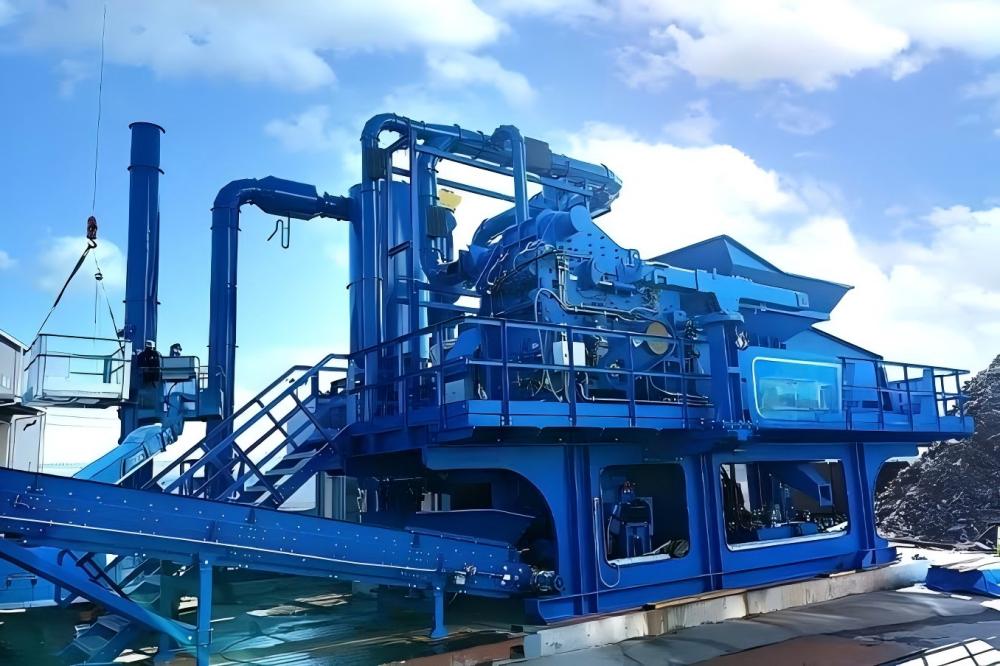
Parameter Table: Comparison of Common Hammer Materials
| Material Type | Hardness (HRC) | Impact Toughness (J/cm²) | Best Application | Pros/Cons |
|---|---|---|---|---|
| High Manganese (Mn13) | 20-50 (Work Hardened) | 120-150 | General scrap, car bodies | Excellent toughness; poor resistance to pure abrasion. |
| Ultra-High Manganese (Mn18Cr2) | 22-55 (Work Hardened) | 100-130 | Heavy structural steel, rails | Higher wear resistance than Mn13; requires high impact to harden. |
| High Chromium Cast Iron | 58-65 | 5-10 | Glass, electronic scrap, wood | Extreme wear resistance; very brittle, breaks on metal impact. |
| Alloy Steel (Cr-Mo) | 45-52 | 40-60 | Medium-duty recycling | Good balance; expensive alloying elements. |
| Bimetallic Composite | 60 (Face) / 30 (Shank) | 80+ (Systemic) | High-performance metal shredding | Best of both worlds; high initial cost, complex manufacturing. |
Common Engineering Mistakes in Hammer Selection
One of the most frequent mistakes is choosing a material based solely on its initial hardness. Many operators assume that a ‘harder’ hammer will last longer. However, in a metal shredder, if the material is too hard and lacks the ability to work-harden, it will suffer from micro-chipping. These tiny chips eventually lead to large stress cracks, causing the hammer to fail prematurely. Always prioritize the ‘Work Hardening’ capability for metal-on-metal applications.
Another common error is neglecting the ‘Feedstock Profile.’ If you are shredding thin-gauge aluminum or light tin, a high-manganese hammer may never receive enough impact energy to work-harden. In this scenario, the hammer remains soft and wears away quickly. For light materials, a medium-alloy steel with a higher initial hardness is often a more cost-effective choice than premium manganese steel.
Furthermore, many engineers overlook the importance of the hammer’s pinhole integrity. The pinhole is the highest stress point of the hammer. If the material is too soft, the hole will ‘ovalize’ or stretch, leading to rotor imbalance and potential machine damage. High-performance hammers often feature reinforced or specially heat-treated pinhole areas to ensure the hammer remains securely attached to the rotor throughout its wear life.
Finally, ignoring the cooling system and operational temperature can be fatal for certain alloys. Manganese steel, for instance, can become brittle if exposed to prolonged temperatures above 250°C, as carbides begin to precipitate. If your shredder runs hot due to high friction or lack of ventilation, you must select a material with high thermal stability or implement water-mist cooling to protect the metallurgical integrity of the hammers.
Selection Checklist for High-Performance Hammers
- Analyze the Feedstock: Is it primarily light scrap (requires initial hardness) or heavy scrap (requires work-hardening toughness)?
- Verify Rotor Speed: Higher RPMs increase impact force, necessitating higher impact toughness (J/cm²).
- Check Chemical Certification: Ensure the Manganese-to-Carbon ratio is between 10:1 and 12:1 for optimal stability.
- Inspect the Casting Quality: Look for signs of porosity or inclusions, which act as stress concentrators and lead to breakage.
- Evaluate the Pinhole: Ensure the pinhole is cast or machined to tight tolerances to prevent vibration.
- Consider Bimetallic Options: If your budget allows, bimetallic hammers offer the lowest cost-per-ton in long-term operations.
- Review Heat Treatment Logs: Confirm the solution annealing process was performed correctly with rapid quenching.
- Assess Environmental Factors: Will the machine operate in extreme cold (brittleness risk) or extreme heat (carbide risk)?
Frequently Asked Questions (FAQ)
How often should I rotate my hammers?
Hammers should be rotated when the leading edge has worn down to the point where shredding efficiency drops or the ‘bite’ on the material is lost. Most high-performance shredders allow for 2 or 4 rotations (flipping the hammer) to utilize all four corners of the wear face. Regular inspection every 8-10 hours of operation is recommended for heavy-duty applications.
Can I weld or hard-face my hammers to extend their life?
While hard-facing is possible on alloy steels, it is extremely difficult on high-manganese steel. The heat from welding can ruin the austenitic structure, making the area around the weld brittle. If you choose to hard-face, you must use specialized manganese-compatible electrodes and keep the base metal temperature below 200°C.
Why did my new manganese hammers wear out faster than the old ones?
This is often due to a lack of ‘Impact Energy.’ If the scrap you are currently processing is lighter than usual, the manganese steel won’t work-harden. It remains in its soft state (200 Brinell) and wears away rapidly. Manganese steel requires consistent, heavy impacts to reach its peak hardness of 500+ Brinell.
What is the benefit of a bimetallic hammer?
A bimetallic hammer uses a high-chromium alloy for the wear head (for extreme hardness) and a tough alloy steel for the shank (for impact resistance). These two metals are joined during the casting process. This allows the hammer to resist abrasion like a ceramic while remaining as tough as a standard steel hammer, significantly extending the interval between replacements.
How does the gap between the hammer and the grate affect wear?
A larger gap allows material to stay in the shredding chamber longer, increasing the ‘grinding’ effect. This leads to higher abrasive wear on the hammers. Keeping the gap adjusted to the manufacturer’s specifications ensures that material is discharged as soon as it reaches the desired size, reducing unnecessary wear on the hammer faces.