How to Select Alligator Shear Blade Materials for Longer Service Life and Better Cut Quality

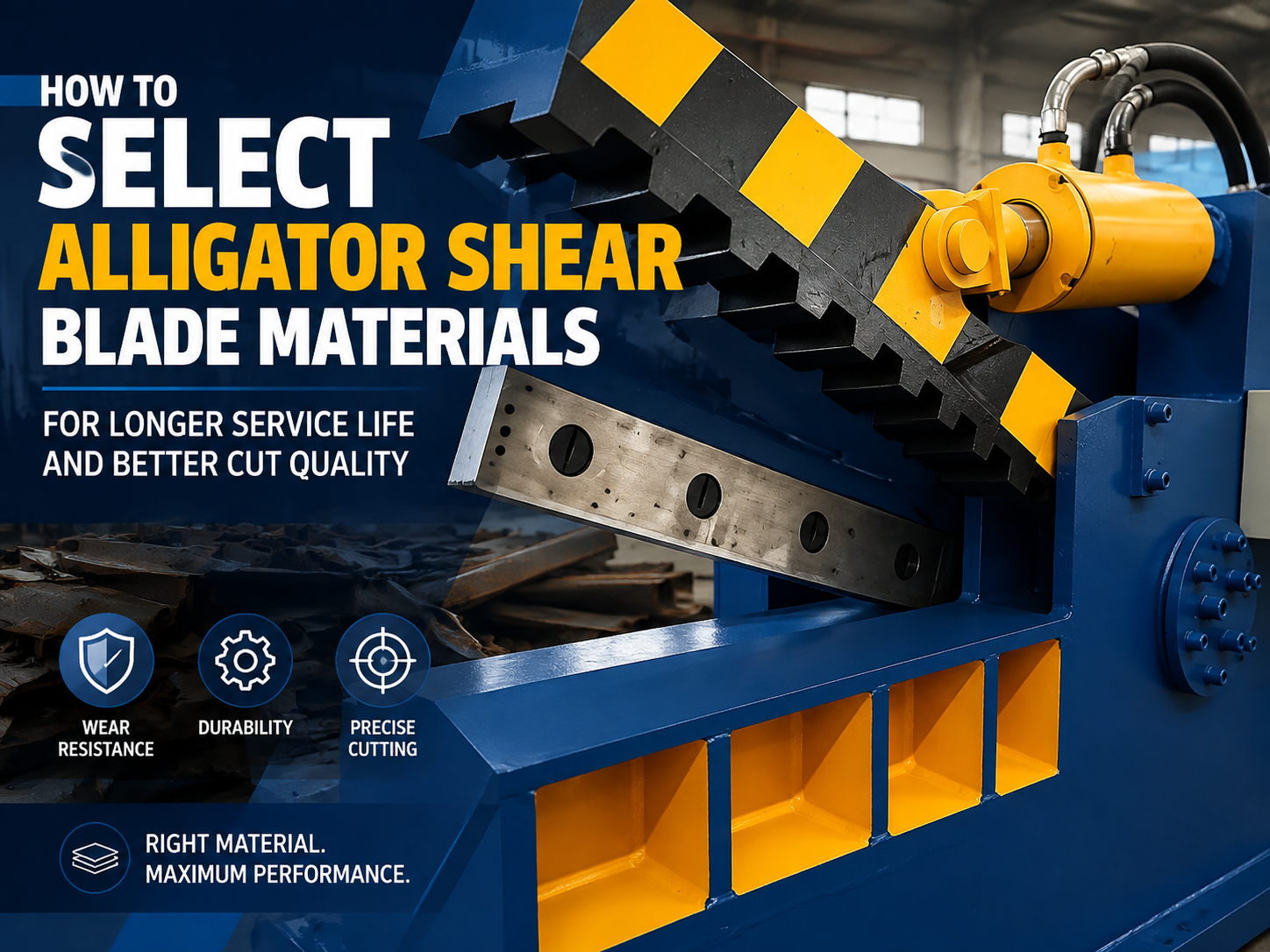
Technical Overview of Alligator Shear Blade Performance
In the demanding world of scrap metal recycling and industrial demolition, the alligator shear stands as a workhorse. However, the efficiency of these machines is fundamentally tied to the quality and composition of their cutting edges. To select alligator shear blade materials for longer service life and better cut quality, one must understand the complex interplay between metallurgical properties and mechanical stress. Alligator shears operate through a pivoting motion, creating high localized pressure at the point of contact. This requires a blade material that can withstand not only abrasive wear but also significant impact forces without chipping or fracturing.
The primary challenge in blade selection is the inherent trade-off between hardness and toughness. Hardness allows the blade to maintain a sharp edge against abrasive materials like reinforced rebar or hardened steel plates. Conversely, toughness is the material’s ability to absorb energy and deform plastically before fracturing. If a blade is too hard, it becomes brittle and may shatter under the sudden shock of a heavy cut. If it is too soft, the edge will dull rapidly, leading to ‘burring’ and increased strain on the machine’s hydraulic system. HARSLE engineers emphasize that the ideal material choice depends heavily on the specific type of scrap being processed, ranging from soft aluminum extrusions to high-tensile steel beams.
Furthermore, the thermal stability of the blade material is a critical technical factor. During high-volume operations, the friction generated at the cutting edge can produce significant heat. If the steel lacks sufficient red-hardness, the edge will soften during use, leading to rapid degradation. Modern alloy steels, enriched with elements like Chromium, Tungsten, and Vanadium, are designed to maintain their mechanical properties even at elevated temperatures. Understanding these technical nuances is the first step toward optimizing your equipment’s uptime and reducing the total cost of ownership.
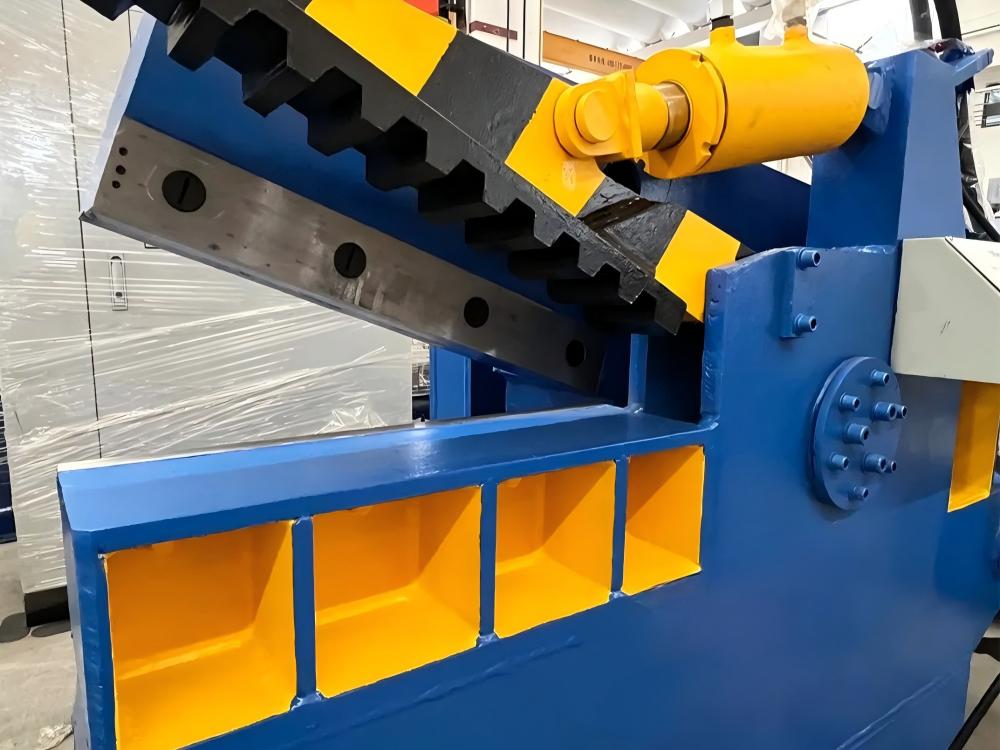
Core Parameters for Blade Material Selection
When you aim to select alligator shear blade materials for longer service life and better cut quality, you must evaluate four core parameters: chemical composition, heat treatment hardness, impact toughness, and wear resistance. Each of these factors contributes to how the blade interacts with the workpiece and how long it remains functional before requiring a regrind or replacement.
1. Chemical Composition and Alloying Elements
The ‘recipe’ of the steel determines its potential. Chromium (Cr) is perhaps the most vital element, as it increases hardenability and provides essential wear resistance. Molybdenum (Mo) enhances the steel’s strength at high temperatures and improves its deep-hardening characteristics. Vanadium (V) acts as a grain refiner, creating a dense molecular structure that resists cracking. For heavy-duty alligator shears, high-carbon, high-chromium tool steels are often the standard because they offer a balanced profile for general-purpose scrap cutting.
2. Hardness (Rockwell C Scale)
Hardness is typically measured on the Rockwell C (HRC) scale. For alligator shear blades, the sweet spot usually lies between 52 HRC and 60 HRC. Blades intended for thin, non-ferrous metals can lean toward the higher end (58-60 HRC) to maintain a razor-sharp edge. However, for thick structural steel or rebar, a slightly lower hardness (54-56 HRC) is preferred to provide the necessary toughness to survive the high-impact shock of the initial ‘bite’.
3. Impact Toughness
Impact toughness is the measure of a material’s resistance to fracture under high-speed loading. In alligator shears, the blade doesn’t just press; it strikes. If the material has low impact toughness, the microscopic inclusions in the steel can act as stress concentrators, leading to large-scale cracks. Materials like 6CrW2Si are specifically engineered with high tungsten content to provide exceptional toughness, making them ideal for shearing irregular or bundled scrap where the load is unpredictable.
4. Wear Resistance (Abrasion vs. Adhesion)
Wear resistance prevents the edge from eroding. Abrasive wear occurs when hard particles in the scrap (like rust or dirt) grind away the blade surface. Adhesive wear occurs when the scrap material ‘welds’ to the blade under pressure and then tears away bits of the blade steel. Selecting a material with a high volume of hard carbides, such as D2 or Cr12MoV, significantly mitigates these issues, ensuring the blade stays sharp for thousands of cycles.
Calculation Method for Blade Stress and Life Expectancy
To scientifically select alligator shear blade materials for longer service life and better cut quality, engineers use specific calculations to match the material to the machine’s output. The most basic calculation involves determining the Shear Force (F) required to cut a specific material. The formula is: F = L × S × τ, where L is the length of the cut, S is the thickness of the material, and τ is the shear strength of the scrap metal.
Once the shear force is known, you must calculate the ‘Blade Pressure’. If the calculated pressure exceeds the yield strength of the blade material at its operating hardness, the blade will deform. For example, if you are cutting stainless steel with a shear strength of 500 MPa, the blade material must have a compressive yield strength significantly higher (usually 3-4 times higher) to avoid edge rolling. This calculation helps in deciding whether a standard tool steel is sufficient or if a premium high-speed steel (HSS) or shock-resisting steel is required.
Another critical calculation is the ‘Blade Clearance’. The gap between the upper and lower blades should typically be 5% to 10% of the material thickness. If the clearance is too tight, the blades will rub against each other, causing excessive heat and wear. If it is too loose, the material will bend rather than cut, leading to poor cut quality and ‘wedging’ that can snap the blades. By calculating the optimal clearance for your most common scrap thickness, you can select a material that maintains its dimensional stability under those specific conditions.
Parameter Table: Comparison of Common Shear Blade Materials
The following table provides a technical comparison of the most popular materials used in alligator shear blades to help you make an informed decision based on your specific application needs.
| Material Grade | Hardness (HRC) | Toughness | Wear Resistance | Best Application |
|---|---|---|---|---|
| 9CrSi | 57-60 | Medium | High | Thin sheets, non-ferrous metals, light scrap. |
| 6CrW2Si | 54-58 | Very High | Medium | Heavy rebar, structural steel, high-impact loads. |
| Cr12MoV (D2) | 58-62 | Medium | Very High | High-volume production, abrasive materials, stainless steel. |
| H13 (4Cr5MoSiV1) | 50-54 | High | Medium | Hot shearing applications or very thick, soft metals. |
| LD (7Cr7Mo2V2Si) | 57-61 | High | High | Premium choice for all-around durability and long life. |
Common Engineering Mistakes in Blade Selection
One of the most frequent mistakes when trying to select alligator shear blade materials for longer service life and better cut quality is over-prioritizing hardness. Many operators believe that a harder blade is always better. However, in the context of an alligator shear, which experiences significant lateral forces and vibration, an overly hard blade (e.g., 64 HRC) will often fail prematurely due to micro-chipping. Once the edge starts to chip, the friction increases exponentially, leading to a total blade failure that could have been avoided with a slightly ‘softer’ but tougher material.
Another common error is ignoring the importance of the heat treatment process. You can have the best alloy in the world, but if the quenching and tempering cycles are not precise, the blade will have internal stresses. Improper heat treatment can lead to ‘decarburization’ of the surface, where the carbon is burnt off, leaving a soft outer layer that wears away instantly. Always ensure your blade supplier provides certified heat treatment reports to guarantee the material’s integrity throughout its cross-section.
Finally, many users fail to account for the ‘Material Compatibility’ factor. Using a blade designed for mild steel to cut high-manganese steel or specialized alloys will lead to rapid adhesive wear. The chemical affinity between the blade and the scrap can cause the scrap to ‘gall’ onto the blade. In these cases, selecting a material with specific surface coatings or a higher Vanadium content can create a barrier that prevents this bonding, thereby extending the service life significantly.
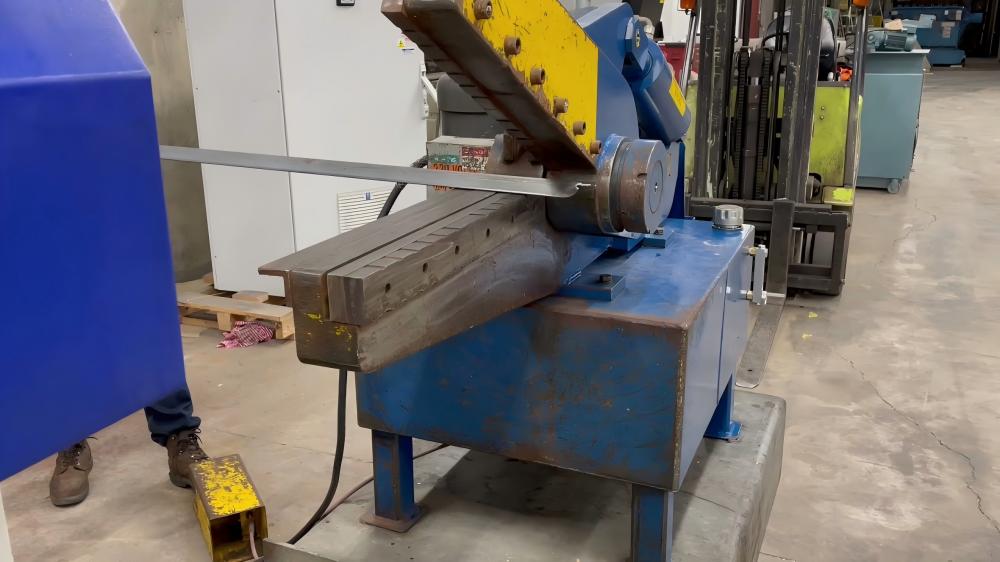
Selection Checklist for Alligator Shear Blades
To ensure you select alligator shear blade materials for longer service life and better cut quality, follow this comprehensive checklist before placing your next order:
- Identify the Primary Scrap Type: Are you cutting mostly aluminum, copper, mild steel, or hardened alloys? Match the HRC and alloy type accordingly.
- Evaluate Machine Tonnage: Higher tonnage shears exert more pressure. Ensure the material’s yield strength can handle the maximum hydraulic force of your HARSLE shear.
- Check Operating Temperature: If the shear runs 24/7, choose materials with high red-hardness (like H13 or M2) to prevent edge softening.
- Verify Blade Dimensions: Ensure the material is available in the thickness required to prevent flexing during the cut.
- Assess Sharpening Capabilities: Some high-carbide steels are difficult to regrind without specialized diamond wheels. Ensure your maintenance team can support the material choice.
- Budget vs. Lifecycle: Calculate the cost per cut. A blade that costs 50% more but lasts 300% longer is the more economical choice.
- Environmental Factors: If operating in corrosive environments (e.g., near saltwater), consider materials with higher Chromium content to prevent pitting.
Frequently Asked Questions (FAQ)
How often should I rotate or sharpen my alligator shear blades?
The frequency depends entirely on the material being cut. For standard mild steel, we recommend checking the edge every 40-80 hours of operation. If you notice a rounded edge or if the machine requires more hydraulic pressure to complete a cut, it is time to rotate the blade to a new edge or regrind it. Using dull blades significantly reduces the service life of the machine’s bearings and seals.
Can I use the same blade material for both aluminum and steel?
While you can, it is not optimal. Aluminum tends to be ‘gummy’ and can stick to high-carbon blades, while steel requires more toughness. A general-purpose material like 6CrW2Si is a good compromise, but for dedicated aluminum lines, a blade with a smoother surface finish and higher hardness is better to prevent adhesion.
What are the signs that I have selected the wrong blade material?
If your blades are cracking or large chunks are breaking off, the material is too brittle (too hard or lack of toughness). If the edge is flattening out or ‘rolling’ quickly, the material is too soft for the application. If the blade looks ‘pitted’ or has material stuck to it, you are likely dealing with adhesive wear and need a different alloy composition.
Does the blade clearance change with different materials?
Yes. When you select alligator shear blade materials for longer service life and better cut quality, you must also adjust the clearance. Harder, more brittle scrap requires a tighter clearance to ensure a clean snap, while softer, ductile materials may require a slightly wider gap to prevent the material from being pulled into the space between the blades.
Why does HARSLE recommend specific alloys for their machines?
HARSLE machines are engineered for specific force curves. We recommend alloys that have been tested to withstand the peak pressures of our hydraulic cylinders. Using sub-standard or mismatched blade materials can void warranties and lead to structural damage to the shear arm due to excessive vibration and resistance.