Scrap Metal Baler Basics: Key Components, Working Principle, and Performance Factors

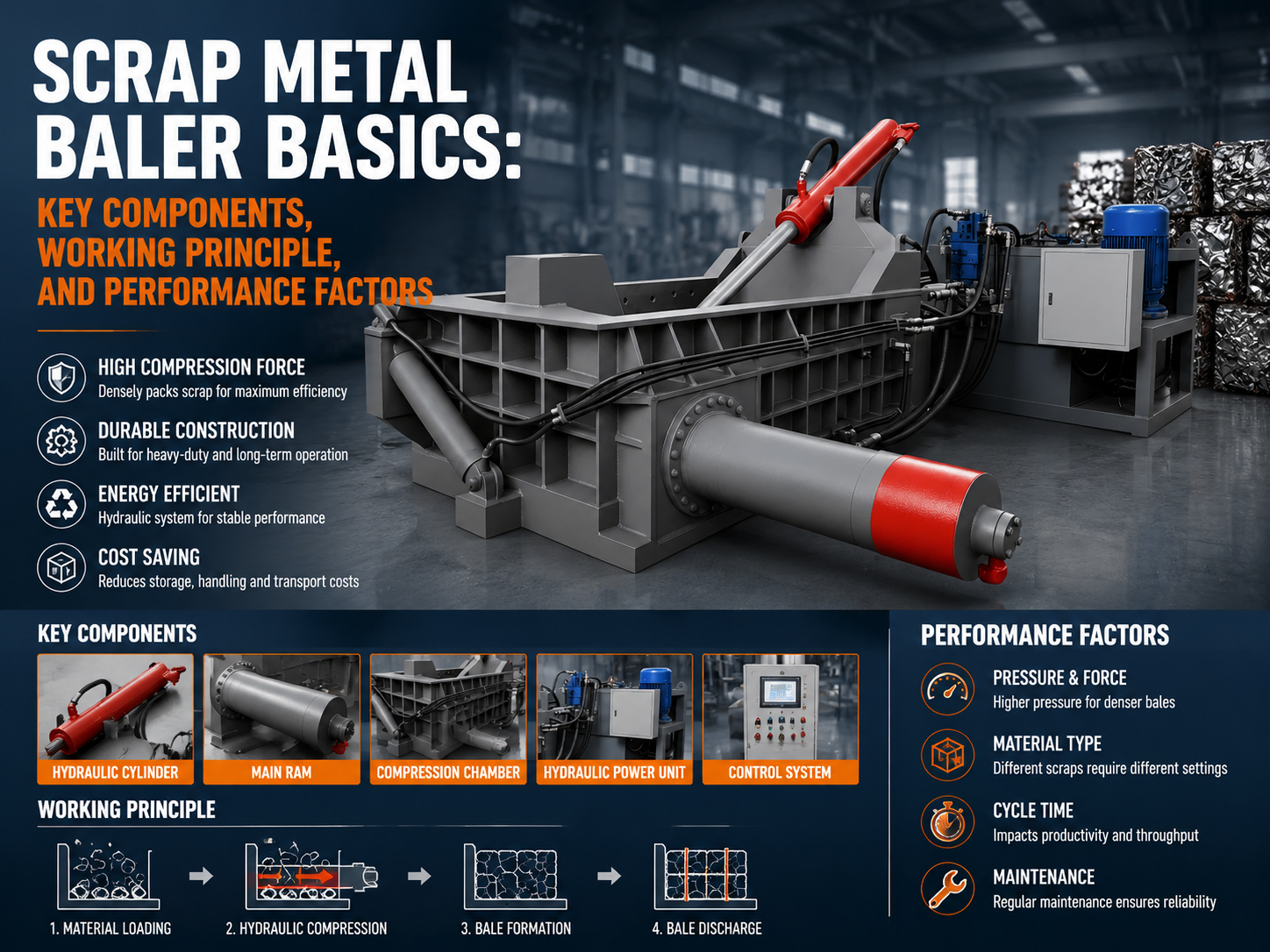
Technical Overview of Scrap Metal Balers
In the modern industrial landscape, the scrap metal baler stands as a cornerstone of the recycling and waste management sectors. These robust machines are designed to compress various types of metal scrap—ranging from aluminum cans and copper wire to steel shavings and end-of-life vehicle parts—into dense, manageable blocks known as bales. The primary objective of a scrap metal baler is to reduce the volume of the material, thereby optimizing storage space and significantly lowering transportation costs. For manufacturers like HARSLE, engineering these machines requires a deep understanding of structural integrity, fluid power, and material science.
The technical architecture of a scrap metal baler is built upon a heavy-duty steel frame, typically constructed from high-grade Q235 or Q345 carbon steel. This frame must withstand immense internal pressures during the compression cycle without deforming. Within this frame lies the compression chamber, where the raw scrap is loaded. The heart of the machine, however, is the hydraulic system. Unlike mechanical presses, hydraulic balers provide a constant force throughout the entire stroke, which is essential for achieving uniform density in the final bale. Modern balers are often categorized by their configuration: horizontal or vertical, and by their ejection method, such as side-push, forward-push, or turn-out.
Beyond the physical structure, the integration of advanced control systems has revolutionized baler efficiency. Programmable Logic Controllers (PLCs) now manage the sequencing of hydraulic valves, ensuring that the lid, side rams, and main rams operate in perfect synchronization. This automation not only increases throughput but also enhances safety by incorporating emergency stop protocols and pressure-sensing interlocks. As we delve deeper into the components, it becomes clear that a scrap metal baler is more than just a press; it is a sophisticated system of synchronized power and precision.
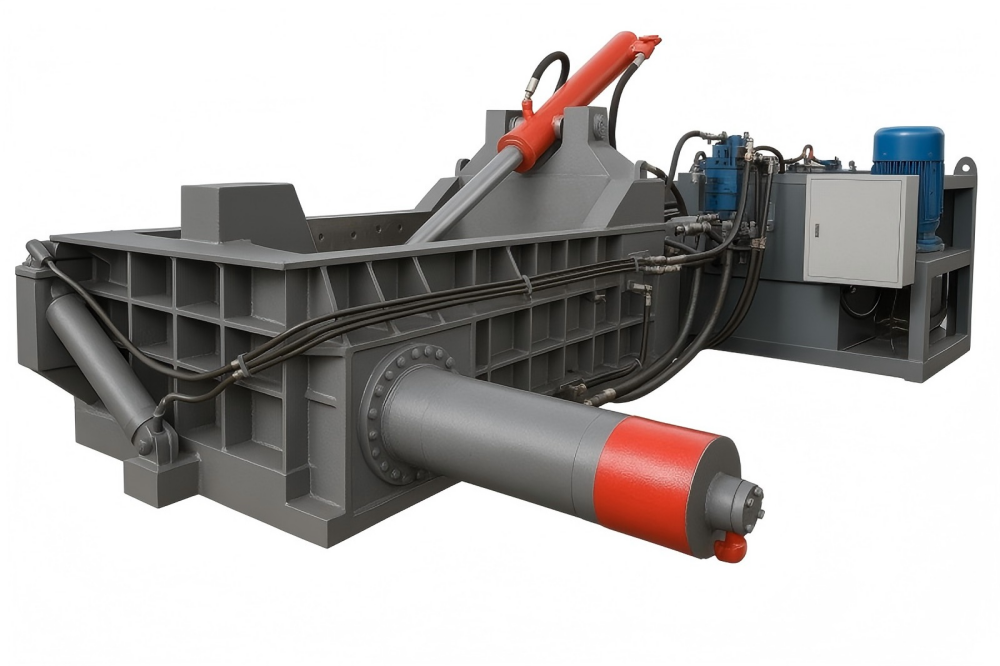
Key Components of a Scrap Metal Baler
To understand how a scrap metal baler functions, one must first identify its primary sub-assemblies. Each component plays a critical role in the machine’s overall performance and longevity. The first major component is the Hydraulic Power Unit (HPU). This unit includes the electric motor, hydraulic pump, oil tank, and filtration system. The pump converts mechanical energy from the motor into hydraulic energy, moving oil through the system to actuate the cylinders. High-pressure piston pumps are commonly used in heavy-duty balers to provide the necessary force for dense scrap.
The Compression Chamber is the area where the scrap is processed. It is lined with replaceable wear plates, often made from Hardox or similar abrasion-resistant steel. These plates protect the main structure from the abrasive nature of metal scrap, which can quickly erode standard steel surfaces. The Hydraulic Cylinders (or rams) are the workhorses of the baler. Most industrial balers utilize a multi-stage compression process involving a lid cylinder (to close the chamber), a side cylinder (for pre-compression), and a main cylinder (for final density). The seals within these cylinders must be of the highest quality to prevent leaks under high-pressure conditions.
Finally, the Control Interface and Electrical System provide the operator with the tools to manage the machine. This includes the control panel, sensors (such as limit switches and pressure transducers), and the PLC. Advanced models may also feature remote diagnostics and data logging, allowing facility managers to track production rates and maintenance intervals. The synergy between these components determines the machine’s reliability and its ability to handle the rigorous demands of a 24/7 recycling facility.
Working Principle: The Physics of Compression
The working principle of a scrap metal baler is rooted in Pascal’s Law, which states that pressure applied to a confined fluid is transmitted undiminished in every direction. In a hydraulic baler, this principle is used to multiply force. When the operator initiates a cycle, the hydraulic pump forces oil into the cap end of the cylinder, pushing the piston forward. Because the surface area of the piston is large, even moderate oil pressure can result in hundreds of tons of force at the ram head.
The typical baling cycle follows a specific sequence. First, the scrap metal is loaded into the chamber, either manually or via a conveyor or grapple. Once the chamber is full, the Lid Compression phase begins. The lid closes with significant force, shearing off any overhanging scrap and providing the first stage of volume reduction. Following this, the Side Ram moves horizontally to further compress the material into a narrow channel. This pre-compression is vital for ensuring that the final bale has a consistent shape and density.
The final and most powerful stage is the Main Ram Compression. The main cylinder extends, pushing the pre-compressed metal against a fixed wall or a closed door. At this point, the pressure reaches its peak, forcing the metal to undergo plastic deformation and interlock with itself. Once the desired pressure or position is reached, the ram retracts slightly, the discharge door opens, and the bale is ejected. This entire process, while seemingly simple, requires precise timing and pressure regulation to prevent machine fatigue and ensure operator safety.
Core Parameters and Performance Factors
When evaluating a scrap metal baler, several core parameters dictate its suitability for a specific application. These parameters are not just numbers on a spec sheet; they are the defining characteristics of the machine’s productivity. The most critical parameter is the Nominal Pressure, usually measured in Kilonewtons (kN) or Tons. This represents the maximum force the main ram can exert. For light materials like aluminum, 100-160 tons may suffice, but for heavy steel scrap, pressures exceeding 400 tons are often required.
Another vital factor is the Cycle Time. This is the duration required to complete one full baling sequence, from the moment the lid starts closing to the moment the ram returns to its home position. A faster cycle time directly correlates to higher hourly throughput. However, speed must be balanced with cooling capacity; faster cycles generate more heat in the hydraulic oil, which can lead to seal failure if not properly managed. The Bale Size and Bale Density are also paramount. The bale dimensions must be compatible with the transport vehicles (e.g., standard shipping containers or flatbed trucks), while the density must be high enough to meet the requirements of the smelting furnace or the next stage of the supply chain.
Performance is also influenced by the Motor Power and Pump Displacement. A larger motor can drive a pump with higher flow rates, which reduces cycle time. However, this increases energy consumption. Modern HARSLE balers often utilize variable frequency drives (VFDs) or load-sensing hydraulics to optimize energy use, providing high flow when needed and reducing power during idle phases. Lastly, the Cooling System (air or water-cooled) ensures that the hydraulic oil remains within the optimal temperature range (usually 30°C to 50°C), preserving the viscosity of the fluid and the integrity of the hydraulic components.
Calculation Method for Baler Performance
To optimize a recycling operation, engineers must be able to calculate the expected performance of their baling equipment. The two most common calculations involve Cylinder Force and Bale Density. Understanding these allows for better machine selection and process planning.
1. Calculating Hydraulic Force
The force exerted by a hydraulic cylinder is a function of the system pressure and the effective area of the piston. The formula is:
Force (F) = Pressure (P) × Area (A)
Where:
- F is the force in Newtons (N).
- P is the hydraulic pressure in Pascals (Pa).
- A is the cross-sectional area of the piston in square meters (m²).
To convert this to tons, divide the result by 9,806.65. For example, if a baler operates at 25 MPa (250 bar) and has a main cylinder with a diameter of 300mm, the area is approximately 0.0707 m². The resulting force would be approximately 1,767,500 N, or roughly 180 tons.
2. Calculating Bale Density
Bale density is critical for logistics. It is calculated by dividing the mass of the bale by its volume:
Density (ρ) = Mass (m) / Volume (V)
If a bale of steel scrap weighs 500 kg and its dimensions are 0.6m x 0.6m x 1.0m (Volume = 0.36 m³), the density is 1,388 kg/m³. Comparing this to the bulk density of loose scrap (which might be as low as 200 kg/m³) demonstrates the efficiency of the baling process.
Parameter Table for Standard Scrap Metal Balers
The following table provides a comparison of typical specifications for various classes of scrap metal balers. These values are representative of industrial standards and help in identifying the right machine for different material volumes.
| Model Class | Nominal Force (kN) | Chamber Size (mm) | Bale Size (mm) | Cycle Time (s) | Motor Power (kW) |
|---|---|---|---|---|---|
| Light Duty | 1000 – 1600 | 1200 x 700 x 600 | 300 x 300 | 60 – 90 | 11 – 15 |
| Medium Duty | 2500 – 4000 | 1600 x 1200 x 800 | 400 x 400 | 80 – 110 | 22 – 37 |
| Heavy Duty | 5000 – 8000 | 2000 x 1600 x 1000 | 500 x 500 | 100 – 140 | 45 – 75 |
| Industrial Max | 10000+ | 2500 x 2000 x 1200 | 600 x 600 | 120 – 180 | 90+ |
Common Engineering Mistakes in Baler Operation
Despite their rugged construction, scrap metal balers are susceptible to damage if operated incorrectly. One of the most common mistakes is Overloading the Chamber. Operators often attempt to cram as much scrap as possible into the chamber to increase bale weight. However, if the material exceeds the chamber’s capacity, the lid may fail to close properly, leading to structural stress on the hinges and cylinders. This can cause permanent warping of the frame or catastrophic failure of the lid locking mechanism.
Another frequent issue is Neglecting Hydraulic Oil Maintenance. Hydraulic oil is the lifeblood of the baler. Over time, the oil can become contaminated with metal fines, dust, and moisture. If the filtration system is not maintained, these contaminants act as abrasives, wearing down pump vanes and scoring cylinder walls. Furthermore, operating with degraded oil or at excessively high temperatures reduces the oil’s lubricity, leading to increased friction and heat generation, creating a destructive feedback loop.
Incorrect Pressure Settings also pose a significant risk. Some operators increase the system pressure beyond the manufacturer’s recommended limits to achieve higher bale density. This practice, known as “over-pressuring,” puts immense strain on the hydraulic hoses, fittings, and seals. It significantly shortens the lifespan of the machine and poses a severe safety hazard should a high-pressure line burst. Finally, failing to replace Wear Plates in a timely manner can lead to the main structural walls of the chamber being eroded. Once the structural steel is compromised, the machine’s safety and integrity are difficult to restore.
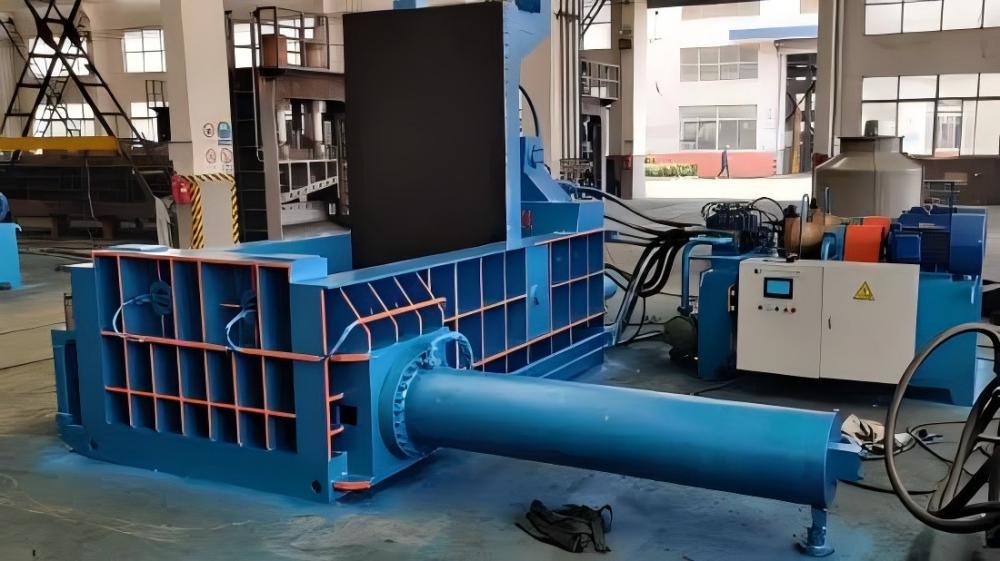
Selection Checklist for Buying a Scrap Metal Baler
Choosing the right scrap metal baler requires a strategic approach. Use the following checklist to ensure the machine meets your operational needs:
- Material Type: Determine the primary material you will process. Aluminum requires less force than stainless steel or heavy structural scrap.
- Volume Requirements: Calculate your daily or hourly scrap generation. Ensure the baler’s cycle time and chamber size can handle the throughput.
- Bale Specifications: Check if the resulting bale size and weight meet the requirements of your buyers or the secondary processing facilities.
- Space Constraints: Measure your facility’s footprint. Consider the space needed for loading, bale storage, and maintenance access.
- Automation Level: Decide between manual, semi-automatic, or fully automatic operation based on your labor costs and production goals.
- Power Supply: Ensure your facility has the electrical capacity to support the baler’s motor, especially for heavy-duty models with high kW ratings.
- Maintenance Support: Verify the availability of spare parts (seals, filters, wear plates) and the manufacturer’s technical support reputation.
- Safety Features: Look for machines with CE certification, emergency stops, safety interlocks on doors, and protective guarding.
Frequently Asked Questions (FAQ)
1. How often should the hydraulic oil be changed?
Typically, hydraulic oil should be changed every 2,000 to 4,000 operating hours, or at least once a year. However, regular oil analysis is recommended to monitor for oxidation and contamination. Filters should be replaced more frequently, usually every 500 to 1,000 hours.
2. Can one baler handle different types of metal?
Yes, most scrap metal balers are versatile. However, the settings (such as pressure and cycle timing) may need adjustment when switching between very soft metals like aluminum and very hard metals like steel to optimize bale integrity and machine wear.
3. What causes a bale to fall apart after ejection?
This is usually caused by insufficient pressure or “spring-back” in the material. If the metal is too elastic or the compression force is too low, the pieces won’t interlock. Increasing the dwell time at maximum pressure can often help the metal take a permanent set.
4. Is a horizontal or vertical baler better for scrap metal?
For metal recycling, horizontal balers are almost always preferred. They allow for larger chamber sizes, higher compression forces, and easier integration with automated loading systems like conveyors or grapples. Vertical balers are generally reserved for cardboard, plastic, or very light non-ferrous scrap.
5. How do I know when to replace the wear plates?
Wear plates should be inspected weekly. If you notice significant thinning (usually more than 50% of the original thickness), deep gouges, or if the bolts holding the plates are becoming exposed, it is time for a replacement. Operating with worn plates will eventually damage the main chamber walls.
6. What is the role of the PLC in a scrap metal baler?
The PLC (Programmable Logic Controller) acts as the brain of the machine. It monitors sensors to ensure the rams are in the correct position before the next step in the cycle begins, manages the timing of valve openings, and provides diagnostic codes if a fault occurs, ensuring both efficiency and safety.