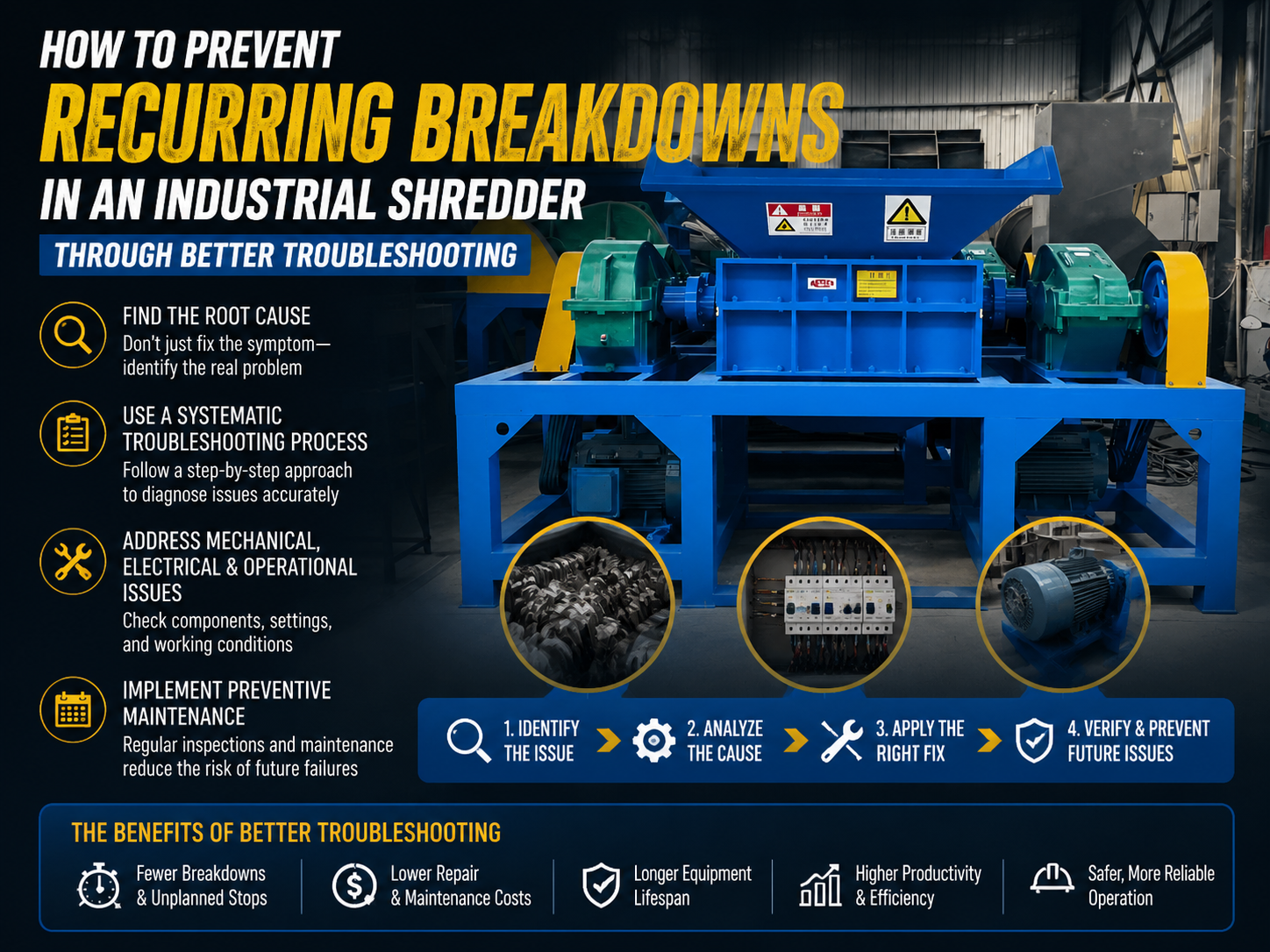
How to Prevent Recurring Breakdowns in an Industrial Shredder Through Better Troubleshooting

Introduction to Industrial Shredder Reliability
In the world of heavy-duty recycling and waste management, the industrial shredder stands as a cornerstone of productivity. Whether processing scrap metal, plastics, or electronic waste, these machines are designed to handle immense stress. However, many facilities find themselves trapped in a cycle of reactive maintenance, where the same issues—motor stalls, blade fractures, or bearing failures—occur repeatedly. To Prevent Recurring Breakdowns In An Industrial Shredder Through Better Troubleshooting, operators and maintenance managers must shift their focus from simply fixing the immediate symptom to identifying and neutralizing the underlying root cause.
Recurring breakdowns are more than just a nuisance; they are a significant drain on a company’s bottom line. Every hour of unplanned downtime translates to lost revenue, delayed shipments, and increased labor costs. Furthermore, frequent repairs can lead to secondary damage, where a poorly addressed vibration issue eventually destroys a gearbox or a misaligned shaft ruins a set of expensive cutters. By implementing a sophisticated troubleshooting framework, industrial facilities can extend the lifespan of their HARSLE equipment and ensure a higher return on investment.
This comprehensive guide explores the technical nuances of industrial shredder operation, the common pitfalls in maintenance routines, and the advanced troubleshooting techniques required to break the cycle of failure. We will delve into the mechanical, electrical, and operational factors that contribute to machine instability and provide actionable advice on how to transform your maintenance department from a reactive unit into a proactive powerhouse.
Key Considerations for Preventing Shredder Failure
Preventing recurring breakdowns begins with a holistic understanding of the machine’s operating environment. It is rarely a single factor that causes a shredder to fail; rather, it is often a combination of material inconsistencies, operator error, and environmental stressors. To effectively Prevent Recurring Breakdowns In An Industrial Shredder Through Better Troubleshooting, one must first evaluate the key variables that influence machine health.
Material Feed Consistency and Composition
One of the most common causes of recurring breakdowns is the introduction of “unshreddables” or materials that exceed the machine’s design specifications. If a shredder is rated for light plastics but is frequently fed thick-walled HDPE or stray metal contaminants, the internal components will experience fatigue much faster than anticipated. Troubleshooting should always begin with an audit of the input material. Are there foreign objects entering the chamber? Is the feed rate consistent, or is the machine being “slugged” with massive amounts of material at once, causing torque spikes?
Environmental and Operational Factors
The environment in which a shredder operates plays a critical role in its longevity. Dust, moisture, and temperature fluctuations can all wreak havoc on electrical components and lubrication systems. For instance, if a shredder is operating in a high-dust environment without adequate filtration, the dust can infiltrate the gearbox or bearings, acting as an abrasive that accelerates wear. Similarly, extreme heat can degrade hydraulic fluids and cause seals to fail prematurely. Troubleshooting must account for these external factors to prevent the same failures from happening every season.
Operator Training and Feedback Loops
Often, the “breakdown” is actually a result of how the machine is being operated. If operators are bypassing safety interlocks or ignoring early warning signs like unusual noises or increased vibration, the machine will eventually fail. A robust troubleshooting process includes interviewing the operators to understand the conditions leading up to the failure. Establishing a feedback loop where operators feel empowered to report minor anomalies can prevent those anomalies from turning into catastrophic breakdowns.
Technical Details: The Mechanics of a Robust Shredder
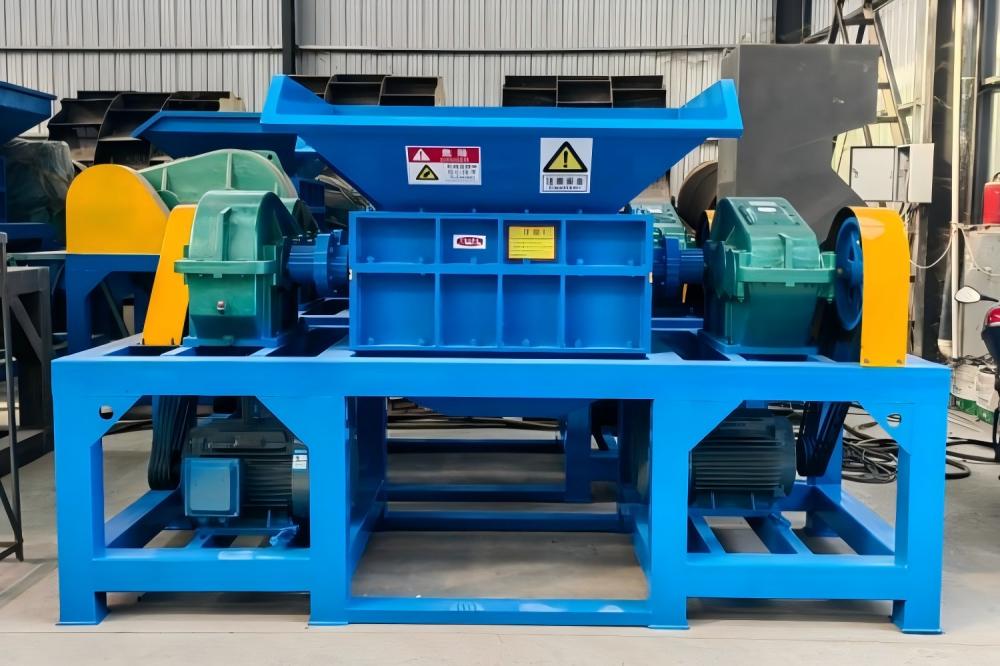
To troubleshoot effectively, one must understand the technical architecture of the industrial shredder. Modern shredders, such as those manufactured by HARSLE, utilize complex interactions between mechanical force and electronic control. Understanding these systems allows for more precise diagnostics when things go wrong.
Blade Geometry and Metallurgy
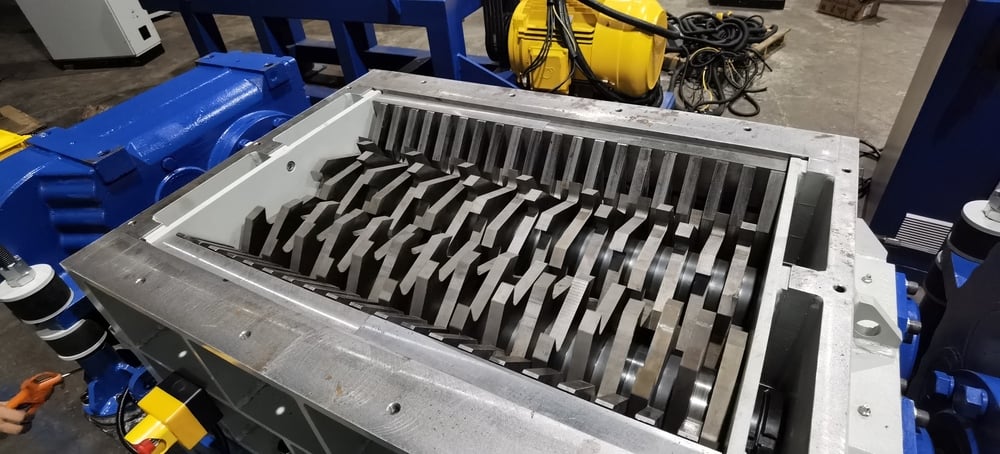
The cutters are the heart of the shredder. Their geometry—including the number of hooks, the thickness of the blade, and the angle of the cutting edge—is specifically engineered for certain materials. When blades wear down, the gap between the cutters (the tolerance) increases. This leads to “material bypass,” where the shredder fails to cut and instead begins to tear or jam. Recurring jams are often a sign that the blades need more than just a sharpen; they may need a complete rethink of their metallurgical composition or a tighter tolerance adjustment.
| Component | Common Failure Mode | Troubleshooting Focus |
|---|---|---|
| Cutter Blades | Chipping, Blunting | Material hardness vs. Blade Grade |
| Main Shaft | Torsional Fatigue | Alignment and Torque Limiters |
| Gearbox | Overheating, Gear Stripping | Oil Analysis and Cooling Efficiency |
| PLC/Control System | Logic Errors, Sensor Failure | Software Logs and Sensor Calibration |
Drive Systems and Torque Management
Industrial shredders typically use either electric motors with high-torque gearboxes or hydraulic drive systems. Electric drives are efficient but can be sensitive to sudden shocks. Hydraulic drives offer excellent shock absorption but are more complex to maintain. If a shredder is experiencing recurring motor burnouts, the troubleshooting should focus on the torque limiting settings in the PLC. Is the machine reversing quickly enough when it hits a hard object? If the “auto-reverse” logic is too slow, the motor will draw excessive current, leading to heat buildup and eventual insulation failure.
Advanced Troubleshooting: Moving Beyond Surface Fixes
To truly Prevent Recurring Breakdowns In An Industrial Shredder Through Better Troubleshooting, maintenance teams must adopt advanced diagnostic techniques. This involves looking at the machine as a living system rather than a collection of static parts.
Root Cause Analysis (RCA) and the “5 Whys”
When a component fails, the first question is usually “How do we fix it?” The second, more important question should be “Why did it fail?” Using the “5 Whys” method is a powerful way to get to the bottom of recurring issues. For example:
1. Why did the bearing fail? (It overheated).
2. Why did it overheat? (Lack of lubrication).
3. Why was there a lack of lubrication? (The automatic greaser was empty).
4. Why was it empty? (The refill schedule was missed).
5. Why was the schedule missed? (The maintenance software didn’t trigger an alert).
By fixing the software alert, you prevent the bearing failure from ever happening again.
Vibration Analysis and Thermal Imaging
Modern troubleshooting utilizes technology to see what the human eye cannot. Vibration analysis can detect slight misalignments in the drive shaft or early-stage pitting in bearings long before they cause a breakdown. Similarly, thermal imaging can identify “hot spots” in electrical panels or gearboxes. If a specific section of the gearbox is consistently hotter than the rest, it indicates a localized friction issue that needs to be addressed before the gears strip. Implementing these predictive tools is the gold standard for preventing recurring breakdowns.
Oil and Fluid Analysis
For shredders with hydraulic systems or large oil-filled gearboxes, regular fluid analysis is non-negotiable. By analyzing the metal content in the oil, technicians can determine which internal components are wearing down. High levels of brass might indicate cage wear in a bearing, while high levels of iron suggest gear tooth wear. This allows for scheduled maintenance during planned downtime, rather than waiting for a catastrophic failure in the middle of a production run.
Selection Advice: Choosing the Right Shredder for Longevity
Sometimes, the reason for recurring breakdowns is that the machine was the wrong choice for the application from day one. When selecting a new industrial shredder, consider the following to ensure long-term reliability:
- Over-Spec for the Application: If you expect to process 5 tons per hour, buy a machine rated for 7 or 8 tons. Operating a machine at 100% capacity constantly is a recipe for frequent breakdowns.
- Ease of Maintenance: Look for designs that allow easy access to the cutting chamber and gearbox. If a machine is hard to service, maintenance will be neglected, leading to failures.
- Robust Control Systems: Ensure the shredder has a high-quality PLC (like Siemens or Mitsubishi) with well-programmed overload protection and data logging capabilities.
- Reputable Manufacturer: Choose a brand like HARSLE that provides comprehensive technical support and readily available spare parts. A machine is only as good as the support behind it.
- Customization Options: Ensure the blade material and hook profile are customized for your specific waste stream. A “one size fits all” approach rarely works in industrial shredding.
Frequently Asked Questions (FAQ)
How often should I inspect my industrial shredder blades?
Daily visual inspections are recommended to check for major chips or jams. A more thorough measurement of the blade gap and sharpness should be conducted weekly or monthly, depending on the abrasiveness of the material being processed. Keeping a log of blade wear helps predict when a full replacement or refurbishment is necessary.
Why does my shredder keep tripping the circuit breaker?
Recurring electrical trips are usually caused by an overload condition. This could be due to feeding material too quickly, a mechanical jam, or a failing motor. It can also be caused by loose electrical connections in the control panel which create high resistance and heat. Check the amperage draw during operation to see if it exceeds the motor’s nameplate rating.
Can I shred different materials in the same machine?
While many shredders are versatile, processing vastly different materials (e.g., switching from thin plastic film to heavy aluminum castings) without adjusting the settings or blades can lead to breakdowns. If you must shred multiple materials, ensure the machine has programmable logic that allows you to switch between different “recipes” for torque and speed.
What is the most common cause of gearbox failure in shredders?
Contamination and lack of lubrication are the leading causes. Because shredders operate in dirty environments, seals can fail, allowing grit to enter the gearbox. Once the oil is contaminated, it acts as a grinding paste, rapidly destroying the gears. Regular oil changes and seal inspections are the best preventative measures.
Conclusion
To Prevent Recurring Breakdowns In An Industrial Shredder Through Better Troubleshooting, one must move beyond the “break-fix” mentality. It requires a disciplined approach that combines mechanical expertise, advanced diagnostic tools, and a deep understanding of the material being processed. By focusing on root cause analysis and implementing a proactive maintenance strategy, facilities can significantly reduce downtime and extend the life of their machinery.
HARSLE industrial shredders are engineered for durability, but even the toughest machines require intelligent oversight. Investing time in operator training, regular fluid analysis, and precise blade management will pay dividends in the form of consistent, reliable performance. Remember, the goal of troubleshooting is not just to get the machine running again, but to ensure it stays running for years to come. Through better troubleshooting, you transform your industrial shredder from a potential bottleneck into a reliable asset that drives your business forward.