
How to Improve Discharge Efficiency In Hammer Shredder Systems: A Technical Guide

Technical Overview of Hammer Shredder Discharge Mechanics
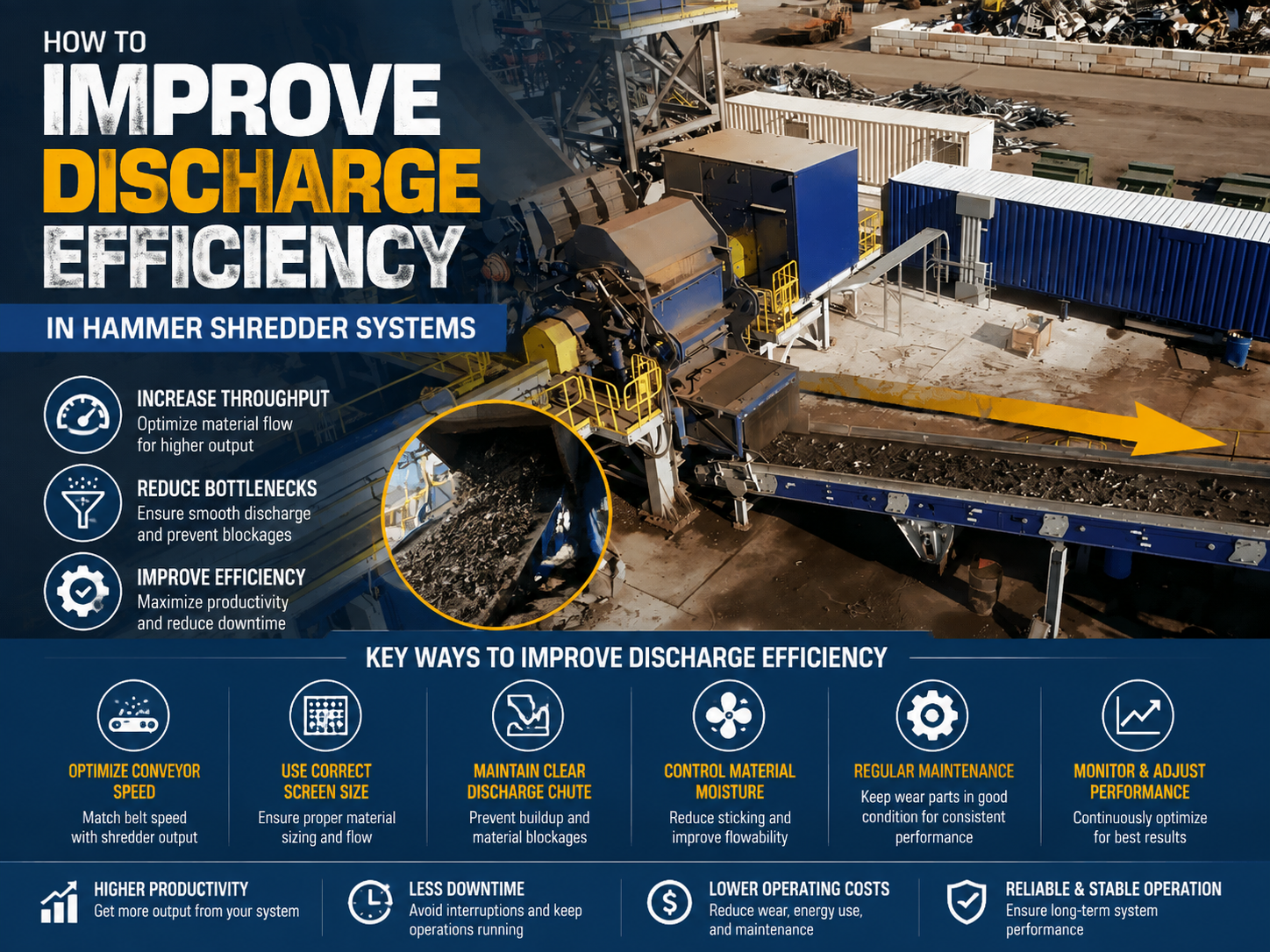
In the world of heavy-duty metal recycling and material processing, the hammer shredder stands as a cornerstone of industrial efficiency. However, the throughput of these machines is often limited not by their ability to crush material, but by their ability to evacuate it. To improve discharge efficiency in hammer shredder systems, one must first understand the complex physics occurring within the shredding chamber. A hammer shredder operates on the principle of kinetic energy transfer, where high-speed rotating hammers strike the input material, fracturing it against anvil plates and internal liners until it is small enough to pass through a discharge grate.
The discharge process is governed by three primary forces: centrifugal force, gravity, and airflow. As the rotor spins, the material is accelerated outward. If the material size is smaller than the grate openings, it should theoretically exit the system. However, factors such as material ‘tumbling,’ air turbulence, and grate clogging often impede this flow. When discharge efficiency drops, the material remains in the chamber longer than necessary, leading to ‘over-shredding.’ This not only wastes energy but also increases the wear and tear on the hammers and liners, significantly raising operational costs.
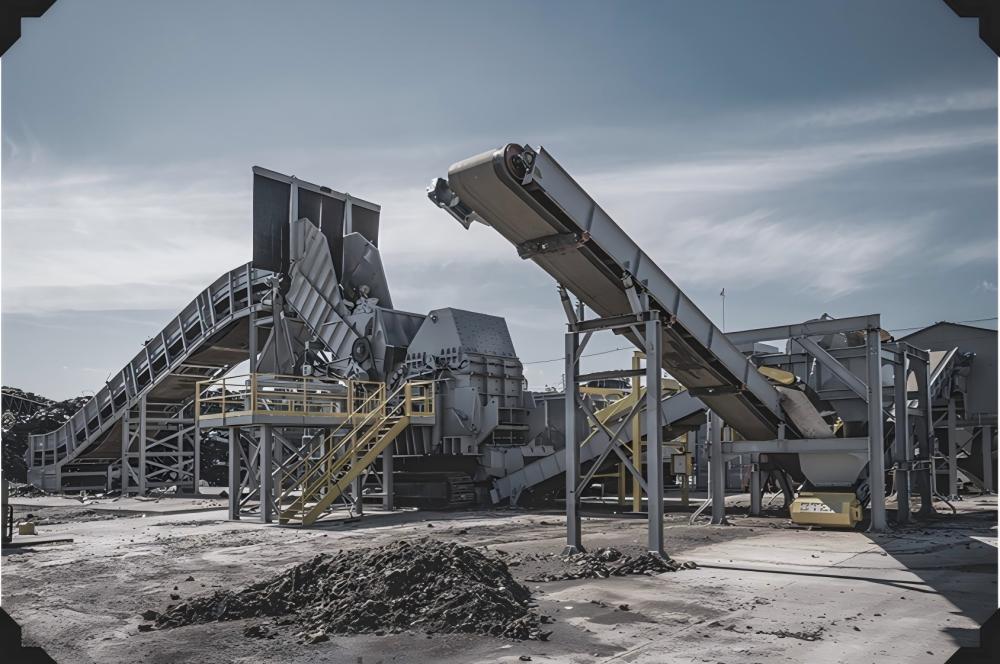
Improving discharge efficiency requires a holistic approach that balances the mechanical design of the shredder with the physical properties of the material being processed. For instance, processing brittle scrap metal requires different discharge parameters than processing ductile aluminum or municipal solid waste. By optimizing the exit path, operators can achieve a higher ‘first-pass’ success rate, ensuring that once a particle reaches the target size, it leaves the chamber immediately. This guide explores the technical nuances of these systems and provides actionable strategies for optimization.
Core Parameters Influencing Discharge Efficiency
To effectively improve discharge efficiency in hammer shredder systems, engineers must focus on several critical parameters. The first is the Rotor Tip Speed. The velocity at which the hammers strike the material determines the centrifugal force applied to the particles. If the speed is too low, the material lacks the momentum to clear the grate openings. Conversely, if the speed is too high, the material may ‘skip’ over the grate openings due to excessive tangential velocity, a phenomenon known as the ‘glancing effect.’
The second parameter is the Grate Open Area Ratio. This is the ratio of the total area of the holes in the discharge grate to the total surface area of the grate itself. A higher open area ratio generally leads to better discharge efficiency, but it must be balanced against the structural integrity of the grate. If the bars between the holes are too thin, the grate will fail under the impact of heavy scrap. Modern designs utilize tapered holes—where the exit side is slightly larger than the entry side—to prevent material from wedging in the openings.
Thirdly, the Hammer-to-Grate Clearance plays a vital role. This is the distance between the tip of the hammer and the inner surface of the discharge grate. If this clearance is too large, a ‘dead layer’ of material can build up on the grate, acting as a cushion that prevents new material from exiting. Maintaining a tight, consistent clearance ensures that the hammers ‘sweep’ the grate, physically pushing material through the openings and keeping the discharge path clear.
Finally, Airflow Management is often overlooked. In high-speed shredders, the rotor acts like a giant fan, creating significant air pressure. If this air cannot escape efficiently through the discharge chute, it creates backpressure that resists the outward movement of material. Implementing a dust extraction system or a dedicated air-relief vent can significantly enhance the flow of fine particles and light materials out of the system.
Calculation Method for Theoretical Throughput
Calculating the theoretical discharge capacity is essential for benchmarking and identifying inefficiencies. The discharge capacity (Q) can be estimated using the following formula:
Q = A × v × ρ × φ
- A: Total open area of the discharge grate (m²).
- v: Average velocity of the material approaching the grate (m/s), usually a fraction of the rotor tip speed.
- ρ: Bulk density of the material (kg/m³).
- φ: Discharge coefficient (typically 0.15 to 0.30), which accounts for the fact that not all material hitting the grate will pass through.
To improve discharge efficiency in hammer shredder systems, you must aim to maximize the discharge coefficient (φ). This is achieved by optimizing the angle of attack. Material should ideally hit the grate at an angle close to 90 degrees. If the material is moving parallel to the grate, the probability of it falling through a hole is drastically reduced. Engineers often use Computational Fluid Dynamics (CFD) and Discrete Element Method (DEM) modeling to visualize these particle trajectories and adjust the grate curvature accordingly.
Another important calculation is the Retention Time. This is the average time a piece of material spends inside the shredder. It is calculated by dividing the mass of the material inside the chamber by the mass flow rate. A high retention time indicates poor discharge efficiency. By monitoring the motor’s amperage, operators can indirectly measure the internal load; a steady increase in amperage without an increase in feed rate usually points to a discharge bottleneck or grate blinding.
Technical Parameter Table for Shredder Optimization
The following table provides recommended settings for various materials to help improve discharge efficiency in hammer shredder systems. Note that these are general guidelines and should be adjusted based on specific machine models like those from HARSLE.
| Material Type | Rotor Tip Speed (m/s) | Grate Opening Shape | Hammer-Grate Clearance (mm) | Recommended Airflow |
|---|---|---|---|---|
| Light Steel Scrap | 55 – 70 | Rectangular / Slotted | 15 – 25 | High (Dust Extraction) |
| Aluminum Castings | 45 – 60 | Round / Hexagonal | 10 – 20 | Medium |
| Electronic Waste (WEEE) | 40 – 55 | Square | 5 – 15 | High (HEPA Filtered) |
| Heavy Melting Scrap | 30 – 45 | Reinforced Slotted | 25 – 40 | Low |
| Wood / Biomass | 70 – 90 | Round | 3 – 8 | Very High |
Common Engineering Mistakes in Discharge Management
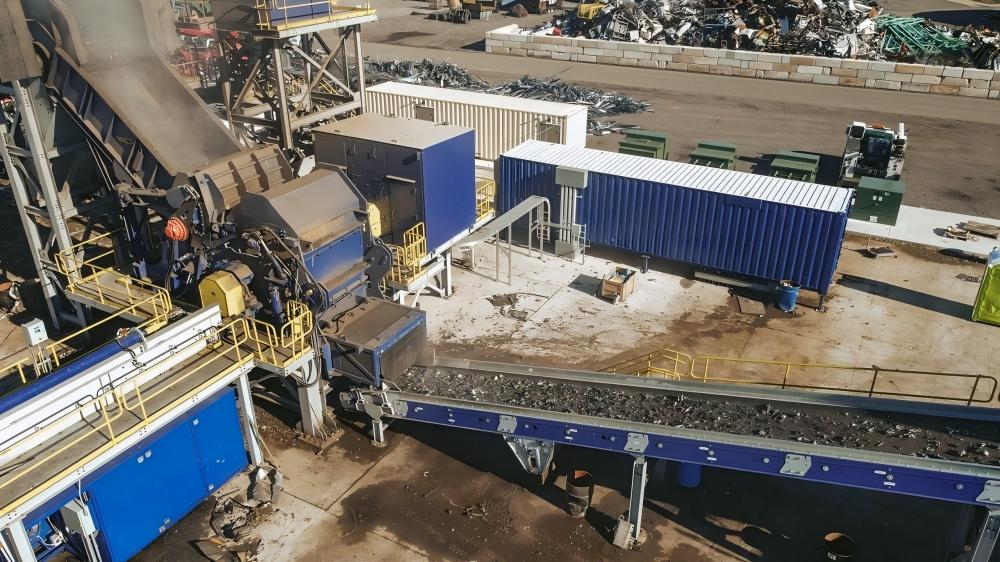
One of the most frequent mistakes made in the industry is Over-Feeding the System. Operators often believe that more input equals more output. However, in a hammer shredder, over-feeding leads to a ‘choked’ condition where the chamber is so full that the material cannot reach the discharge grates. This causes the rotor to lose speed and can lead to catastrophic motor failure. To improve discharge efficiency in hammer shredder systems, the feed rate must be synchronized with the discharge capacity, often using an automated VFD (Variable Frequency Drive) on the conveyor belt.
Another common error is Ignoring Hammer Wear Patterns. As hammers wear down, they become rounded and lose their ability to ‘grip’ and ‘throw’ the material. This results in the material sliding along the hammer face rather than being propelled toward the grate. Furthermore, worn hammers increase the clearance between the hammer and the grate, allowing a thick layer of material to accumulate. Regular hammer rotation and replacement are non-negotiable for maintaining high discharge rates.
Poor Grate Maintenance is a third critical failure point. Grates are subject to extreme impact and abrasion. Over time, the holes can become ‘peened’ or mushroomed, effectively reducing the open area. In some cases, sticky materials or tramp metal can wedge into the openings, causing partial blockages. If the grate is not inspected and cleaned regularly, the effective discharge area can drop by as much as 50%, leading to a massive drop in efficiency and an increase in heat generation within the chamber.
Finally, many facilities fail to account for Material Moisture Content. Wet or oily material tends to clump together, forming ‘balls’ that are too large to pass through the grates or ‘cakes’ that stick to the chamber walls. If you are processing damp materials, it is essential to use grates with larger openings or incorporate a drying stage prior to shredding. Adding anti-stick liners or using specialized vibrating discharge chutes can also help mitigate these issues.
Selection Checklist for High-Efficiency Shredder Systems
When purchasing or upgrading a system to improve discharge efficiency in hammer shredder systems, use the following checklist to ensure the equipment meets technical requirements:
- Adjustable Grate Positioning: Does the machine allow for the adjustment of the grate distance to compensate for hammer wear?
- Quick-Change Grate Design: Can the grates be swapped out in less than two hours to accommodate different material sizes?
- Reversible Rotor: Does the rotor support bi-directional rotation to maximize hammer life and maintain sharp leading edges?
- Integrated Air Separation: Is there a built-in port for air suction to remove light fractions and reduce internal pressure?
- Vibration Monitoring: Are there sensors to detect imbalances caused by material buildup or uneven discharge?
- Tapered Grate Holes: Are the discharge openings wider on the outside than the inside to prevent clogging?
- High-Torque Start: Can the motor handle a ‘dirty start’ if the chamber is not completely empty?
Frequently Asked Questions (FAQ)
How does hammer weight affect discharge efficiency?
Hammer weight primarily affects the ‘shattering’ force. Heavier hammers are better for thick scrap as they maintain momentum through the impact. However, for discharge efficiency, the hammer’s *shape* and *surface area* are more important, as they determine how effectively the hammer ‘sweeps’ the material toward the grate.
Can I increase discharge efficiency by simply increasing the RPM?
Not necessarily. While higher RPM increases centrifugal force, it also increases the tangential velocity. If the velocity is too high, the material may move too fast to fall into the grate openings, essentially ‘floating’ over them. There is always an optimal RPM ‘sweet spot’ for every material type.
What is ‘Grate Blinding’ and how do I prevent it?
‘Grate blinding’ occurs when the openings in the discharge grate become blocked by material. This is common with ductile metals or wet materials. To prevent it, ensure the hammers have sharp edges to shear the material and maintain a tight hammer-to-grate clearance to physically clear the holes.
How often should I inspect the discharge grates?
Does the shape of the grate holes matter?
Yes, significantly. Round holes provide the most consistent sizing but are more prone to blinding. Slotted or rectangular holes offer a higher open area and better discharge rates for elongated pieces of scrap, though they may allow some ‘oversize’ material to pass through in one dimension.
How does a VFD help with discharge efficiency?
A Variable Frequency Drive (VFD) allows you to fine-tune the rotor speed to match the specific material density and moisture content. It also allows the system to automatically slow down the feed conveyor if it detects the rotor is struggling, preventing the chamber from overfilling and choking the discharge path.


