How Briquetting Machine Pressure Impacts Briquette Density and Quality: A Technical Guide

Technical Overview: The Mechanics of Briquetting
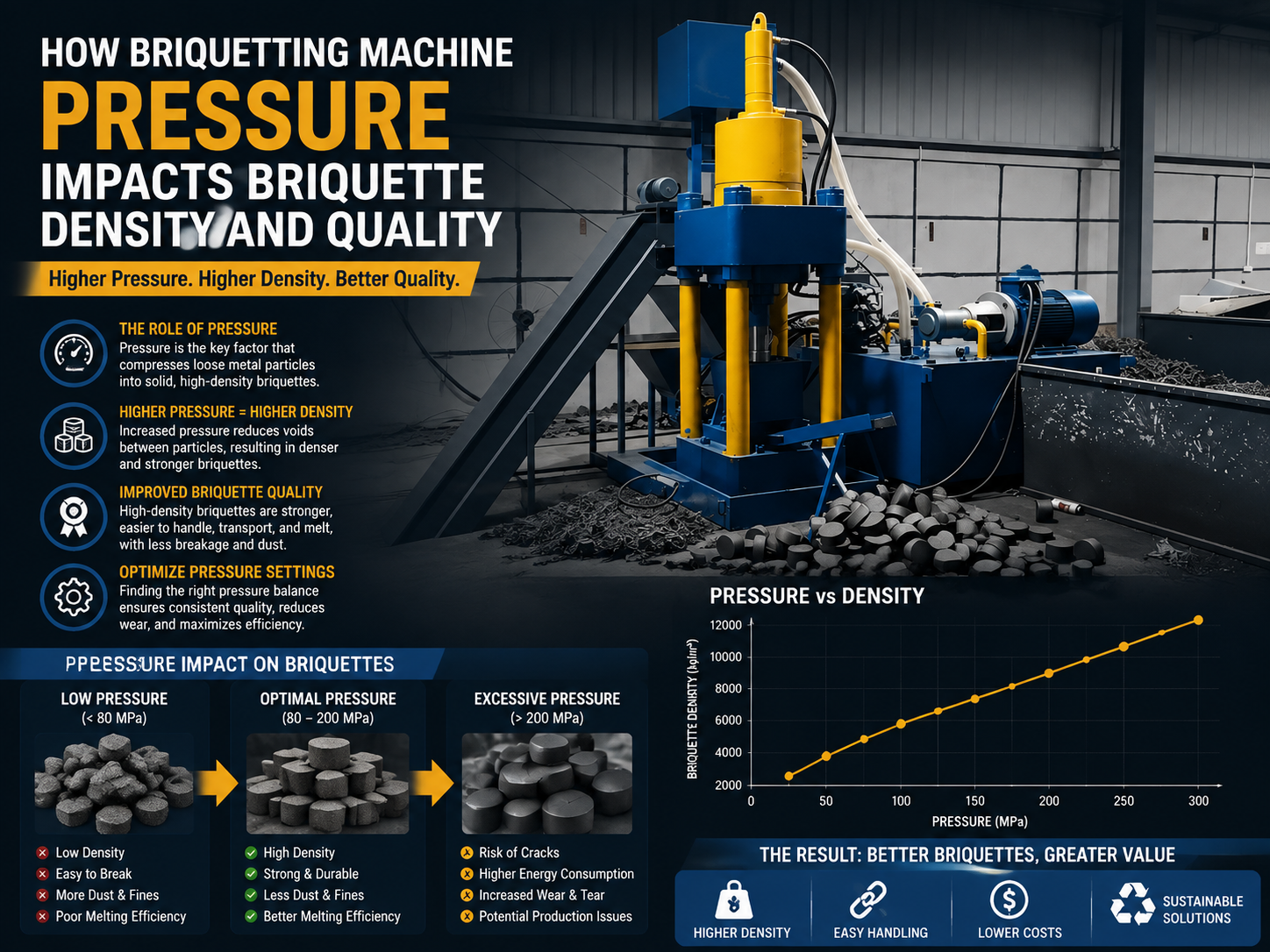
In the modern metal fabrication industry, the management of metal swarf, chips, and turnings represents a significant operational challenge. HARSLE briquetting machines are engineered to transform these loose, voluminous waste materials into compact, high-density briquettes. At the heart of this transformation lies the fundamental relationship between hydraulic force and material consolidation. Understanding how briquetting machine pressure impacts briquette density and quality is essential for manufacturers looking to optimize their scrap recovery processes and improve furnace melt yields.
The briquetting process involves the application of extreme mechanical force to loose particulate matter, forcing the air out of the interstitial spaces and inducing plastic deformation in the metal particles. When pressure is applied, the individual chips undergo mechanical interlocking and cold welding. This process is highly dependent on the specific pressure exerted by the hydraulic cylinder, which dictates the final structural integrity of the resulting briquette.
High-quality briquettes are characterized by their ability to withstand handling, transport, and thermal shock during the smelting process. If the pressure is insufficient, the briquettes may crumble, leading to increased oxidation and material loss. Conversely, excessive pressure can lead to unnecessary energy consumption and accelerated wear on the machine’s mold and die components. Therefore, finding the optimal pressure balance is a critical engineering task.
HARSLE’s advanced hydraulic systems are designed to provide consistent, repeatable pressure profiles. By controlling the compression cycle, operators can ensure that every briquette meets the stringent density requirements of modern foundries. This technical guide explores the physics behind these operations and provides actionable insights for industrial users.
Core Parameters Influencing Briquette Quality
The primary factor influencing the final product is the specific pressure, defined as the force applied per unit area of the briquette cross-section. However, pressure alone does not determine quality; it is part of a complex interplay involving material characteristics, moisture content, and particle size distribution. For instance, ductile metals like aluminum or copper require different pressure thresholds compared to brittle cast iron chips.
Material morphology plays a significant role in how pressure is distributed within the compression chamber. Long, stringy turnings require a pre-crushing stage to ensure uniform density, whereas short, granular chips can be fed directly into the press. If the material is not properly prepared, the pressure will be unevenly distributed, leading to internal voids and structural weaknesses that compromise the briquette’s quality.
Dwell time is another critical parameter. The duration for which the maximum pressure is maintained at the end of the compression stroke allows for stress relaxation and better particle bonding. If the dwell time is too short, the briquette may exhibit ‘spring-back’—a phenomenon where the material expands after the pressure is released, resulting in a lower-than-expected density and poor structural cohesion.
Finally, the temperature of the material during compression can influence the effectiveness of the pressure. While cold briquetting is standard for most metal fabrication applications, the friction generated during the compression cycle can slightly elevate the temperature of the briquettes. This heat can actually assist in the bonding process for certain alloys, provided that the hydraulic system is capable of maintaining stable pressure despite thermal expansion of the machine components.
Calculation Method: Determining Required Pressure
To calculate the required pressure for a specific material, engineers must first determine the target density of the briquette. The target density is usually expressed as a percentage of the solid metal density. For most industrial applications, a briquette density of 70% to 85% of the solid metal is considered optimal for furnace charging. The formula for required force is: F = P × A, where F is the total force, P is the specific pressure, and A is the cross-sectional area of the die.
The specific pressure (P) required depends on the yield strength of the metal being processed. For example, aluminum alloys generally require lower specific pressures than stainless steel or hardened steel alloys. A common rule of thumb is to start with a specific pressure that is 1.5 to 2 times the yield strength of the material. This ensures that the material enters the plastic deformation zone, allowing for permanent bonding.
Another factor in the calculation is the friction between the material and the die walls. As the briquette is formed, the pressure is not uniform throughout the entire length of the briquette due to wall friction. This is often referred to as the ‘die wall effect.’ To compensate for this, HARSLE machines utilize advanced die geometries and lubrication systems that minimize friction, ensuring that the pressure is transmitted as efficiently as possible to the center of the briquette.
Operators should also account for the compression ratio, which is the ratio of the volume of loose chips to the volume of the final briquette. A higher compression ratio requires a longer stroke and potentially higher pressure to overcome the initial resistance of the loose material. By monitoring the hydraulic pressure gauge during the cycle, operators can verify if the machine is reaching the calculated force necessary for the specific material batch.
Parameter Table: Material vs. Pressure Requirements
| Material Type | Typical Density (g/cm³) | Required Specific Pressure (MPa) | Compression Ratio |
|---|---|---|---|
| Aluminum Chips | 2.7 | 150 – 250 | 6:1 – 10:1 |
| Copper Turnings | 8.9 | 200 – 350 | 4:1 – 8:1 |
| Cast Iron Swarf | 7.2 | 300 – 500 | 3:1 – 6:1 |
| Steel Scrap | 7.8 | 400 – 600 | 5:1 – 9:1 |
| Brass Shavings | 8.5 | 250 – 400 | 4:1 – 7:1 |
The table above provides a baseline for setting up your HARSLE briquetting machine. Please note that these values are estimates and can vary based on the specific alloy composition and the physical state of the scrap. Always perform a test run with a small batch to calibrate the pressure settings for your specific material stream.
Common Engineering Mistakes in Briquetting
One of the most frequent mistakes in the briquetting process is the failure to account for material contamination. Coolants, oils, and cutting fluids left on the chips can act as lubricants, preventing the metal particles from bonding effectively. While some residual oil is inevitable, excessive moisture can lead to ‘briquette explosion’ during the smelting process due to steam generation. Proper chip wringing or centrifuging before briquetting is essential for both quality and safety.
Another common error is ignoring the wear on the die and punch. As these components wear down, the clearance between them increases, allowing material to extrude into the gap. This not only creates ‘flash’ on the briquettes but also leads to a loss of effective pressure, as the hydraulic force is dissipated through the extruded material rather than being applied to the briquette core. Regular inspection of the die set is mandatory for maintaining consistent quality.
Inconsistent feeding is also a major culprit. If the pre-fill chamber is not filled to the correct level, the stroke of the hydraulic cylinder will vary, leading to briquettes of different heights and densities. HARSLE machines feature automated feeding systems designed to mitigate this, but operators must ensure that the feed rate is synchronized with the cycle time of the press to maintain a steady output.
Finally, many users fail to adjust the pressure settings when switching between different materials. Using the same pressure for aluminum as for steel is inefficient. For aluminum, excessive pressure might cause the material to stick to the die, while for steel, insufficient pressure will result in fragile briquettes. Always maintain a log of pressure settings for each material type to ensure repeatability and quality control.
Selection Checklist for Briquetting Equipment
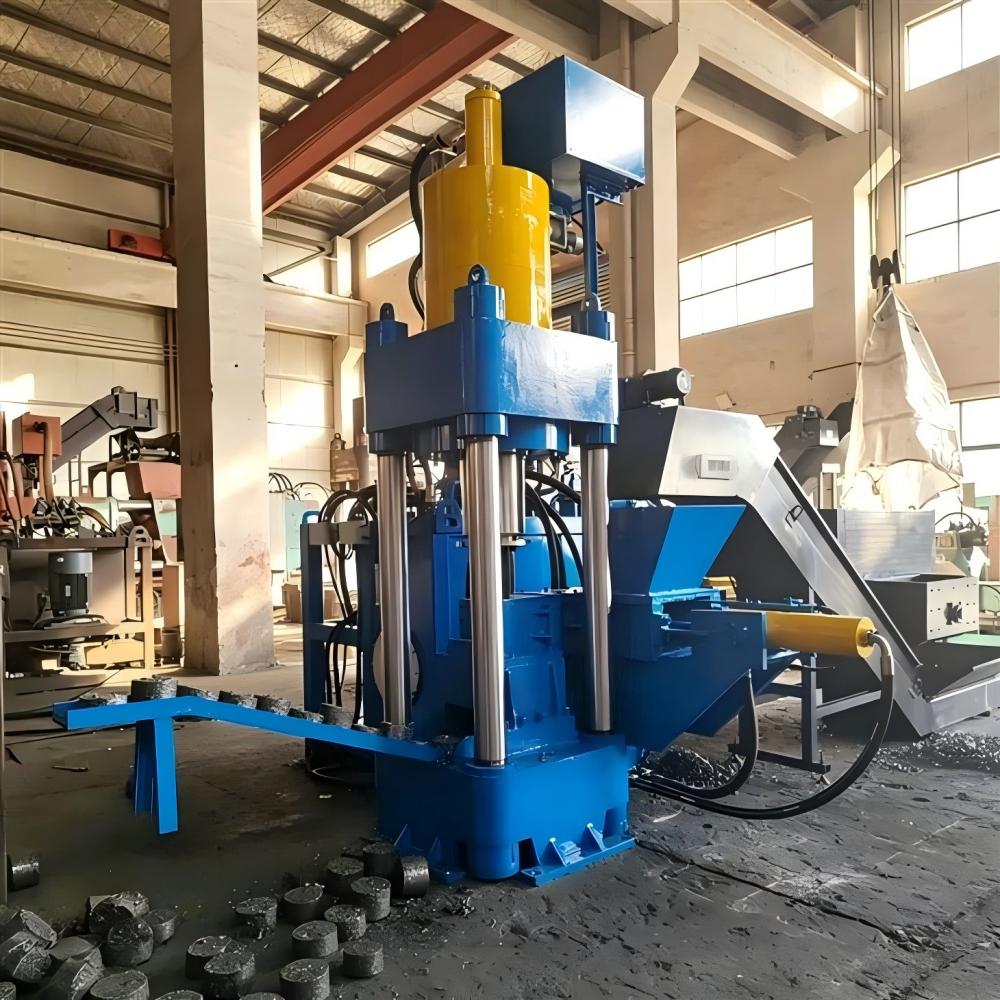
When selecting a briquetting machine, consider the total volume of scrap generated per day. A machine that is undersized for your output will require constant operation, leading to premature component fatigue. Conversely, an oversized machine may be cost-prohibitive in terms of energy consumption and floor space. HARSLE offers a range of capacities to suit various production scales.
Evaluate the hydraulic system’s responsiveness. High-quality briquetting machines should feature proportional valves that allow for precise control over the pressure ramp-up. This prevents shock loads on the hydraulic system and ensures a smooth compression cycle. Check if the machine includes a PLC-based control system that allows for the storage of multiple material profiles, making it easy to switch between different scrap types.
Consider the maintenance accessibility of the machine. Briquetting is a high-stress process, and components like seals, punches, and dies will eventually require replacement. A machine with a modular design, like those manufactured by HARSLE, allows for quick and easy maintenance, minimizing downtime. Ensure that the manufacturer provides comprehensive support and readily available spare parts.
Finally, look for integrated features such as automatic oil recovery systems and chip conveyors. These features not only improve the quality of the briquettes by removing excess fluids but also enhance the overall cleanliness and efficiency of your facility. A well-integrated briquetting line is a significant asset that pays for itself through reduced waste disposal costs and increased revenue from high-quality scrap sales.
FAQ: Frequently Asked Questions
How does briquetting machine pressure impact briquette density and quality?
Higher pressure generally leads to higher density and better structural integrity. However, it must be balanced against the material’s yield strength and the machine’s mechanical limits to avoid excessive wear and energy waste.
What is the ideal density for metal briquettes?
For most industrial smelting applications, a density of 70% to 85% of the solid metal is considered ideal. This ensures the briquette sinks into the melt and minimizes oxidation.
Why do my briquettes crumble after production?
Crumbling is usually caused by insufficient pressure, inadequate dwell time, or high levels of contaminants like oil and coolant that prevent proper particle bonding.
Can I use the same machine for different metals?
Yes, HARSLE briquetting machines are versatile. However, you must adjust the pressure and cycle parameters when switching between materials with different physical properties, such as aluminum and steel.
How often should I replace the die and punch?
The lifespan of these components depends on the abrasiveness of the material being processed. Regular inspections should be conducted, and parts should be replaced when the clearance exceeds the manufacturer’s recommended tolerances to maintain briquette quality.