How Hammer Shredders Support Pre-Shredding in Metal Recycling Facilities

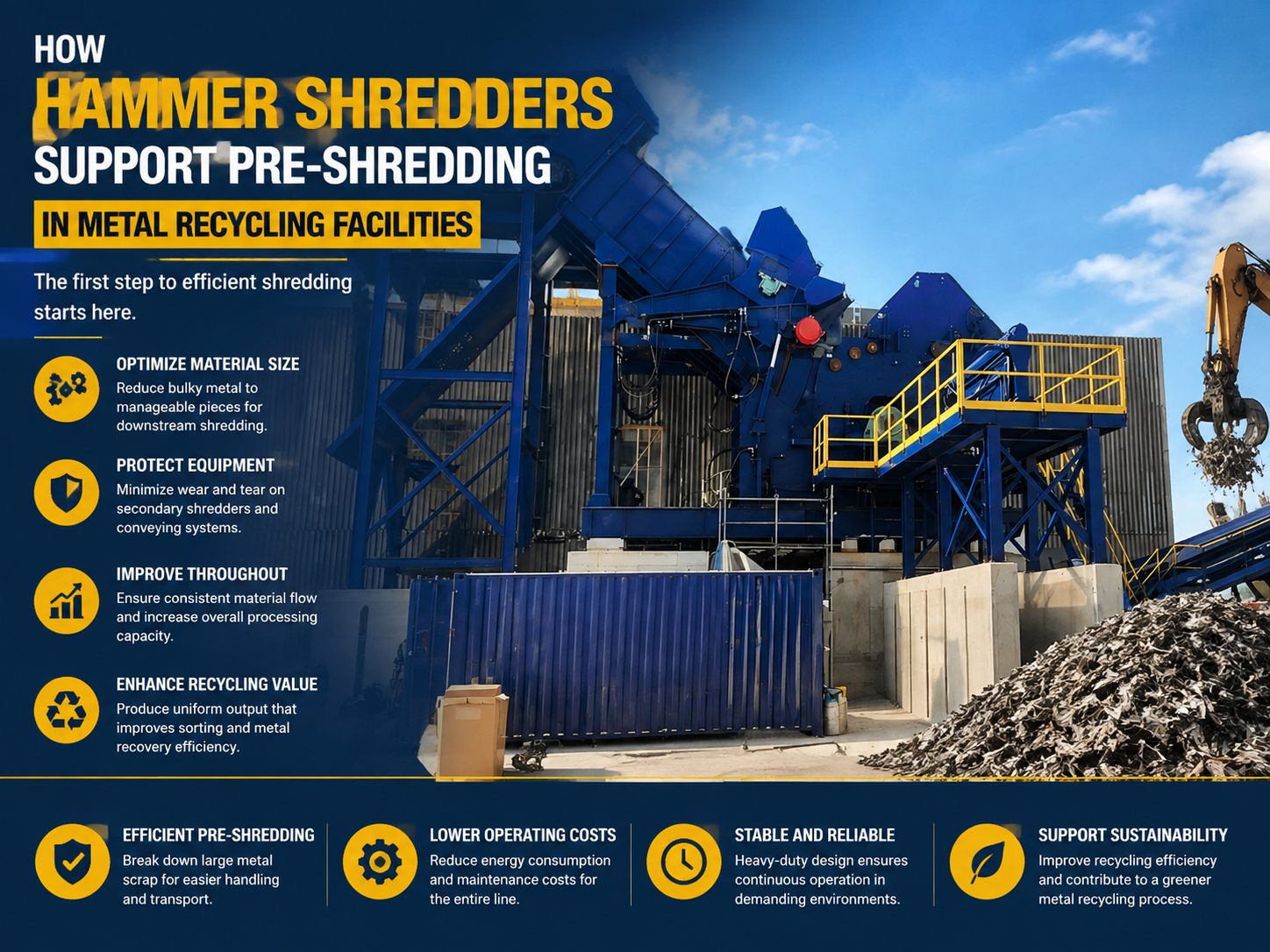
Technical Overview of Hammer Shredders in Pre-Shredding
In the modern landscape of the circular economy, the efficiency of metal recovery is paramount. Hammer shredders support pre-shredding in metal recycling facilities by acting as the primary stage of size reduction, transforming bulky, heterogeneous scrap into a more manageable, uniform feedstock. This process is not merely about breaking metal; it is about liberating different material fractions—such as separating ferrous metals from non-ferrous metals and non-metallic contaminants—before they reach downstream sorting systems. HARSLE hammer shredders are engineered to handle the immense mechanical stress required to fracture high-tensile materials through high-velocity impact rather than shearing.
The fundamental mechanism of a hammer shredder involves a high-speed rotor equipped with heavy, pivoting hammers. As the rotor spins, these hammers extend due to centrifugal force. When scrap metal enters the crushing chamber, it is struck by these hammers with massive kinetic energy. The impact causes the material to fracture along grain boundaries or structural weak points. Unlike secondary grinders, hammer shredders in a pre-shredding capacity are designed for volume and liberation. They ensure that large items, such as end-of-life vehicles (ELVs), white goods, and industrial structural scrap, are reduced to a size that prevents clogging in secondary processing lines.
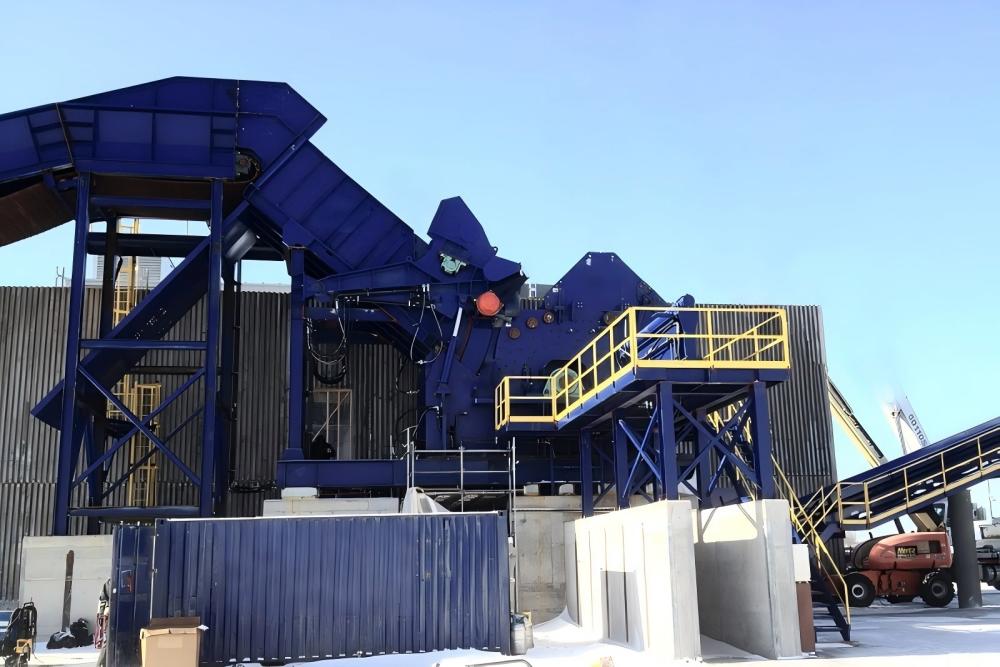
One of the critical technical advantages of using hammer shredders for pre-shredding is the ‘balling’ effect. As the metal pieces are repeatedly struck and bounced against the anvil and grate bars, they tend to curl into dense, spherical shapes. This increased bulk density is highly beneficial for logistics and subsequent melting processes in electric arc furnaces (EAF). Furthermore, the pre-shredding stage significantly reduces the wear and tear on secondary fine-grinders, which are often more delicate and expensive to maintain. By removing the bulk of the structural integrity of the scrap early on, the entire facility operates with higher uptime and lower specific energy consumption per ton of processed material.
HARSLE’s design philosophy emphasizes the durability of the crushing chamber. The interior is typically lined with high-manganese steel plates that work-harden under impact. This means the more the machine is used for heavy-duty pre-shredding, the tougher its internal surfaces become. The synergy between the rotor’s inertia and the hammers’ mass allows the machine to maintain throughput even when encountering dense ‘unshreddables,’ which are safely ejected through a dedicated trap, protecting the internal components from catastrophic failure.
Core Parameters for Metal Recycling Efficiency
When evaluating how hammer shredders support pre-shredding in metal recycling facilities, several core parameters dictate the machine’s performance and suitability for specific scrap streams. The first and most vital parameter is the Rotor Diameter and Width. The physical dimensions of the rotor determine the ‘bite’ the shredder can take. A larger diameter increases the tangential velocity of the hammers, which directly correlates to the impact energy. For pre-shredding heavy scrap, a larger rotor is essential to provide the necessary inertia to overcome the resistance of thick-walled steel sections.
Hammer Mass and Geometry are equally critical. In pre-shredding applications, hammers are typically heavier (ranging from 50kg to over 150kg each) to ensure they do not deflect too easily upon impact. The geometry—whether bell-shaped, T-shaped, or rectangular—affects how the hammer interacts with the metal. HARSLE utilizes specialized alloy compositions that balance hardness with toughness, preventing the hammers from cracking while maintaining a sharp leading edge for effective fracturing. The arrangement of these hammers on the rotor (staggered vs. aligned) also influences the smoothness of the power draw and the consistency of the output size.
Motor Power and Drive System represent the ‘heart’ of the shredding operation. Pre-shredding requires high torque to handle surges in material feeding. Modern facilities often utilize variable frequency drives (VFDs) or hydraulic drives to manage these loads. A high-kilowatt motor ensures that the rotor can recover its RPM quickly after a heavy impact. Furthermore, the Grate Bar Opening Size determines the final product size. In a pre-shredding context, these openings are larger than in finishing mills, focusing on throughput and liberation rather than fine granulation. The ratio between the grate area and the rotor volume is a key metric for preventing material ‘over-milling,’ which wastes energy and increases dust production.
Lastly, the Feed Control System is a parameter often overlooked. Effective pre-shredding relies on a consistent flow of material. HARSLE shredders often incorporate heavy-duty feed rollers or vibrating feeders that compress the scrap before it enters the hammer circle. This pre-compression stabilizes the material, allowing the hammers to strike a solid mass rather than loose pieces, which significantly improves the efficiency of energy transfer from the motor to the metal fracture.
Calculation Method for Shredding Performance
To optimize how hammer shredders support pre-shredding in metal recycling facilities, engineers must employ precise calculation methods to match the machine to the operational requirements. The most fundamental calculation is the Kinetic Energy (Ek) of the hammers. This is calculated using the formula: Ek = 0.5 * I * ω², where I is the moment of inertia of the rotor assembly and ω is the angular velocity. Because the velocity is squared, increasing the rotor speed has a much more significant impact on crushing force than increasing the mass of the hammers. However, speed must be balanced against the mechanical limits of the bearings and the heat generated by friction.
Another vital calculation is the Throughput Capacity (Q). This is generally estimated by the formula: Q = V * ρ * η, where V is the volume of the crushing chamber, ρ is the bulk density of the incoming scrap, and η is the efficiency factor (typically 0.6 to 0.8 for pre-shredders). For example, if a facility is processing light iron with a low bulk density, the volume of the chamber becomes the limiting factor. Conversely, when processing heavy structural steel, the motor’s power (kW) per ton of material becomes the primary constraint. Engineers must calculate the ‘Specific Energy Consumption’ (kWh/t) to ensure the facility remains profitable at varying scrap prices.
The Hammer Tip Speed is also a critical metric, usually maintained between 50 and 90 meters per second for metal recycling. If the speed is too low, the metal will not fracture; if it is too high, the wear on the hammers increases exponentially without a proportional gain in throughput. The calculation is simple: v = π * D * n / 60, where D is the diameter of the hammer swing circle in meters and n is the RPM. HARSLE provides detailed performance charts that allow operators to adjust these variables based on the specific metallurgy of the scrap being processed on a given day.
Parameter Table for HARSLE Hammer Shredders
The following table outlines the typical specifications for HARSLE hammer shredders optimized for pre-shredding applications in metal recycling facilities. These values are representative of standard industrial configurations.
| Model Series | Rotor Diameter (mm) | Motor Power (kW) | Hammer Weight (kg) | Throughput (Tons/Hr) | Max Feed Size (mm) |
|---|---|---|---|---|---|
| HARSLE HS-1200 | 1200 | 110 – 160 | 45 – 60 | 5 – 10 | 800 x 800 |
| HARSLE HS-1600 | 1600 | 250 – 400 | 80 – 110 | 15 – 25 | 1200 x 1000 |
| HARSLE HS-2000 | 2000 | 600 – 800 | 120 – 160 | 35 – 50 | 1600 x 1400 |
| HARSLE HS-2500 | 2500 | 1000 – 1500 | 180 – 250 | 60 – 100 | 2000 x 1800 |
Note: Throughput values are based on mixed No.1 and No.2 heavy melting scrap. Actual results may vary based on material density and moisture content.
Common Engineering Mistakes in Shredder Operation
Even the most robust hammer shredders can underperform if subjected to common engineering and operational mistakes. One of the most frequent errors is Improper Hammer Rotation Cycles. Operators often wait too long to flip or replace hammers. As the leading edge of a hammer rounds off, it stops fracturing the metal and starts ‘pushing’ it. This increases the heat in the chamber, spikes the amperage of the motor, and significantly reduces the quality of the output. A strict maintenance schedule based on tonnage processed, rather than just hours of operation, is essential.
Another common mistake is Inadequate Material Pre-Sorting. While hammer shredders are designed for heavy-duty work, the introduction of ‘unshreddables’ like massive engine blocks or thick hardened steel shafts can cause unnecessary stress. While HARSLE machines feature ejection gates, frequent ejections disrupt the flow and can eventually fatigue the housing. Implementing a basic pre-sort or using a hydraulic shear to downsize exceptionally large pieces before they reach the shredder can extend the life of the hammer shredder by 30-40%.
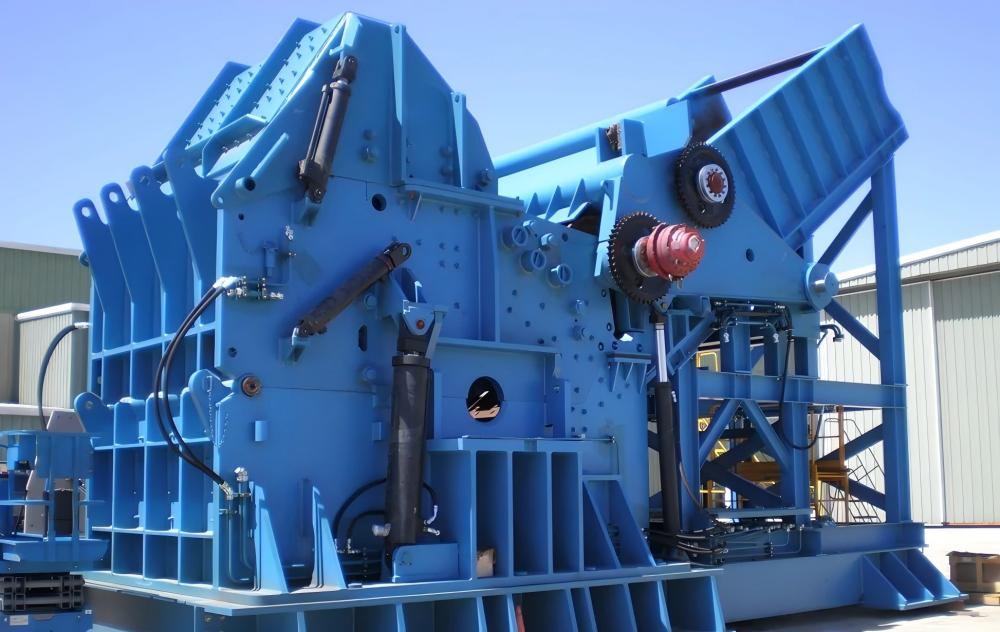
Ignoring the Wear Liners is a critical failure point. The internal liners are sacrificial components. If they are allowed to wear through to the main structural frame of the shredder, the repair costs can be astronomical. Many facilities fail to inspect the liner bolts and the gap between the hammer tip and the anvil. If this gap becomes too wide, the shredding efficiency drops because the material is not being ‘nipped’ effectively. Regular measurement and adjustment of the anvil position are required to maintain peak performance.
Lastly, Poor Lubrication and Cooling of the main rotor bearings is a recipe for disaster. Hammer shredders operate in extremely dusty and high-vibration environments. Using the wrong grade of grease or failing to maintain the automatic lubrication system can lead to bearing seizure. Given the massive inertia of the rotor, a bearing failure often results in secondary damage to the drive shaft and couplings. Monitoring bearing temperatures and vibration signatures using IoT sensors is now a standard recommendation for HARSLE industrial installations.
Selection Checklist for Metal Recycling Facilities
Choosing the right equipment is vital to ensure hammer shredders support pre-shredding in metal recycling facilities effectively. Use this checklist during the procurement phase:
- Material Stream Analysis: Define the primary scrap type (e.g., aluminum scrap, car bodies, industrial waste). This determines the required hammer alloy and motor torque.
- Throughput Requirements: Calculate the daily and hourly tonnage needed to meet your facility’s ROI targets. Ensure the shredder’s rated capacity has a 20% buffer for peak loads.
- Power Availability: Verify if your facility’s electrical grid can handle the high startup current of a large shredder motor or if a soft-starter/VFD is required.
- Downstream Compatibility: Ensure the output size from the pre-shredder matches the intake requirements of your magnetic separators, eddy current separators, and secondary mills.
- Maintenance Access: Check if the shredder housing opens hydraulically for easy access to the rotor and hammers. HARSLE models feature ‘top-opening’ designs to minimize downtime.
- Safety Features: Ensure the machine includes emergency stop systems, vibration monitoring, and an automatic ‘unshreddable’ ejection gate.
- Spare Parts Availability: Confirm that wear parts like hammers, liners, and grates are readily available in your region to avoid long lead times.
FAQ
How often should hammers be replaced in a pre-shredding operation?
Hammer life depends entirely on the abrasiveness of the material. For clean aluminum, hammers may last weeks. For sandy or contaminated steel scrap, they might need flipping every 24-48 hours of operation. HARSLE recommends monitoring the ’rounding’ of the hammer face; once the radius exceeds 20mm, efficiency drops sharply.
Can a hammer shredder handle non-metallic materials?
Yes, hammer shredders are excellent at liberating non-metallics like plastics, rubber, and glass from metal assemblies. However, these materials can create dust, so a proper dust extraction or water suppression system must be integrated into the facility design.
What is the difference between a hammer shredder and a ring mill?
A hammer shredder uses fixed or pivoting solid hammers that rely on high-speed impact. A ring mill uses rolling rings that crush material through a combination of impact and attrition. Hammer shredders are generally preferred for ‘pre-shredding’ because they handle larger, bulkier items more effectively than ring mills.
How does HARSLE ensure the safety of the operator?
HARSLE integrates multiple safety layers, including heavy-duty ballistic shielding around the feed and discharge zones, vibration sensors that auto-stop the motor if an imbalance is detected, and hydraulic interlocks that prevent the machine from starting while the maintenance doors are open.
Does pre-shredding improve the value of the scrap?
Absolutely. Pre-shredded scrap is denser, cleaner, and more uniform. This makes it more desirable for steel mills and smelters, often fetching a higher price per ton compared to unprocessed ‘baled’ or ‘loose’ scrap. It also reduces the energy required in the melting process.