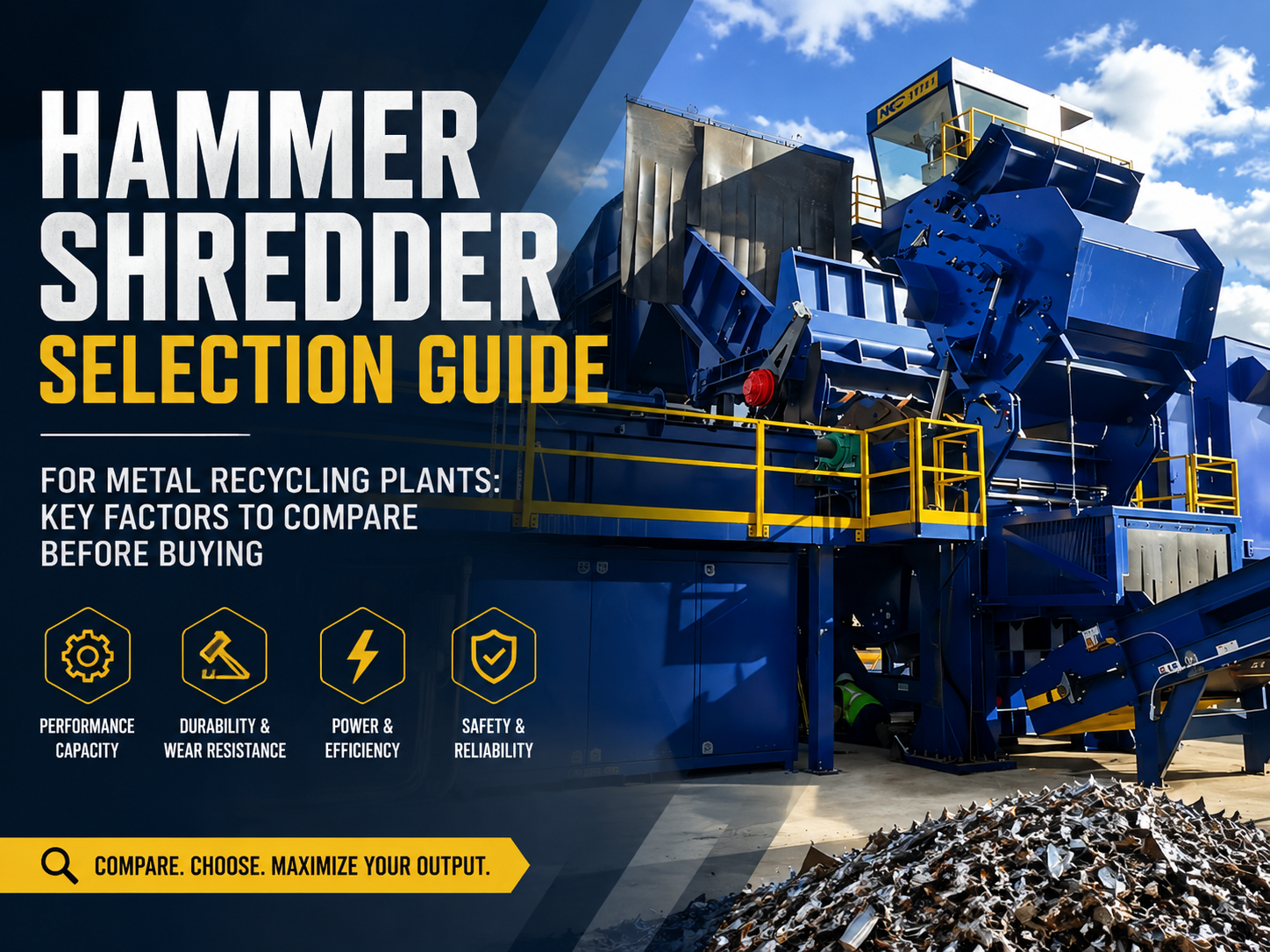
Hammer Shredder Selection Guide for Metal Recycling Plants: Key Factors to Compare Before Buying

Introduction to Hammer Shredder Selection for Metal Recycling
In the rapidly evolving world of metal recycling, the efficiency of your processing line often dictates your profit margins. At the heart of many high-output facilities lies the hammer shredder—a powerhouse designed to reduce bulky scrap into dense, high-purity fragments. However, selecting the right hammer shredder is not merely a matter of picking the largest motor or the lowest price tag. It requires a deep understanding of material science, mechanical engineering, and operational economics. This Hammer Shredder Selection Metal Recycling Plants: Key Factors Compare Before Buying guide is designed to help plant managers and investors navigate the complexities of the market.
The primary goal of a hammer shredder in a metal recycling context is to liberate different materials (such as separating copper from aluminum or steel) and to increase the bulk density of the scrap. High-density scrap fetches a premium price at steel mills and foundries because it improves furnace efficiency and reduces melting time. Therefore, the machine you choose must align perfectly with your specific feedstock—whether that is End-of-Life Vehicles (ELVs), aluminum extrusions, or light industrial scrap.
As we delve into this guide, we will explore the technical nuances that differentiate a mediocre machine from a high-performance asset. From the metallurgy of the hammers to the sophistication of the hydraulic rejection systems, every component plays a role in your long-term success. HARSLE remains committed to providing industrial-grade solutions that balance durability with cost-effectiveness, ensuring that your investment yields the highest possible return.
Price Range Overview: What to Expect in Today’s Market
When evaluating the cost of a hammer shredder, it is essential to categorize machines based on their throughput capacity and intended application. The market generally splits into three tiers: entry-level/specialty units, mid-range industrial shredders, and heavy-duty large-scale systems. Understanding these price brackets helps in setting a realistic budget for your recycling plant.
Entry-level hammer shredders, often used for processing light aluminum scrap or electronic waste, typically range from $30,000 to $80,000. These machines are characterized by smaller rotors and lower horsepower motors (usually under 150 HP). While they are excellent for niche applications, they lack the structural integrity required for heavy ferrous scrap or full-car shredding. They are often the starting point for smaller yards looking to add value to their non-ferrous collections.
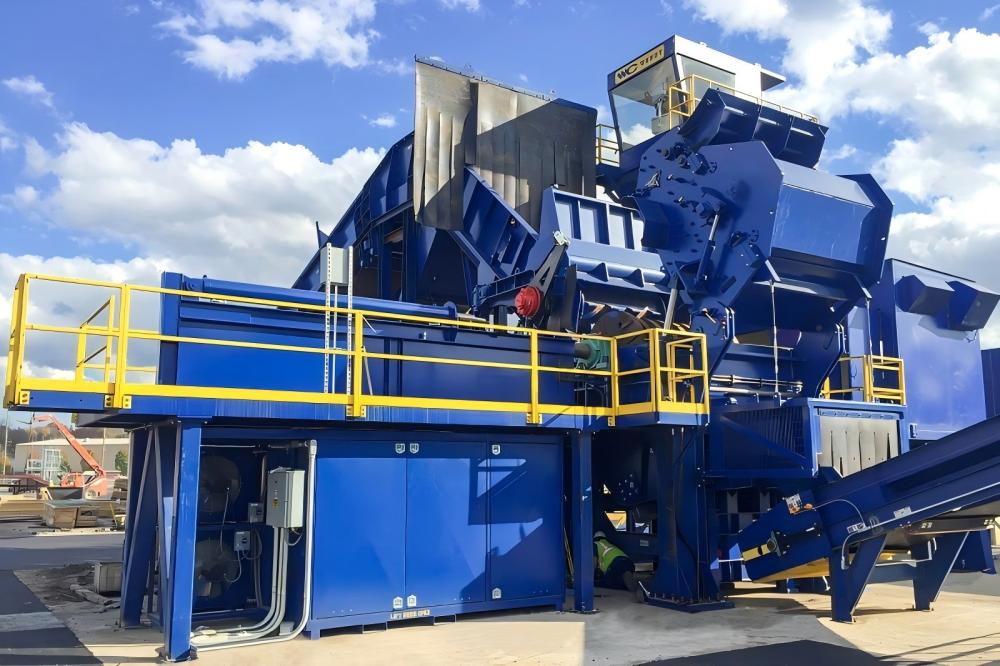
Mid-range industrial shredders represent the bulk of the market for professional recycling plants. These units typically cost between $150,000 and $450,000. In this range, you find machines capable of handling light iron, white goods (appliances), and pre-cut ELVs. These shredders feature robust frames, advanced hydraulic systems for easy maintenance, and motors ranging from 300 HP to 800 HP. This is where the Hammer Shredder Selection Metal Recycling Plants: Key Factors Compare Before Buying becomes critical, as the variation in build quality between manufacturers can be significant.
Finally, large-scale heavy-duty systems can exceed $1,000,000. These are massive installations designed for 24/7 operation, processing hundreds of tons of scrap per day. These systems often include integrated downstream separation technologies like magnetic drums, eddy current separators, and air zig-zag classifiers. For these investments, the purchase price is often secondary to the total cost of ownership and the guaranteed hourly throughput.
Main Cost Drivers: Why Some Shredders Cost More Than Others
The price of a hammer shredder is driven by several key factors, the most prominent being the quality of the rotor and the metallurgy of the wear parts. The rotor is the most expensive single component of the machine. A high-quality rotor is forged and precision-balanced to withstand the immense centrifugal forces and impact shocks generated during operation. Cheaper machines may use cast rotors or lower-grade steel, which are prone to cracking under heavy stress.
Another significant cost driver is the motor and drive system. High-efficiency motors from reputable brands like Siemens or WEG add to the initial cost but provide better reliability and lower energy consumption. Furthermore, the type of coupling—whether it is a fluid coupling or a direct drive with a sophisticated VFD (Variable Frequency Drive)—impacts both the price and the machine’s ability to handle “unshreddables” without damaging the motor.
The thickness and grade of the housing steel also play a role. A shredder processing heavy scrap needs a housing lined with high-manganese steel plates. These liners are designed to work-harden; the more they are hit, the harder they become. Machines built with thinner, standard-grade steel will require frequent housing repairs and will eventually suffer from structural fatigue, leading to a shorter overall lifespan.
Lastly, automation and control systems contribute to the cost. Modern hammer shredders are equipped with PLC (Programmable Logic Controller) systems that monitor motor load, bearing temperature, and vibration levels. These systems can automatically adjust the feed rate to prevent jams, protecting the machine from operator error. While these features increase the upfront investment, they are essential for maintaining high uptime in a professional recycling environment.
Configuration Impact: Tailoring the Machine to Your Scrap
The configuration of a hammer shredder is perhaps the most critical aspect of the Hammer Shredder Selection Metal Recycling Plants: Key Factors Compare Before Buying process. The configuration must match the physical characteristics of your feedstock. For instance, the choice between fixed hammers and swing hammers is fundamental. Swing hammers are generally preferred for metal recycling because they can retract when they hit an unshreddable object, reducing the risk of catastrophic rotor damage.
The design of the discharge grate (or grid) determines the final size of the shredded product. Smaller holes in the grate result in a finer, denser product but reduce the overall throughput and increase wear on the hammers. Conversely, larger holes allow for faster processing but may result in a product that requires further secondary processing. Many modern HARSLE shredders offer interchangeable grates, allowing plants to switch between different product specifications depending on market demand.
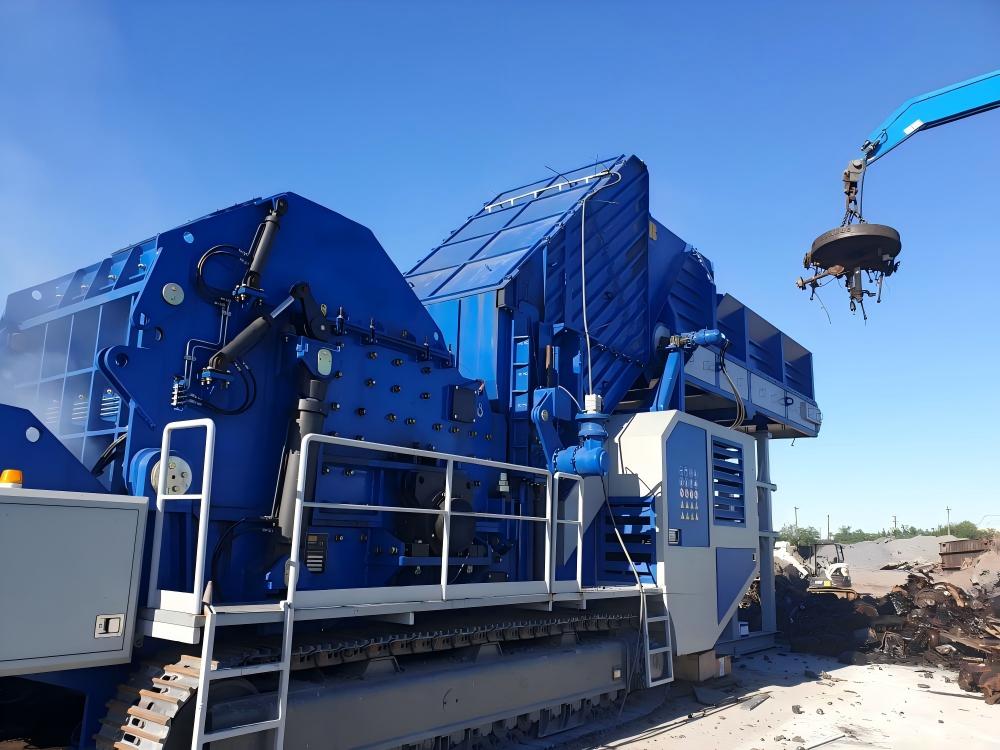
Hydraulic systems are another configuration variable. High-end shredders feature hydraulic opening mechanisms that allow the entire upper housing to be opened like a clamshell. This provides easy access to the rotor and hammers for maintenance. Without this feature, changing a set of hammers can take days of labor; with it, the task can be completed in a few hours. This configuration choice directly impacts your operational downtime and labor costs.
Feeding mechanisms also vary. Some plants prefer a gravity feed, while others require a forced-feed system with a hydraulic pusher or a heavy-duty slat conveyor. For bulky scrap like car bodies, a pre-shredder or a heavy-duty feed roller is often necessary to flatten the material before it enters the hammer mill. This prevents the shredder from becoming “choked” and ensures a consistent flow of material, which is vital for maximizing the efficiency of downstream separation equipment.
Hidden Costs: Beyond the Initial Purchase Price
When comparing hammer shredders, many buyers fail to account for the “hidden” costs that emerge during the first few years of operation. The most significant of these is the cost of wear parts. Hammers, liners, and grates are consumables. Depending on the abrasiveness of your scrap, hammers may need to be rotated or replaced every few hundred tons. If a machine uses proprietary hammer designs that can only be sourced from the original manufacturer at high prices, your operating margins will suffer.
Energy consumption is another major ongoing expense. A shredder running a 500 HP motor for 10 hours a day consumes a massive amount of electricity. Machines that are poorly designed or have inefficient drive systems will waste energy as heat and vibration. When performing a Hammer Shredder Selection Metal Recycling Plants: Key Factors Compare Before Buying analysis, always ask for the expected kilowatt-hour per ton (kWh/t) ratio for the specific material you plan to process.
Installation and civil works are often underestimated. A large hammer shredder requires a massive, reinforced concrete foundation to absorb the vibrations. In some cases, vibration isolation systems (like giant springs or rubber mounts) are necessary to prevent damage to nearby structures. Additionally, the cost of bringing sufficient electrical power to the site and installing dust extraction and fire suppression systems can add 20-30% to the total project cost.
Finally, consider the cost of labor and training. A hammer shredder is a dangerous piece of machinery if not operated correctly. Investing in staff training is essential not only for safety but also for optimizing the machine’s performance. An unskilled operator might overfeed the machine, leading to frequent trips and mechanical stress, whereas a trained operator can maintain a steady “sweet spot” that maximizes throughput while minimizing wear.
ROI Calculation: Determining the Payback Period
Calculating the Return on Investment (ROI) for a hammer shredder involves more than just looking at the price of scrap. You must consider the “value-add” of the shredding process. For example, if raw mixed scrap sells for $200 per ton, but shredded and separated high-density steel fragments sell for $350 per ton, your gross value-add is $150 per ton. From this, you must subtract your operating costs (power, labor, wear parts, and maintenance).
A typical ROI calculation might look like this: If a shredder processes 10 tons per hour with a net profit (after operating costs) of $50 per ton, the machine generates $500 of profit per hour. If the machine runs for 2,000 hours per year, the annual profit is $1,000,000. For a machine that costs $500,000 (including installation), the payback period would be just six months. However, this assumes a consistent supply of scrap and a steady market for the output.
It is also important to factor in the recovery of non-ferrous metals. A hammer shredder is excellent at liberating copper and aluminum from complex assemblies. The recovery of even a small percentage of copper from a stream of steel scrap can significantly boost the ROI, as copper prices are many times higher than steel prices. This is why downstream separation (magnets, eddy currents) is often integrated into the ROI model of a hammer shredder installation.
Lastly, consider the reduction in transport costs. Shredded scrap has a much higher bulk density than loose scrap. This means you can fit more weight into each truck or shipping container, drastically reducing your logistics expenses. For plants that export their processed material, this saving alone can sometimes justify the investment in a high-performance hammer shredder.
Buying Advice: A Checklist for Metal Recycling Plants
Before finalizing your purchase, use this checklist to ensure you have covered all the critical factors in the Hammer Shredder Selection Metal Recycling Plants: Key Factors Compare Before Buying process. First, verify the manufacturer’s reputation. Ask for references from other recycling plants that process similar materials. A manufacturer like HARSLE, with a track record in metal fabrication and processing machinery, offers the reliability needed for such a significant investment.
- Material Compatibility: Does the rotor design and hammer weight match your toughest feedstock?
- Maintenance Access: Does the machine have a hydraulic opening system for quick hammer changes?
- Wear Part Availability: Are the hammers and liners made from standard alloys that can be sourced competitively?
- Safety Features: Does the machine include an unshreddable rejection door and emergency stop systems?
- Structural Integrity: Check the weight of the machine compared to competitors; a heavier machine often indicates more robust steel construction.
- After-Sales Support: Does the manufacturer provide on-site installation, commissioning, and operator training?
Furthermore, consider the future-proofing of your plant. If you expect your volume to grow, it might be wiser to invest in a slightly larger machine now than to replace a smaller one in two years. Look for modular designs that allow for the addition of more advanced separation technology later. A well-chosen hammer shredder should be the cornerstone of your facility for at least 10 to 15 years.
Finally, always conduct a “test grind” if possible. Send a sample of your typical scrap to the manufacturer’s facility and observe the throughput, the quality of the output, and the energy consumed. This real-world data is far more valuable than any brochure specification. It allows you to see exactly how the machine handles your specific challenges, such as tangled wire or heavy structural sections.
Frequently Asked Questions (FAQ)
1. What is the difference between a hammer shredder and a shear shredder?
A shear shredder (usually twin-shaft) uses high torque and low speed to cut material, which is ideal for volume reduction of tires or plastics. A hammer shredder uses high speed and kinetic energy to impact and shatter material, which is better for densifying metal and liberating different metal types from each other.
2. How often do the hammers need to be replaced?
This depends entirely on the material. For clean aluminum, hammers might last weeks. For sandy or dirty iron scrap, they might need turning every 20-40 hours of operation. Using high-quality manganese or chrome-moly steel hammers can significantly extend these intervals.
3. Can a hammer shredder handle large engine blocks?
Only if it is specifically designed as a heavy-duty mill with a high-inertia rotor and heavy hammers (often 50kg+ per hammer). Smaller or mid-range shredders will suffer broken shafts or housing damage if fed large, solid cast-iron blocks without pre-processing.
4. What is the ideal moisture content for scrap being fed into the shredder?
Ideally, scrap should be dry. Wet scrap can cause “balling” of fines and can clog the discharge grates. Furthermore, if the scrap contains sealed containers with liquids, there is a risk of small explosions or fires during the high-energy shredding process.
5. How do I minimize the noise and vibration of the shredder?
Noise can be managed with acoustic enclosures and sound-dampening walls. Vibration is best managed through a massive concrete foundation and the use of high-quality vibration isolation mounts. Ensuring the rotor is perfectly balanced after every hammer change is also crucial for minimizing vibration.
6. Is a vertical or horizontal hammer shredder better?
Horizontal shredders (the most common) are better for high-volume, heavy scrap like ELVs. Vertical shredders (often called vertical grinders) are excellent for achieving very high density and purity in non-ferrous metals like copper meatballs or aluminum cans, but they generally have lower throughput for heavy steel.