How to Diagnose Vertical Baler Cylinder Problems Before Major Damage: A Comprehensive Maintenance Guide

Introduction to Vertical Baler Hydraulic Integrity
In the high-pressure environment of metal fabrication and waste management, the vertical baler stands as a critical piece of infrastructure. At the heart of this machine lies the hydraulic cylinder, a component responsible for generating the immense force required to compress scrap metal, cardboard, or plastic into manageable bales. When this component begins to fail, the efficiency of your entire facility drops, and the risk of catastrophic equipment failure rises exponentially. Learning how to diagnose vertical baler cylinder problems before major damage occurs is not just a maintenance task; it is a vital operational strategy to protect your capital investment.
HARSLE understands that downtime is the enemy of productivity. A hydraulic cylinder that is leaking, drifting, or losing pressure is often signaling a deeper issue that, if ignored, can lead to bent rods, blown seals, or even structural damage to the baler frame. By implementing a proactive diagnostic routine, operators and maintenance teams can identify the early warning signs of wear and tear. This guide provides a deep dive into the technical indicators of cylinder distress and the steps required to mitigate these issues before they escalate into costly repairs.
The complexity of modern hydraulic systems means that problems are rarely isolated. A cylinder issue might be a symptom of contaminated fluid, a failing pump, or improper pressure settings. Therefore, diagnosing these problems requires a systematic approach that looks beyond the cylinder itself to the entire hydraulic circuit. In this article, we will explore the specific symptoms of cylinder degradation, the diagnostic tools you need, and the best practices for maintaining peak performance in your HARSLE vertical baler.
Understanding the lifecycle of your hydraulic components is key to long-term success. Hydraulic cylinders are designed for durability, but they are subject to extreme stress cycles. Over time, internal seals harden, rod surfaces develop microscopic scratches, and hydraulic fluid loses its lubricating properties. By recognizing these subtle changes, you can schedule maintenance during planned downtime rather than reacting to a sudden, expensive breakdown during peak production hours.
Key Considerations for Hydraulic System Health
The first step in any diagnostic process is establishing a baseline for normal operation. A healthy vertical baler should operate with consistent cycle times, minimal noise, and zero external fluid leakage. When you notice a deviation from this baseline, it is time to investigate. One of the most common early indicators of cylinder trouble is a change in the sound of the hydraulic pump. If the pump begins to whine or labor significantly during the compression stroke, it may be struggling to overcome internal bypass leakage within the cylinder.
Fluid quality is another critical consideration. Hydraulic oil acts as both a power transmission medium and a lubricant for the internal components of the cylinder. If the oil is dark, smells burnt, or contains visible particulate matter, it is likely causing accelerated wear on the cylinder seals and the rod surface. Regularly checking the oil condition is a simple yet effective way to diagnose potential cylinder problems before they manifest as mechanical failure. Always ensure that your filtration system is functioning correctly, as contaminants are the primary cause of premature seal failure.
Temperature monitoring provides another layer of diagnostic insight. Hydraulic systems generate heat, but excessive heat is a sign of inefficiency. If the cylinder barrel feels significantly hotter than the surrounding hydraulic lines, it may indicate internal leakage where high-pressure fluid is forcing its way past the piston seals. This “blow-by” generates heat through friction and pressure drop, which can quickly degrade the seals further, leading to a rapid decline in cylinder performance.
Finally, consider the environmental factors of your facility. Vertical balers are often placed in areas with high dust, debris, or moisture. If the rod wiper seal is compromised, contaminants can enter the cylinder during the retraction stroke. Once inside, these particles act as an abrasive, scoring the cylinder wall and damaging the piston seals. Keeping the area around the cylinder clean and ensuring that the rod is free of debris before each cycle is a fundamental maintenance practice that prevents major damage.
Technical Details: Identifying Symptoms of Failure
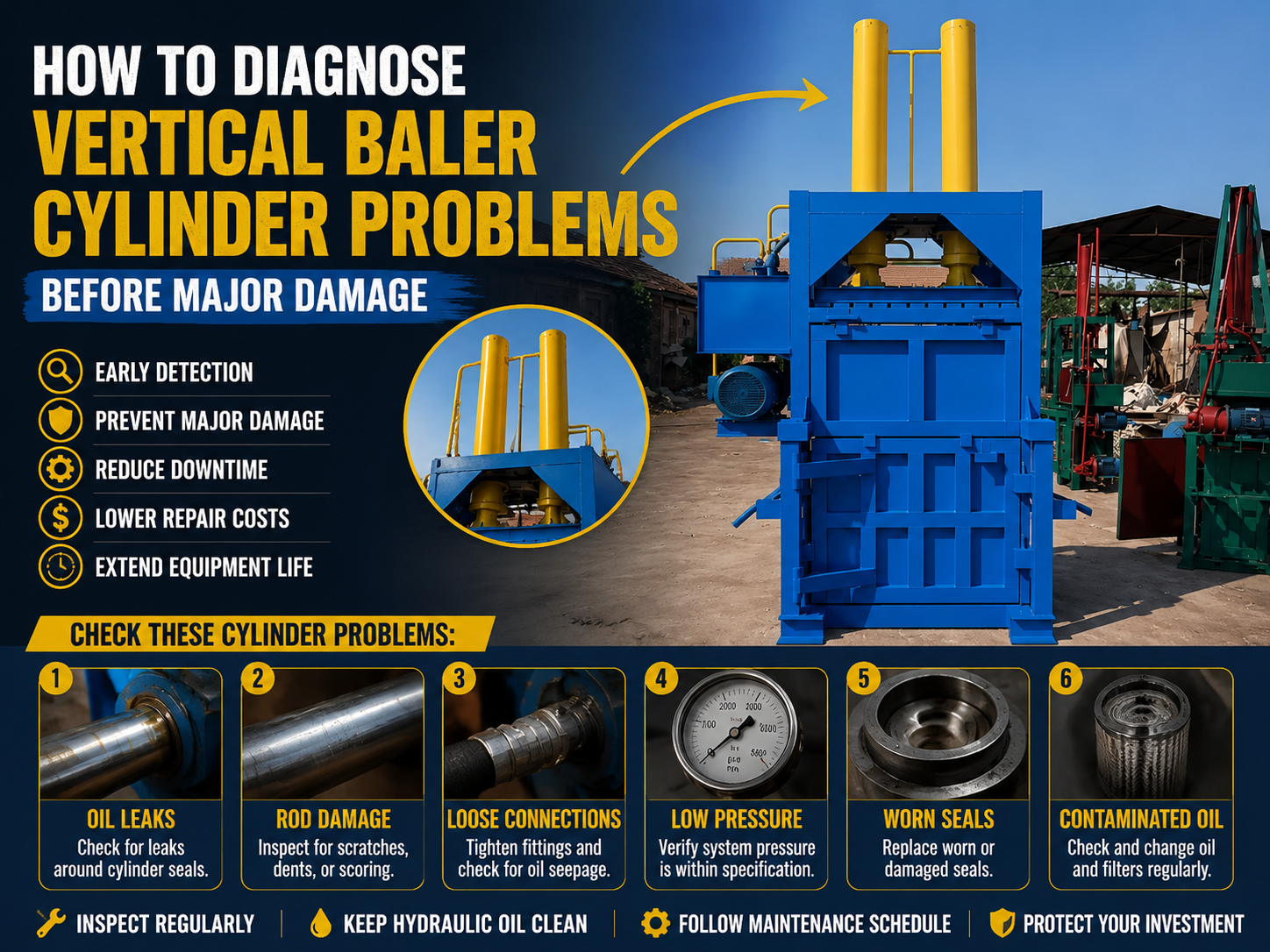
To effectively diagnose vertical baler cylinder problems before major damage occurs, you must be able to interpret specific mechanical symptoms. The most obvious sign is external leakage. While a small amount of weeping at the rod gland might be considered normal in some older machines, any active dripping or pooling of oil indicates that the rod seals have failed. If left unaddressed, this not only creates a safety hazard but also allows air to enter the system, leading to cavitation and erratic cylinder movement.
Another technical symptom is “cylinder drift.” This occurs when the baler ram slowly descends or retracts on its own while the machine is idle. This is a classic sign of internal seal bypass. If the piston seals are worn, the high-pressure oil can leak from one side of the piston to the other, causing the ram to lose its position. This not only reduces the effective force of the baler but also puts unnecessary strain on the hydraulic valves and the pump as they attempt to compensate for the pressure loss.
Uneven or jerky movement during the compression stroke is a red flag that suggests mechanical binding or air in the system. If the cylinder rod is bent, even slightly, it will cause the piston to drag against the cylinder wall. This creates uneven wear patterns and can lead to catastrophic failure if the rod snaps under load. If you observe any hesitation or vibration during the stroke, stop the machine immediately and inspect the rod for straightness and surface integrity.
Pressure testing is the most definitive way to diagnose internal issues. By using a calibrated pressure gauge, you can compare the pressure at the cylinder ports against the manufacturer’s specifications. If the pump is delivering the correct pressure but the cylinder is failing to achieve the required compression force, the problem is almost certainly internal leakage. This diagnostic step allows you to pinpoint the failure without disassembling the entire unit, saving valuable time and labor costs.
Selection Advice for Replacement Components
When the time comes to replace a cylinder or its internal components, quality must be the priority. Not all hydraulic cylinders are created equal. For industrial-grade vertical balers, you should always source components that meet or exceed the original equipment manufacturer (OEM) specifications. HARSLE provides high-quality replacement parts designed specifically for our machinery, ensuring perfect compatibility and performance. Using generic or “will-fit” parts can often lead to premature failure due to differences in seal materials, rod coatings, or mounting tolerances.
Consider the material specifications of the cylinder rod. A high-quality rod should be induction-hardened and chrome-plated to resist corrosion and impact damage. If your baler operates in a harsh environment, consider upgrading to stainless steel or specialized coatings that offer superior resistance to the elements. The seals are equally important; ensure that the replacement seal kit is made from high-grade polyurethane or Viton, depending on the temperature and chemical requirements of your hydraulic fluid.
When selecting a replacement, also evaluate the mounting style and stroke length. Even a minor discrepancy in these dimensions can cause misalignment, which will lead to side-loading and premature failure of the new cylinder. Always verify the part number against the machine’s serial number to ensure you are getting the correct configuration. If you are unsure about the specifications, consult with a HARSLE technical representative who can guide you through the selection process.
Finally, consider the long-term maintenance requirements of the new component. Some modern cylinders feature advanced sealing technologies that require less frequent lubrication or offer better protection against contamination. Investing in these upgraded components can reduce your total cost of ownership over the life of the machine. Remember that the cheapest option is rarely the most cost-effective when you factor in the potential for downtime and the labor cost of repeated repairs.
Frequently Asked Questions (FAQ)
- How often should I inspect the hydraulic cylinder on my vertical baler?
We recommend a visual inspection before every shift and a more thorough technical inspection, including fluid analysis and pressure checks, every 500 operating hours. - What causes a hydraulic cylinder to leak at the rod gland?
The most common cause is a worn rod seal, often resulting from contamination, excessive heat, or normal wear and tear over thousands of cycles. - Can I repair a bent cylinder rod?
In most cases, no. A bent rod compromises the structural integrity of the cylinder and will lead to rapid seal failure and potential catastrophic breakage. It is best to replace the rod or the entire cylinder. - Why is my baler ram moving slowly?
Slow movement can be caused by low hydraulic fluid levels, a failing pump, or internal bypass leakage in the cylinder. Check your fluid levels and pressure settings first. - Is it safe to operate a baler with a leaking cylinder?
No. Leaking cylinders pose a safety risk, can cause environmental contamination, and will inevitably lead to more severe damage to the hydraulic system.
Conclusion: Maintaining HARSLE Performance
Learning how to diagnose vertical baler cylinder problems before major damage occurs is a cornerstone of effective industrial maintenance. By staying vigilant, monitoring fluid quality, listening for changes in machine operation, and performing regular pressure tests, you can extend the life of your HARSLE equipment and ensure consistent productivity. The hydraulic cylinder is the muscle of your baler; treat it with the care it deserves, and it will provide years of reliable service.
Remember that the goal of these diagnostic practices is to move from a reactive maintenance model to a proactive one. When you catch a problem early, you have the luxury of planning the repair, sourcing the correct parts, and minimizing the impact on your production schedule. Ignoring these signs only leads to emergency repairs, which are invariably more expensive and disruptive. If you ever have doubts about the condition of your hydraulic system, do not hesitate to reach out to the HARSLE support team for expert guidance.
As you continue to operate your metal fabrication equipment, keep this guide as a reference. Regular training for your operators on how to spot these early warning signs will pay dividends in reduced downtime and lower maintenance costs. By prioritizing the health of your hydraulic cylinders, you are protecting the efficiency and profitability of your entire operation. Trust in the quality of HARSLE machinery, but support that quality with diligent, informed maintenance practices.