Container Shear Technical Comparison: Single-Pusher vs. Double-Pusher Designs

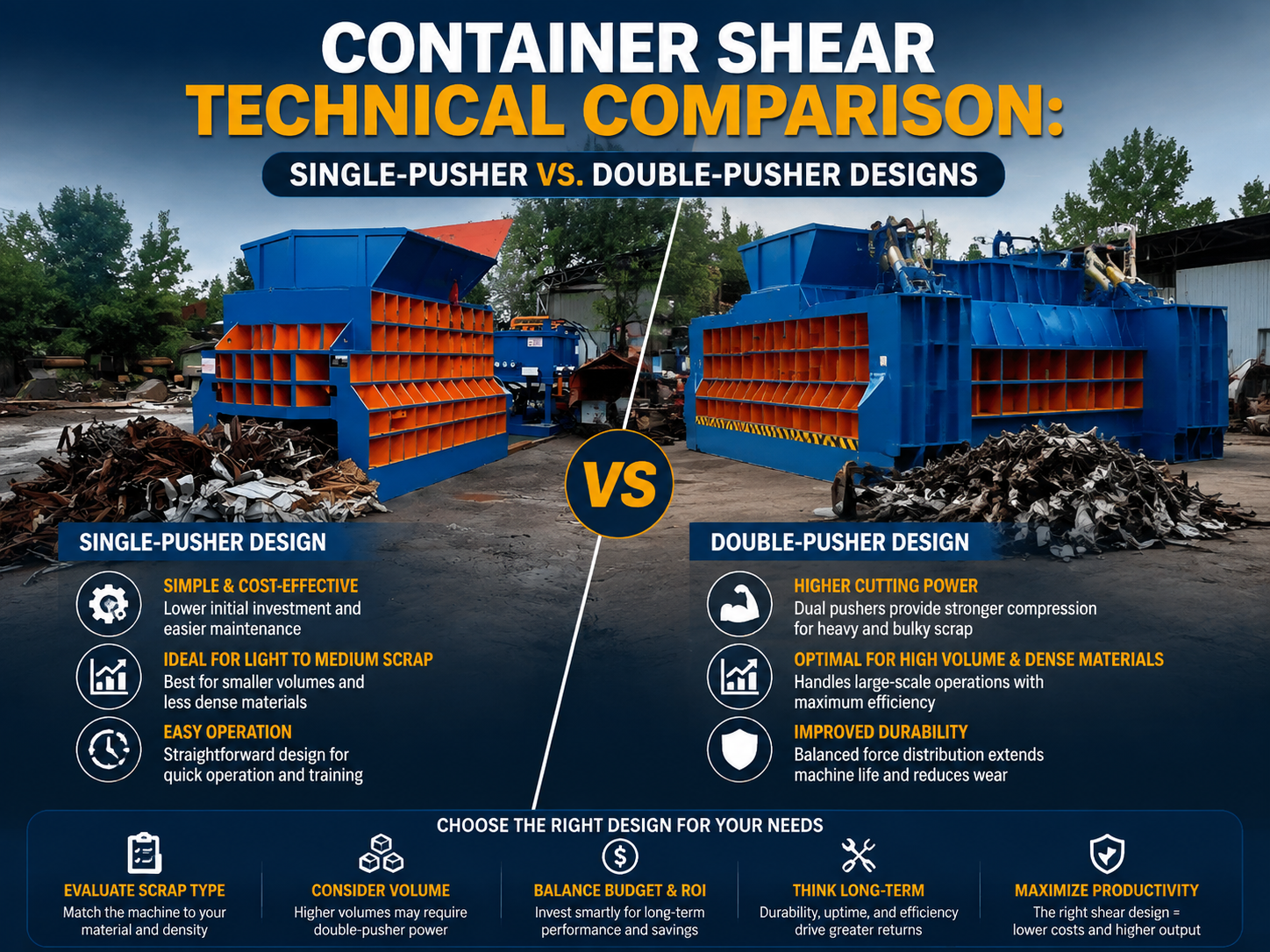
Technical Overview of Container Shear Systems
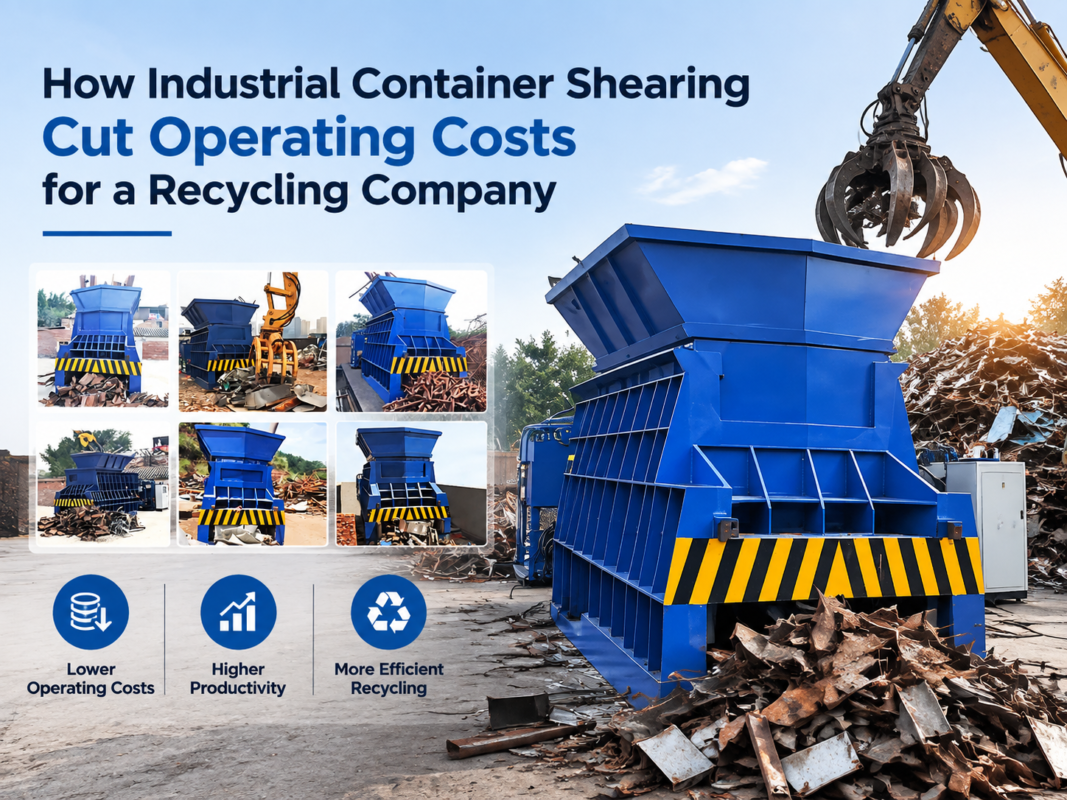
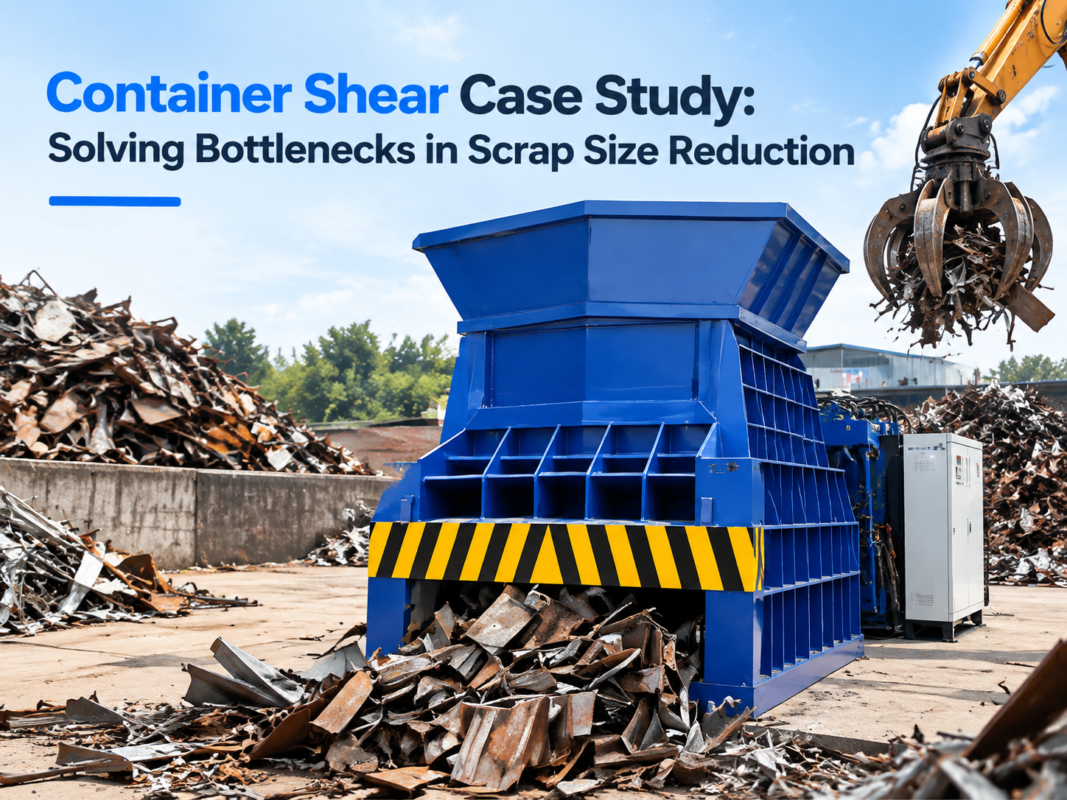
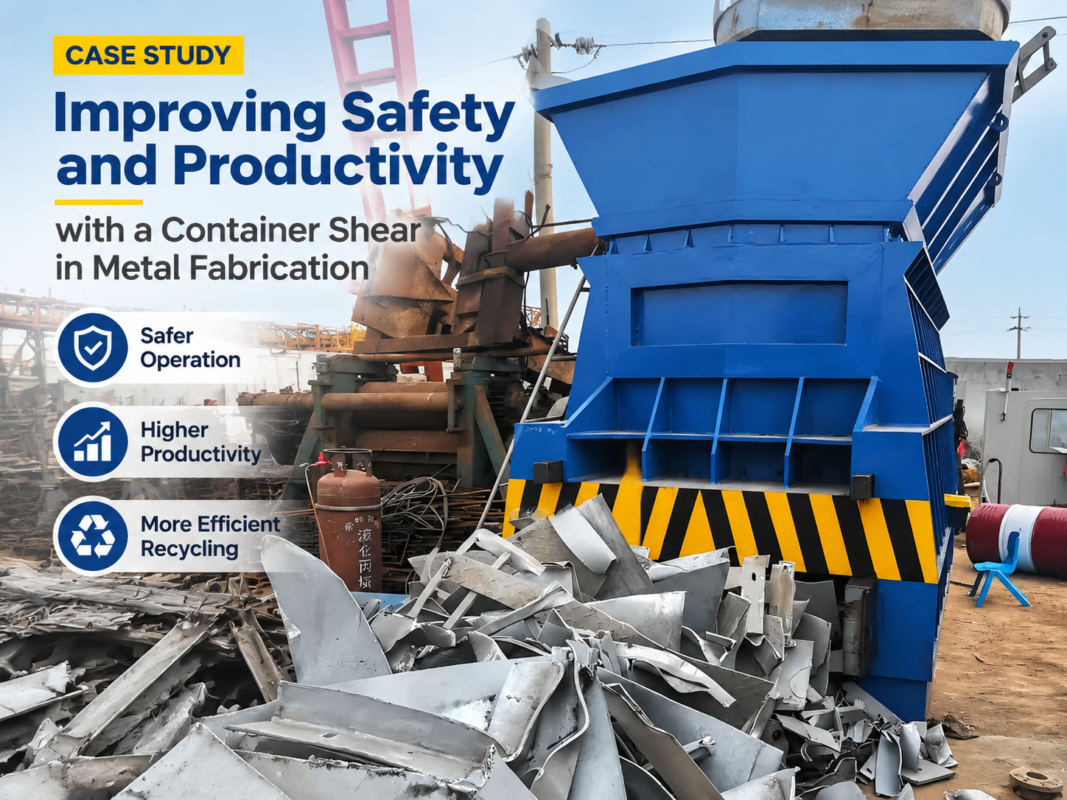
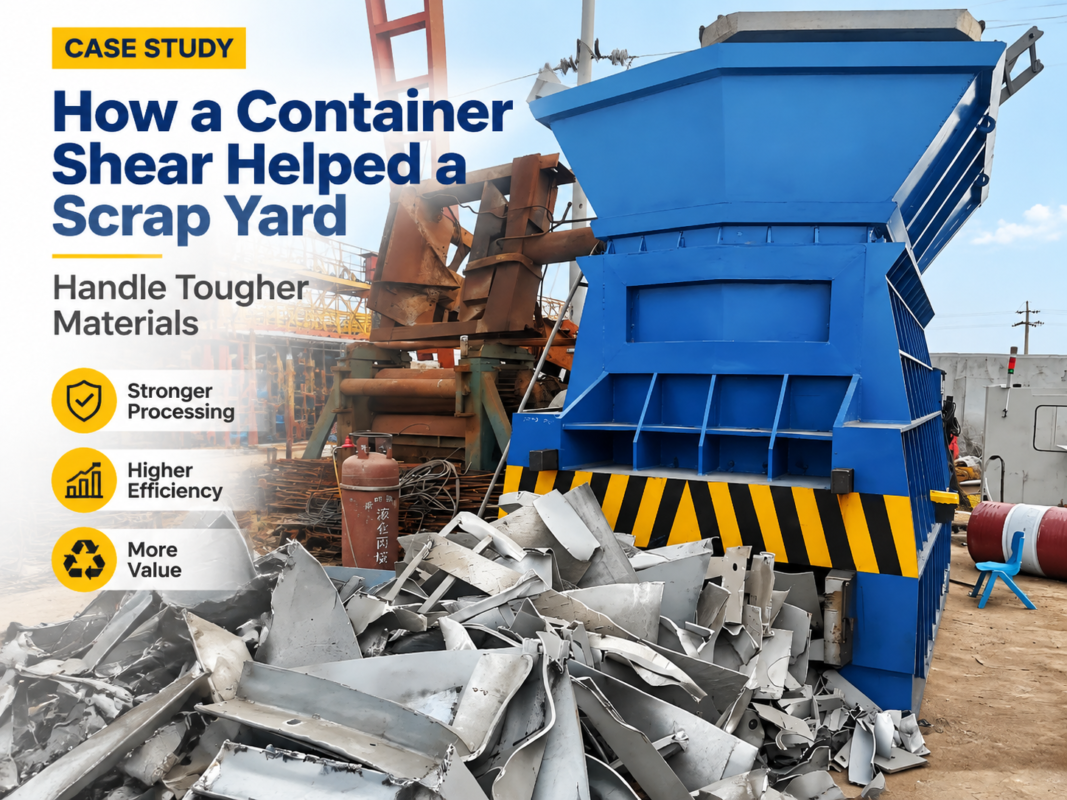
In the modern scrap metal recycling industry, the container shear (also known as a box shear) has become a cornerstone of high-efficiency processing. Unlike traditional alligator shears or guillotine shears that require manual feeding or complex pre-compression lids, container shears utilize a continuous feeding box and a powerful hydraulic ram to process large volumes of scrap. At HARSLE, we recognize that the choice between a single-pusher and a double-pusher design is one of the most critical decisions an industrial facility can make. This technical comparison delves into the mechanical nuances, hydraulic efficiencies, and structural differences between these two dominant configurations.
The single-pusher design is the traditional workhorse of the industry. It features a single longitudinal hydraulic cylinder that pushes the scrap material through the cutting head. This design is prized for its simplicity, lower maintenance requirements, and cost-effectiveness. However, as scrap density and material complexity increase, the limitations of a single-axis compression become apparent. This is where the double-pusher design enters the market, offering a multi-stage compression process that significantly enhances the density of the scrap before it ever reaches the blades.
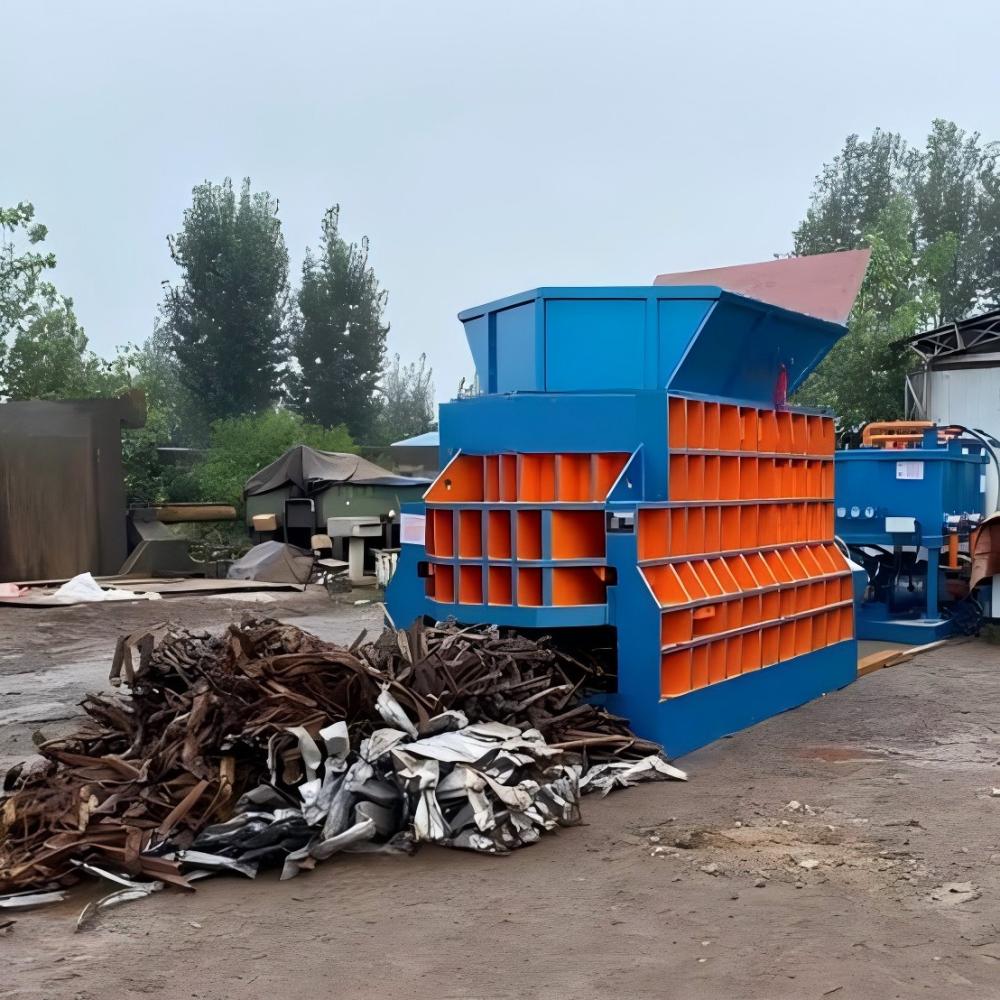
From a mechanical engineering perspective, the primary difference lies in the distribution of force. In a single-pusher system, the material is often unevenly distributed within the box, leading to potential jams or ‘bridging’ where scrap locks against the side walls. The double-pusher system mitigates this by using a secondary lateral or vertical pusher to pre-compact the material into a uniform ‘log.’ This pre-compaction ensures that the main pusher encounters consistent resistance, which protects the hydraulic seals and extends the life of the main cylinder. Furthermore, the double-pusher design allows for the processing of bulkier, more irregular scrap that would otherwise require manual pre-sorting or torch cutting.
Understanding these systems requires a deep dive into hydraulic circuit logic. Single-pusher machines typically utilize a simpler open-loop hydraulic system. In contrast, double-pusher machines often employ sophisticated closed-loop or load-sensing hydraulics to synchronize the movements of both rams. This synchronization is vital; if the secondary pusher does not retract or engage at the precise millisecond required by the PLC (Programmable Logic Controller), the machine could suffer structural deformation or catastrophic hydraulic failure. HARSLE integrates advanced Siemens PLC systems to manage these complex timings, ensuring that the transition between compression and shearing is seamless and energy-efficient.
Core Parameters and Mechanical Specifications
When evaluating container shears, several core parameters dictate the machine’s performance and suitability for specific scrap grades. The most prominent parameter is the shearing force, typically measured in metric tons (t). For industrial applications, this ranges from 400t to over 1250t. However, the force of the pusher—often overlooked—is equally important. In a single-pusher design, the pusher force must be high enough to overcome the friction of the entire scrap load against the box floor and walls. In a double-pusher design, the force is divided, allowing for more nuanced control over material density.
Cycle time is another critical metric. A single-pusher machine generally has a faster cycle time for light, uniform scrap because there are fewer mechanical movements per cut. However, when dealing with heavy HMS 1 (Heavy Melting Steel), the double-pusher machine often proves faster in terms of ‘tons per hour’ because it prevents the machine from stalling or requiring multiple ‘re-tries’ to compress the load. The stroke length of the main cylinder also varies; single-pusher designs often require longer strokes to clear the entire box, whereas double-pusher designs can optimize the stroke based on the pre-compacted length of the scrap log.
Material density is the ultimate goal of any shearing operation. The double-pusher design excels here, producing a finished product with a higher bulk density. This is a significant advantage for logistics, as higher density allows for more weight to be packed into shipping containers or trucks, directly reducing transportation costs. Additionally, the hydraulic pressure settings (usually ranging from 25MPa to 31.5MPa) must be carefully calibrated. High-pressure systems offer more power but require superior seal technology and more frequent oil filtration to prevent component wear. HARSLE machines utilize high-pressure piston pumps that are specifically rated for the continuous duty cycles required in 24/7 recycling yards.
Calculation Method for Shearing Force and Throughput
To accurately compare these designs, engineers must use specific calculation methods to determine the required shearing force ($F$). The standard formula used in metal fabrication is: F = k · L · S · τ. In this equation, k represents a safety factor (usually 1.2 to 1.3 to account for blade wear), L is the maximum width of the material being cut, S is the thickness of the material, and τ is the shear strength of the specific metal grade. For a container shear, the ‘L’ is effectively the width of the blade, but the ‘S’ is the cumulative thickness of the compacted scrap.
In a single-pusher system, the ‘S’ value is often unpredictable because the scrap is loosely packed. This leads to ‘shock loading’ where the hydraulic pressure spikes suddenly as the blade hits a dense pocket of metal. In a double-pusher system, the pre-compression phase allows the engineer to calculate a more consistent ‘S’ value. This predictability allows for the use of more efficient hydraulic motors that operate closer to their peak efficiency curve without the constant risk of hitting the relief valve pressure.
Throughput calculation (T) is also vital for ROI analysis. T = (V · ρ · 60) / C, where V is the volume of the compression box, ρ is the density of the scrap, and C is the cycle time in minutes. While the single-pusher design might have a lower C, the double-pusher design significantly increases ρ. In most heavy-duty industrial scenarios, the increase in density (ρ) provided by the double-pusher design outweighs the slightly longer cycle time, resulting in a higher total throughput of processed tons per hour. This is why large-scale recycling facilities almost exclusively prefer double-pusher or multi-stage compression shears.
Comparative Parameter Table
| Feature / Parameter | Single-Pusher Design | Double-Pusher Design |
|---|---|---|
| Primary Application | Light to Medium Scrap (HMS 2, Sheet Metal) | Heavy & Bulky Scrap (HMS 1, Structural Steel) |
| Compression Efficiency | Moderate (Longitudinal only) | High (Lateral + Longitudinal) |
| Hydraulic Complexity | Low (Standard Open Circuit) | High (Synchronized Logic Control) |
| Maintenance Requirements | Lower (Fewer moving parts) | Higher (More cylinders and seals) |
| Finished Product Density | 250 – 400 kg/m³ | 500 – 800 kg/m³ |
| Initial Investment Cost | Lower | Higher (approx. 20-30% more) |
| Structural Stress | Concentrated on main ram and blade | Distributed across frame and side walls |
Common Engineering Mistakes in Container Shear Selection
One of the most frequent mistakes made by procurement teams is overestimating the capability of a single-pusher shear when dealing with mixed demolition scrap. While a single-pusher machine may be rated for 600 tons, that rating only applies to the shearing blade. If the pusher cannot effectively move the material into the throat of the shear because the scrap is ‘wedged’ in the box, the 600-ton shearing capacity becomes irrelevant. This ‘feeding bottleneck’ is a common cause of reduced productivity in yards that try to save on initial capital expenditure by choosing a simpler design for complex materials.
Another critical error involves ignoring the hydraulic cooling system. Double-pusher machines generate significantly more heat due to the increased number of hydraulic cycles and the friction of pre-compression. If the machine is not equipped with an oversized industrial oil cooler (either air-cooled or water-cooled), the hydraulic oil will quickly exceed its optimal temperature range (usually 40-55°C). Overheated oil loses its viscosity, leading to internal leakage in the pumps and rapid degradation of the cylinder seals. At HARSLE, we emphasize the integration of high-capacity cooling units to ensure the machine maintains its rated force throughout a full 10-hour shift.
Structural fatigue is also a major concern that is often overlooked during the comparison. In a single-pusher design, the reaction force of the push is absorbed entirely by the rear of the machine frame and the shearing head. This can lead to ‘frame stretching’ over years of use. A double-pusher design, by its nature, requires a much more robust, reinforced box structure to handle the lateral forces of the secondary pusher. While this makes the machine heavier and more difficult to install, it also results in a much more rigid platform that is less prone to cracking or misalignment in the long run. Engineers must ensure the foundation is designed to handle these multi-axial vibrations.
Selection Checklist for Industrial Buyers
Choosing the right container shear requires a systematic approach. Use the following checklist to determine which design fits your operational needs:
- Material Type: Is your scrap primarily uniform (e.g., factory offcuts) or irregular (e.g., car bodies, structural beams)? Irregular scrap demands a double-pusher.
- Daily Volume: If you process more than 50 tons per day, the efficiency gains of a double-pusher design will usually pay for the price difference within 18 months.
- Logistics Constraints: Are you shipping processed scrap in containers? If so, the higher density of double-pushed scrap is mandatory to maximize container weight limits.
- Maintenance Capability: Does your team have experience with complex hydraulic logic and PLC troubleshooting? If not, a single-pusher machine offers a shallower learning curve.
- Power Availability: Double-pusher machines often require higher peak amperage during the simultaneous operation of both rams. Ensure your electrical grid can handle the load.
- Blade Replacement Frequency: Double-pusher designs often result in more even blade wear because the material is presented to the blades in a more uniform state.
Furthermore, consider the ‘Total Cost of Ownership’ (TCO). While the single-pusher machine is cheaper to buy, the double-pusher machine often has a higher resale value in the secondary market because of its versatility. Additionally, the ability to process a wider variety of scrap grades allows a recycling yard to pivot its business model based on fluctuating commodity prices, providing a level of ‘future-proofing’ that a single-pusher machine cannot match.
Frequently Asked Questions (FAQ)
1. Can a single-pusher container shear be upgraded to a double-pusher?
Technically, no. The frame of a single-pusher machine is not designed to handle the lateral stresses of a secondary compression ram. Upgrading would require a complete redesign of the box and the hydraulic manifold, which is usually more expensive than purchasing a new machine.
2. How often should the blades be rotated or replaced?
This depends entirely on the material being cut. For standard steel scrap, blades should be inspected daily and typically rotated every 200-500 hours of operation. Most HARSLE blades have four cutting edges, allowing for multiple rotations before a full replacement is necessary.
3. What is the ideal hydraulic oil for these machines?
We recommend high-quality anti-wear hydraulic oil, typically ISO VG 46 or 68, depending on your local climate. In colder regions, a multi-grade oil with a high viscosity index is essential to prevent pump cavitation during morning startups.
4. Does a double-pusher design require a special foundation?
Yes. Because of the lateral forces involved in pre-compression, the foundation must be reinforced with a specific rebar pattern and a minimum thickness of 500mm to 1000mm of high-strength concrete. HARSLE provides detailed foundation drawings for every machine model.
5. How does the PLC improve the shearing process?
The PLC monitors pressure sensors on both the pusher and the shear head. If it detects a jam, it can automatically trigger a ‘retract and re-push’ sequence, preventing the operator from having to manually clear the box. This automation significantly increases safety and reduces downtime.
6. Is the double-pusher design louder than the single-pusher?
The shearing noise is similar, but the double-pusher design involves more hydraulic ‘cycling’ sounds. However, because the material is better compacted, there is often less ‘clattering’ of loose metal during the push phase, which can actually result in a more consistent and less jarring acoustic profile in the yard.