Container Shear Cutting Force Explained: How Machine Tonnage Affects Output

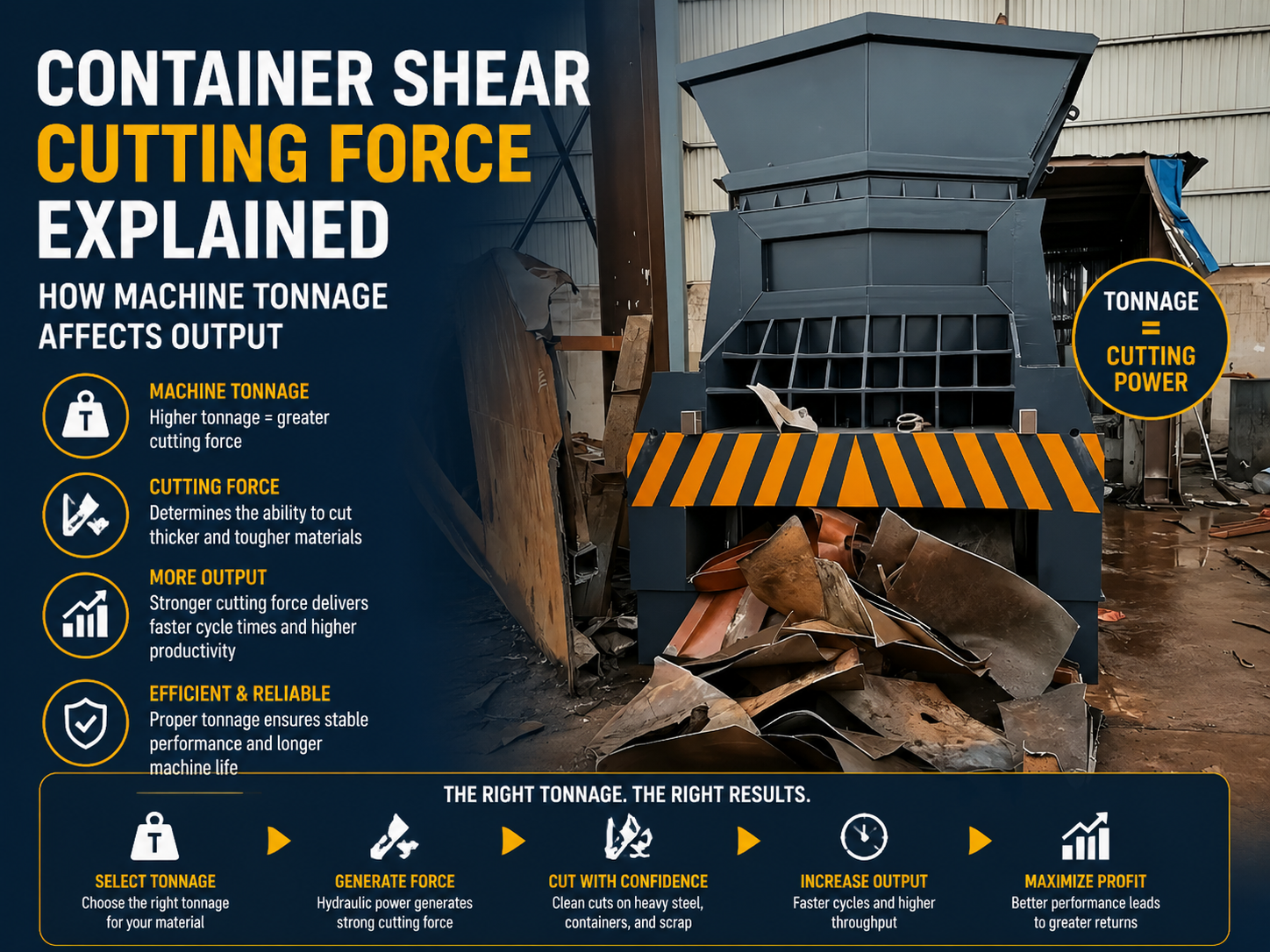
Technical Overview of Container Shear Cutting Force
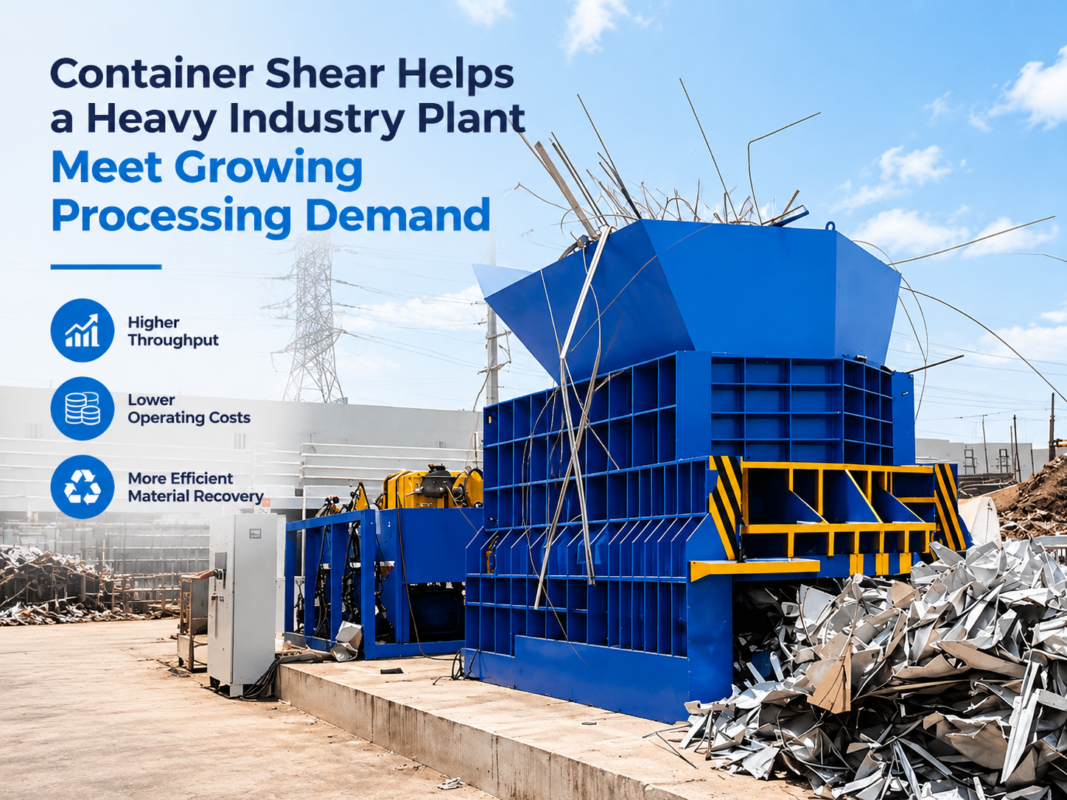
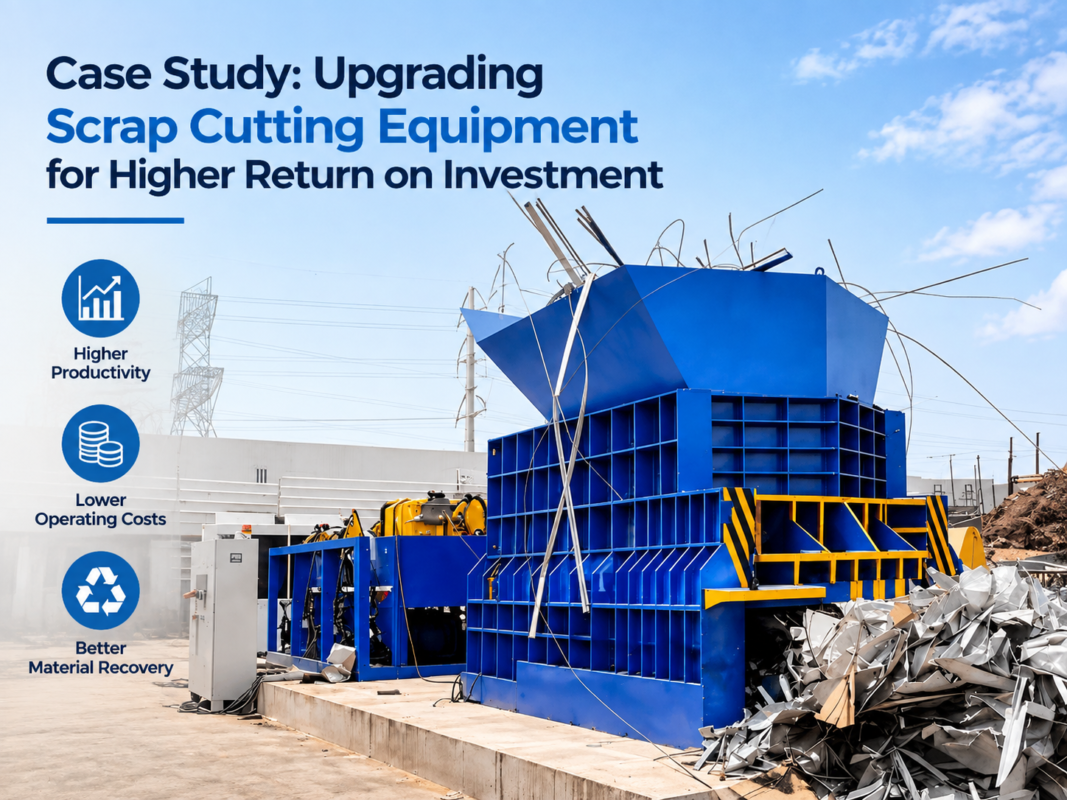
In the world of heavy-duty scrap metal recycling, the container shear stands as a titan of efficiency. Unlike traditional alligator shears or guillotine shears that require manual feeding or complex conveyor systems, the container shear utilizes a large hopper or ‘box’ to pre-compress scrap before the shearing blade descends. The core of this machine’s performance lies in its cutting force, which is directly dictated by the machine’s tonnage. Understanding the relationship between hydraulic pressure, cylinder dimensions, and material resistance is essential for any scrap yard operator looking to optimize their ROI.
Container shears, often referred to as box shears, are designed to handle high volumes of diverse scrap, ranging from HMS 1 and 2 to structural steel and decommissioned vehicle frames. The ‘cutting force’ is the maximum pressure the main shear cylinder can exert on the material through the blade. This force is not just a number on a spec sheet; it determines the maximum thickness of the material the machine can process and the speed at which it can cycle through a load. When we talk about ‘Machine Tonnage,’ we are referring to the nominal force capacity, usually measured in metric tons (e.g., 400T, 630T, 800T, or 1250T).
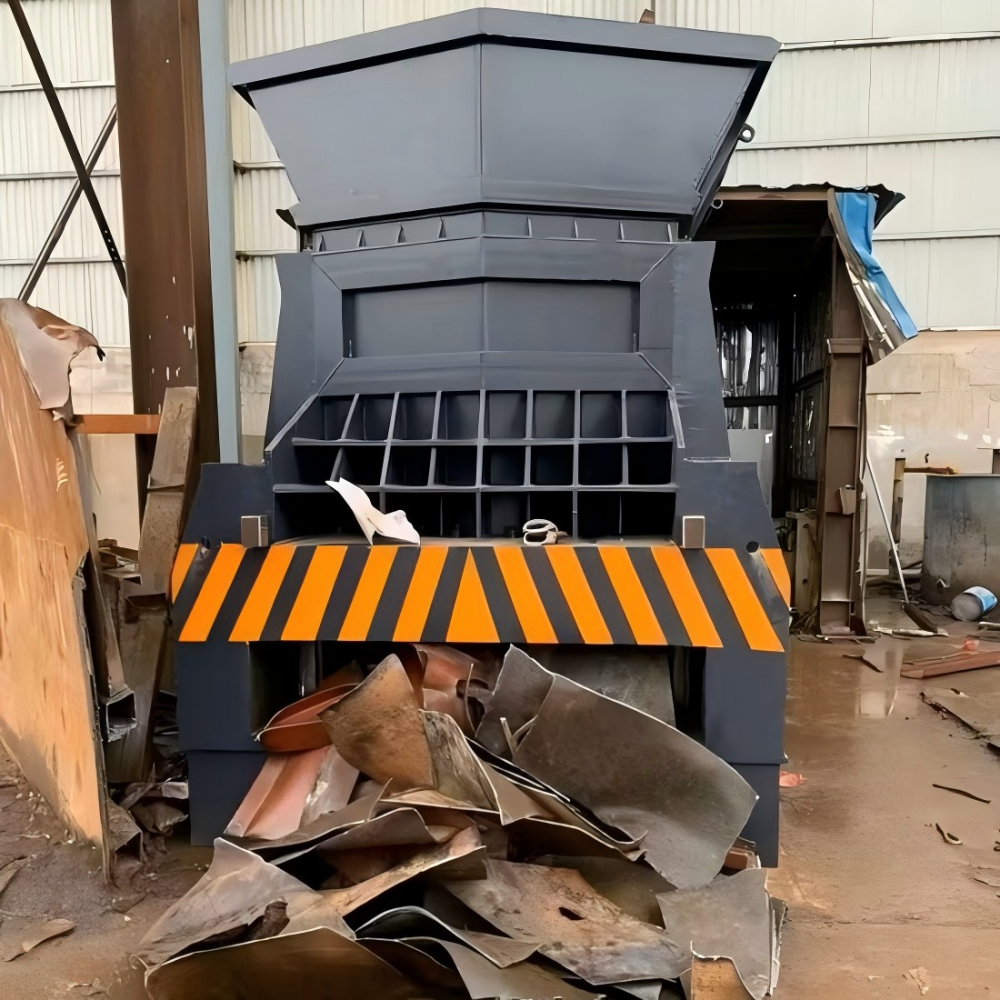
The engineering behind these machines involves a sophisticated interplay of hydraulic systems. A standard HARSLE container shear utilizes high-pressure piston pumps to drive hydraulic oil into the main cylinder. The resulting force is a product of the oil pressure (measured in MPa or PSI) and the surface area of the cylinder piston. However, the effective cutting force is also influenced by the shear angle of the blade. A steeper angle reduces the initial contact area, allowing the machine to ‘slice’ through thicker sections with less total force, though this requires a longer stroke. Conversely, a flatter blade provides a cleaner cut but demands significantly higher tonnage to overcome the material’s shear strength.
Furthermore, the container shear’s unique design includes lateral compression. Before the vertical shear blade moves, the side walls of the container compress the scrap into a dense log. This pre-compression is vital because it reduces the ‘void space’ within the scrap, ensuring that the cutting force is applied directly to the metal rather than wasting energy on collapsing air pockets. This integrated approach is why container shears are significantly more productive than open-style shears for bulk processing.
Core Parameters Influencing Shearing Performance
To fully grasp how machine tonnage affects output, one must look beyond the headline tonnage figure and examine the core parameters that define the machine’s capability. These parameters include the hydraulic system pressure, the cylinder bore diameter, the blade length, and the cycle time. Each of these factors plays a critical role in how the machine handles different grades of scrap metal.
1. Hydraulic System Pressure and Cylinder Bore
The relationship between pressure and area is the fundamental law of hydraulics (Force = Pressure × Area). In a 630-ton container shear, the main cylinder must have a specific bore diameter to achieve that force at a standard operating pressure (usually around 25-31.5 MPa). If a manufacturer uses a smaller cylinder, they must increase the pressure to reach the same tonnage, which can lead to higher wear and tear on seals and hoses. HARSLE prioritizes large-diameter cylinders to maintain high tonnage at sustainable pressure levels, ensuring long-term reliability.
2. Blade Length and Shear Angle
The length of the blade determines the width of the ‘log’ that can be cut in a single stroke. However, the longer the blade, the more force is distributed across its edge. To compensate for this, engineers implement a shear angle (rake angle). A higher rake angle reduces the instantaneous force required but increases the stroke length needed to complete the cut. This is a critical trade-off: higher tonnage machines can afford lower rake angles, resulting in faster cycle times and more uniform output sizes.
3. Pre-compression Force
The ‘box’ or container part of the shear has its own set of cylinders. The force exerted by these lids or side-squeeze rams is just as important as the shearing force. If the pre-compression force is too low, the scrap remains loose, and the shear blade may struggle to grab and cut the material efficiently, leading to ‘folding’ rather than ‘shearing.’ High-tonnage machines typically feature pre-compression forces that are 30-50% of the main shearing force.
Calculation Method: Determining Actual Cutting Force
Calculating the required tonnage for a specific scrap profile is essential for equipment selection. The basic formula for the force required to shear a piece of metal is: F = L × S × τ, where F is the force, L is the length of the cut, S is the thickness of the material, and τ (tau) is the shear strength of the material.
However, in a container shear, the calculation is more complex because the material is often a bundle of various shapes. Engineers use an ‘effective thickness’ model. For example, if you are shearing a bundle of rebar, the machine doesn’t just see one bar; it sees a consolidated mass. The shear strength of common scrap materials varies widely: mild steel is approximately 350-450 N/mm², while stainless steel or high-carbon alloys can exceed 600 N/mm². If your machine is rated for 600 tons based on mild steel, it will struggle with the same thickness of stainless steel.
Another factor is the ‘Shear Efficiency Factor.’ Because the blade is angled, the machine doesn’t cut the entire width at once. The formula is adjusted to: F = (0.5 × S² × τ) / tan(θ), where θ is the shear angle. This explains why a machine with a 10-degree blade angle can cut much thicker plate than a machine with a 2-degree angle, even if they have the same tonnage. When HARSLE designs a container shear, we balance this angle to ensure the machine can handle the ‘worst-case scenario’ scrap without stalling the hydraulic system.
Container Shear Parameter Table
The following table provides a general comparison of common container shear tonnages and their typical processing capabilities. Note that these values can vary based on specific material density and blade condition.
| Model Tonnage (Metric Tons) | Main Motor Power (kW) | Max Cutting Thickness (Mild Steel) | Container Length (mm) | Cycle Time (Empty) | Typical Hourly Output (Tons) |
|---|---|---|---|---|---|
| 400T | 45 – 75 | 40 – 50 mm | 4000 – 5000 | 60 – 80 sec | 4 – 8 |
| 630T | 90 – 132 | 60 – 75 mm | 5000 – 6000 | 50 – 70 sec | 8 – 15 |
| 800T | 150 – 220 | 80 – 95 mm | 6000 – 8000 | 45 – 65 sec | 15 – 25 |
| 1000T | 250 – 350 | 100 – 120 mm | 8000 – 10000 | 40 – 60 sec | 25 – 40 |
| 1250T+ | 400+ | 130+ mm | 10000+ | 35 – 55 sec | 40+ |
Common Engineering Mistakes in Tonnage Selection
One of the most frequent mistakes scrap yard owners make is underestimating the ‘peak load’ requirements. Choosing a machine based on the *average* thickness of your scrap rather than the *maximum* thickness can lead to frequent hydraulic bypass events, where the machine reaches its pressure limit and stops the cut. This not only slows down production but also generates excessive heat in the hydraulic oil, degrading the system’s components.
Another common error is ignoring the impact of blade wear. As blades dull, the ‘radius’ of the cutting edge increases. This changes the physics of the cut from shearing to tearing/crushing, which requires significantly more force. A machine that easily cuts 50mm plate with sharp blades might struggle with 40mm plate once the blades are rounded. Operators often try to compensate by cranking up the system pressure beyond factory settings, which is a dangerous practice that can lead to catastrophic cylinder or frame failure.
Furthermore, many fail to consider the ‘Density Factor.’ A 630-ton shear might be rated for a certain tonnage, but if the container is filled with very light, springy material (like thin sheet metal or wire), the pre-compression lids might spend more time cycling than the shear blade. In this case, the bottleneck isn’t the cutting force, but the box volume and lid speed. Conversely, for heavy melting scrap (HMS), the cutting force is the absolute bottleneck. Matching the machine’s tonnage to the specific *type* of scrap is more important than just buying the largest machine available.
Selection Checklist: Choosing the Right Container Shear
Selecting the right container shear involves a balance of capital expenditure and operational requirements. Use this checklist to ensure you choose a machine that meets your output goals:
- Analyze Your Scrap Stream: What is the thickest material you receive at least 10% of the time? Your machine tonnage should be rated to handle this comfortably.
- Verify Hydraulic Components: Does the machine use reputable pumps (e.g., Rexroth, Kawasaki) and valves? High tonnage requires high-quality flow control.
- Check the Frame Rigidity: A 1000-ton shear exerts massive internal stress. Ensure the frame is made of high-tensile Q345B or Q690 steel with proper stress-relieving welds.
- Evaluate the Cooling System: High-tonnage operations generate heat. Ensure the machine has an oversized industrial oil cooler (air or water-cooled) to maintain viscosity.
- Blade Replacement Accessibility: Higher tonnage machines use heavier blades. Check if the machine design allows for safe and relatively quick blade rotations and changes.
- Automation Features: Does the machine have a PLC (like Siemens) that adjusts the cutting stroke based on material resistance? This can significantly increase hourly output.
Frequently Asked Questions (FAQ)
How does machine tonnage affect energy consumption?
Generally, higher tonnage machines require larger motors and consume more electricity per hour. However, they are often more energy-efficient *per ton of processed scrap* because they can cut through heavy material in a single stroke that might take a smaller machine multiple attempts or require manual pre-processing with a torch.
Can I increase the cutting force by upgrading the hydraulic pump?
Not safely. The cutting force is limited by the structural integrity of the frame and the pressure rating of the cylinder and hoses. Increasing the pump pressure beyond the manufacturer’s specification can lead to structural cracking or hydraulic explosions. If you need more force, it is time to upgrade to a higher-tonnage machine.
What is the lifespan of blades on a high-tonnage container shear?
Blade life depends on the material being cut and the maintenance of the blade gap. In a typical 630T machine processing mixed scrap, you can expect to rotate the blades every 200-500 hours of operation. Keeping the blade gap tight (usually 0.5mm to 1.0mm) is the best way to maximize life and ensure the tonnage is used efficiently.
Does the container size affect the cutting force?
The container size affects the *volume* of scrap processed per cycle, but not the *force* of the shear blade. However, a larger container allows for better distribution of scrap, which can prevent ‘jamming’ where the blade hits a concentrated mass that exceeds its tonnage capacity.
Why is my shear struggling with material well below its rated capacity?
This is usually due to one of three things: dull blades, an incorrect blade gap, or hydraulic ‘slippage.’ If the internal seals of the cylinder are worn, oil can bypass the piston, significantly reducing the effective force. Check your system pressure during a stall; if the pressure is high but the blade isn’t moving, the material is too tough. If the pressure is low, the hydraulic system is the issue.
Is a 1000T shear always better than an 800T shear?
Not necessarily. A 1000T machine is heavier, more expensive, and requires more power. If 95% of your scrap can be processed by an 800T machine, the extra investment in a 1000T unit might not provide a good return. However, if you plan to move into heavy industrial demolition scrap, the 1000T is a safer long-term investment.