Comparing Vertical and Horizontal Briquetting Machine Designs: A Comprehensive Engineering Guide

Technical Overview
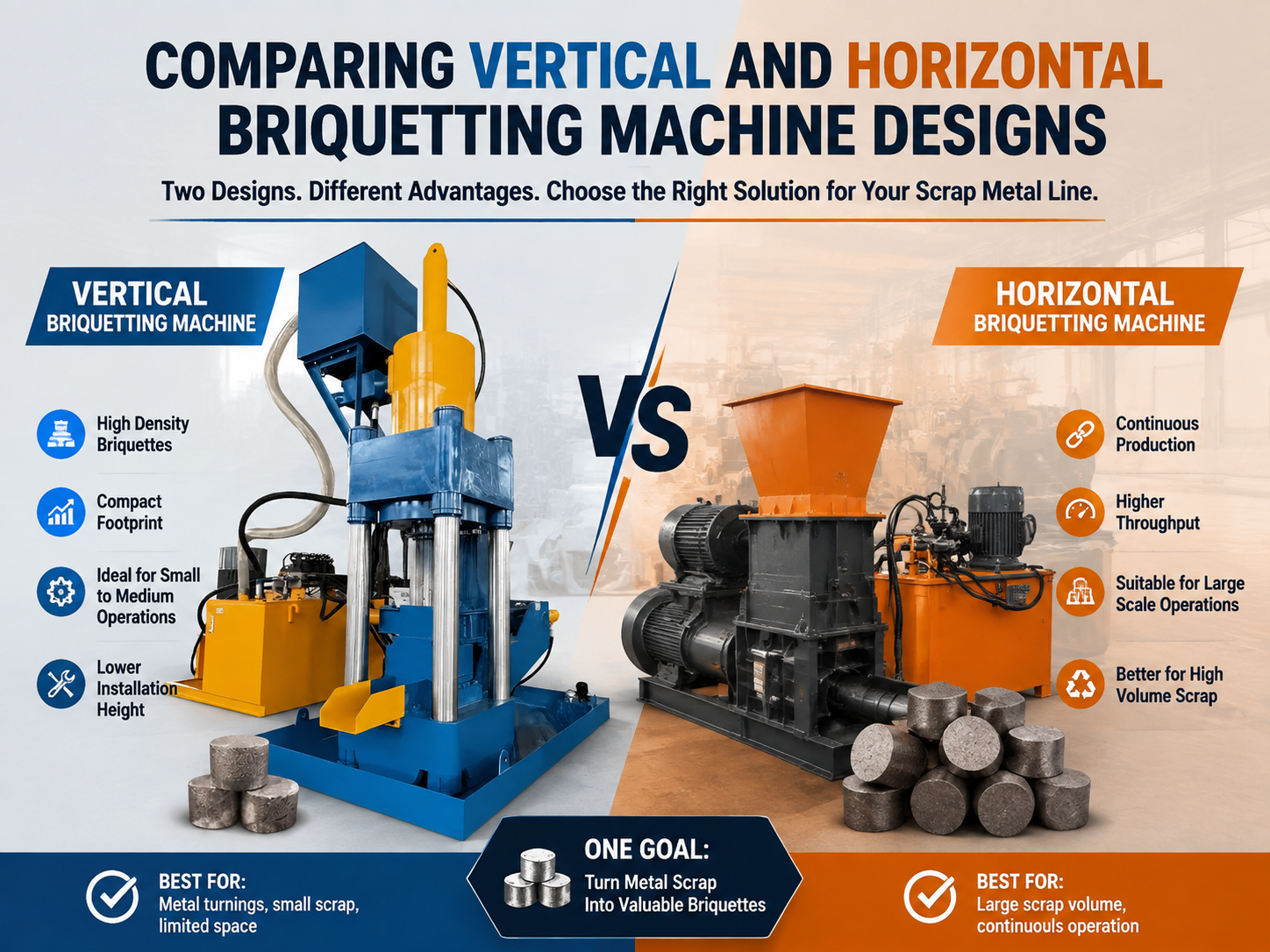
In the modern metal fabrication landscape, the efficient management of metal swarf and chips is a critical component of operational sustainability. When comparing vertical and horizontal briquetting machine designs, engineers must evaluate how each configuration handles material density, throughput requirements, and floor space constraints. Briquetting machines serve as the bridge between waste management and resource recovery, transforming loose, voluminous metal chips into dense, high-value pucks that are easier to transport and melt.
The vertical briquetting press is often characterized by its compact footprint and gravity-assisted feeding mechanism. In this design, the hydraulic cylinder acts vertically, compressing the material within a die chamber. This configuration is highly effective for facilities with limited floor space, as the vertical orientation minimizes the machine’s horizontal profile. Because the material is fed from the top, gravity naturally assists in filling the die, which can be advantageous for certain types of granular or short-chip materials.
Conversely, horizontal briquetting machines utilize a side-loading or hopper-fed system where the hydraulic ram moves parallel to the floor. This design is typically favored for high-volume, continuous production environments. The horizontal configuration allows for more robust structural support and easier integration into automated conveyor systems. By utilizing a horizontal stroke, these machines can accommodate larger feed hoppers and more complex pre-compression stages, making them the industry standard for large-scale metal recycling plants.
Understanding the fundamental differences between these two architectures is essential for optimizing your production line. While vertical units offer simplicity and space efficiency, horizontal units provide the scalability and throughput necessary for high-output metal fabrication shops. Both designs rely on high-pressure hydraulic systems to overcome the elastic memory of metal chips, but the mechanical execution of this force differs significantly, impacting maintenance cycles and operational longevity.
Core Parameters
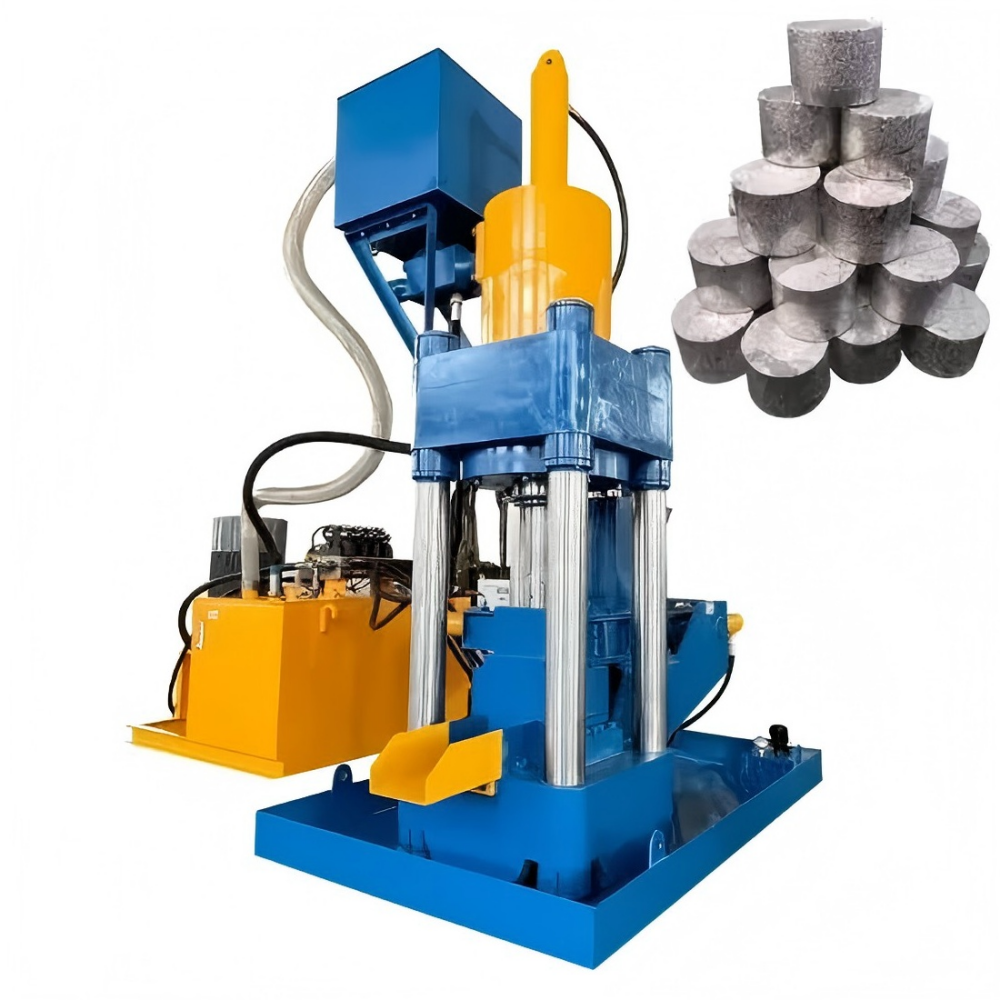
When evaluating briquetting technology, several core parameters define the machine’s performance. The primary metric is the specific pressure exerted on the material, measured in megapascals (MPa). This pressure must be sufficient to exceed the yield strength of the metal being processed, whether it is aluminum, copper, steel, or cast iron. Vertical machines often achieve high pressure through a direct-acting cylinder, while horizontal machines may utilize a multi-stage compression process to achieve the same density.
Throughput capacity, measured in kilograms per hour (kg/h), is the second critical parameter. Horizontal machines generally outperform vertical units in this regard due to their ability to handle continuous feeding. The cycle time—the duration required to complete one full compression stroke—is dictated by the hydraulic pump flow rate and the cylinder bore size. In horizontal designs, the cycle time is often optimized for high-speed production, whereas vertical designs may prioritize force over speed.
Material density and puck dimensions are also vital. The goal of briquetting is to reach a density that is 70% to 90% of the solid metal’s density. Horizontal machines often feature adjustable die sizes, allowing for more versatility in puck diameter and thickness. Vertical machines, while sometimes limited in die flexibility, provide excellent consistency for standardized puck sizes, which is ideal for specific smelting requirements.
Finally, the power consumption and hydraulic system efficiency must be considered. Modern HARSLE briquetting machines incorporate variable frequency drives (VFDs) to optimize energy usage based on the load. Comparing vertical and horizontal briquetting machine designs requires a deep dive into the hydraulic circuit design, as the horizontal configuration often requires more complex valving to manage the weight of the ram and the material flow, whereas vertical systems benefit from a simpler, more direct hydraulic path.
Calculation Method
To determine the required briquetting force, engineers use the formula: F = P × A, where F is the total force in kilonewtons (kN), P is the required pressure in MPa, and A is the cross-sectional area of the die in square millimeters. For materials like aluminum, a lower pressure is typically required compared to stainless steel, which demands significantly higher force to achieve the desired puck density.
Calculating the throughput involves analyzing the bulk density of the loose chips versus the density of the final briquette. If the loose material has a bulk density of 200 kg/m³ and the briquette has a density of 4000 kg/m³, the compression ratio is 20:1. By multiplying the volume of the die chamber by the cycles per hour, you can estimate the machine’s hourly output. It is important to account for a 10-15% efficiency loss due to material feeding delays and mechanical cycle overhead.
Energy consumption calculations should include the idle power draw of the hydraulic pump and the peak power draw during the compression stroke. Horizontal machines often have higher idle power due to larger cooling systems and conveyor integration, while vertical machines may have lower overall power requirements but lower total throughput. Comparing vertical and horizontal briquetting machine designs requires balancing these energy costs against the total volume of scrap generated.
Maintenance costs are calculated by estimating the wear rate of the die and punch components. In vertical machines, the die wear is often uniform due to gravity-fed material distribution. In horizontal machines, the bottom of the die chamber may experience accelerated wear due to the weight of the chips being pushed along the floor of the chamber. Factoring in the cost of replacement parts and downtime is essential for a true total cost of ownership (TCO) analysis.
Parameter Table
| Parameter | Vertical Briquetting Machine | Horizontal Briquetting Machine |
|---|---|---|
| Footprint | Compact (Small) | Extensive (Large) |
| Feeding Method | Gravity/Hopper | Conveyor/Forced Feed |
| Throughput | Low to Medium | High to Very High |
| Material Versatility | Best for Short Chips | Best for Mixed/Long Chips |
| Maintenance Ease | High (Accessible) | Moderate (Complex) |
| Automation Potential | Limited | High |
Common Engineering Mistakes
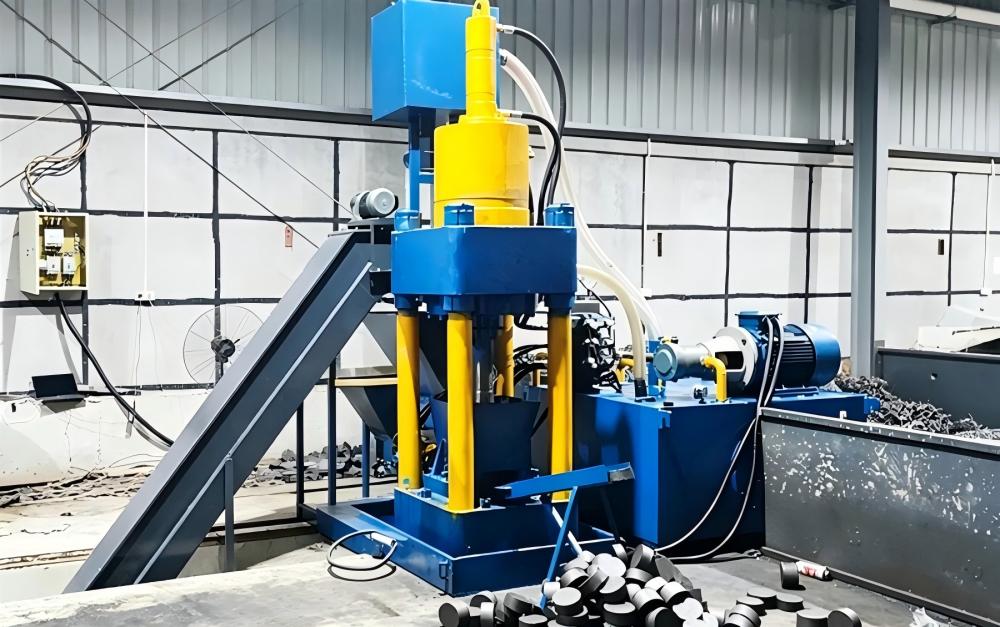
One of the most frequent mistakes when comparing vertical and horizontal briquetting machine designs is ignoring the material’s morphology. Long, stringy chips can easily bridge in a vertical hopper, leading to inconsistent puck density or machine jams. Horizontal machines, which often feature pre-crushers or agitators, are much better suited for long, curly chips that would otherwise cause significant downtime in a vertical system.
Another common error is failing to account for the cooling requirements of the hydraulic oil. High-pressure briquetting generates significant heat. In horizontal machines, the larger hydraulic reservoirs and integrated cooling systems are designed for continuous operation. If a vertical machine is pushed beyond its duty cycle, the oil temperature can spike, leading to seal degradation and premature pump failure. Always ensure the cooling capacity matches the expected duty cycle of your facility.
Underestimating the importance of the die material is a critical oversight. Using standard steel for abrasive materials like cast iron chips will result in rapid die wear. Engineers should specify hardened tool steels or tungsten carbide inserts for high-wear applications. When comparing vertical and horizontal briquetting machine designs, ensure that the die replacement process is evaluated; horizontal machines often require more disassembly to reach the die, whereas vertical machines may offer easier access for maintenance teams.
Finally, many facilities neglect the integration of the briquetting machine with existing scrap handling systems. A machine that is technically superior but difficult to load or unload will become a bottleneck. Whether choosing a vertical or horizontal design, the material handling flow—from the CNC machine to the briquette storage bin—must be seamless. Ignoring this logistical aspect often leads to the machine sitting idle despite its high theoretical capacity.
Selection Checklist
- Material Type: Identify if you are processing aluminum, steel, brass, or mixed alloys.
- Chip Morphology: Determine if your chips are short, granular, or long and stringy.
- Throughput Requirements: Calculate the total weight of scrap generated per shift.
- Floor Space Availability: Measure the available area and consider ceiling height for vertical units.
- Automation Level: Decide if you need a standalone unit or a fully integrated conveyor-fed system.
- Budget and TCO: Compare initial capital expenditure against long-term maintenance and energy costs.
- Cooling and Power: Ensure your facility’s electrical and cooling infrastructure can support the machine’s peak load.
- Support and Service: Verify the availability of spare parts and technical support from the manufacturer, such as HARSLE.
FAQ
Q: Which design is better for small machine shops?
A: Vertical briquetting machines are generally better for small shops due to their compact footprint and lower initial investment, provided the scrap volume is manageable.
Q: Can horizontal machines handle long, stringy chips?
A: Yes, horizontal machines are superior for long chips because they can be equipped with pre-crushers or shredders to break down the material before it enters the compression chamber.
Q: How often should the die be replaced?
A: Die life depends on the material being processed. Abrasive materials like cast iron will wear dies faster than aluminum. Regular inspection is recommended every 500-1000 operating hours.
Q: Is a horizontal machine more energy-efficient?
A: Not necessarily. While horizontal machines have higher throughput, they often require more power for conveyors and cooling. Efficiency is best measured by energy consumed per kilogram of briquettes produced.
Q: Does HARSLE provide custom briquetting solutions?
A: Yes, HARSLE offers tailored solutions based on your specific material throughput and facility layout requirements, ensuring you get the most efficient design for your application.