How to Compare Single-Shaft Shredders for Heavy-Duty Industrial Applications

Introduction to Industrial Single-Shaft Shredders
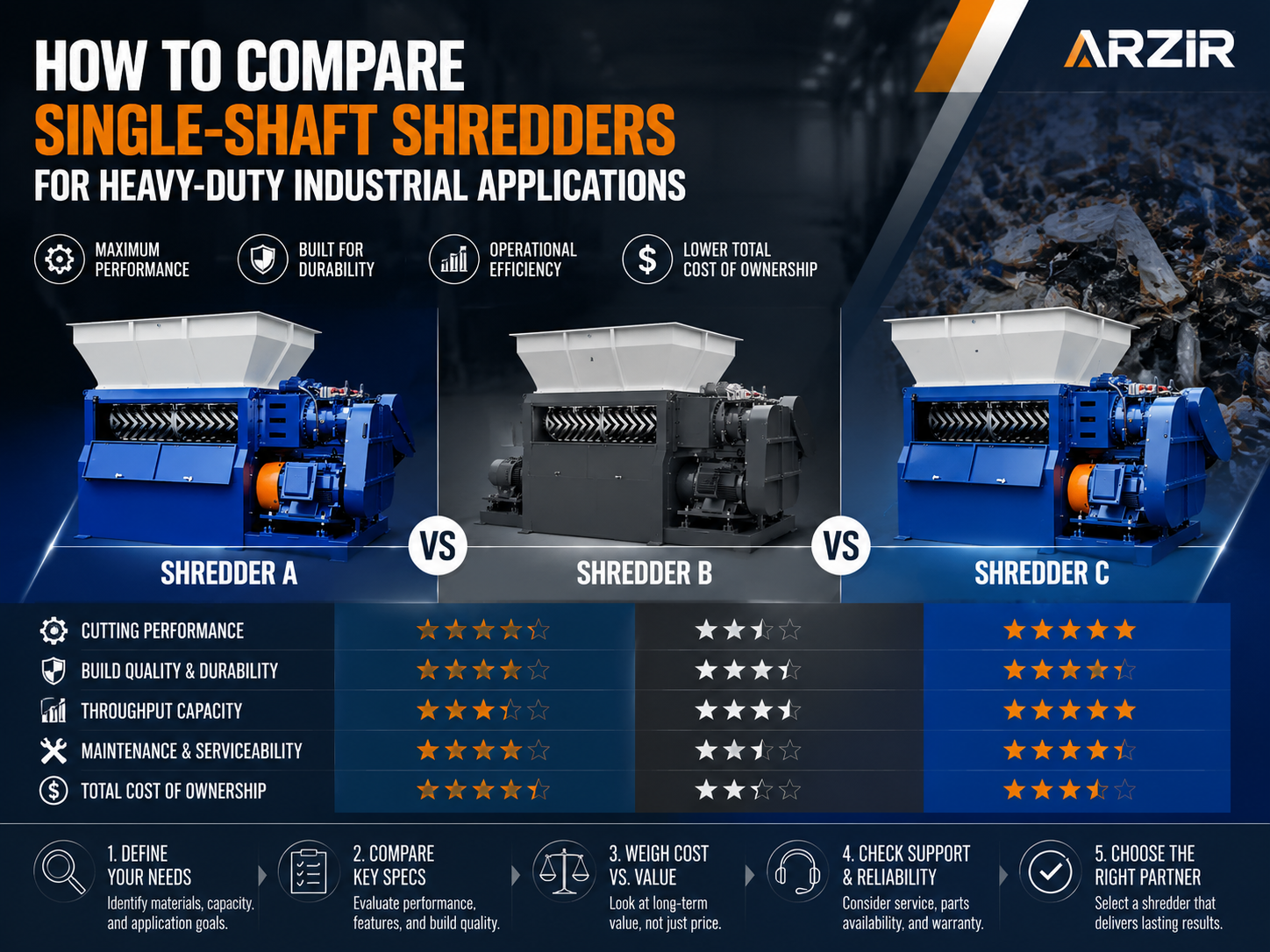
In the modern industrial landscape, waste management and material recycling have transitioned from secondary concerns to primary operational priorities. For facilities dealing with high volumes of plastic, wood, rubber, or light metal scrap, the single-shaft shredder stands as the workhorse of the processing line. However, the market is saturated with various models, making it difficult for procurement managers to effectively compare single-shaft shredders heavy-duty industrial applications. Choosing the wrong machine can lead to frequent downtime, high maintenance costs, and inefficient throughput.
A single-shaft shredder operates using a large-diameter rotor equipped with multiple cutting knives. As the rotor turns, these knives shear against a fixed counter-knife, reducing large bulk materials into smaller, uniform pieces. Unlike dual-shaft shredders which focus on high-torque tearing, single-shaft models are prized for their ability to produce a specific, consistent output size via an interchangeable screen. This article provides a deep dive into the technical and financial metrics required to make an informed investment in heavy-duty shredding technology.
Price Range Overview for Heavy-Duty Shredders
When you begin to compare single-shaft shredders heavy-duty industrial applications, the first thing you will notice is the massive variance in pricing. Industrial-grade shredders typically fall into three distinct price brackets based on their capacity, build quality, and automation features. Understanding these tiers is essential for aligning your budget with your operational requirements.
Entry-Level Industrial Shredders ($15,000 – $35,000)
These machines are designed for small-to-medium enterprises (SMEs) that process consistent, non-abrasive materials like plastic purgings or wood offcuts. While labeled as “industrial,” they often feature smaller rotors (200mm to 300mm diameter) and lower motor power (15kW to 30kW). They are excellent for intermittent use but may struggle with the 24/7 demands of a heavy-duty facility.
Mid-Range Workhorses ($40,000 – $85,000)
This is where most heavy-duty industrial applications find their match. These shredders feature reinforced frames, larger rotors (400mm+), and motor power ranging from 45kW to 90kW. They often include advanced PLC controls and hydraulic rammers to force material against the rotor. HARSLE’s mid-range models are specifically engineered to balance energy efficiency with high-torque performance, making them ideal for diverse waste streams.
High-End Custom Systems ($90,000 – $250,000+)
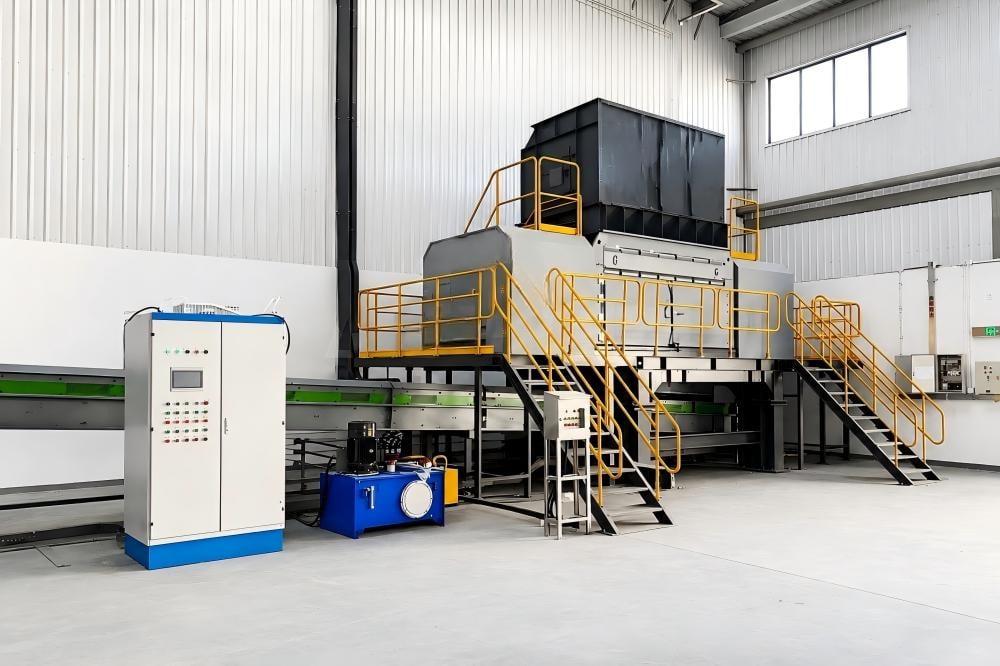
At the top of the spectrum are fully automated, high-capacity systems designed for specialized recycling plants. These machines are often integrated into larger lines with conveyors, magnetic separators, and granulators. They feature specialized metallurgy for knives to handle abrasive materials like glass-filled plastics or light aluminum scrap. The price reflects the engineering required for maximum uptime and extreme throughput (3,000kg/hr and above).
Main Cost Drivers in Shredder Manufacturing
To accurately compare single-shaft shredders heavy-duty industrial applications, one must look beneath the paint. Several critical components drive the manufacturing cost and, consequently, the performance of the machine. Understanding these drivers helps buyers distinguish between a “cheap” machine and a “valuable” one.
Rotor Design and Construction
The rotor is the heart of the shredder. High-quality heavy-duty shredders utilize solid steel rotors machined from a single piece of forged steel. This prevents the warping and cracking that can occur with hollow, welded rotors when processing dense materials. A solid rotor acts as a flywheel, maintaining momentum and reducing the strain on the motor during peak loads. The diameter and length of the rotor directly correlate to the surface area available for cutting, which dictates the hourly throughput.
Motor Power and Gearbox Torque
It is a common mistake to look only at the kilowatt (kW) rating of the motor. While power is important, torque is what actually shears the material. A high-quality shredder uses a heavy-duty reduction gearbox that converts high-speed motor rotation into high-torque rotor movement. Brands like HARSLE prioritize the synergy between the motor and the gearbox to ensure that the machine doesn’t stall when faced with a “tough” bite of material.
Blade Metallurgy and Mounting
The knives are the primary wear part. Standard machines might use basic carbon steel, but heavy-duty applications require D2 (Cr12MoV) or DC53 tool steel. These materials are vacuum heat-treated to reach a hardness of 58-60 HRC. Furthermore, the way the knives are mounted matters. Concave square knives that can be rotated four times before replacement offer significantly lower operational costs than single-sided flat blades.
Configuration Impact on Performance
The configuration of a shredder determines its versatility. When you compare single-shaft shredders heavy-duty industrial applications, you must evaluate how the machine’s setup aligns with your specific material type. A configuration that works for soft plastic film will fail miserably when applied to thick-walled HDPE pipes.
Hydraulic Pusher Systems
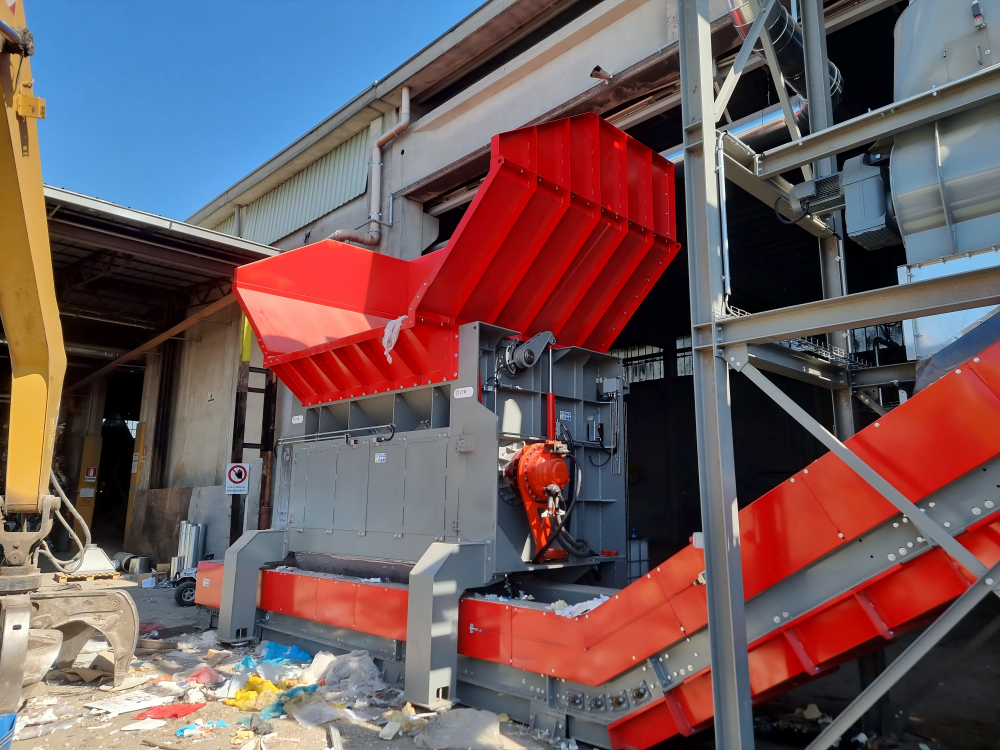
In a single-shaft shredder, a hydraulic ram (or pusher) forces the material against the rotating rotor. The design of this pusher—whether it is horizontal, inclined, or swing-arm—impacts how the machine handles bulky items. For heavy-duty applications, an inclined pusher is often preferred as it uses gravity to assist the hydraulic force, ensuring that the material is always in contact with the cutting zone.
Screen Size and Accessibility
The screen determines the final particle size. Heavy-duty shredders should offer easy access to the screen cradle, allowing operators to switch between different mesh sizes (e.g., 20mm for fine recycling vs. 80mm for volume reduction) in under 30 minutes. The total surface area of the screen also limits how fast material can exit the machine; a larger screen area generally means higher throughput.
Cooling and Safety Systems
Heavy-duty processing generates significant heat due to friction. High-end shredders incorporate water-cooling systems for the rotor and gearbox oil. Additionally, safety configurations such as shock-absorbing gearbox mounts and electronic “auto-reverse” functions are non-negotiable. These systems protect the machine from catastrophic failure if an un-shreddable object (like a large steel bolt) enters the chamber.
Identifying Hidden Costs of Ownership
The purchase price is only the beginning. To truly compare single-shaft shredders heavy-duty industrial applications, you must calculate the Total Cost of Ownership (TCO). Many buyers are blinded by a low initial price tag, only to be crippled by operational expenses later.
- Energy Consumption: A shredder running 16 hours a day is a massive energy consumer. Machines equipped with VFDs (Variable Frequency Drives) can reduce energy consumption by 20-30% by adjusting motor speed to the load.
- Wear Part Frequency: How often do the knives need to be rotated or sharpened? If a machine requires blade changes every 200 hours instead of 800 hours, the labor and part costs will quickly exceed the initial savings on the machine price.
- Downtime and Parts Availability: If a bearing fails, can you get a replacement locally, or must it be shipped from overseas? HARSLE utilizes internationally recognized brands for bearings (NSK/SKF) and electronics (Siemens/Schneider) to ensure parts are always accessible.
- Labor Requirements: Does the machine require a dedicated operator to clear jams, or is the PLC smart enough to handle most material surges automatically?
ROI Calculation: Is the Investment Justified?
Calculating the Return on Investment (ROI) is the final step in the comparison process. For industrial shredders, ROI is usually measured by the reduction in waste disposal costs or the revenue generated from selling processed regrind. A heavy-duty shredder should pay for itself within 12 to 24 months in a high-volume environment.
Consider a facility that produces 5 tons of plastic waste per day. If the cost of hauling that waste is $100 per ton, but the resale value of shredded regrind is $300 per ton, the swing in value is $400 per ton. At 5 tons a day, that is $2,000 in daily value. Even after accounting for electricity and maintenance, a $60,000 shredder would reach ROI in less than two months of full operation. This calculation highlights why choosing a machine with higher throughput and reliability (even at a higher price) is mathematically superior.
Buying Advice: A Step-by-Step Checklist
Before finalizing your purchase, use this checklist to compare single-shaft shredders heavy-duty industrial applications effectively. This ensures that no technical detail is overlooked during the procurement phase.
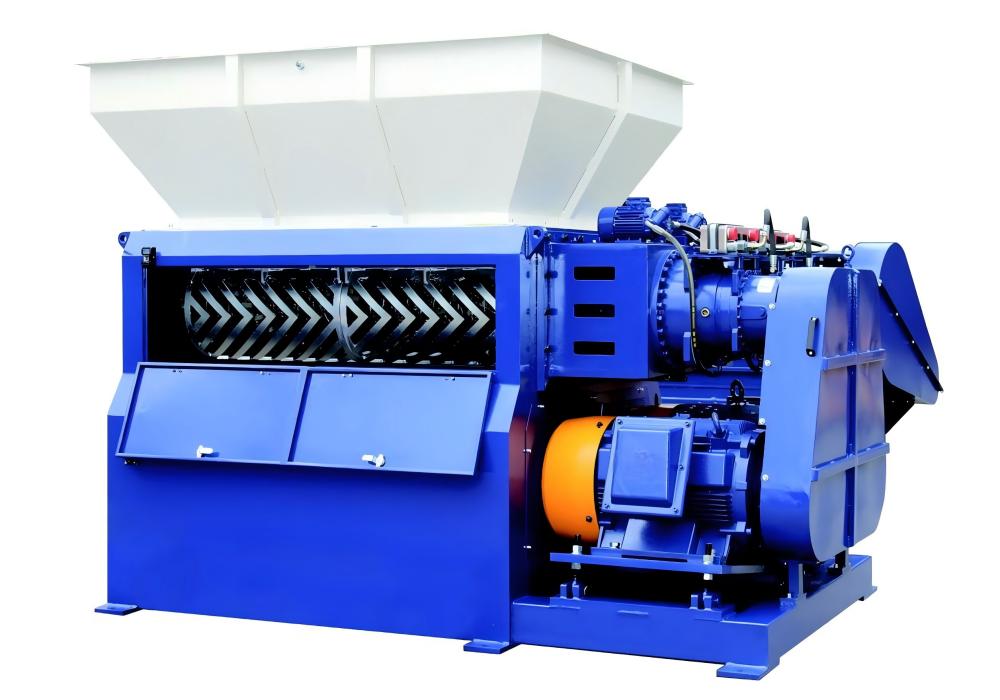
- Material Testing: Never buy a shredder without seeing your specific material processed. Most reputable manufacturers, including HARSLE, offer material trials where you can send samples and receive a video report of the throughput and output quality.
- Verify Frame Thickness: For heavy-duty use, the main housing should be constructed from thick, welded steel plates (typically 20mm or thicker) to withstand the vibrations and stresses of shredding.
- Check the PLC Logic: Ask about the “Auto-Reverse” logic. In a heavy-duty application, the machine should automatically reverse the rotor if it detects a spike in amperage, then attempt to shred again. This prevents motor burnout.
- Evaluate Knife Access: Look at how the knives are bolted. Are they easily accessible through a maintenance door, or do you have to disassemble the hopper? Ease of maintenance is the difference between a 2-hour blade change and an 8-hour ordeal.
- Assess the Hydraulic Unit: Ensure the hydraulic station is independent and well-ventilated. Overheated hydraulic oil is a leading cause of ram failure in industrial shredders.
Frequently Asked Questions (FAQ)
What is the main difference between a single-shaft and a double-shaft shredder?
A single-shaft shredder uses a high-speed rotor and a screen to produce a precise, small output size. A double-shaft shredder uses low-speed, high-torque shearing to tear large items into strips. Single-shaft is better for recycling and granulation prep, while double-shaft is better for volume reduction of bulky waste like tires or mattresses.
How long do the blades last in heavy-duty applications?
Blade life depends entirely on the material. For clean plastics, blades can last 800-1,200 hours per edge (with 4 edges per knife). For abrasive materials like glass-filled nylon or wood with occasional nails, life may drop to 200-400 hours. Regular rotation is key to maintaining performance.
Can a single-shaft shredder handle metal?
Standard single-shaft shredders are designed for plastics, wood, and rubber. While they can handle light non-ferrous metals like aluminum cans or thin extrusions, they are not intended for heavy steel scrap. Processing heavy metal in a standard shredder will cause immediate damage to the knives and rotor.
What maintenance is required daily?
Daily maintenance for a heavy-duty shredder includes checking the gearbox oil level, greasing the main rotor bearings, inspecting the knives for looseness or chipping, and ensuring the hydraulic fluid is at the correct temperature and level. Clearing dust from the motor cooling fans is also critical.
Why is the screen size important?
The screen size dictates the final particle size. A smaller screen (e.g., 20mm) produces a finer product but reduces the throughput because the material stays in the chamber longer. A larger screen (e.g., 60mm) allows material to exit faster, increasing hourly capacity but resulting in a coarser output.
Conclusion
To compare single-shaft shredders heavy-duty industrial applications, one must look beyond the surface-level specifications. It is a balance of structural integrity, smart automation, and long-term operational costs. By focusing on the rotor construction, metallurgy, and the total cost of ownership, industrial buyers can secure a machine that not only meets their current waste processing needs but also provides a scalable solution for the future. HARSLE continues to lead the industry by providing robust, high-torque shredding solutions designed for the rigors of modern industrial environments.