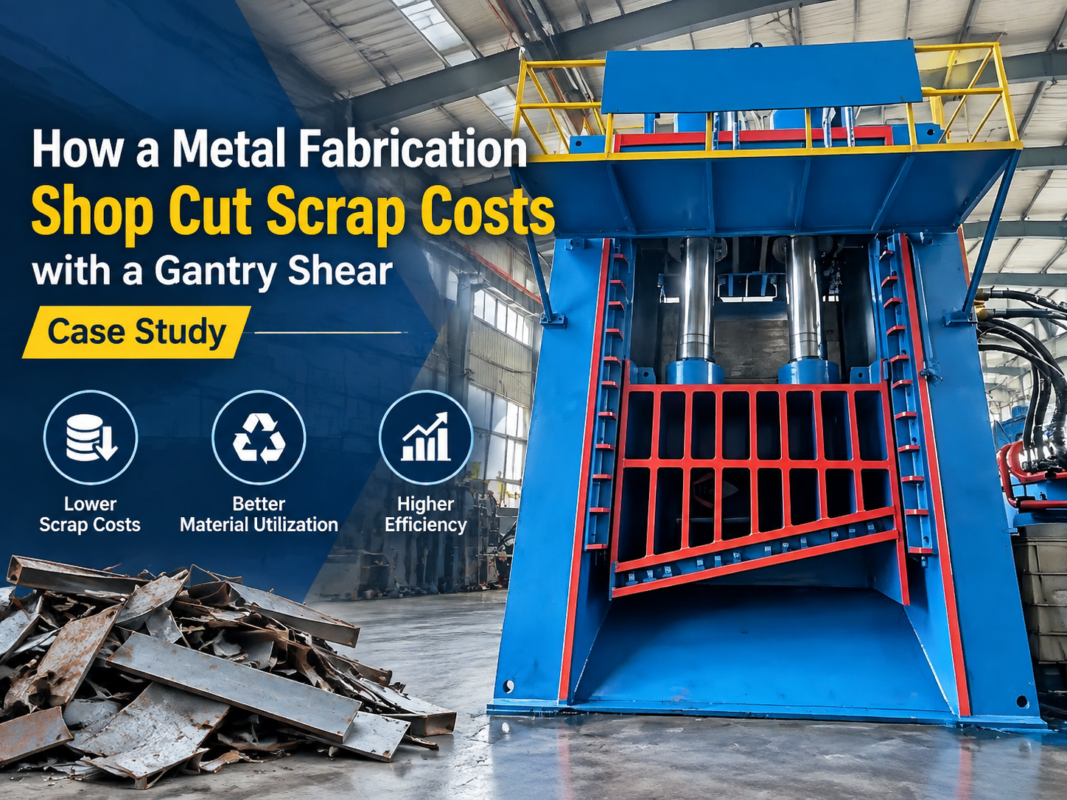
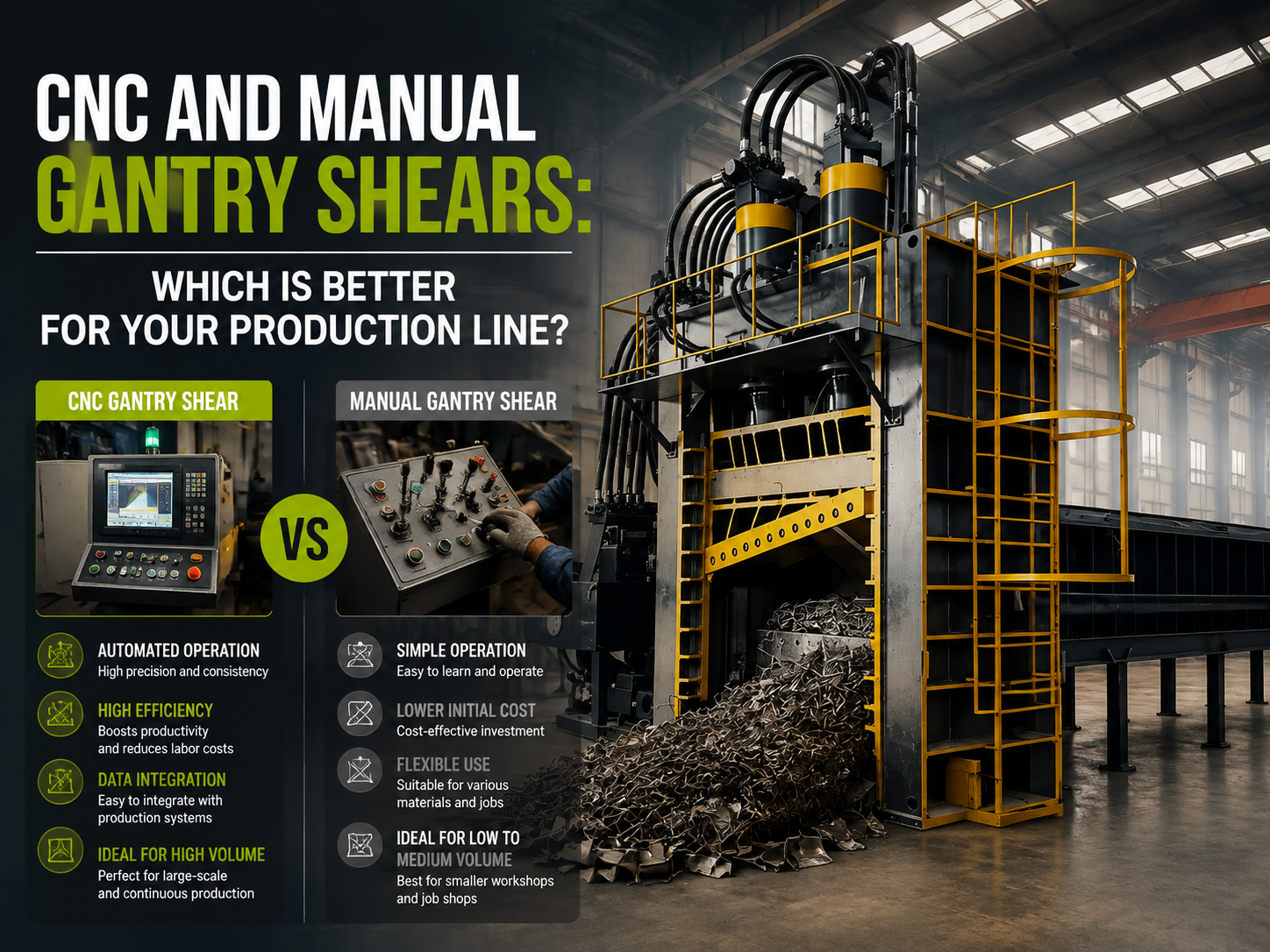
CNC and Manual Gantry Shears: Which Is Better for Your Production Line?

Technical Overview of Gantry Shearing Technology
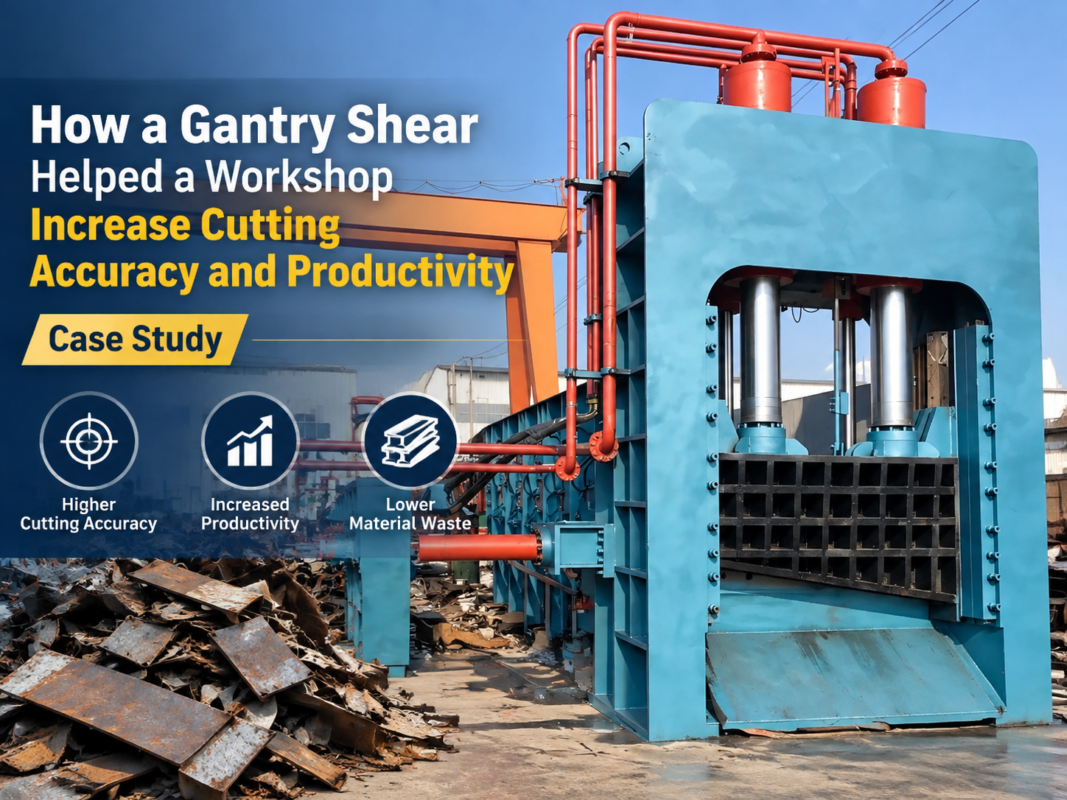
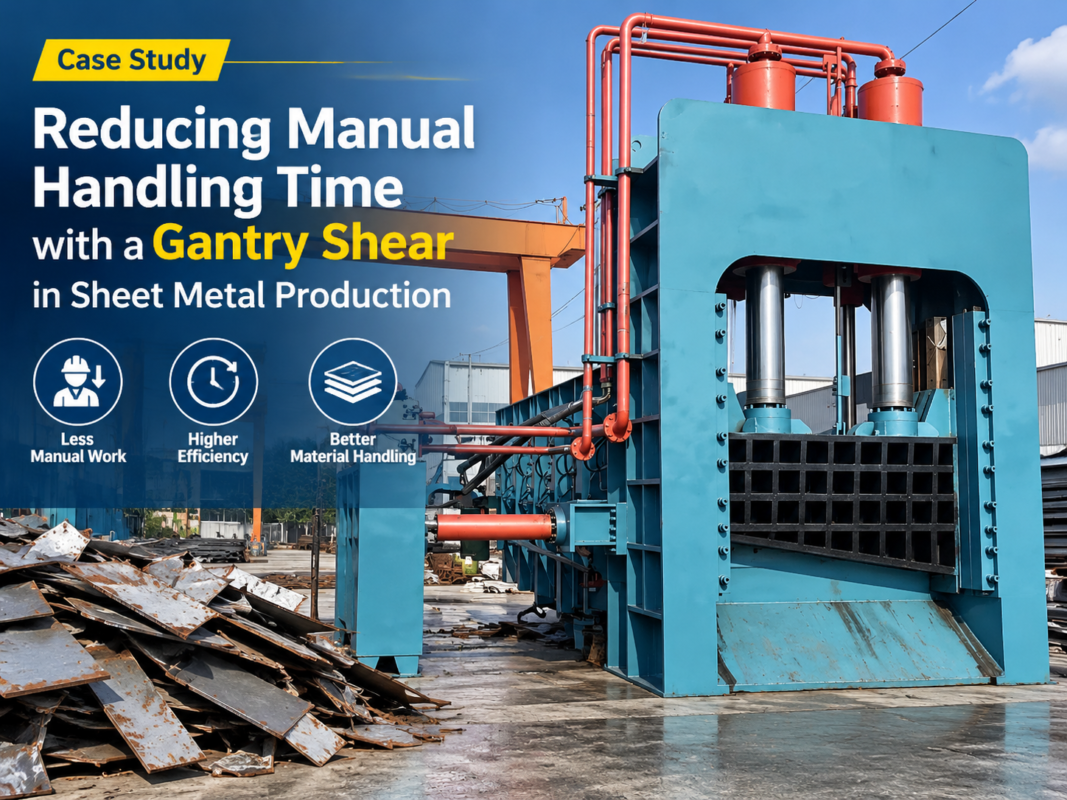
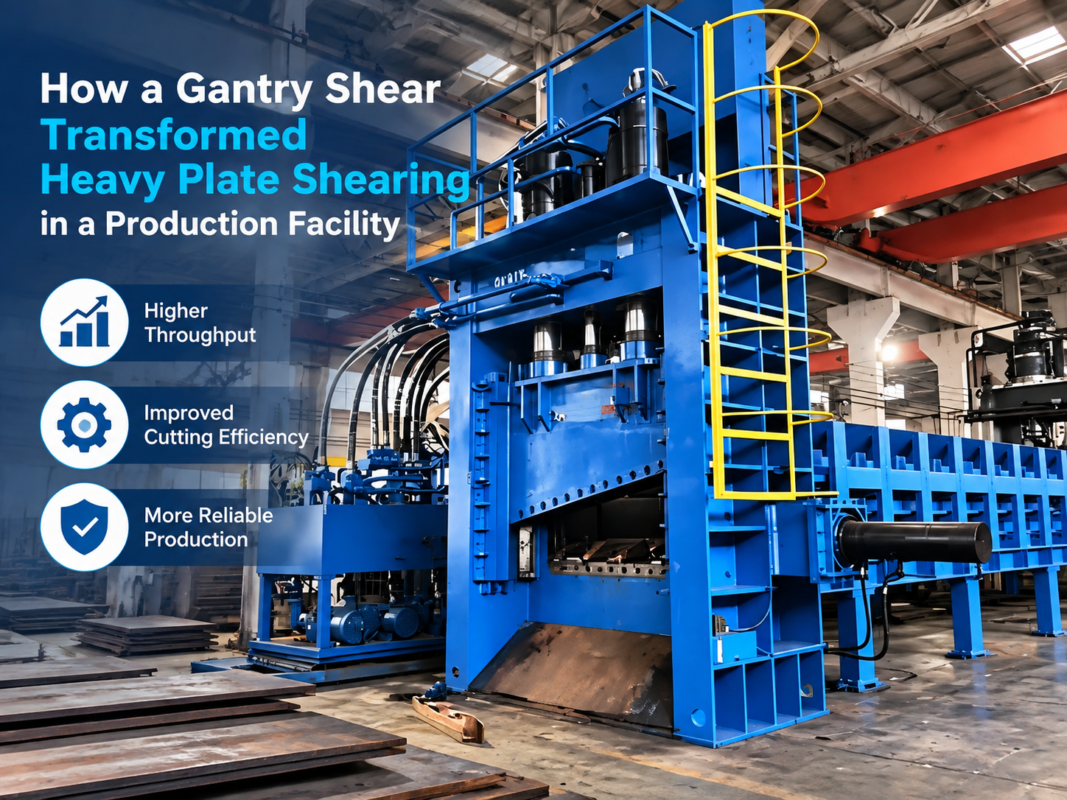
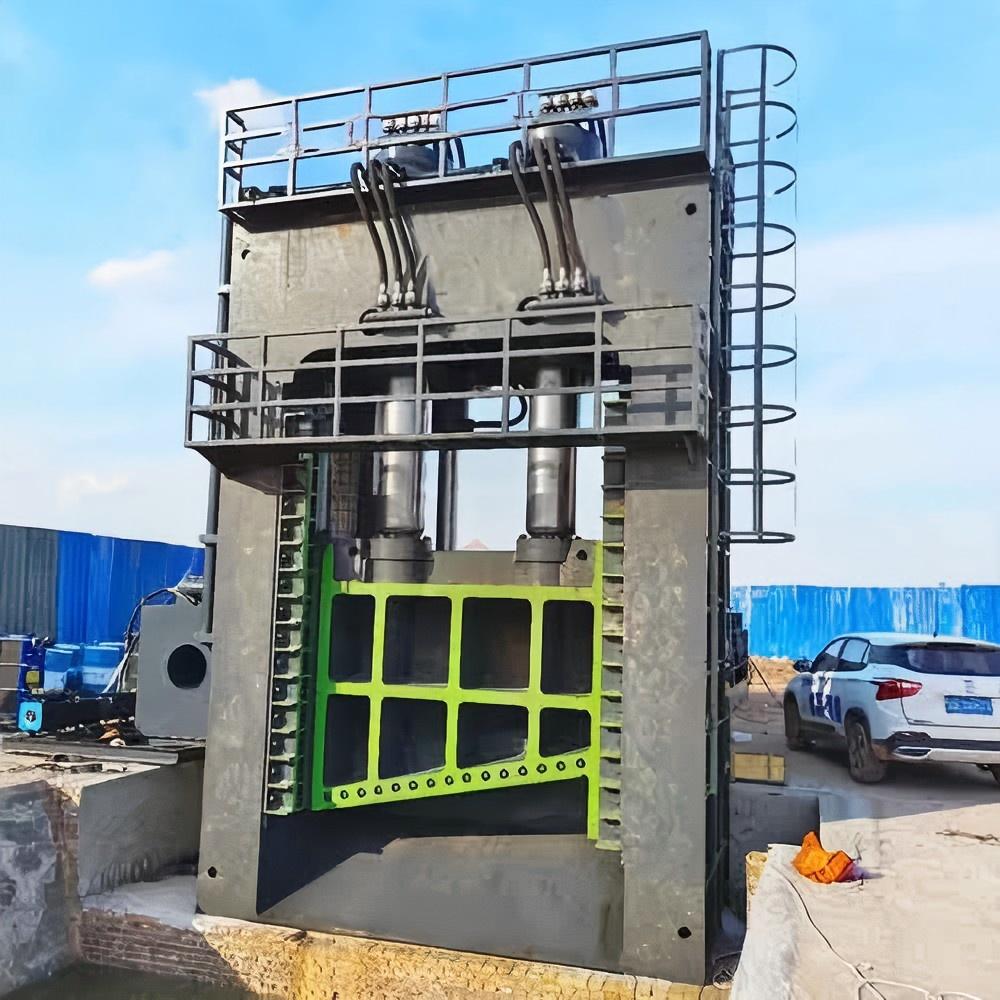
In the world of heavy-duty metal processing and scrap recycling, the gantry shear stands as a titan of efficiency. Designed to handle large volumes of metal, from structural steel beams to automotive scrap, these machines utilize a vertical shearing action housed within a robust ‘gantry’ frame. The primary debate for modern production managers revolves around the control mechanism: CNC Manual Gantry Shears: Which Is Better Production Line? To answer this, we must first understand the underlying mechanics that govern both systems.
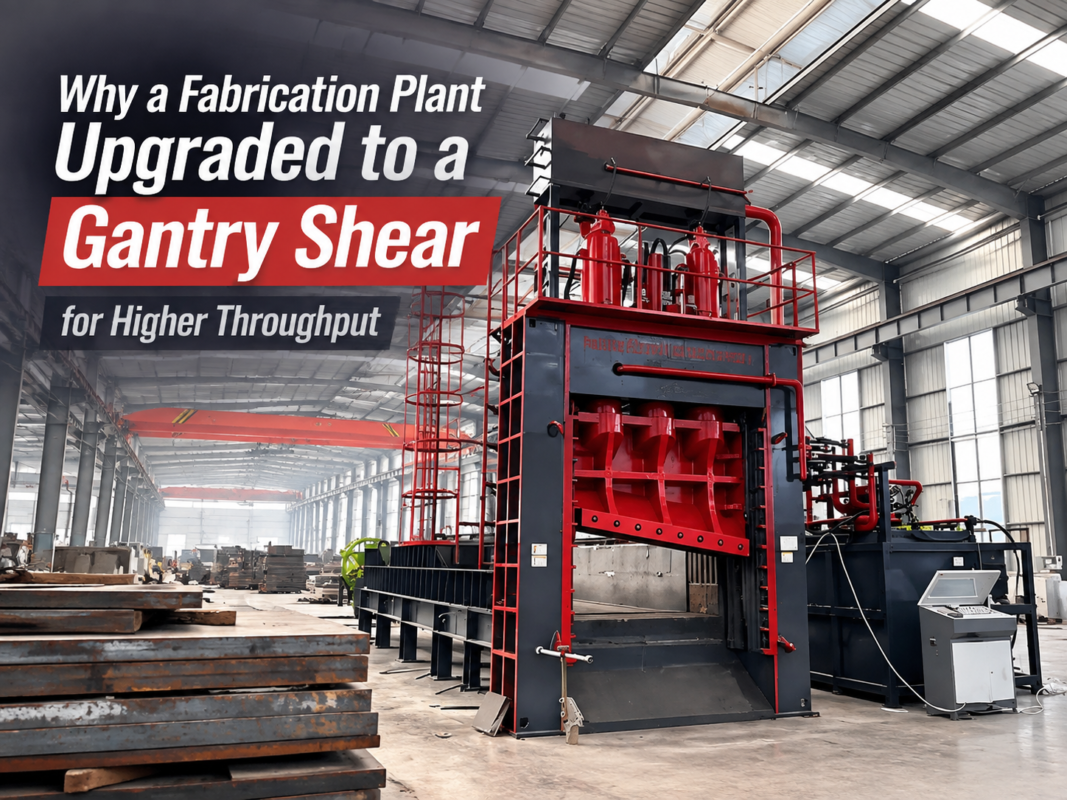
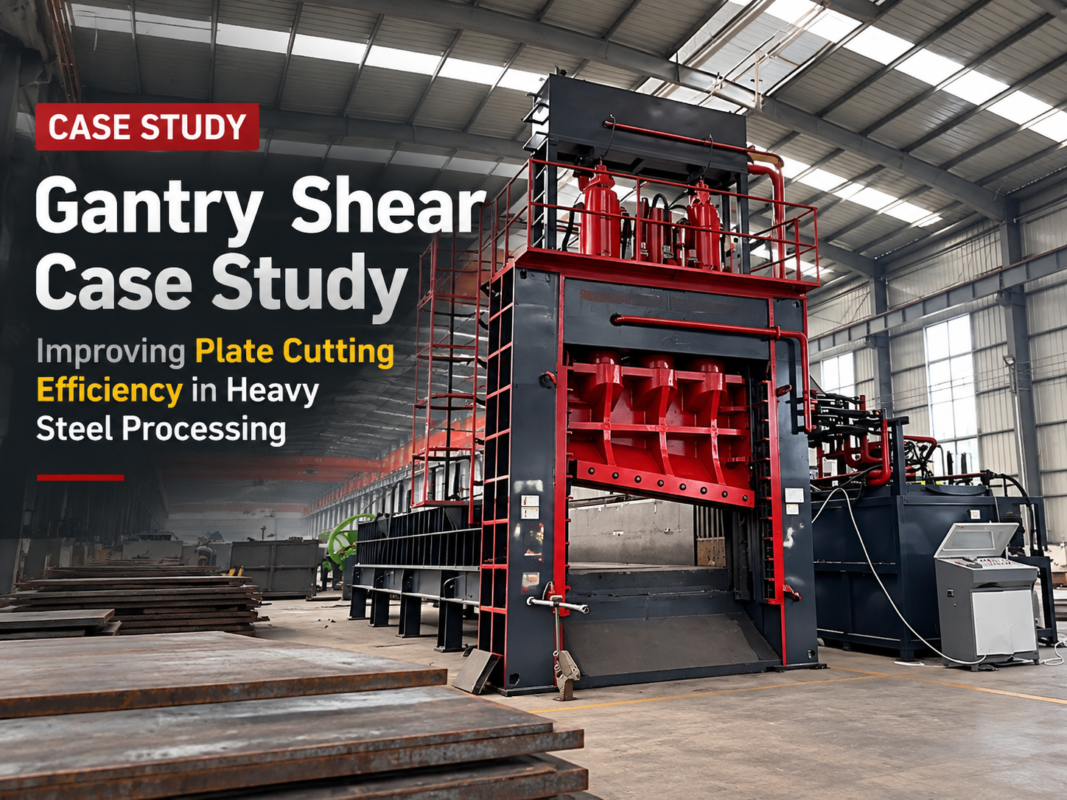
A gantry shear operates on a hydraulic principle where high-pressure fluid drives a heavy blade carrier downward against a fixed lower blade. The gantry structure provides the necessary rigidity to prevent frame deflection during high-tonnage operations. Manual gantry shears typically rely on operator-actuated valves or simple electrical push-buttons to trigger the stroke. In contrast, CNC (Computer Numerical Control) gantry shears integrate sophisticated PLC systems, sensors, and automated feeding mechanisms to manage the entire cutting cycle without constant human intervention.
The technical sophistication of a CNC system allows for variable stroke lengths, automated pressure adjustments based on material resistance, and integration with conveyor systems. Manual machines, while simpler, offer a level of tactile control that some operators prefer for irregular scrap pieces that require careful positioning. However, as production demands increase, the limitations of manual operation—such as slower cycle times and higher labor fatigue—become more apparent. HARSLE’s range of gantry shears bridges this gap by offering high-performance hydraulic systems regardless of the control interface.
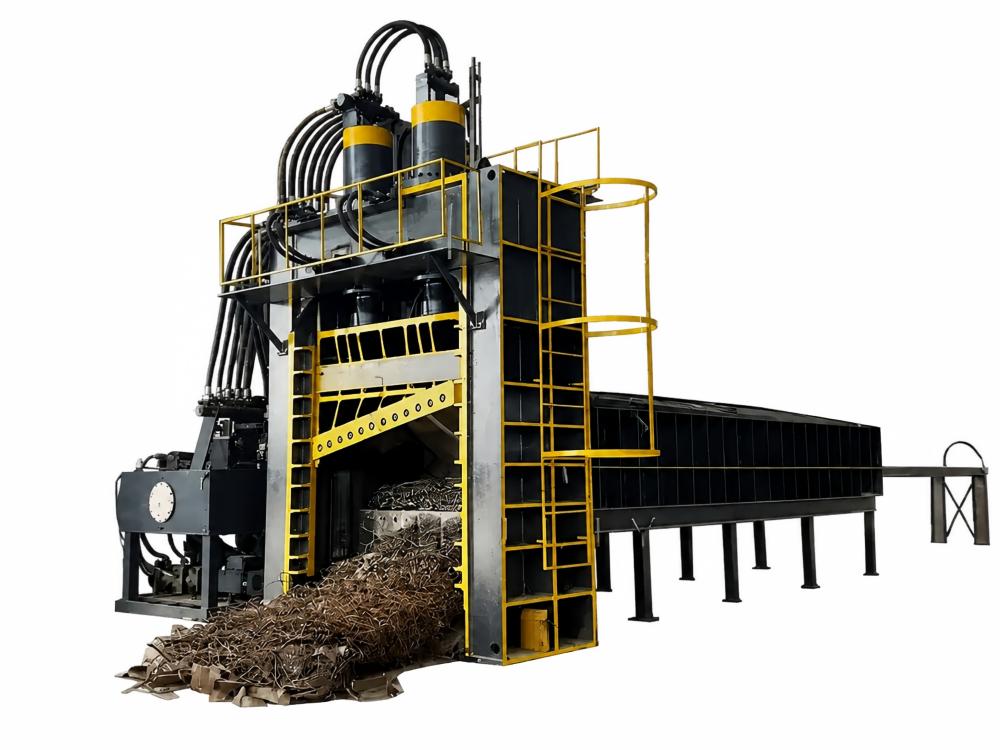
Furthermore, the hydraulic circuit in a modern gantry shear is a masterpiece of engineering. It often features a logic valve block design that minimizes heat generation and maximizes flow speed. Whether manual or CNC, the efficiency of the pump and the quality of the seals determine the machine’s longevity. CNC systems take this a step further by monitoring oil temperature and filter status in real-time, providing diagnostic feedback that manual machines lack. This technical oversight is crucial for maintaining a consistent CNC Manual Gantry Shears: Which Is Better Production Line? evaluation.
Core Parameters Defining Performance
When evaluating a gantry shear for your facility, several core parameters dictate its suitability. The most critical is the Shearing Force, usually measured in kilonewtons (kN) or tons. This force determines the maximum thickness and type of material the machine can sever. For instance, a 630-ton shear is standard for general scrap, while 1000-ton to 1600-ton units are required for heavy industrial demolition scrap. The choice between CNC and manual often influences how effectively this force is applied across different cycles.
Blade Length is another vital parameter. A wider blade allows for larger pieces of scrap to be fed into the throat of the machine, reducing the need for pre-processing with torches. In a CNC setup, the blade length is often paired with an automated ‘hold-down’ or ‘stamper’ that secures the material before the shear descends. This synchronization is handled by the CNC controller to ensure safety and precision, whereas in a manual machine, the operator must coordinate these two movements independently.
Stroke Frequency (cuts per minute) is where CNC systems often outshine manual ones. By optimizing the return stroke and using sensors to detect when the blade has cleared the material, a CNC gantry shear can significantly increase the number of cuts per hour. Manual machines are limited by the operator’s reaction time and the fixed cycle of the hydraulic valves. For high-volume production lines, the cumulative time saved by a CNC system can equate to several extra tons of processed material per shift.
Finally, Motor Power and System Pressure must be considered. High-efficiency motors paired with variable displacement pumps allow CNC shears to consume less energy during idle times. Manual machines often run the pump at a constant rate, which can lead to higher electricity costs and faster oil degradation. Understanding these parameters is essential for any facility looking to optimize their CNC Manual Gantry Shears: Which Is Better Production Line? strategy.
Calculation Method for Shearing Force
To ensure you select the right machine, you must calculate the required shearing force based on your most demanding material. The standard engineering formula for shearing force ($F$) is:
F = 0.6 × L × S × σb
Where:
- F is the shearing force (in Newtons).
- L is the width of the material being cut (in mm).
- S is the thickness of the material (in mm).
- σb is the ultimate tensile strength of the material (in N/mm² or MPa).
For example, if you are cutting a carbon steel plate that is 500mm wide and 40mm thick, with a tensile strength of 450 MPa, the calculation would be:
F = 0.6 × 500 × 40 × 450 = 5,400,000 N, which is approximately 540 tons. In this scenario, a 630-ton gantry shear would be the appropriate choice to provide a safety margin and prevent the machine from operating at its absolute limit.
It is important to note that the ‘0.6’ factor accounts for the shear resistance of the metal, which is typically about 60-70% of its tensile strength. When using a CNC gantry shear, the controller can often be programmed with these material profiles. The system then adjusts the hydraulic pressure to match the calculated requirement, preventing unnecessary wear on the pump and frame. Manual operators must rely on experience to judge if a piece is too thick, which often leads to ‘stalling’ the machine or causing structural fatigue over time.
Parameter Table for Gantry Shear Selection
The following table provides a comparison of typical specifications for HARSLE gantry shears, ranging from medium to heavy-duty models. This data helps in determining the CNC Manual Gantry Shears: Which Is Better Production Line? based on specific output needs.
| Model Series | Shearing Force (Tons) | Blade Length (mm) | Max Opening (mm) | Motor Power (kW) | Control Type |
|---|---|---|---|---|---|
| HS-630 | 630 | 1400 | 800 | 45 x 2 | Manual / PLC |
| HS-800 | 800 | 1600 | 900 | 55 x 2 | CNC / PLC |
| HS-1000 | 1000 | 1800 | 1000 | 75 x 2 | CNC |
| HS-1250 | 1250 | 2000 | 1100 | 90 x 2 | CNC |
| HS-1600 | 1600 | 2200 | 1200 | 110 x 3 | CNC |
Common Engineering Mistakes in Gantry Shear Operation
One of the most frequent mistakes in metal shearing is incorrect blade gap adjustment. The clearance between the upper and lower blades must be adjusted based on the thickness of the material. If the gap is too wide, the metal will ‘fold’ or ‘tear’ rather than shear, leading to massive burrs and increased strain on the hydraulic system. If it is too tight, the blades may collide, causing catastrophic damage. CNC gantry shears often feature motorized gap adjustment, whereas manual machines require the operator to shim the blades or adjust bolts manually, a task that is frequently neglected.
Another common error is ignoring material hardness. Not all steel is created equal. Processing alloy steels or hardened plates on a machine rated for mild steel will quickly dull the blades and can even crack the gantry frame. Engineers must ensure that the CNC Manual Gantry Shears: Which Is Better Production Line? decision includes a thorough analysis of the scrap stream. If the material varies wildly, a CNC system with pressure-sensing technology is safer, as it can abort a cut if the resistance exceeds safe thresholds.
Poor hydraulic oil maintenance is a silent killer of gantry shears. Because these machines operate in dusty, outdoor, or semi-outdoor environments, contaminants easily enter the hydraulic reservoir. Failure to change filters or monitor oil acidity leads to valve erosion and pump failure. CNC machines provide an advantage here by offering digital alerts for maintenance intervals. In manual operations, maintenance is often reactive (fixing things after they break) rather than proactive, which significantly increases the total cost of ownership.
Lastly, improper feeding techniques can lead to machine damage. Operators often try to ‘overstuff’ the throat of the shear. In a manual setup, this is easy to do and can lead to the material wedging in the frame. CNC-controlled shears often work in tandem with an automated ‘box’ or ‘pusher’ that pre-compresses the scrap and feeds it at a controlled rate, ensuring that the shear only receives what it can handle. This automation eliminates the human error associated with feeding, which is a major factor in the CNC Manual Gantry Shears: Which Is Better Production Line? debate.
Selection Checklist: Finding the Right Fit
Choosing between a CNC and a manual gantry shear requires a systematic approach. Use the following checklist to guide your investment:
- Production Volume: Does your facility process more than 50 tons of scrap per day? If yes, the efficiency of a CNC system is almost mandatory to maintain profitability.
- Labor Availability: Do you have skilled operators who understand hydraulic systems? Manual machines require more ‘feel’ and experience. CNC machines require more ‘programming’ knowledge but are easier for a novice to operate safely.
- Material Consistency: Is your scrap uniform (e.g., offcuts from a factory) or varied (e.g., demolition scrap)? Uniform scrap is perfect for the automated cycles of a CNC shear.
- Budget Constraints: Manual machines have a lower upfront cost. However, you must calculate the long-term labor costs and potential downtime. Often, the ROI on a CNC machine is realized within 18-24 months through increased throughput.
- Integration: Does the shear need to communicate with other machines, such as conveyors or sorting robots? If so, a CNC system with industrial communication protocols (like Modbus or Profibus) is required.
- Maintenance Capabilities: Do you have access to technicians who can service electronic sensors and PLCs? If your facility is in a very remote area with limited tech support, a rugged manual hydraulic system might be more ‘fixable’ in a pinch.
Frequently Asked Questions (FAQ)
1. Can a manual gantry shear be upgraded to CNC later?
While it is technically possible to retro-fit a PLC and sensors onto a manual hydraulic shear, it is often cost-prohibitive. The hydraulic valve blocks in a CNC machine are specifically designed for electronic control (solenoid-operated). Upgrading a manual machine usually involves replacing the entire hydraulic manifold and adding a significant amount of wiring and sensor mounting points. It is generally better to decide on the control level at the time of purchase.
2. How often should the blades be rotated or sharpened?
This depends entirely on the material being cut. For clean mild steel, blades may last 200-300 hours before needing a rotation (most gantry shear blades have 4 cutting edges). If you are cutting sandy, rusty, or hardened scrap, this interval could drop to 100 hours. CNC machines can track ‘cut counts,’ making it easier to schedule this maintenance before the cut quality degrades and damages the machine.
3. What is the advantage of a ‘Side Squeeze’ gantry shear?
Many CNC gantry shears include a side-squeeze or ‘wing’ system. This pre-compresses bulky scrap (like a car body or a large tank) into a dense log before it reaches the shear blade. This ensures that the shearing force is applied to a concentrated area, making the cut more efficient and preventing the material from shifting during the stroke. Manual machines rarely have this feature integrated as seamlessly as CNC models.
4. Is a CNC gantry shear more prone to breakdown in cold weather?
Hydraulic systems in general are sensitive to cold, as oil viscosity increases. CNC machines actually handle this better because they often have automated ‘warm-up’ cycles where the oil is circulated through the system at low pressure until it reaches operating temperature. Manual machines require the operator to remember to do this, otherwise, the high pressure on cold oil can blow seals or damage the pump.
5. Which is better for a small-scale recycling yard?
For a small yard processing less than 10-15 tons a day, a manual gantry shear is often the most logical choice. The lower capital investment and simpler mechanical nature fit the scale of the operation. However, as soon as the yard looks to scale up or reduce labor costs, the transition to a CNC-controlled CNC Manual Gantry Shears: Which Is Better Production Line? becomes the standard path for growth.