Aluminium Extrusion Press Technical Guide: How the Process Works and What to Optimize

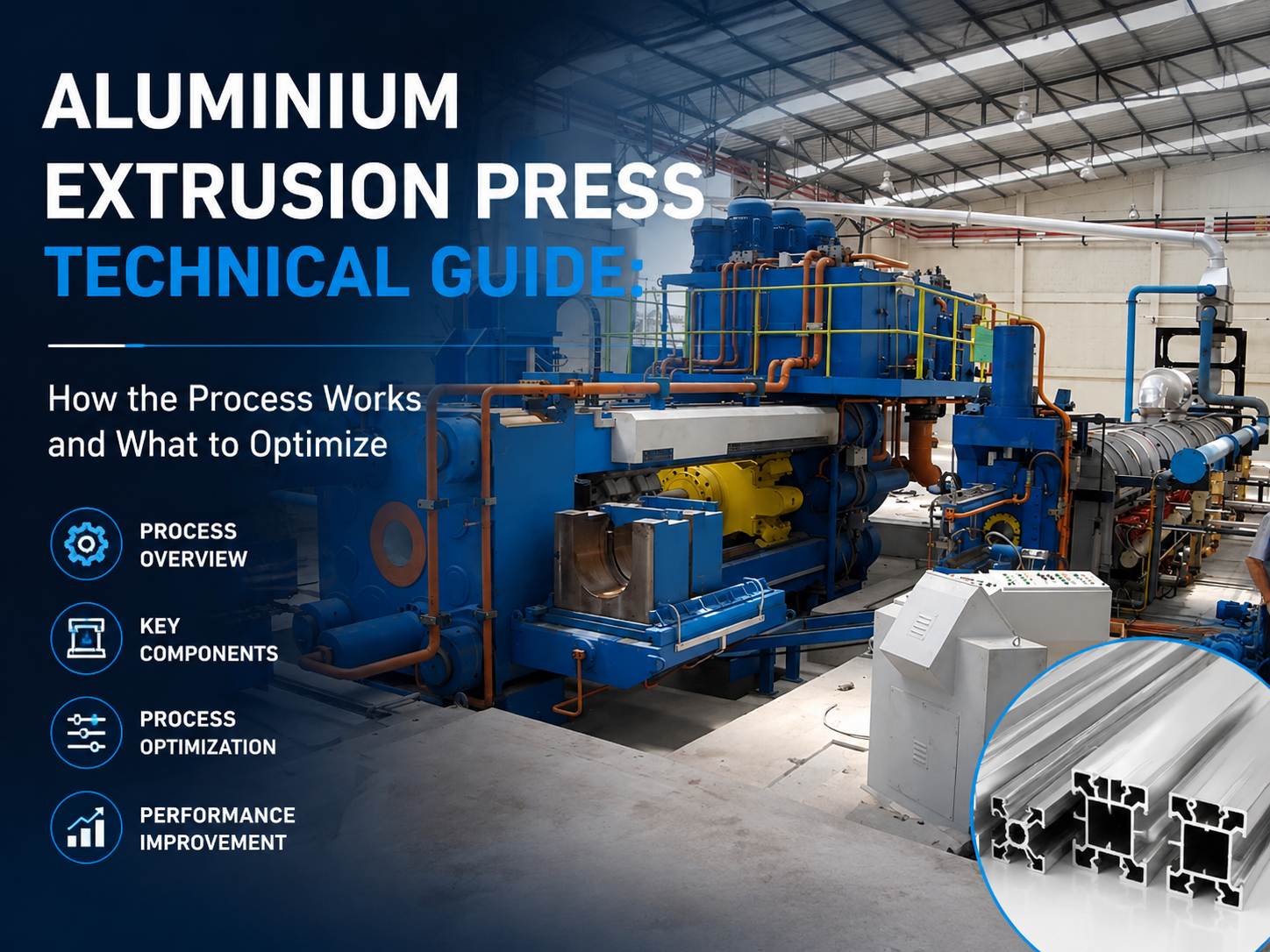
Technical Overview: Understanding the Aluminium Extrusion Press
The aluminium extrusion process is a cornerstone of modern metal fabrication, transforming aluminium billets into complex cross-sectional profiles. At its core, an aluminium extrusion press operates by forcing a heated aluminium billet through a shaped steel die. This process relies on high-pressure hydraulic systems to overcome the yield strength of the metal, causing it to flow plastically into the desired geometry. Understanding the mechanics of this transformation is essential for any facility looking to improve output quality and operational efficiency.
The process begins with the billet furnace, where aluminium logs are heated to a specific temperature range—typically between 400°C and 500°C. This temperature is critical; if the billet is too cold, the press will struggle to overcome the resistance, potentially damaging the die or the press structure. If it is too hot, the surface finish of the profile may suffer, and the mechanical properties of the final product may be compromised. Once heated, the billet is transferred to the press container.
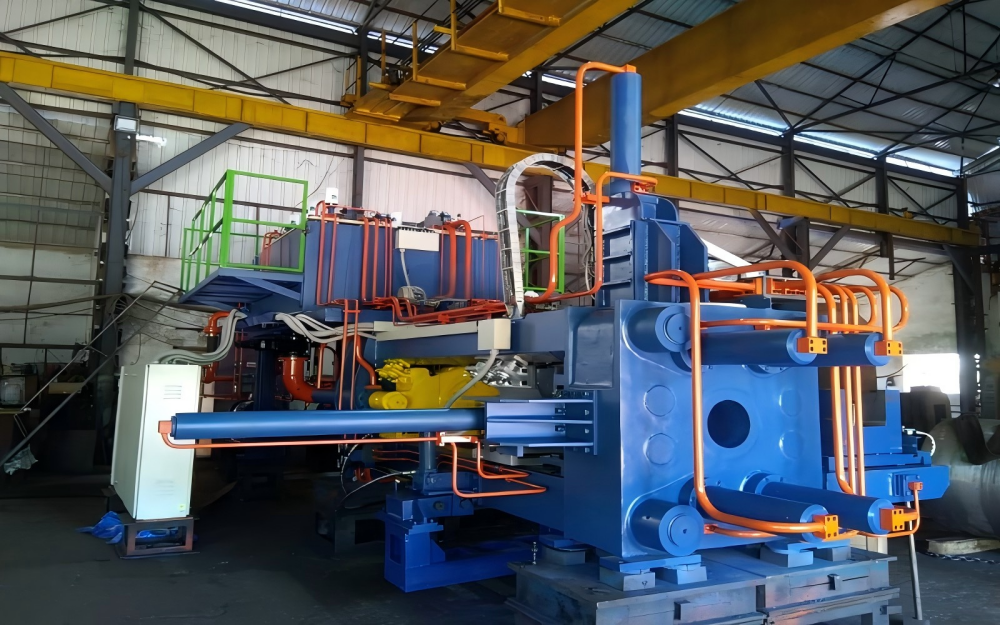
Inside the press, the main ram exerts immense force on the billet via a dummy block. As the pressure builds, the aluminium is forced through the aperture of the die. The die itself is a precision-engineered component, often made from H13 tool steel, designed to withstand extreme heat and pressure while maintaining the exact profile dimensions. The resulting extrusion emerges from the die, is cooled, and then cut to length.
Modern HARSLE aluminium extrusion presses incorporate advanced PLC controls and proportional hydraulic valves to ensure consistent pressure application. This level of automation is what separates high-performance industrial machinery from legacy equipment. By controlling the speed of the ram and the pressure profile throughout the stroke, operators can minimize scrap rates and achieve tighter tolerances on complex shapes.
Core Parameters for Aluminium Extrusion Press Technical: Process Works Optimize
Optimizing the aluminium extrusion process requires a deep dive into several interconnected variables. The first and most significant parameter is the extrusion ratio. This is defined as the ratio of the cross-sectional area of the container to the cross-sectional area of the final profile. A higher ratio requires significantly more pressure and generates more heat due to internal friction, which can limit the maximum speed of the press.
Ram speed is another critical factor. While faster speeds increase throughput, they also increase the temperature of the profile due to adiabatic heating. If the exit temperature exceeds the alloy’s solidus temperature, the profile will experience surface tearing or “hot shortness.” Therefore, the optimization strategy must balance speed against the cooling capacity of the quench system located immediately after the die.
Container temperature and pressure distribution also play vital roles. The container must be kept at a temperature close to that of the billet to prevent premature cooling of the outer skin of the aluminium. If the container is too cold, the friction between the billet and the container wall increases, leading to higher required extrusion forces and potential surface defects known as “pick-up” or “tearing.”
Finally, die lubrication and maintenance are essential for process optimization. The use of specialized lubricants reduces the friction between the aluminium and the die bearing surface. Proper die design, including the use of feeder plates and balanced flow channels, ensures that the metal reaches all parts of the die aperture simultaneously, preventing twisting or warping of the extruded profile as it exits the press.
Calculation Method for Extrusion Force
Calculating the required extrusion force is a fundamental step in selecting the right aluminium extrusion press. The basic formula for calculating the required force (F) is: F = P × A, where P is the specific pressure required to deform the alloy and A is the cross-sectional area of the billet. However, this is a simplified view; in practice, engineers must account for friction and the complexity of the profile.
The specific pressure (P) is influenced by the alloy type, the extrusion ratio, and the temperature. Harder alloys, such as the 7000 series, require significantly higher specific pressures than the more common 6000 series. The formula is often expanded to: F = A_b × σ_y × ln(R) + F_f, where A_b is the billet area, σ_y is the yield stress of the alloy at the operating temperature, ln(R) is the natural log of the extrusion ratio, and F_f represents the frictional force against the container wall.
To optimize this calculation, engineers use software simulations to model the metal flow. By inputting the specific alloy properties and the die geometry, these simulations can predict the peak force required during the initial breakthrough phase. This is the moment when the pressure is highest, as the metal first begins to flow into the die. Ensuring the press has a safety margin above this peak force is critical for equipment longevity.
When performing these calculations, always consider the “dead cycle” time. The dead cycle includes the time taken to load the billet, move the dummy block, and reset the press. Optimizing this cycle is just as important as optimizing the extrusion force itself, as it directly impacts the total number of billets that can be processed per hour.
Parameter Table: Typical Operating Ranges
| Parameter | Typical Range | Optimization Goal |
|---|---|---|
| Billet Temperature | 420°C – 480°C | Maintain consistency to prevent surface defects |
| Extrusion Ratio | 10:1 to 50:1 | Balance throughput with structural integrity |
| Ram Speed | 5 mm/s – 25 mm/s | Maximize speed without exceeding exit temp |
| Specific Pressure | 400 – 700 MPa | Ensure sufficient force for complex profiles |
| Container Temp | 380°C – 450°C | Minimize friction and heat loss |
Common Engineering Mistakes in Extrusion
One of the most frequent mistakes in aluminium extrusion is neglecting the thermal management of the die. Many operators focus solely on the billet temperature, forgetting that the die acts as a heat sink. If the die is not preheated correctly, the initial profiles produced will have different mechanical properties and dimensions compared to those produced once the die reaches thermal equilibrium. This leads to high scrap rates at the start of every production run.
Another common error is the improper selection of the dummy block. The dummy block must expand under pressure to seal the container effectively. If the block is worn or of the wrong material, aluminium can leak behind it, causing “back-end” defects. This not only wastes material but can also cause significant damage to the press ram and container liner, leading to expensive downtime.
Inadequate cooling of the profile after it exits the press is also a major oversight. Aluminium alloys require specific cooling rates to achieve their desired T6 or T5 temper. If the quench system is not calibrated to the extrusion speed, the profile may not reach the required hardness, or it may suffer from distortion due to uneven cooling. Always ensure the quench system is integrated with the press control system for synchronized operation.
Finally, many facilities fail to implement a rigorous die maintenance schedule. Dies are precision tools that degrade over time. Ignoring signs of wear, such as surface streaking or dimensional drift, leads to poor quality parts. Regular inspection, polishing, and nitriding of the dies are essential to maintain high-quality output and extend the life of the tooling.
Selection Checklist for Aluminium Extrusion Presses
When selecting an aluminium extrusion press, start by defining your maximum profile size and complexity. This will dictate the required tonnage of the press. A press that is too small will struggle with large or complex profiles, while a press that is too large will be inefficient and costly to operate. Always aim for a press that operates at 70-80% of its rated capacity for the majority of your work.
Evaluate the hydraulic system’s efficiency. Modern presses should feature variable displacement pumps and energy-recovery systems. These features significantly reduce power consumption and heat generation in the hydraulic oil, leading to lower operating costs and longer component life. Ask the manufacturer about the response time of the valves, as this determines the precision of the ram control.
Consider the level of automation and integration. A modern extrusion line should include automated billet loading, dummy block handling, and profile pullers. Integration with your ERP system allows for real-time tracking of production data, which is vital for quality control and predictive maintenance. Look for HMI (Human-Machine Interface) panels that provide clear diagnostics and easy-to-use control over all process parameters.
Check the availability of spare parts and technical support. An extrusion press is a long-term investment. Ensure that the manufacturer has a strong local presence or a reliable service network. Downtime in an extrusion facility is extremely expensive, so having access to quick technical support and readily available critical components is non-negotiable.
FAQ: Aluminium Extrusion Press Technical Guide
Q: What is the most important factor in aluminium extrusion quality?
A: Temperature control is paramount. Both the billet temperature and the die temperature must be strictly managed to ensure consistent material flow and surface finish.
Q: How often should I perform maintenance on my extrusion press?
A: Daily checks should include hydraulic levels and die condition. Monthly maintenance should involve inspecting the ram, container liner, and electrical systems. A major overhaul is typically recommended every 2-3 years depending on usage.
Q: Can one press handle all aluminium alloys?
A: While a press can technically extrude various alloys, the pressure requirements differ significantly. Ensure your press has the tonnage capacity to handle the hardest alloy you intend to process.
Q: Why is the extrusion ratio important?
A: It determines the amount of force required and the degree of metal deformation. High ratios require more power and can lead to higher temperatures, affecting the final profile quality.
Q: How can I reduce scrap rates in my extrusion process?
A: Focus on die design, consistent billet heating, and precise control of the ram speed. Implementing automated profile handling and cooling systems also helps reduce handling-related damage.
Q: What is the role of the dummy block?
A: The dummy block acts as a barrier between the ram and the billet, preventing the aluminium from flowing backward and ensuring all force is directed into the die aperture.