Optimizing Aluminium Extrusion Press Die Change Procedure for Faster Line Changeovers

Technical Overview
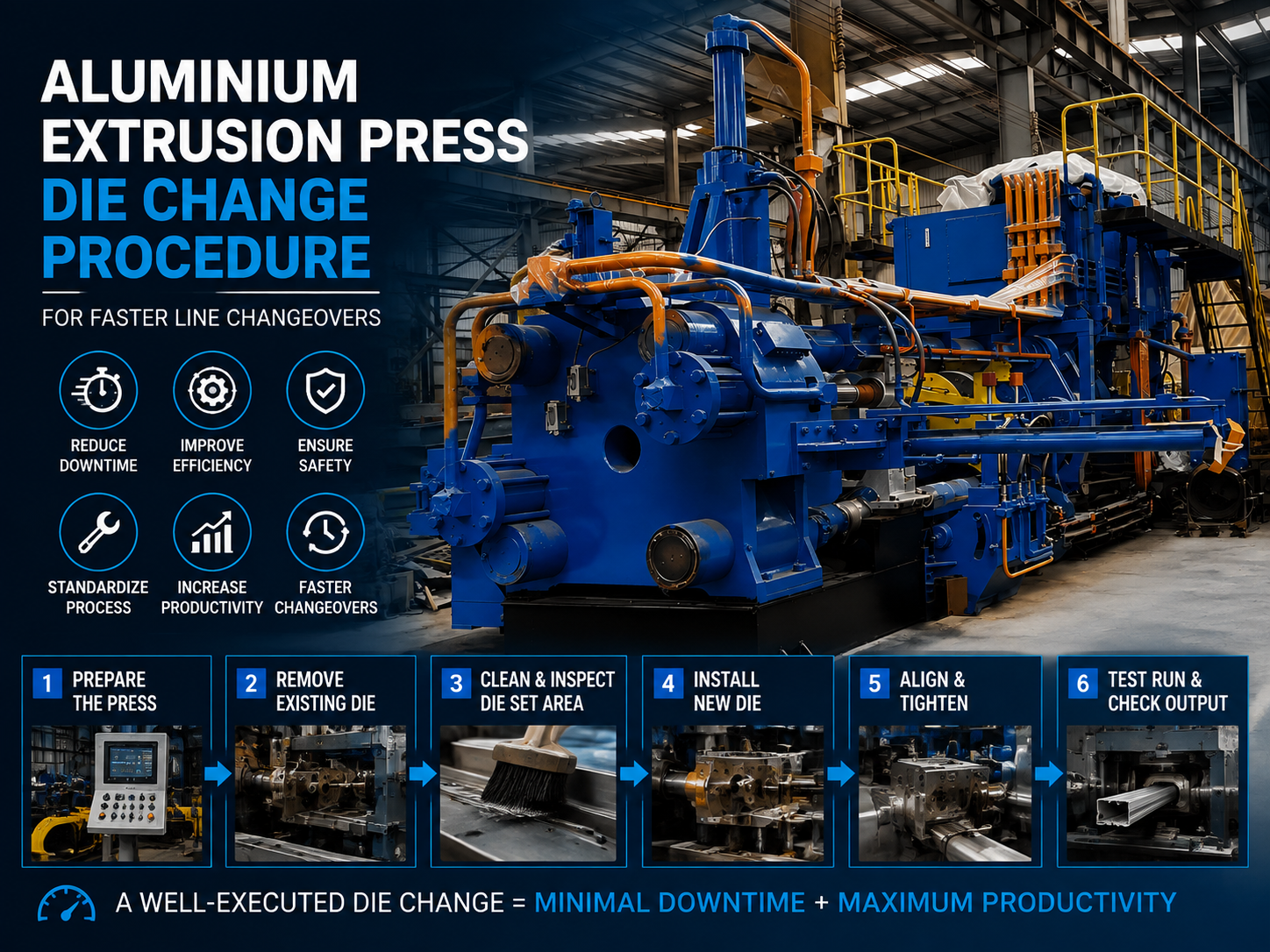
In the competitive landscape of modern metal fabrication, the efficiency of an aluminium extrusion line is dictated by its Overall Equipment Effectiveness (OEE). A critical component of this metric is the time spent during die changeovers. The Aluminium Extrusion Press Die Change Procedure for Faster Line Changeovers is not merely a maintenance task; it is a strategic operational process that directly impacts profitability. As manufacturers face increasing pressure to produce smaller batch sizes with higher frequency, mastering the rapid exchange of dies has become a prerequisite for industrial success.
The extrusion process involves forcing a heated aluminium billet through a shaped die to create complex profiles. Because the die is subject to extreme thermal and mechanical stress, it must be replaced periodically due to wear or when switching to a different profile geometry. Traditional methods often involve significant downtime, requiring the press to be cooled, disassembled, and re-calibrated. By implementing a standardized, high-speed procedure, HARSLE-equipped facilities can reduce changeover times by up to 40%, significantly increasing annual output.
Modern extrusion presses utilize advanced hydraulic systems and automated die-handling carriages to facilitate these transitions. The integration of quick-change die systems allows operators to pre-heat the new die while the current production run is still active. This ‘parallel processing’ approach is the cornerstone of modern lean manufacturing in the extrusion sector. By minimizing the time the press remains idle, manufacturers can maintain a continuous flow of production, thereby reducing the unit cost of each extruded profile.
Furthermore, the precision of the die change procedure is paramount to product quality. Improper alignment or inadequate pre-heating of the die can lead to surface defects, dimensional inaccuracies, or even catastrophic failure of the die assembly under high pressure. Therefore, the procedure must be treated as a high-precision engineering task rather than a simple mechanical swap. This guide outlines the systematic approach required to achieve rapid, safe, and repeatable die changeovers.
Core Parameters
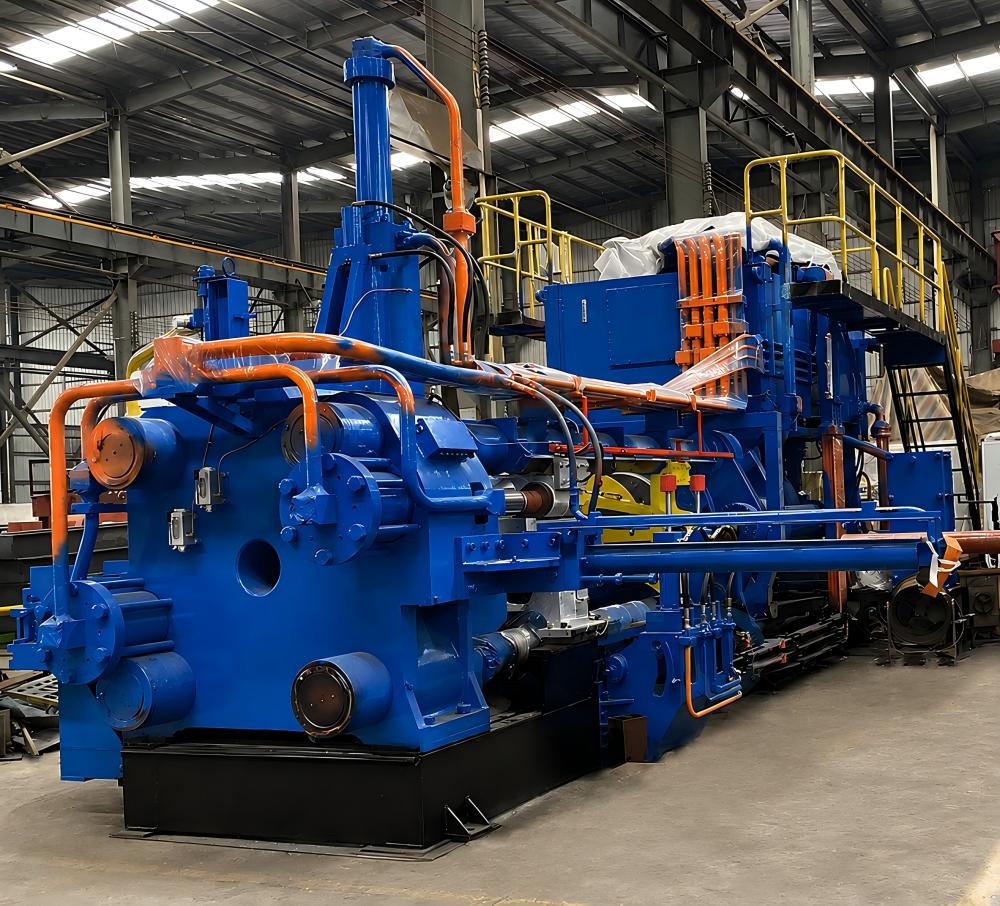
To execute an efficient die change, operators must monitor several core parameters that influence the speed and success of the operation. The first parameter is the die temperature. Aluminium extrusion dies must be pre-heated to a specific range, typically between 400°C and 480°C, depending on the alloy and profile complexity. If the die is too cold, the aluminium will solidify prematurely, causing a blockage or ‘die-lock.’ If it is too hot, the die material may lose its structural integrity.
The second core parameter is the alignment tolerance. The die assembly must be perfectly centered relative to the extrusion stem and the container. Even a deviation of a few millimeters can result in uneven wall thickness or profile distortion. Modern presses utilize laser-guided positioning systems or mechanical stops to ensure that the die is seated with micron-level accuracy. Operators must verify these settings during every changeover to prevent scrap production.
Hydraulic pressure management is the third critical parameter. During the changeover, the main ram must be retracted to a ‘safe zone’ that allows for the removal of the die stack. The pressure in the hydraulic lines must be monitored to ensure that the die-locking mechanism is fully disengaged before the carriage is moved. Failure to properly manage hydraulic pressure can lead to mechanical damage to the press frame or the die-handling equipment.
Finally, the cleanliness of the die-seating surface is a parameter that is often overlooked. Any residual aluminium or lubricant on the bolster or the die carrier can prevent a flush fit. A systematic cleaning cycle, utilizing compressed air or specialized scrapers, must be integrated into the changeover procedure. This ensures that the die is fully supported across its entire surface area, preventing cracking under the immense pressure of the extrusion cycle.
Calculation Method
Calculating the efficiency of your die change procedure requires a clear understanding of the ‘Changeover Time’ (T_co). This is defined as the time elapsed from the production of the last good part of the previous batch to the production of the first good part of the new batch. The formula is: T_co = T_stop + T_remove + T_clean + T_install + T_align + T_start. Each of these variables must be measured and optimized individually.
To calculate the potential gains from a faster procedure, use the ‘Throughput Increase’ formula: ΔP = (T_old – T_new) * N, where ΔP is the increase in annual production hours, T_old is the average time taken previously, T_new is the target time, and N is the number of changeovers performed annually. By quantifying the time saved, management can justify the investment in automated die-handling systems or specialized training programs for the maintenance crew.
Another vital calculation is the ‘Die Life vs. Changeover Frequency’ ratio. Frequent changeovers increase the wear on the die-locking mechanisms and the press frame. Therefore, the calculation must also account for the ‘Cost of Downtime’ versus the ‘Cost of Tooling.’ If the cost of downtime is significantly higher than the cost of premature die wear, the focus should shift toward faster changeovers even if it requires more frequent maintenance of the die-handling carriage.
Finally, utilize the ‘OEE Impact Factor’ to measure success. OEE = Availability * Performance * Quality. By reducing T_co, you directly improve the ‘Availability’ component of the OEE equation. A 10% reduction in T_co can lead to a 2-3% increase in total OEE, which, in a high-volume extrusion facility, translates to significant annual revenue growth. Tracking these metrics in real-time via a digital dashboard is recommended for all HARSLE-equipped facilities.
Parameter Table
| Parameter | Target Range | Impact on Efficiency |
|---|---|---|
| Die Pre-heat Temp | 400°C – 480°C | Prevents die-lock and surface defects |
| Alignment Tolerance | ± 0.05 mm | Ensures profile dimensional accuracy |
| Hydraulic Pressure | 150 – 250 Bar | Safe operation of locking mechanisms |
| Cleaning Time | < 3 Minutes | Reduces total changeover duration |
| Billet Temperature | 450°C – 520°C | Maintains flow consistency |
Common Engineering Mistakes
One of the most common mistakes in the Aluminium Extrusion Press Die Change Procedure for Faster Line Changeovers is the failure to properly pre-heat the die assembly. Operators often rush this step to save time, but a cold die acts as a heat sink, causing the aluminium to freeze inside the die channels. This leads to a ‘die-lock’ situation, which can take hours to clear and may permanently damage the die, costing thousands of dollars in replacement fees and lost production time.
Another frequent error is the lack of standardized tooling. When operators use improvised tools or non-standard wrenches to adjust the die stack, they risk damaging the precision surfaces of the press. Every extrusion line should have a dedicated ‘die change kit’ that includes calibrated torque wrenches, specialized cleaning brushes, and alignment jigs. Standardizing these tools ensures that every operator, regardless of experience level, can perform the changeover with the same level of speed and precision.
Neglecting the condition of the die-locking ring is a critical oversight. Over time, the locking ring can develop burrs or lose its clamping force due to thermal cycling. If the die is not locked securely, it may shift during the extrusion process, leading to profile wall thickness variations. Regular inspection of the locking ring and the bolster surface should be part of the preventive maintenance schedule, not just the changeover procedure.
Finally, poor communication between the production planning team and the press operators often leads to unnecessary downtime. If the next die is not prepared, inspected, and pre-heated before the current run ends, the press sits idle. Implementing a ‘Kits-Ready’ system, where the next die is staged in a pre-heating oven adjacent to the press, is essential for achieving the fastest possible line changeovers. Without this level of coordination, the mechanical speed of the press is irrelevant.
Selection Checklist
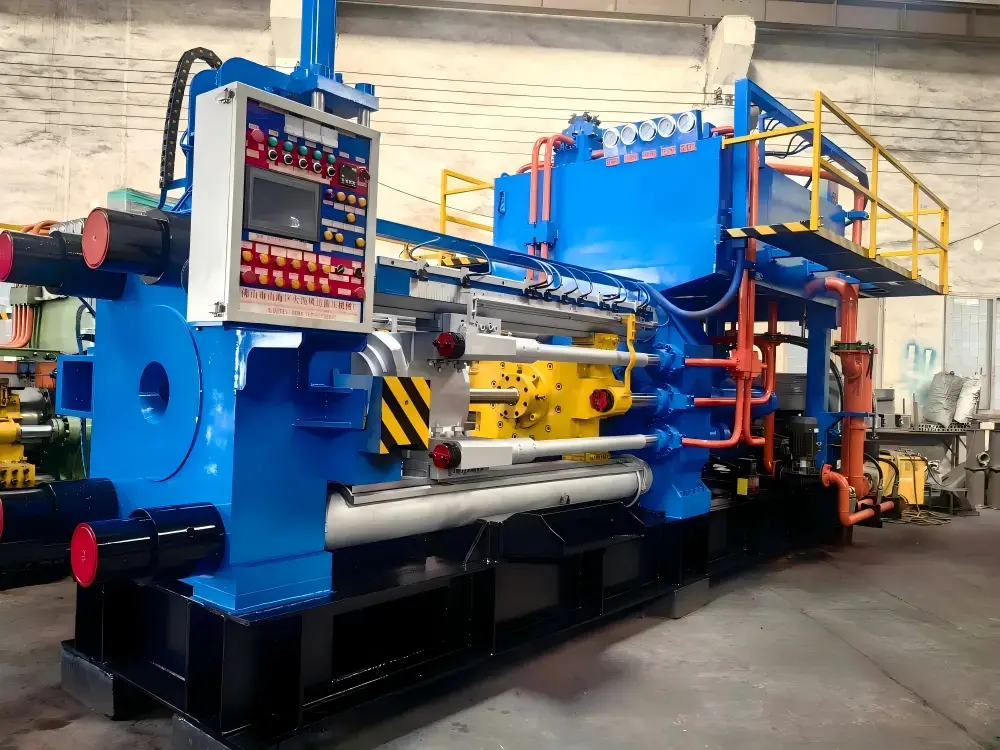
When selecting equipment or planning a workflow for faster die changeovers, use this checklist to ensure all bases are covered:
- Automated Die Carriage: Does the press feature a motorized carriage to move the die stack in and out of the press quickly?
- Pre-heating Capacity: Are there enough pre-heating ovens to ensure that the next die is always ready at the correct temperature?
- Quick-Lock Mechanisms: Does the press utilize hydraulic or pneumatic quick-lock systems instead of manual bolting?
- Digital Monitoring: Is there a system to track die temperature and alignment in real-time?
- Operator Training: Have the maintenance and production teams undergone specific training for rapid changeover procedures?
- Tooling Organization: Is there a dedicated, organized station for all changeover tools and consumables?
- Spare Parts Inventory: Are critical components like locking rings and seals kept in stock to prevent delays?
FAQ
Q: How can I reduce my die changeover time by 50%?
A: Focus on parallel processing. Pre-heat the next die while the current one is running, use automated die-handling carriages, and implement a standardized ‘pit-stop’ style procedure where every operator has a specific task.
Q: What is the most important factor in die alignment?
A: The most important factor is the concentricity between the die opening and the extrusion container. Using laser-guided alignment tools is the most reliable way to ensure this.
Q: How often should I inspect the die-locking ring?
A: The locking ring should be inspected visually every 50 changeovers and undergo a full dimensional check every 500 changeovers or during major maintenance cycles.
Q: Can I use the same die change procedure for different press sizes?
A: While the principles remain the same, the specific tools and safety protocols must be adapted for the tonnage and physical dimensions of each press. Always follow the manufacturer’s manual for specific press models.
Q: What is the benefit of a ‘Kits-Ready’ system?
A: A ‘Kits-Ready’ system ensures that all necessary components, including the die, bolster, and locking ring, are assembled and pre-heated as a single unit before the changeover begins, eliminating the need to assemble parts while the press is idle.