
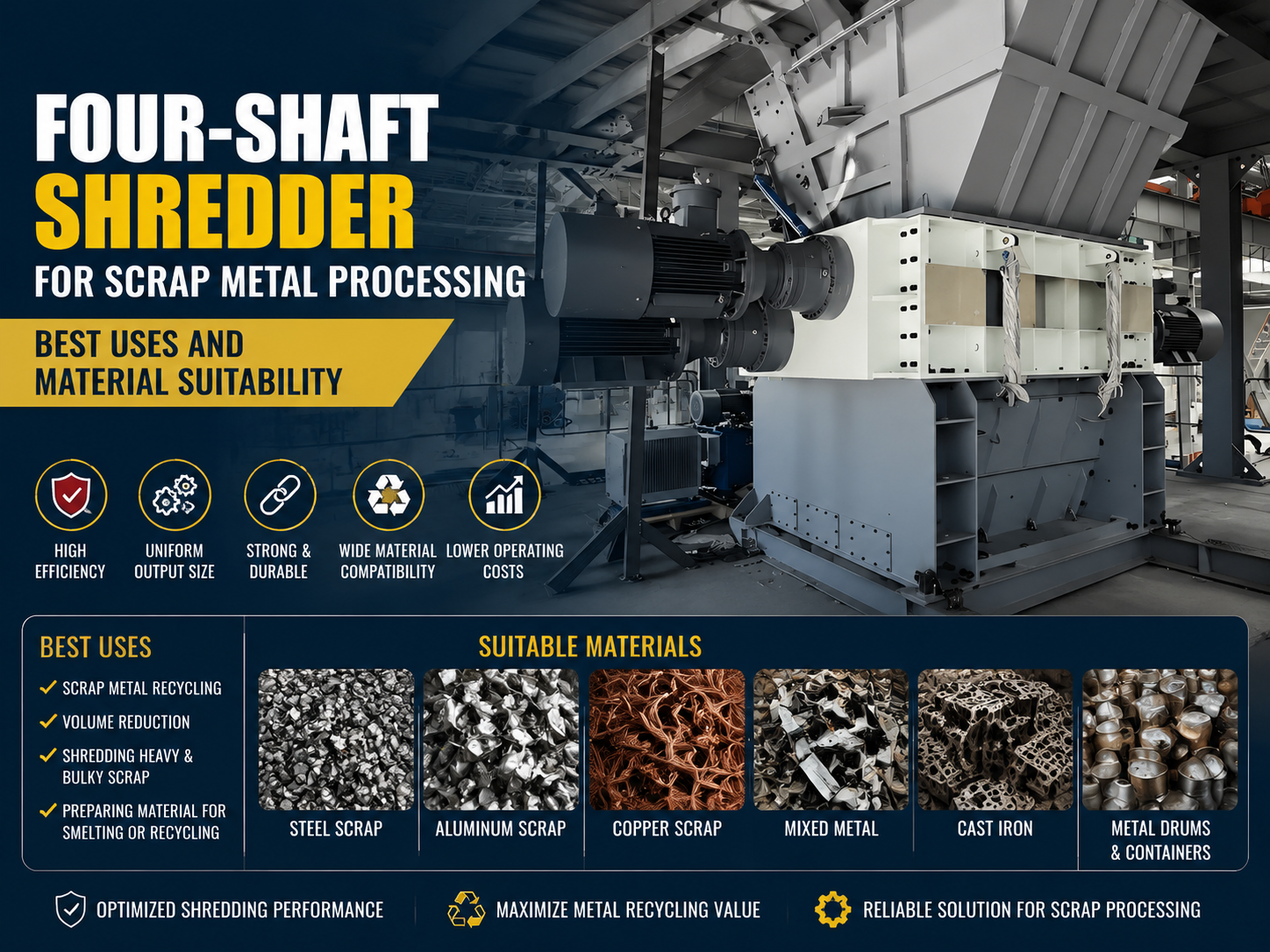
Four-Shaft Shredder for Scrap Metal Processing: Best Uses and Material Suitability

Technical Overview of Four-Shaft Shredders
The four-shaft shredder represents the pinnacle of size reduction technology in the scrap metal processing industry. Unlike traditional single or twin-shaft models, the four-shaft configuration utilizes two main drive shafts and two auxiliary shafts. This unique arrangement allows for a more aggressive ‘grab’ on bulky materials, ensuring that the scrap is consistently fed into the cutting blades. The primary advantage of this design is the integration of a screen beneath the cutting chamber, which ensures that only material reduced to a specific size can exit the machine. This makes the four-shaft shredder an ideal choice for applications requiring precise output dimensions and high-torque performance.
In the context of scrap metal processing, the four-shaft shredder operates at relatively low speeds but with immense torque. This low-speed, high-torque approach minimizes dust generation, reduces noise pollution, and prevents the overheating of materials, which is critical when processing volatile or heat-sensitive scrap. The interaction between the four sets of blades creates a multi-directional shearing action, effectively breaking down complex assemblies like electronic waste, automotive components, and light structural steel. HARSLE’s engineering focus on these machines ensures that the blade geometry and shaft synchronization are optimized for maximum throughput and minimal wear.
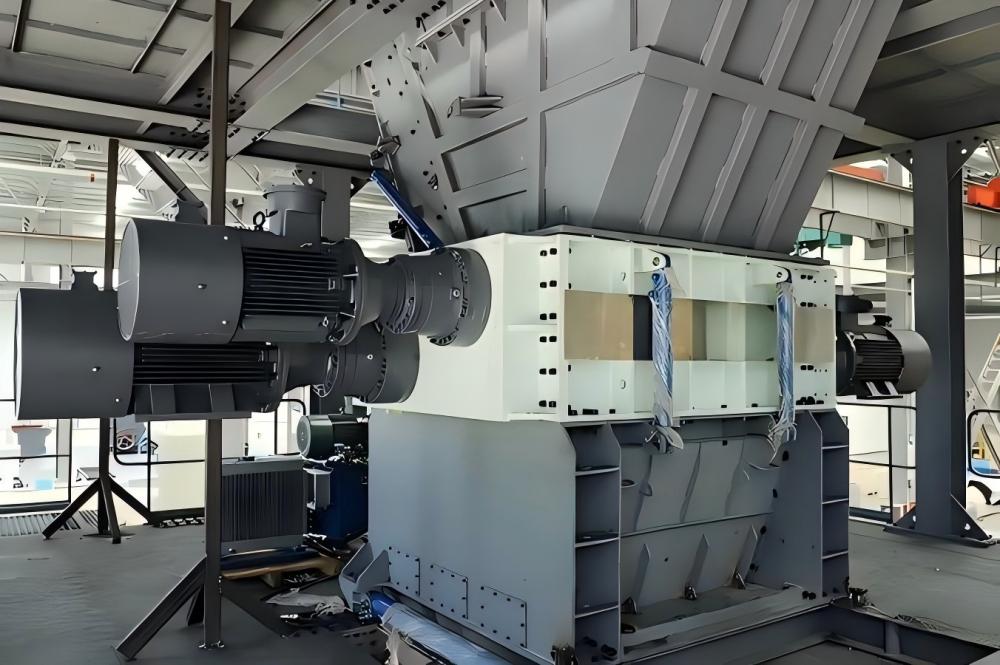
The mechanical architecture of a four-shaft shredder involves a heavy-duty gearbox, often driven by dual electric motors or a hydraulic power unit. The drive shafts are equipped with specialized alloy steel blades that are heat-treated for extreme hardness and toughness. The auxiliary shafts, positioned above the main shafts, act as feeders, preventing material from ‘bridging’ or floating on top of the cutters. This continuous feeding mechanism is what allows the four-shaft shredder to handle large, hollow objects like metal drums or car bumpers more efficiently than twin-shaft alternatives.
Material Suitability and Best Uses
When discussing Four-Shaft Shredder Scrap Metal Processing: Best Uses Material Suitability, it is essential to categorize materials based on their density and shear resistance. These machines are exceptionally well-suited for light to medium-duty scrap metal. This includes aluminum extrusions, copper radiators, brass fittings, and thin-gauge steel sheets. Because the four-shaft design provides a controlled output size, it is the preferred choice for secondary shredding in recycling lines where the material must be prepared for downstream processes like eddy current separation or smelting.
Another significant application is in the processing of Electronic Waste (E-waste). Modern electronics contain a mix of plastics, precious metals, and ferrous components. The four-shaft shredder’s ability to liberate these materials while maintaining a uniform particle size is crucial for high-recovery recycling. Furthermore, the machine is highly effective for ‘destruction’ services, where sensitive equipment or branded products must be rendered unrecognizable and unrecoverable for security or brand protection purposes.
Core Parameters of Four-Shaft Shredders
Understanding the core parameters is vital for any facility looking to integrate a four-shaft shredder into their workflow. The performance of the machine is dictated by several key factors: motor power, shaft torque, blade thickness, and screen aperture. Motor power typically ranges from 30kW to over 200kW, depending on the required throughput. However, power alone does not define the machine; the torque delivered to the shafts is what determines the ability to shear through thick metal sections without stalling.
Blade thickness is another critical parameter. Thinner blades allow for a finer cut but are more susceptible to damage from heavy contaminants. Conversely, thicker blades provide the structural integrity needed for heavy scrap but result in a coarser primary cut. The screen aperture, located at the bottom of the shredding chamber, defines the final product size. If the material is not small enough to pass through the screen, the auxiliary shafts recirculate it back to the main cutters. This internal recirculation is a hallmark of the four-shaft design, eliminating the need for external conveyor loops in many applications.
Shaft speed is generally kept between 10 and 25 RPM. This low speed is intentional, as it maximizes the torque-to-power ratio. It also ensures that the blades have sufficient time to ‘bite’ into the metal. The distance between the shafts and the clearance between the blades (the ‘tolerance’) are also engineered to specific tolerances to ensure a clean shear rather than a messy tear, which reduces the energy required per ton of processed material.
Calculation Method for Shredder Throughput
Estimating the throughput of a four-shaft shredder is essential for production planning. The theoretical capacity can be calculated using the volume of the cutting chamber, the rotational speed of the shafts, and the bulk density of the scrap material. While real-world factors like material tangling and operator efficiency play a role, the following formula provides a solid engineering baseline:
Throughput (T) = (V × ρ × η × ω) / 60
Where:
- V = Effective volume of the cutting chamber (m³)
- ρ = Bulk density of the material (kg/m³)
- η = Filling efficiency factor (typically 0.3 to 0.6 for scrap metal)
- ω = Rotational speed of the drive shafts (RPM)
For example, if you are processing loose aluminum scrap with a bulk density of 150 kg/m³ in a shredder with an effective chamber volume of 0.8 m³, running at 20 RPM with a filling efficiency of 0.4, the calculation would be: (0.8 × 150 × 0.4 × 20) / 60 = 16 kg per minute, or approximately 0.96 tons per hour. It is important to note that as the screen size decreases, the filling efficiency (η) also decreases because more material is recirculated within the chamber, reducing the net hourly output.
Parameter Table for Standard Models
The following table outlines typical specifications for industrial-grade four-shaft shredders used in scrap metal processing. These values serve as a guide for selecting the right machine class based on operational needs.
| Model Class | Motor Power (kW) | Shaft Diameter (mm) | Blade Quantity (pcs) | Output Size (mm) | Capacity (t/h) |
|---|---|---|---|---|---|
| H-4S-500 | 30 – 45 | 120 | 20 – 30 | < 40 | 0.5 – 1.2 |
| H-4S-800 | 55 – 75 | 180 | 30 – 45 | < 50 | 1.5 – 3.0 |
| H-4S-1200 | 90 – 132 | 240 | 40 – 60 | < 60 | 3.5 – 6.0 |
| H-4S-1500 | 160 – 220 | 300 | 50 – 80 | < 80 | 7.0 – 12.0 |
Common Engineering Mistakes in Shredder Operation
One of the most frequent mistakes in operating a four-shaft shredder is the failure to account for ‘tramp metal’ or unshreddable objects. While these machines are robust, a solid steel shaft or a heavy engine block can cause catastrophic failure if the machine is not equipped with an automatic reverse or a hydraulic relief system. Operators often bypass safety sensors to increase speed, which leads to broken blade teeth and twisted shafts. Proper training on material pre-sorting is essential to longevity.
Another common error is neglecting blade maintenance. Because the four-shaft shredder relies on a shearing action, the sharpness and clearance of the blades are paramount. As blades dull, the machine requires more power to achieve the same results, increasing electrical costs and putting undue strain on the gearbox. Furthermore, excessive heat buildup from dull blades can cause the scrap metal to soften or weld together, clogging the screen and halting production. Regular hard-facing or blade replacement schedules must be strictly followed.
Inadequate cooling systems for the hydraulic or lubrication units is a third major pitfall. Scrap metal processing is often performed in dusty, high-temperature environments. If the shredder’s oil cooling system is not cleaned regularly, the lubricant viscosity drops, leading to premature bearing failure. Engineers should ensure that the shredder is installed with sufficient airflow and that the thermal protection circuits are fully operational and never bypassed.
Selection Checklist for Four-Shaft Shredders
Choosing the right shredder requires a systematic evaluation of your specific needs. Use the following checklist to ensure all technical and operational requirements are met before purchase:
- Material Hardness: Is the scrap primarily non-ferrous (aluminum/copper) or does it contain significant amounts of ferrous steel?
- Desired Output Size: What is the maximum particle size allowed for your downstream process? This determines the screen size.
- Throughput Requirements: How many tons per day do you need to process? Ensure the motor power and chamber size align with this goal.
- Blade Material: Have you selected the correct alloy (e.g., D2, H13, or specialized shock-resistant steels) for your specific scrap type?
- Power Supply: Does your facility have the electrical infrastructure to handle the high startup current of large shredder motors?
- Maintenance Access: Does the machine design allow for easy removal of the screen and shafts for servicing?
- Safety Features: Does the machine include emergency stops, auto-reverse on overload, and hopper safety curtains?
Frequently Asked Questions (FAQ)
1. What is the main difference between a twin-shaft and a four-shaft shredder?
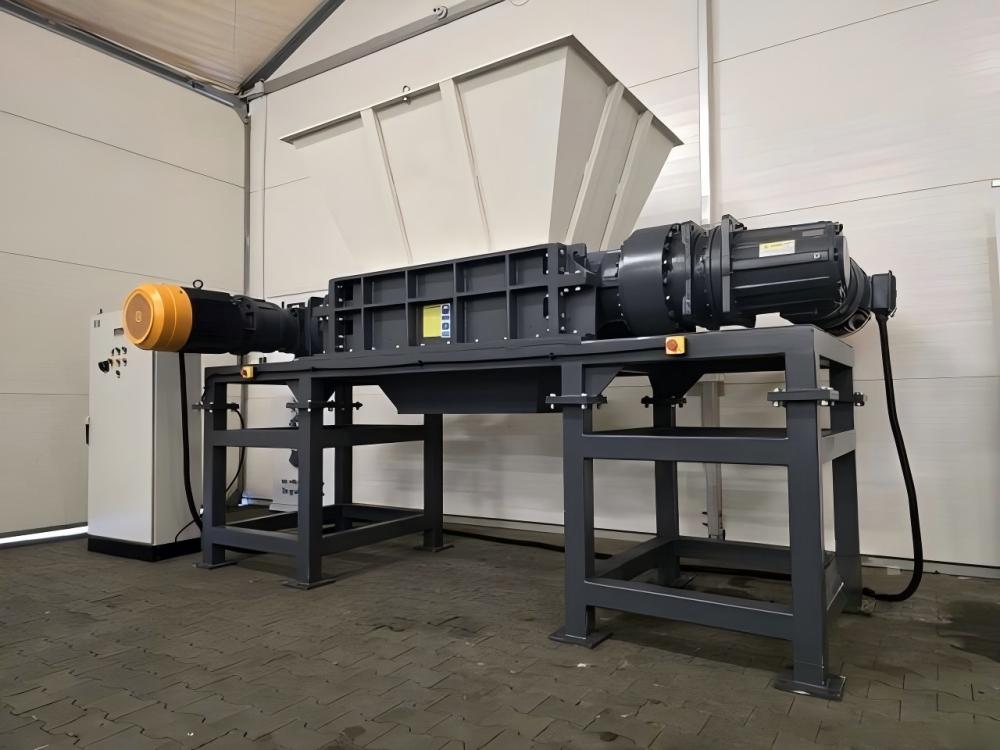
The primary difference is the output control. A twin-shaft shredder produces long, strip-like pieces determined by the blade width. A four-shaft shredder uses a screen to ensure the material is cut and recirculated until it reaches a specific, uniform size. Additionally, the four shafts provide better feeding for bulky, hollow items.
2. Can a four-shaft shredder process heavy steel beams?
Generally, no. Four-shaft shredders are designed for ‘light’ to ‘medium’ scrap, such as sheet metal, aluminum profiles, and electronic waste. Heavy structural steel beams require a dedicated scrap shear or a massive primary pre-shredder. Attempting to process heavy beams in a standard four-shaft model will likely damage the blades or shafts.
3. How often do the blades need to be sharpened?
Blade life depends entirely on the material being processed. For clean aluminum, blades may last for hundreds of hours. For abrasive materials or scrap with high dirt content, they may need attention every 80-100 hours. Many modern blades are designed to be ‘hard-faced’ (welded and ground) several times before needing full replacement.
4. Why is the auto-reverse function important?
Auto-reverse is a critical safety feature. When the control system detects a spike in motor current (indicating a jam or an unshreddable object), it automatically stops the shafts and rotates them in reverse for a few seconds. This clears the jam and allows the material to be repositioned or identified by the operator, preventing mechanical breakage.
5. Is a hydraulic drive better than an electric drive?
Hydraulic drives offer superior torque control and are more resilient to shock loads, making them excellent for very unpredictable scrap. However, they are more complex and require more maintenance. Electric drives are more energy-efficient and easier to maintain, making them the standard choice for most consistent scrap processing applications.
6. Can the screen size be changed?
Yes, most four-shaft shredders feature interchangeable screens. This allows the operator to switch between different output sizes (e.g., 20mm for fine recycling or 60mm for general volume reduction) depending on the current contract or material type. Changing the screen usually takes between 30 minutes and two hours depending on the machine size.












