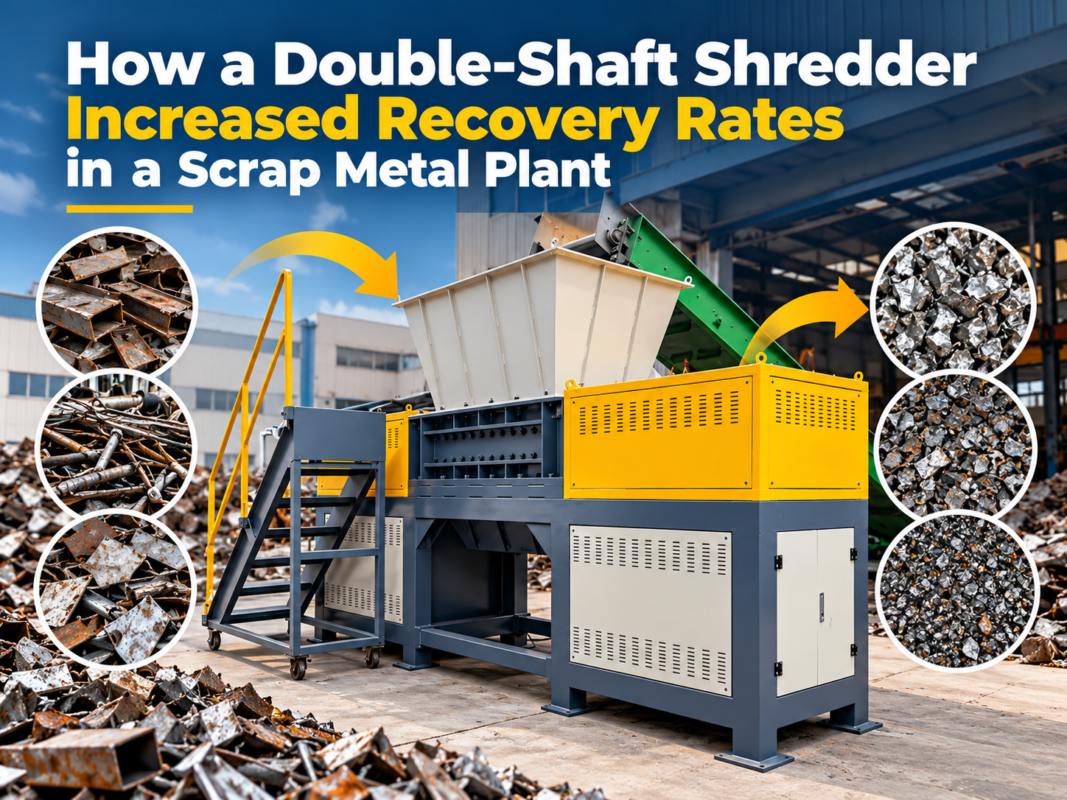
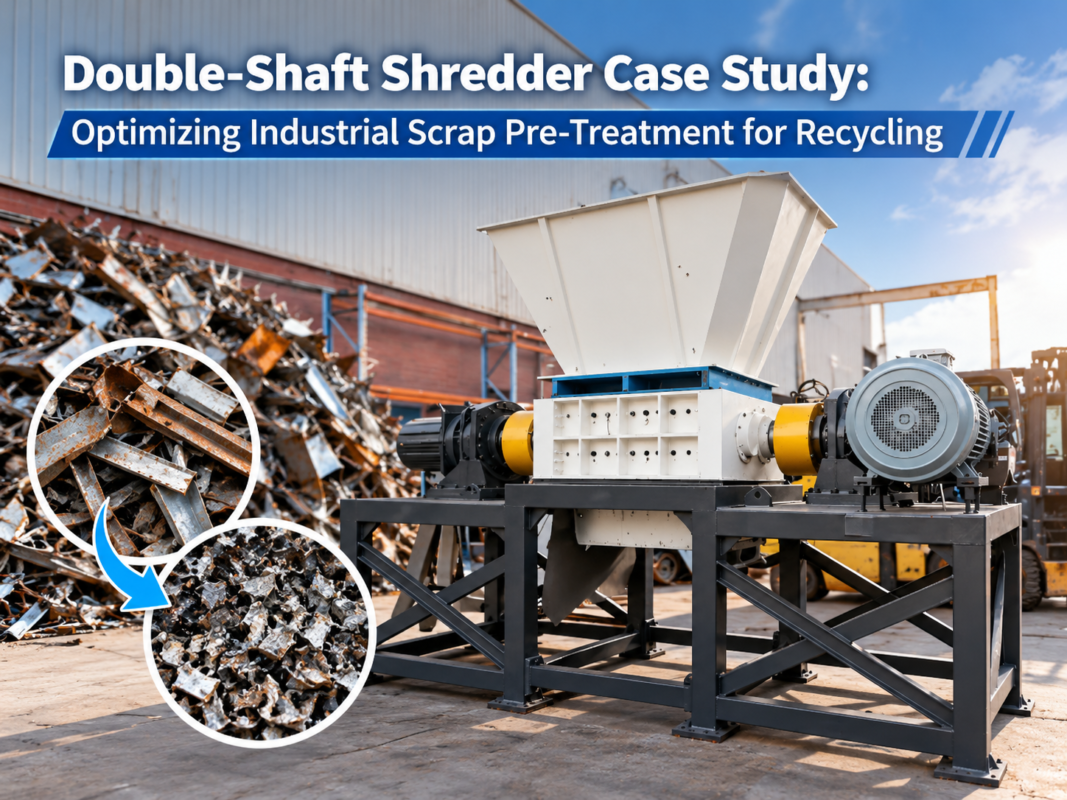
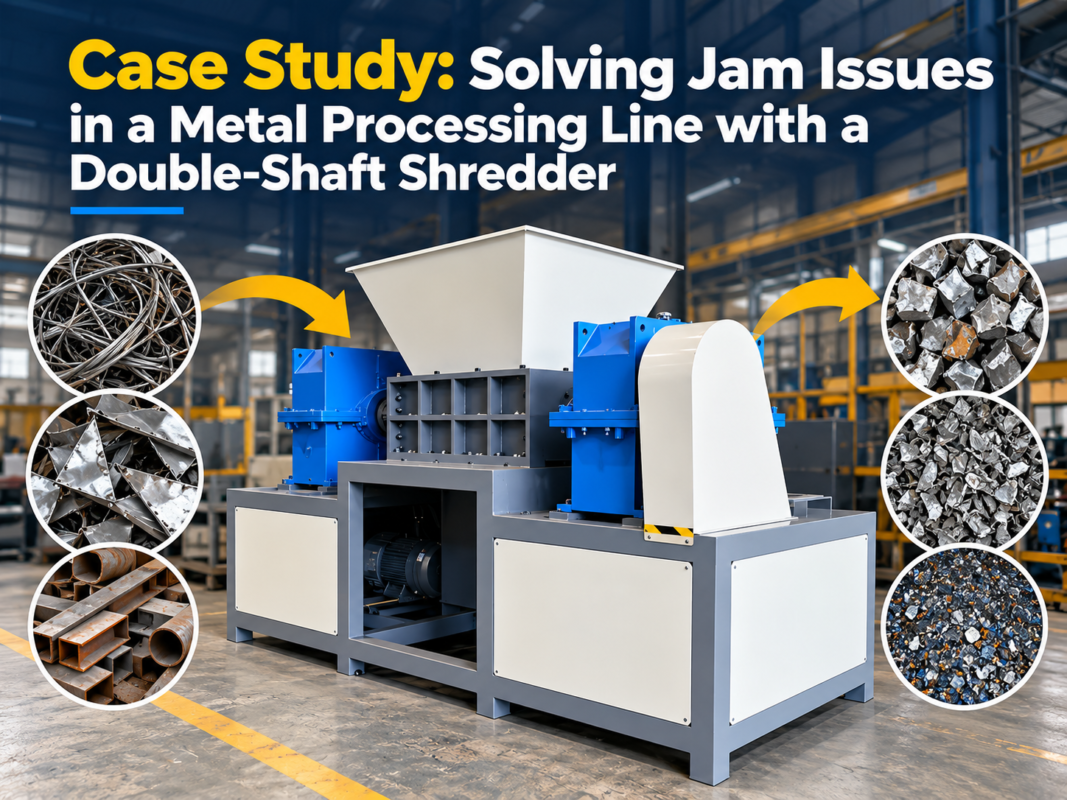
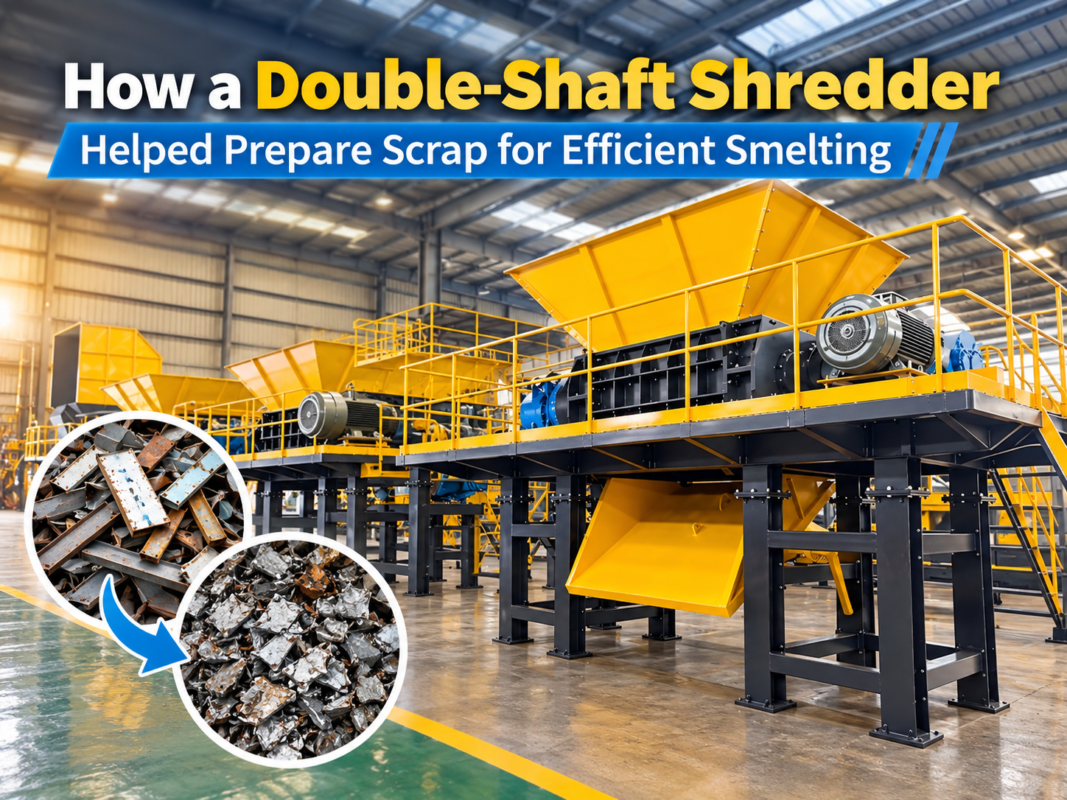
Double-Shaft Shredder Noise and Dust Control Solutions for Factory Environments

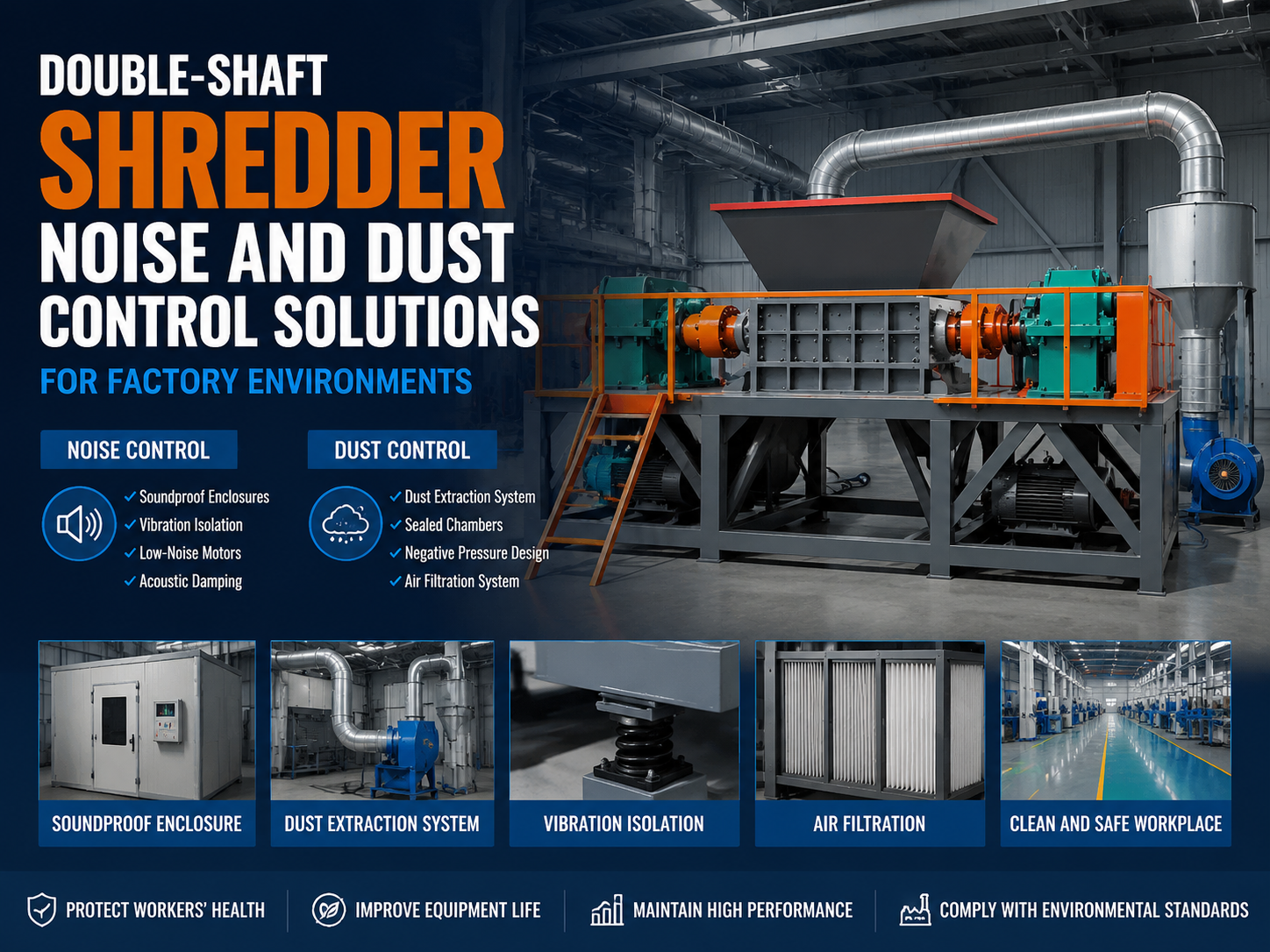
Technical Overview of Noise and Dust Challenges in Shredding Operations
In the modern industrial landscape, the double-shaft shredder stands as a cornerstone of waste management, recycling, and material size reduction. However, the very mechanics that make these machines effective—high-torque shearing, tearing, and crushing—are also the primary sources of environmental pollutants within a factory setting. Specifically, noise and airborne dust represent significant challenges to operational efficiency, worker health, and regulatory compliance. Implementing effective Double-Shaft Shredder Noise Dust Control Solutions Factory Environments is no longer an optional upgrade but a fundamental requirement for sustainable manufacturing.
Noise in double-shaft shredders is generated through several mechanisms. First, the mechanical interaction between the high-strength alloy blades and the processed material creates impact sounds. Second, the heavy-duty gearboxes and electric motors produce structural vibrations and high-frequency hums. Depending on the material—be it scrap metal, plastics, or electronic waste—the decibel levels can easily exceed 85-90 dB(A), which is the threshold for mandatory hearing protection in many jurisdictions. Without proper mitigation, prolonged exposure leads to operator fatigue and long-term auditory damage.
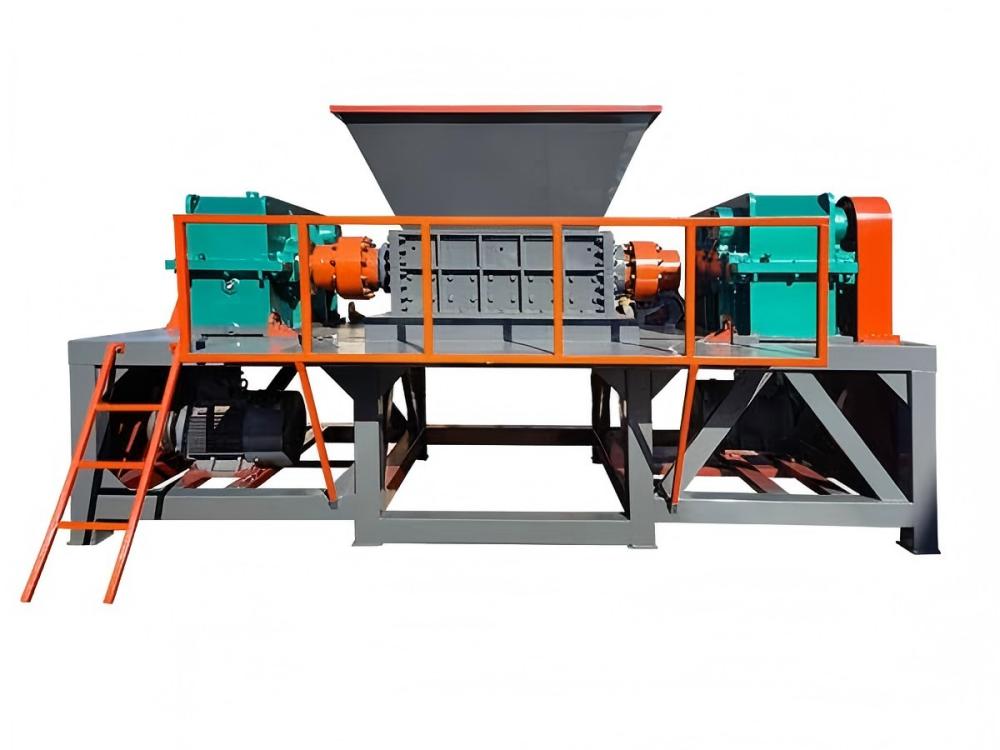
Dust generation is equally problematic. As the shafts rotate in opposite directions, they fracture the material, releasing fine particulates into the air. These particulates vary in size from large visible flakes to microscopic PM2.5 and PM10 particles. In a factory environment, these particles can settle on sensitive electronic components, causing premature equipment failure, or worse, pose a fire and explosion risk if the dust is combustible (such as aluminum or certain plastics). Furthermore, the inhalation of these particles poses severe respiratory risks to the workforce.
To address these issues, HARSLE emphasizes a holistic engineering approach. This involves source reduction (improving blade geometry), transmission path control (acoustic barriers), and receiver protection (ventilation and enclosures). By integrating these solutions directly into the factory layout, manufacturers can achieve a cleaner, quieter, and more productive workspace. The following sections detail the technical parameters and calculation methods required to design an effective control system.
Core Parameters for Noise and Dust Control
Designing a control system for a double-shaft shredder requires a deep dive into specific physical parameters. For noise control, the primary metric is the Sound Pressure Level (SPL), measured in decibels (dB). However, engineers must also consider the frequency spectrum. Low-frequency noise from heavy motors requires mass-loaded barriers, while high-frequency shearing noise can be managed with porous absorption materials. The goal is typically to reduce the ambient noise at the operator station to below 80 dB(A).
For dust control, the critical parameters include the Capture Velocity and the Air Exchange Rate. Capture velocity refers to the speed of air required at the shredder’s hopper or discharge point to ensure that dust particles are pulled into the extraction system rather than escaping into the factory air. For typical industrial shredding, a capture velocity of 0.5 to 1.0 meters per second (m/s) is standard. Additionally, the total volume of air moved (measured in Cubic Meters per Hour, m³/h) must be sufficient to create a slight negative pressure within the shredder housing.
Material characteristics also dictate parameter selection. Brittle materials like glass or hard plastics generate more fine dust, requiring higher-efficiency filtration (such as HEPA or PTFE-coated bags). Conversely, ductile materials like rubber generate less dust but may produce more frictional heat, necessitating temperature monitoring within the dust collection ducts to prevent melting or smoldering. Understanding these variables allows for the customization of Double-Shaft Shredder Noise Dust Control Solutions Factory Environments to the specific application.
Calculation Method for Extraction and Attenuation
To ensure the effectiveness of a dust extraction system, engineers use the following basic formula for required airflow (Q):
Q = V × A × 3600
Where Q is the airflow in m³/h, V is the required capture velocity (m/s), and A is the open area of the shredder’s intake or discharge (m²). For example, if a shredder has a hopper opening of 1.5 m² and requires a capture velocity of 0.8 m/s to contain fine plastic dust, the required airflow would be 4,320 m³/h. It is vital to add a safety factor of 15-20% to account for duct friction and filter resistance over time.
Noise attenuation calculations are more complex, often involving the Inverse Square Law for distance and the Transmission Loss (TL) of enclosure materials. The total noise at a distance r from the source can be estimated as:
Lp2 = Lp1 – 20 log(r2/r1)
When adding an acoustic enclosure, the resulting noise level is L_total = L_source – TL + 10 log(S/A), where S is the surface area of the enclosure and A is the equivalent absorption area inside. Selecting a material with a high Sound Transmission Class (STC) rating is essential for achieving significant decibel drops.
Furthermore, vibration isolation must be calculated to prevent structural noise. The isolation efficiency is determined by the ratio of the shredder’s operating frequency to the natural frequency of the isolation mounts. A ratio of at least 3:1 is recommended to achieve over 90% vibration isolation. This prevents the floor of the factory from acting as a giant sounding board, which is a common oversight in many installations.
Technical Parameter Table
| Parameter Description | Small-Scale Shredder (15-30kW) | Medium-Scale Shredder (45-90kW) | Large-Scale Shredder (110kW+) |
|---|---|---|---|
| Target Noise Level (with Enclosure) | < 75 dB(A) | < 78 dB(A) | < 82 dB(A) |
| Required Capture Velocity | 0.5 – 0.7 m/s | 0.7 – 0.9 m/s | 1.0 – 1.2 m/s |
| Dust Extraction Airflow (m³/h) | 2,000 – 3,500 | 5,000 – 8,500 | 12,000+ |
| Filter Media Type | Polyester Needle Felt | PTFE Membrane | Antistatic / Flame Retardant |
| Acoustic Panel Thickness | 50 mm | 80 mm | 100 mm+ |
| Vibration Isolation Type | Rubber Mounts | Spring Isolators | Inertia Base + Springs |
Common Engineering Mistakes in Control Implementation
One of the most frequent mistakes in implementing Double-Shaft Shredder Noise Dust Control Solutions Factory Environments is the use of inadequate ducting geometry. Sharp 90-degree elbows and T-junctions create turbulence and significant pressure drops, which drastically reduce the effective suction at the shredder. Engineers should always use long-radius elbows and 45-degree entries to maintain laminar flow and ensure that dust does not settle and clog the pipes, which can lead to fire hazards.
Another common error is neglecting the “Make-up Air” requirement. If a high-powered dust collector is pulling 10,000 m³/h out of a small, sealed room, it creates a vacuum. This makes doors hard to open and, more importantly, reduces the fan’s efficiency because it is fighting against the negative pressure. A balanced HVAC system that provides filtered make-up air is essential for the long-term performance of the dust control system.
In terms of noise, many factories install acoustic walls but leave “flanking paths”—small gaps under doors, unsealed cable penetrations, or shared ventilation ducts. Sound behaves like water; it will leak through the smallest opening. A 1% gap in an acoustic enclosure can reduce its effectiveness by up to 50%. Furthermore, failing to account for motor cooling inside an acoustic enclosure can lead to overheating. Every enclosure must include silencers (attenuators) that allow airflow for cooling while trapping sound waves.
Selection Checklist for Noise and Dust Control Systems
- Material Compatibility: Does the dust extraction system handle the specific density and abrasiveness of your material?
- Regulatory Compliance: Does the solution meet OSHA, CE, or local environmental standards for dB levels and PM emissions?
- Maintenance Accessibility: Can the blades be changed and the machine serviced without dismantling the entire acoustic enclosure?
- Explosion Protection: If shredding combustible materials, are the dust collectors equipped with explosion vents and spark detection?
- Energy Efficiency: Does the system use Variable Frequency Drives (VFDs) to adjust fan speed based on actual shredder load?
- Seal Quality: Are the gaskets on the shredder housing and the enclosure doors made of high-durability, oil-resistant polymers?
- Integrated Monitoring: Does the PLC system include sensors for filter pressure drop and ambient noise levels?
Frequently Asked Questions (FAQ)
1. How often should I change the filters in my shredder’s dust extraction system?
Filter life depends on the material being shredded and the volume of dust. Typically, filters should be inspected monthly. Most modern systems use a differential pressure gauge; when the pressure drop across the filters exceeds a certain limit (usually 1000-1500 Pa), it is time to pulse-clean or replace the cartridges. Using PTFE-coated filters can significantly extend life in sticky or humid applications.
2. Can I use a water misting system instead of dry dust extraction?
Water misting is effective for suppressing heavy dust at the source, but it has drawbacks. It can make the shredded material wet, which might interfere with downstream separation processes (like optical sorters or eddy current separators). Additionally, wet dust can cake on the shredder blades and inside the housing, leading to corrosion and increased maintenance. Dry extraction is generally preferred for indoor factory environments.
3. What is the best material for an acoustic enclosure?
The most effective enclosures use a “sandwich” construction: an outer layer of 1.5mm-2mm galvanized steel for mass, a middle layer of high-density rock wool (80-100kg/m³) for absorption, and an inner layer of perforated metal to allow sound waves to enter the insulation rather than bouncing back. This combination addresses both sound transmission and reverberation.
4. Does noise control affect the shredder’s performance?
If designed correctly, noise control should not affect the shredding capacity. However, it can affect thermal management. Because enclosures trap heat, it is critical to ensure the shredder’s hydraulic power unit (HPU) or electric motors have adequate cooling air. HARSLE designs integrated solutions where the cooling airflow is part of the acoustic silencer path.
5. How do I measure if my dust control is actually working?
Beyond visual inspection, you should use a handheld laser particle counter to measure PM2.5 and PM10 levels at the operator’s breathing zone. Comparing these readings when the machine is off versus when it is running will give you a clear indication of the system’s capture efficiency. For noise, a calibrated Type 2 sound level meter should be used to perform a 360-degree noise map around the equipment.