Comprehensive Gantry Shear Buying Guide for Metal Fabrication and Steel Processing

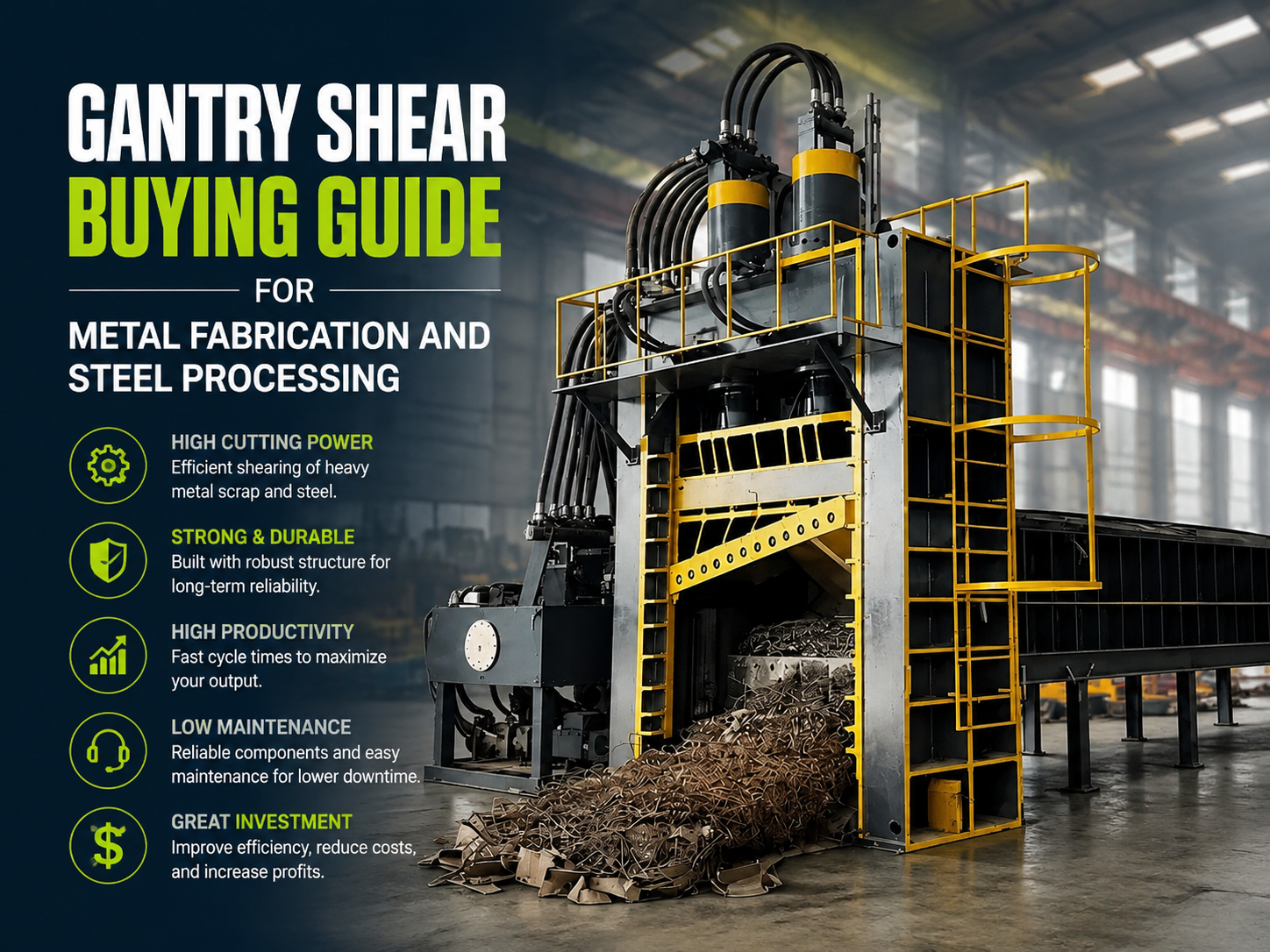
Introduction to Gantry Shear Buying for Metal Fabrication and Steel Processing
In the heavy-duty world of metal recycling and industrial steel processing, the gantry shear stands as a titan of efficiency. For facilities dealing with high volumes of scrap metal, structural steel, or decommissioned machinery, selecting the right equipment is not just a matter of preference—it is a critical business decision that impacts throughput, operational costs, and safety. This Gantry Shear Buying Guide for Metal Fabrication and Steel Processing is designed to provide engineers, facility managers, and business owners with the technical depth required to make an informed investment.
HARSLE has long been at the forefront of manufacturing robust hydraulic machinery, and our gantry shears are engineered to meet the rigorous demands of modern steel mills and scrap yards. Unlike smaller alligator shears, gantry shears offer the force and automation necessary to process large-scale materials continuously. Whether you are cutting heavy I-beams, ship plates, or automotive scrap, understanding the nuances of hydraulic pressure, blade geometry, and feeding mechanisms is essential for optimizing your production line.
Technical Overview: The Anatomy of a Gantry Shear
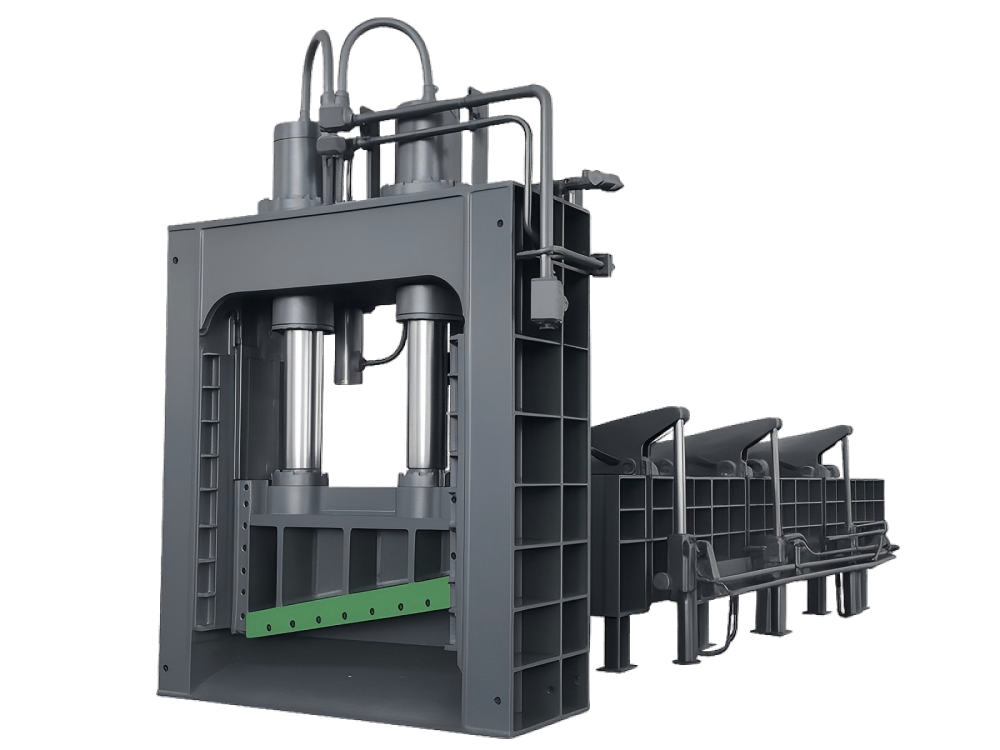
A gantry shear, often referred to as a heavy-duty hydraulic scrap shear, operates on a vertical cutting principle. The machine consists of a massive frame (the gantry), a hydraulic power unit, a feeding box, and a cutting head. The primary advantage of the gantry design is its stability and the ability to apply immense downward pressure evenly across the blade surface. This allows for the processing of thicker and harder materials than swing-arm or alligator-style shears.
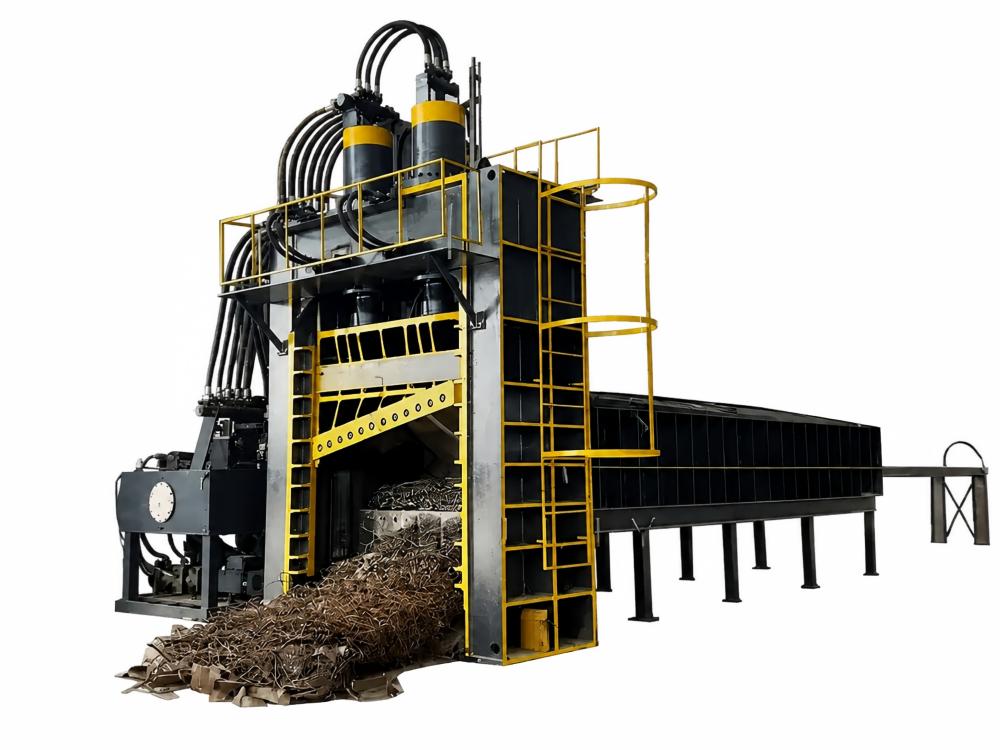
The hydraulic system is the heart of the machine. High-quality gantry shears utilize variable displacement axial piston pumps and sophisticated valve blocks to manage oil flow. This ensures that the machine can provide high speed during the idle stroke and maximum force during the actual cutting phase. Furthermore, modern gantry shears are equipped with PLC (Programmable Logic Controller) systems, allowing for automated feeding and cutting cycles, which significantly reduces the need for manual intervention and increases safety.
The feeding mechanism is another critical component. Most industrial gantry shears feature a large hopper or feeding box equipped with a hydraulic pusher. This pusher moves the scrap toward the blades in increments. Some advanced models also include a side-compression lid, which pre-compacts bulky scrap before it reaches the shear, ensuring a cleaner cut and preventing material jams. This multi-stage processing is what makes the gantry shear indispensable for large-scale steel processing operations.
Core Parameters to Consider
When evaluating a gantry shear for your metal fabrication or steel processing facility, several core parameters dictate the machine’s capability and suitability for your specific application. Understanding these metrics is the first step in the Gantry Shear Buying Metal Fabrication Steel Processing journey.
- Shear Force (Tonnage): This is the most vital specification. It represents the maximum pressure the hydraulic cylinder can exert on the material. Common industrial sizes range from 400 tons to over 1600 tons. For standard structural steel, a 600-800 ton machine is often sufficient, while heavy ship-breaking or thick plate processing requires 1000+ tons.
- Blade Length: The width of the cutting area determines the maximum size of the material that can be fed into the machine without pre-cutting. Blade lengths typically range from 800mm to 2000mm.
- Cutting Frequency: Measured in cuts per minute (CPM). This indicates the speed of the machine. While higher CPM increases productivity, it also requires more robust cooling systems to manage hydraulic oil temperature.
- Feeding Box Dimensions: The length, width, and depth of the feeding box determine the volume of scrap the machine can handle per cycle. A larger box reduces the need for pre-processing scrap with torches or smaller shears.
- Motor Power: The total kilowatt (kW) rating of the electric motors driving the hydraulic pumps. Higher power ratings generally correlate with faster cycle times and higher pressure capabilities.
Beyond these, one must consider the “Throat Depth” and the “Maximum Opening Height.” These dimensions limit the physical size of the scrap sections. If you are processing large pipes or thick beams, a higher opening height is mandatory to avoid material getting stuck before the cut begins.
Calculation Method: Determining Required Shear Force
To ensure you don’t under-specify your machine, you must calculate the required shear force based on the toughest material you intend to process. The theoretical shear force (F) can be estimated using the following formula:
F = L × S × τ × K
Where:
- L: Length of the cut (mm) – usually the width of the material or the blade.
- S: Thickness of the material (mm).
- τ (Tau): Shear strength of the material (N/mm²). For common structural steel (A36/Q235), this is approximately 350-400 N/mm². For stainless steel, it can be significantly higher.
- K: A safety and friction factor (typically 1.2 to 1.4) to account for blade dullness and mechanical losses.
For example, if you are cutting a steel plate that is 1000mm wide and 40mm thick with a shear strength of 400 N/mm²:
F = 1000 × 40 × 400 × 1.3 = 20,800,000 Newtons.
Converting this to metric tons (1 ton ≈ 9806 Newtons):
20,800,000 / 9806 ≈ 2121 Tons.
In this scenario, a 2000-ton shear would be the minimum requirement. However, in scrap processing, we rarely cut a solid plate of that width and thickness simultaneously. Most scrap is irregular. Therefore, manufacturers provide “Shear Capacity” charts that translate tonnage into practical shapes like round bars, square bars, and I-beams.
Gantry Shear Parameter Table (Standard Models)
The following table provides a general overview of standard HARSLE gantry shear specifications to assist in your initial selection process.
| Model Series | Shear Force (Tons) | Blade Length (mm) | Max Opening (mm) | Motor Power (kW) | Cycle Time (s) |
|---|---|---|---|---|---|
| HGS-400 | 400 | 1000 | 600 | 45 | 15-25 |
| HGS-600 | 600 | 1200 | 700 | 75 | 18-30 |
| HGS-800 | 800 | 1400 | 800 | 110 | 20-35 |
| HGS-1000 | 1000 | 1600 | 900 | 150 | 25-40 |
| HGS-1250 | 1250 | 1800 | 1000 | 185 | 30-45 |
| HGS-1600 | 1600 | 2000 | 1100 | 220 | 35-55 |
Note: Specifications may vary based on custom configurations, hydraulic pump selections, and material density requirements. Always consult with a HARSLE technical engineer for precise model matching.
Common Engineering Mistakes in Gantry Shear Selection
Even experienced procurement officers can fall into traps when purchasing heavy machinery. Avoiding these common mistakes will save your operation from downtime and excessive maintenance costs.
1. Undersizing the Tonnage: The most frequent mistake is buying a machine based on “average” scrap thickness rather than “peak” thickness. If your shear constantly operates at its relief valve pressure to break through tough sections, the hydraulic seals will fail prematurely, and the frame may suffer fatigue cracking. Always aim for a 20% buffer above your maximum expected requirement.
2. Ignoring the Cooling System: Gantry shears generate significant heat due to the high-pressure hydraulic cycles. In warmer climates or high-shift environments, a standard air-cooled heat exchanger might not be enough. Failing to invest in an industrial-grade water-cooling system or an oversized oil chiller can lead to oil thinning, which causes pump cavitation and loss of shearing force.
3. Neglecting Foundation Requirements: A 1000-ton gantry shear is not a “plug-and-play” machine. It exerts massive dynamic loads on the ground. Many buyers fail to prepare a reinforced concrete foundation according to the manufacturer’s blueprints. A weak foundation leads to machine misalignment, which ruins the blade clearance and can eventually snap the main gantry bolts.
4. Overlooking Blade Quality and Clearance: Not all blades are created equal. Using low-quality tool steel for blades in a high-volume steel processing environment will result in frequent sharpening stops. Furthermore, failing to maintain the correct blade gap (clearance) based on material thickness will result in “tearing” rather than “shearing,” which puts unnecessary lateral stress on the cylinder guides.
Selection Checklist for Metal Fabrication Professionals
Before finalizing your purchase, use this checklist to ensure the equipment aligns with your operational goals:
- Material Analysis: What is the primary material? (e.g., HMS 1/2, plate and structural, or stainless). Stainless steel requires higher tonnage and specialized blade alloys.
- Volume Requirements: How many tons per hour do you need to process? This determines the motor power and the automation level of the feeding box.
- Space Constraints: Does the facility have enough room for the machine, the feeding area, and the discharge conveyor? Remember to account for maintenance access around the hydraulic power unit.
- Power Supply: Does your facility have the electrical infrastructure to support 100kW+ motors? You may need to upgrade your transformers or capacitors to handle the startup current.
- Automation Level: Do you need a remote-controlled operation? HARSLE offers PLC-integrated systems that allow a single crane operator to manage the entire shearing process from the cab.
- After-Sales Support: Does the manufacturer provide local or rapid-response technical support? Availability of wear parts like seals, blades, and filters is crucial for minimizing downtime.
Frequently Asked Questions (FAQ)
How often should gantry shear blades be sharpened?
Blade life depends entirely on the material being processed. For clean structural steel, blades may last 200-400 hours before needing a rotation or grind. For sandy or contaminated scrap, this interval may drop. Most HARSLE blades are four-sided, meaning you can rotate them three times before requiring a professional regrind.
Can a gantry shear be used for non-ferrous metals?
Yes, gantry shears are excellent for processing large volumes of aluminum extrusions, copper busbars, and heavy brass. However, because non-ferrous metals are softer, the blade clearance must be adjusted to prevent the material from “folding” between the blades rather than cutting.
What type of hydraulic oil is recommended?
We typically recommend high-quality anti-wear hydraulic oil (ISO VG 46 or 68, depending on the ambient temperature). Maintaining oil cleanliness through regular filter changes is the single most important factor in extending the life of the hydraulic pumps and valves.
Is a gantry shear better than a shredder?
They serve different purposes. A shredder is better for thin, mixed scrap (like cars) to produce “proler” scrap. A gantry shear is superior for heavy structural steel and plates where the goal is to produce “clean cut” pieces for foundry charging. Shears also have much lower power consumption and maintenance costs per ton compared to shredders.
What is the typical lead time for a HARSLE gantry shear?
Standard models usually have a lead time of 45-60 days, while custom-engineered solutions with specific feeding box sizes or increased tonnage may take 90 days. We recommend planning your facility upgrades at least six months in advance to account for shipping and foundation preparation.
Conclusion
Investing in a gantry shear is a transformative step for any metal fabrication or steel processing business. By focusing on the technical parameters, calculating your force requirements accurately, and avoiding common procurement pitfalls, you ensure a high return on investment and a safer working environment. HARSLE remains committed to providing the industry with high-performance, durable shearing solutions that stand the test of time. For a personalized consultation and a detailed quote tailored to your specific scrap processing needs, contact our engineering team today.