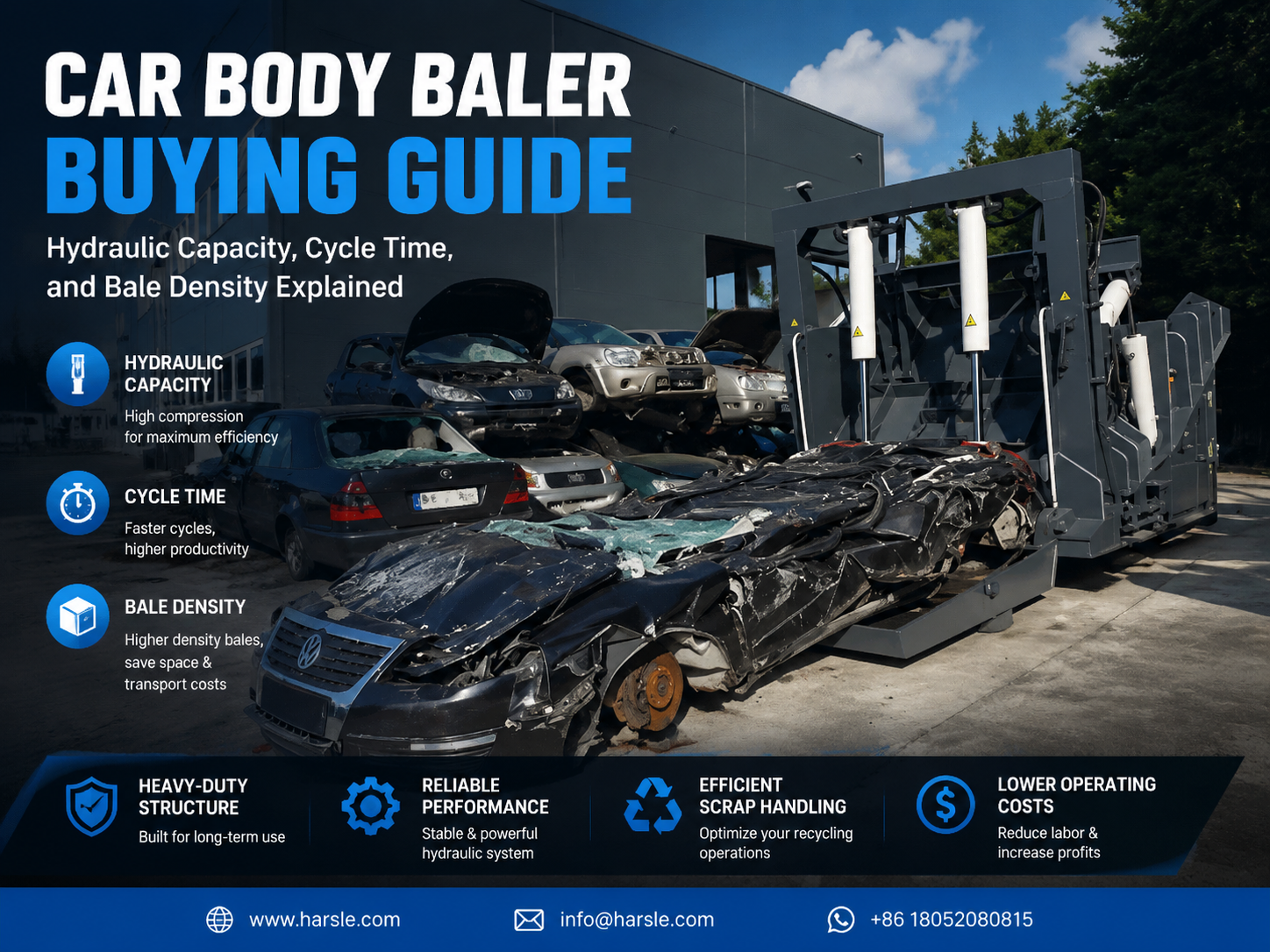
Car Body Baler Buying Guide: Hydraulic Capacity, Cycle Time, and Bale Density Explained

Technical Overview of Modern Car Body Balers
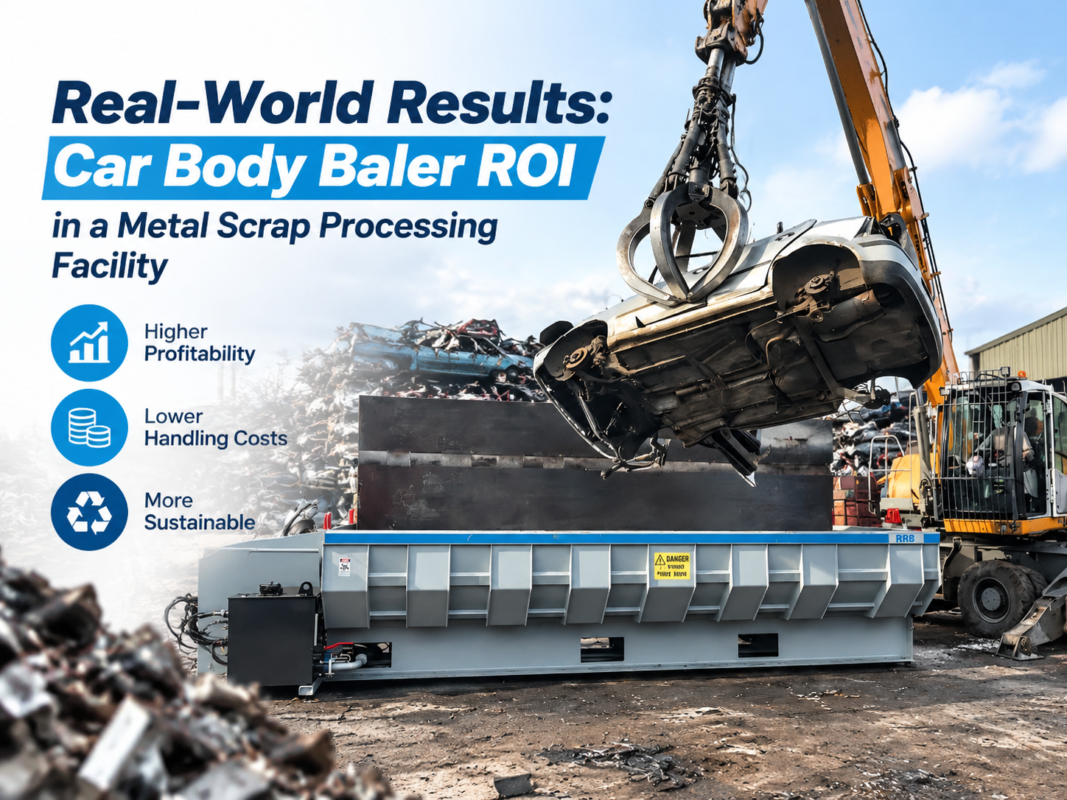
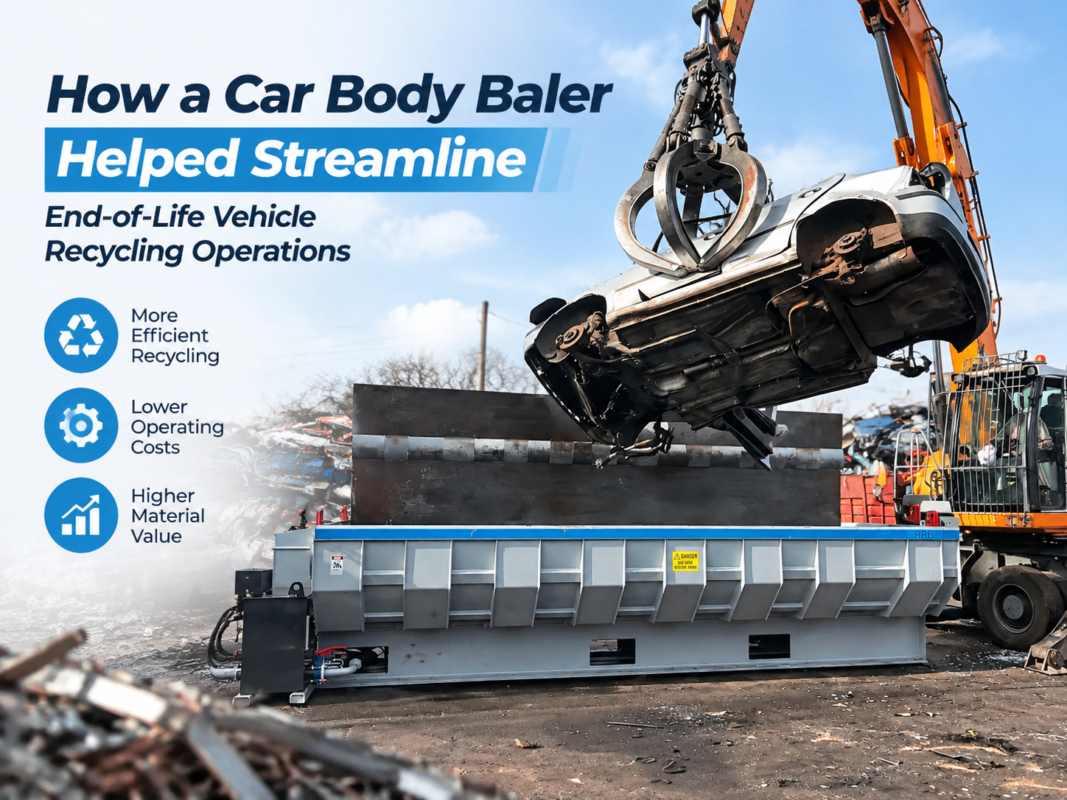
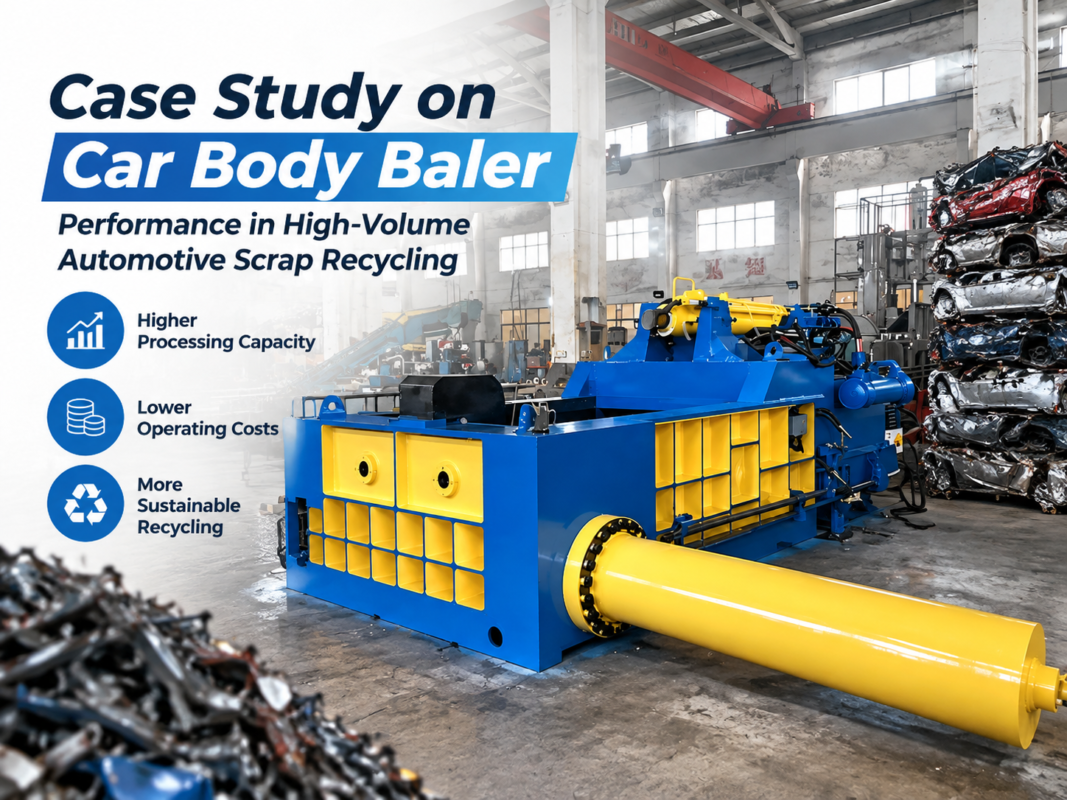
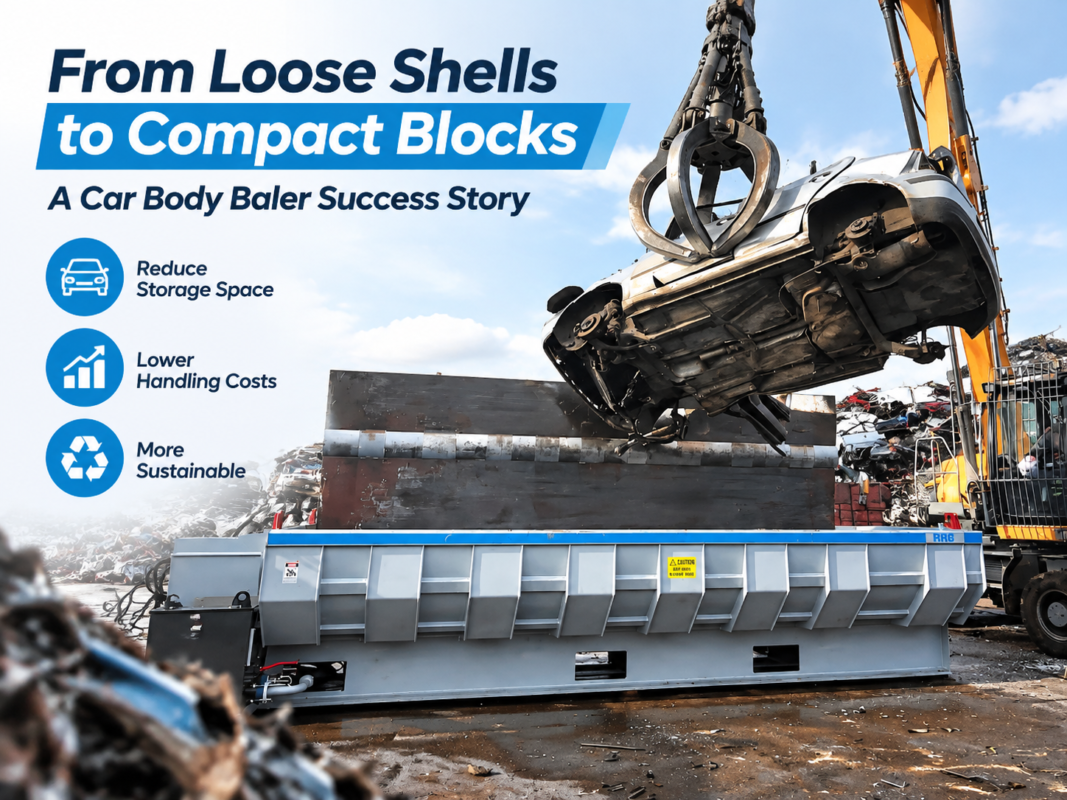
In the high-stakes world of scrap metal recycling, the car body baler stands as a cornerstone of operational efficiency. These machines are engineered to transform End-of-Life Vehicles (ELVs) into dense, manageable cubes or ‘logs’ that are optimized for transport and smelting. Unlike standard scrap shears or small-scale balers, a car body baler must handle the structural complexity of an entire vehicle frame, including high-strength steels, engine mounts, and various alloys. Understanding the technical nuances of these machines is critical for any scrap yard operator looking to maximize their Return on Investment (ROI).
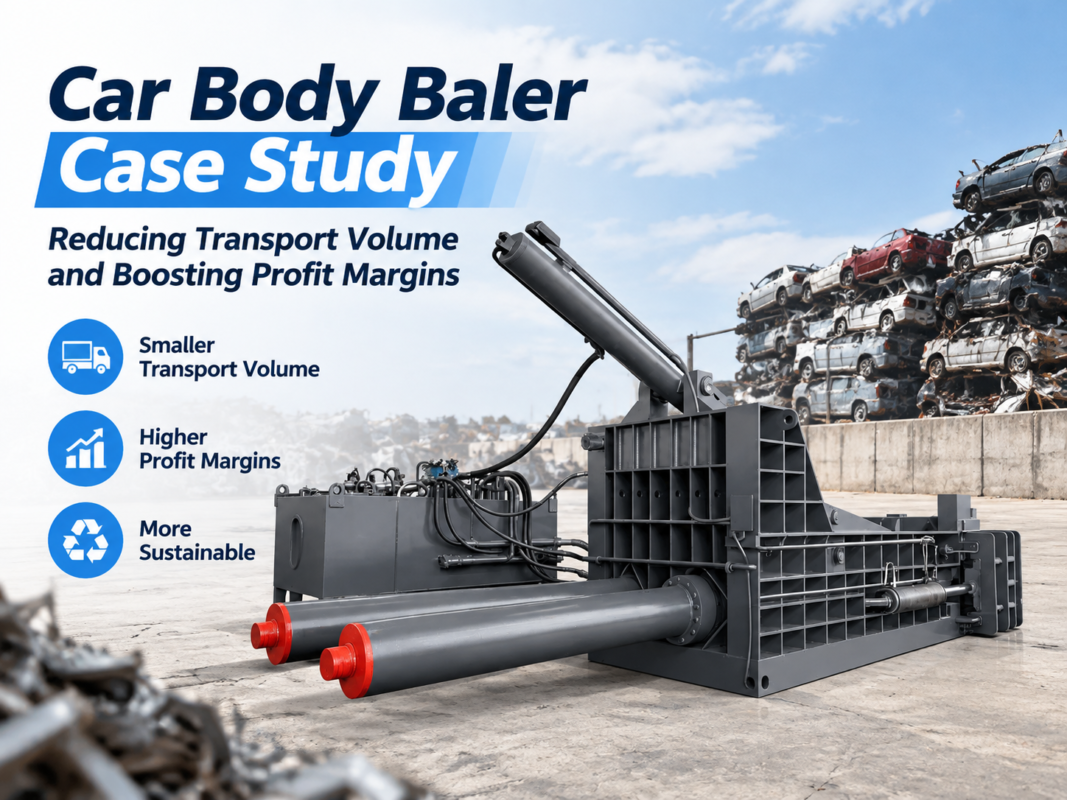
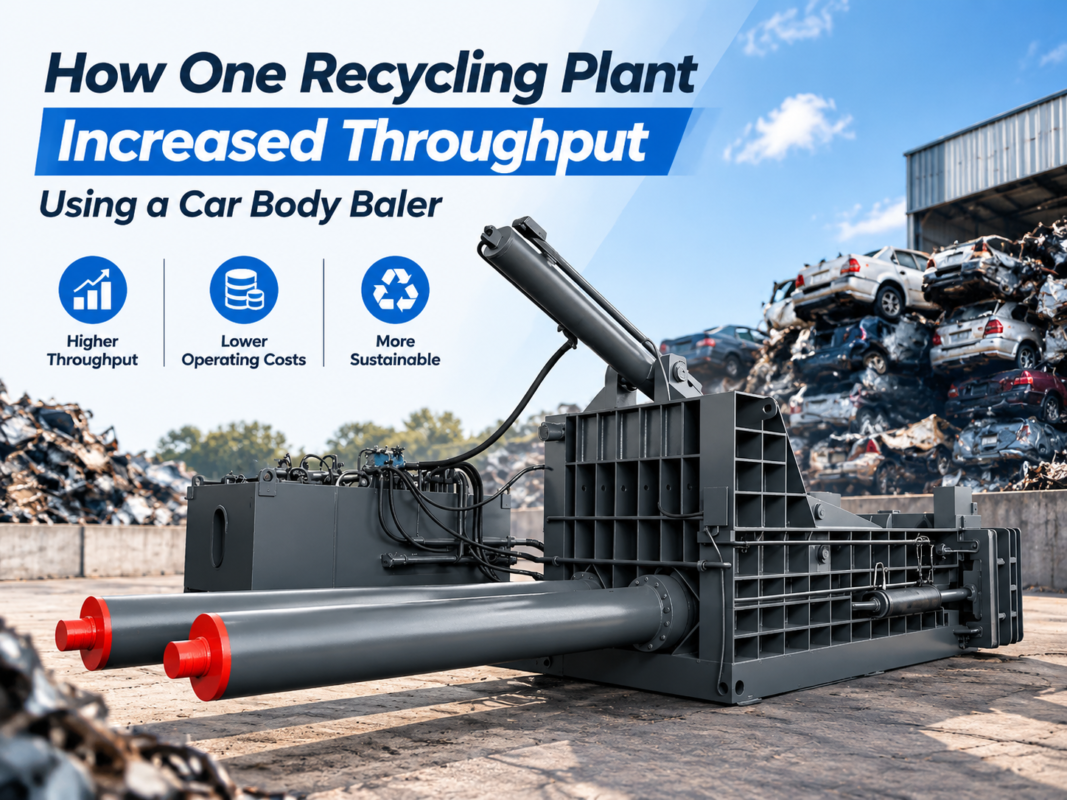
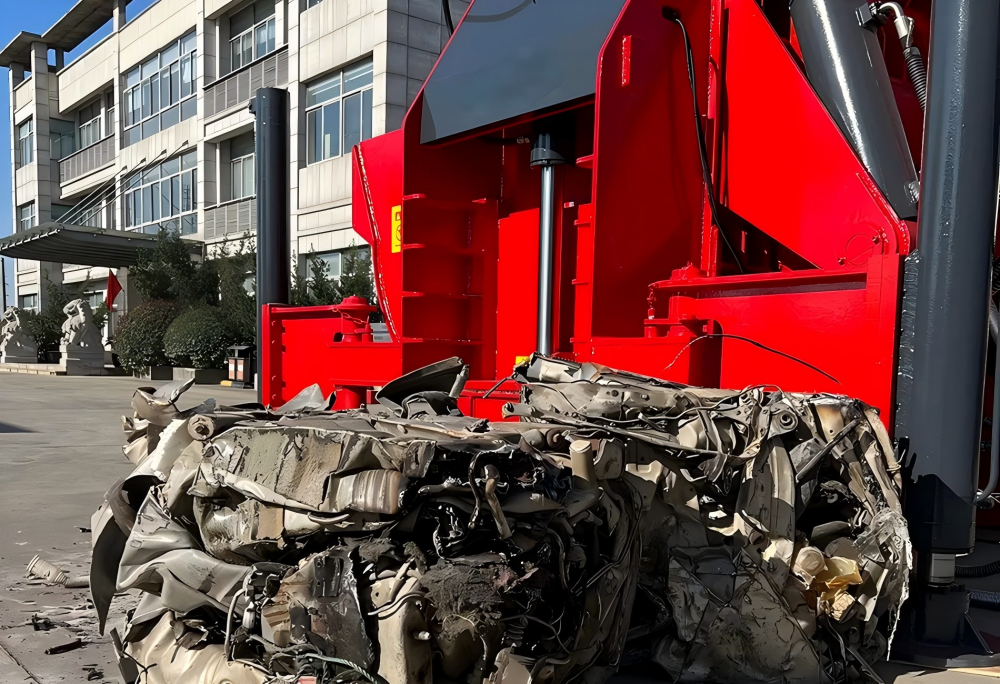
At its core, a car body baler utilizes a sophisticated hydraulic system to exert massive amounts of force across multiple axes. Most modern units, such as those manufactured by HARSLE, utilize a triple-compression system. This involves a pre-compression lid or ‘wing’ that crushes the car vertically, followed by a longitudinal ram that compresses the material into a bale, and often a side-squeeze mechanism to ensure uniform density. The synergy between these components determines the machine’s throughput and the quality of the final product.
The evolution of these machines has moved from simple mechanical crushers to high-tech hydraulic powerhouses. Today’s balers feature PLC (Programmable Logic Controller) systems that monitor pressure, temperature, and cycle progress in real-time. This level of automation ensures that the machine operates within its safety margins while maintaining peak performance. For a buyer, the technical overview is not just about the size of the machine, but how the hydraulic circuit manages energy and force to achieve the desired output.
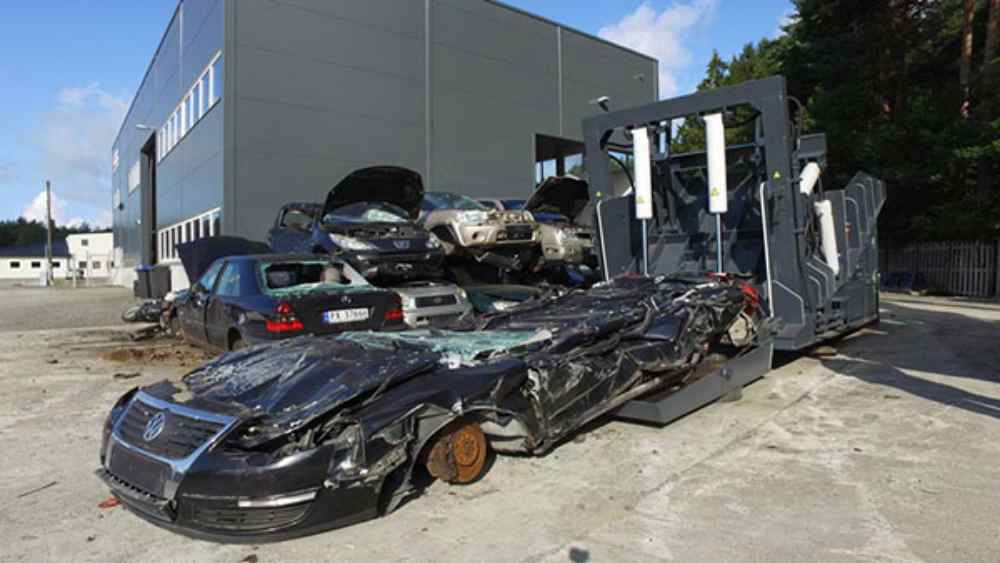
Furthermore, the structural integrity of the baler’s frame is paramount. Because the machine is subjected to repetitive, high-intensity stress cycles, the quality of the steel used in the chamber and the welding techniques employed are vital. HARSLE utilizes high-tensile, wear-resistant plates (such as Hardox or equivalent) to line the compression chambers, ensuring that the abrasive nature of scrap metal does not prematurely degrade the equipment. This technical foundation is what allows a baler to run for thousands of hours with minimal downtime.
Core Parameters: Hydraulic Capacity, Cycle Time, and Bale Density
Hydraulic Capacity: The Engine of Compression
Hydraulic capacity is often the first specification a buyer looks at, but it is frequently misunderstood. It refers to the total force the machine can exert, typically measured in tons or kilonewtons (kN). However, the true measure of a baler’s capability lies in its system pressure (PSI or Bar) and the bore size of its cylinders. A machine with a 200-ton main ram might seem powerful, but if the hydraulic system is inefficient, that force may not be applied effectively during the final stages of compression.
When evaluating hydraulic capacity, it is essential to distinguish between the ‘nominal force’ and the ‘effective force.’ The nominal force is the theoretical maximum, while the effective force is what is actually delivered to the scrap metal. High-quality balers use variable displacement pumps that adjust flow and pressure dynamically. This means the machine can move the rams quickly when resistance is low and switch to high-pressure, low-flow mode when the material becomes highly compacted. This adaptability is what separates professional-grade machinery from entry-level models.
Cycle Time: Measuring Operational Throughput
Cycle time is the duration it takes for the machine to complete one full baling sequence—from the moment the lid starts to close until the finished bale is ejected and the rams return to their starting positions. In a high-volume scrap yard, every second counts. A cycle time of 60 seconds versus 90 seconds can mean the difference between processing 40 cars a day or 60 cars a day. This directly impacts the labor cost per ton of processed scrap.
Several factors influence cycle time, including the pump’s flow rate (measured in gallons or liters per minute), the diameter of the hydraulic lines, and the efficiency of the valve manifold. Faster cycle times require more robust cooling systems, as the rapid movement of hydraulic fluid generates significant heat. Buyers must ensure that a machine advertised with a fast cycle time also includes a high-capacity oil cooler to prevent overheating during multi-shift operations. HARSLE designs its hydraulic circuits to minimize friction and turbulence, which helps in maintaining consistent cycle times even under heavy loads.
Bale Density: The Key to Logistical Profitability
Bale density is perhaps the most critical parameter for long-distance transport. It is the weight of the material per unit of volume (e.g., lbs/ft³ or kg/m³). Steel mills and foundries often have strict requirements for bale density to ensure efficient melting. More importantly, higher density allows you to maximize the weight capacity of your shipping containers or flatbed trailers. If your bales are too light, you are essentially paying to ship air, which eats into your profit margins.
Achieving high bale density requires a combination of high hydraulic pressure and a well-designed compression chamber. The goal is to eliminate as much void space as possible within the car body. A standard high-density car bale should ideally reach between 45 and 60 lbs/ft³. Achieving this consistently requires the baler to maintain peak pressure at the end of the stroke, ensuring the ‘spring-back’ of the metal is minimized once the pressure is released. This is where the ‘hold time’ at the end of the cycle becomes a technical detail worth investigating.
Calculation Method: Understanding the Math Behind the Machine
To make an informed purchase, you should be able to verify the manufacturer’s claims through basic engineering calculations. The most fundamental calculation is for Hydraulic Force (F). The formula is F = P × A, where P is the hydraulic pressure and A is the cross-sectional area of the cylinder piston. If a manufacturer claims a 250-ton force but uses small cylinders with standard pressure, the math might not add up. Always ask for the cylinder bore diameter and the maximum operating pressure of the pump.
Another vital calculation is Bale Density (D). You can calculate this by taking the average weight of the vehicles you process and dividing it by the volume of the finished bale. D = Mass / (Length × Width × Height). For example, if a 3,000 lb car is compressed into a bale measuring 40″ x 24″ x 20″ (approx. 11.1 cubic feet), the density is roughly 270 lbs/ft³. Note that this is an extremely high density usually reserved for industrial balers; standard car logs are often larger and less dense. Knowing your target density helps you determine the necessary chamber size and ram force.
Finally, consider the Power Requirement. The horsepower (HP) or kilowatts (kW) required to drive the hydraulic pumps is a major operational cost. The formula for hydraulic horsepower is HP = (Flow in GPM × Pressure in PSI) / 1714. By understanding this, you can evaluate whether your facility’s electrical grid can support the machine or if you need to invest in a diesel-powered unit. High-efficiency motors and VFD (Variable Frequency Drive) technology can significantly reduce energy consumption by only drawing power when the rams are actually moving.
Comparative Parameter Table for Car Body Balers
The following table provides a general comparison of different classes of car body balers to help you identify which category fits your scrap yard’s volume.
| Feature | Entry-Level (Portable) | Mid-Range (Stationary) | High-Production (Heavy Duty) |
|---|---|---|---|
| Main Ram Force | 120 – 150 Tons | 160 – 220 Tons | 250+ Tons |
| Cycle Time | 100 – 120 Seconds | 70 – 90 Seconds | 45 – 60 Seconds |
| Bale Size (Typical) | 40″ x 24″ x Variable | 40″ x 26″ x Variable | 40″ x 30″ x Variable |
| Average Density | 25 – 35 lbs/ft³ | 35 – 50 lbs/ft³ | 50 – 65 lbs/ft³ |
| Power Source | Diesel / 45kW Electric | 75kW – 110kW Electric | Dual 110kW+ Electric |
| Daily Capacity | 20 – 30 Cars | 50 – 80 Cars | 120+ Cars |
Common Engineering Mistakes in Baler Selection
One of the most frequent mistakes buyers make is undersizing the cooling system. In warmer climates or high-throughput environments, hydraulic oil can quickly reach temperatures that degrade seals and reduce the viscosity of the fluid. This leads to internal leakage within the valves and cylinders, causing a noticeable drop in both cycle time and compression force. Always ensure the baler has an oversized heat exchanger, preferably with an independent circulation pump to keep the oil cool even when the main rams are idle.
Another common error is ignoring the ‘Lid Design’ mechanics. In many car balers, the lid does a significant portion of the initial crushing. If the lid hinges and cylinders are not engineered for off-center loading, the frame can warp over time. Scrap cars are not uniform; an engine block on one side creates an uneven load. A well-engineered baler like those from HARSLE uses heavy-duty torsion bars or synchronized cylinders to ensure the lid closes evenly, preventing structural fatigue and expensive repairs down the road.
Furthermore, many buyers overlook maintenance accessibility. A baler is a massive piece of steel, but it relies on delicate sensors and hydraulic hoses. If these components are buried deep within the frame without access panels, routine maintenance will be neglected. Engineering mistakes in the layout of the hydraulic power unit (HPU) can lead to ‘fluid starvation’ if the suction lines are too long or have too many bends. Ensure the machine you choose has a clean, logical layout that allows your technicians to inspect and service the unit safely and quickly.
Selection Checklist: What to Look for Before You Buy
- Material Compatibility: Does the baler handle just car bodies, or can it also process white goods (appliances) and loose HMS (Heavy Melting Scrap)?
- Chamber Lining: Are the wear plates replaceable? What is the Brinell hardness rating of the liner?
- Hydraulic Component Brand: Does the machine use reputable brands like Rexroth, Parker, or Vickers? This is crucial for sourcing spare parts locally.
- Automation Features: Does the PLC include remote diagnostics? Can the manufacturer dial in to troubleshoot software issues?
- Safety Systems: Are there emergency stops at all operator stations? Does the machine have safety interlocks on the access doors?
- Bale Ejection Method: Is it a ‘push-out’ or ‘lift-out’ system? Push-out systems are generally faster and safer for high-volume operations.
- Foundation Requirements: Does the machine require a reinforced concrete pad, or is it a self-supporting frame? This can add thousands to your installation cost.
- Total Cost of Ownership (TCO): Beyond the purchase price, calculate the cost of electricity, hydraulic oil changes, and wear plate replacement over a 5-year period.
Frequently Asked Questions (FAQ)
1. What is the difference between a car baler and a car logger?
A car baler typically produces a highly compressed, rectangular bale that is held together by the friction and deformation of the metal. A car logger produces a less dense, longer ‘log’ that is often used as feed material for large-scale industrial shredders. Balers are preferred for direct shipping to mills, while loggers are preferred for pre-processing before shredding.
2. How often should the hydraulic oil be changed in a car body baler?
Generally, hydraulic oil should be tested every 2,000 hours and changed if the additive package is depleted or if contamination levels are high. However, with high-quality filtration systems (3-10 micron), some operators can extend this interval. Always follow the manufacturer’s specific guidelines provided in the manual.
3. Can I process engine blocks in a standard car body baler?
Most car body balers are designed to handle the car frame with the engine removed. While some heavy-duty models can crush an engine block, it significantly increases the wear and tear on the chamber liners and can potentially damage the rams if the block is positioned poorly. It is usually more profitable to remove the engine for its aluminum and cast iron value separately.
4. What is the ideal bale size for international shipping?
For standard 20ft or 40ft shipping containers, a bale width of around 40 inches (approx. 1 meter) is ideal as it allows for efficient stacking. The length is usually variable depending on the amount of material fed into the chamber. Ensuring your baler produces consistent dimensions is key to maximizing container weight limits.
5. Why is my baler’s cycle time slowing down?
The most common causes for increased cycle time are clogged suction filters, worn-out hydraulic pumps, or internal bypass in the control valves. It could also be due to the oil becoming too hot, which causes it to lose viscosity. Regular maintenance of the filtration and cooling systems is the best way to prevent this issue.
6. Is a portable car baler as effective as a stationary one?
Portable balers offer the flexibility to move between different scrap yards, which is a huge advantage for mobile contractors. However, they often have slightly smaller chambers and lower hydraulic capacities compared to massive stationary units. The choice depends on whether your business model is centralized or decentralized.