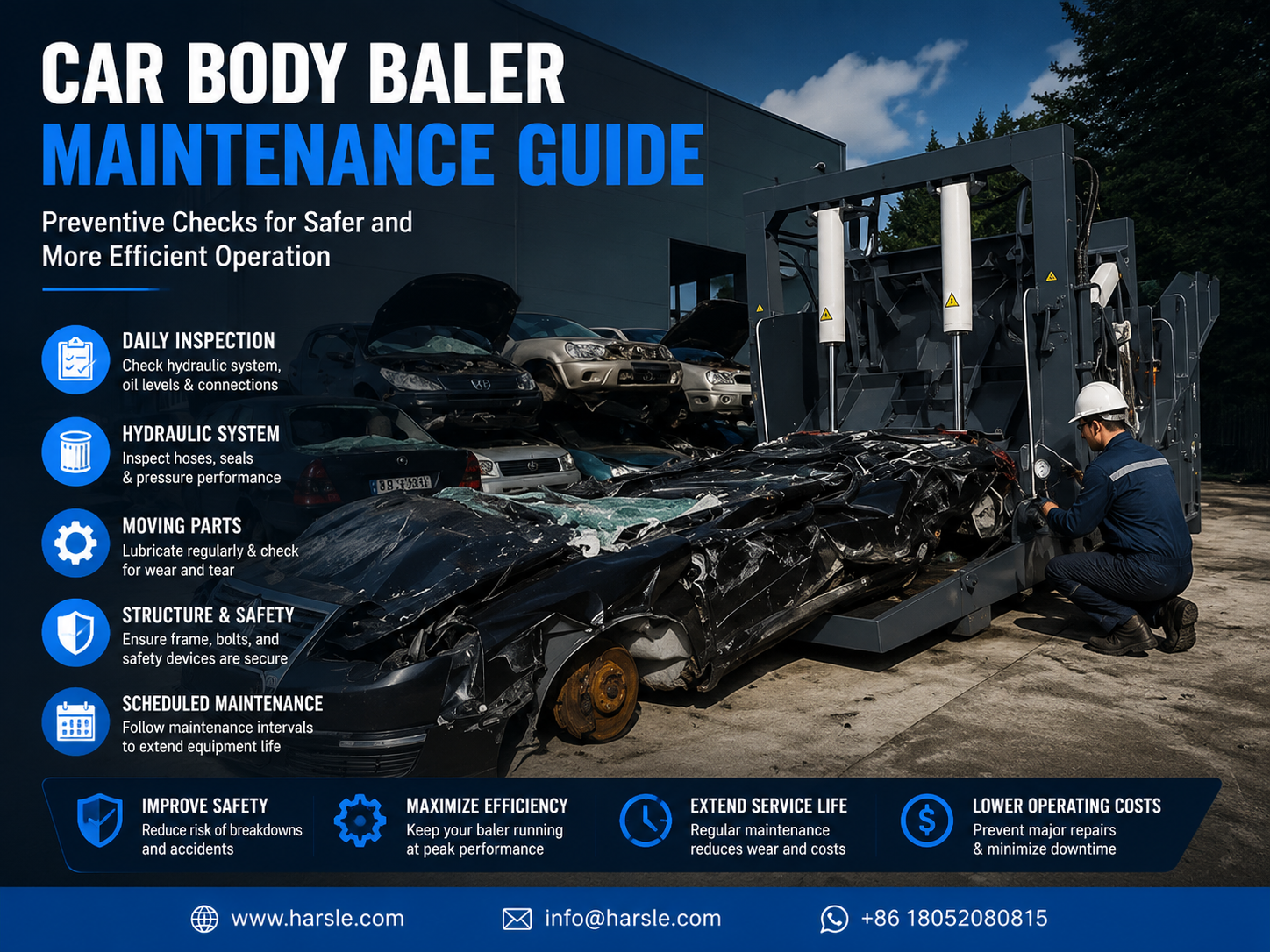
Car Body Baler Maintenance Guide: Preventive Checks for Safer and More Efficient Operation

Technical Overview of Car Body Baler Systems
The car body baler is a cornerstone of modern scrap metal recycling, designed to compress entire vehicle shells and large-scale metal scrap into dense, manageable blocks. These machines utilize massive hydraulic force to reduce the volume of bulky materials, facilitating easier transport and more efficient smelting processes. At its core, a HARSLE car body baler consists of a large charging box, high-pressure hydraulic cylinders, a power unit (motor and pump), and a sophisticated control system. Understanding the technical synergy between these components is the first step toward effective maintenance.
The operation typically involves a multi-stage compression process. First, the lid or side rams provide initial compaction, followed by the main longitudinal ram which delivers the final high-pressure squeeze. This sequential movement requires precise synchronization, managed by PLC (Programmable Logic Controller) systems. The hydraulic circuit is the lifeblood of the machine, converting electrical energy into mechanical force through fluid dynamics. Because these machines operate in harsh environments—exposed to dust, metal shards, and varying temperatures—the mechanical stress on the frame and hydraulic seals is immense.
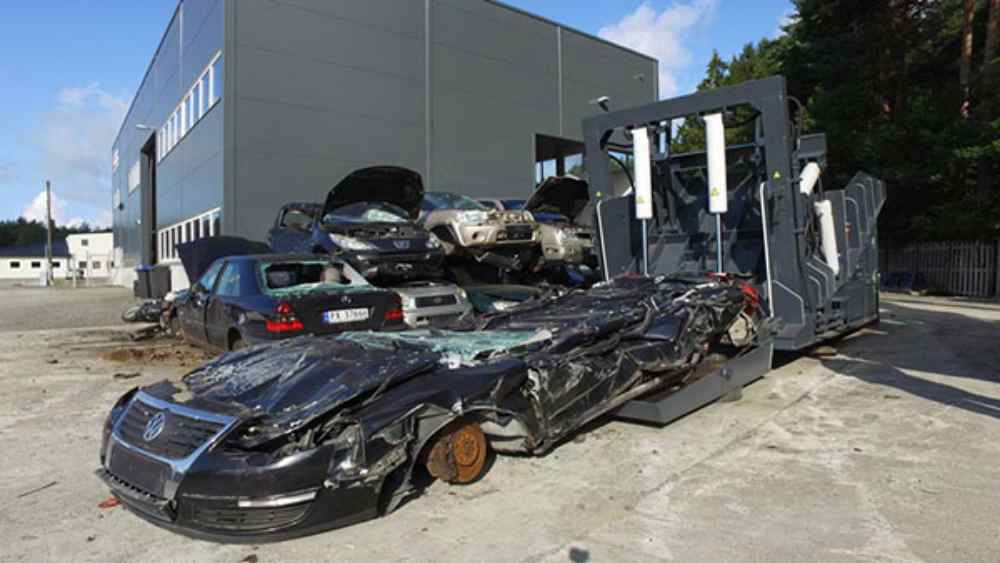
Maintenance is not merely a reactive measure to fix breakdowns; it is a proactive strategy to ensure the longevity of the investment. A well-maintained baler operates with higher cycle speeds, consumes less energy, and, most importantly, provides a safer environment for operators. Neglecting preventive checks can lead to catastrophic failures, such as cylinder rod scoring, pump cavitation, or structural cracks in the charging box, all of which result in expensive downtime and repair costs.
Core Parameters of High-Performance Balers
When discussing the maintenance and operation of a car body baler, several core parameters dictate the machine’s performance and the frequency of required service. The most critical parameter is the Nominal Force, usually measured in Kilonewtons (kN) or tons. This represents the maximum pressure the main cylinder can exert. For car bodies, this typically ranges from 2500kN to 6000kN. Maintenance must ensure that the relief valves are calibrated correctly so the system never exceeds its rated capacity, which could deform the structural steel.
Another vital parameter is the Cycle Time. This is the duration required to complete one full compression and return cycle. An increase in cycle time is often the first symptom of hydraulic inefficiency, such as a worn pump or internal leakage in the valves. Monitoring the Bale Size and Bale Density is also essential. If the bales are becoming loose or inconsistent in size, it indicates that the limit switches or pressure sensors may need adjustment or that the hydraulic fluid has lost its optimal viscosity.
The Motor Power and Pump Displacement determine the speed and flow of the hydraulic oil. In high-efficiency models, variable displacement pumps are often used to save energy during the non-pressing stages of the cycle. Maintenance teams must ensure the cooling system is sized correctly for the motor’s heat output, especially in continuous shift operations. Finally, the Charging Box Dimensions must be inspected for wear; the internal liners are sacrificial components designed to protect the main structure from the abrasive action of scrap metal.
Calculation Method for Baler Performance
To maintain a car body baler at peak efficiency, engineers must occasionally perform calculations to verify that the machine is performing according to its technical specifications. One of the most important calculations is the System Pressure vs. Output Force. The formula is: Force (F) = Pressure (P) × Area (A). If the main cylinder has a bore diameter of 400mm, the area is approximately 125,663 mm². At a system pressure of 25 MPa, the theoretical force is roughly 3,141 kN. If the actual pressing force is lower, it suggests a leak or a pump issue.
Another critical calculation is the Bale Density. This is calculated by dividing the weight of the finished bale by its volume (Length × Width × Height). For car bodies, a density of 800-1000 kg/m³ is often targeted for optimal furnace charging. If the density drops, the maintenance team should check the hydraulic oil temperature; overheated oil becomes less compressible and loses its ability to transmit force effectively, leading to “spongy” operation.
Furthermore, calculating the Oil Flow Rate can help diagnose pump health. Flow (Q) = Displacement × RPM. By measuring the time it takes for a cylinder to extend a known distance, you can calculate the actual flow rate. If the actual flow is significantly lower than the calculated theoretical flow, the pump is likely experiencing internal wear (slippage) and may require a rebuild or replacement. Regular monitoring of these metrics allows for data-driven maintenance decisions.
Technical Parameter Table for HARSLE Car Body Balers
The following table outlines the typical specifications for various grades of car body balers. These parameters serve as the baseline for all preventive maintenance checks.
| Model Series | Nominal Force (kN) | Bale Size (mm) | Cycle Time (s) | Motor Power (kW) | Operation Mode |
|---|---|---|---|---|---|
| HBA-250 | 2500 | 500 x 500 | 90 – 110 | 37 – 45 | Manual / PLC |
| HBA-400 | 4000 | 600 x 600 | 100 – 120 | 55 – 75 | PLC Automatic |
| HBA-600 | 6000 | 800 x 800 | 120 – 150 | 90 – 110 | PLC Automatic |
| HBA-1000 | 10000 | 1000 x 1000 | 150 – 180 | 150+ | Remote / PLC |
Note: These values are representative. Actual performance depends on the specific configuration of the hydraulic power unit and the type of scrap being processed. Maintenance schedules should be tightened for machines operating at the upper limits of their nominal force.
Common Engineering Mistakes in Baler Maintenance
One of the most frequent mistakes in car body baler maintenance is the neglect of hydraulic oil quality. Many operators assume that as long as the oil level is high, the machine is fine. However, hydraulic oil degrades over time due to thermal stress and contamination. Fine metal particles from the scrap can enter the system, acting as an abrasive that destroys pump vanes and valve seats. Failing to implement a strict oil analysis and filtration schedule is a leading cause of premature component failure.
Another common error is ignoring structural fatigue and bolt tightness. A car body baler is subject to intense vibrations and shock loads. Over time, the bolts securing the hydraulic cylinders or the foundation can loosen. If a cylinder is allowed to operate while slightly misaligned, it will exert side-loading forces on the piston rod, leading to seal failure and eventual rod bending. Regular torque checks on all critical fasteners are mandatory for safe operation.
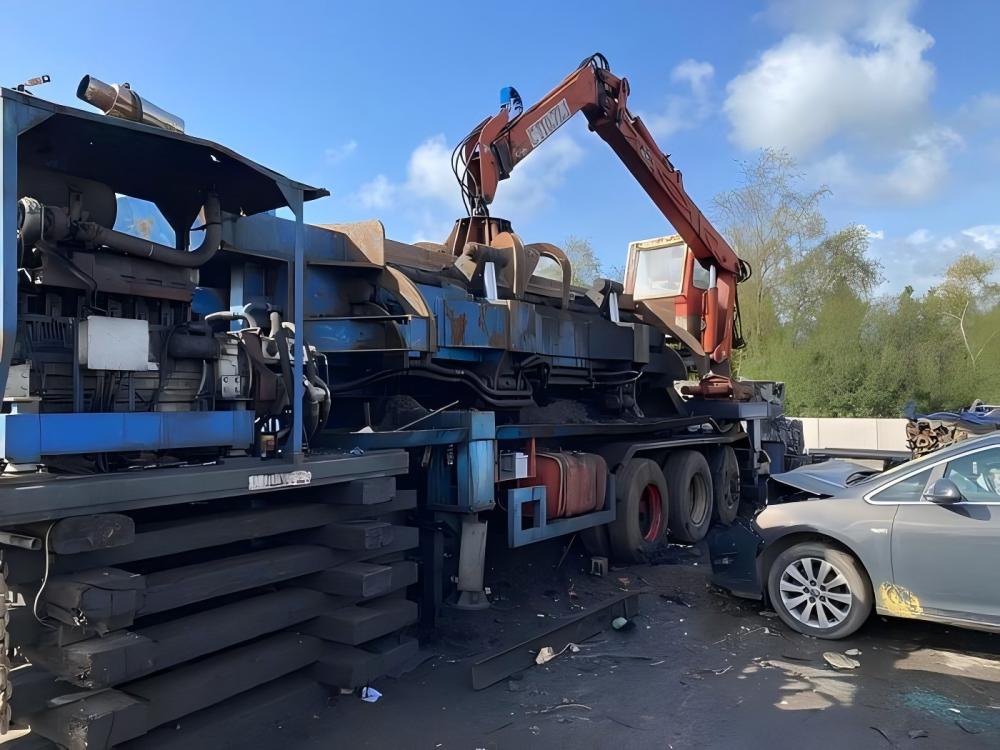
Furthermore, many maintenance teams fail to properly maintain the cooling system. In hot climates or high-production environments, the hydraulic oil can easily exceed 60°C. At these temperatures, seals begin to harden and crack, and the oil’s lubricating properties diminish. Using an undersized heat exchanger or failing to clean the cooling fins of an air-cooled system can lead to a cycle of overheating that rapidly ages every hydraulic component in the machine.
Selection and Maintenance Checklist for Industrial Balers
To ensure you are selecting the right machine and maintaining it for maximum ROI, follow this comprehensive checklist. This list covers both the procurement phase and the ongoing operational phase.
- Structural Integrity: Check for high-tensile steel construction and replaceable Hardox liners in the charging box.
- Hydraulic Component Brand: Ensure the pumps and valves are from reputable global brands (like Rexroth or Vickers) for easier parts sourcing.
- Daily Lubrication: Verify that all pivot points, hinges, and sliding surfaces are greased daily to prevent metal-on-metal friction.
- Filter Inspection: Change return-line filters every 500-1000 hours, or whenever the indicator shows a bypass condition.
- Seal Monitoring: Inspect cylinder glands for weeping oil; a small leak today is a blown seal tomorrow.
- Electrical Cabinet: Use compressed air to blow out dust from the PLC and contactors to prevent short circuits or overheating.
- Safety Systems: Test E-stop buttons and light curtains at the start of every shift. Never bypass safety interlocks.
- Oil Temperature: Install a temperature alarm to alert operators if the oil exceeds 55°C.
By adhering to this checklist, scrap yard managers can significantly reduce the total cost of ownership. A car body baler is a massive investment, and its profitability is directly tied to its uptime. Preventive maintenance is the only way to guarantee that uptime.
Frequently Asked Questions (FAQ)
1. How often should I change the hydraulic oil in my car body baler?
Generally, hydraulic oil should be changed every 2,000 to 4,000 operating hours. However, this depends heavily on the environment. It is highly recommended to perform oil analysis every 6 months to check for oxidation, water content, and particulate contamination. If the oil appears milky or smells burnt, change it immediately regardless of the hour count.
2. Why is my baler losing pressure during the final compression stage?
Loss of pressure is usually caused by one of three things: a worn hydraulic pump that cannot maintain high pressure, an internal leak in the main cylinder (piston seal bypass), or a malfunctioning relief valve that is opening too early. Start by checking the relief valve settings and then move to a cylinder bypass test.
3. Can I process materials other than car bodies in this machine?
Yes, most car body balers can handle various types of light to medium scrap, including white goods (appliances), sheet metal, and aluminum extrusions. However, you should avoid heavy structural steel or solid shafts, as these can exceed the machine’s cutting or shearing capacity and damage the liners or the frame.
4. What is the benefit of a PLC-controlled system over manual levers?
PLC systems provide consistent cycle times and prevent operator error, such as trying to move two cylinders simultaneously in a way that could cause mechanical interference. They also allow for remote diagnostics and can store data on the number of bales produced, which is invaluable for production management and maintenance scheduling.
5. How do I know when the wear liners need to be replaced?
Inspect the liners monthly. You should replace them when they have worn down by approximately 50-60% of their original thickness or if you notice deep gouges that could catch the ram. Operating with worn liners will eventually lead to damage of the main structural walls of the charging box, which is much more expensive to repair.