Horizontal Baler Productivity Guide: Faster Cycles, Denser Bales, Better Output

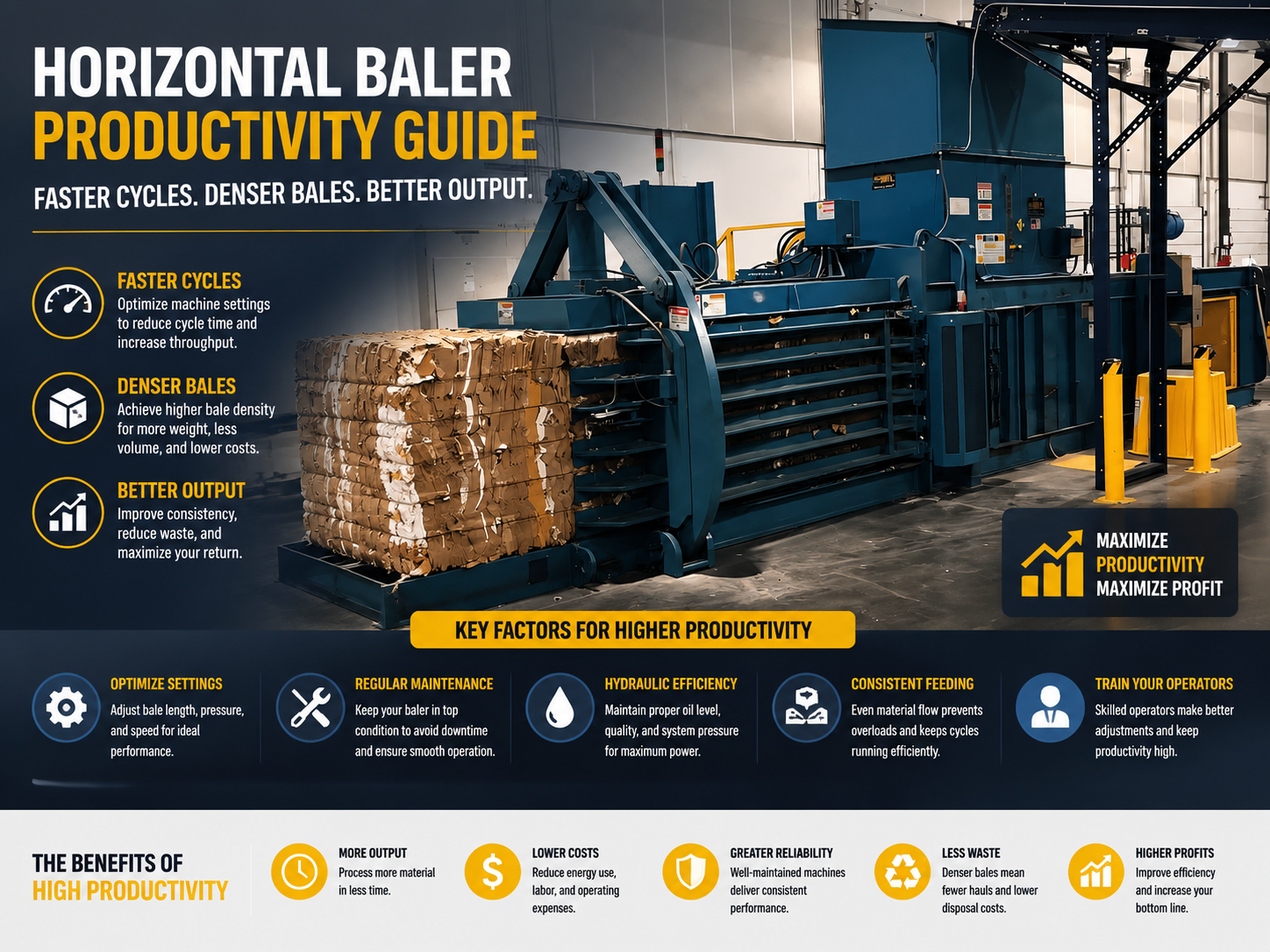
Technical Overview of Horizontal Baler Productivity
In the modern recycling and waste management industry, the efficiency of a horizontal baler is the heartbeat of the facility. Horizontal balers are engineered to handle high volumes of material, ranging from cardboard and plastics to non-ferrous metals and municipal solid waste. Unlike vertical balers, which are often limited by manual loading and lower throughput, horizontal systems are designed for continuous operation, often integrated with conveyor belts or air-trim systems. The core of horizontal baler productivity lies in the synergy between hydraulic power, structural rigidity, and intelligent control systems.
A high-productivity horizontal baler, such as those manufactured by HARSLE, utilizes a heavy-duty ram driven by high-pressure hydraulic cylinders. This ram compresses material against a closed door or through a tensioning extrusion channel. The productivity of this process is measured by three primary metrics: cycle time (the time it takes for the ram to extend and retract), bale density (the weight of material packed into a specific volume), and total hourly throughput. Achieving faster cycles requires a sophisticated hydraulic circuit that can deliver high flow rates during the approach phase and high pressure during the compression phase.
Furthermore, the structural design of the baler plays a critical role in long-term productivity. A chassis that flexes under pressure leads to energy loss and premature wear on the ram guides. HARSLE horizontal balers are constructed with reinforced steel plates and precision-machined liners to ensure that every ounce of hydraulic force is directed into the material. The integration of PLC (Programmable Logic Controller) systems allows for real-time adjustments to the compression cycle, optimizing the stroke length based on the resistance of the material being processed.
Finally, the tying mechanism—whether manual, semi-automatic, or fully automatic—is a significant factor in the overall output. Fully automatic horizontal balers use a needle and twister system to secure the bale without stopping the compression cycle, which is essential for high-volume operations. By minimizing downtime between bales, facilities can significantly increase their daily tonnage and reduce labor costs per ton of processed material.
Core Parameters Influencing Performance
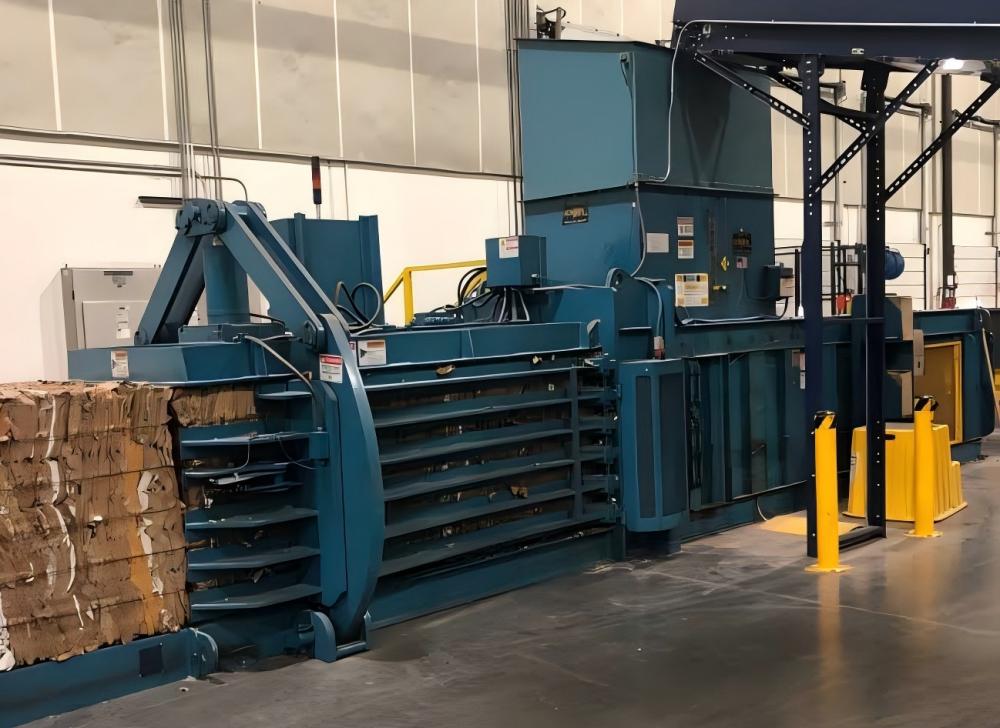
To optimize a horizontal baler for faster cycles and denser bales, one must understand the core technical parameters that govern its operation. The first and most obvious parameter is the Main Cylinder Force. This is typically measured in tons or kilonewtons (kN). Higher force allows for the compression of tougher materials and the creation of denser bales, which is crucial for maximizing shipping container weights and reducing logistics costs. However, force must be balanced with speed; a machine with massive force but a slow hydraulic pump will have a poor cycle time.
The Hydraulic Pump Capacity, measured in gallons per minute (GPM) or liters per minute (LPM), directly dictates the speed of the ram. Modern high-productivity balers often use variable displacement pumps or dual-pump systems. These systems provide high flow at low pressure to move the ram quickly toward the material, then switch to low flow at high pressure for the final squeeze. This “regenerative circuit” technology is a hallmark of HARSLE engineering, ensuring that energy is not wasted and cycle times are kept to a minimum.
Another critical parameter is the Feed Opening Size. The dimensions of the hopper determine how much material can be loaded in a single charge. If the feed opening is too small, the baler will spend more time waiting for material; if it is too large without sufficient ram force, the material may bridge or jam. Matching the feed opening to the upstream conveyor system is vital for maintaining a steady flow of material and preventing bottlenecks in the production line.
Lastly, the Tensioning System in continuous horizontal balers (open-end balers) is a key parameter for bale density. These machines use hydraulic cylinders to squeeze the exit channel, creating resistance against which the ram pushes. The ability of the control system to automatically adjust this tension based on material type and moisture content ensures consistent bale weights. Without a responsive tensioning system, bales may come out too loose (wasting space) or too tight (risking wire breakage).
Calculation Method for Baler Throughput and Density
Calculating the potential productivity of a horizontal baler is essential for facility planning and ROI analysis. The most common calculation is the Theoretical Throughput, which is determined by the cycle time and the volume of the compression chamber. The formula is as follows:
Throughput (m³/hr) = (Chamber Volume × 3600) / Cycle Time (seconds)
However, theoretical throughput does not account for material density or loading efficiency. To find the Actual Tonnage Throughput, you must factor in the bulk density of the loose material and the fill factor of the hopper. For example, loose cardboard has a much lower bulk density than shredded paper. The formula for actual output is:
Tons per Hour = (Cycles per Hour × Volume per Cycle × Material Density × Efficiency Factor)
Bale density is another critical calculation, especially for international shipping where maximizing the weight of a 40ft container is the goal. Density is calculated by dividing the final bale weight by its volume. To improve density, operators can increase the system pressure or increase the number of “strokes” per bale. In a HARSLE horizontal baler, the PLC can be programmed to perform a “pre-compression” stroke, which helps settle the material before the final tie, leading to a 10-15% increase in density for springy materials like plastics.
Finally, the Energy Efficiency Ratio should be calculated to ensure that the increase in productivity isn’t offset by exorbitant electricity costs. This is measured in kWh per ton. By using high-efficiency motors (IE3 or IE4 standards) and optimized hydraulic manifolds, HARSLE machines provide a superior ratio, ensuring that “Better Output” also means “Lower Operating Cost.”
Horizontal Baler Parameter Table
| Parameter | Standard Series | High-Performance Series | Heavy-Duty Industrial |
|---|---|---|---|
| Pressing Force (Tons) | 50 – 80 | 100 – 120 | 150 – 200+ |
| Cycle Time (Seconds) | 25 – 35 | 15 – 22 | 12 – 18 |
| Motor Power (kW) | 22 – 37 | 45 – 75 | 90 – 150 |
| Bale Size (mm) | 1100 x 750 x Var. | 1100 x 1100 x Var. | 1100 x 1100 x Var. |
| Throughput (Tons/Hr) | 4 – 8 | 10 – 18 | 20 – 35 |
| Tying System | Manual / Semi-Auto | Fully Automatic | Fully Auto (Dual-Tie) |
Common Engineering Mistakes in Baler Operation
One of the most frequent engineering mistakes in horizontal baler operation is neglecting hydraulic oil health. Hydraulic systems are the lifeblood of the baler. When oil becomes contaminated with dust or moisture, or when it overheats due to continuous high-cycle operation, the viscosity drops. This leads to internal leakage in the pumps and valves, which manifests as slower cycle times and reduced pressing force. Many operators fail to realize that a 10-degree Celsius rise above the optimal operating temperature can significantly degrade the performance and lifespan of the hydraulic components.
Another common error is the misalignment or dullness of the shear blades. In a horizontal baler, the ram is equipped with a blade that shears off excess material as it enters the compression chamber. If these blades are dull or the gap between the moving and stationary blade is too wide, the material will fold rather than cut. This creates “wedging,” where material gets stuck between the ram and the chamber wall, drastically increasing friction, consuming more power, and potentially damaging the structural frame of the machine.
Furthermore, incorrect sensor calibration can lead to massive productivity losses. Horizontal balers rely on proximity sensors and pressure transducers to tell the PLC when to reverse the ram or initiate a tie. If a sensor is misaligned, the ram might travel further than necessary (wasting time) or reverse too early (resulting in loose bales). Regular calibration of the “home” and “full-extend” positions is a simple maintenance task that is often overlooked but has a direct impact on the “Faster Cycles” goal.
Lastly, poor material preparation is a significant bottleneck. Feeding oversized items or highly non-compressible materials into a baler designed for cardboard can cause emergency stops and mechanical strain. Engineering a proper pre-sorting and shredding stage before the baler ensures that the machine operates within its designed parameters, leading to consistent, high-density bales and preventing the “Better Output” from being interrupted by frequent downtime.
Selection Checklist for High-Productivity Balers
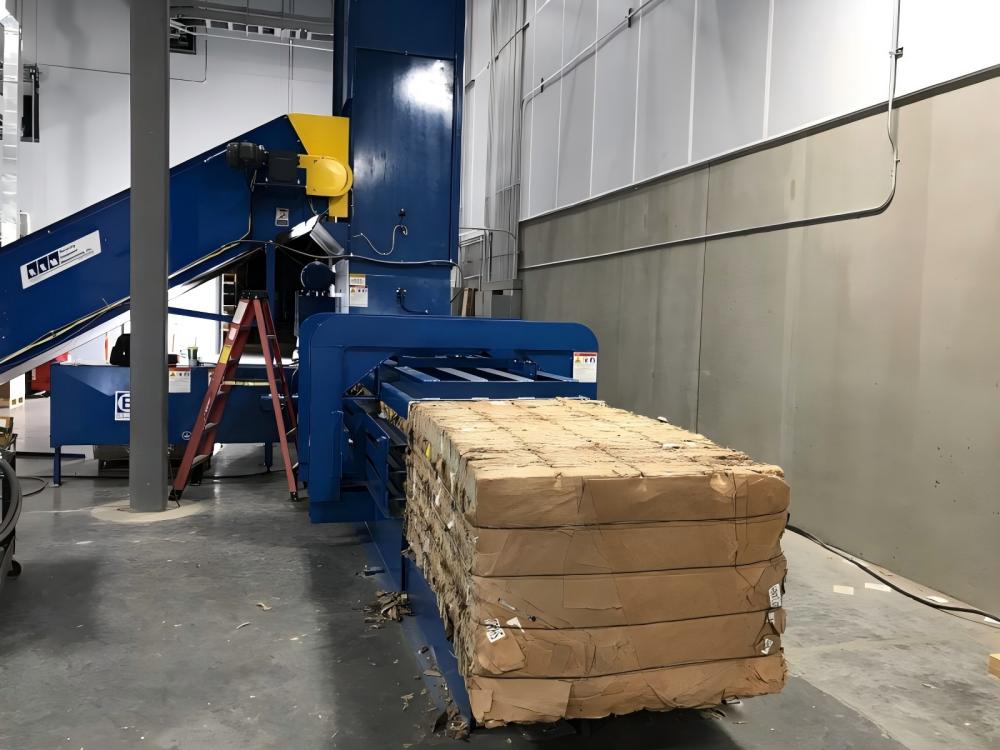
Choosing the right horizontal baler requires a strategic approach. Use the following checklist to ensure your selection meets the requirements for faster cycles and denser bales:
- Material Compatibility: Does the baler’s shear strength and ram force match the toughest material in your waste stream?
- Throughput Requirements: Calculate your peak hourly volume. Does the machine’s cycle time allow for a 20% buffer above this peak?
- Automation Level: Do you have the labor force for manual tying, or does the ROI justify a fully automatic wire-tier?
- Cooling System: For multi-shift operations, is the baler equipped with an air or water cooling system to maintain hydraulic efficiency?
- Bale Dimensions: Are the bale sizes optimized for your local transport regulations and shipping container dimensions?
- Power Supply: Does your facility have the electrical infrastructure to support the high-kilowatt motors required for fast cycles?
- Maintenance Access: Are the wear liners, hydraulic filters, and shear blades easily accessible for routine service?
- Safety Features: Does the machine comply with CE/ANSI standards, including interlocked gates and emergency stop circuits?
Frequently Asked Questions (FAQ)
1. How can I reduce the cycle time of my existing horizontal baler?
Reducing cycle time can often be achieved by optimizing the hydraulic settings and ensuring the oil is at the correct viscosity. Upgrading to a more efficient pump or adding a regenerative circuit can also help. Additionally, ensuring that the feed conveyor is synchronized with the ram movement prevents the machine from idling between strokes.
2. Why are my bales expanding after they leave the machine?
Bale expansion, or “rebound,” occurs when the material is not compressed beyond its elastic limit or when the tying wires are too loose. To fix this, you can increase the pressing pressure, increase the dwell time (the time the ram stays at full extension), or use a higher gauge of baling wire. For materials like plastic, a “double-tie” may be necessary.
3. How often should I replace the wear liners in the compression chamber?
Wear liners should be inspected monthly. The replacement frequency depends on the abrasiveness of the material being baled. For cardboard, liners may last several years, but for abrasive materials like certain plastics or metals, they may need replacement every 12-18 months. Replacing them early prevents damage to the main structural frame.
4. What is the advantage of a twin-ram horizontal baler?
Twin-ram balers use one ram for compression and a second, smaller ram for ejection and tying. This design allows for extremely high density because the material is compressed against a solid wall rather than a friction-based channel. They are ideal for difficult materials like non-ferrous metals and high-density plastics.
5. Can HARSLE balers be integrated into an automated factory line?
Yes, HARSLE horizontal balers are designed with modern PLC interfaces (such as Siemens or Mitsubishi) that allow for seamless integration with conveyors, air-conveyance systems, and central monitoring stations. This allows for a fully automated “hands-off” recycling process.
6. What type of hydraulic oil is best for high-productivity baling?
We recommend a high-quality anti-wear hydraulic oil, typically ISO VG 46 or 68, depending on your ambient operating temperature. In very cold environments, a multi-grade oil may be necessary to ensure the machine can start and reach operating speed quickly without cavitation.