How Scrap Metal Baler Hydraulic Systems Affect Production Stability and Energy Use

Technical Overview of Scrap Metal Baler Hydraulic Systems
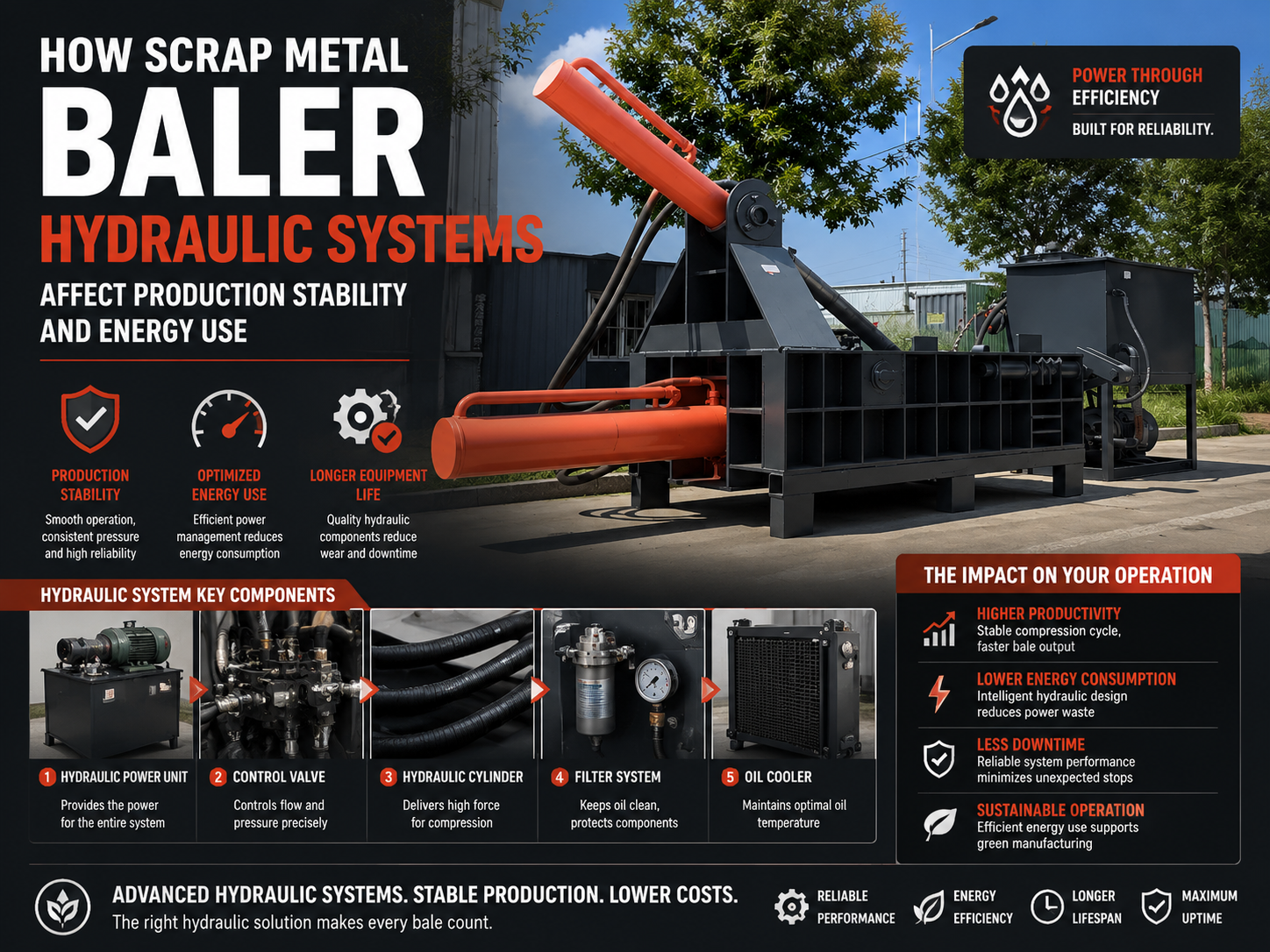
The hydraulic system is the fundamental ‘circulatory system’ of any scrap metal baler. Its primary function is to convert mechanical energy from an electric motor into hydraulic pressure, which is then translated into linear force by hydraulic cylinders to compress bulky metal waste into dense, manageable bales. Understanding how scrap metal baler hydraulic systems affect production stability and energy use requires a deep dive into the components that manage fluid flow, pressure regulation, and thermal stability. At HARSLE, we emphasize that the synergy between the pump, valve blocks, and the cooling circuit determines the machine’s long-term reliability.
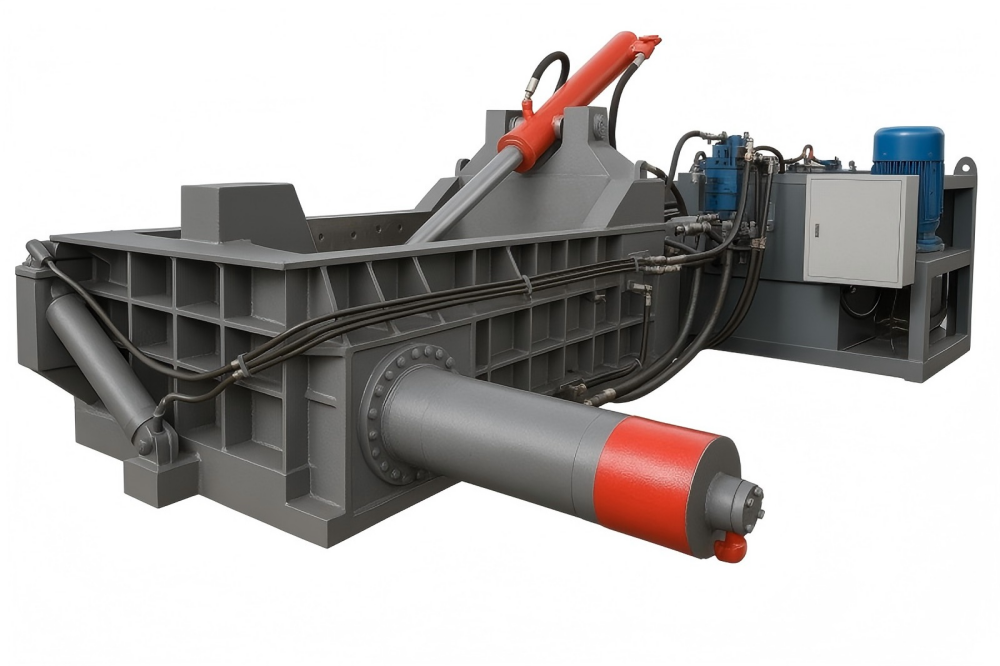
A standard hydraulic system for a scrap metal baler consists of several critical sub-assemblies: the power unit (motor and pump), the control manifold (valves), the actuators (cylinders), and the auxiliary systems (filtration and cooling). The choice of pump—whether it is a constant displacement gear pump or a variable displacement axial piston pump—directly impacts how the machine handles varying loads. In high-volume recycling environments, the ability of the hydraulic system to maintain consistent pressure without overheating is what defines ‘production stability.’ If the system cannot dissipate heat effectively, the hydraulic oil loses viscosity, leading to internal leakage and a significant drop in compaction force.
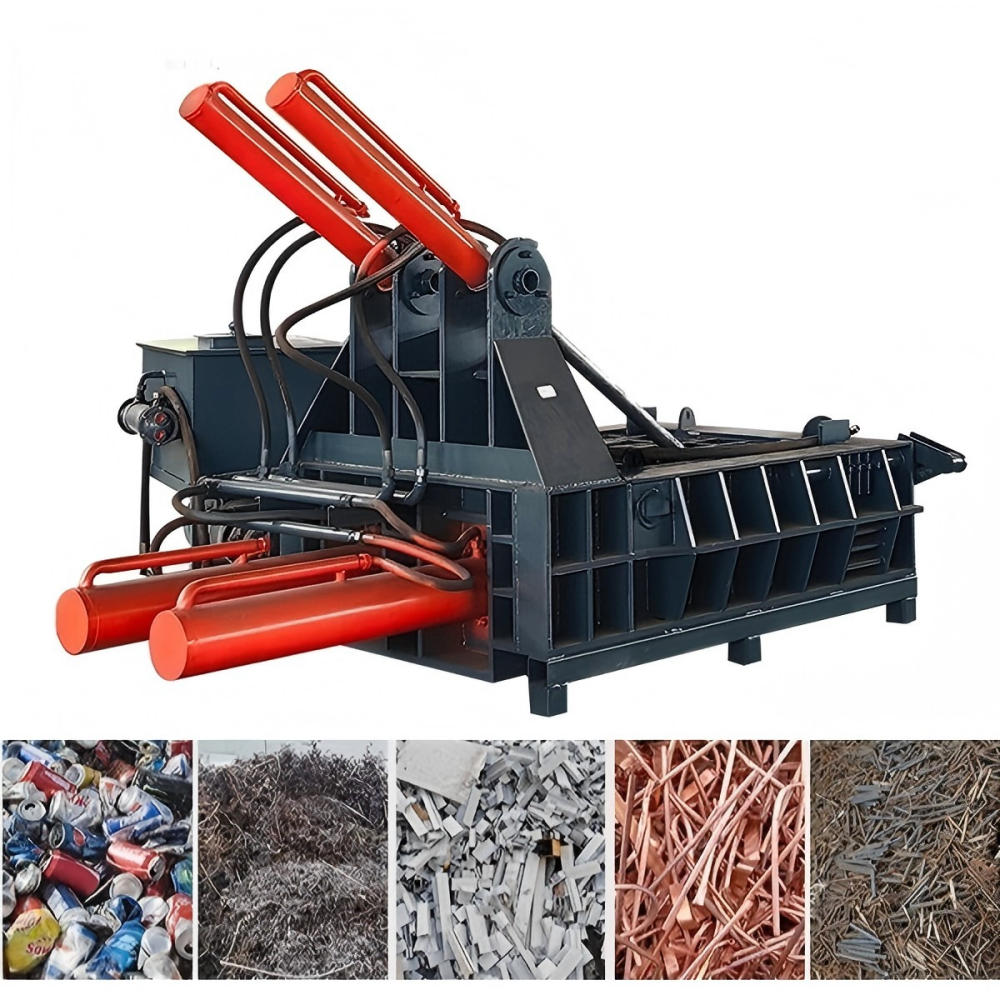
Modern scrap metal balers have evolved to incorporate logic-controlled valve blocks. These blocks reduce the complexity of piping and minimize potential leak points, which are the enemies of production stability. Furthermore, the integration of regenerative circuits allows the oil from the rod end of the cylinder to be redirected to the cap end during the fast-forward stroke. This technical nuance significantly increases the speed of the cycle without requiring a larger, more energy-hungry pump. By optimizing these fluid dynamics, manufacturers can ensure that the baler operates within its peak efficiency window for extended shifts.
Energy use in hydraulic systems is often misunderstood. It is not merely about the horsepower of the motor but how that power is managed during the different phases of the baling cycle: the idle phase, the compression phase, and the return stroke. A poorly designed system wastes energy by bypassing high-pressure oil back to the tank through relief valves, generating heat instead of work. Conversely, a well-engineered system uses pressure-compensated pumps that only deliver the flow required at the specific pressure needed, drastically reducing the energy footprint of the recycling facility.
Core Parameters Influencing Performance
To evaluate how scrap metal baler hydraulic systems affect production stability and energy use, one must look at the core technical parameters. The first is Nominal Pressure, usually measured in Megapascals (MPa). Most industrial balers operate between 20MPa and 31.5MPa. Higher pressure allows for smaller cylinder diameters to achieve the same force, but it also places higher stress on seals and hoses, potentially impacting stability if the components are not rated for continuous high-pressure duty.
The second parameter is Flow Rate (L/min). The flow rate determines the cycle time—how fast the ram moves. However, a high flow rate requires larger diameter piping to prevent turbulence and excessive friction, which can lead to energy loss in the form of heat. Balancing flow and pressure is the key to achieving a high ‘Throughput-to-Energy’ ratio. If the flow rate is too high for the valve orifice, the resulting backpressure increases the load on the motor, spiking energy consumption unnecessarily.
Thirdly, Oil Tank Capacity and Cooling Capacity are vital for stability. A general rule of thumb in industrial hydraulics is that the tank should hold 3 to 5 times the pump’s flow per minute. This volume allows for air bubbles to settle and heat to dissipate. In tropical climates or high-intensity 24/7 operations, integrated water-cooled or air-cooled heat exchangers are mandatory. Without adequate cooling, the hydraulic fluid’s chemical properties break down, leading to ‘varnishing’ of the valves and eventual system failure.
Finally, the Filtration Rating (measured in microns) ensures that the hydraulic fluid remains free of contaminants. Scrap metal environments are inherently dusty and dirty. If the hydraulic system lacks high-efficiency suction and return-line filters, microscopic metal particles can score the cylinder walls and pump pistons. This degradation leads to a slow decline in production stability as the machine loses the ability to hold pressure over time.
Calculation Method for Hydraulic Efficiency
Calculating the efficiency and requirements of a scrap metal baler involves several standard hydraulic formulas. To understand the force being applied to the scrap metal, we use the formula: F = P × A, where F is the force (Newtons), P is the pressure (Pascals), and A is the effective area of the cylinder piston (square meters). For a baler rated at 250 tons (approx. 2,500,000 N) operating at 25 MPa, the required cylinder area can be calculated to ensure the structural frame can support the load.
To calculate the Theoretical Power Requirement of the electric motor, the formula is: Power (kW) = (Pressure (bar) × Flow (L/min)) / 600. For example, if a baler requires 200 bar of pressure and a flow of 150 L/min to achieve the desired cycle time, the motor must provide at least 50 kW of power. However, this does not account for mechanical and volumetric efficiencies. Real-world power consumption is usually 15-20% higher due to friction and internal leakage, which is why HARSLE utilizes high-efficiency motors to bridge this gap.
Cycle time calculation is also essential for production planning. Time (s) = (Volume of Cylinder (L) / Flow Rate (L/s)). By calculating the time for the forward stroke, compression hold, and return stroke, engineers can determine the hourly throughput. If the calculated cycle time is 60 seconds, the machine can theoretically perform 60 cycles per hour. If the hydraulic system is inefficient, the actual cycle time will increase as the oil heats up, directly reducing the stability of the production output.
Parameter Table for Common Scrap Metal Baler Models
| Model Series (Y81) | Nominal Force (kN) | Bale Size (mm) | Cycle Time (s) | Motor Power (kW) | System Pressure (MPa) |
|---|---|---|---|---|---|
| Y81-125 | 1250 | 300 x 300 | 80 – 90 | 15 | 20 |
| Y81-160 | 1600 | 350 x 350 | 85 – 95 | 18.5 | 20 |
| Y81-250 | 2500 | 500 x 500 | 90 – 100 | 30 – 37 | 25 |
| Y81-400 | 4000 | 600 x 600 | 100 – 120 | 45 – 55 | 25 |
| Y81-630 | 6300 | 800 x 800 | 120 – 150 | 75 – 90 | 31.5 |
Note: The parameters above are indicative of standard configurations. Customizations in pump flow and motor efficiency can alter these values to favor either speed or energy conservation depending on the client’s specific recycling needs.
Common Engineering Mistakes in Hydraulic Design
One of the most frequent mistakes in scrap metal baler engineering is undersizing the cooling system. Designers often calculate cooling needs based on average ambient temperatures rather than peak summer temperatures in a scrap yard. When the oil temperature exceeds 60°C, the viscosity drops below the required threshold for pump lubrication. This results in accelerated wear and inconsistent bale density, which is a primary example of how scrap metal baler hydraulic systems affect production stability and energy use negatively.
Another common error is the improper sizing of hydraulic lines. To save on costs, some manufacturers use smaller diameter hoses and fittings. This creates high fluid velocity, leading to turbulent flow. Turbulence generates significant heat and causes ‘hydraulic shock’ when valves shift. Hydraulic shock not only damages gauges and sensors but can also lead to fatigue cracks in the machine’s structural welds over time. Ensuring laminar flow through proper pipe sizing is essential for a quiet and stable machine.
Ignoring filtration placement is a third critical mistake. Some systems only filter the oil as it returns to the tank. However, the most sensitive component—the pump—is often left unprotected on the suction side. While suction strainers are common, they are often too coarse to catch the fine particulates that cause ‘silt’ buildup in proportional valves. A dual-filtration approach, including high-pressure line filters, is necessary for maintaining the precision of the hydraulic control system.
Finally, the lack of a soft-start or VFD (Variable Frequency Drive) for the main motor is a missed opportunity for energy saving. Starting a large 45kW motor ‘across the line’ creates massive current spikes and mechanical stress on the pump coupling. By using a VFD, the system can ramp up the motor speed gradually and even reduce the RPM during the loading phase when the hydraulic system is idling, leading to energy savings of up to 30% in some applications.
Selection Checklist for High-Efficiency Balers
When selecting a scrap metal baler, the hydraulic system should be your primary focus. Use the following checklist to ensure you are investing in a machine that prioritizes both stability and energy efficiency:
- Pump Type: Does the machine use a variable displacement piston pump? These are more efficient than fixed gear pumps for varying loads.
- Cooling System: Is there an independent cooling circuit? Independent circuits (kidney loops) allow for continuous filtration and cooling even when the main cylinders are not moving.
- Valve Manifold: Are the valves mounted on a manifold block? This reduces the number of hoses and potential leak points.
- Regenerative Circuitry: Does the hydraulic logic include a regenerative fast-forward feature to reduce cycle times without increasing motor size?
- Oil Temperature Monitoring: Is there an automated shut-off or warning system for high oil temperatures?
- Seal Quality: Are the cylinder seals sourced from reputable international brands (like NOK or Parker)? High-quality seals prevent internal bypass and maintain pressure stability.
- Motor Efficiency: Is the motor rated as IE3 (Premium Efficiency) or higher?
The Role of Hydraulic Fluid in Stability
The choice of hydraulic oil is often overlooked but is a critical factor in how scrap metal baler hydraulic systems affect production stability and energy use. Using the wrong grade of oil can lead to cavitation in the pump or sluggish valve response. For most scrap metal balers, an ISO VG 46 or 68 anti-wear hydraulic oil is recommended. The ‘anti-wear’ (AW) additives are crucial because they form a protective film on metal surfaces, preventing metal-to-metal contact during the high-pressure compression phase.
Furthermore, the Viscosity Index (VI) of the oil determines how much the thickness of the oil changes with temperature. A high VI oil stays stable across a wider temperature range, ensuring that the baler performs the same at 8:00 AM as it does at 4:00 PM. Inconsistent bale weights and lengths are often traced back to oil that has thinned out too much by mid-afternoon. Regular oil analysis—checking for water content, oxidation, and particle count—is a low-cost way to ensure the hydraulic system remains a stable asset rather than a maintenance liability.
Future Trends: Digital Hydraulics and IoT
The industry is moving toward ‘Smart Hydraulics.’ This involves integrating sensors that monitor pressure, flow, temperature, and vibration in real-time. By feeding this data into a PLC (Programmable Logic Controller), the machine can predict a failure before it happens. For instance, a slight increase in the time taken to reach full pressure might indicate a wearing pump or a leaking seal. This proactive approach to maintenance is the ultimate way to ensure production stability.
Energy use is also being optimized through ‘Power on Demand’ systems. In these setups, the hydraulic pump is driven by a servo motor. Unlike a traditional motor that runs at a constant speed, a servo motor only rotates when the machine needs movement. During the loading of scrap into the hopper, the motor stops completely, consuming zero energy. While the initial investment is higher, the reduction in energy use and the extension of hydraulic component life provide a rapid return on investment for high-volume scrap yards.
Frequently Asked Questions (FAQ)
1. How often should I change the hydraulic oil in my scrap metal baler?
Generally, hydraulic oil should be changed every 2,000 to 4,000 operating hours. However, this depends on the environment. In dusty scrap yards, it is better to rely on oil analysis. If the oil remains clean and the additive package is intact, you may only need to change the filters. Always change the filters whenever the oil is replaced.
2. Why is my baler losing pressure during the final compression?
Pressure loss is usually caused by internal leakage. This could be due to worn piston seals in the main cylinder, a malfunctioning relief valve that is opening too early, or internal wear in the hydraulic pump. Check the oil temperature first; if the oil is too hot, it may be bypassing the seals simply because it is too thin.
3. Can I use a smaller motor to save energy?
Using a smaller motor than recommended will lead to motor burnout. To save energy, it is better to use a Variable Frequency Drive (VFD) or a variable displacement pump. These technologies allow a powerful motor to operate efficiently at lower loads rather than struggling with an undersized motor that runs at 100% capacity constantly.
4. What is the ideal operating temperature for the hydraulic system?
The ideal range is between 35°C and 50°C (95°F to 122°F). Operating above 60°C (140°F) significantly shortens the life of the seals and the oil. If your system regularly runs hot, consider upgrading your cooling system or checking for flow restrictions in the return lines.
5. How does air get into the hydraulic system, and how does it affect stability?
Air can enter through a loose suction line, a low oil level in the tank, or a worn pump shaft seal. Air in the system causes ‘spongy’ operation, jerky movements, and a loud whining noise from the pump (cavitation). This instability makes it impossible to achieve consistent bale density and can cause catastrophic pump failure.
6. Does the type of scrap metal affect the hydraulic system’s energy use?
Yes. Harder, more resilient materials like stainless steel or thick structural scrap require the system to stay at maximum pressure for longer durations, which consumes more energy and generates more heat compared to baling soft aluminum cans or thin sheet metal. Adjusting the pressure settings for different materials can help optimize energy use.