Why Are Briquettes Crumbling After Pressing? Hydraulic Briquetting Machine Fixes

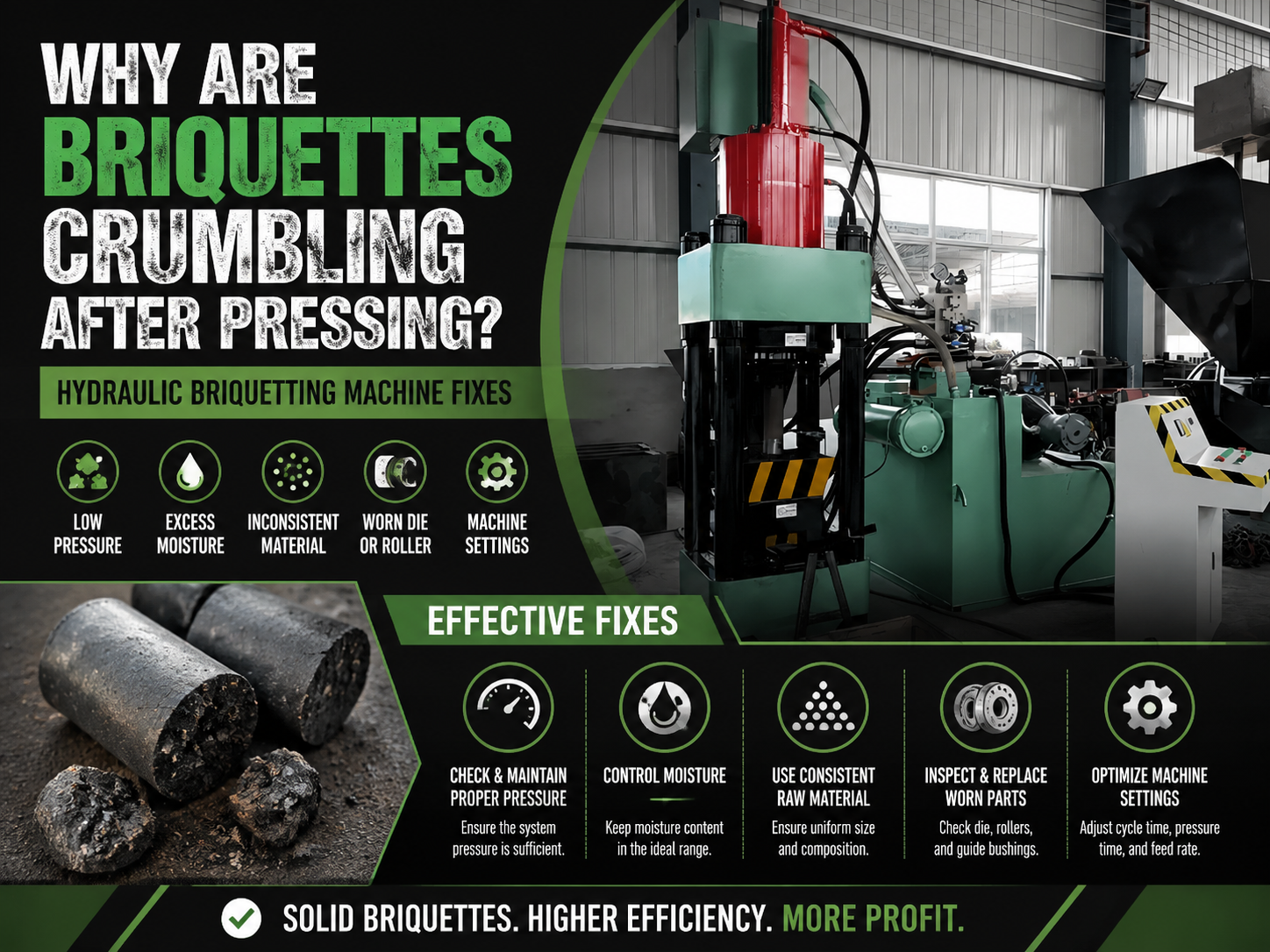
Introduction to Briquette Quality and Industrial Efficiency
In the world of metal recycling and waste management, the hydraulic briquetting machine stands as a cornerstone of efficiency. By transforming loose metal chips, swarf, and turnings into dense, manageable blocks, manufacturers can significantly reduce storage space, lower transportation costs, and increase the melt yield during smelting. However, a common and frustrating issue faced by many operators is the phenomenon of briquettes crumbling or falling apart shortly after they are ejected from the press. This lack of structural integrity, often referred to as ‘friability,’ can negate the benefits of the briquetting process, leading to messy workshops and lost revenue.
Understanding why briquettes crumble requires a deep dive into the physics of compaction and the mechanical nuances of the hydraulic briquetting machine. It is not merely a matter of applying force; it is about the synergy between material properties, hydraulic precision, and machine maintenance. When a briquette fails, it is usually a symptom of an underlying imbalance in one of these areas. For companies using HARSLE equipment, achieving a ‘rock-solid’ briquette is the standard, and deviations from this quality indicate a need for systematic troubleshooting.
This comprehensive guide will explore the technical reasons behind briquette failure and provide actionable fixes for your hydraulic briquetting machine. Whether you are processing aluminum, steel, cast iron, or copper, the principles of high-density compaction remain the same. By the end of this article, you will have a clear roadmap to diagnosing and resolving crumbling issues, ensuring your recycling operations remain profitable and efficient.
Key Considerations: Why Do Briquettes Lose Their Integrity?
1. Material Moisture and Contamination
One of the most frequent culprits behind crumbling briquettes is the presence of excessive moisture or lubricants. In metal fabrication, chips are often coated in cutting fluids, coolants, or oils. While a small amount of moisture can sometimes act as a lubricant during the initial compression phase, an excess creates ‘pore water pressure.’ As the hydraulic ram compresses the material, the trapped liquid has nowhere to go. Once the pressure is released, the internal liquid pressure forces the metal particles apart, causing the briquette to crack or disintegrate.
Conversely, material that is too dry can also be problematic, especially for certain types of metal or biomass. Without a slight film of moisture or a binding agent, the friction between particles might not be sufficient to create a lasting bond. Achieving the ‘Goldilocks’ zone of moisture content—typically between 10% and 15% for most materials, though much lower for pure metals—is essential for stability.
2. Particle Size and Distribution
The geometry of the raw material plays a vital role in how well it knits together under pressure. If the metal chips are too large, curly, or irregular, they create large voids within the briquette. These voids act as structural weak points. Ideally, a mix of different particle sizes is preferred; smaller particles fill the gaps between larger ones, creating a more continuous and dense matrix. If your material consists solely of long, stringy turnings, the hydraulic briquetting machine may struggle to compress them into a solid mass without a pre-shredding stage.
3. The Role of Elastic Recovery
Every material has a degree of elasticity. When metal is compressed in a hydraulic press, it undergoes both plastic deformation (permanent shape change) and elastic deformation (temporary shape change). When the ram retracts, the metal naturally wants to ‘spring back’ to its original volume. This is known as elastic recovery. If the pressure applied was insufficient to reach the point of permanent plastic deformation, or if the material was not held under pressure long enough, the spring-back force will exceed the internal friction holding the briquette together, leading to immediate crumbling.
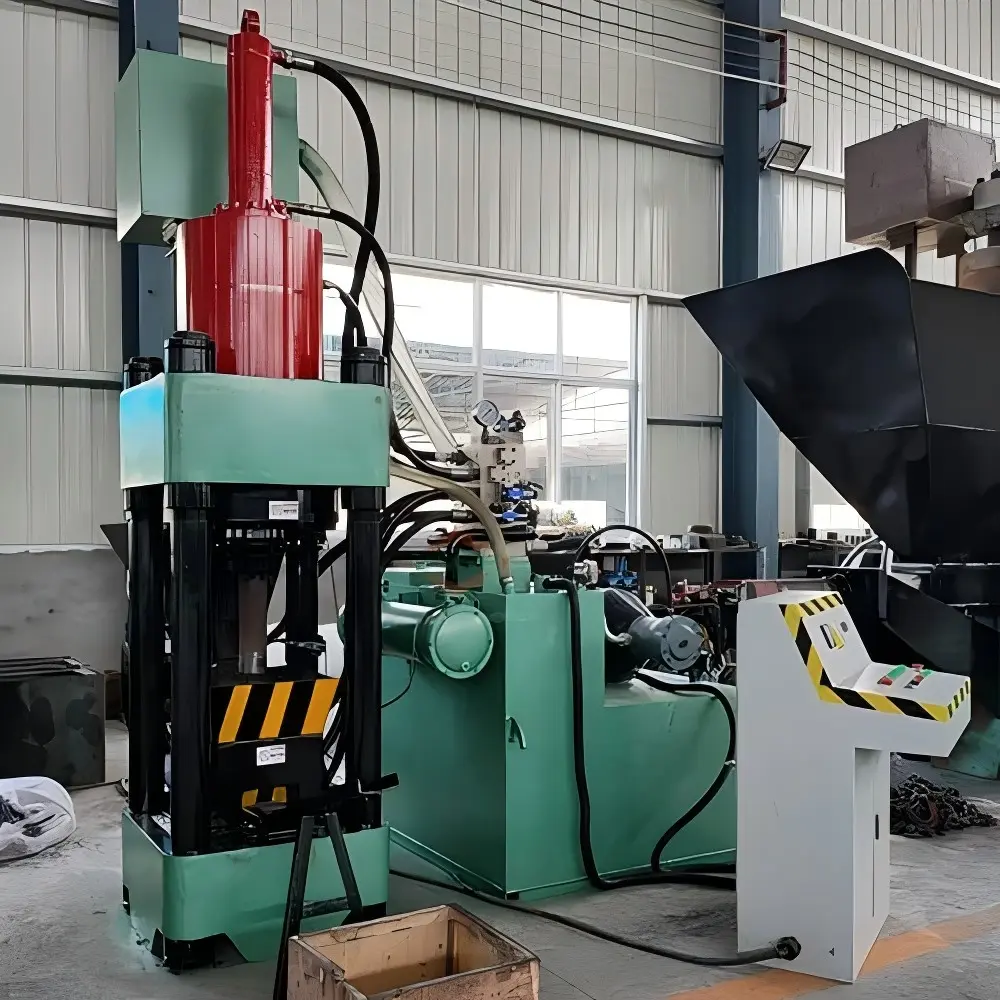
Technical Details: Hydraulic Briquetting Machine Fixes
Optimizing Hydraulic Pressure and Dwell Time
The most direct fix for crumbling briquettes is often adjusting the hydraulic settings. However, it is not always as simple as ‘turning up the pressure.’ If the pressure is too high for the specific mold design, it can cause ‘capping’ or internal shearing. The key is the **dwell time**—the duration the ram stays at its maximum extension. Increasing the dwell time by just 1-2 seconds allows the metal particles to settle and the air to escape, significantly reducing the elastic recovery effect. HARSLE machines equipped with advanced PLC systems allow for precise adjustment of these parameters to match the specific material density requirements.
Addressing Mold and Die Wear
The internal condition of the compression chamber and the die is critical. Over time, the abrasive nature of metal chips can wear down the walls of the mold, creating a ‘bell-mouth’ shape or rough patches. If the mold is wider at the entrance than the exit, or if there are deep scratches, the briquette will experience uneven friction during ejection. This uneven force often leads to ‘lamination,’ where the briquette splits into thin discs. Regular inspection and polishing of the die, or replacing worn liners, is a mandatory maintenance step for ensuring consistent briquette quality.
Feeding Consistency and Pre-Compression
A hydraulic briquetting machine relies on a consistent volume of material for every cycle. If the feeding hopper delivers inconsistent amounts, the ram will travel to different depths, resulting in varying densities. Many high-end HARSLE models utilize a pre-compression cylinder or a screw feeder. The pre-compressor removes excess air and packs the material into the main chamber before the high-pressure ram engages. If your briquettes are crumbling, check the timing and pressure of the pre-compression stage; it is often the unsung hero of briquette integrity.
Temperature Management
Heat is a byproduct of high-pressure compaction. While some heat is beneficial as it can soften certain materials and help them bond, excessive heat can degrade the hydraulic oil or cause the material to oxidize. If the hydraulic oil becomes too thin due to heat, the pump may fail to maintain the required pressure throughout the stroke. Ensure your machine’s cooling system is functioning correctly and that the oil viscosity is appropriate for your operating environment.
Selection Advice: Choosing the Right Machine for Your Material
When purchasing a hydraulic briquetting machine, matching the machine’s specifications to your specific waste stream is the best way to prevent future crumbling issues. Not all machines are created equal, and a press designed for sawdust will fail miserably when faced with steel swarf.
- Tonnage Requirements: Aluminum generally requires lower pressure (around 150-200 MPa) compared to steel or cast iron, which may require 300 MPa or more to achieve a solid bond. Ensure the HARSLE model you choose has a rated pressure that exceeds your material’s requirements by at least 20%.
- Automation and Sensors: Look for machines with integrated pressure sensors and PLC controls. These systems can automatically adjust the stroke length based on the resistance encountered, ensuring every briquette reaches the same density regardless of slight variations in the raw material.
- Material Compatibility: If you are processing ‘wet’ chips from a CNC machine, look for a briquetter with an integrated fluid collection system. This not only prevents crumbling by allowing fluids to escape but also allows you to reclaim and reuse expensive cutting oils.
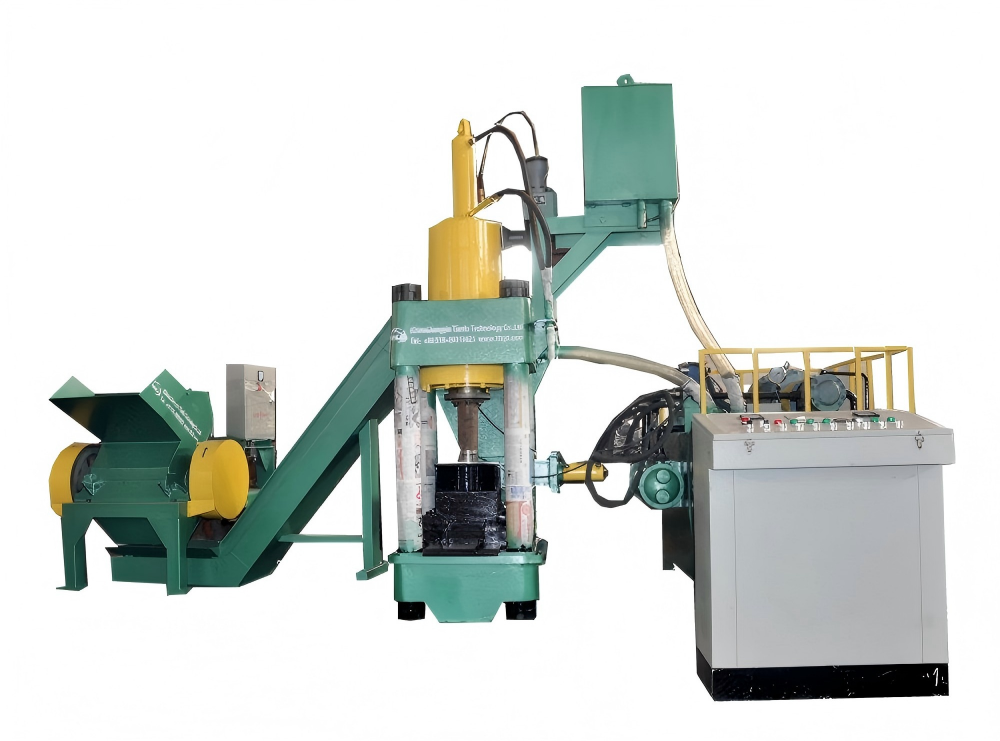
The Importance of a Trial Run
Before finalizing a purchase, it is highly recommended to send a sample of your specific material to the manufacturer. HARSLE offers testing services where we can determine the optimal pressure, dwell time, and binder requirements (if any) for your scrap. This empirical data is far more valuable than theoretical calculations and ensures that the machine delivered to your facility is ‘plug-and-play’ for your specific needs.
Economic Impact of Briquette Quality
Why should a business care if their briquettes crumble? The economic implications are significant. First, loose chips have a much lower bulk density, meaning you are paying to transport air. A well-compressed briquette can increase density by a factor of 10 or more. Second, in the furnace, loose chips have a high surface-area-to-volume ratio, leading to high oxidation losses (burn-off). Solid briquettes sink below the dross line in the melt, resulting in a much higher metal recovery rate. If your briquettes crumble, you lose these advantages, directly impacting your bottom line.
| Feature | Impact on Briquette Integrity | Recommended Fix |
|---|---|---|
| Hydraulic Pressure | Low pressure leads to low density and crumbling. | Increase system pressure or check for leaks. |
| Dwell Time | Insufficient time for air escape and plastic deformation. | Adjust PLC settings to increase hold time. |
| Material Size | Large, stringy chips create structural voids. | Install a shredder or crusher before the hopper. |
| Mold Condition | Worn dies cause uneven ejection forces. | Polish or replace the die liners. |
FAQ: Troubleshooting Your Hydraulic Briquetting Machine
Q1: Can I use a binder to stop my briquettes from crumbling?
Yes, for certain materials like cast iron dust or very fine grinding swarf, a binder (such as molasses, starch, or specialized industrial polymers) can be very effective. However, for most metal chips, the high pressure of a HARSLE machine should be enough to create a mechanical bond without the need for additives, which can contaminate the melt.
Q2: Why do my briquettes look good at first but crack after an hour?
This is usually due to ‘delayed elastic recovery’ or moisture issues. If the material was compressed too quickly, the internal stresses take time to manifest as cracks. Try increasing the dwell time and ensuring the material is as dry as possible before pressing.
Q3: How often should I change the hydraulic oil?
For a machine running a single shift, we recommend a full oil change and filter replacement every 2,000 to 3,000 operating hours. Contaminated or overheated oil loses its incompressibility, leading to erratic pressure spikes and poor briquette quality.
Q4: Is it better to have a horizontal or vertical briquetting press?
Horizontal presses are generally better for long, stringy materials as they often feature a larger charging chamber. Vertical presses are often more compact and better suited for fine powders or chips that flow easily. HARSLE provides both configurations depending on the application.
Q5: What is the ideal density for a metal briquette?
Ideally, a metal briquette should reach 70% to 85% of the solid metal’s density. For example, an aluminum briquette should ideally reach a density of around 2.1 to 2.3 g/cm³. If you are significantly below this, crumbling is much more likely.
Conclusion: Achieving Perfection in Compaction
A hydraulic briquetting machine is a powerful tool for turning waste into profit, but its effectiveness depends on a fine-tuned balance of mechanical force and material preparation. If you are struggling with briquettes crumbling after pressing, the solution usually lies in a systematic review of your material’s moisture, the machine’s dwell time, and the physical state of the mold. By implementing the fixes outlined in this guide—such as optimizing hydraulic settings, maintaining die integrity, and ensuring consistent feeding—you can produce high-density briquettes that withstand transport and maximize smelting efficiency.
At HARSLE, we are committed to providing not just the machinery, but the technical expertise required to make your recycling operations a success. Our range of hydraulic briquetting presses is engineered for durability and precision, helping you overcome the common challenges of metal compaction. Remember, a solid briquette is a sign of a healthy, efficient production line. Don’t let crumbling waste eat into your margins; invest in the right settings and the right equipment today.