Why Is the Aluminium Extrusion Press Cycle Time Slowing Down? Troubleshooting Steps

Introduction to Aluminium Extrusion Press Cycle Time
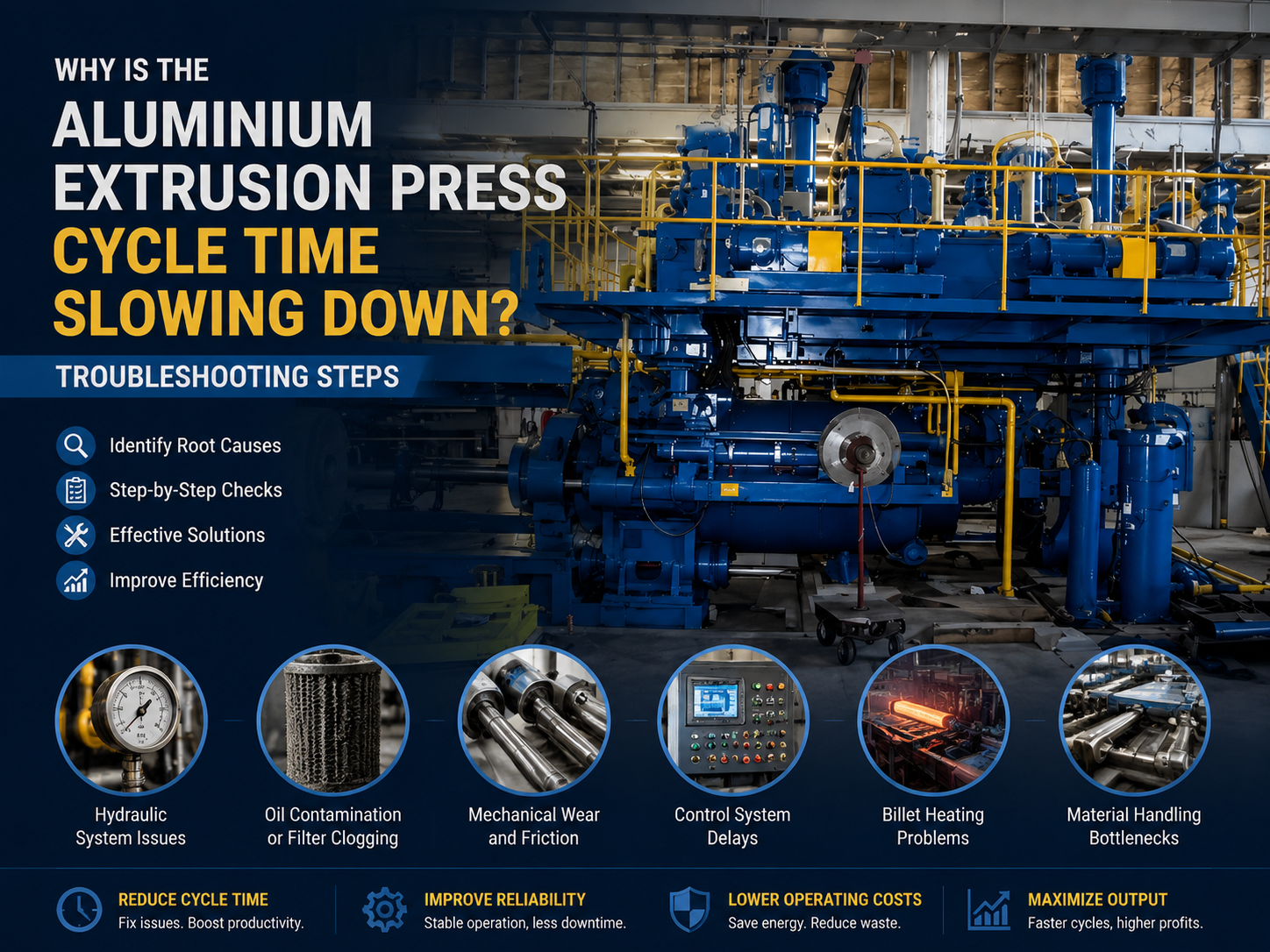
In the high-stakes world of metal fabrication, efficiency is the primary metric of success. For facilities operating an aluminium extrusion press, the ‘cycle time’—the total duration required to process a single billet into a finished profile—is the heartbeat of the production line. When this cycle time begins to creep upward, even by a few seconds, the cumulative effect on daily output and profit margins can be devastating. Understanding why an aluminium extrusion press cycle time is slowing down is not just a matter of maintenance; it is a critical diagnostic process that ensures the longevity and profitability of your industrial investment.
Cycle time is generally divided into two main components: the extrusion time (when the metal is actually being pushed through the die) and the ‘dead cycle time’ (the time spent on non-extrusion tasks like billet loading, container shifting, and shearing). A slowdown can occur in either phase, and identifying the root cause requires a deep dive into hydraulic systems, mechanical alignments, and electronic control logic. At HARSLE, we recognize that a high-performance press must maintain its speed over years of rigorous operation. This guide provides a comprehensive framework for troubleshooting and rectifying cycle time delays.
As global demand for lightweight aluminium components in the automotive, aerospace, and construction sectors continues to rise, manufacturers cannot afford the luxury of inefficient machinery. A slow press doesn’t just produce fewer parts; it often consumes more energy per unit and subjects components to unnecessary thermal stress. By the end of this article, you will have a technical roadmap to identify bottlenecks and restore your aluminium extrusion press to its peak operational velocity.
Key Considerations: What Defines a ‘Slow’ Cycle?
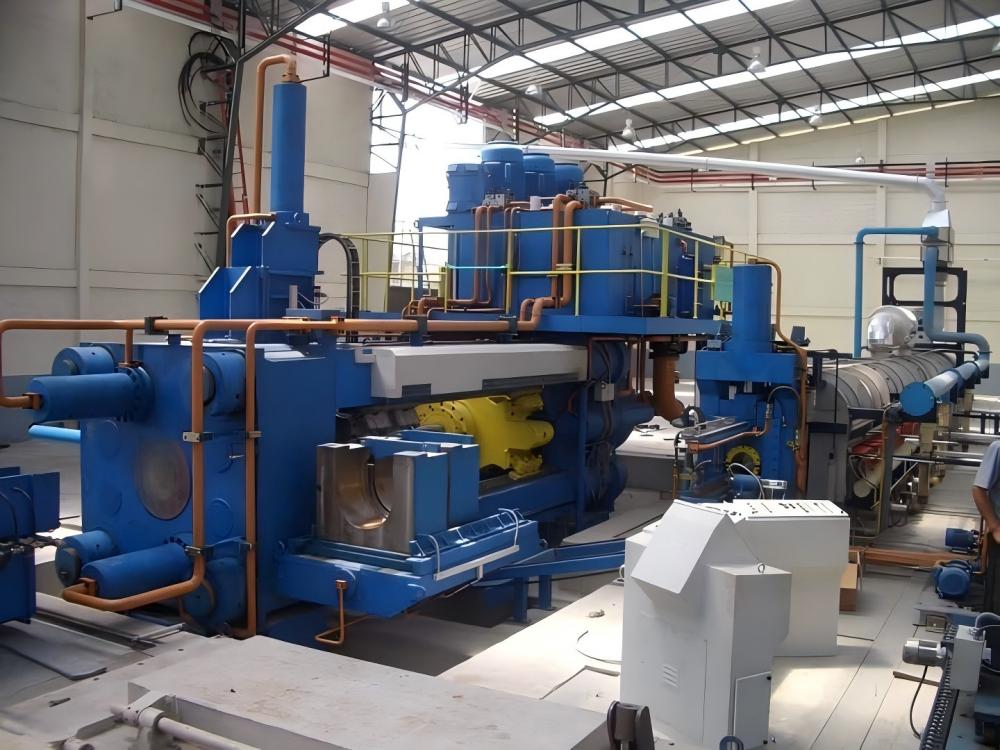
Before diving into the mechanical specifics, it is essential to establish a baseline for what constitutes a slowdown. Every aluminium extrusion press has a theoretical minimum cycle time defined by its manufacturer. This is often referred to as the ‘dry cycle’ or ‘dead cycle’ time. If your machine was rated for a 15-second dead cycle but is currently performing at 22 seconds, you are facing a significant efficiency leak. The first consideration is distinguishing between a gradual slowdown over months and a sudden drop in performance.
Gradual slowdowns often point toward wear and tear, such as internal leakage in hydraulic pumps or the slow degradation of seals. Sudden slowdowns, conversely, are typically linked to sensor failures, PLC (Programmable Logic Controller) errors, or a specific mechanical obstruction. Another key consideration is the ‘Extrusion Ratio’ and the temperature of the billet. If the material is too cold or the profile is too complex, the press must work harder, which naturally increases the extrusion phase of the cycle. However, if the mechanical movements of the press itself are sluggish, the issue lies within the machine’s infrastructure.
Environmental factors also play a role. Hydraulic oil viscosity changes with temperature; if your cooling system is failing, the oil becomes too thin, leading to reduced volumetric efficiency in the pumps. Conversely, if the oil is too cold during start-up, the sluggish flow can delay valve responses. Operators must also be considered; a lack of synchronization between the billet heater, the loader, and the press can lead to ‘waiting time,’ which is often misdiagnosed as a machine slowdown. A holistic view of the entire extrusion line is necessary to pinpoint the exact location of the bottleneck.
Technical Details: The Mechanics of the Slowdown
1. Hydraulic System Inefficiencies
The hydraulic system is the most common culprit when an aluminium extrusion press cycle time begins to lag. The system relies on a complex network of pumps, proportional valves, and cylinders to move the main ram and auxiliary components. Over time, hydraulic pumps experience internal wear, which reduces their ability to maintain flow at high pressures. This is known as a loss of volumetric efficiency. If the pump cannot deliver the required liters per minute (LPM) at the set pressure, the ram speed will inevitably drop.
Furthermore, the response time of the valves is critical. Proportional valves use electrical signals to precisely control the flow of oil. If the spool inside the valve is sticking due to oil contamination or if the solenoid is weakening, the transition between movements (e.g., from ‘fast forward’ to ‘pressing’) will take longer. Even a delay of 0.5 seconds per valve transition can add several seconds to the total dead cycle time. Regular oil analysis and filtration are paramount to preventing these micro-delays.
2. PLC Logic and Sensor Feedback
Modern aluminium extrusion presses are controlled by sophisticated PLC systems that rely on feedback from encoders and proximity sensors. If a sensor is misaligned or failing, it may send ‘chattering’ signals or delayed confirmations to the PLC. For example, the PLC will not initiate the next step in the cycle—such as moving the container—until it receives a ‘home’ signal from the billet loader. If that signal is delayed by a faulty limit switch, the entire cycle pauses. Troubleshooting involves checking the ‘I/O’ (Input/Output) status in the PLC software to see which specific step is hanging.
3. Mechanical Friction and Alignment
The physical movement of massive steel components involves overcoming significant friction. The main ram, the container, and the die slide move on precision ways or guide rails. If these rails are not properly lubricated or if the press has fallen out of alignment due to foundation settling or thermal expansion, the force required to move them increases. This extra resistance slows down the ‘dead’ movements. Furthermore, a worn container heating system can lead to uneven thermal expansion, causing the container to bind slightly during its travel, which adds seconds to the cycle and increases wear on the hydraulic seals.
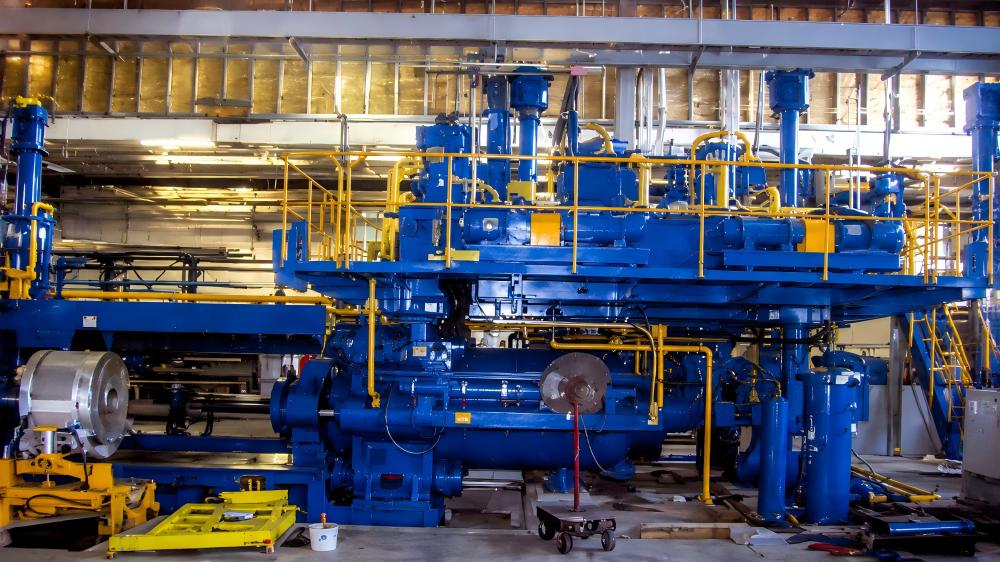
Troubleshooting Steps: A Systematic Approach
To effectively diagnose why your aluminium extrusion press cycle time is slowing down, follow these structured troubleshooting steps. This process moves from the most common external factors to the more complex internal mechanical and electronic issues.
Step 1: Analyze the Cycle Time Breakdown
Use a stopwatch or the machine’s built-in diagnostics to time each segment of the cycle. Break it down into: Billet Loading, Container Closing, Main Ram Fast Forward, Extrusion, Pressure Relief, Container Opening, and Shearing. Compare these times against the machine’s original specifications. This will immediately tell you if the problem is in the ‘Dead Cycle’ (mechanical/hydraulic movement) or the ‘Extrusion Cycle’ (process/material related).
Step 2: Inspect Hydraulic Oil and Pressure
Check the hydraulic oil temperature. It should typically be between 40°C and 55°C. If it is higher, the oil’s viscosity has dropped, causing internal leakage. Next, perform a ‘pump slip test’ to check the health of your main pumps. If the pumps are not delivering their rated flow at high pressure, they likely need a rebuild or replacement. Also, check the nitrogen pre-charge in the accumulators; if the accumulators are ‘flat,’ the press will lose the rapid-travel speed required for the dead cycle.
Step 3: Verify Sensor and Limit Switch Accuracy
Inspect all proximity switches and linear transducers. Dust, aluminium shavings, or grease buildup can interfere with sensor readings. Ensure that the ‘target’ for each sensor is clean and properly positioned. In the PLC interface, look for any ‘wait’ states where the machine is idling while waiting for a signal. Often, adjusting a limit switch by just a few millimeters can shave seconds off the loading and unloading phases.
Step 4: Evaluate the Shearing and Loading Mechanisms
The auxiliary movements often hide the most significant time losses. If the butt shear is slow to retract or if the billet loader is moving sluggishly, it delays the start of the next extrusion. Check the pneumatic or hydraulic cylinders dedicated to these tasks. Worn seals in these smaller cylinders are frequently overlooked but are major contributors to increased dead cycle time.
Step 5: Review Process Parameters
Sometimes the slowdown is intentional but forgotten. Check the PLC settings for ‘Ramp Up’ speeds and ‘Breakthrough’ pressure limits. If an operator previously lowered these speeds to deal with a difficult die and never changed them back, the press will continue to run slowly. Ensure that the billet temperature and die temperature are within the optimal range for the specific alloy being extruded.
Selection Advice: Choosing a Press for Long-Term Speed
When purchasing a new aluminium extrusion press, or upgrading an existing one, certain design features are critical for maintaining fast cycle times over the long term. At HARSLE, we emphasize the following technical specifications for high-efficiency production:
- Servo-Driven Hydraulics: Modern presses utilize servo-motors to drive hydraulic pumps. This allows for much faster response times and the ability to vary flow rates instantly, significantly reducing dead cycle time compared to traditional fixed-vane or piston pumps.
- Robust Frame Design: A rigid, pre-stressed frame minimizes deflection during high-pressure extrusion. Less deflection means better alignment, which reduces friction and wear on the moving parts, keeping the cycle fast for years.
- Advanced Control Systems: Look for presses equipped with high-speed PLCs (like Siemens S7-1500 or equivalent) and user-friendly HMI (Human Machine Interface) that provides real-time cycle time analytics. This allows operators to spot slowdowns the moment they occur.
- Rapid-Change Die Systems: While not part of the ‘press cycle’ itself, the time taken to change dies affects overall plant efficiency. Automated die-slide systems and quick-bolting mechanisms are essential for modern high-mix production environments.
- Integrated Cooling and Filtration: A press is only as good as its oil. High-capacity heat exchangers and multi-stage filtration systems ensure that the hydraulic fluid remains at the perfect viscosity, preventing the sluggishness associated with overheated or dirty oil.
| Feature | Impact on Cycle Time | Maintenance Requirement |
|---|---|---|
| Servo-Hydraulic Pump | Reduces dead cycle by up to 30% | Low; electronic monitoring |
| Linear Transducers | Precise positioning for faster transitions | Keep clean and calibrated |
| High-Flow Valves | Faster ram movement (forward/retract) | Annual spool inspection |
| Automated Billet Loader | Minimizes idle time between billets | Lubricate pivot points weekly |
Frequently Asked Questions (FAQ)
Q1: How much dead cycle time is considered ‘normal’?
For a modern 1000-ton to 2500-ton aluminium extrusion press, a dead cycle time of 12 to 18 seconds is generally considered excellent. Older machines or much larger presses (above 5000 tons) may have dead cycles ranging from 25 to 40 seconds. If your current time is 20% higher than the manufacturer’s spec, it’s time to troubleshoot.
Q2: Can the type of aluminium alloy affect the cycle time?
Yes, significantly. Harder alloys (like the 7000 series) require much higher pressures and slower extrusion speeds to prevent cracking or surface defects. However, the ‘dead cycle’ (loading, shearing) should remain constant regardless of the alloy. If the dead cycle is slowing down, it is a machine issue, not a material issue.
Q3: Why does my press slow down after 4 hours of operation?
This is almost always related to heat. As the machine runs, the hydraulic oil heats up. If your cooling system is inadequate, the oil viscosity drops, leading to internal pump leakage and slower valve response. Check your heat exchanger for clogs or ensure your cooling water flow is sufficient.
Q4: Will upgrading my PLC improve my cycle time?
An upgrade can help if your current PLC is old and has slow processing speeds or if the sensors are outdated. Modern PLCs can handle more complex ‘overlap’ movements (e.g., starting the billet loader while the shear is still retracting), which can shave 1-2 seconds off every cycle.
Q5: How often should I calibrate the sensors on my extrusion press?
We recommend a full calibration check every six months. However, if you notice a sudden change in the ‘stop’ positions of the ram or container, you should check the relevant linear transducers or encoders immediately.
Conclusion: Maintaining Peak Performance
An aluminium extrusion press is a significant capital investment, and its productivity is directly tied to its cycle time. When you ask, “Why is the aluminium extrusion press cycle time slowing down?”, you are initiating a vital health check for your entire production line. By systematically evaluating hydraulic efficiency, electronic feedback loops, and mechanical alignment, you can identify and resolve the bottlenecks that eat into your profitability.
Regular maintenance is the most effective defense against cycle time degradation. Ensuring clean oil, calibrated sensors, and well-lubricated guide rails will keep your press running at its rated speed for decades. At HARSLE, we are committed to providing not only high-quality machinery but also the technical expertise required to keep that machinery operating at peak performance. Whether you are troubleshooting an older unit or looking to invest in the latest high-speed extrusion technology, understanding the nuances of cycle time is the key to staying competitive in the modern metal fabrication industry.
Don’t let a few lost seconds turn into hours of lost production. Implement a rigorous monitoring program today, and ensure your aluminium extrusion press remains the fast, efficient powerhouse your business depends on.