
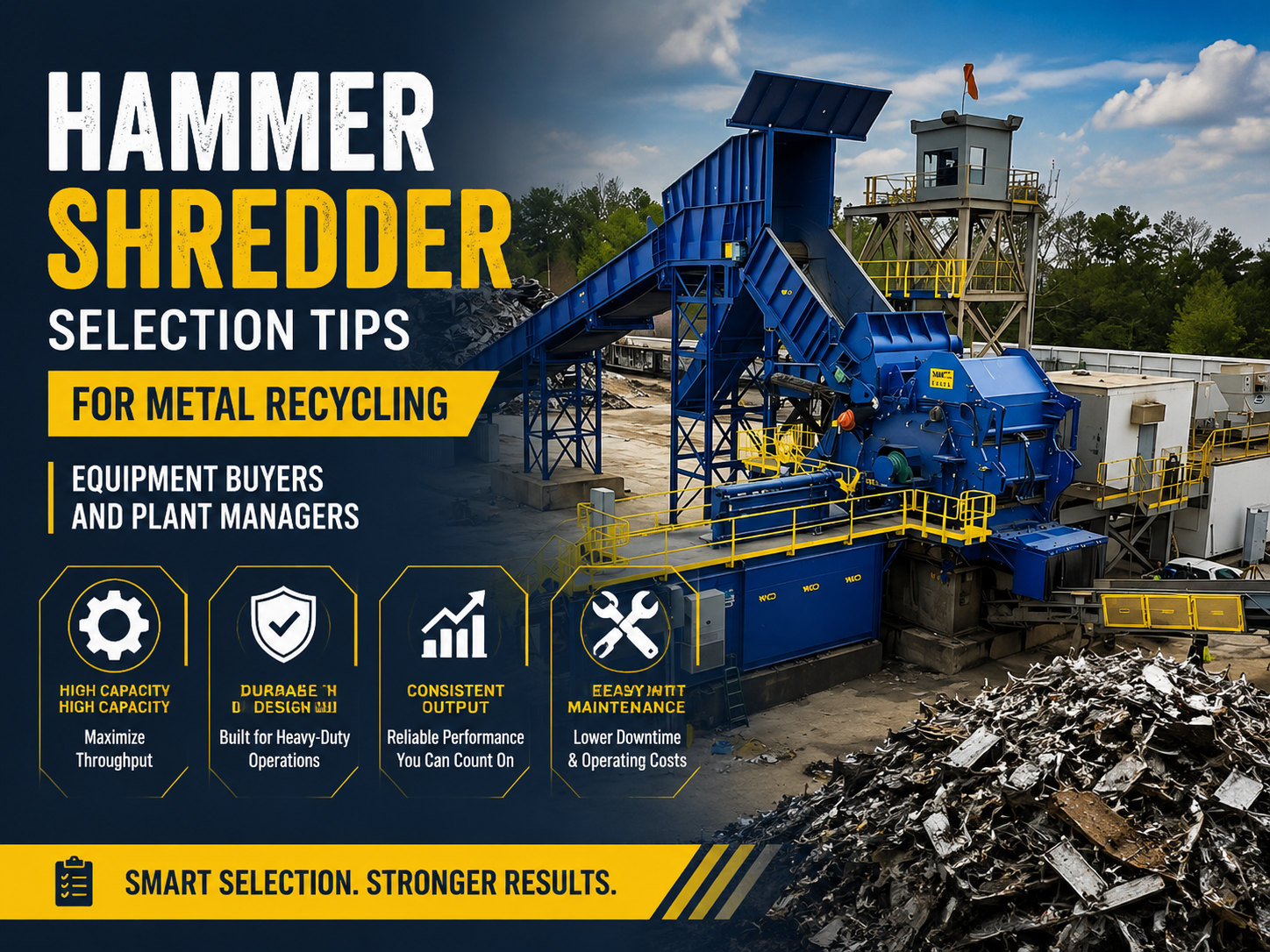
Hammer Shredder Selection Tips for Metal Recycling Equipment Buyers and Plant Managers

Introduction to Hammer Shredder Procurement for Modern Recycling
In the rapidly evolving landscape of metal recycling, the hammer shredder stands as the cornerstone of high-volume processing. For plant managers and equipment buyers, selecting the right machinery is not merely a purchase; it is a strategic investment that dictates the facility’s throughput, purity of output, and long-term profitability. As global demand for high-quality secondary raw materials increases, the pressure to choose a shredder that balances power with efficiency has never been higher.
A hammer shredder operates on the principle of high-speed impact. Large scrap metal items are fed into a chamber where massive, rotating hammers strike the material against anvils and grates, reducing it to a dense, uniform size. This process not only facilitates easier transport but also liberates non-ferrous metals and contaminants from steel, significantly increasing the market value of the end product. However, the market is flooded with various configurations, making the selection process daunting for even experienced professionals.
This guide provides a deep dive into the essential Hammer Shredder Selection Tips Metal Recycling Equipment Buyers Plant Managers need to navigate the complexities of industrial procurement. We will explore the financial landscape, technical specifications, and operational considerations that ensure your investment yields the highest possible return. Whether you are upgrading an existing line or building a new facility, understanding these nuances is critical to operational success.
Price Range Overview: Categorizing Your Investment
The cost of a hammer shredder varies significantly based on its scale, motor power, and intended application. For plant managers, understanding these price brackets is the first step in budgetary planning. Generally, the market is divided into three primary tiers: entry-level/mobile units, mid-range industrial shredders, and heavy-duty large-scale systems.
Entry-level or mobile hammer shredders typically range from $150,000 to $450,000. These units are designed for smaller yards or specialized processing of light scrap, such as aluminum extrusions or thin-gauge sheet metal. While they offer lower upfront costs and greater flexibility, their throughput is limited, often capping at 5-10 tons per hour (TPH). These are ideal for facilities testing the waters of shredding or those with limited space.
Mid-range industrial shredders, the workhorses of the industry, fall between $500,000 and $1,500,000. These machines are engineered for consistent, multi-shift operations, processing car bodies, white goods, and mixed heavy scrap. With capacities ranging from 15 to 40 TPH, they offer a balance of robust construction and manageable operating costs. Most professional recycling plants find their ideal solution within this category.
| Shredder Category | Estimated Price Range (USD) | Typical Throughput (TPH) | Primary Application |
|---|---|---|---|
| Small/Mobile Units | $150k – $450k | 5 – 12 TPH | Light scrap, aluminum, e-waste |
| Medium Industrial | $500k – $1.5M | 15 – 45 TPH | ELVs (End-of-Life Vehicles), white goods |
| Heavy-Duty Systems | $2M – $5M+ | 50 – 100+ TPH | Heavy structural steel, high-volume ELV |
At the top end, heavy-duty systems can exceed $5,000,000. These are massive installations requiring significant infrastructure, including dedicated power substations and reinforced foundations. They are capable of processing over 100 TPH and are designed for the largest regional recycling hubs. For these units, the purchase price is only a fraction of the total project cost, which includes sophisticated downstream separation technologies.
Main Cost Drivers: What Are You Actually Paying For?
When evaluating quotes, it is essential to look beyond the sticker price and understand the engineering that drives the cost. The most significant cost driver in a hammer shredder is the motor and drive system. High-horsepower motors (ranging from 500HP to 5000HP) require specialized electrical components, soft starters, or variable frequency drives (VFDs). A VFD-controlled system adds to the initial cost but provides superior control over rotor speed and protects the motor from torque spikes, ultimately extending the machine’s life.
The second major driver is the metallurgy of the wear parts. The rotor, hammers, and internal liners are subjected to extreme stress. Premium shredders utilize high-manganese steel or specialized alloy compositions that offer superior work-hardening properties. While a machine using standard carbon steel components might be cheaper initially, the frequency of replacement will quickly erode any savings. Buyers should inquire about the specific Brinell hardness and alloy mix of the wear components.
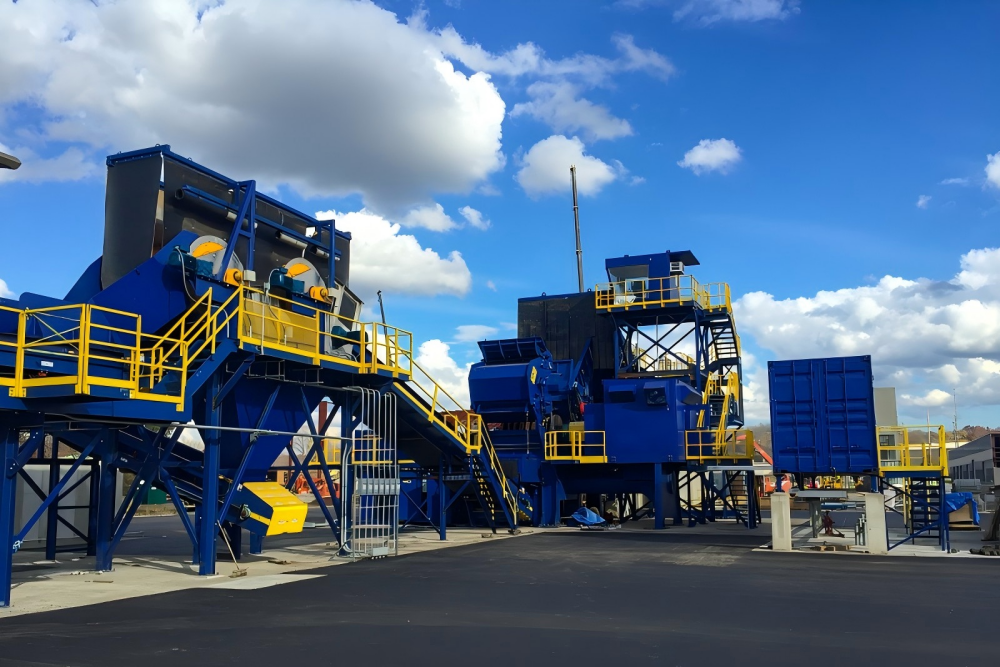
Structural integrity also plays a massive role. A shredder box must be thick enough to withstand the internal explosions of pressure and the constant bombardment of flying metal. Reinforced housings with hydraulic opening mechanisms for easy maintenance add to the cost but are indispensable for minimizing downtime. Furthermore, the inclusion of advanced automation and sensor arrays—monitoring vibration, bearing temperature, and motor load—contributes to the price but prevents catastrophic failures.
Configuration Impact: Tailoring the Machine to Your Scrap
Configuration is where the Hammer Shredder Selection Tips Metal Recycling Equipment Buyers Plant Managers become most practical. The “one size fits all” approach does not apply to metal recycling. The first configuration choice is the rotor type. Disc rotors are generally preferred for heavy scrap as they provide high inertia and are less prone to damage from unshreddable items. Pin-style rotors, conversely, may be suitable for lighter, more uniform materials where high-speed impact is the priority.
The grate configuration is equally critical. The size and shape of the holes in the bottom and top grates determine the density and size of the final product. If your end-customers are steel mills requiring a specific density (e.g., 60-80 lbs per cubic foot), your grate selection must reflect this. Some modern shredders offer interchangeable grates, allowing a plant to switch between processing different scrap types within a few hours.
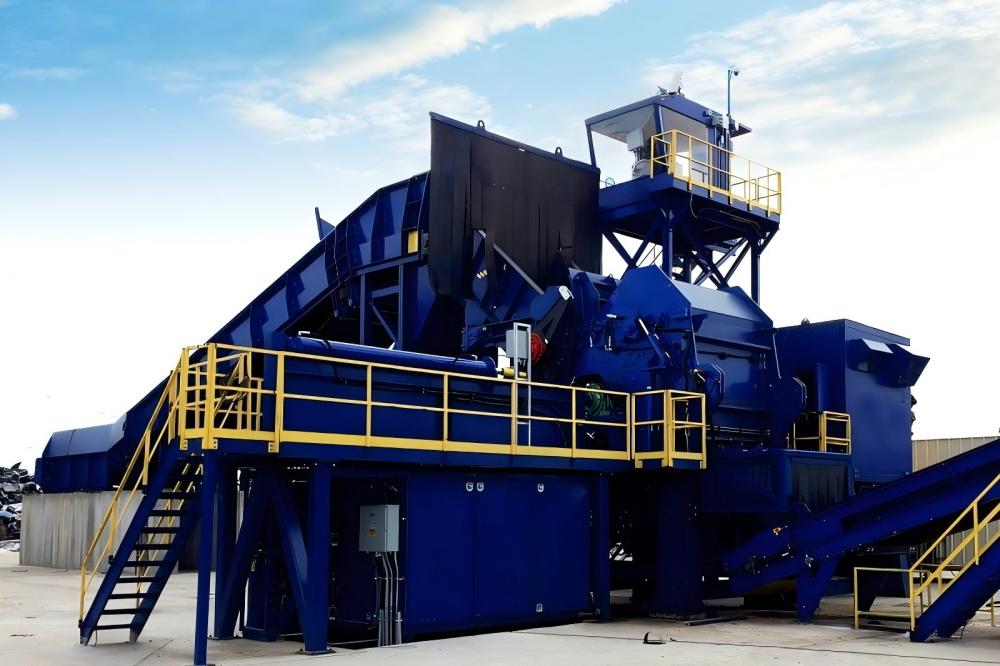
Downstream integration is the third pillar of configuration. A hammer shredder is only as good as the system that cleans its output. Buyers must decide on the level of magnetic separation (overband vs. drum magnets), eddy current separators for non-ferrous recovery, and air aspiration systems for removing “fluff” (plastics, foam, and fabric). For plant managers, ensuring the shredder’s discharge height and conveyor width are compatible with these downstream components is a common oversight that can lead to bottlenecks.
Hidden Costs: Beyond the Initial Purchase
The true cost of ownership for a hammer shredder often hides in the operational phase. Energy consumption is the most prominent hidden cost. These machines are massive power consumers. A shredder running at 1000HP can cost thousands of dollars per day in electricity. Plant managers must evaluate the efficiency of the motor and the potential for peak-shaving strategies to manage utility costs.
Maintenance labor and wear parts inventory represent another significant ongoing expense. Hammers are consumable items; depending on the material being processed, they may need to be flipped or replaced every few days or weeks. A facility must maintain a robust inventory of hammers, pins, and liners. Furthermore, the labor required to perform these changes is intensive. Machines designed with hydraulic pin pullers and easy-access doors can reduce maintenance time by 50%, saving significant labor costs over the machine’s lifespan.
Logistics and installation are often underestimated. Shipping a 50-ton shredder housing requires specialized heavy-haul transport and permits. Upon arrival, the cost of cranes, foundation pouring, and electrical integration can add 20-30% to the base price of the machine. Additionally, environmental compliance costs—such as noise dampening, dust suppression systems, and water treatment for wet-shredding processes—must be factored into the initial capital expenditure (CAPEX) budget.
ROI Calculation: Justifying the Investment
To justify the purchase of a hammer shredder to stakeholders, a detailed Return on Investment (ROI) calculation is necessary. The primary driver of ROI in metal recycling is the “spread”—the difference between the cost of raw scrap and the selling price of processed, clean fragments. Shredded scrap (often referred to as HMS 1/2 or shredded steel) commands a premium over un-processed scrap because it is furnace-ready for steel mills.
Consider a scenario where a plant processes 2,000 tons of scrap per month. If the shredding process increases the value of the scrap by $40 per ton, the gross monthly revenue increase is $80,000. From this, you must subtract the operating costs (OPEX), which include electricity, wear parts, labor, and maintenance. If the OPEX is $15 per ton, the net profit increase is $25 per ton, or $50,000 per month. In this example, a $1.5 million investment would reach a break-even point in 30 months, excluding tax benefits and depreciation.
Another factor in ROI is the recovery of non-ferrous metals. Mixed scrap often contains 3-5% aluminum, copper, and brass. Without a shredder and proper downstream separation, these valuable metals are often sold at steel prices or lost. A hammer shredder liberates these metals, allowing them to be sold at their significantly higher market rates, which can often cover the entire operating cost of the shredding line.
Buying Advice: Expert Tips for Plant Managers
When you are ready to move forward, start with a thorough material audit. What exactly are you shredding? If your stream is 90% aluminum cans, you need a very different machine than if you are processing 90% car engines. Provide your vendor with samples or detailed descriptions of your scrap mix. A reputable manufacturer like HARSLE will use this data to recommend specific hammer weights and rotor speeds.
Secondly, prioritize the “Serviceability Index.” Ask the manufacturer for a detailed maintenance manual before buying. Look for features like automatic lubrication systems, remote diagnostic capabilities, and the availability of local service technicians. In the recycling world, downtime is the ultimate profit killer. A machine that is $50,000 cheaper but takes two days longer to repair is a poor investment.
Finally, consider future-proofing. The recycling industry is subject to changing environmental regulations and shifting market demands. Choose a shredder with a modular design that can be upgraded. Can you add a larger motor later? Can the downstream line be expanded to include sensor-based sorting? Buying a machine that can grow with your business ensures that you won’t be looking for a replacement in five years.
Frequently Asked Questions (FAQ)
1. How often do the hammers need to be replaced?
Hammer life depends entirely on the abrasiveness of the material and the metallurgy of the hammer. In high-volume steel recycling, hammers are typically flipped every 20-40 hours of operation and replaced every 80-100 hours. Using high-quality manganese steel can extend these intervals significantly.
2. What is the difference between a vertical and horizontal hammer shredder?
Horizontal shredders are the industry standard for large-scale scrap, offering high throughput and the ability to handle bulky items like car bodies. Vertical shredders (or grinders) are often used for secondary processing to achieve a very fine, uniform grain size or for specific materials like e-waste and electric motors.
3. Can a hammer shredder handle “unshreddables”?
Most industrial shredders are equipped with a “reject door” or “ejection gate.” When a massive piece of unshreddable steel (like a thick engine crank or a structural beam) enters the chamber, the rotor’s kinetic energy forces the item through a safety door to prevent damage to the rotor and housing.
4. Is wet shredding better than dry shredding?
Wet shredding involves injecting water into the shredding chamber. This helps with dust suppression, reduces the risk of fires/explosions from magnesium or residual fuel, and can help clean the metal. However, it requires a water treatment system and can be messier. Dry shredding is simpler but requires robust air filtration and explosion venting.
5. What electrical infrastructure is required for a mid-sized shredder?
A mid-sized shredder (1000HP) typically requires a dedicated transformer and a high-voltage supply (e.g., 4160V). You must also ensure your local grid can handle the inrush current during startup, which is why soft starters or VFDs are highly recommended for plant managers to avoid utility penalties.
6. How do I choose the right grate size?
Grate size should be determined by your end-buyer’s specifications. Smaller holes produce a denser, cleaner product but reduce the machine’s throughput. Larger holes increase TPH but may result in a lower-quality product with more trapped contaminants. Many plants find a middle ground or use staggered hole sizes.
7. What are the safety requirements for operating a hammer shredder?
Safety is paramount. Requirements include blast-resistant operator cabins, emergency stop circuits, vibration sensors, and strict Lock-Out Tag-Out (LOTO) procedures for maintenance. Additionally, the facility layout must account for the risk of flying debris and high noise levels, often requiring sound-dampening walls or enclosures.


