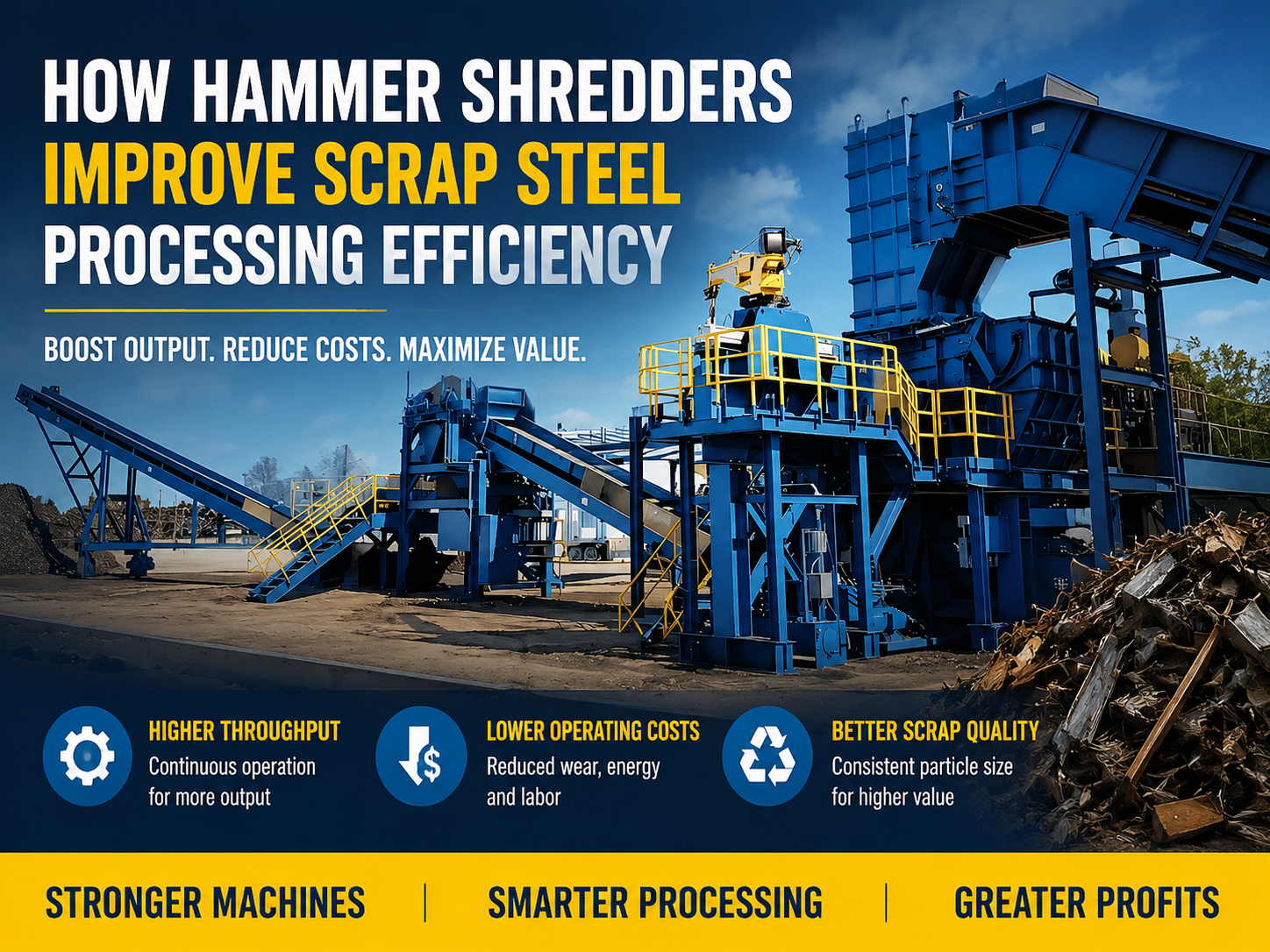
How Hammer Shredders Improve Scrap Steel Processing Efficiency: A Comprehensive Industrial Guide

Introduction to Modern Scrap Steel Processing
In the rapidly evolving landscape of global metal recycling, the demand for high-quality, clean, and dense scrap steel has never been higher. As steel mills move toward more sustainable production methods, such as Electric Arc Furnaces (EAF), the quality of the input material becomes a critical factor in operational success. This is where the hammer shredder enters the spotlight. Understanding how hammer shredders improve scrap steel processing efficiency is essential for any recycling facility looking to optimize its output and maximize profitability.
Traditional methods of scrap processing, such as manual sorting or simple hydraulic shearing, often fall short when dealing with high volumes of complex scrap. These methods frequently leave behind contaminants or produce low-density material that is expensive to transport and less efficient to melt. Hammer shredders, however, utilize high-velocity impact forces to break down scrap into small, uniform pieces while simultaneously separating non-metallic attachments. This process not only increases the physical density of the scrap but also enhances its chemical purity, making it a premium product for steel manufacturers.
HARSLE, a leader in metal fabrication machinery, recognizes that efficiency in the scrap yard translates directly to the bottom line. By integrating advanced hammer shredding technology, operators can process a wider variety of materials—from end-of-life vehicles (ELVs) to industrial white goods—with significantly less downtime and higher throughput. In this guide, we will delve into the technical mechanics, economic benefits, and strategic considerations that define how these powerful machines revolutionize the recycling industry.
Key Considerations for Efficiency in Scrap Metal Recycling
When evaluating how hammer shredders improve scrap steel processing efficiency, one must first consider the concept of ‘material liberation.’ Scrap steel is rarely pure; it is often attached to plastics, rubbers, glass, and non-ferrous metals. A hammer shredder’s primary role is to liberate the steel from these contaminants through intense mechanical energy. This liberation allows downstream separation equipment, such as magnetic drums and eddy current separators, to work with near-perfect accuracy.
Another key consideration is the ‘density-to-volume’ ratio. Transporting loose, bulky scrap is economically inefficient. Hammer shredders compress and densify the metal into ‘shredded scrap’ (often categorized as E40 or ISRI 211). This high-density material allows for more weight to be loaded into shipping containers or trucks, drastically reducing logistics costs. Furthermore, in the furnace, dense scrap melts more uniformly and requires less energy per ton, providing a secondary layer of efficiency for the end-user.
Operational uptime is the third pillar of efficiency. Modern hammer shredders are designed with heavy-duty wear plates and replaceable hammer heads made from specialized alloys like manganese steel. These materials are chosen for their work-hardening properties; the more they are struck by scrap, the harder they become. This durability ensures that the machine can run for extended shifts without frequent stops for maintenance, which is a vital component of high-volume industrial processing.
Technical Details: The Mechanics of High-Impact Shredding
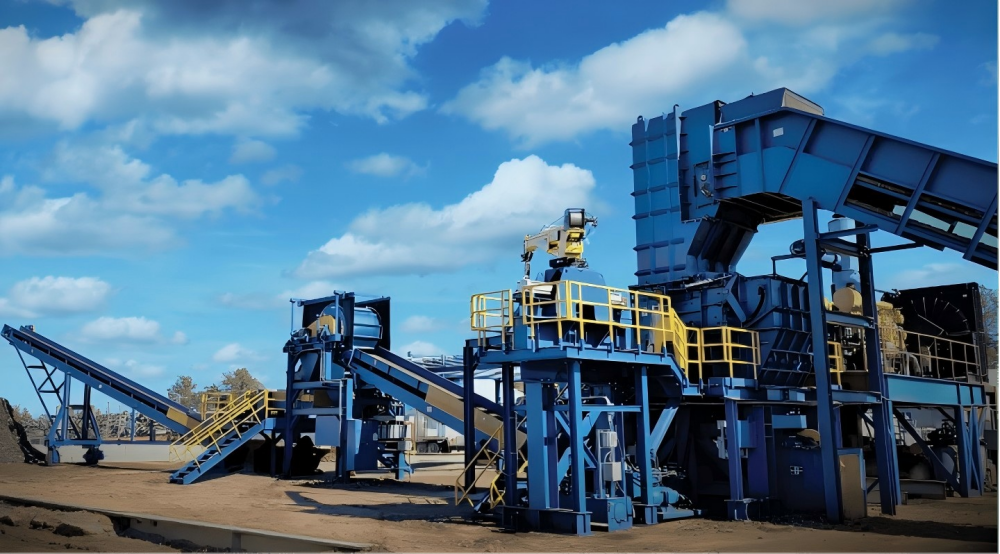
The core of the hammer shredder is the rotor assembly. This massive, spinning component houses a series of free-swinging hammers. As the rotor spins at high speeds (typically between 400 and 600 RPM), the hammers extend outward due to centrifugal force. When scrap metal is fed into the chamber, it is struck by these hammers against a fixed anvil or breaker bar. This initial impact causes the material to fracture along its weakest points.
The Role of Kinetic Energy
The efficiency of a hammer shredder is directly proportional to the kinetic energy stored in its rotor. The formula for kinetic energy (KE = 1/2 mv²) highlights that both the mass of the hammers and the velocity of the rotor are crucial. By optimizing these factors, HARSLE machines ensure that even heavy structural steel can be pulverized into manageable fragments. The energy transfer is so intense that it often generates heat, which helps to brittle certain plastics and coatings, making them easier to strip away from the metal surface.
Grate Bars and Sizing Control
Beneath the rotor lies the grate basket. The size of the openings in these grates determines the final size of the shredded scrap. Material remains in the shredding chamber, being struck repeatedly, until it is small enough to pass through the grates. This ensures a consistent output size, which is critical for automated feeding systems in steel mills. If the material is too large, it is carried back around for another cycle, a process known as internal recirculation, which maximizes the ‘cleaning’ effect on the metal.
Advanced Metallurgy and Wear Resistance
Because the environment inside a shredder is incredibly abrasive, the metallurgy of the hammers is a feat of engineering. Most high-efficiency shredders use high-manganese steel or chrome-moly alloys. These materials are designed to absorb the shock of impact without cracking, while the surface layer hardens to resist abrasion. This technical balance is what allows a hammer shredder to process thousands of tons of steel before requiring a hammer flip or replacement.
Selection Advice: Choosing the Right Shredder for Your Operation
Selecting the appropriate machinery is the most critical step in ensuring that hammer shredders improve scrap steel processing efficiency for your specific business model. Not all shredders are created equal, and a machine that is oversized for your needs will waste energy, while an undersized machine will suffer from frequent breakdowns and poor output quality.
- Assess Your Feedstock: Are you processing light-gauge sheet metal, car bodies, or heavy industrial beams? Light-duty shredders are excellent for appliances and thin scrap, but they will fail if fed heavy structural steel. Conversely, a mega-shredder used for light scrap is an inefficient use of electricity.
- Capacity Requirements: Calculate your required Tons Per Hour (TPH). Industrial hammer shredders can range from 5 TPH to over 100 TPH. Ensure your upstream loading equipment (cranes, conveyors) and downstream separation systems can match the shredder’s pace.
- Motor Power and Drive Systems: The motor is the heart of the system. High-efficiency electric motors paired with sophisticated soft-start or variable frequency drives (VFDs) can significantly reduce peak energy demand and lower operational costs.
- Maintenance Accessibility: Look for designs that feature hydraulic opening housings. The ability to quickly access the rotor and grates for inspection and part replacement is a major factor in overall operational efficiency.
Furthermore, consider the environmental controls. Modern regulations often require dust suppression and air filtration systems. A shredder that integrates these features into its design will save you the headache of retrofitting expensive secondary systems later. HARSLE provides integrated solutions that balance raw power with environmental compliance, ensuring a sustainable long-term investment.
Maintenance Strategies for Peak Efficiency
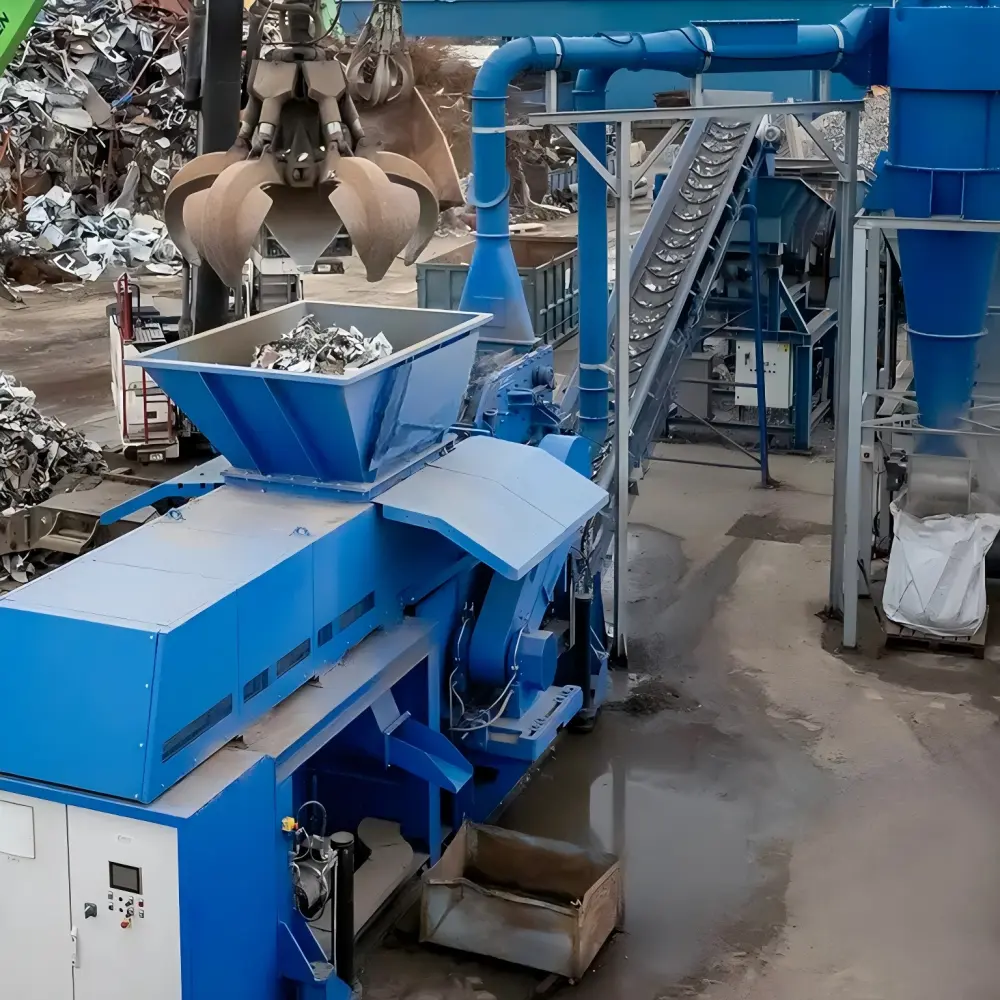
To ensure that hammer shredders improve scrap steel processing efficiency over the long term, a rigorous maintenance schedule is non-negotiable. The extreme forces at play mean that even the sturdiest machines require regular attention. The first priority is hammer management. Hammers should be rotated or ‘flipped’ regularly to ensure even wear. Once the leading edge is rounded beyond a certain point, the shredding action becomes more of a ‘rubbing’ action, which consumes more power and produces lower-quality scrap.
Lubrication of the main rotor bearings is another critical task. These bearings support the massive weight of the spinning rotor and are subjected to intense vibrations. Automated lubrication systems are highly recommended as they provide a constant, metered flow of grease, preventing overheating and premature failure. Additionally, the integrity of the liners inside the shredding chamber must be checked. These liners protect the main frame of the machine; if they wear through, the structural integrity of the shredder itself could be compromised.
Finally, monitoring the vibration levels of the machine can provide early warning signs of rotor imbalance. An unbalanced rotor can cause catastrophic damage to the bearings and the foundation. Using vibration sensors and digital monitoring tools allows operators to perform predictive maintenance, addressing small issues before they lead to expensive, unplanned downtime.
Frequently Asked Questions (FAQ)
How does a hammer shredder differ from a twin-shaft shredder?
A twin-shaft shredder typically operates at lower speeds and uses high torque to shear and tear material. It is excellent for volume reduction of bulky items. A hammer shredder, however, operates at high speeds and uses impact force. The hammer shredder is superior for ‘cleaning’ scrap and producing a high-density, pebble-like final product that is preferred by steel mills.
What is the typical lifespan of shredder hammers?
The lifespan of hammers depends entirely on the material being processed and the alloy of the hammer. On average, in a high-volume scrap yard, hammers may need to be flipped every 20-40 hours of operation and replaced after 80-100 hours. Using high-quality manganese steel can extend these intervals significantly.
Can hammer shredders process non-ferrous metals?
Yes. While they are primarily used for steel, hammer shredders are excellent for processing aluminum scrap, copper radiators, and electronic waste. The high-impact action is very effective at separating different materials, which can then be sorted using downstream technology like eddy current separators.
How much power does a hammer shredder consume?
Power consumption varies by size. Small industrial units may start at 200kW, while large-scale recycling plants can utilize motors exceeding 2000kW. Efficiency is maximized when the shredder is kept consistently full, as idling a large motor is a significant waste of energy.
Does shredding scrap help in reducing CO2 emissions?
Absolutely. Using shredded scrap in an Electric Arc Furnace (EAF) reduces the need for virgin iron ore and coking coal. Producing steel from scrap requires about 75% less energy than producing it from raw materials, and the high purity of shredded scrap further optimizes this energy saving.
Conclusion: The Future of Scrap Processing with HARSLE
In conclusion, the question of how hammer shredders improve scrap steel processing efficiency is answered through a combination of physical densification, chemical purification, and logistical optimization. By transforming low-value, bulky scrap into a high-value, furnace-ready commodity, these machines serve as the backbone of the modern circular economy. The ability to process diverse waste streams with high throughput and minimal manual intervention makes the hammer shredder an indispensable tool for any serious metal recycling operation.
As the industry moves toward stricter environmental standards and higher quality requirements for recycled steel, the role of advanced machinery becomes even more prominent. HARSLE remains committed to providing the metal fabrication and recycling industries with robust, efficient, and technologically advanced hammer shredders. By investing in the right equipment and maintaining it with precision, operators can ensure they remain competitive in a global market that increasingly values efficiency and sustainability. Whether you are looking to upgrade an existing line or build a new facility from the ground up, understanding the power of the hammer shredder is the first step toward operational excellence.