
Top Industrial Uses Of Hammer Shredders In Metal Fabrication Facilities

Introduction to Hammer Shredders in Modern Metal Fabrication
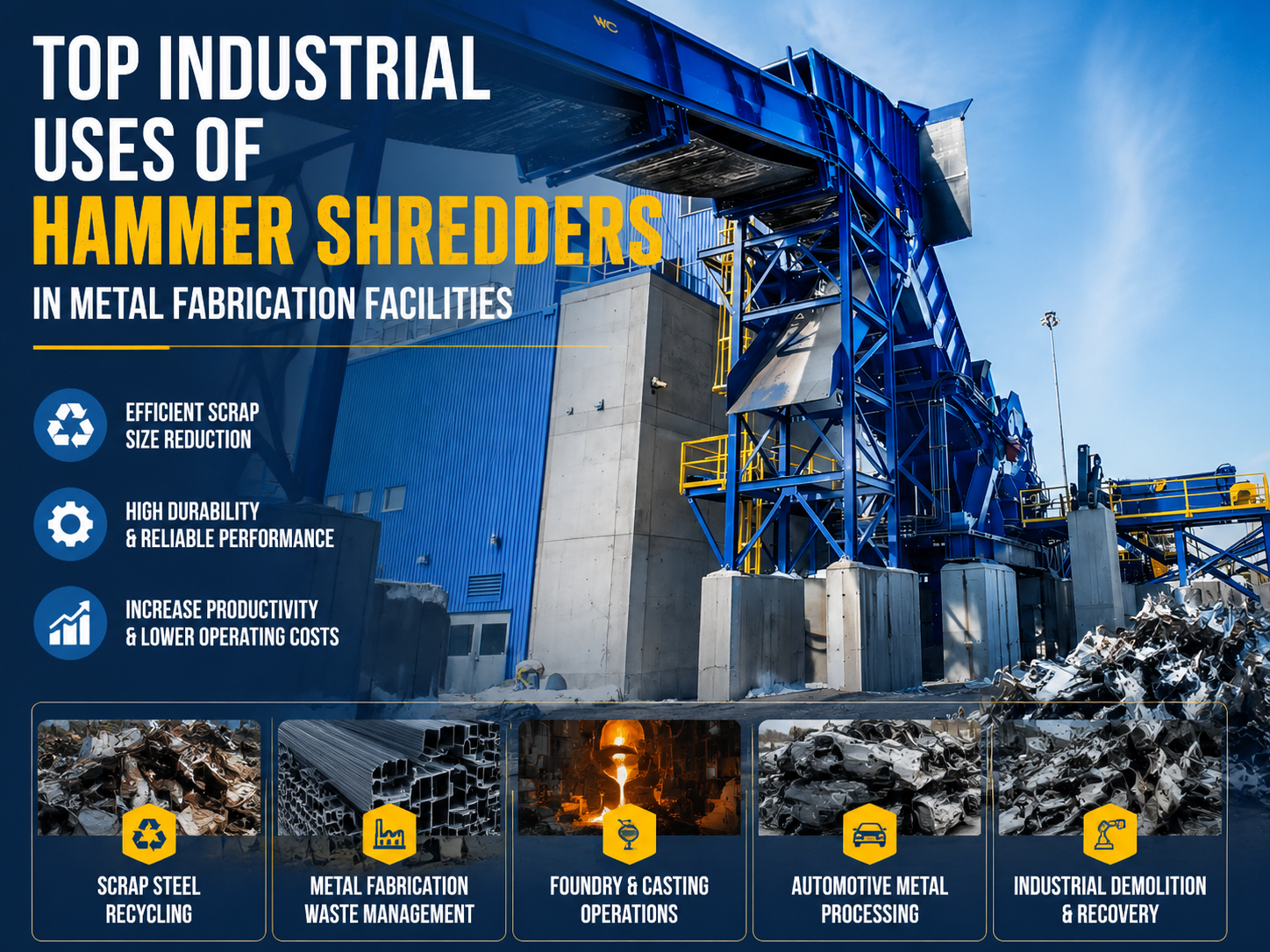
In the high-stakes world of metal fabrication, efficiency is not just a goal—it is a requirement for survival. As facilities strive to optimize their production lines and minimize waste, the role of specialized machinery becomes increasingly critical. Among these, the hammer shredder stands out as a versatile powerhouse. Often referred to as a hammer mill in certain contexts, these machines are designed to break down large, bulky metal scrap into smaller, more manageable, and highly dense pieces. This process is fundamental to modern recycling and material preparation workflows.
A hammer shredder operates on a relatively simple yet incredibly powerful principle: kinetic energy. A high-speed rotor, equipped with heavy-duty swinging hammers, strikes the incoming material with immense force. This impact causes the material to fracture and disintegrate. Unlike shears that cut or granulators that grind, hammer shredders pulverize and densify. This makes them uniquely suited for the rugged environment of a metal fabrication facility where offcuts, skeletons, and defective parts are a daily byproduct of the manufacturing process.
The adoption of hammer shredders has seen a significant uptick as global metal prices fluctuate and environmental regulations tighten. Facilities are no longer content with simply hauling away scrap; they want to process it on-site to increase its market value or prepare it for immediate remelting. By understanding the top industrial uses of hammer shredders in metal fabrication facilities, plant managers can better appreciate how these machines contribute to a leaner, more profitable operation. From automotive recycling to electronic waste recovery, the applications are as diverse as the metals they process.
HARSLE, a leader in metal fabrication machinery, recognizes that the hammer shredder is more than just a waste processor—it is a value-added asset. Whether you are dealing with aluminum extrusions, steel skeletons, or complex electronic assemblies, the right hammer shredder can transform a liability into a high-purity raw material. In the following sections, we will delve deep into the technical nuances, strategic applications, and selection criteria that define the modern use of hammer shredders in the industry.
Key Considerations for Implementing Hammer Shredders
Before integrating a hammer shredder into a metal fabrication facility, several key considerations must be addressed to ensure the investment yields the expected ROI. The first and most critical factor is the nature of the input material. Not all metals behave the same way under impact. For instance, brittle materials like cast iron shatter easily, whereas ductile materials like certain aluminum alloys may require specific hammer configurations to prevent clogging or excessive heat buildup. Understanding the metallurgical properties of your waste stream is the first step in successful implementation.
Another vital consideration is the desired output size and density. Hammer shredders are typically equipped with a discharge grate or screen. The size of the openings in this grate determines how long the material remains in the shredding chamber and, consequently, how small the final product will be. If the goal is to sell scrap to a foundry, they may require a specific “nugget” size for optimal melting efficiency. Conversely, if the goal is volume reduction for transport, a coarser output might suffice, saving on energy costs and reducing wear on the machine.
Safety and environmental impact cannot be overlooked. Hammer shredders are high-energy machines that generate significant noise, vibration, and dust. Modern facilities must implement robust dust extraction systems to capture fine metallic particles, which can be both a health hazard and a fire risk (especially with metals like magnesium or aluminum). Furthermore, acoustic enclosures are often necessary to protect workers from the high-decibel environment created during the pulverization process. Ensuring that the machine is equipped with safety interlocks and emergency stop mechanisms is non-negotiable in a professional fabrication setting.
Finally, the total cost of ownership (TCO) must be evaluated. This includes not just the initial purchase price, but also the ongoing maintenance costs. Hammers are wear parts; they are designed to be consumed. The frequency of hammer replacement, the cost of hard-facing, and the ease of access to the rotor for maintenance are all factors that will influence the long-term profitability of the machine. A well-designed hammer shredder, like those offered by HARSLE, prioritizes ease of maintenance to minimize downtime and keep the facility running at peak capacity.
Technical Details: How Hammer Shredders Work
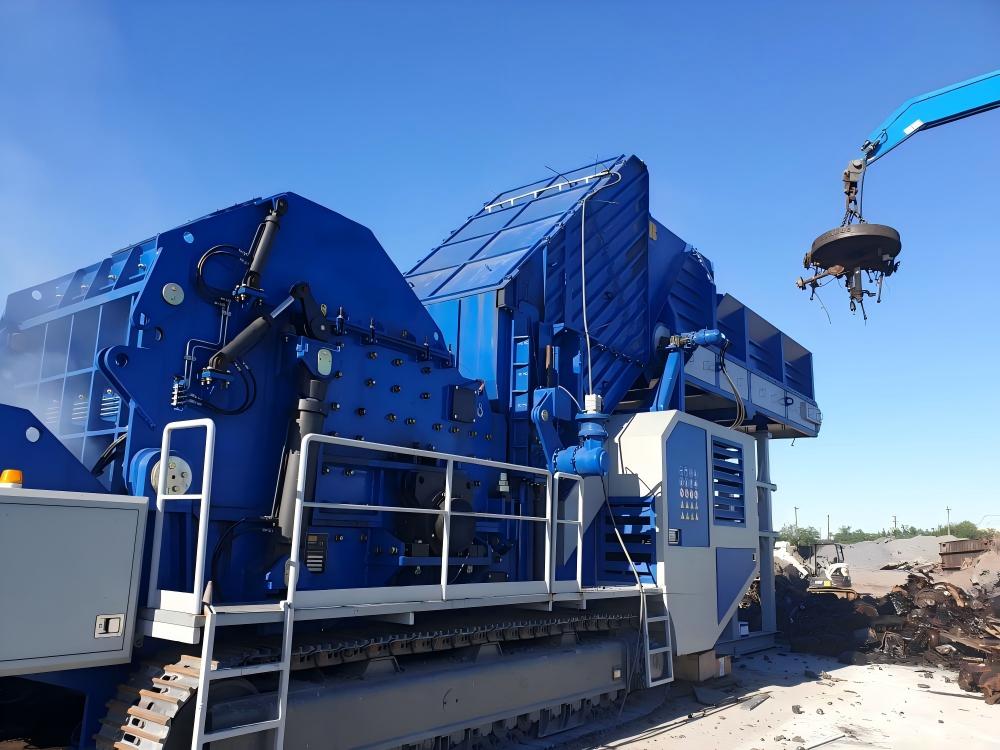
The technical prowess of a hammer shredder lies in its rotor assembly. The rotor is a massive, balanced shaft that spins at high speeds, typically between 500 and 1,500 RPM, depending on the machine’s size and the material being processed. Attached to this rotor are the hammers—heavy blocks of wear-resistant alloy steel. These hammers are usually “free-swinging,” meaning they are pinned to the rotor and can pivot. This design allows the hammers to retract if they hit an un-shreddable object (like a massive piece of tramp iron), protecting the rotor and motor from catastrophic failure.
When material enters the shredding chamber, it is struck by the hammers and flung against the “breaker plates” or “anvil” located at the top and sides of the chamber. This secondary impact further breaks down the material. The process continues until the pieces are small enough to pass through the grate at the bottom. The kinetic energy involved is calculated by the formula E = ½mv², where ‘m’ is the mass of the hammer and ‘v’ is the velocity. This explains why even relatively small hammers can exert massive force when spun at high speeds.
| Component | Function | Material/Specification |
|---|---|---|
| Rotor Shaft | Main rotating element that carries hammers | High-strength forged steel |
| Hammers | Primary impact tools for material reduction | Manganese steel or Chrome-moly alloy |
| Breaker Plates | Provide a hard surface for secondary impact | Replaceable wear-resistant liners |
| Discharge Grate | Controls the final size of the shredded metal | Heavy-duty perforated steel plate |
| Flywheel | Stores rotational energy to handle peak loads | Cast iron or steel disc |
The drive system is another technical marvel. Most industrial hammer shredders use high-torque electric motors, often coupled with a fluid coupling or a V-belt drive. The fluid coupling is particularly important as it allows the motor to start under no load and provides a “slip” mechanism to protect against sudden jams. In larger installations, sophisticated PLC (Programmable Logic Controller) systems monitor the motor’s current draw. If the current spikes, indicating a potential jam, the PLC can automatically slow down the infeed conveyor to allow the shredder to clear itself.
Top Industrial Uses of Hammer Shredders
1. Scrap Metal Recycling and Densification
The most common use of hammer shredders in metal fabrication is the processing of general scrap. Fabrication shops produce a variety of waste, including punchings, clippings, and skeletons from laser or plasma cutting. These materials are often awkward to handle and have a low bulk density, making them expensive to transport. A hammer shredder transforms this “light” scrap into dense, uniform pieces. This densification not only reduces shipping costs but also makes the scrap more valuable to steel mills, as it improves the furnace’s charging efficiency and reduces melt loss.
2. Automotive and ELV (End-of-Life Vehicle) Processing
While large-scale auto shredders are massive installations, smaller hammer shredders are used within fabrication facilities that specialize in automotive components. These machines process sub-assemblies, engine blocks, and aluminum wheels. By shredding these components, facilities can effectively separate ferrous metals from non-ferrous metals and non-metallic materials (like plastics and rubber) using downstream magnetic and eddy-current separators. This high-purity separation is essential for high-grade recycling.
3. Electronic Waste (E-Waste) Recovery
Metal fabrication facilities are increasingly involved in the production and recycling of electronic enclosures and components. Hammer shredders are ideal for the primary stage of e-waste recycling. They can pulverize computer towers, server racks, and circuit boards. The goal here is “liberation”—breaking the physical bonds between different materials. Once shredded, the precious metals (gold, silver, copper) can be separated from the fiberglass and plastics. The hammer mill’s ability to create a fine, consistent output is crucial for the subsequent chemical or mechanical recovery processes.
4. Aluminum Profile and Extrusion Processing
Aluminum is a staple in modern fabrication due to its weight-to-strength ratio. However, aluminum extrusions often come with thermal breaks (plastic inserts) or are coated in paint and anodized finishes. Hammer shredders are used to process these profiles into small chips. During the shredding process, the mechanical action often helps to strip away coatings and loosen thermal breaks. The resulting aluminum “shred” is highly sought after by secondary aluminum smelters because it melts quickly and uniformly.
5. Appliance (White Goods) Recycling
Facilities that handle the decommissioning of industrial or consumer appliances use hammer shredders to process refrigerators, washing machines, and HVAC units. These items are a complex mix of sheet steel, copper tubing, aluminum fins, and insulation foam. A hammer shredder effectively breaks these assemblies apart. The heavy impact of the hammers is particularly good at separating the copper coils from the aluminum fins in heat exchangers, a process that is difficult to achieve with other types of shredders.
6. Hazardous Waste Pre-treatment
In some specialized fabrication environments, hammer shredders are used to process metal containers that once held hazardous materials. By shredding and flattening these containers, the facility ensures they cannot be reused and prepares them for thorough cleaning or decontamination. The high-energy impact can also help to dislodge any residual solidified material inside the containers, making the subsequent cleaning process more effective.
Selection Advice: Choosing the Right Hammer Shredder
Selecting the right hammer shredder for your metal fabrication facility requires a balance between capacity, durability, and cost. The first step is to define your throughput requirements. Are you processing 500 kg per hour or 10 tons per hour? This will dictate the size of the shredding chamber and the horsepower of the motor. It is always advisable to choose a machine with a slightly higher capacity than your current needs to allow for future growth and to avoid running the machine at its absolute limit, which accelerates wear.
Next, consider the hammer design. There are various shapes—bell-shaped, rectangular, or ring-style hammers. Bell hammers are excellent for general scrap, while ring hammers (which rotate on their pins) are often preferred for applications where the material needs to be crushed rather than just struck. The material of the hammer is equally important. Manganese steel is a popular choice because it “work-hardens”—the more it is struck, the harder its surface becomes. However, for very abrasive materials, high-chrome alloys might be more appropriate.
The ease of maintenance should be a top priority. Look for a hammer shredder with a hydraulic opening mechanism. This allows the upper housing to be lifted easily, providing full access to the rotor and grates. In a busy fabrication facility, being able to change a set of hammers in a few hours rather than a full day can save thousands of dollars in lost production. Additionally, check the availability of spare parts. Choosing a reputable manufacturer like HARSLE ensures that you have access to high-quality wear parts and technical support when you need it.
Finally, evaluate the integration capabilities. Does the shredder come with a dedicated control panel? Can it be integrated into your existing SCADA system? Does the manufacturer offer auxiliary equipment like vibrating feeders, magnetic separators, or dust collectors? A turnkey solution is often more efficient than trying to piece together a system from multiple vendors. Ensure the vendor provides a comprehensive manual and training for your operators to ensure the machine is used safely and efficiently.
Frequently Asked Questions (FAQ)
What is the difference between a hammer shredder and a dual-shaft shredder?
A hammer shredder uses high-speed impact to pulverize and densify material, making it ideal for brittle metals and creating a dense end-product. A dual-shaft shredder uses low-speed, high-torque shearing action to cut material. Dual-shaft shredders are better for bulky, elastic materials like tires or large plastic drums, while hammer shredders are superior for metal densification and liberation.
How often do the hammers need to be replaced?
Hammer life depends entirely on the material being processed. When shredding clean aluminum, hammers may last for hundreds of hours. When processing abrasive steel scrap or material contaminated with sand or glass, they may need replacement or hard-facing every 40-80 hours. Regular inspection is key to maintaining performance.
Can a hammer shredder process stainless steel?
Yes, but with caution. Stainless steel is much tougher and more work-hardening than carbon steel. Processing it will cause significantly more wear on the hammers and liners. If your facility processes large amounts of stainless steel, you will need a machine with a higher horsepower motor and specialized, extra-tough hammer alloys.
What are the power requirements for an industrial hammer shredder?
Industrial units typically start at 37kW (50HP) for small-scale operations and can go up to 300kW (400HP) or more for heavy-duty scrap processing. The power required is directly proportional to the toughness of the material and the desired throughput rate.
Is dust collection mandatory for hammer shredders?
In almost all industrial jurisdictions, yes. The high-speed impact creates fine metallic and non-metallic dust. Without a proper collection system, this dust poses an inhalation risk to workers and can create an explosive atmosphere, particularly with aluminum or magnesium scrap.
Conclusion: The Future of Metal Processing with HARSLE
The industrial uses of hammer shredders in metal fabrication facilities are expanding as the industry moves toward more sustainable and efficient practices. These machines are no longer just “junk crushers”; they are sophisticated pieces of engineering that play a vital role in material recovery, waste reduction, and value creation. By transforming bulky, low-value scrap into high-density, high-purity raw materials, hammer shredders provide a clear path to increased profitability and environmental stewardship.
As we have explored, the technical details of rotor speed, hammer metallurgy, and grate sizing are critical to the success of the shredding operation. Whether you are processing automotive components, e-waste, or aluminum extrusions, the right hammer shredder can revolutionize your workflow. The key lies in selecting a machine that is robust, easy to maintain, and perfectly matched to your specific material stream.
HARSLE remains committed to providing the metal fabrication industry with cutting-edge solutions that meet these challenges head-on. Our range of hammer shredders is designed with the user in mind, featuring heavy-duty construction, intuitive controls, and easy maintenance access. By investing in high-quality shredding technology, fabrication facilities can ensure they remain competitive in a global market that increasingly values efficiency and resource recovery. As the circular economy continues to evolve, the hammer shredder will undoubtedly remain at the heart of the metal fabrication facility’s waste-to-wealth strategy.


