Comprehensive Preventive Maintenance Plan for Recycling Balers in Metal Recycling Operations

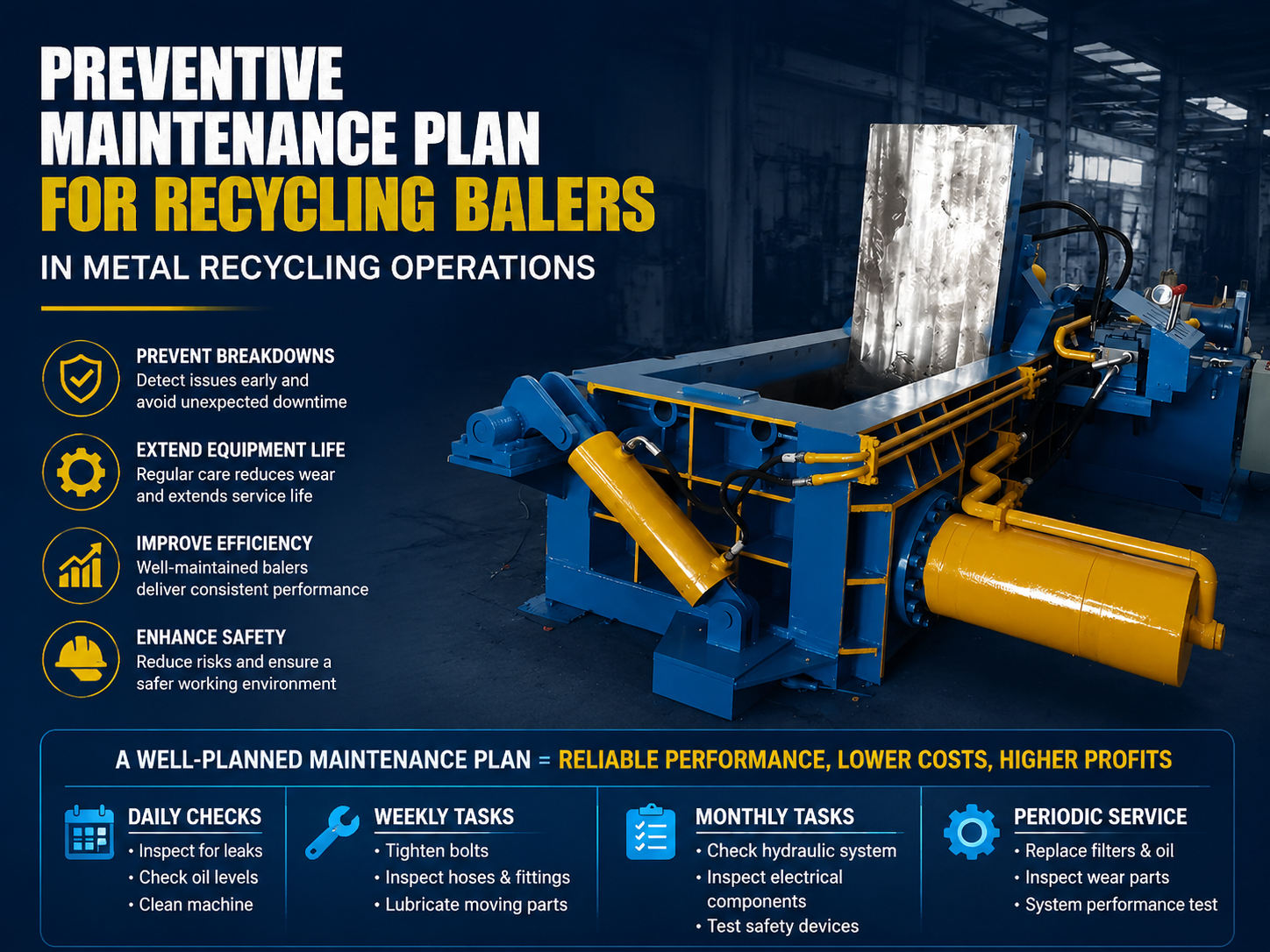
The Critical Importance of a Preventive Maintenance Plan for Recycling Balers in Metal Recycling Operations
In the high-intensity environment of metal recycling, the reliability of your equipment is the backbone of your profitability. A Preventive Maintenance Plan for Recycling Balers in Metal Recycling Operations is not merely a suggestion; it is a fundamental operational requirement. These machines, designed to compress bulky scrap into dense, transportable bales, endure immense structural stress, high hydraulic pressures, and abrasive conditions. Without a structured maintenance strategy, a minor component failure can quickly escalate into a catastrophic breakdown, leading to expensive downtime and safety hazards.
Implementing a rigorous maintenance schedule ensures that your HARSLE recycling baler operates at peak efficiency. Metal recycling facilities often operate on thin margins where throughput is king. When a baler goes offline, the entire production chain halts—scrap piles up, transport schedules are disrupted, and labor costs continue to accrue without output. By prioritizing preventive care, operators can extend the lifespan of the machine by years, ensuring that the initial capital investment continues to yield returns long after the warranty period has expired.
Beyond financial considerations, safety is the most compelling reason for a comprehensive maintenance plan. Recycling balers exert hundreds of tons of force. A ruptured hydraulic hose or a failing safety interlock can lead to life-altering injuries. A well-maintained machine is a predictable machine. By systematically checking sensors, structural welds, and hydraulic integrity, facility managers create a safer working environment for their teams, reducing the risk of accidents and the associated legal and insurance complications.
Finally, a consistent maintenance plan optimizes energy consumption. A baler struggling with clogged filters or worn-out pumps requires more electricity to achieve the same compaction force. In an era where industrial energy costs are volatile, maintaining mechanical and hydraulic efficiency is a direct way to lower operational overhead. This guide provides a deep dive into the essential components of a robust maintenance strategy tailored specifically for the rigors of metal recycling.
Daily Inspection Protocols: The First Line of Defense
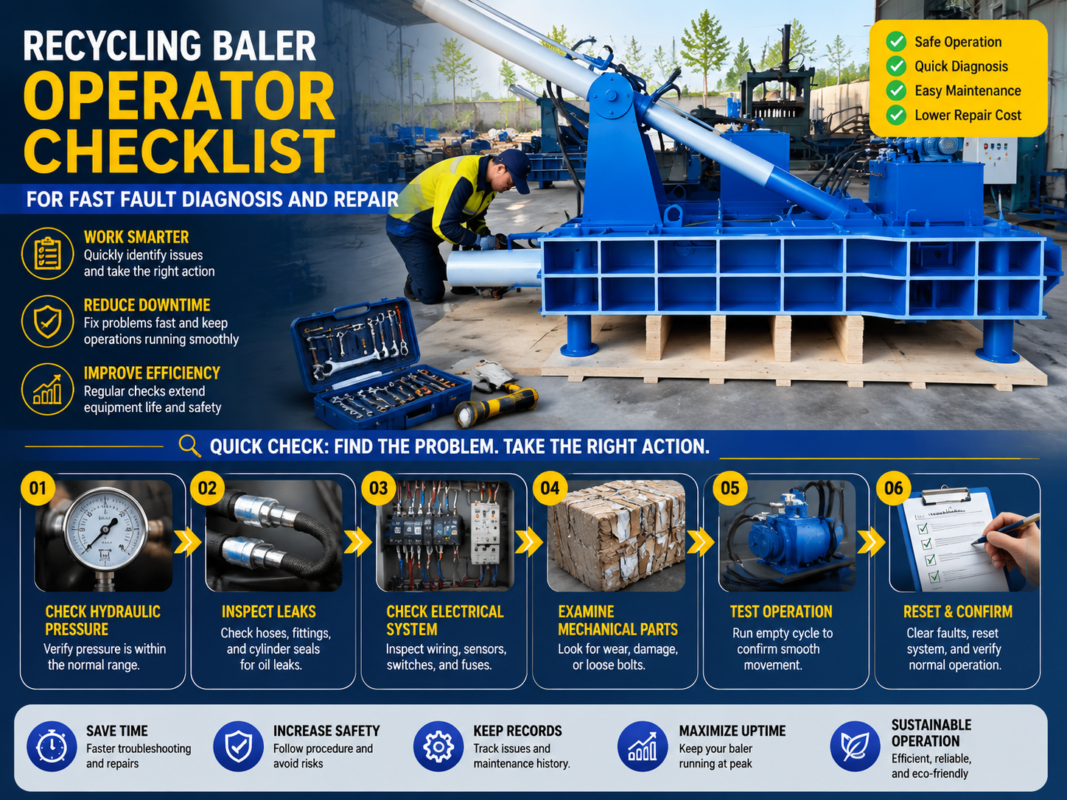
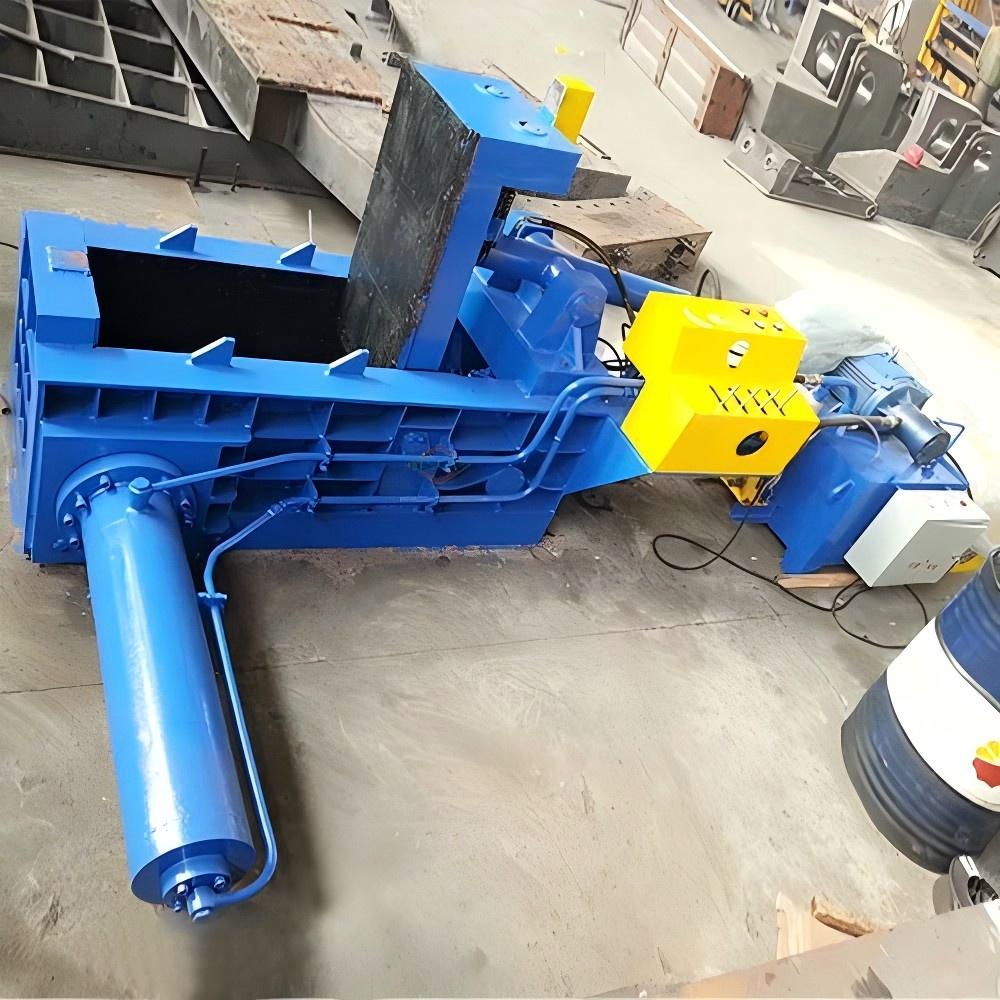
The success of any Preventive Maintenance Plan for Recycling Balers in Metal Recycling Operations begins with the daily walk-around. This routine should be performed at the start of every shift by a trained operator. The goal is to identify visible signs of wear or potential failure before the machine is powered on. Daily inspections are the most effective way to catch small leaks, loose bolts, or debris buildup that could lead to significant issues during a production run.
Operators should begin by clearing the area around the baler. Metal scrap is inherently messy, and small pieces of wire or shards can easily find their way into the machine’s guide tracks or near hydraulic cylinders. Cleaning the hopper and the compression chamber is vital; leftover debris can cause the ram to misalign or create unnecessary friction against the wear plates. A clean machine is not just about aesthetics; it allows for the easy detection of new oil leaks or structural cracks that would otherwise be hidden under a layer of dust and grease.
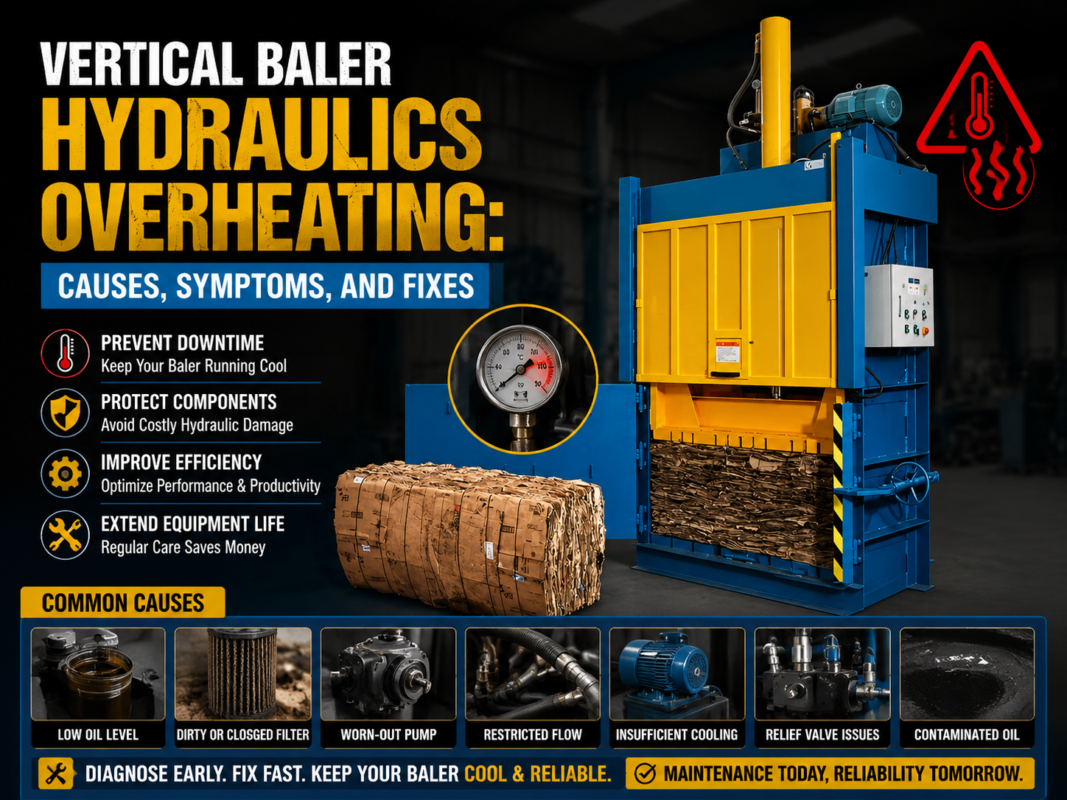
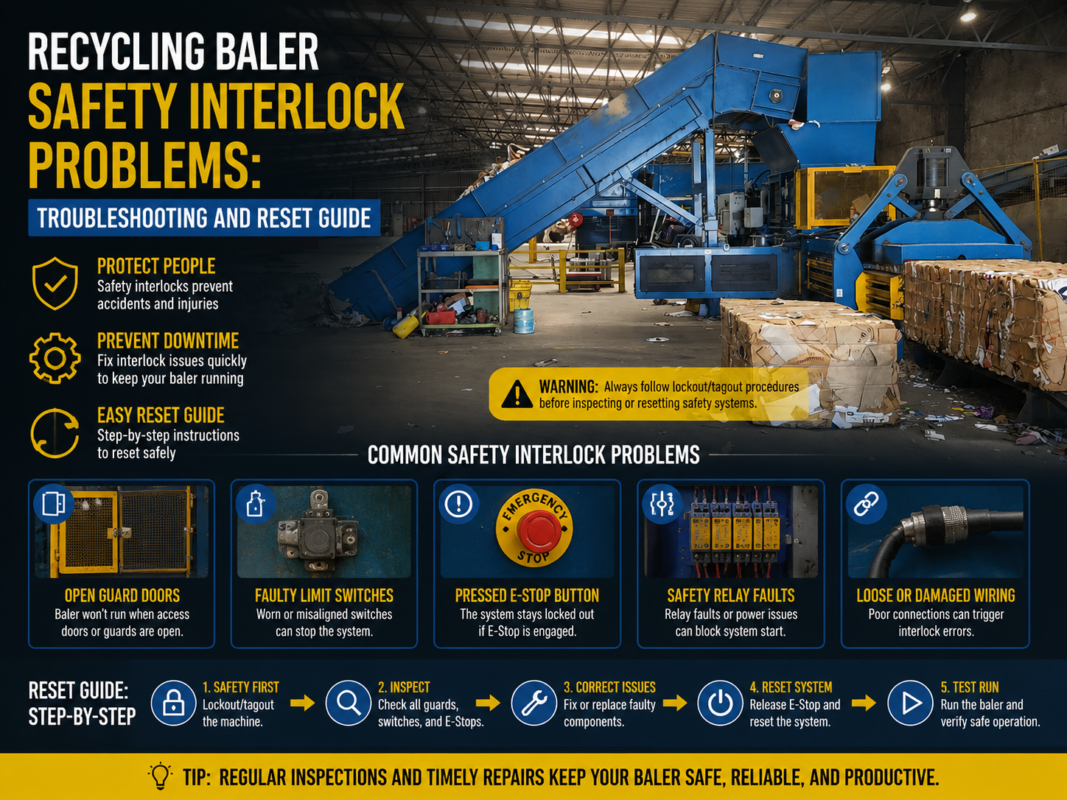
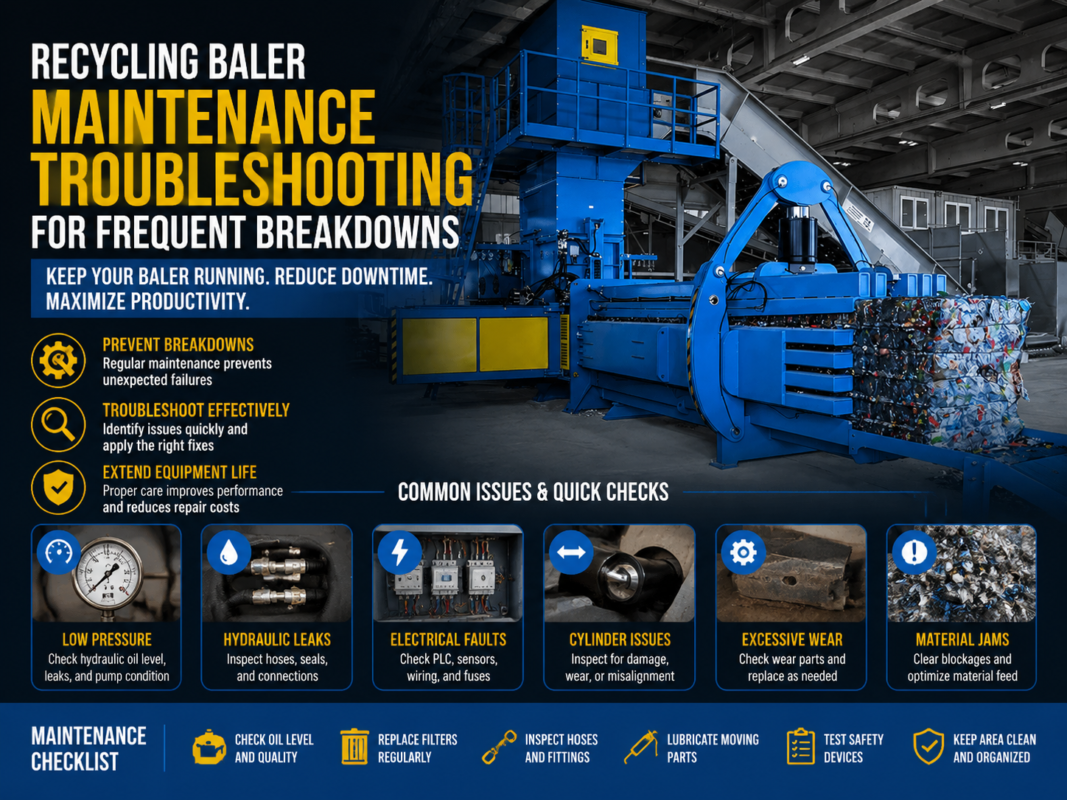
The daily checklist must include a verification of all safety devices. This includes emergency stop buttons, light curtains, and gate interlocks. If a safety feature is bypassed or malfunctioning, the machine must be tagged out immediately. Furthermore, operators should check the hydraulic oil level and temperature via the sight glass. Operating with low oil can lead to cavitation in the pump, while high temperatures indicate a cooling system failure or excessive internal friction. These simple visual checks take less than fifteen minutes but can save thousands of dollars in repair costs.
Daily Checklist Summary:
- Check for hydraulic fluid leaks around fittings and cylinders.
- Inspect the compression chamber for trapped debris or metal shards.
- Verify that all emergency stops and safety interlocks are functional.
- Monitor oil levels and ensure the cooling system is operational.
- Listen for unusual noises during the initial warm-up cycle.
Hydraulic System Maintenance: The Heart of the Baler
The hydraulic system is the lifeblood of a recycling baler. In metal recycling operations, the hydraulic fluid is subjected to extreme pressure and temperature fluctuations. A core component of your Preventive Maintenance Plan for Recycling Balers in Metal Recycling Operations must be the management of oil quality. Contamination is the leading cause of hydraulic failure. Microscopic metal particles, dust, and moisture can degrade the oil’s lubricating properties and score the precision surfaces of valves and pumps.
Regular oil analysis is highly recommended for industrial balers. By sending a sample to a lab, you can detect the presence of wear metals, which provides an early warning of internal component failure. Additionally, filters must be replaced according to the manufacturer’s schedule, or sooner if the environment is particularly dusty. High-quality 10-micron filters are standard for protecting sensitive proportional valves. Never wait for a filter-clogged light to illuminate; proactive replacement is always the cheaper option.
Hose management is another critical aspect. Hydraulic hoses have a finite lifespan and are prone to external abrasion in a scrap yard environment. During monthly deep-dives, inspect every inch of the high-pressure lines for bulging, cracking, or weeping at the crimps. A hose failure under 3000 PSI is not just a maintenance issue; it is a severe fire and injection hazard. Ensure that hoses are properly routed and clamped to prevent them from rubbing against the machine frame during the vibration of a cycle.
Electrical and Control System Integrity
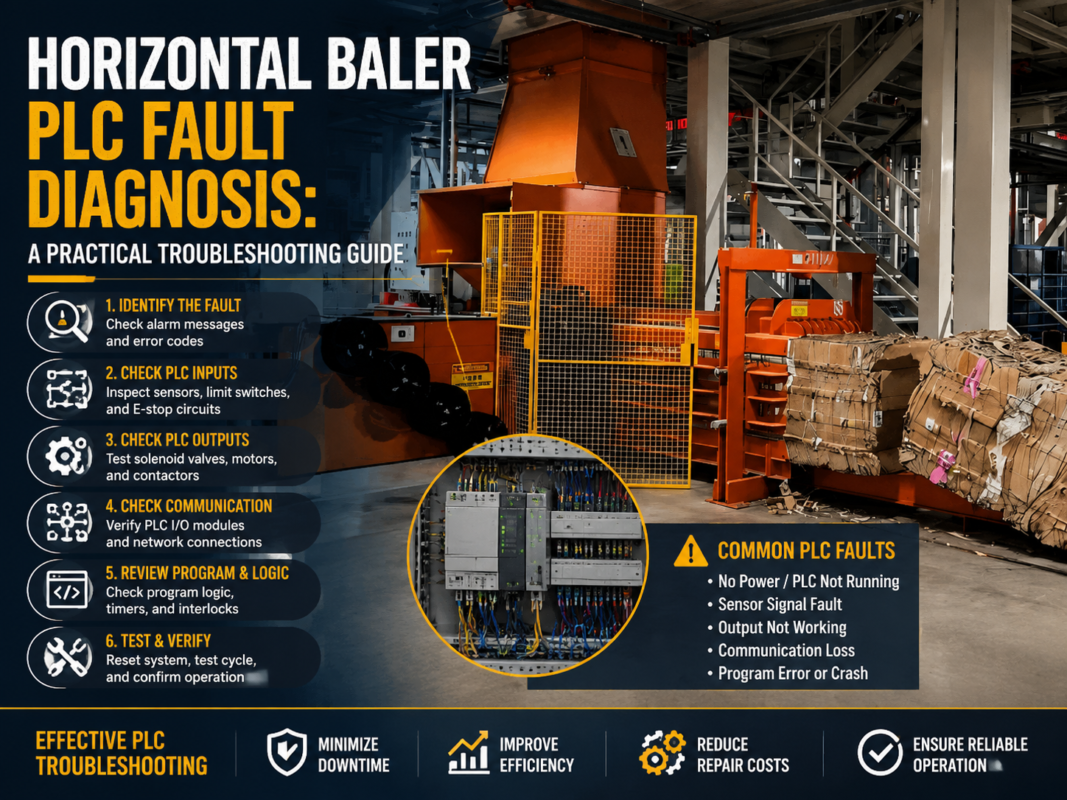
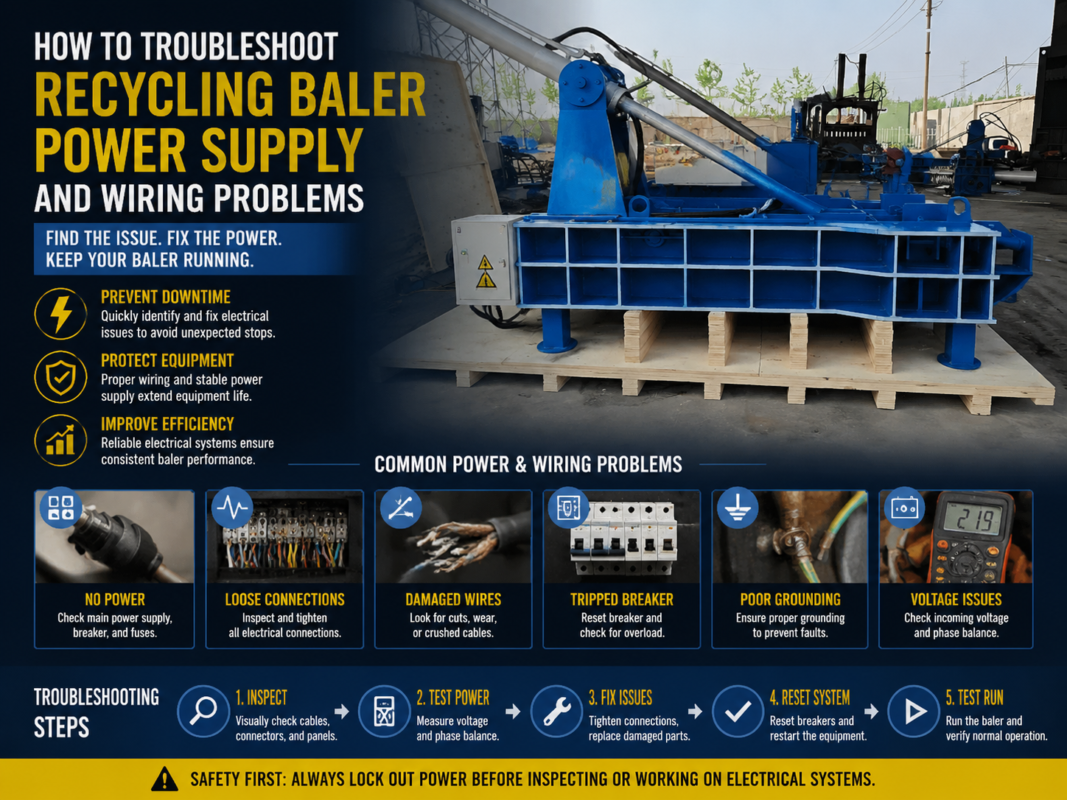
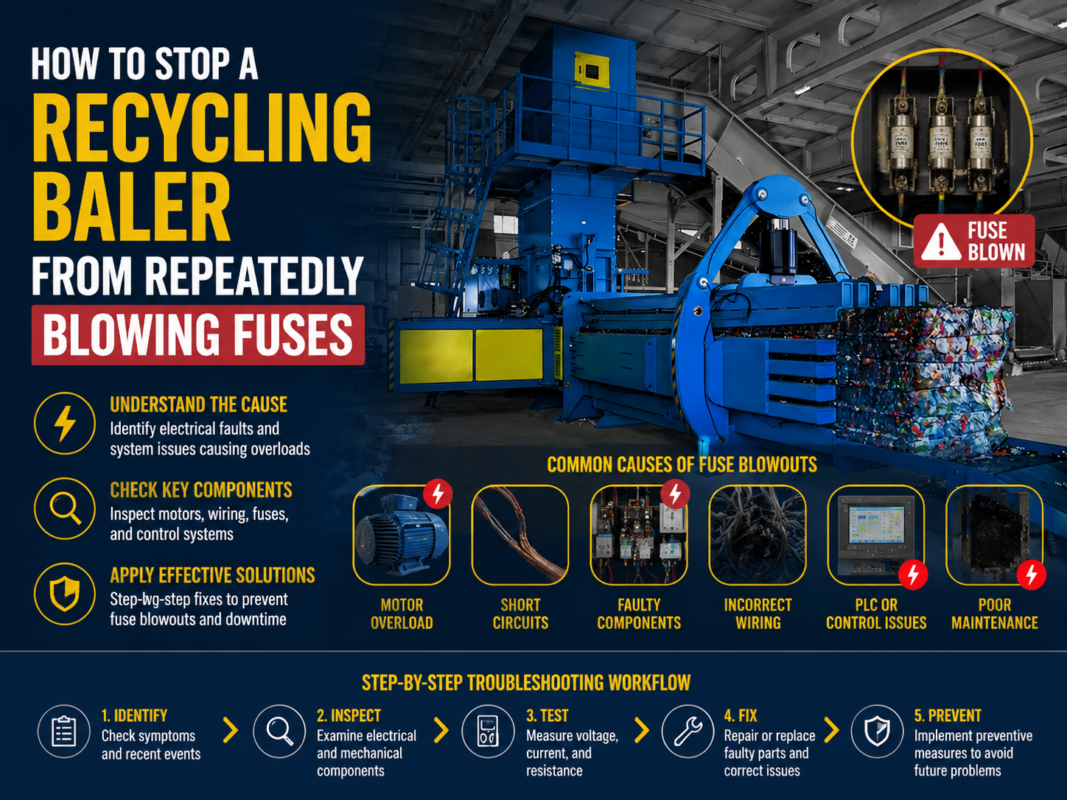
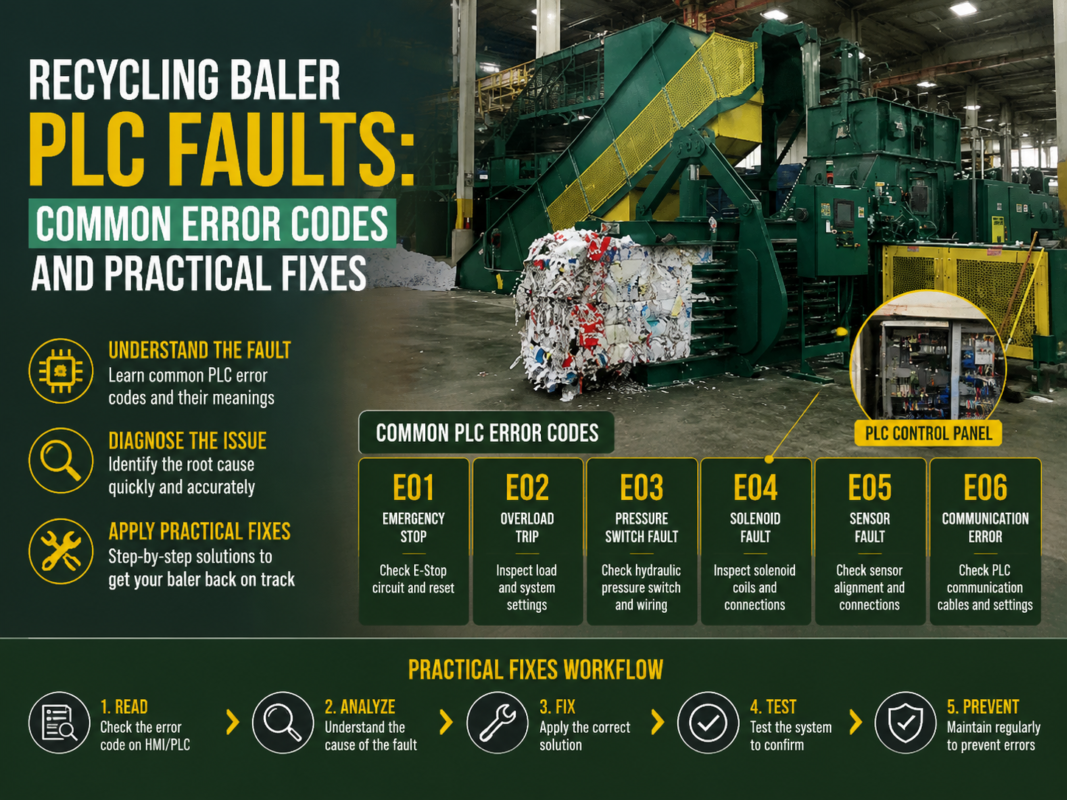
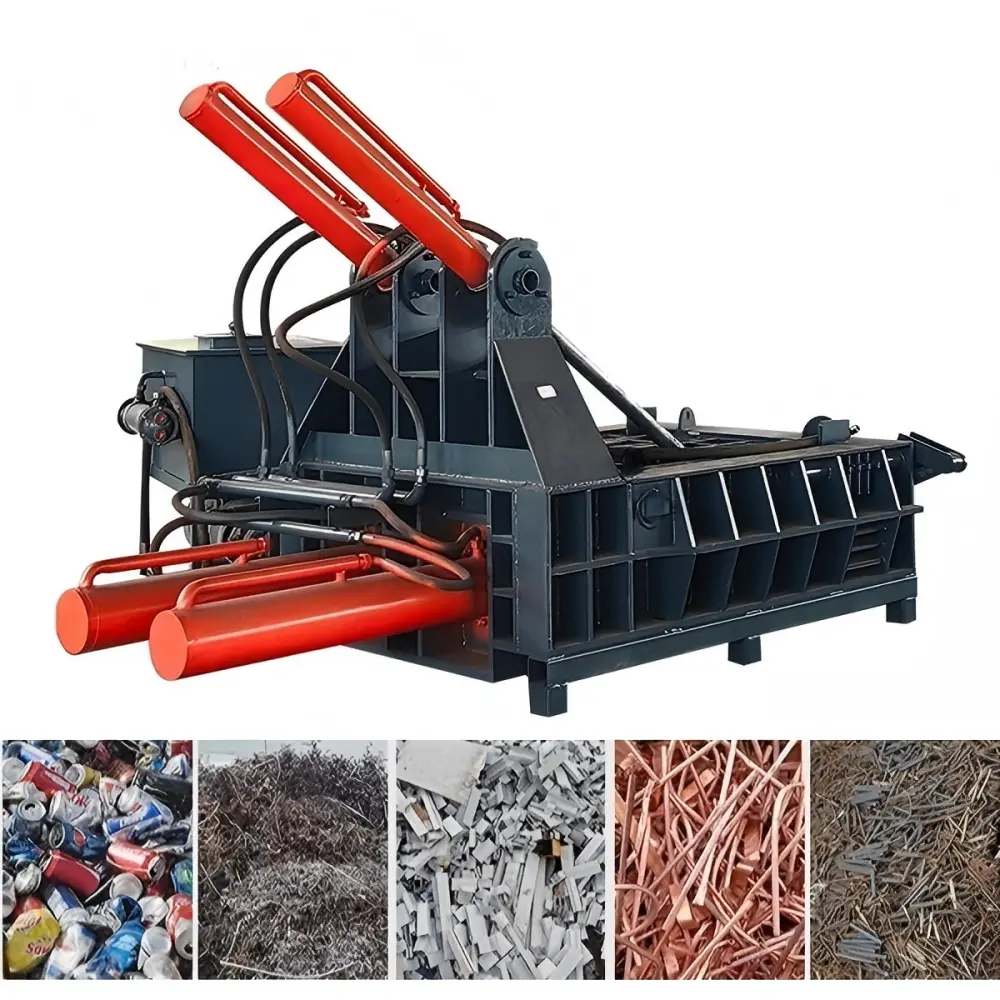
Modern HARSLE balers utilize sophisticated PLC (Programmable Logic Controller) systems to manage the complex timing of the compression cycles. The electrical cabinet is often overlooked in maintenance plans, yet it is a common source of intermittent faults. Vibration from the baling process can loosen terminal screws over time, leading to arcing or signal loss. A quarterly inspection should involve tightening all electrical connections and ensuring that the cabinet remains sealed against the metallic dust prevalent in recycling centers.
Sensors and limit switches are the “eyes” of the machine. In a metal recycling environment, these components are frequently bumped by falling scrap or coated in grime. Ensure that all proximity sensors are securely mounted and that their sensing faces are clean. If the PLC receives a delayed or erratic signal from a limit switch, it can cause the ram to over-travel or the cycle to hang, potentially damaging the mechanical structure. Calibrating these sensors ensures the machine operates within its designed parameters.
Furthermore, the cooling fans for the electrical cabinet and the VFD (Variable Frequency Drive) must be checked. Overheating is a silent killer of electronic components. If the filters on the cabinet intake are clogged, the internal temperature can rise rapidly, leading to premature failure of the PLC or relays. Including a “dust-out” procedure for the electrical components using dry, low-pressure compressed air is a simple yet effective preventive measure.
Mechanical Components: Wear Plates and Cutting Blades
The mechanical structure of a recycling baler bears the brunt of the physical work. The ram moves back and forth thousands of times a week, sliding on wear plates. These plates are designed to be sacrificial; they wear down so that the main frame of the machine does not. A key part of the Preventive Maintenance Plan for Recycling Balers in Metal Recycling Operations is monitoring the clearance between the ram and the liners. If the gap becomes too wide, scrap can get wedged between the ram and the wall, causing massive structural damage.
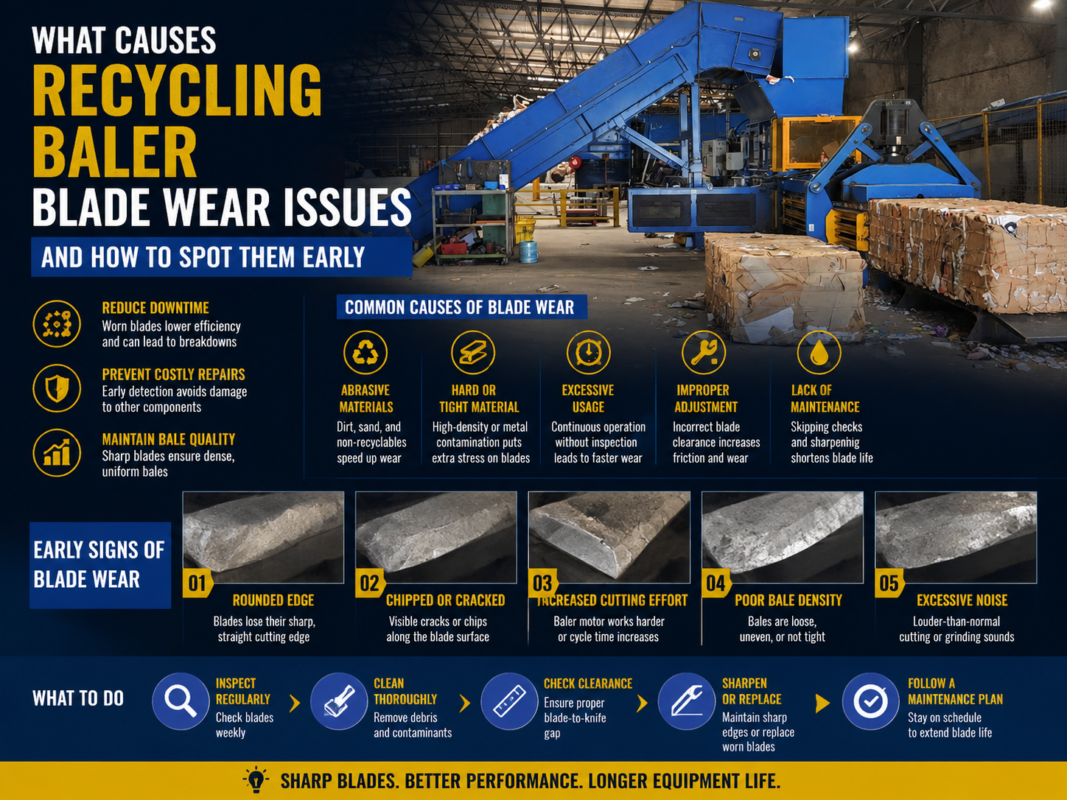
Cutting blades (or shear blades) are equally important. Most balers feature a shearing action to trim excess metal as the ram moves forward. These blades must be kept sharp and properly gapped. Dull blades don’t cut; they tear and wedge, which significantly increases the hydraulic pressure required to complete a stroke. This puts unnecessary strain on the entire system. Regularly rotating or sharpening the blades, and ensuring the bolts holding them are torqued to specification, is vital for maintaining bale quality and machine health.
Structural integrity checks should focus on the weld points of the main chamber and the cylinder mounts. The repetitive stress of baling can lead to fatigue cracks. Using a simple dye-penetrant test on suspected areas can reveal cracks before they become visible to the naked eye. Catching a crack early allows for a simple weld repair; ignoring it can lead to a complete frame failure that renders the machine a total loss.
Comprehensive Lubrication Strategy
Lubrication is the simplest yet most frequently neglected aspect of industrial maintenance. A recycling baler has numerous pivot points, bushings, and sliding surfaces that require consistent grease. Without a proper film of lubricant, metal-on-metal contact leads to rapid wear and heat generation. Your maintenance plan should specify the type of grease to be used—typically a heavy-duty, extreme-pressure (EP) grease containing molybdenum disulphide for high-load applications.
If your HARSLE baler is equipped with an automatic lubrication system, the maintenance task shifts to monitoring the reservoir and ensuring that all lines are intact. It is a common mistake to assume an auto-lube system is working perfectly. Blocked lines can leave a critical bearing bone-dry while the rest of the machine is over-greased. Manually verifying that grease is reaching each point is a necessary monthly check.
For machines requiring manual lubrication, a clear chart should be posted near the machine. This chart should identify every grease nipple and the frequency of application. In the dusty environment of a metal recycling plant, it is crucial to wipe the grease fitting clean before attaching the grease gun. Injecting dirt and metal dust into a bearing along with the grease is counterproductive and will accelerate wear rather than prevent it.
Recognizing Troubleshooting Signals and Warning Signs
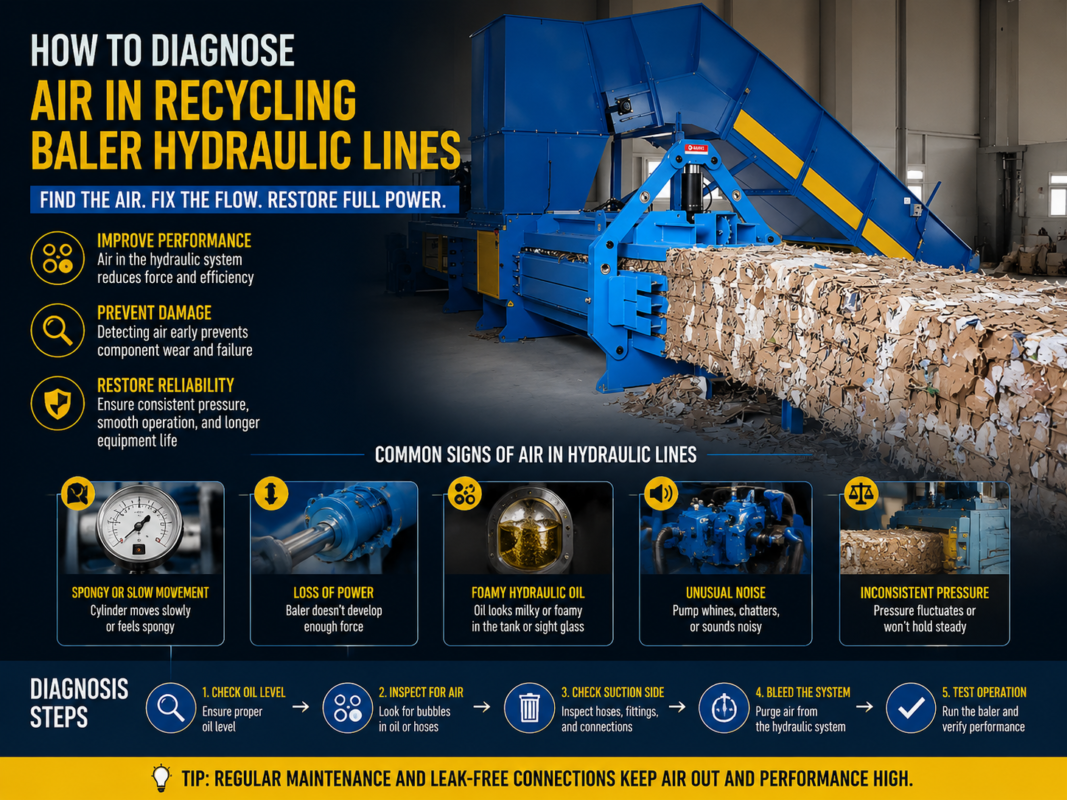
An effective Preventive Maintenance Plan for Recycling Balers in Metal Recycling Operations trains operators to be sensitive to the machine’s “body language.” Changes in sound, speed, or smell are often the first indicators of an impending failure. For example, a high-pitched whining sound from the hydraulic pump usually indicates aeration or cavitation, which will destroy the pump in short order if not addressed.
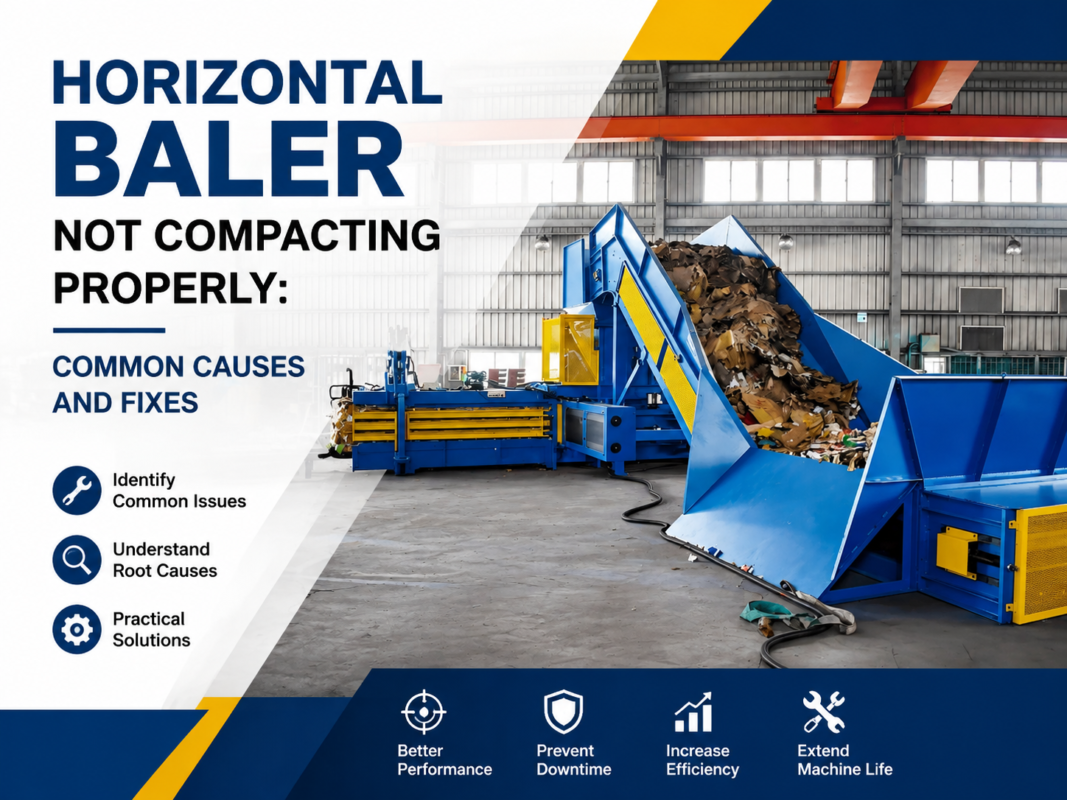
Slow cycle times are another red flag. If the baler is taking longer than usual to complete a bale, it suggests internal leakage in the cylinders or a declining pump efficiency. Similarly, if the bales are coming out less dense or “spongy,” the system may not be reaching its full relief pressure. Monitoring the pressure gauges during a cycle can help diagnose whether the issue is mechanical (scrap wedged in the chamber) or hydraulic (a failing relief valve).
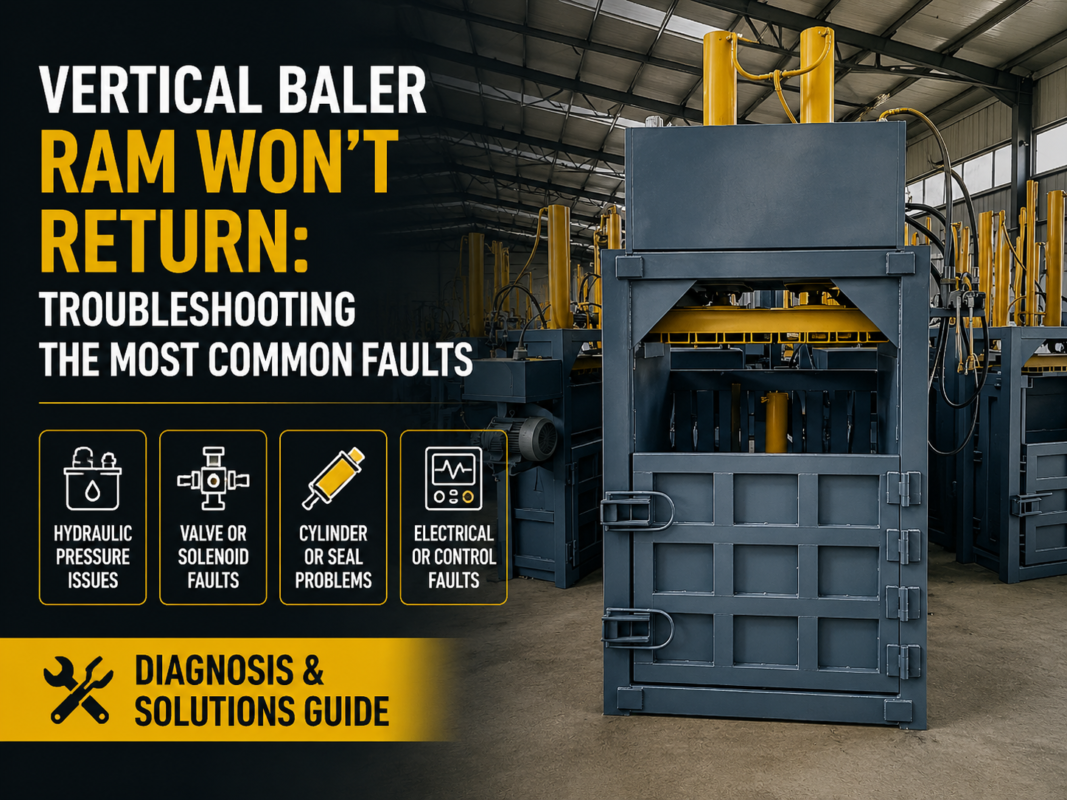
Excessive heat is perhaps the most common warning sign. If the hydraulic tank is too hot to touch, the cooling system is failing or the oil is bypassing a seal internally, generating friction heat. Operators should also look for “chattering” or jerky movement of the ram, which often points to air in the lines or worn-out guide shoes. Encouraging operators to report these minor anomalies immediately—without fear of being blamed for downtime—is the hallmark of a healthy maintenance culture.
Maintenance Schedule Table
| Frequency | Component | Action Required |
|---|---|---|
| Daily | Safety Systems | Test E-stops, light curtains, and interlocks. |
| Daily | Hydraulic Oil | Check level and temperature; inspect for leaks. |
| Daily | Hopper/Chamber | Clear debris and metal shards from tracks. |
| Weekly | Filters | Inspect air breathers and hydraulic return filters. |
| Weekly | Wear Plates | Check for excessive clearance or loose bolts. |
| Weekly | Lubrication | Grease all manual points; check auto-lube reservoir. |
| Monthly | Hydraulic Hoses | Full inspection for cracks, abrasions, or leaks. |
| Monthly | Shear Blades | Check sharpness and gap; tighten mounting bolts. |
| Quarterly | Electrical Cabinet | Clean dust; tighten terminals; check cooling fans. |
| Quarterly | Oil Analysis | Send sample to lab for contamination testing. |
| Annually | Hydraulic Fluid | Complete oil change and tank cleaning (if needed). |
| Annually | Structural | Non-destructive testing (NDT) on critical welds. |
Frequently Asked Questions (FAQ)
1. How often should I change the hydraulic oil in my recycling baler?
While many manufacturers suggest an annual oil change, the best practice is to base the change on oil analysis results. In heavy-duty metal recycling operations, oil can degrade faster due to heat and contaminants. If the analysis shows high oxidation or depletion of additives, change it immediately. Always change the oil if it appears milky (water contamination) or smells burnt.
2. Why are my bales suddenly becoming loose or less dense?
This is usually caused by a drop in hydraulic pressure or worn shear blades. Check your pressure gauge to see if the machine is reaching its maximum rated PSI. If the pressure is correct, the issue may be that the blades are dull, allowing metal to wedge rather than cut, which absorbs the force intended for compaction. Also, check for internal cylinder bypassing.
3. Can I use any type of grease for the pivot points?
No. Metal recycling balers require Extreme Pressure (EP) grease, typically with a Lithium complex or Moly-disulfide base. Standard multi-purpose grease may fail under the high loads and slow-moving oscillations typical of baler components, leading to premature bushing failure.
4. What is the most common cause of baler downtime?
Hydraulic contamination and hose failure are the leading causes. Small metal particles from the recycling process can enter the system if breathers are missing or if the oil is not filtered properly. This leads to valve sticking and pump failure. Regular filter changes and hose inspections are the best way to prevent this.
5. How do I know if my wear liners need replacing?
Measure the gap between the ram and the liner according to the HARSLE manual specifications. If the gap exceeds the limit (usually a few millimeters), or if you see deep scoring and gouges on the plates, they need replacement. Operating with worn liners can cause the ram to tilt, damaging the main hydraulic cylinder rod.
6. Is it necessary to warm up the baler in winter?
Yes. Hydraulic oil is much more viscous when cold. Starting a baler and immediately running it at full load in freezing temperatures can cause pump cavitation and seal damage. Run the machine through several “dry” cycles (without scrap) to circulate the oil and bring it up to operating temperature before beginning production.