Troubleshooting Recycling Baler Noise and Vibration Through Maintenance: A Comprehensive Guide

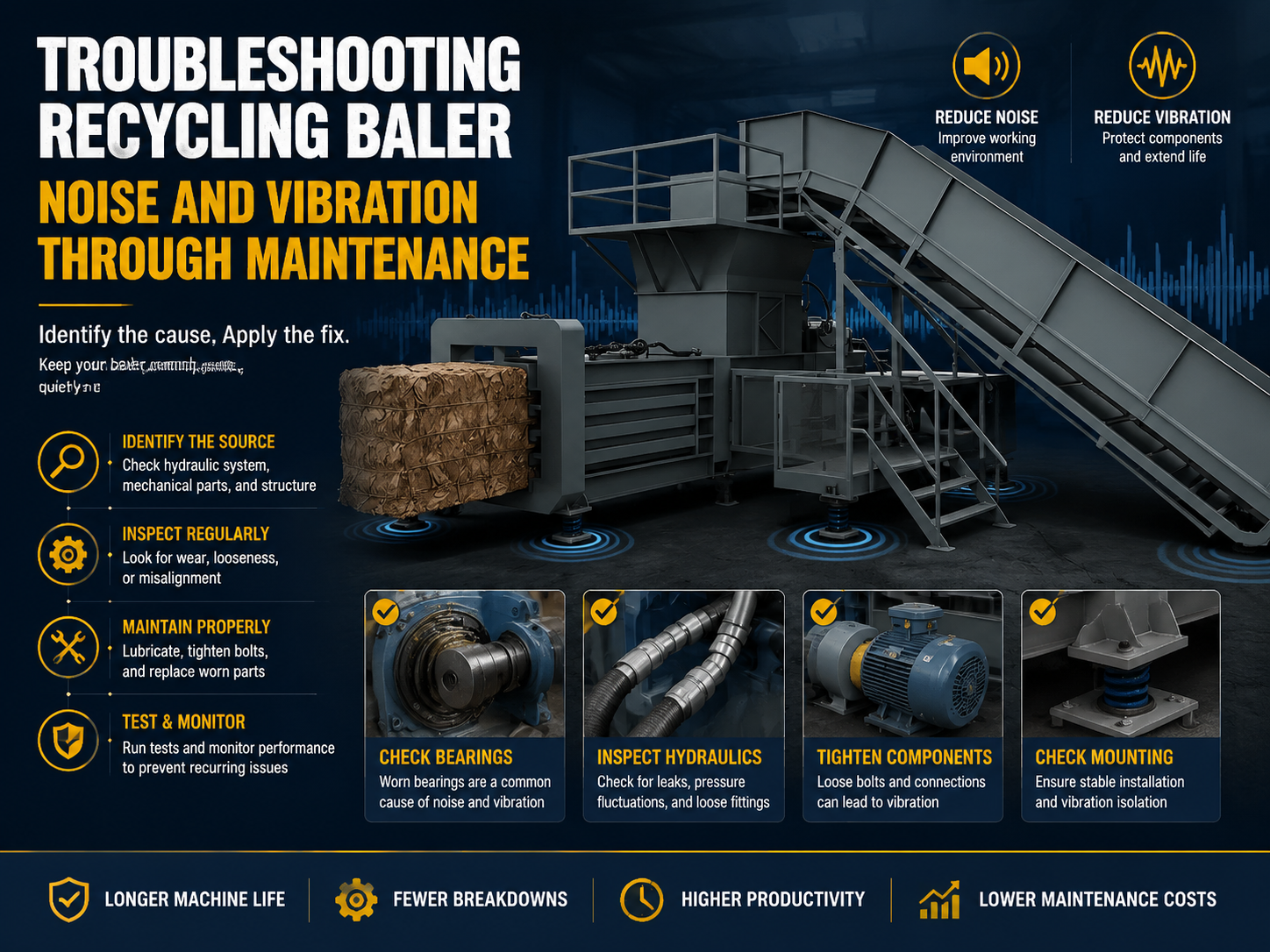
Introduction to Troubleshooting Recycling Baler Noise and Vibration Through Maintenance
In the high-intensity world of waste management and scrap processing, the recycling baler stands as a cornerstone of efficiency. However, like any heavy-duty industrial machinery, these units are subject to immense physical stress. Over time, operators may notice an increase in operational noise or unusual vibrations. Ignoring these signs can lead to catastrophic component failure, expensive downtime, and safety hazards. Troubleshooting recycling baler noise and vibration through maintenance is not merely a reactive task; it is a proactive strategy to ensure the longevity and reliability of your HARSLE equipment.
Noise and vibration are often the first symptoms of underlying mechanical or hydraulic distress. In a recycling baler, where thousands of pounds of pressure are applied to compress materials like cardboard, plastic, or metal, even a minor misalignment can escalate into a major structural issue. By understanding the root causes of these disturbances, maintenance teams can implement targeted solutions that restore the machine to its optimal operating state. This guide provides a deep dive into the systematic approach required to diagnose and resolve these common industrial challenges.
The Critical Importance of Regular Maintenance
The primary goal of troubleshooting recycling baler noise and vibration through maintenance is to preserve the structural integrity of the machine. When a baler vibrates excessively, it creates a ripple effect throughout its frame. Bolts loosen, welds are stressed, and sensitive electronic components can be shaken out of calibration. Regular maintenance acts as a shield, preventing these micro-damages from accumulating into a total system breakdown.
Furthermore, a quiet and stable baler is a more efficient baler. Excessive noise often indicates energy loss—energy that should be going into the compression cycle is instead being dissipated as sound and heat. By maintaining the unit properly, you ensure that the hydraulic system operates at peak pressure with minimal resistance, directly translating to lower energy costs and faster cycle times. From an ROI perspective, the cost of a comprehensive maintenance program is a fraction of the cost of replacing a main hydraulic pump or a cracked structural cylinder mount.
Safety is another paramount concern. High-decibel environments contribute to operator fatigue and can mask other warning sounds in a busy facility. Vibrations can also cause hydraulic fittings to weep or spray, creating slip hazards or fire risks. Therefore, troubleshooting recycling baler noise and vibration through maintenance is a fundamental requirement for maintaining a safe and compliant workplace. HARSLE emphasizes that a well-maintained machine is the safest machine on the floor.
Daily Inspection: The First Line of Defense
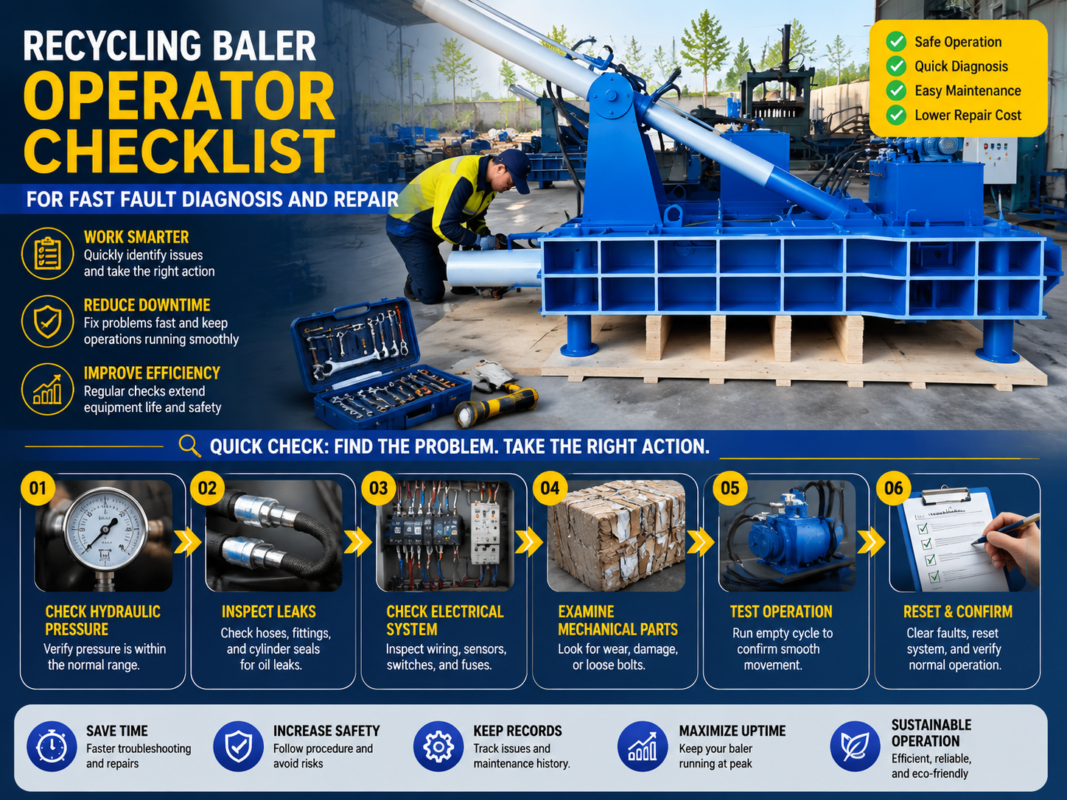
Effective troubleshooting begins with a consistent daily inspection routine. Before the shift starts, operators should perform a visual and auditory sweep of the machine. This “Look, Listen, and Feel” approach allows for the detection of anomalies before they become critical. Start by checking for loose debris around the ram and the bale chamber, as trapped material is a frequent cause of grinding noises and uneven vibration.
During the initial warm-up cycle, listen closely to the sound of the hydraulic pump. A healthy pump should produce a steady, low-frequency hum. Any high-pitched whining, growling, or intermittent sputtering suggests that the system is struggling. Similarly, observe the movement of the ram. It should glide smoothly along its tracks. Any jerking or “stuttering” movement is a clear indicator of friction issues or hydraulic pressure fluctuations that need immediate attention.
Check the floor around the baler for signs of hydraulic fluid leaks. Even a small puddle can indicate a loose fitting or a worn seal that is allowing air into the system—a primary cause of vibration. Finally, ensure that all safety guards are securely fastened. A loose guard vibrating against the machine frame can create a deceptive amount of noise that might be mistaken for a more serious internal problem.
Hydraulic System Checks: Addressing the Heart of the Baler
The hydraulic system is the most common source of noise and vibration in a recycling baler. One of the most frequent issues is pump cavitation. This occurs when the pump cannot get enough oil, causing vacuum bubbles to form and then implode violently. This creates a distinctive “marbles in a blender” sound. Troubleshooting recycling baler noise and vibration through maintenance in this area involves checking the suction strainers for clogs and ensuring the hydraulic oil is at the correct level and viscosity.
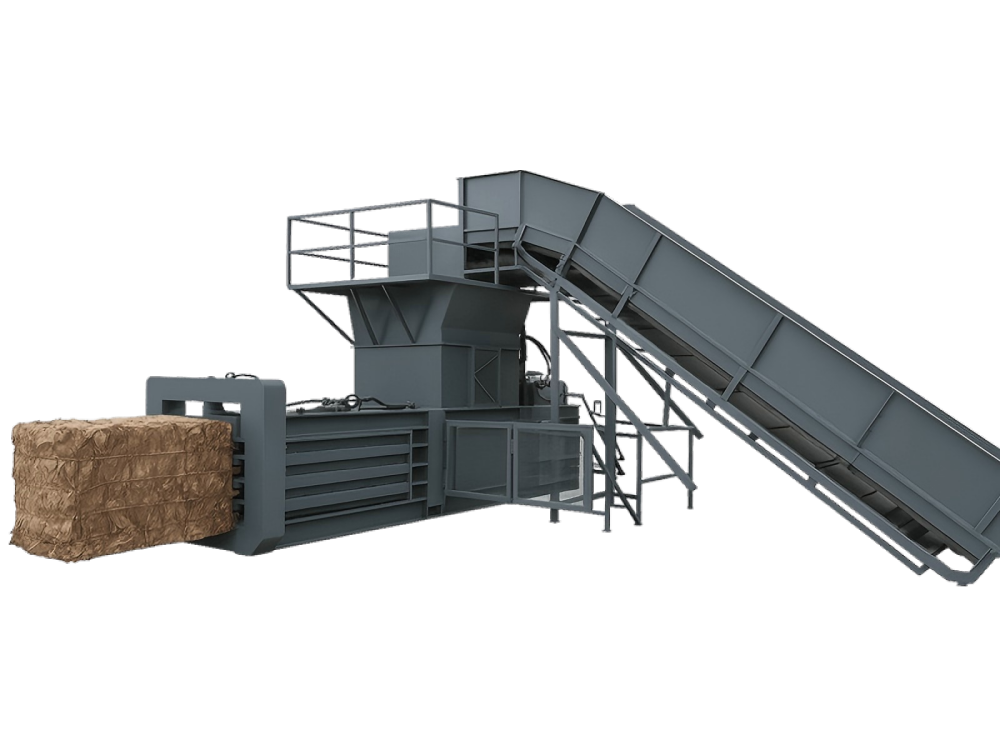
Air aeration is another culprit. If air is sucked into the hydraulic lines through a loose fitting or a damaged seal, the fluid becomes compressible. This leads to “spongy” operation and significant vibration as the ram moves. To fix this, maintenance teams must bleed the air from the system and tighten all intake-side connections. Regularly replacing hydraulic filters is also essential, as restricted flow increases the workload on the pump, leading to heat and noise.
Valve chatter is a third hydraulic concern. Relief valves that are set incorrectly or are worn out can open and close rapidly, creating a vibrating sensation throughout the hydraulic manifold. During maintenance, technicians should use pressure gauges to verify that all valves are operating within the manufacturer’s specified ranges. If a valve continues to chatter despite being set correctly, it may require internal cleaning or replacement of the spring and poppet assembly.
Electrical and Motor System Troubleshooting
While the hydraulics do the heavy lifting, the electric motor provides the power. A vibrating motor is often a sign of misalignment between the motor shaft and the hydraulic pump shaft. Even a fraction of a millimeter of misalignment can cause significant high-frequency vibration that wears out bearings prematurely. Using a laser alignment tool during scheduled maintenance is the best way to ensure these components are perfectly coupled.
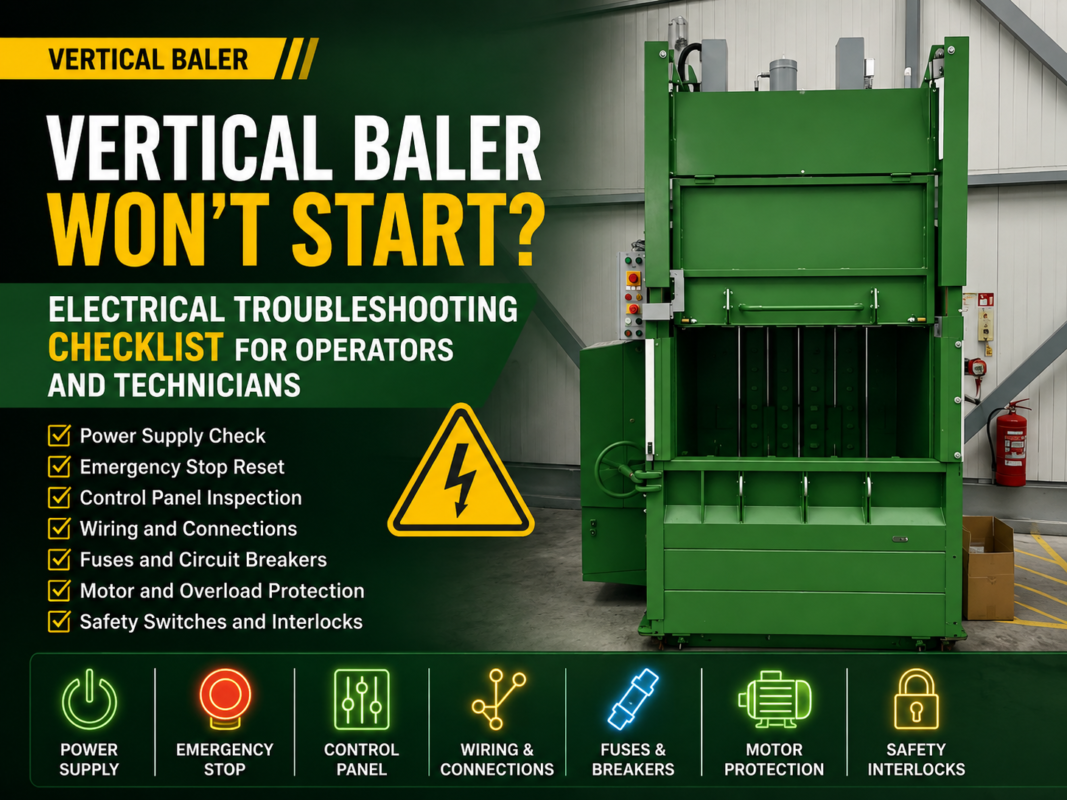
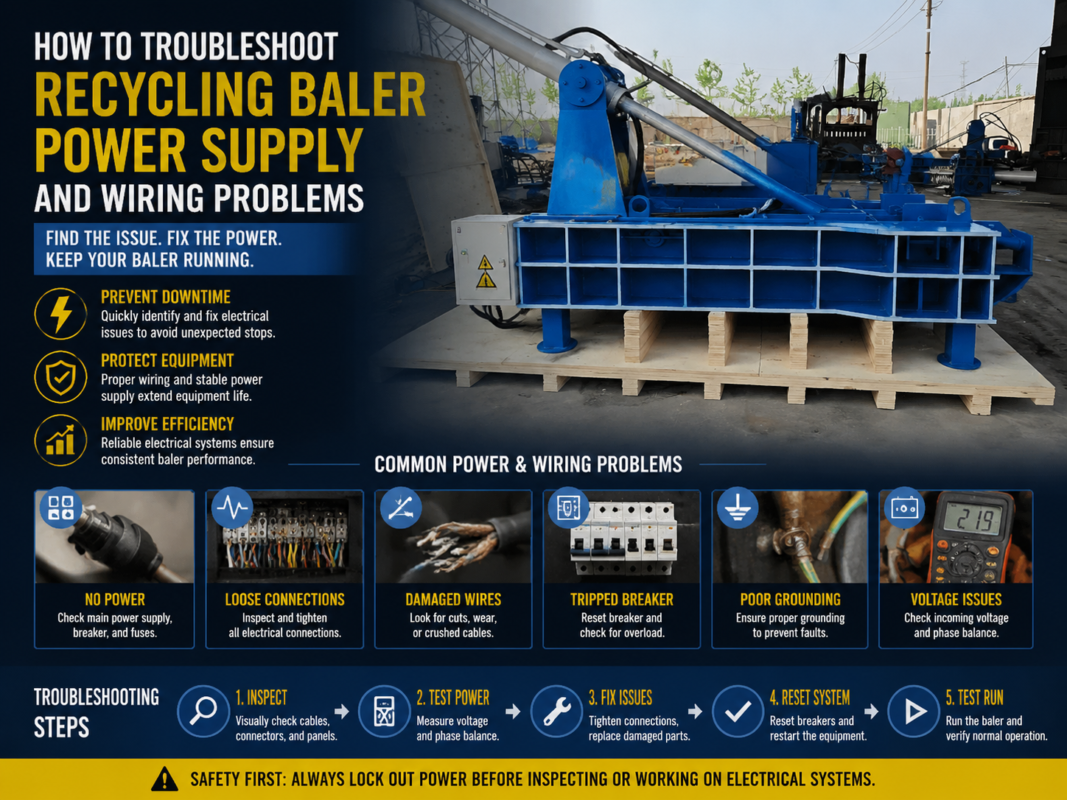
Electrical issues can also manifest as noise. A humming sound from the control cabinet might indicate a failing contactor or a loose wire. In a recycling environment, dust and vibration can cause electrical terminals to loosen over time. This creates resistance, heat, and eventually, electrical noise or intermittent failure. Part of troubleshooting recycling baler noise and vibration through maintenance involves tightening all electrical connections and blowing out dust from the cooling fans and heat sinks.
Sensors and limit switches must also be checked. If a limit switch is loose, it may vibrate and send false signals to the PLC, causing the ram to hesitate or reverse unexpectedly. This creates mechanical shock loads that resonate through the entire machine. Ensuring that all sensors are securely mounted and properly aligned prevents these erratic movements and the associated noise.
Mechanical Structure and Ram Alignment
The mechanical frame of a HARSLE recycling baler is designed for rigidity, but the sheer force of operation can eventually lead to wear in the moving parts. The ram guides and wear plates are critical components. If the wear plates become excessively worn, the ram will have too much “play” within the chamber. This results in a loud “thud” or “clunk” at the beginning or end of each stroke as the ram shifts position under load.
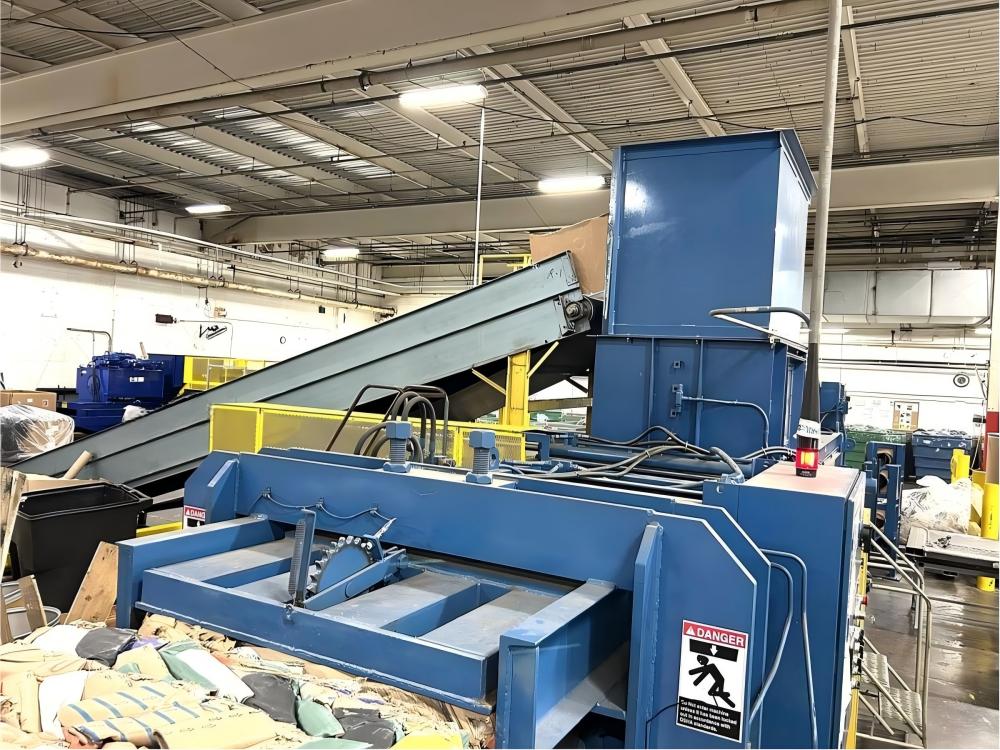
Troubleshooting recycling baler noise and vibration through maintenance requires measuring the gap between the ram and the chamber walls. If the gap exceeds the manufacturer’s tolerances, the wear plates must be adjusted or replaced. Additionally, check the bolts that secure the main cylinder to the frame. If these bolts stretch or loosen, the cylinder will kick back slightly during the high-pressure phase of the cycle, causing a massive vibration spike.
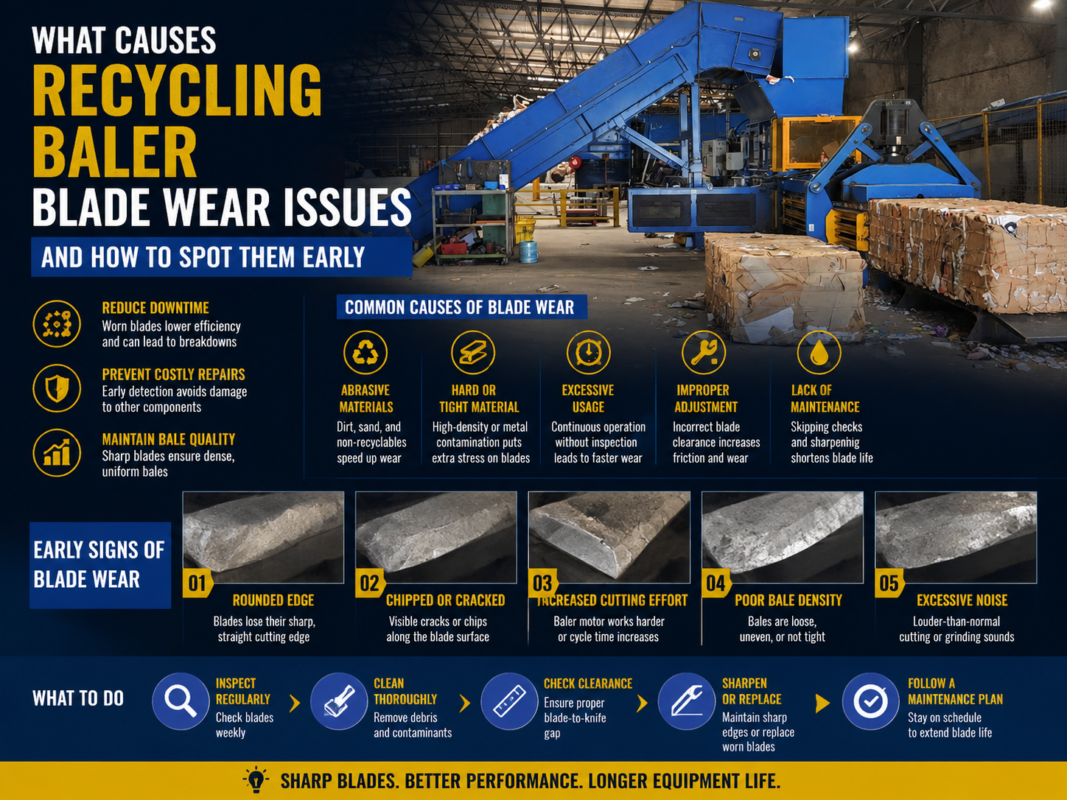
Inspect the bale chamber floor for warping or scarring. In scrap metal baling, hard materials can sometimes get wedged between the ram and the floor, causing a screeching sound and putting immense lateral stress on the ram. Keeping the chamber clean and ensuring the shear blades are sharp will reduce the force required to cut through material, thereby reducing the overall noise and vibration produced during the baling process.
Comprehensive Lubrication Plan
Lubrication is the simplest yet most effective way to reduce noise and vibration. Friction is the enemy of smooth operation. Without a proper film of grease, metal-on-metal contact creates high-pitched squealing and increases the temperature of the components. A comprehensive lubrication plan should identify every grease point on the baler, including the ram guides, pivot pins, and door hinges.
Not all lubricants are created equal. For a recycling baler, it is essential to use a high-pressure (EP) grease that can withstand the heavy loads without being squeezed out of the joint. Maintenance schedules should dictate the frequency of lubrication based on the machine’s duty cycle. For example, a baler running three shifts a day will require much more frequent lubrication than one used only a few times a week.
Automatic lubrication systems are an excellent investment for HARSLE balers. These systems deliver small, precise amounts of grease at regular intervals, ensuring that the machine is always perfectly lubricated. This eliminates the human error factor and ensures that even hard-to-reach pivot points are not neglected. When troubleshooting noise, always check the lubrication status first; often, a few pumps of grease can solve a seemingly complex vibration issue.
Deciphering Troubleshooting Signals
To effectively troubleshoot, operators must learn to “read” the signals the machine is sending. Different sounds point to different problems:
- High-Pitched Whining: Usually indicates hydraulic pump cavitation or a restricted suction line.
- Rhythmic Thumping: Often points to a flat spot on a roller or a loose mechanical mounting bolt.
- Grinding/Screeching: Suggests metal-on-metal contact, likely due to lack of lubrication or worn wear plates.
- Hissing: A clear sign of a high-pressure hydraulic leak or a failing seal within a valve.
- Erratic Shaking: Typically caused by air trapped in the hydraulic cylinders or a failing motor-pump coupling.
By categorizing these signals, maintenance teams can bypass the guesswork and go straight to the source of the problem. Documenting these occurrences in a maintenance log helps identify patterns over time, allowing for better predictive maintenance planning.
Maintenance Schedule Table
A structured approach is the only way to ensure nothing is missed. Use the following table as a baseline for your HARSLE recycling baler maintenance program.
| Frequency | Component | Action Required |
|---|---|---|
| Daily | Hydraulic Oil Level | Check and top up if necessary; inspect for clarity. |
| Daily | Ram Chamber | Clear debris and check for obstructions. |
| Weekly | Grease Points | Apply EP grease to all manual fittings and pivot pins. |
| Weekly | Hydraulic Hoses | Inspect for fraying, leaks, or bulging. |
| Monthly | Wear Plates | Measure clearances and adjust if necessary. |
| Monthly | Electrical Cabinet | Vacuum dust and check for loose terminal connections. |
| Quarterly | Oil Analysis | Send a sample to a lab to check for contamination and additive depletion. |
| Quarterly | Mounting Bolts | Torque all structural and cylinder bolts to spec. |
| Annually | Hydraulic Fluid | Perform a full system flush and replace fluid and all filters. |
| Annually | Motor Alignment | Verify pump-motor coupling alignment with precision tools. |
Frequently Asked Questions (FAQ)
1. Why is my recycling baler making a loud banging noise at the end of the stroke?
This is often caused by the ram hitting the end of its travel too hard, which may indicate that the proximity switches are out of adjustment or the hydraulic cushioning in the cylinder is failing. It can also be caused by loose mounting bolts allowing the cylinder to shift.
2. How often should I change the hydraulic oil to prevent noise?
Generally, hydraulic oil should be changed every 2,000 operating hours or once a year. However, if the oil appears cloudy (indicating water) or smells burnt (indicating overheating), it should be changed immediately to prevent pump damage and noise.
3. Can the type of material being baled cause vibration?
Yes. Baling non-homogeneous materials or very hard scrap can cause the ram to exert uneven pressure, leading to lateral vibration. Ensuring the material is distributed evenly in the chamber can help mitigate this.
4. What is the most common cause of a vibrating hydraulic pipe?
The most common cause is “fluid hammer” or air in the system. Ensure all pipe clamps are tight and that the system has been properly bled of air. Vibration can also be caused by a pump that is beginning to fail.
5. Is some level of noise normal for a HARSLE baler?
Industrial balers are powerful machines and will always produce some operational sound. However, the noise should be consistent. Any new, sudden, or changing sounds are indicators that troubleshooting is required.
Conclusion
Troubleshooting recycling baler noise and vibration through maintenance is an essential skill for any facility manager or operator. By staying vigilant and following a rigorous maintenance schedule, you can protect your investment, ensure operator safety, and maintain the high throughput that HARSLE machines are known for. Remember that noise and vibration are the machine’s way of communicating; listening to those signals today will prevent a total silence tomorrow due to machine failure. Invest in quality lubricants, perform regular inspections, and never ignore the warning signs of mechanical distress.