Recycling Baler Wear Parts: When to Inspect and Replace Them

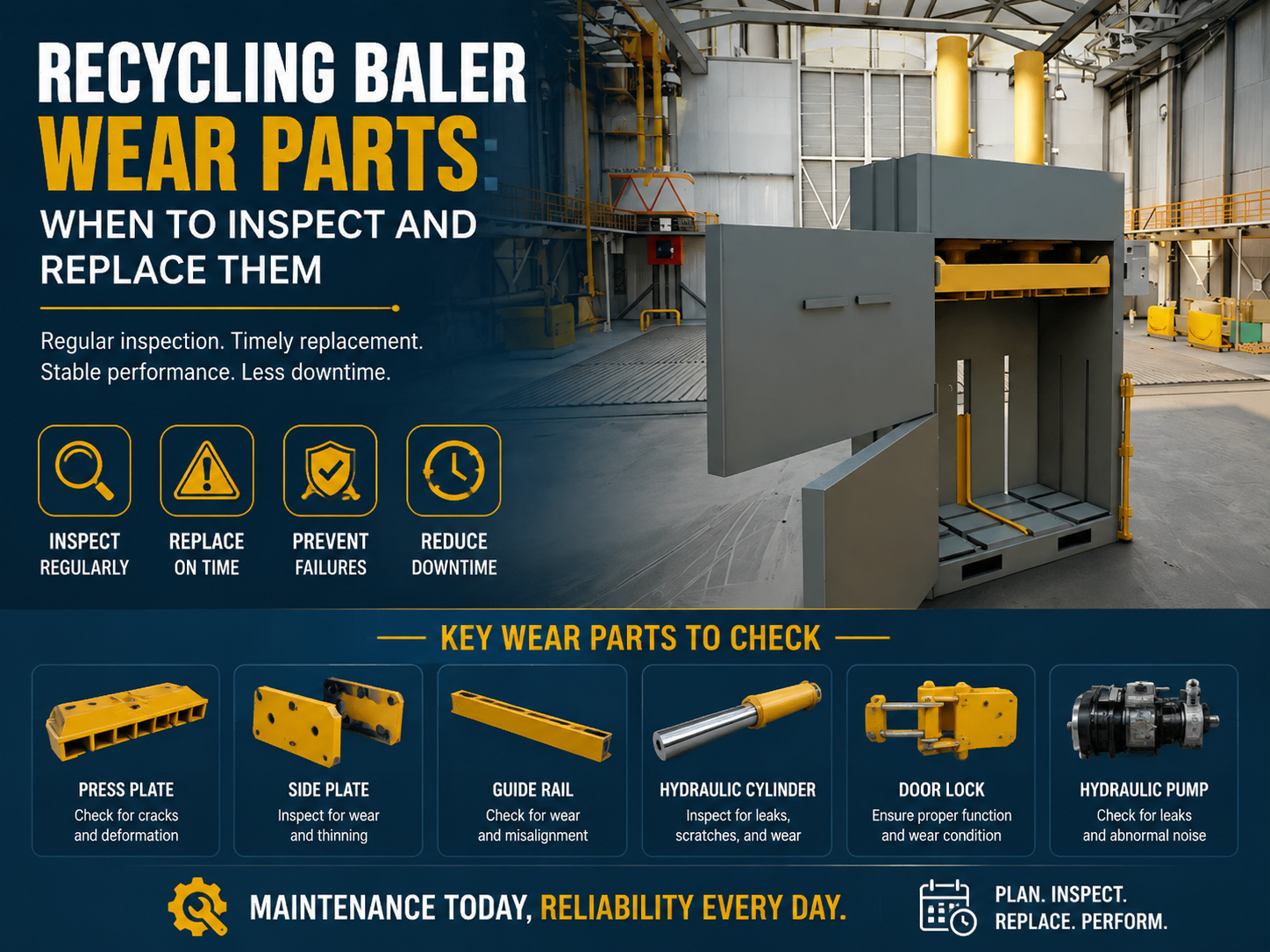
The Critical Importance of Maintaining Recycling Baler Wear Parts
In the high-intensity world of scrap metal processing and waste management, the recycling baler stands as the workhorse of the facility. However, the sheer force required to compress metal, plastic, and paper into dense, transportable bales puts immense stress on every component. Understanding Recycling Baler Wear Parts: When Inspect Replace Them is not just a matter of routine housekeeping; it is a fundamental strategy for operational efficiency, safety, and long-term profitability. When wear parts are neglected, the machine’s performance degrades, leading to increased energy consumption, poor bale quality, and eventually, catastrophic mechanical failure.
Proactive maintenance is the cornerstone of industrial longevity. For a HARSLE recycling baler, the wear parts—ranging from shear blades and liners to hydraulic seals and filters—are designed to be sacrificial. They are intended to take the brunt of the friction and pressure so that the core structural components of the machine remain protected. By establishing a rigorous inspection schedule, facility managers can transition from a reactive ‘break-fix’ mindset to a predictive maintenance model. This shift significantly reduces unplanned downtime, which is often the single most expensive factor in industrial operations.
Moreover, the safety implications of worn parts cannot be overstated. A dull shear blade or a leaking hydraulic hose is not just a performance issue; it is a hazard. High-pressure hydraulic fluid leaks can cause serious injury, and a failing mechanical component can lead to structural collapses or flying debris. Therefore, knowing when to inspect and replace these parts is a critical safety protocol. This guide provides a deep dive into the technical aspects of baler maintenance, ensuring your equipment remains in peak condition for years to come.
Finally, the economic argument for timely replacement is compelling. While purchasing new wear parts involves an upfront cost, it is a fraction of the cost of replacing a main hydraulic cylinder or a cracked frame. Furthermore, a well-maintained baler produces more consistent, higher-density bales, which optimizes transport costs and increases the market value of the recycled material. In the following sections, we will break down the specific inspection points and replacement triggers for every major system within your recycling baler.
Daily Inspection: The First Line of Defense
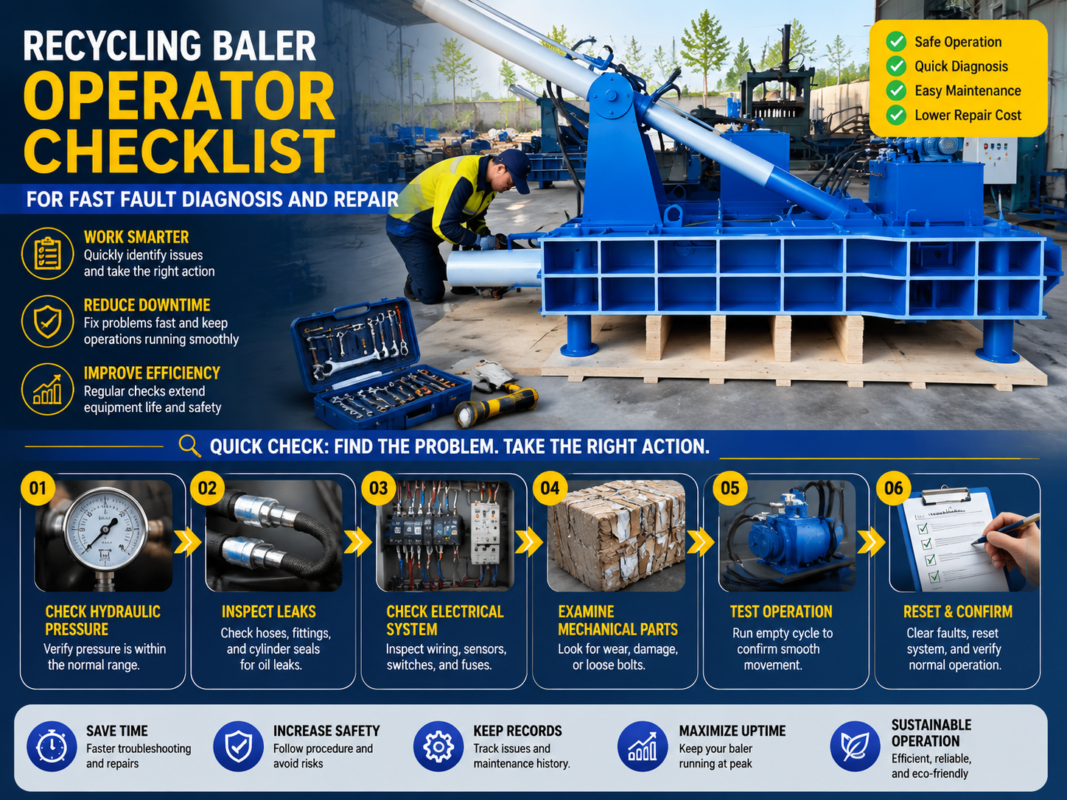
The daily inspection is the most effective tool in a maintenance technician’s arsenal. It requires no specialized tools—only a keen eye, a sharp ear, and a commitment to consistency. Before the shift begins, operators should perform a visual walk-around of the entire machine. This includes checking for any visible signs of fluid leakage under the machine or around the hydraulic cylinders. Even a small puddle can indicate a failing seal that, if left unaddressed, could lead to a total loss of hydraulic pressure during operation.
Noise monitoring is another critical aspect of the daily routine. Experienced operators become attuned to the ‘song’ of their machine. Any new grinding, squealing, or thumping sounds should be investigated immediately. For instance, a high-pitched whine from the pump often indicates cavitation or air entering the hydraulic system, while a metallic grinding sound in the chamber usually points to worn liners or loose shear blades. Catching these sounds early can prevent the ‘domino effect’ where one failing part damages several others.
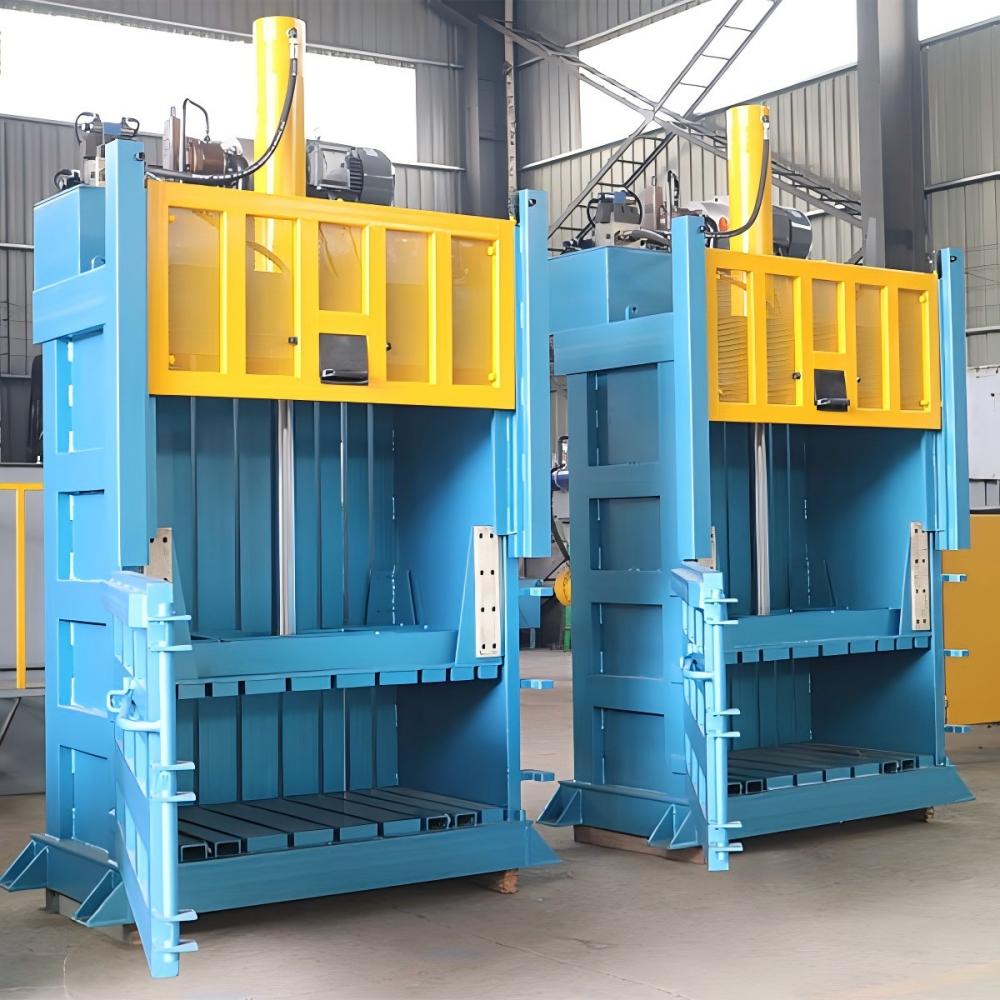
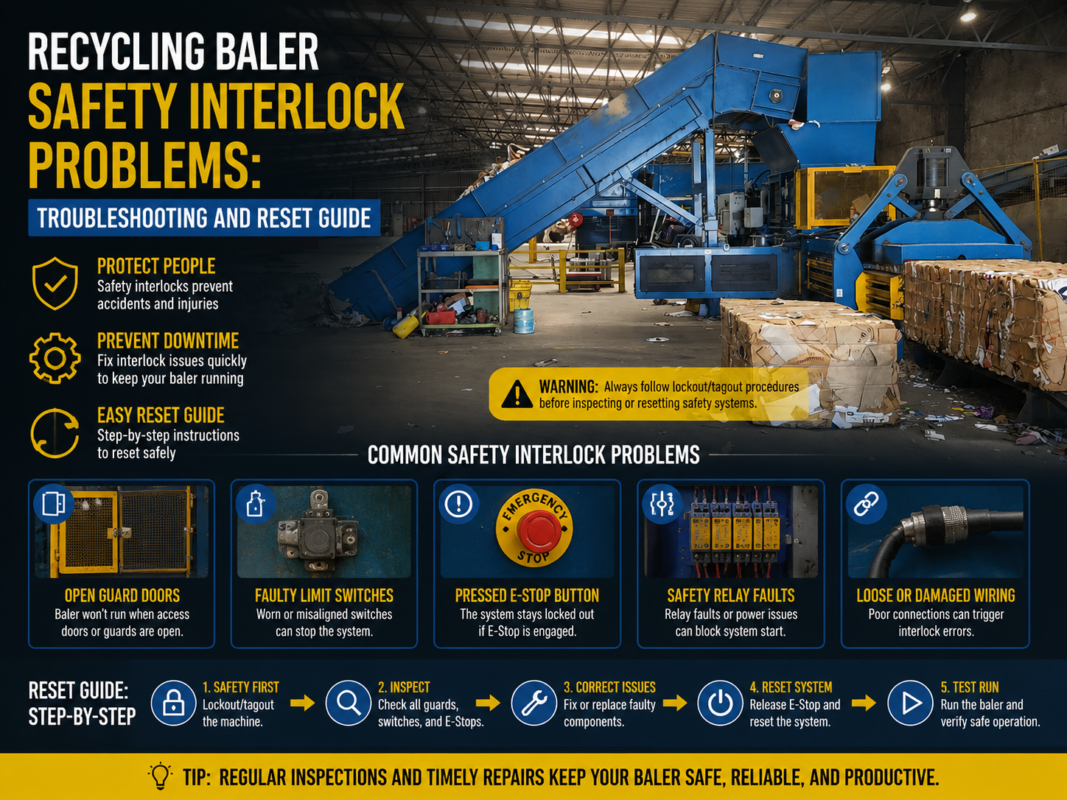
Safety interlocks and emergency stop buttons must be tested every single day. In a recycling environment, dust and debris can easily jam a limit switch or an E-stop mechanism. Ensuring these components are functional is non-negotiable. Additionally, the bale chamber should be cleared of any residual debris from the previous shift. Accumulated material behind the ram or under the shear blades can cause unnecessary friction and accelerate the wear of the liners and guides.
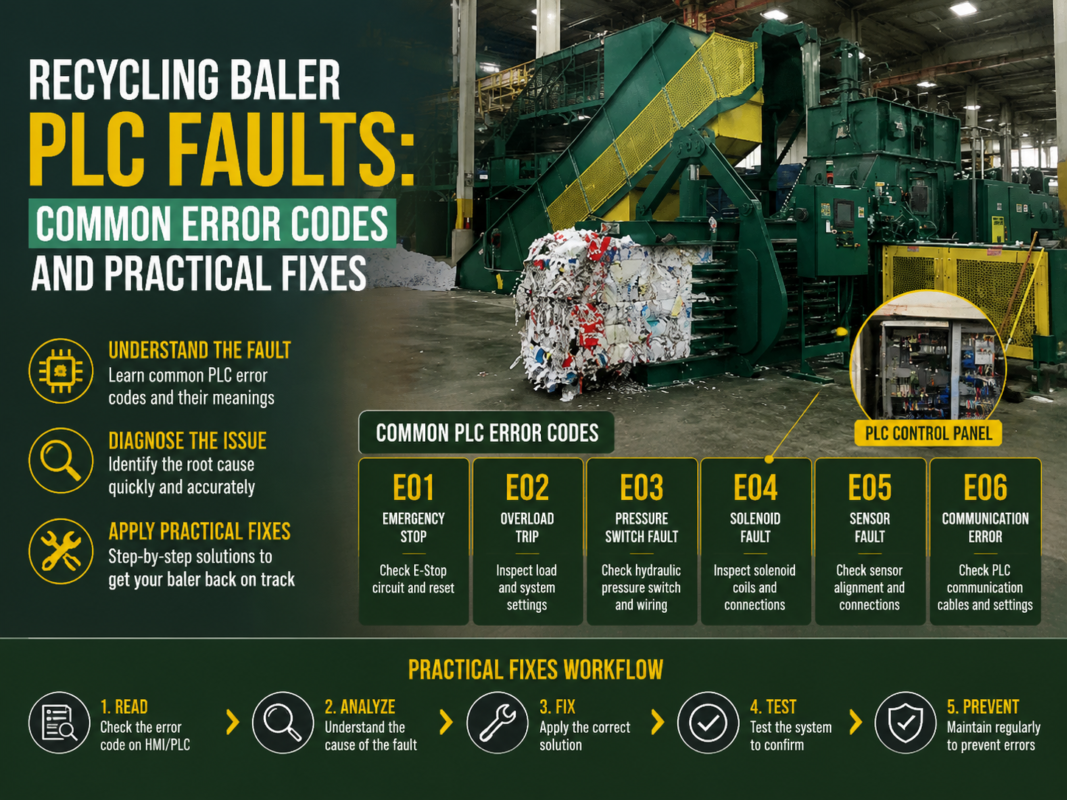
Lastly, the daily check should include a quick review of the control panel for any error codes or warning lights. Modern HARSLE balers are equipped with sophisticated diagnostic systems that can alert the operator to temperature spikes or pressure irregularities before they become critical. Documenting these daily checks in a logbook creates a historical record that is invaluable for identifying long-term wear patterns and planning for major overhauls.
Hydraulic System Checks: Pressure, Purity, and Performance
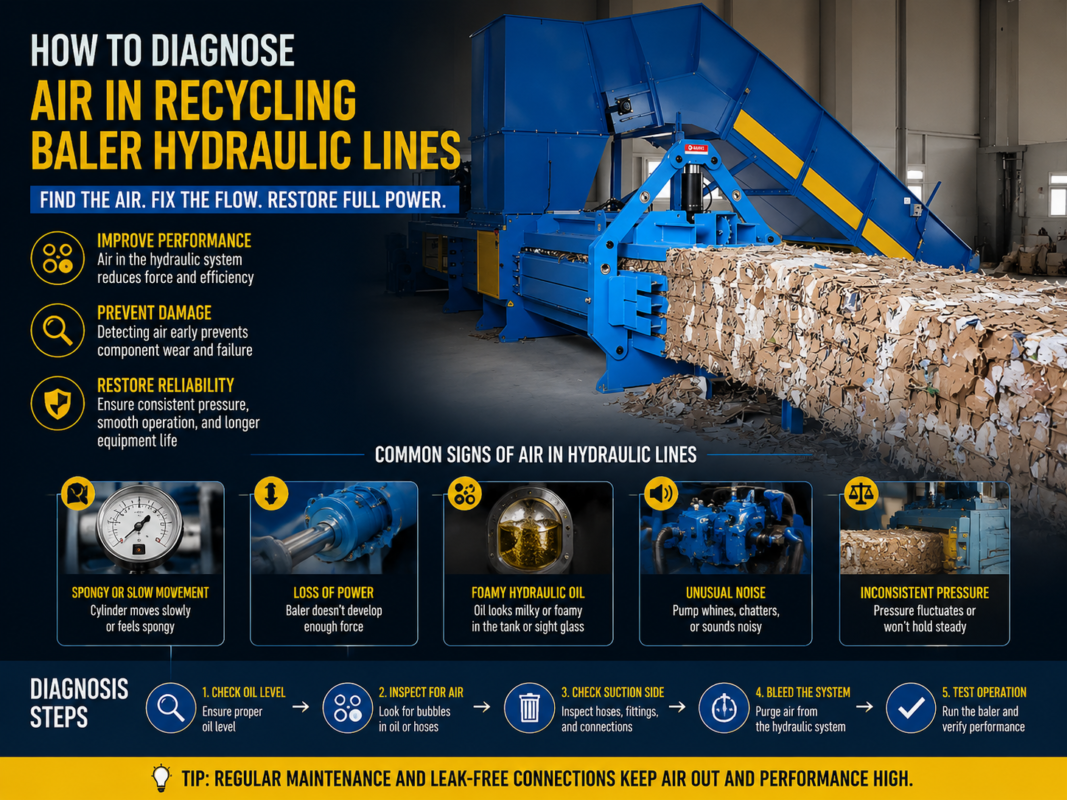
The hydraulic system is the heart of the recycling baler, and its wear parts are among the most critical to monitor. The hydraulic oil itself should be viewed as a ‘liquid wear part.’ Over time, the oil breaks down due to heat and shear forces, losing its lubricating properties. Furthermore, contamination from metal shavings, dust, and moisture can turn the oil into an abrasive slurry that destroys pumps and valves. Regular oil analysis is recommended to check for particulate count and chemical degradation.
Hydraulic filters are the primary defense against contamination. These should be inspected and replaced according to the manufacturer’s hour-meter intervals, or sooner if the filter bypass indicator is triggered. A clogged filter allows unfiltered oil to circulate through the system, leading to rapid wear of the precision-machined surfaces inside the control valves and the main pump. When replacing filters, always inspect the old filter for large metal particles, which can be an early warning sign of internal component failure.
Seals and hoses are the most common points of failure in the hydraulic circuit. Hoses should be inspected for cracks, abrasions, or ‘weeping’ at the fittings. Because balers operate under extreme pressure, a hose failure can be explosive. Seals on the main ram cylinder should be checked for bypass—if the ram ‘drifts’ or fails to hold pressure, the internal seals are likely worn. Replacing a seal kit is a standard maintenance task that prevents the need for a much more expensive cylinder rod re-chroming or replacement.
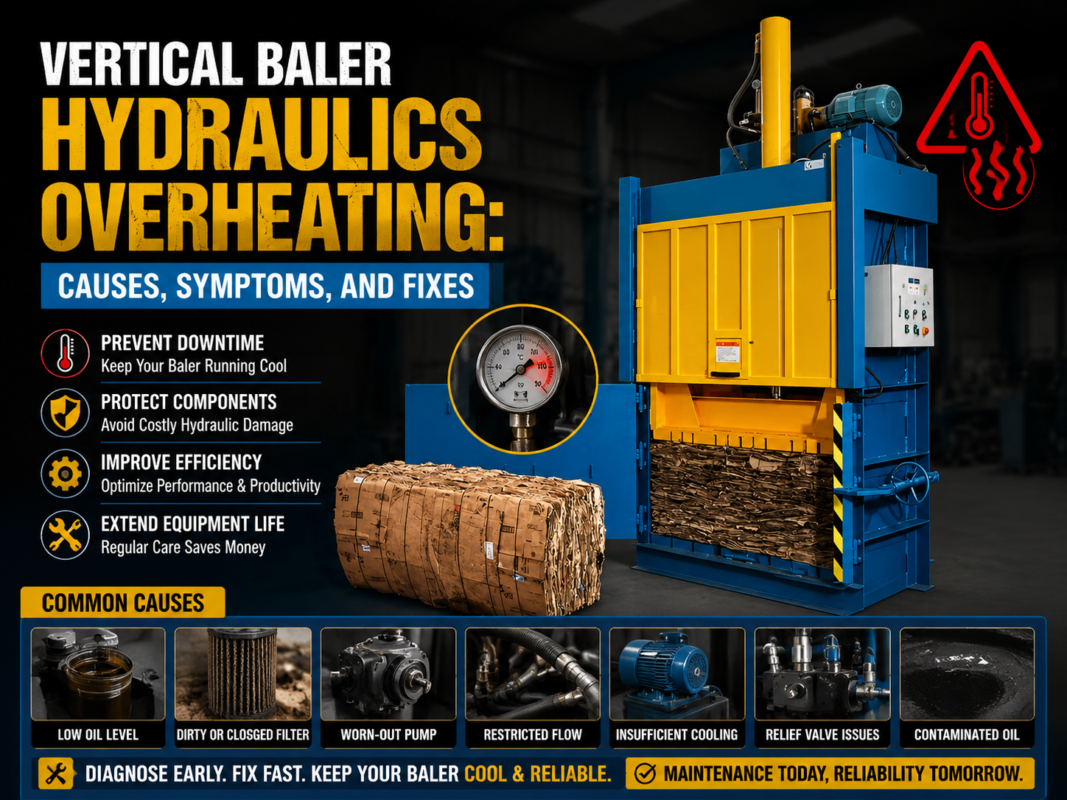
Finally, the hydraulic pump and valves require periodic performance testing. If the cycle time of the baler begins to slow down, it often indicates that the pump is losing efficiency or that a relief valve is bypassing. Monitoring the operating temperature of the oil is also vital; if the oil is consistently running too hot (above 60°C/140°F), it will accelerate the wear of every seal in the system. Heat exchangers and cooling fans must be kept clean and functional to maintain the correct thermal balance.
Electrical and Control System Maintenance
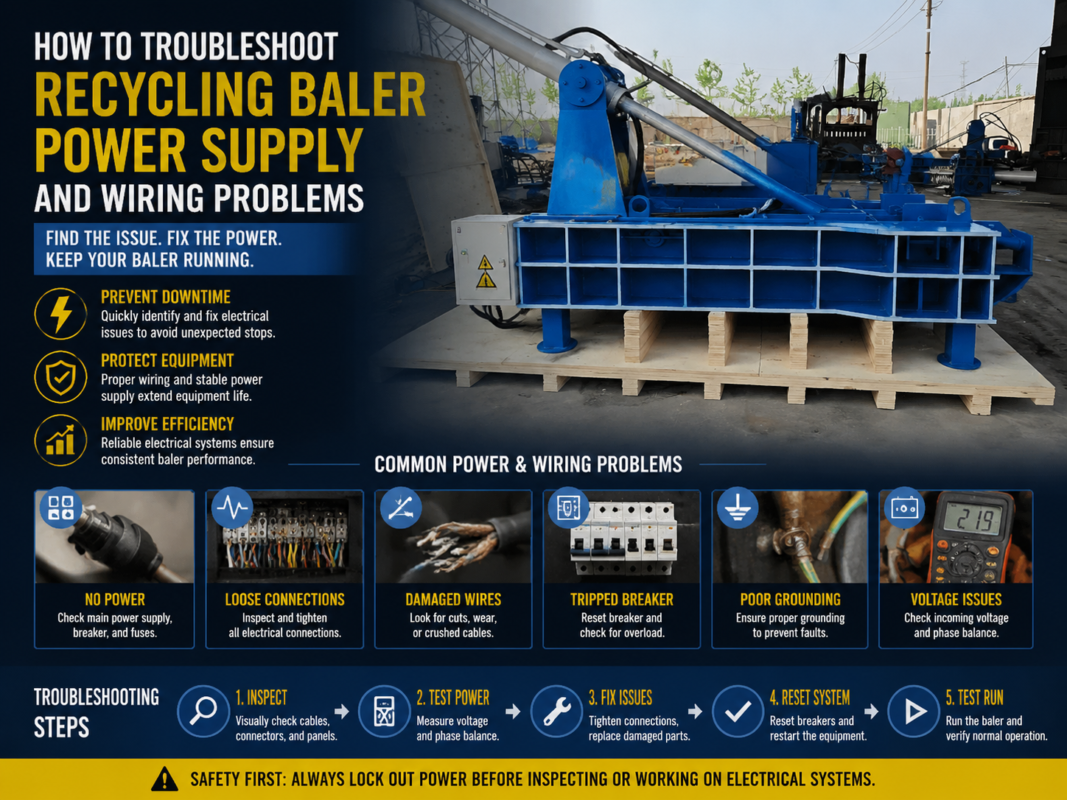
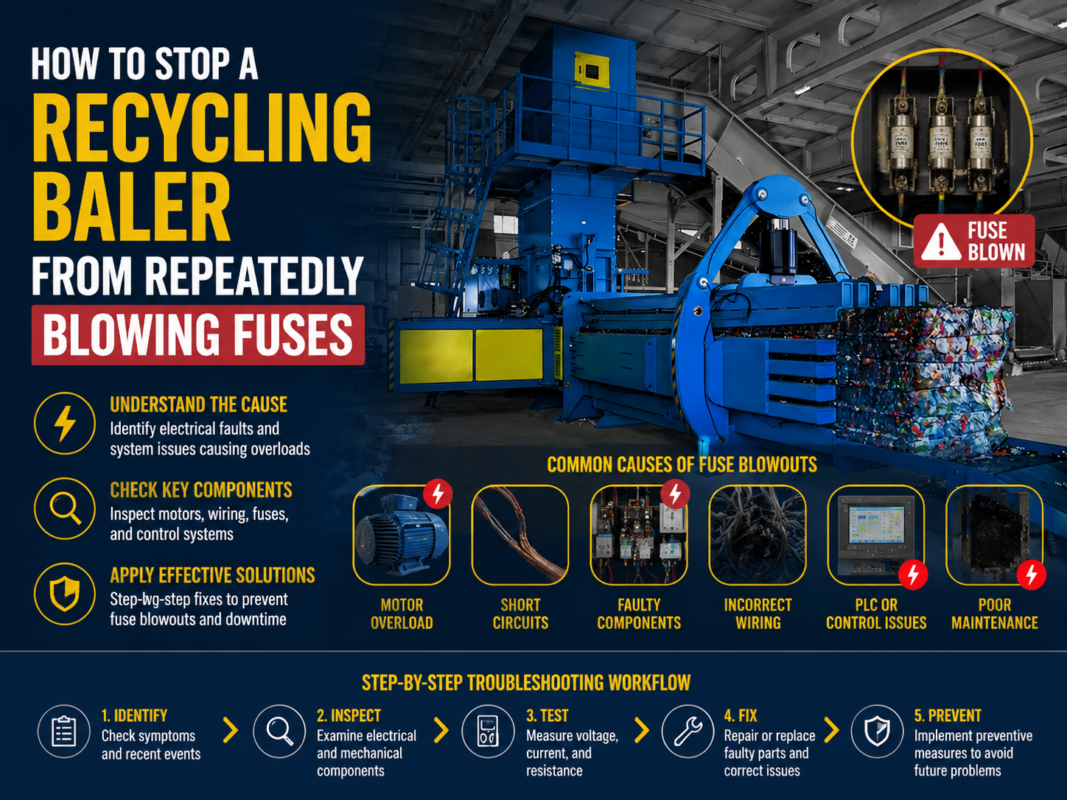
While often overlooked in favor of mechanical parts, the electrical system contains several wear-sensitive components. Vibration is the primary enemy of electrical reliability in a recycling baler. Over time, the constant pulsing of the hydraulic system and the impact of the shear blades can loosen terminal screws and wire connections. A loose connection creates resistance, which generates heat and can eventually lead to a fire or a fried control board. Quarterly tightening of all connections in the main control panel is a best practice.
Sensors and limit switches are the ‘eyes’ of the machine. In the harsh environment of a scrap yard, these components are subjected to dust, moisture, and physical impact. Proximity sensors should be checked for proper alignment and cleaned of any metallic dust buildup, which can cause false readings. If the baler is failing to complete its cycle or the ram is stopping in the wrong position, a faulty or misaligned sensor is the most likely culprit.
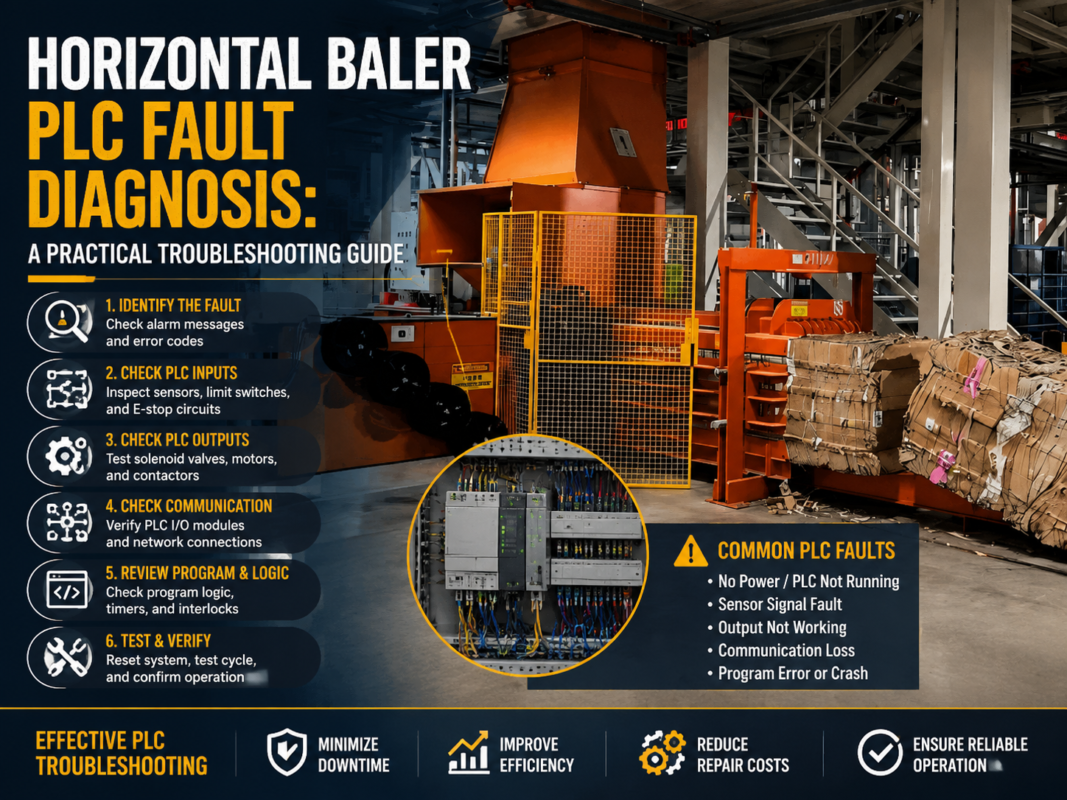
The PLC (Programmable Logic Controller) and HMI (Human Machine Interface) are the brains of the operation. While the hardware itself doesn’t ‘wear’ in the traditional sense, the cooling fans for the electronics can fail, leading to overheating. Additionally, the backup batteries for the PLC memory should be replaced every few years to prevent the loss of machine parameters during a power outage. Keeping the electrical cabinet sealed and the filters clean is essential for protecting these sensitive components from the conductive dust often found in recycling facilities.
Mechanical Wear Parts: Shear Blades, Liners, and Guides
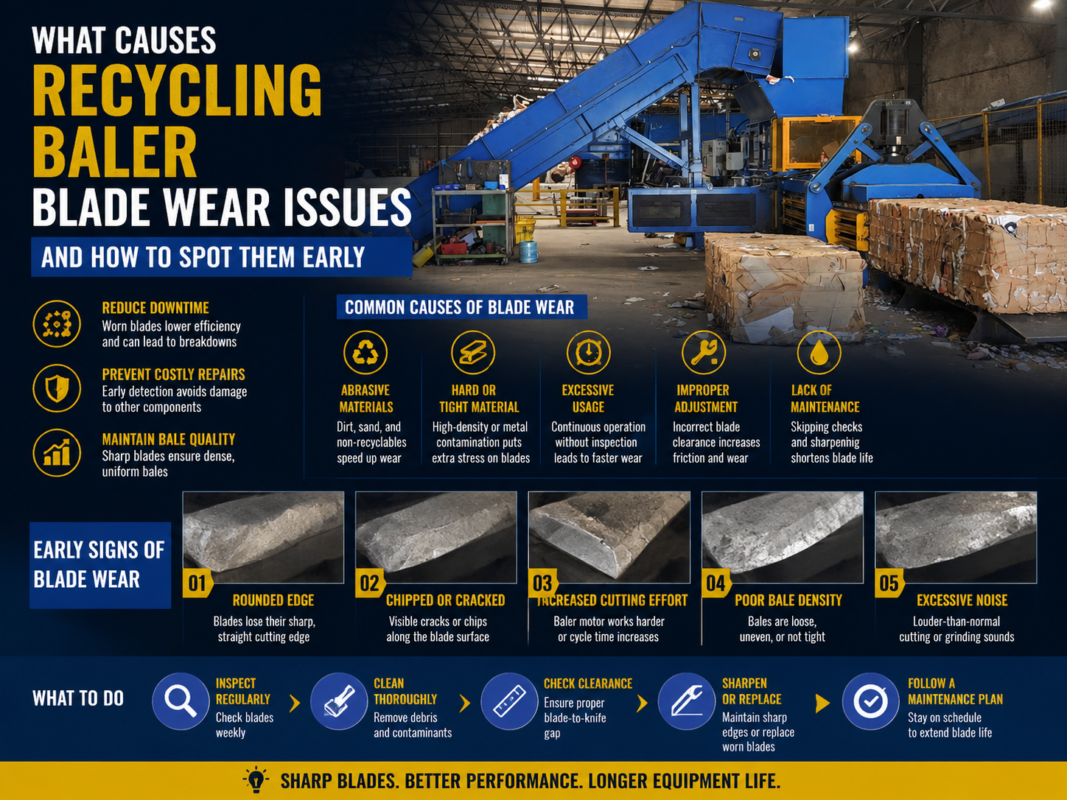
The mechanical wear parts are where the ‘rubber meets the road’—or rather, where the steel meets the scrap. The shear blades are perhaps the most critical wear part in a recycling baler. Their job is to cut through overhanging material as the ram moves forward. When these blades become dull, the machine must work significantly harder to complete a stroke, putting extra strain on the hydraulics. Dull blades also result in ‘ragged’ cuts, which can jam the ram or cause material to wedge between the ram and the chamber wall.
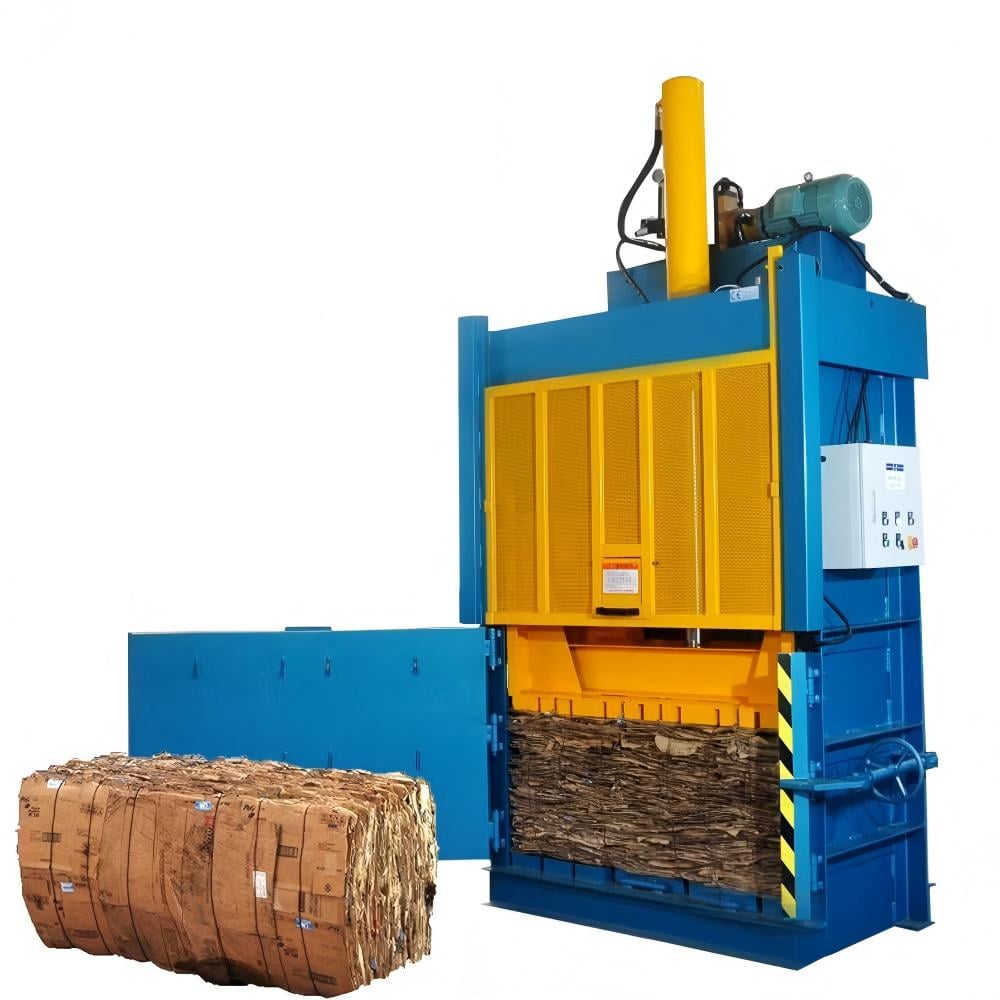
Blade clearance is just as important as sharpness. As the blades and their mounting seats wear, the gap between the moving and stationary blades increases. If this gap becomes too wide, the material will be folded rather than cut, leading to massive pressure spikes and potential structural damage. Most HARSLE balers allow for blade shimming or adjustment to maintain the factory-specified clearance. Once a blade has been flipped or sharpened to its limit, it must be replaced entirely.
The chamber liners and ram wear plates are designed to protect the main frame of the baler. These are typically made of high-abrasion-resistant steel (like Hardox). Over months of sliding contact with abrasive scrap, these plates will thin out. If they are allowed to wear through, the ram will begin to grind against the structural frame of the machine, leading to repairs that can cost tens of thousands of dollars. Measuring the thickness of these liners during monthly inspections is vital. They should be replaced once they reach the minimum thickness specified in the manual.
Ram guides and wear strips ensure that the ram travels in a perfectly straight line. If these guides wear unevenly, the ram can ‘cock’ in the chamber, leading to uneven wear on the seals and potentially scoring the cylinder rod. Proper lubrication of these guides is essential, but even with the best lubrication, they will eventually need replacement. Look for uneven shiny spots or scoring on the guide tracks as a sign that the wear strips are reaching the end of their service life.
The Lubrication Plan: Reducing Friction and Heat
Lubrication is the simplest yet most frequently neglected aspect of baler maintenance. A proper lubrication plan reduces the friction between moving parts, which in turn reduces heat and the rate of wear. Most modern recycling balers feature centralized lubrication systems, but these are not ‘set and forget.’ The grease reservoir must be kept full, and the distribution lines must be checked for blockages or breaks. If one line in a manifold is blocked, that specific bearing or wear plate will receive no grease, leading to rapid failure.
The type of lubricant used is critical. Recycling balers operate under high loads and often in extreme temperatures. Using a generic grease may not provide the necessary ‘tackiness’ or extreme-pressure (EP) additives required to stay in place under the force of a 200-ton ram. Always refer to the HARSLE manual for the specific grease grades. For machines operating in outdoor environments, the lubricant may need to be changed seasonally to account for viscosity changes in winter versus summer.
Beyond the automated system, there are often manual grease points that require attention. These might include door hinges, bale ejector pivots, and motor bearings. A weekly ‘grease round’ ensures that these secondary but important components don’t seize up. It is also important not to over-grease; excess grease can attract dust and grit, creating an abrasive paste that actually accelerates wear on exposed parts like cylinder rods.
Troubleshooting Signals: When to Stop and Inspect
Recognizing the early warning signs of wear can save a company from a total operational halt. One of the most common signals is a change in cycle time. If the baler normally takes 45 seconds to complete a cycle but is now taking 60 seconds, something is wrong. This could be a sign of internal pump wear, a leaking cylinder seal, or excessively dull shear blades. Any deviation from the ‘baseline’ performance should trigger a comprehensive inspection of the Recycling Baler Wear Parts: When Inspect Replace Them protocols.
Irregular bale shapes are another red flag. If bales are coming out ‘banana-shaped’ or are significantly less dense than usual, it often indicates that the ram is not traveling straight or that the hydraulic pressure is dropping prematurely. This is frequently caused by worn ram guides or a malfunctioning pressure relief valve. Similarly, if the bale weights are inconsistent despite the same input material, the hydraulic system’s ability to maintain ‘hold pressure’ should be investigated.
Overheating is a clear signal that the system is fighting against itself. Friction from worn liners or internal hydraulic leakage generates heat. If the oil temperature alarm sounds, do not simply wait for it to cool down and restart. Investigate the source of the heat. Is the oil level low? Is the cooler clogged? Or is a component failing internally? Ignoring heat is the fastest way to destroy every seal and hose in the machine.
Comprehensive Maintenance Schedule Table
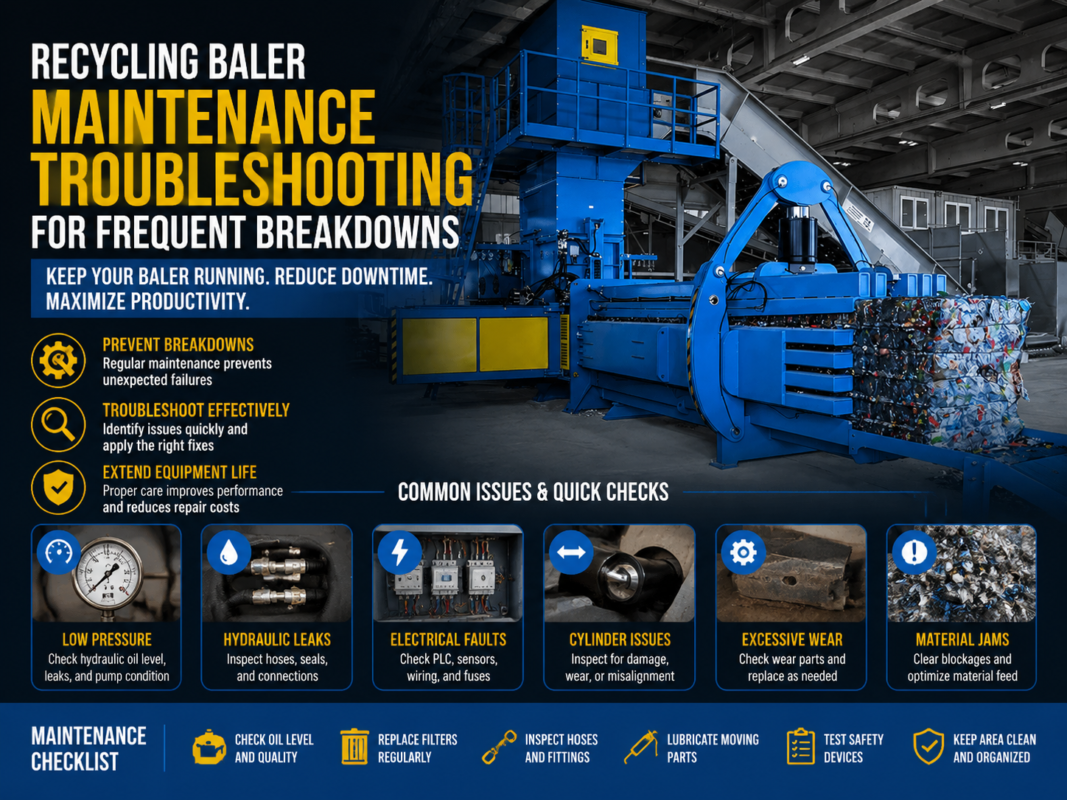
To keep your recycling baler in top condition, follow this structured maintenance schedule. Note that these are general guidelines; always refer to your specific HARSLE model manual for exact intervals.
| Frequency | Component | Action Required |
|---|---|---|
| Daily | Hydraulic System | Check oil level, look for leaks, monitor operating temperature. |
| Daily | Safety Systems | Test E-stops, interlocks, and light curtains. |
| Weekly | Shear Blades | Inspect for chips, dullness, and check blade clearance gap. |
| Weekly | Lubrication | Check auto-lube reservoir and manually grease pivot points. |
| Monthly | Chamber Liners | Measure thickness of wear plates and check for loose bolts. |
| Monthly | Hydraulic Filters | Check indicators; replace if necessary. Inspect for metal debris. |
| Quarterly | Electrical Panel | Tighten all connections, clean filters, and check sensor alignment. |
| Yearly | Hydraulic Oil | Perform full oil analysis or replace oil and clean the reservoir. |
| Yearly | Structural Integrity | Inspect main frame welds and cylinder mounts for stress cracks. |
Frequently Asked Questions (FAQ)
1. How often should I sharpen the shear blades on my recycling baler?
The frequency of sharpening depends entirely on the material being processed. If you are baling soft aluminum or plastics, blades may last several months. However, if you are processing heavy steel scrap or contaminated materials, you may need to rotate or sharpen the blades every few weeks. A good rule of thumb is to inspect them weekly and sharpen them as soon as you notice a 10-15% increase in cycle time or visible ‘tearing’ of the material.
2. What are the signs that my hydraulic pump is wearing out?
The most common signs of pump wear include increased noise (a high-pitched whine), slower cycle times, and the inability to reach maximum system pressure. If the pump is getting excessively hot compared to the rest of the hydraulic system, it is likely experiencing internal leakage (slippage), which indicates that the internal tolerances have worn beyond their limits.
3. Can I use any hydraulic oil in my HARSLE baler?
No. You must use oil that meets the specific viscosity and additive requirements outlined in your machine’s manual. Most recycling balers require an anti-wear (AW) hydraulic oil, typically ISO 46 or ISO 68. Using the wrong oil can lead to poor lubrication at high temperatures or sluggish performance in cold weather, both of which accelerate the wear of the pump and valves.
4. Why are my bale chamber liners wearing out faster on one side?
Uneven liner wear is usually a sign of ram misalignment. This can be caused by worn ram guide strips, uneven loading of material into the chamber, or a cylinder that is not pushing perfectly straight. It is important to address this quickly, as uneven wear can eventually lead to structural damage to the ram itself or the main chamber walls.
5. How do I know when a hydraulic hose needs to be replaced before it bursts?
Inspect hoses for ‘bubbling’ or blistering on the outer cover, which indicates the inner high-pressure layer has failed. Also, look for any exposed wire braiding, as this will quickly rust and weaken the hose. Any hose that shows signs of ‘weeping’ fluid at the crimped fittings should be replaced immediately, as this is a precursor to a complete blow-out.
6. Is it better to repair or replace a leaking hydraulic cylinder?
If the leak is coming from the rod seal and the chrome rod itself is smooth and free of scratches, a simple seal kit replacement is usually sufficient and cost-effective. However, if the rod is scored, pitted, or bent, or if the internal barrel of the cylinder is damaged, a full replacement or professional remanufacturing is necessary to ensure the new seals don’t fail immediately.