Essential Safety Checks for Recycling Baler Maintenance: A Comprehensive Guide for Industrial Efficiency


The Critical Role of Maintenance in Recycling Baler Operations
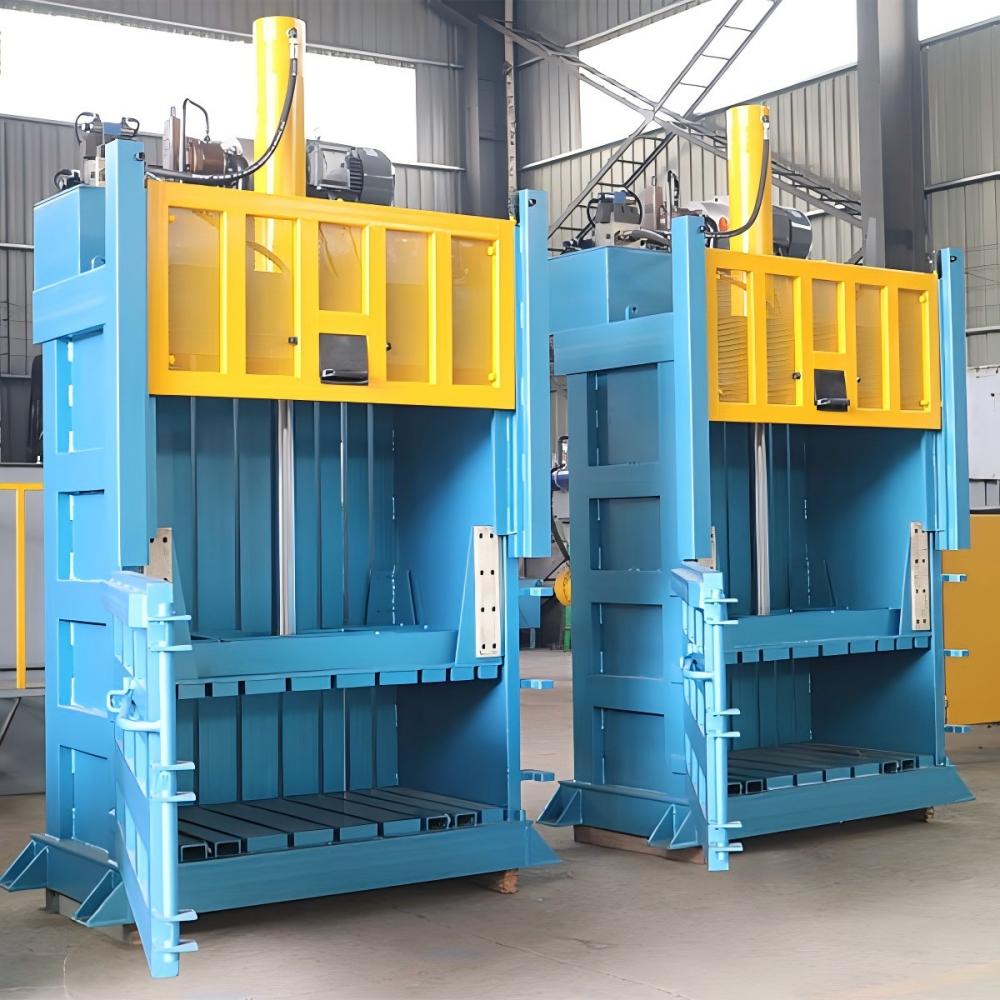
In the high-pressure world of waste management and metal fabrication, the recycling baler stands as a cornerstone of operational efficiency. These machines are designed to compress voluminous materials—ranging from cardboard and plastics to scrap metal and aluminum—into manageable, transportable bales. However, the sheer force required to achieve this compression means that every component of the machine is under significant stress. Implementing Essential Safety Checks Recycling Baler Maintenance is not merely a recommendation; it is a fundamental necessity for ensuring the longevity of the equipment and, more importantly, the safety of the personnel operating it.
Neglecting routine maintenance often leads to a domino effect of industrial failures. A minor hydraulic leak, if ignored, can escalate into a complete system failure, resulting in expensive downtime and potential environmental hazards. Furthermore, a baler that is not properly maintained poses a severe risk of mechanical failure during operation, which can lead to catastrophic injuries. By prioritizing a structured maintenance regime, facilities can maximize their Return on Investment (ROI) while fostering a culture of safety and reliability. HARSLE, a leader in metal fabrication machinery, emphasizes that a well-maintained machine is a productive machine.
Beyond safety, the economic implications of maintenance are profound. Regular inspections allow for the identification of wear and tear before they necessitate major overhauls. Replacing a worn seal or sharpening a shear blade is significantly cheaper than replacing a damaged hydraulic pump or a warped ram. In this guide, we will delve deep into the technical aspects of recycling baler upkeep, providing a roadmap for operators and maintenance managers to keep their equipment in peak condition.
Daily Inspection: The First Line of Defense
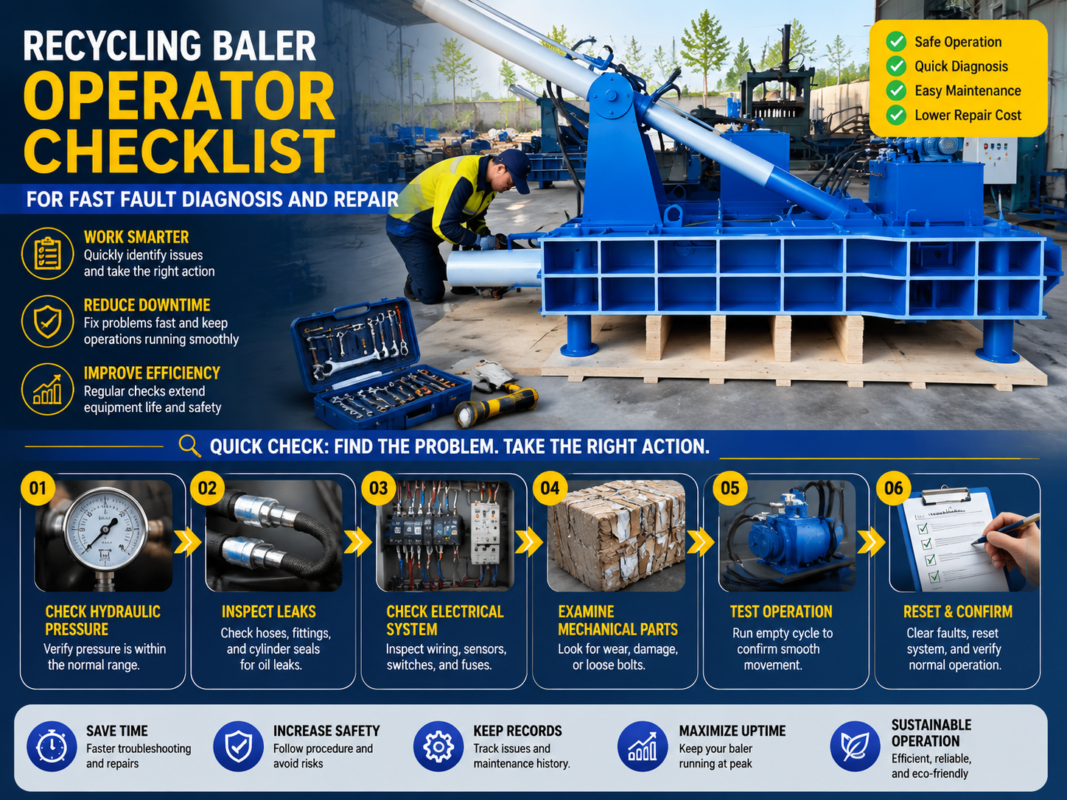
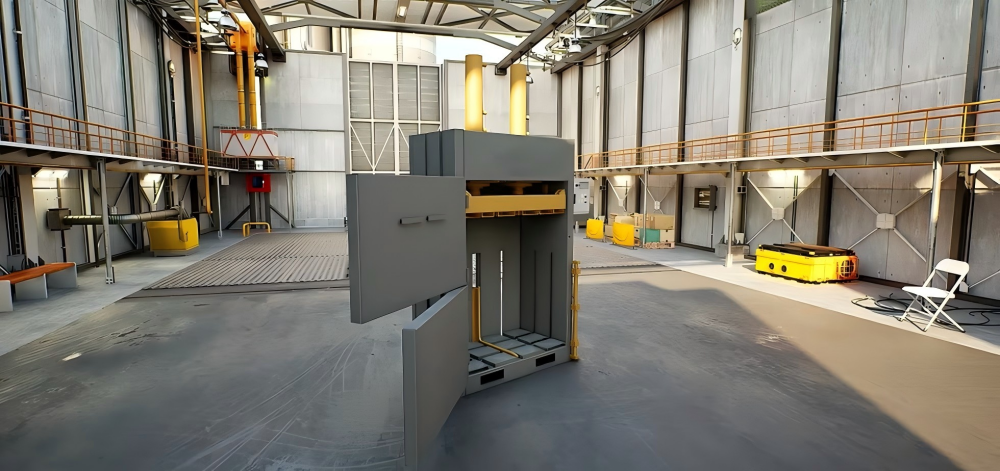
The daily inspection routine is the most effective way to catch emerging issues before they disrupt production. This process should begin before the machine is even powered on. Operators should conduct a 360-degree walk-around of the baler, looking for any obvious signs of damage, such as structural cracks, loose bolts, or fluid puddles on the floor. Ensuring the work area is clean and free of debris is also vital, as stray material can interfere with the machine’s moving parts or create tripping hazards for the staff.
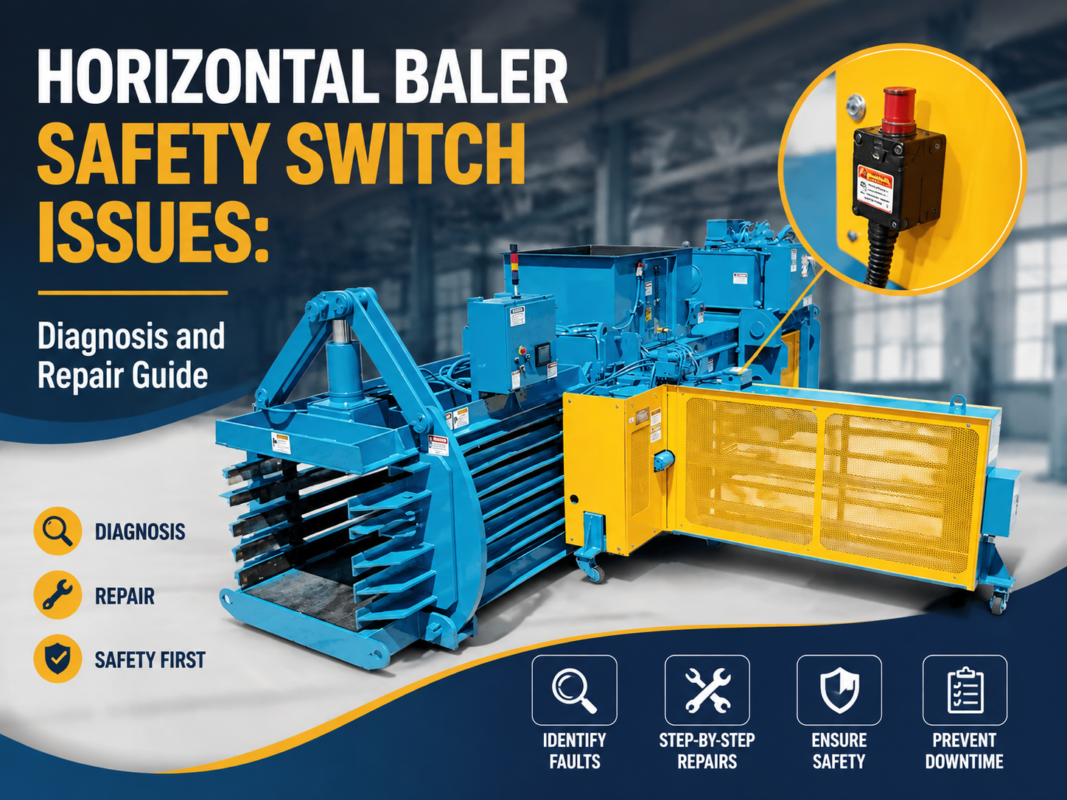
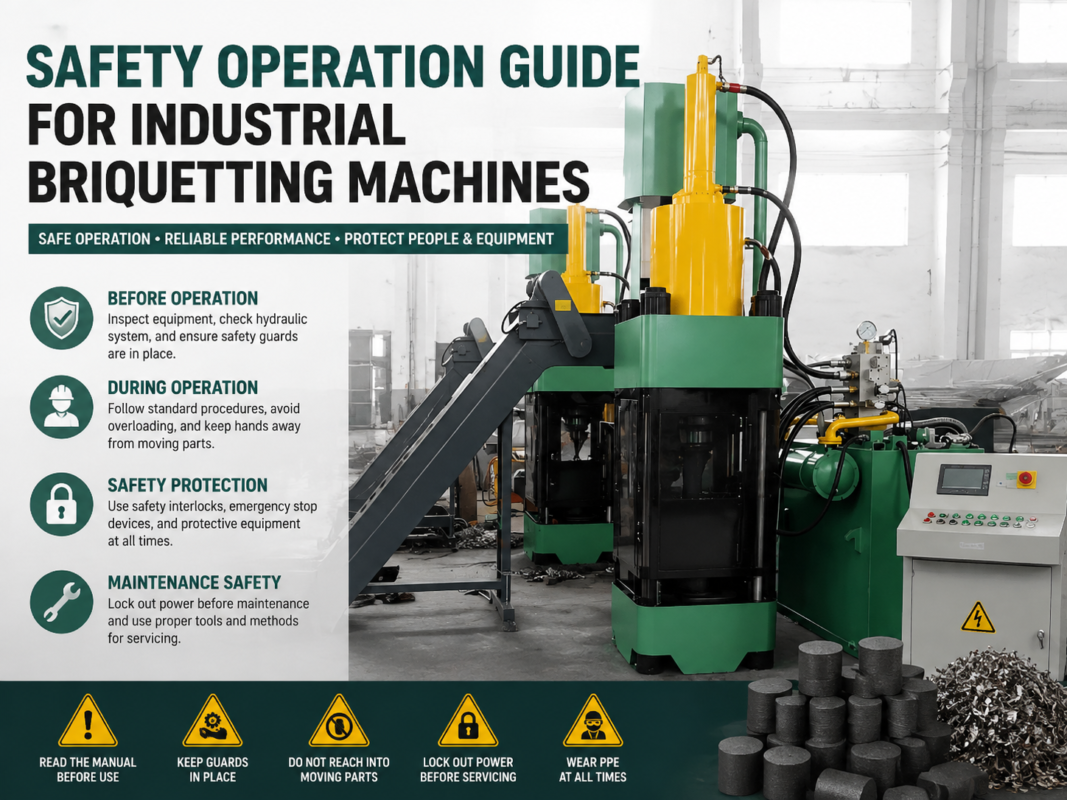
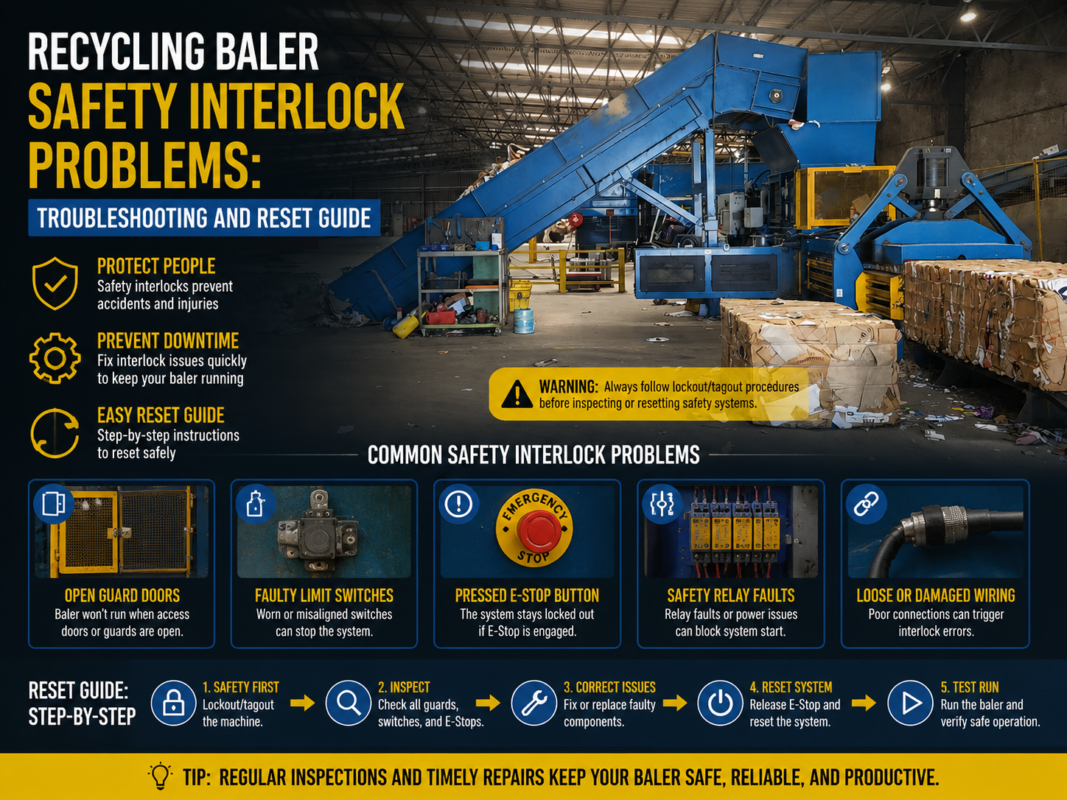
One of the most critical components of the daily check is the verification of safety interlocks and emergency stop (E-stop) buttons. These systems are designed to halt the machine instantly in the event of an emergency. Operators must test each E-stop button to ensure it functions correctly and that the machine cannot be restarted until the button is reset. Similarly, safety gates and doors must be checked to ensure they are properly aligned and that the limit switches are engaging. If a gate can be opened while the ram is in motion, the machine must be locked out and tagged out immediately for repair.
Cleaning the bale chamber and the area around the ram is another essential daily task. Over time, small fragments of material can accumulate behind the ram or in the tracks, leading to increased friction and potential jamming. By removing this debris daily, operators can prevent unnecessary wear on the wear plates and hydraulic seals. Finally, checking the hydraulic oil level via the sight glass ensures that the system has sufficient fluid to operate without cavitating the pump, which can cause permanent internal damage.
Hydraulic System Checks: The Lifeblood of the Baler
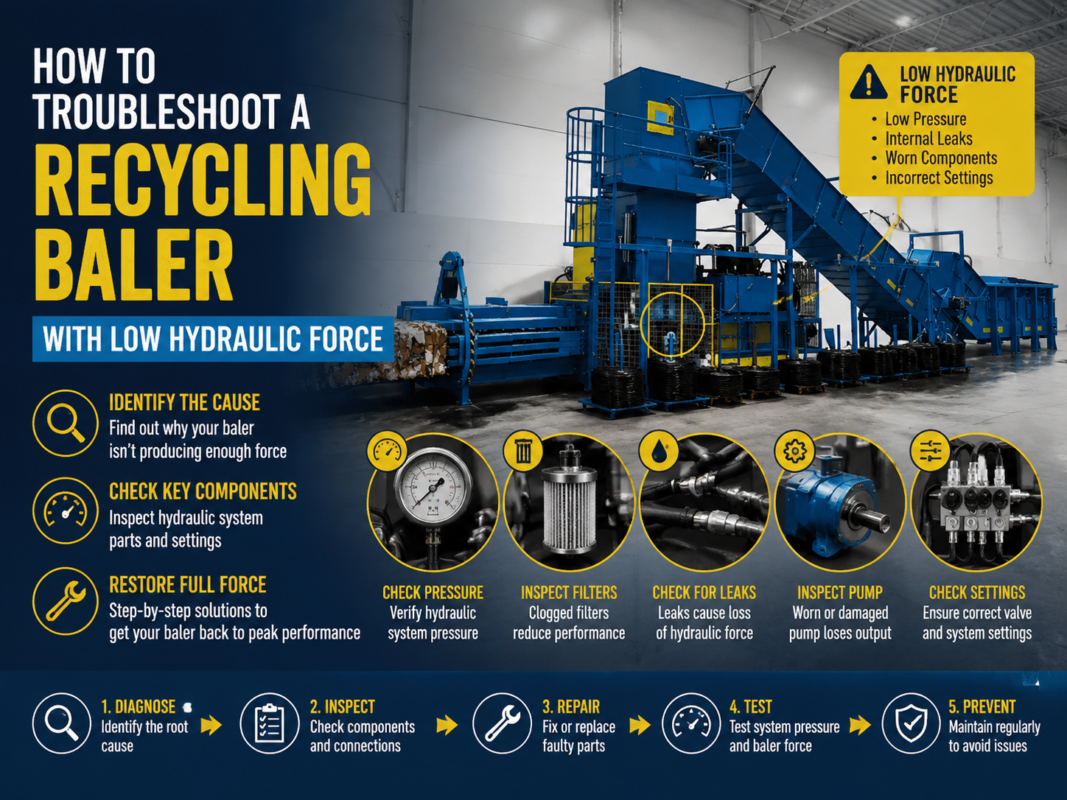
The hydraulic system is the heart of any recycling baler, providing the immense force needed to crush materials. Maintaining this system requires a focus on fluid quality, pressure regulation, and component integrity. The first step in Essential Safety Checks Recycling Baler Maintenance for hydraulics is monitoring the oil temperature. Most modern balers, including those from HARSLE, are equipped with temperature sensors. If the oil becomes too hot (typically above 60°C or 140°F), its viscosity drops, leading to poor lubrication and accelerated wear on the pump and valves.
Hydraulic hoses and fittings must be inspected for leaks, bulges, or abrasions. A pinhole leak in a high-pressure line can be extremely dangerous, as the escaping fluid can penetrate human skin—a condition known as fluid injection injury. Operators should never use their hands to check for leaks; instead, a piece of cardboard or wood should be passed over the suspected area. Any hose showing signs of the outer jacket wearing down to the wire braid should be replaced immediately to prevent a high-pressure burst.
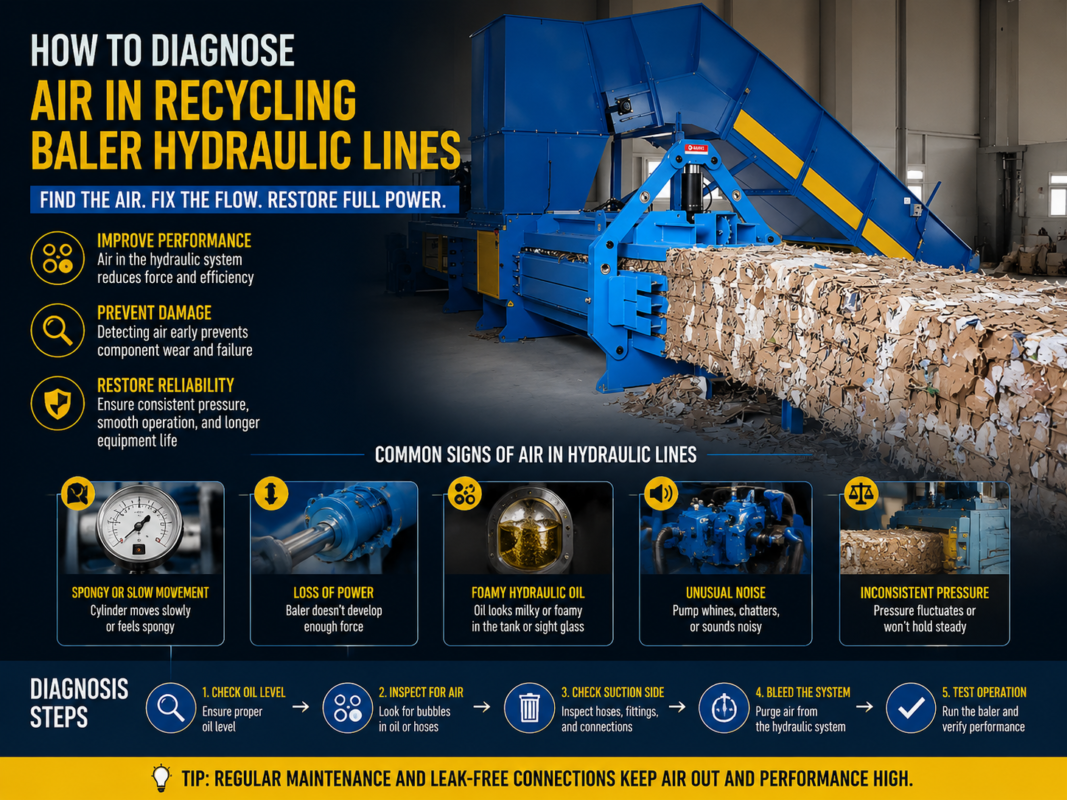
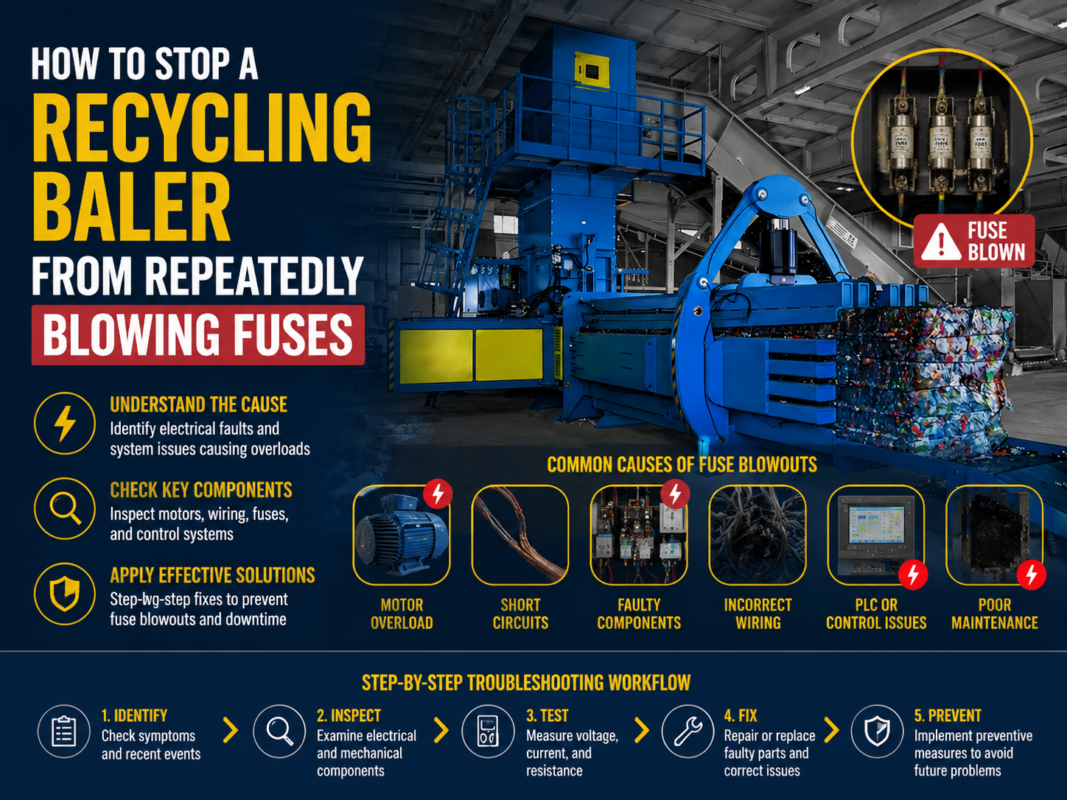
The filtration system is equally important. Hydraulic oil must remain free of contaminants like dust, metal shavings, and moisture. Regularly checking the filter indicators and replacing filter elements according to the manufacturer’s schedule is crucial. If the oil appears milky, it indicates water contamination; if it smells burnt or looks dark, it has likely oxidized due to overheating. In either case, a full oil change and system flush may be required to protect the expensive hydraulic components.
Electrical System and Control Logic Inspections
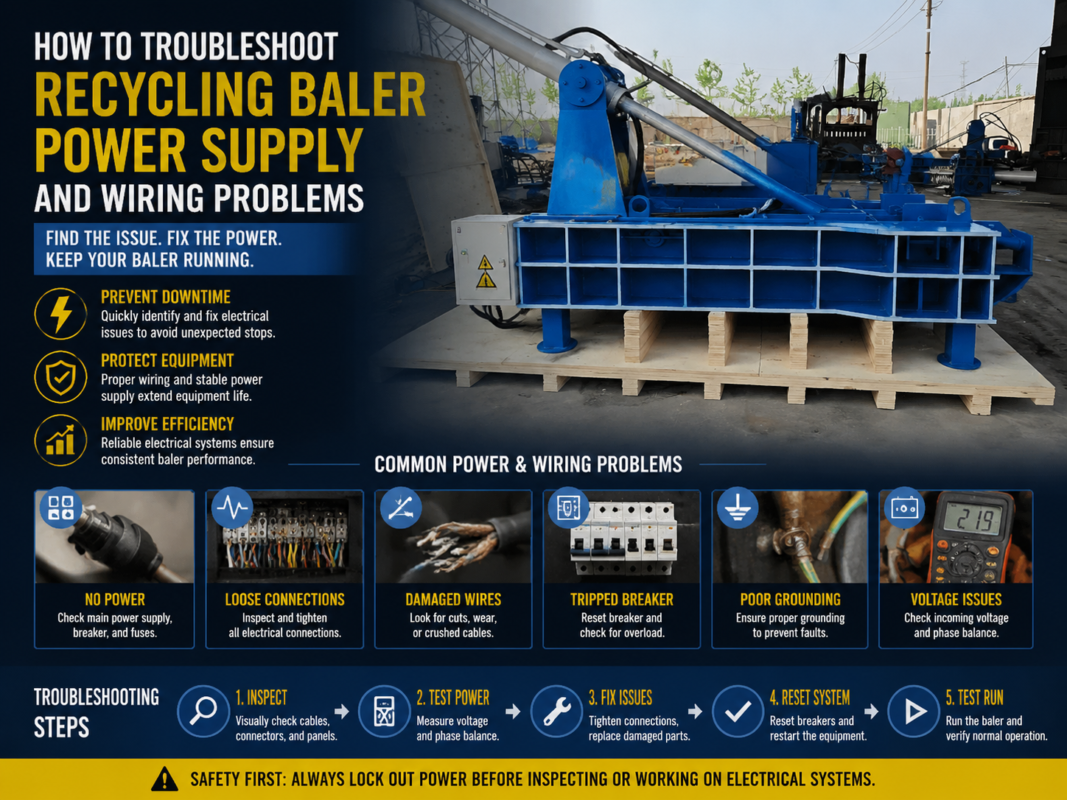
Modern recycling balers rely on sophisticated electrical systems and Programmable Logic Controllers (PLCs) to manage the complex sequences of the baling cycle. Electrical maintenance begins with the control panel. Ensure that the cabinet is sealed against dust and moisture, as industrial environments are often harsh. Loose wiring connections are a common cause of intermittent faults and can even lead to electrical fires due to increased resistance and heat. A periodic check to ensure all terminals are tight can prevent these issues.
Sensors and limit switches are the “eyes” of the machine. They detect the position of the ram, the status of the doors, and the pressure levels within the system. If a sensor is misaligned or coated in grime, it may send incorrect signals to the PLC, causing the machine to malfunction or bypass safety protocols. Cleaning these sensors and ensuring they are securely mounted is a vital part of the electrical check. Furthermore, the grounding of the machine should be verified to protect against electrical surges and ensure the safety of the operator.
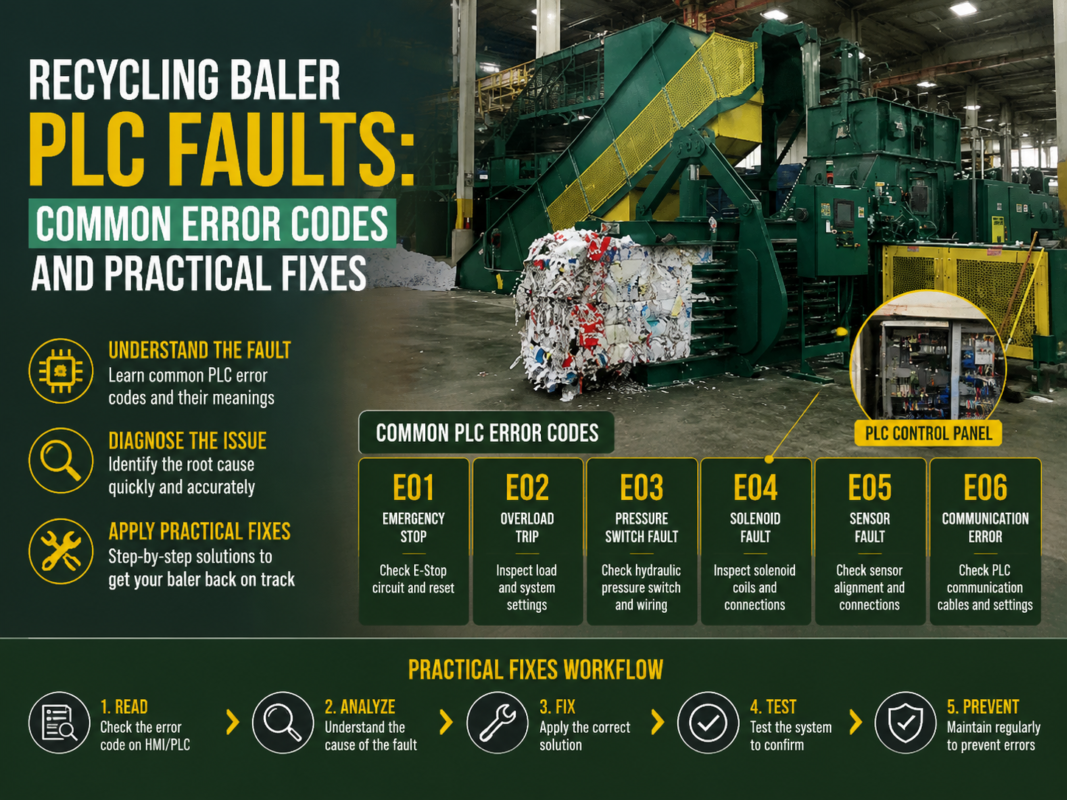
The PLC software itself rarely requires maintenance, but the hardware it controls—such as relays and contactors—has a finite lifespan. Listen for unusual clicking sounds or signs of arcing within the control panel. If the baler features a touch-screen HMI (Human-Machine Interface), ensure it is responsive and that no error codes are being ignored. Addressing minor electrical glitches early prevents the frustration of a machine that refuses to start in the middle of a busy shift.
Mechanical Integrity and Structural Checks
The mechanical structure of a recycling baler is subjected to immense torsional and compressive forces. Over time, this can lead to structural fatigue. Inspecting the weld points on the bale chamber and the main frame is essential. Any signs of cracking or deformation must be addressed by a certified welder immediately. The ram itself must be checked for alignment. If the ram is not traveling straight, it will put uneven pressure on the wear plates and hydraulic cylinders, leading to premature failure.
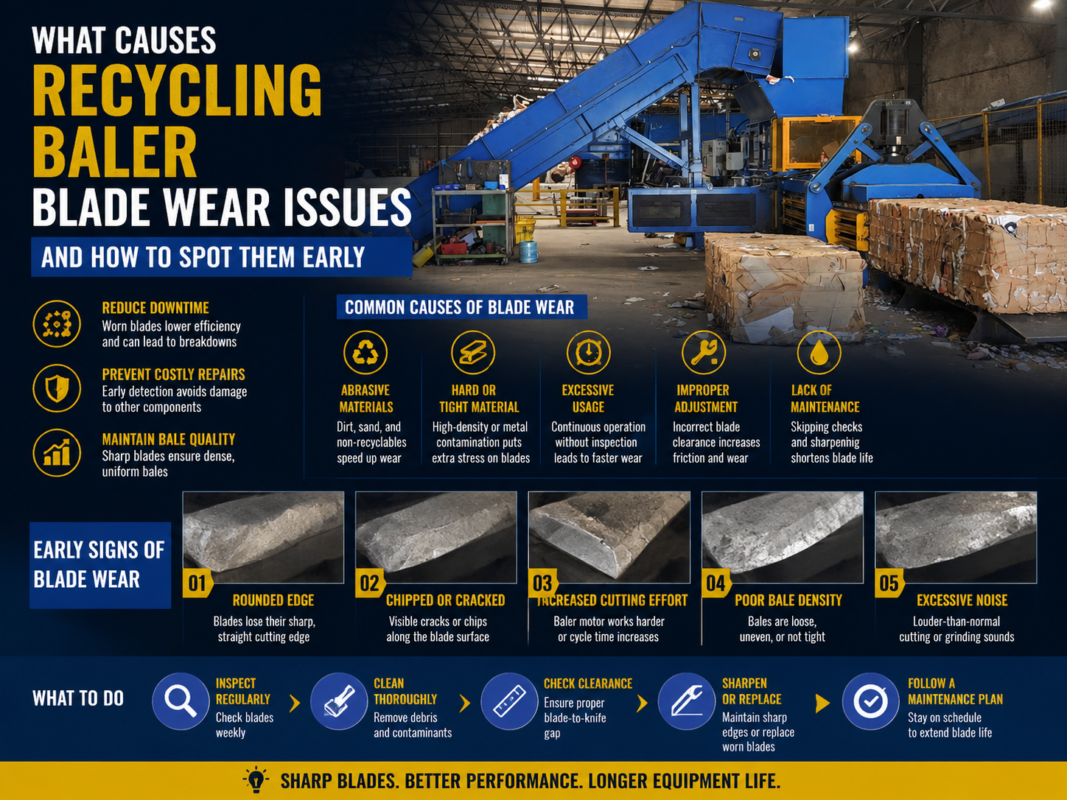
Shear blades are another critical mechanical component, especially in balers designed for metal or tough plastics. These blades must remain sharp and properly gapped to ensure a clean cut as the ram moves forward. Dull blades increase the load on the hydraulic system, as the machine has to “tear” through material rather than cut it. This results in higher energy consumption and increased wear on the motor. Regularly rotating or sharpening the blades according to the HARSLE maintenance manual will keep the machine running efficiently.
Finally, inspect the bale ejection system. Whether it is a manual tie or an automatic wire-tier, the mechanisms involved must be timed perfectly. For automatic tiers, check the needles, twisters, and cutters for wear. Misaligned tying mechanisms can lead to “broken bales,” which require the material to be re-processed, wasting time and labor. Keeping these mechanical parts clean and well-adjusted ensures that every bale produced is dense, secure, and ready for transport.
The Lubrication Plan: Reducing Friction and Wear
Lubrication is often the most overlooked aspect of Essential Safety Checks Recycling Baler Maintenance, yet it is one of the most cost-effective ways to extend machine life. Every moving part—from the ram guides to the door hinges—requires regular lubrication to minimize friction. Without a proper lubrication film, metal-on-metal contact will rapidly grind down components, leading to expensive replacements and increased energy usage.
A comprehensive lubrication plan should specify the type of lubricant to be used for each point. Not all greases are created equal; some are designed for high pressure, while others are better suited for high-speed movement. Using the wrong type can be as detrimental as using none at all. For example, the ram wear plates usually require a heavy-duty, extreme-pressure (EP) grease that can withstand the sliding forces of the compression cycle. Automatic lubrication systems, if equipped, should be checked daily to ensure the reservoir is full and the lines are not blocked.
Frequency is just as important as the quality of the lubricant. Some points may require daily attention, while others only need greasing weekly or monthly. It is helpful to create a color-coded map of the machine’s lubrication points to guide maintenance staff. Over-lubrication should also be avoided, as excess grease can attract dust and grit, creating an abrasive paste that actually accelerates wear. A “wipe-clean” policy after greasing helps maintain a professional and safe working environment.
Troubleshooting Signals: Listening to Your Machine
An experienced operator can often tell if a baler is struggling just by listening to it. Unusual noises are frequently the first sign of an impending problem. A high-pitched whining or screaming sound often indicates hydraulic cavitation, where air is being pulled into the pump. This is a critical issue that can destroy a pump in minutes. Conversely, a deep banging or clunking sound might suggest a loose mechanical component or a foreign object trapped in the chamber.
Changes in cycle time are another important signal. If the ram is moving slower than usual, it could indicate a failing pump, a clogged filter, or an internal leak in the hydraulic cylinder. Monitoring the pressure gauge during the cycle is also revealing. If the machine reaches maximum pressure too early, there may be an obstruction. If it fails to reach the required pressure to finish a bale, there is likely a bypass in the valve manifold or a worn-out seal. These signals should never be ignored; they are the machine’s way of asking for maintenance.
Heat is the final major troubleshooting signal. Beyond the hydraulic oil, check the temperature of the electric motor and the bearings. A motor that is running too hot may be overloaded due to dull shear blades or electrical phase imbalance. Using an infrared thermometer during a routine check can help identify “hot spots” that aren’t visible to the naked eye. By catching these thermal anomalies early, you can prevent motor burnouts and electrical failures that would otherwise cause lengthy shutdowns.
Comprehensive Maintenance Schedule Table
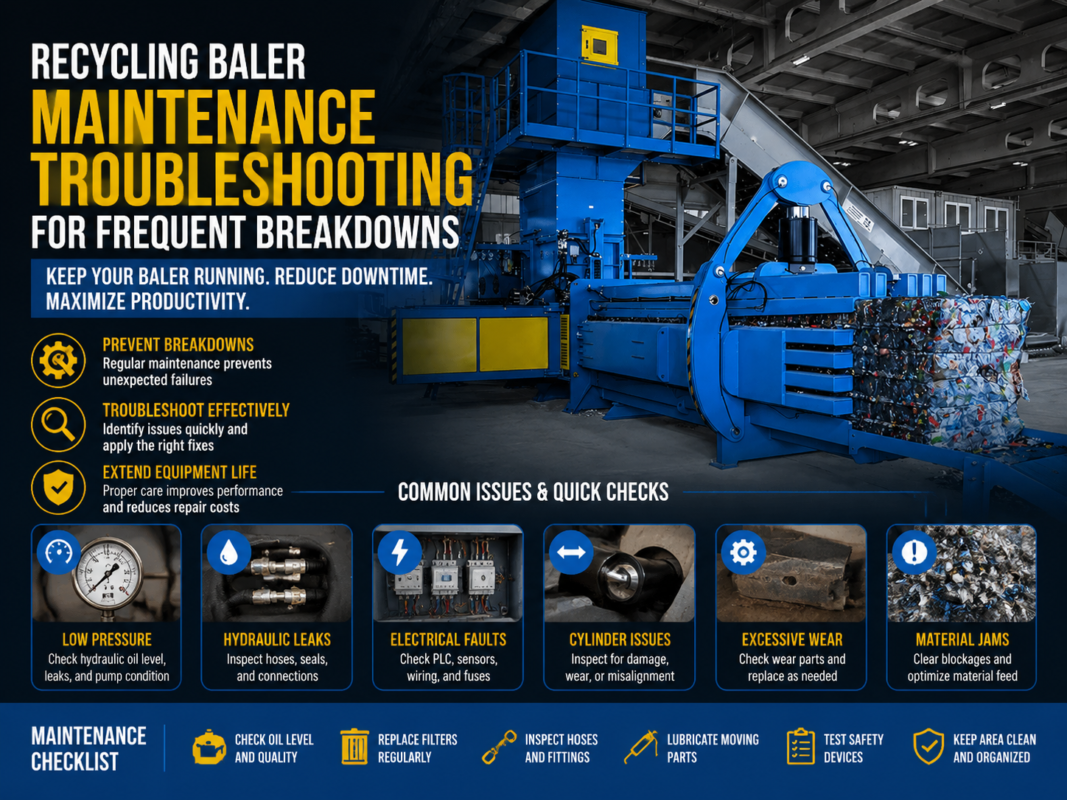
To ensure no step is missed, follow this structured maintenance schedule designed for industrial recycling balers.
| Frequency | Task Description | Component Focus |
|---|---|---|
| Daily | Test E-stops and safety interlocks. | Safety Systems |
| Daily | Check hydraulic oil level and temperature. | Hydraulics |
| Daily | Clear debris from ram tracks and chamber. | Mechanical |
| Weekly | Inspect hoses for leaks and abrasions. | Hydraulics |
| Weekly | Lubricate all grease points (EP Grease). | Lubrication |
| Monthly | Check shear blade gap and sharpness. | Mechanical |
| Monthly | Tighten electrical terminals in control panel. | Electrical |
| Quarterly | Analyze hydraulic oil for contamination. | Hydraulics |
| Annually | Full system calibration and structural NDT. | General |
Frequently Asked Questions (FAQ)
1. How often should I change the hydraulic oil in my recycling baler?
Generally, hydraulic oil should be changed every 2,000 to 4,000 operating hours, or at least once a year. However, this depends heavily on the operating environment. If the baler operates in a dusty or high-temperature area, more frequent changes or oil analysis may be necessary. Always check the oil’s color and clarity during your Essential Safety Checks Recycling Baler Maintenance.
2. Why is my baler making a loud vibrating noise during the compression stroke?
Vibration is often caused by air in the hydraulic system (cavitation), loose mounting bolts on the pump or motor, or worn-out ram wear plates. It can also occur if the material being baled is unevenly distributed, causing the ram to twist. Check for loose hardware and ensure the hydraulic fluid level is correct.
3. Can I use any type of grease for the lubrication points?
No. Most recycling balers require a high-pressure Lithium-based grease (often NLGI Grade 2) with Extreme Pressure (EP) additives. Using a standard multi-purpose grease may not provide enough protection for the high-load sliding surfaces of the ram. Consult your HARSLE manual for specific lubricant specifications.
4. What should I do if the emergency stop button doesn’t work?
If an E-stop fails its daily test, the machine must be shut down immediately and locked out. Do not attempt to operate the machine until a qualified technician has repaired the switch or the underlying wiring. Operating a baler without a functional E-stop is a major safety violation and poses a life-threatening risk.
5. How do I know when the shear blades need sharpening?
Signs of dull blades include “ragged” edges on the material, the ram struggling to complete the stroke, or an increase in the hydraulic pressure required to cut through the load. If you notice the machine is consuming more power or the cycle time is increasing, it is time to inspect and likely sharpen or rotate the blades.
6. Why are my bales coming out loose or misshapen?
Loose bales can be caused by several factors: insufficient hydraulic pressure, a malfunctioning auto-tie system, or not enough material being fed into the chamber. Ensure the pressure relief valve is set correctly and that the tying wire or plastic strapping is under the correct tension. Misshapen bales often indicate that the ram is misaligned or that the chamber is unevenly loaded.
Conclusion: Investing in Longevity
Maintaining a recycling baler is a continuous commitment that pays dividends in safety, efficiency, and machine lifespan. By following the Essential Safety Checks Recycling Baler Maintenance outlined in this guide, operators can ensure that their HARSLE equipment remains a reliable asset for years to come. Remember that maintenance is not just about fixing what is broken; it is about preventing the break from happening in the first place. A proactive approach reduces the stress on both the machine and the maintenance budget, allowing your facility to focus on what it does best: processing materials and driving sustainability.