How to Match Vertical Baler Capacity to Your Daily Waste Volume: A Comprehensive Guide

Introduction to Waste Volume Management
In the modern industrial landscape, efficient waste management is no longer just a matter of environmental responsibility; it is a critical component of operational cost-control. For businesses dealing with high volumes of cardboard, plastic, or light metal scrap, the decision to invest in a vertical baler is a significant step toward streamlining logistics. However, the most common mistake procurement managers make is failing to accurately match vertical baler capacity daily waste volume. Choosing a machine that is too small leads to operational bottlenecks and premature wear, while an oversized machine results in unnecessary capital expenditure and wasted floor space.
HARSLE understands that every facility has a unique waste profile. Whether you are a small retail outlet or a massive distribution center, the physics of compression remain the same, but the scale of the solution must vary. This guide provides a deep dive into the technicalities of capacity matching, ensuring that your investment in a vertical baler yields the highest possible efficiency and the fastest return on investment (ROI).
Price Range Overview for Vertical Balers
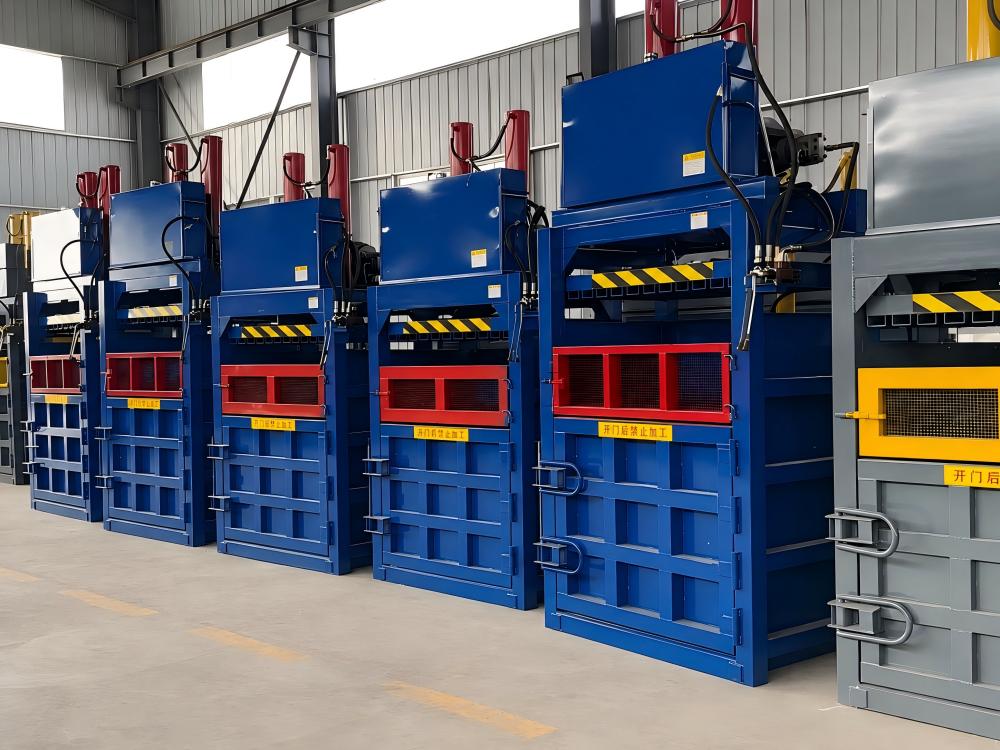
The price of a vertical baler is directly proportional to its compression force, chamber size, and automation features. Understanding the price tiers helps in setting a realistic budget based on your daily waste output. Generally, vertical balers are categorized into three main price brackets:
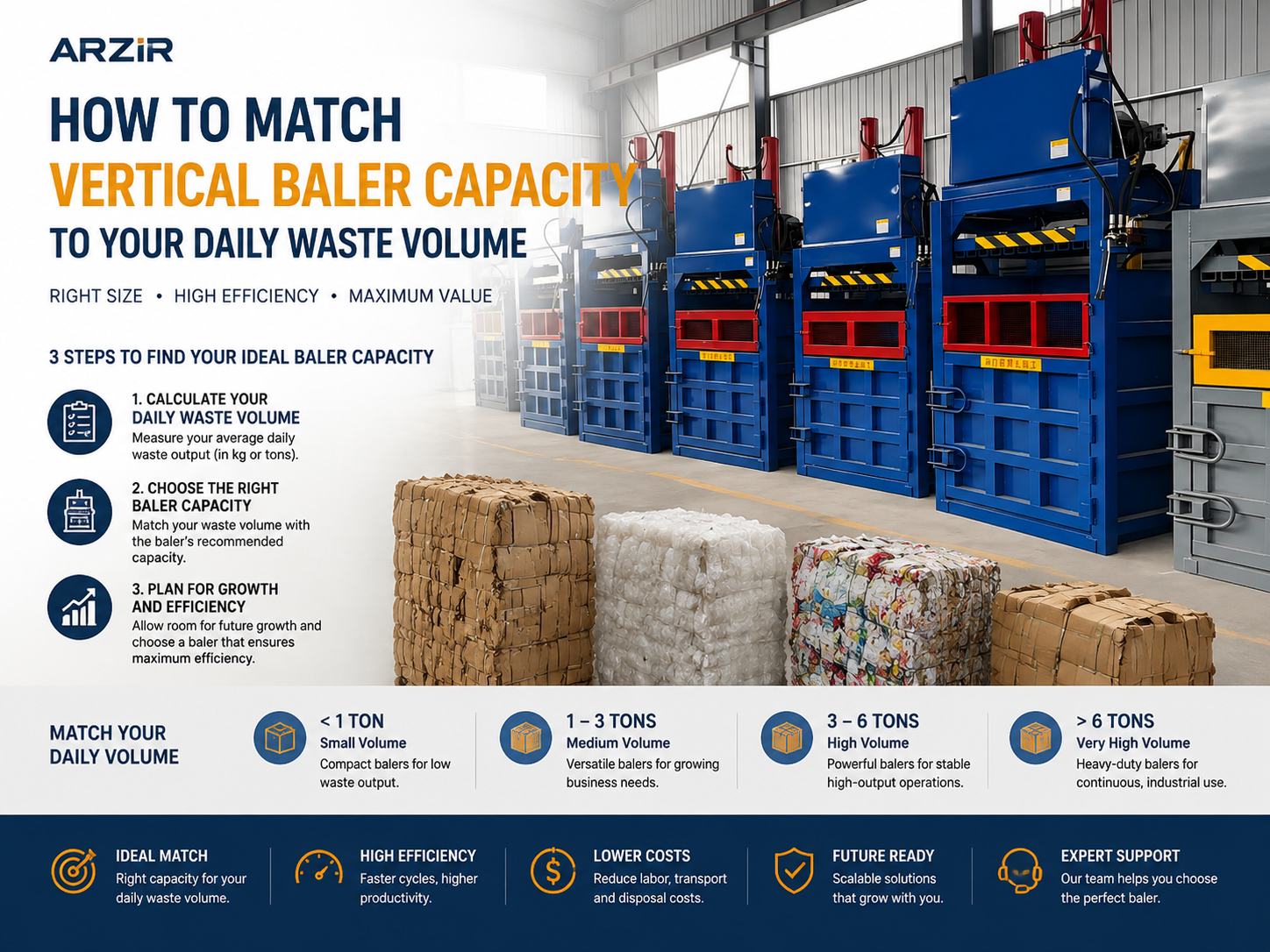
- Entry-Level/Small Balers ($2,000 – $5,500): These units typically offer 5 to 15 tons of pressure. They are ideal for small retail stores or offices generating less than 500 lbs of waste per day. They produce small, manageable bales that can be moved with a hand truck.
- Mid-Range/Standard Balers ($6,000 – $15,000): This is the most popular category for manufacturing plants and supermarkets. With 20 to 50 tons of pressure, these machines can handle 1 to 5 tons of waste daily. They produce “mill-size” bales (approx. 60 inches wide), which are the industry standard for recycling pick-ups.
- Heavy-Duty/Industrial Balers ($16,000 – $35,000+): Designed for 24/7 operations, these machines feature high-speed cycles, 60+ tons of pressure, and reinforced frames. They are essential for facilities processing over 10 tons of waste daily, including tough materials like hard plastics or aluminum cans.
When evaluating these price ranges, it is vital to consider that the initial purchase price is only one part of the equation. A cheaper machine that requires three cycles to do the work of one larger machine will eventually cost more in labor and electricity. Conversely, a high-end machine in a low-volume environment will never pay for itself through efficiency gains.
Main Cost Drivers in Vertical Baler Selection
Several technical factors influence the cost and capacity of a vertical baler. To match vertical baler capacity daily waste volume effectively, you must understand what drives these costs. The primary driver is the hydraulic system. The tonnage (compression force) is determined by the cylinder diameter and the hydraulic pump’s PSI. A higher tonnage allows for denser bales, which reduces the number of bales you need to store and transport.
The second major driver is the cycle time. Cycle time refers to how long it takes for the platen to move down, compress the material, and return to the starting position. In high-volume environments, a cycle time of 30 seconds versus 50 seconds can make a massive difference in daily throughput. Faster cycle times require more powerful motors and advanced hydraulic valves, which increase the machine’s price.
Material of construction also plays a role. Industrial-grade balers use high-tensile steel (such as Q345) and reinforced door hinges to withstand the outward pressure of expanding materials like plastic film. Cheaper models may use thinner plates that can warp over time under heavy use. Finally, the complexity of the control system—ranging from simple manual levers to PLC-controlled touchscreens with bale-full indicators—adds to the cost but significantly improves safety and ease of use.
Configuration Impact on Operational Efficiency
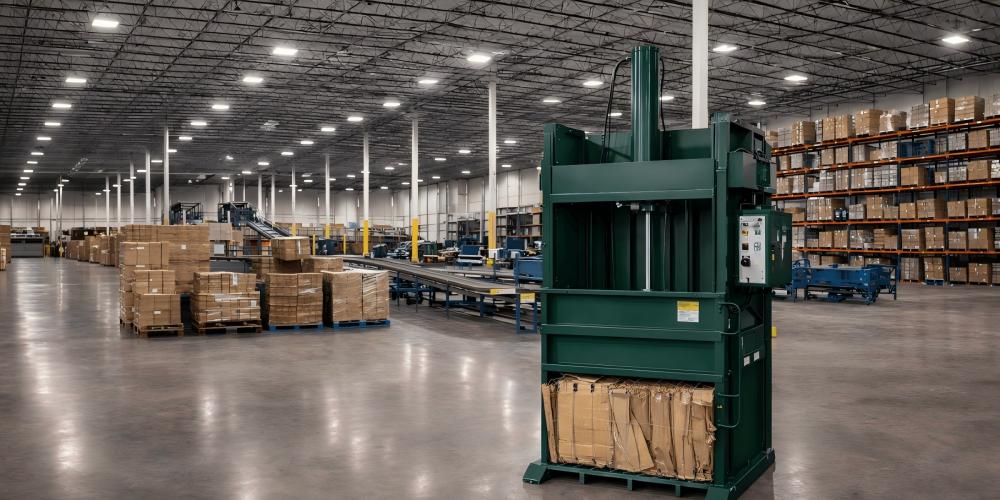
The configuration of your baler should be dictated by the type of waste and the physical constraints of your facility. For instance, the loading aperture (the opening where you throw the trash) must be large enough to accommodate your largest boxes without requiring manual breakdown. If your staff has to spend 10 minutes cutting up boxes before they can fit them into the baler, the labor cost will quickly exceed the machine’s value.
Another configuration choice is the ejection system. Manual ejection requires the operator to use a chain or lever to pull the bale out, which can be physically demanding. Hydraulic ejection systems use the machine’s power to push the bale onto a pallet automatically. For high-volume operations, hydraulic ejection is almost mandatory to maintain safety and speed. Furthermore, the door style—vertical lift vs. side swing—impacts the footprint. Vertical lift doors are excellent for tight spaces where a swinging door would block a walkway.
Power configuration is also critical. Most industrial balers require three-phase power (208V, 230V, or 460V). If your facility only has single-phase power, you will either need a specialized motor or a phase converter, both of which add to the installation complexity. Matching the motor’s horsepower to your expected duty cycle ensures the machine doesn’t overheat during peak waste periods, such as during a shift change or after a large shipment delivery.
Hidden Costs of Owning a Vertical Baler
Beyond the sticker price, several “hidden” costs can affect the total cost of ownership (TCO). Shipping is a major factor; these machines are heavy and often require flatbed transport and a heavy-duty forklift or crane for offloading. Installation might also require a certified electrician to run dedicated lines to the machine’s location.
Consumables are an ongoing expense. Vertical balers require baling wire or high-strength twine to secure the compressed material. Depending on the volume, you might go through hundreds of dollars of wire per month. Maintenance is another factor. Hydraulic oil needs to be filtered or replaced, and seals must be checked for leaks. A neglected machine will lose compression force, leading to “soft” bales that recyclers may reject or charge extra to process.
Finally, consider the cost of floor space. An industrial baler occupies a permanent footprint, and you also need space for the operator to work and for the finished bales to be stored before pickup. If your facility is already cramped, the “cost” of that square footage must be factored into your ROI. Choosing a baler with a smaller footprint but higher vertical height can sometimes mitigate this issue.
ROI Calculation: When Does a Baler Pay for Itself?
To justify the purchase, you must calculate the Return on Investment. The formula is relatively straightforward: ROI = (Current Disposal Costs + Labor) – (New Disposal Costs + Labor + Consumables + Machine Amortization). In many cases, waste hauling companies charge by the “pull” (each time they empty a dumpster). By baling your cardboard, you might reduce 10 dumpster pulls a month to just one, saving thousands of dollars annually.
Furthermore, many recycling centers will pay for mill-size bales of clean cardboard or plastic. Instead of paying to have waste removed, you turn that waste into a revenue stream. For example, if you produce 5 tons of cardboard a week and the market rate is $50 per ton, that is $250 in weekly revenue. Combined with the savings from reduced trash pickups, a mid-range baler often pays for itself within 12 to 18 months.
Labor savings are also significant. Without a baler, employees often spend hours breaking down boxes and walking back and forth to an outdoor dumpster. A centrally located vertical baler allows for immediate disposal, keeping the workspace clean and allowing employees to focus on their primary tasks. When you match vertical baler capacity daily waste volume correctly, you maximize these labor efficiencies.
Buying Advice: How to Match Capacity to Volume
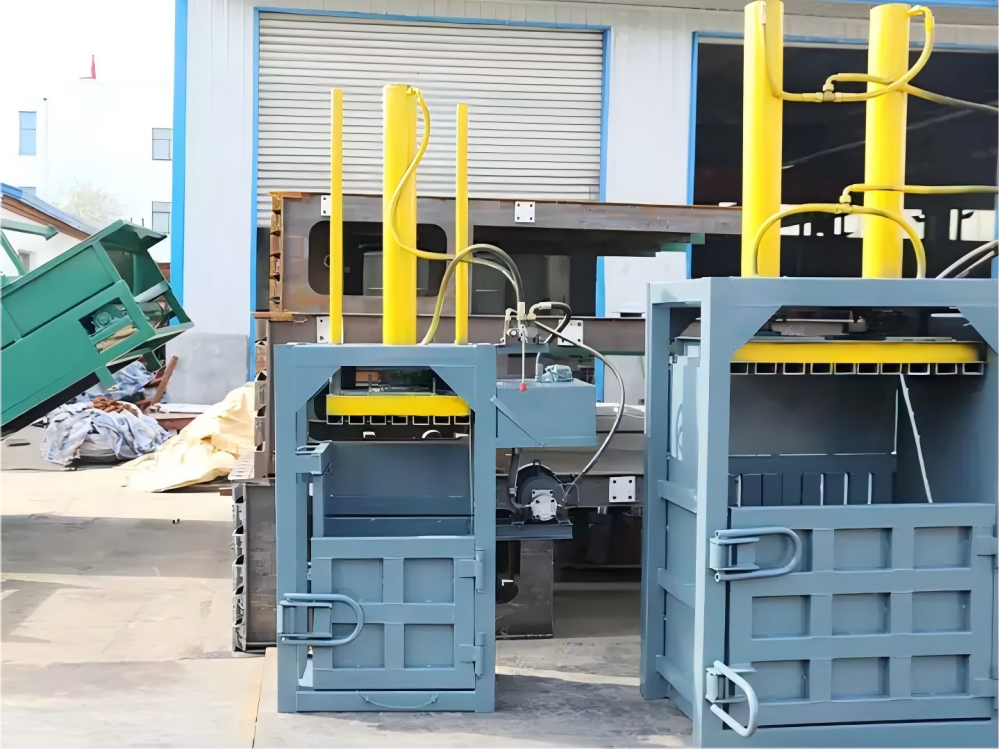
To accurately match vertical baler capacity daily waste volume, follow this step-by-step selection process:
- Conduct a Waste Audit: For one week, track the volume and weight of the material you intend to bale. Note the peak times. If you generate 2,000 lbs of cardboard on Monday but only 200 lbs on Tuesday, your baler must be sized for the Monday load.
- Determine Material Density: Cardboard compresses easily, but plastic “remembers” its shape and tries to expand. If you are baling plastic, you need a machine with higher tonnage and “retainer dogs” (teeth inside the chamber that hold the material down).
- Calculate Bale Frequency: If a machine produces a 1,000 lb bale and you generate 2,000 lbs of waste daily, you will produce 2 bales per day. Ensure your staff has the time to tie off and eject two bales without disrupting production.
- Check Ceiling Height and Floor Load: Vertical balers extend quite high when the ram is up. Ensure your ceiling can accommodate the full extension. Also, ensure your floor can handle the concentrated weight of the machine and a full bale.
- Consult with the Recycler: Before buying, ask your local recycling partner what bale size and weight they prefer. There is no point in making 500 lb bales if your recycler only pays top dollar for 1,000 lb mill-size bales.
HARSLE recommends always choosing a machine with about 20% more capacity than your current average needs. This “buffer” accounts for future business growth and prevents the machine from constantly running at its maximum limit, which extends the lifespan of the hydraulic components.
Frequently Asked Questions (FAQ)
1. How long does a typical vertical baler last?
With proper maintenance, a high-quality industrial vertical baler from HARSLE can last 15 to 20 years. The key is regular hydraulic oil changes and ensuring the ram remains aligned. In high-corrosion environments (like those handling wet waste), the lifespan may be shorter unless stainless steel components are used.
2. Can I bale different materials in the same machine?
Yes, most vertical balers are versatile. You can bale cardboard in the morning and plastic film in the afternoon. However, you must never mix materials within a single bale, as this contaminates the recycling stream and reduces the bale’s value. You should also adjust the pressure settings if your machine allows it when switching between materials.
3. What safety features should I look for?
Safety is paramount. Look for machines with E-stop buttons, safety interlocks on the doors (the machine should not run if the door is open), and shielded moving parts. All HARSLE balers comply with international safety standards to protect operators from pinch points and high-pressure hazards.
4. Is a vertical baler better than a horizontal one?
Vertical balers are better for low-to-medium volumes and facilities with limited floor space. They are manually loaded and require an operator to tie the bales. Horizontal balers are for massive volumes (5 tons per hour or more) and are usually automated, but they cost significantly more and require a much larger footprint.
5. How much training do employees need?
Basic operation is simple, but safety training is essential. Employees need to know how to load the machine evenly to avoid “lopsided” bales, how to safely thread the baling wire, and how to use the ejection system. Most operators can be fully trained in less than two hours.
6. What happens if the bale is too heavy for my forklift?
This is a common oversight. Before selecting a high-capacity baler that produces 1,500 lb bales, ensure your forklift or pallet jack is rated for that weight. If not, you may need to choose a smaller baler or upgrade your material handling equipment.