How to Match Aluminium Alloy Grades with Extrusion Press Parameters: A Technical Guide

Technical Overview: Understanding the Extrusion Dynamics
The extrusion process is a sophisticated metal forming technique where a cylindrical aluminium billet is forced through a shaped die to create a specific cross-section. For manufacturers utilizing HARSLE aluminium extrusion presses, the success of the final product hinges on the precise synchronization between the alloy’s metallurgical properties and the machine’s mechanical capabilities. When you match aluminium alloy grades with extrusion press parameters, you are essentially balancing the flow stress of the metal against the force capacity of the hydraulic system.
Aluminium alloys are categorized by their series, ranging from the highly formable 1xxx series to the high-strength 7xxx series. Each series possesses a unique deformation resistance, which dictates the required extrusion pressure, temperature, and ram speed. Understanding these variables is not merely about preventing machine overload; it is about ensuring structural integrity, surface finish quality, and dimensional accuracy in the extruded profile.
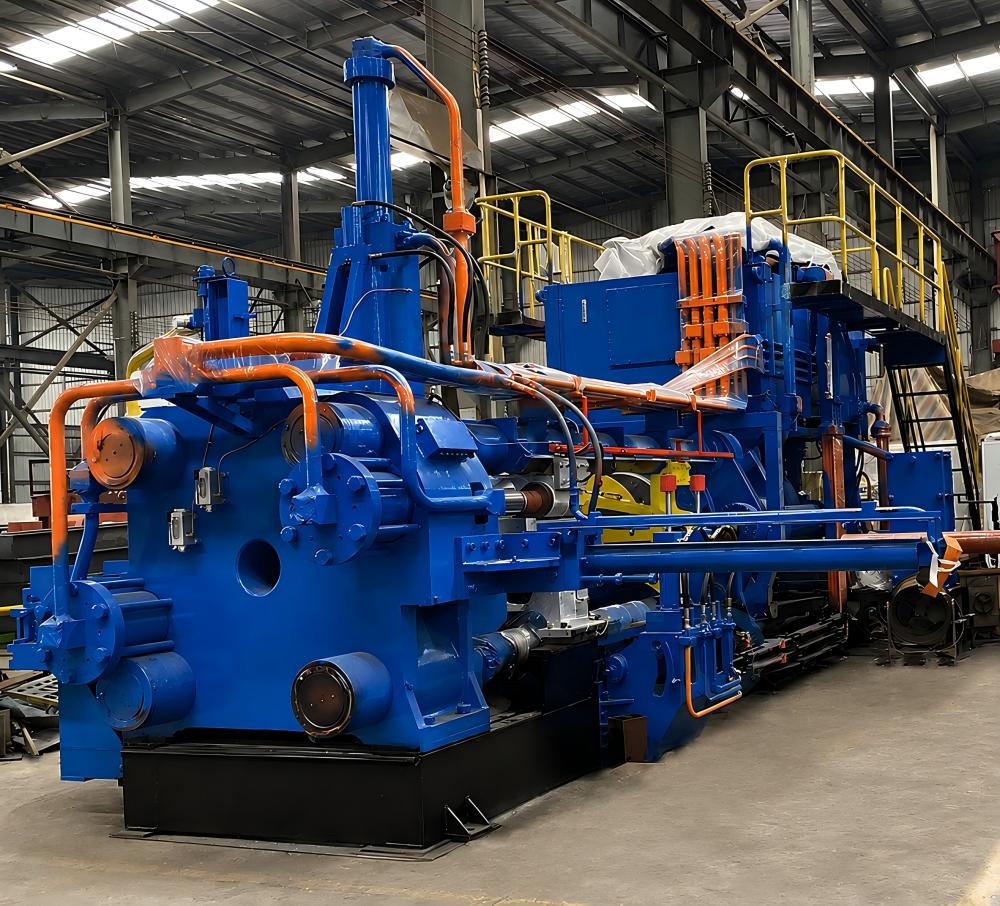
The extrusion press acts as the heart of the fabrication line. Its ability to maintain constant pressure while managing the heat generated by friction is critical. If the parameters are mismatched—for instance, using a low-tonnage press for a high-strength 7075 alloy—the result is often incomplete extrusion, die damage, or catastrophic failure of the hydraulic seals. Conversely, excessive pressure on softer alloys can lead to surface tearing and internal structural defects.
HARSLE engineering standards emphasize that the extrusion ratio, billet temperature, and ram speed are the three pillars of process control. By mastering these, operators can achieve consistent output across diverse alloy grades. This guide serves as a comprehensive roadmap for technicians and production managers to align their equipment settings with the specific demands of the aluminium alloy being processed.
Core Parameters for Extrusion Success
To effectively match aluminium alloy grades with extrusion press parameters, one must first identify the core variables that define the extrusion environment. The first and most critical parameter is the extrusion pressure. This is the force applied by the main ram to the billet. High-strength alloys like the 2xxx and 7xxx series require significantly higher specific pressure compared to the 6xxx series, which is the industry standard for architectural profiles.
The second parameter is the billet temperature. Aluminium alloys exhibit different flow stresses at varying temperatures. If the billet is too cold, the flow stress increases, requiring more pressure and potentially exceeding the press’s capacity. If the billet is too hot, the metal may reach its solidus temperature, leading to surface cracking or ‘hot shortness.’ Maintaining a precise temperature window is vital for consistent material flow.
Ram speed is the third pillar. This parameter directly influences the strain rate of the metal. High-strength alloys generally require slower ram speeds to prevent excessive heat generation within the die, which can lead to surface defects. Softer alloys can be extruded at higher speeds, increasing productivity. However, the speed must be balanced against the cooling capacity of the die and the press’s ability to maintain pressure stability.
Finally, the extrusion ratio—the ratio of the cross-sectional area of the billet to the cross-sectional area of the extruded profile—must be considered. A higher extrusion ratio requires more force. When selecting a HARSLE press, it is essential to ensure that the press tonnage can handle the maximum extrusion ratio required for the toughest alloy grade in your production portfolio.
Calculation Method: Determining Required Tonnage
Calculating the required extrusion force is a fundamental step in the production planning process. The formula generally used is: F = P × A, where F is the total force, P is the specific pressure required for the alloy, and A is the cross-sectional area of the billet. However, the specific pressure (P) is not a constant; it is a function of the alloy grade, the extrusion ratio, and the temperature.
To determine the specific pressure, engineers use the formula: P = σ × ln(R) × η, where σ represents the flow stress of the alloy at the extrusion temperature, R is the extrusion ratio, and η is the efficiency factor of the press. The flow stress (σ) is the most variable component, as it changes significantly with temperature and strain rate. For 6063 aluminium, the flow stress is relatively low, allowing for higher extrusion ratios on smaller presses.
When planning a production run, start by identifying the alloy’s flow stress curve. Most manufacturers provide these curves in their technical documentation. Once the flow stress is identified, calculate the required pressure for the specific profile geometry. If the calculated pressure exceeds 85% of the press’s maximum capacity, it is advisable to either increase the billet temperature (within safe limits) or reduce the extrusion speed to prevent machine fatigue.
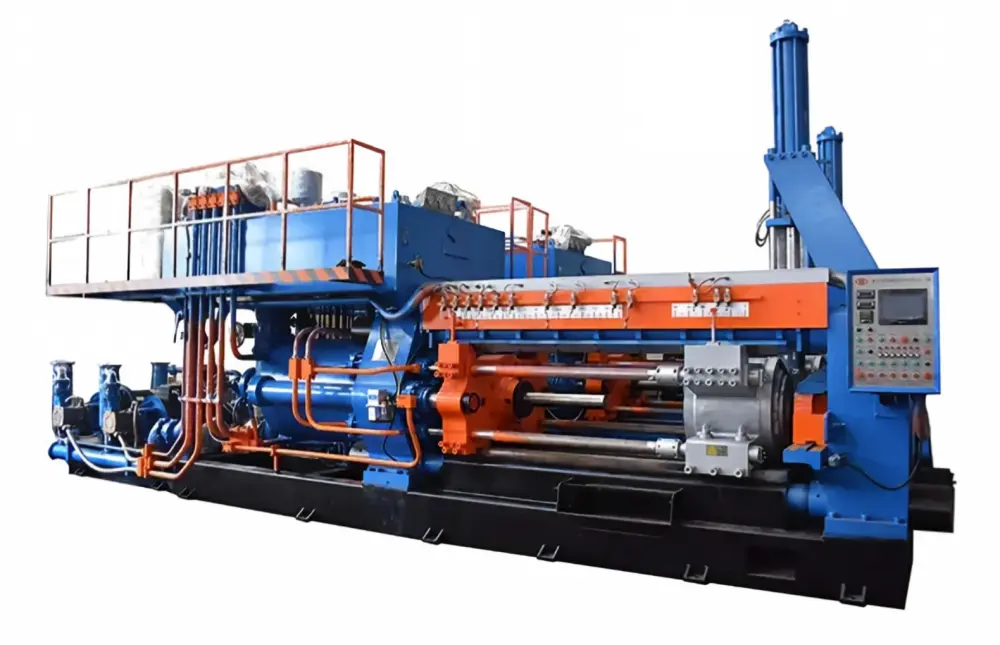
It is also important to account for the ‘dead cycle’ time and the friction between the billet and the container wall. As the billet length decreases during the extrusion process, the friction component changes. Advanced HARSLE extrusion presses utilize PLC-based control systems that automatically adjust the ram speed and pressure to compensate for these changing conditions, ensuring a uniform extrusion velocity throughout the entire billet length.
Parameter Table: Alloy Grade vs. Press Settings
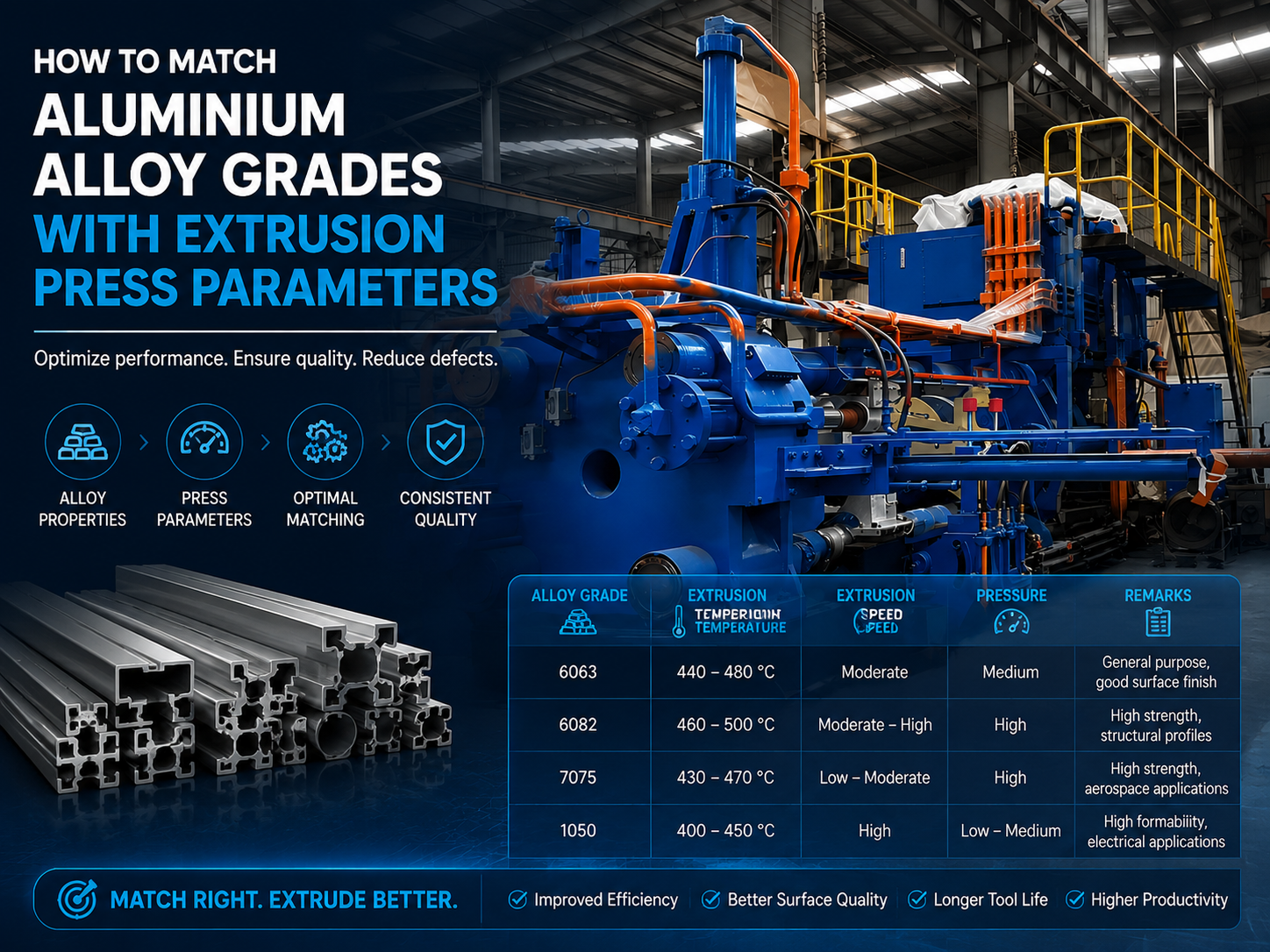
The following table provides a general reference for matching aluminium alloy grades with extrusion press parameters. Please note that these values are approximations and should be adjusted based on specific profile complexity and die design.
| Alloy Grade | Typical Application | Relative Flow Stress | Recommended Temp (°C) | Extrusion Speed |
|---|---|---|---|---|
| 1050/1100 | Electrical/Chemical | Low | 400-450 | High |
| 3003 | Heat Exchangers | Low-Medium | 420-460 | Medium-High |
| 6063 | Architectural | Medium | 450-500 | High |
| 6061 | Structural | Medium-High | 440-480 | Medium |
| 2024 | Aerospace | High | 380-420 | Low |
| 7075 | High-Strength | Very High | 350-400 | Very Low |
This table serves as a baseline. When working with 7075 or other high-strength alloys, the extrusion press must be equipped with a robust cooling system and high-pressure hydraulic pumps to handle the increased resistance. Always consult the specific alloy datasheet provided by your material supplier before finalizing your machine parameters.
Common Engineering Mistakes
One of the most common mistakes when matching aluminium alloy grades with extrusion press parameters is ignoring the impact of the extrusion ratio. Operators often assume that if a press can handle a 6063 profile, it can handle any alloy. This oversight leads to ‘stalled’ billets, where the pressure required exceeds the press capacity, resulting in a frozen billet that is extremely difficult to remove from the container.
Another frequent error is the improper management of billet temperature. Using a ‘one-size-fits-all’ temperature setting for all alloys is a recipe for poor surface quality. For instance, extruding 6061 at temperatures suitable for 6063 can lead to surface tearing due to the higher magnesium content in 6061. Conversely, extruding 7075 at too high a temperature can lead to grain structure issues that compromise the mechanical properties of the final part.
Inadequate die lubrication and maintenance also play a role. If the die is not properly preheated or if the lubrication is inconsistent, the friction increases, requiring higher extrusion pressure. This creates a false reading of the alloy’s flow stress, leading operators to believe they need a more powerful press when they actually need better die management.
Finally, failing to account for the taper heating of the billet is a significant oversight. Taper heating—where the back of the billet is hotter than the front—is essential for maintaining constant extrusion pressure and temperature throughout the stroke. Neglecting this leads to variations in the profile’s dimensions and mechanical properties from the beginning to the end of the extrusion.
Selection Checklist for Extrusion Operations
Before initiating a production run, use this checklist to ensure your HARSLE extrusion press is correctly configured for the alloy grade:
- Verify Alloy Specifications: Confirm the chemical composition and the required flow stress curve for the specific batch.
- Calculate Required Tonnage: Use the formula F = P × A to ensure the press capacity exceeds the calculated force by at least 15-20%.
- Check Billet Temperature: Ensure the induction heater is calibrated to the specific temperature range for the alloy.
- Review Die Geometry: Assess the complexity of the profile; intricate shapes require higher pressure and slower speeds.
- Inspect Hydraulic System: Check oil pressure, filter status, and pump performance to ensure the press can maintain steady force.
- Set Ram Speed: Program the PLC for the optimal speed based on the alloy’s thermal sensitivity.
- Monitor Cooling Systems: Ensure the die cooling and profile quenching systems are ready for the specific alloy’s thermal requirements.
FAQ: Frequently Asked Questions
How does alloy grade affect the extrusion press tonnage?
Higher strength alloys like 7075 have higher flow stress, meaning they require more force to deform. You must ensure your press tonnage is sufficient to overcome this resistance without stalling.
Can I use the same ram speed for all aluminium alloys?
No. Softer alloys like 1xxx can be extruded at high speeds, while high-strength alloys require slower speeds to prevent overheating and surface defects.
What is the role of the extrusion ratio in press selection?
The extrusion ratio determines the amount of work required. A higher ratio means more deformation, which requires higher pressure. Always calculate the ratio for your most complex profile to ensure your press is capable.
Why is billet temperature control so critical?
Temperature directly influences the flow stress of the metal. Precise control prevents both machine overload (if too cold) and material defects (if too hot).
How often should I calibrate my extrusion press?
Calibration should be performed annually or after any major maintenance. However, daily checks of hydraulic pressure and temperature sensors are essential for consistent production quality.