Horizontal Baler Size Guide: Matching Bale Output to Material Volume and Workflow

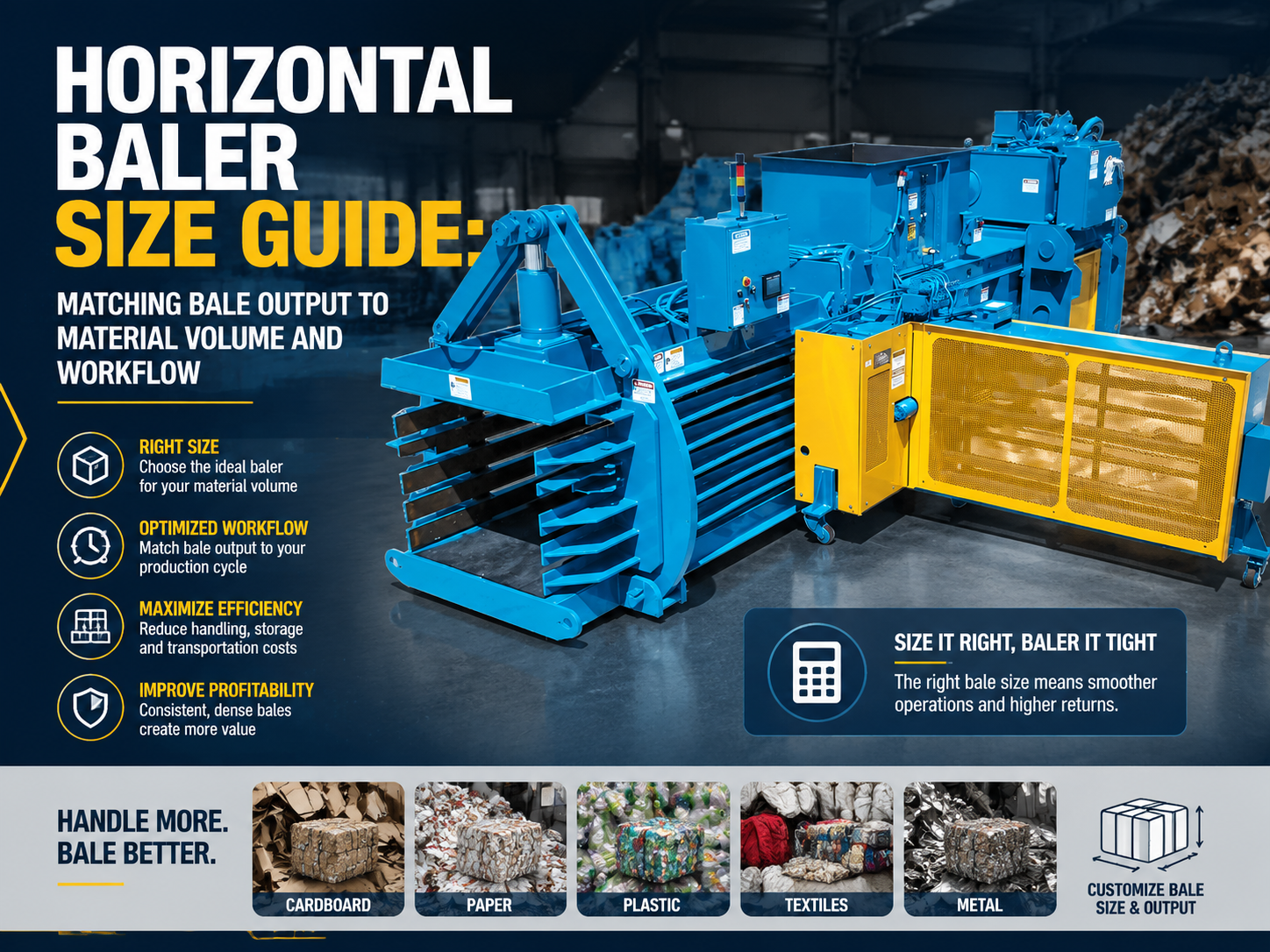
Technical Overview of Horizontal Baler Systems
In the realm of industrial waste management and recycling, the horizontal baler stands as a cornerstone of efficiency. Unlike vertical balers, which are often limited by manual loading and lower throughput, horizontal balers are designed for high-volume processing, often integrating seamlessly into automated production lines. Understanding the technical nuances of these machines is the first step in mastering the Horizontal Baler Size : Matching Bale Output Material Volume Workflow. These machines utilize a horizontal hydraulic ram to compress materials—ranging from cardboard (OCC) and plastics to non-ferrous metals—into dense, rectangular bales that are easy to transport and sell to mills.
The engineering of a horizontal baler involves a complex interplay of hydraulic pressure, structural steel integrity, and electronic control systems. At HARSLE, we emphasize the importance of the ‘shear blade’ design in horizontal units. As the ram moves forward, a hardened steel blade shears off excess material at the hopper throat, ensuring a clean bale and preventing jams. This mechanism is critical for continuous workflow, as it allows the machine to process a steady stream of material from conveyors or air-sort systems without manual intervention.

Furthermore, horizontal balers are categorized into two primary types: closed-end and auto-tie. Closed-end balers require a manual tie but offer higher compression force for difficult materials, while auto-tie balers are the workhorses of the recycling industry, capable of producing bales and tying them with wire automatically. The choice between these depends heavily on your specific material volume and the labor costs associated with your workflow. A properly sized machine ensures that the hydraulic system operates within its optimal thermal range, extending the lifespan of pumps and valves.
Finally, the structural frame of a horizontal baler must be rigid enough to withstand hundreds of tons of force over decades of service. High-tensile steel plates, reinforced stress points, and precision-machined guides for the ram are all hallmarks of a quality machine. When we discuss sizing, we aren’t just talking about the physical footprint; we are talking about the machine’s ability to handle the kinetic energy and pressure required to turn loose, voluminous waste into a commodity.
Core Parameters: Defining the Horizontal Baler Size
When evaluating the Horizontal Baler Size : Matching Bale Output Material Volume Workflow, several core parameters must be analyzed. The most obvious is the physical dimensions of the bale produced. Standard export-size bales (typically around 1100mm x 1100mm x Variable Length) are preferred because they maximize the weight capacity of shipping containers. However, the ‘size’ of a baler also refers to its cylinder bore, motor horsepower, and hopper opening size.
The cylinder bore determines the total pressing force. For example, a 100-ton baler provides significantly more compaction than a 60-ton unit, which is essential if you are processing high-memory materials like PET plastics or thick cardboard. If the pressing force is too low for the material volume, the bales will be ‘soft,’ leading to breakage during transport and lower resale value. Conversely, excessive force on light materials is an inefficient use of electricity and increases wear on the machine.
Motor horsepower (HP) and cycle time are the engines of workflow. A higher HP motor allows the hydraulic pumps to move more fluid per minute, resulting in a faster ram cycle. In a high-volume facility, a difference of 10 seconds in cycle time can equate to several tons of lost production per shift. When matching a baler to your workflow, you must calculate the ‘clearance rate’—how fast the machine can process the material being delivered by your conveyor system. If the conveyor delivers 5 tons per hour but the baler can only process 3, you have a bottleneck that will stall your entire operation.
The hopper opening is another critical size factor. It must be large enough to accept the largest pieces of waste without bridging. Bridging occurs when material wedges itself across the opening, preventing it from falling into the charging chamber. For large cardboard boxes or bulky plastic crates, a wide-mouth hopper is non-negotiable. Matching the hopper size to the material dimensions prevents manual pre-sorting or breaking down of waste, which significantly reduces labor costs.
Calculation Method: Matching Output to Volume
To achieve the perfect Horizontal Baler Size : Matching Bale Output Material Volume Workflow, you must move beyond guesswork and use empirical calculations. The goal is to determine the required throughput in tons per hour (TPH). Start by measuring your peak material inflow. If your facility receives 40 tons of cardboard over an 8-hour shift, your average requirement is 5 TPH. However, waste often arrives in surges, so it is wise to size the machine for 1.5 times the average, or 7.5 TPH.
The formula for calculating baler throughput is: (Bale Weight x Cycles per Hour) / 2000. For instance, if a baler produces a 1,500 lb bale and has a cycle time that allows for 10 bales per hour, the throughput is 15,000 lbs (7.5 tons) per hour. You must also account for the ‘fill efficiency’ of the hopper. Not every stroke of the ram will result in a full charge, especially with light, fluffy materials. Typically, a 60-70% efficiency factor is applied to theoretical cycle times to get a realistic production figure.
Material density plays a massive role in these calculations. Cardboard has a different ‘memory’ and loose density than shredded paper or aluminum cans. A baler that can process 10 tons of paper per hour might only process 4 tons of plastic film in the same timeframe because the film requires more strokes to reach the same bale density. When HARSLE engineers consult with clients, we request material samples or density data to ensure the hydraulic pressure and chamber length are optimized for the specific waste stream.
Workflow integration also requires looking at the ‘dwell time’—the time the ram stays forward to allow the material to set. For high-memory plastics, a longer dwell time is needed to prevent the bale from expanding and snapping the wires. This reduces the number of cycles per hour. Therefore, if your workflow involves difficult materials, you may need a larger baler with a faster hydraulic system to compensate for the necessary dwell time, ensuring your hourly tonnage targets are still met.
Horizontal Baler Parameter Comparison Table
The following table provides a generalized comparison of horizontal baler sizes to help you begin the matching process for your facility. Note that these figures are estimates and can vary based on specific manufacturer configurations and material types.
| Baler Class | Pressing Force (Tons) | Motor Power (kW/HP) | Bale Size (mm) | Throughput (Tons/Hr) | Best For… |
|---|---|---|---|---|---|
| Light Industrial | 40 – 60 | 15 / 20 | 1100 x 750 x Var. | 1 – 3 | Small warehouses, retail distribution, paper shredding. |
| Medium Duty | 80 – 100 | 30 / 40 | 1100 x 1100 x Var. | 4 – 7 | Regional recycling centers, large manufacturing plants. |
| Heavy Duty (Auto-Tie) | 120 – 160 | 45 / 60 | 1100 x 1100 x Var. | 8 – 15 | High-volume MRFs (Material Recovery Facilities). |
| Industrial Max | 200+ | 75+ / 100+ | 1100 x 1100 x Var. | 15 – 25+ | Scrap metal processing, municipal waste hubs. |
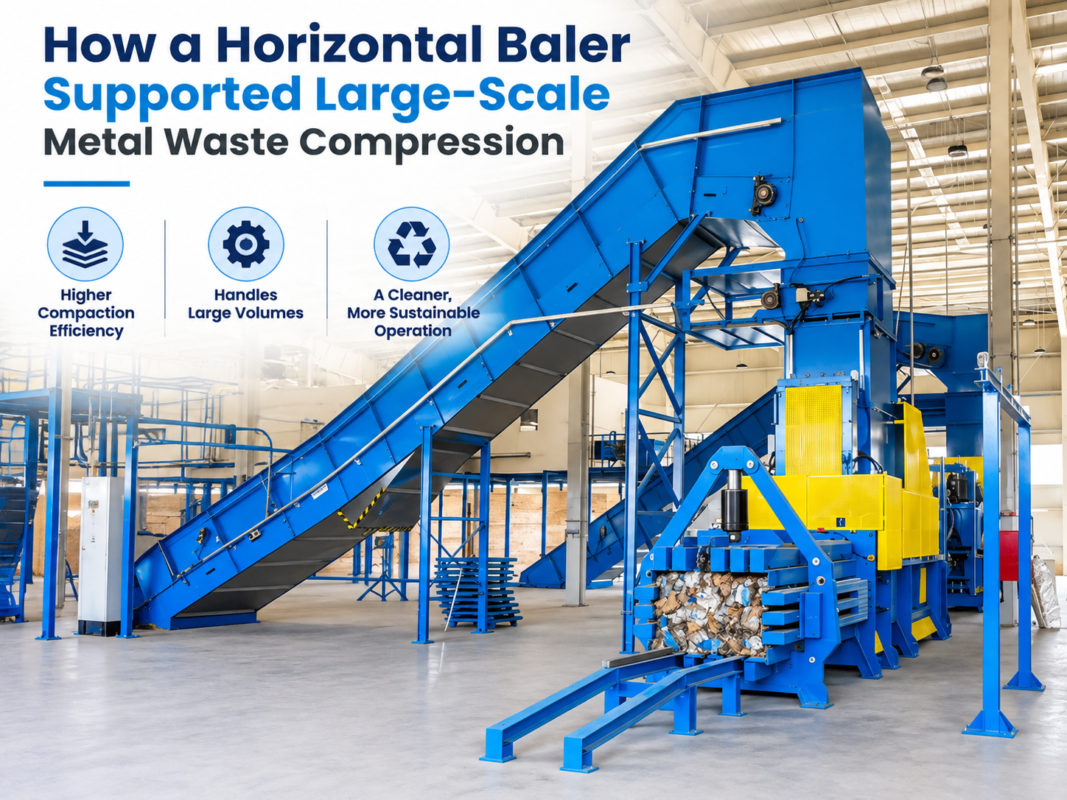
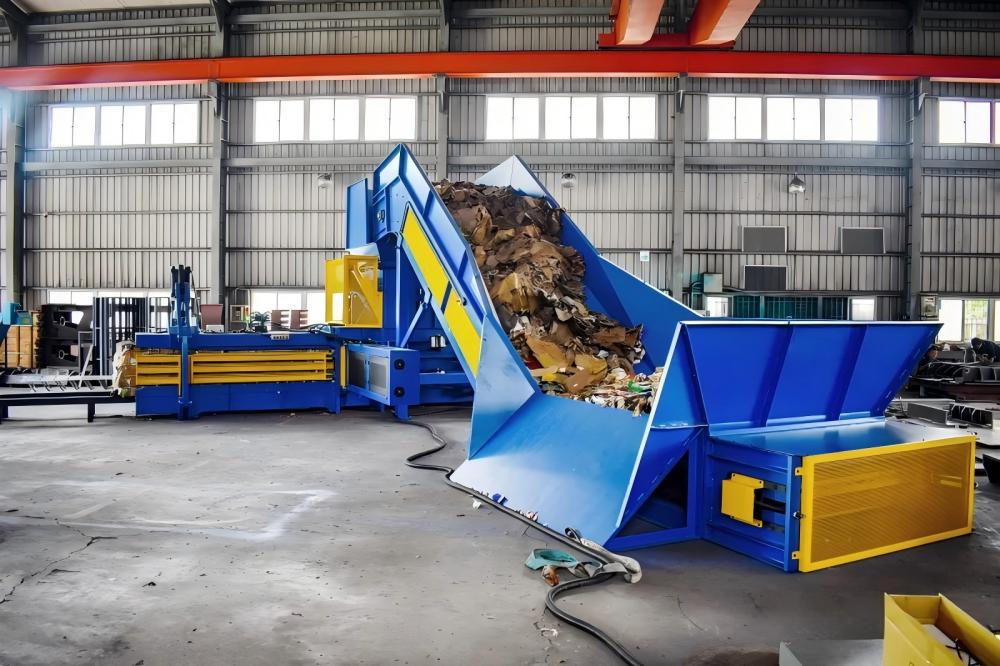
When using this table, remember that the Horizontal Baler Size : Matching Bale Output Material Volume Workflow is also dependent on the feeding method. A ‘Heavy Duty’ baler fed by a small skid-steer loader will never reach its 15 TPH potential. To achieve those numbers, a high-speed inclined conveyor or a cyclone air-feed system is required. The machinery must be viewed as a single, cohesive ecosystem where the baler is the heart, but the conveyors are the arteries.
Common Engineering Mistakes in Baler Selection
One of the most frequent mistakes in the industry is ‘Undersizing for Growth.’ Many businesses purchase a baler based on their current waste volume without considering a 20% or 30% increase in production over the next five years. An undersized baler will be forced to run for multiple shifts, increasing labor costs and accelerating mechanical wear. It is almost always more cost-effective to invest in a slightly larger machine now than to replace an inadequate one in two years.
Another common error is ignoring the ‘Cooling Requirements’ of the hydraulic system. In high-volume workflows, the hydraulic oil can heat up rapidly. If a baler is sized correctly for volume but lacks an adequate oil cooler, the machine will eventually trip sensors or suffer from thinned oil, leading to pump cavitation and failure. This is especially critical in warmer climates or indoor facilities with poor ventilation. Always ensure the baler’s cooling capacity matches its expected duty cycle.
Misjudging material ‘Spring-Back’ is a technical oversight that affects bale quality. Materials like foam, tires, or certain plastics have high elasticity. If the baler’s chamber is too short or the pressure is insufficient, the bale will expand significantly once it leaves the chamber. This can cause the wires to snap or make the bales impossible to stack safely. Engineering the right Horizontal Baler Size : Matching Bale Output Material Volume Workflow means accounting for the physical properties of the waste, not just its weight.
Finally, many buyers overlook the importance of the PLC (Programmable Logic Controller) and sensor integration. A baler might be the right physical size, but if its software cannot communicate with the upstream conveyor, the system will suffer from ‘slugging’—where too much material hits the hopper at once, causing a jam. Modern HARSLE balers use ultrasonic sensors to monitor hopper levels and adjust conveyor speeds automatically, ensuring a smooth, continuous flow that prevents mechanical strain.
Selection Checklist: Matching Your Workflow
To ensure you choose the right equipment, follow this comprehensive selection checklist designed to align your Horizontal Baler Size : Matching Bale Output Material Volume Workflow:
- Material Audit: List every type of material you will process. Note the percentage of each (e.g., 70% OCC, 20% Plastic Film, 10% Aluminum).
- Volume Analysis: Determine your peak hourly volume, not just the daily average. Size the machine for the peaks.
- Space Constraints: Measure your floor space, including the ‘bale run-out’ area where finished bales exit the machine. Horizontal balers have a large footprint.
- Loading Method: Will you use a conveyor, a forklift with a bin tipper, or an air-sort system? Ensure the hopper height and width match your loading equipment.
- Electrical Capacity: Check your facility’s power supply. Large horizontal balers require significant amperage and often 3-phase power.
- Labor Availability: Decide between manual-tie (lower upfront cost, higher labor) and auto-tie (higher upfront cost, lower labor).
- Bale Destination: Confirm the requirements of your waste buyer. Do they require a specific bale weight or density for maximum payout?
- Maintenance Access: Ensure there is at least 3-5 feet of clearance around the machine for technicians to access the hydraulic power unit and cylinders.
By systematically checking these boxes, you move from a speculative purchase to an engineered solution. A baler is a 15-to-20-year investment; taking the time to match it to your workflow today prevents decades of operational headaches.
Frequently Asked Questions (FAQ)
1. What is the main advantage of a horizontal baler over a vertical one?
The primary advantage is throughput and automation. Horizontal balers can process much larger volumes of material per hour and can be integrated with conveyors for continuous feeding. They also produce denser, more consistent bales that are optimized for shipping, whereas vertical balers are generally manual-load and better suited for smaller operations.
2. How do I know if I need an auto-tie baler?
If your facility produces more than 20-30 bales per day, the labor costs of manually tying each bale will quickly exceed the cost of an auto-tie system. Auto-tie balers are essential for high-volume workflows where stopping the machine to tie a bale would create a significant bottleneck in the production line.
3. Can one horizontal baler handle multiple types of materials?
Yes, most horizontal balers are versatile. However, you may need to adjust the PLC settings for different materials (e.g., changing the pressure for plastic vs. cardboard). If you frequently switch materials, look for a machine with ‘multi-material’ programming that allows operators to switch modes with a single button press.
4. What maintenance is required for a horizontal baler?
Regular maintenance includes monitoring hydraulic oil levels and quality, greasing moving parts, checking the sharpness of the shear blades, and inspecting the tension of the auto-tie needles. A well-maintained machine is crucial for maintaining the Horizontal Baler Size : Matching Bale Output Material Volume Workflow over the long term.
5. How does bale density affect my shipping costs?
Shipping is often charged by the container, not the weight (up to a certain limit). If your bales are not dense enough, you will fill a container’s volume before reaching its weight limit, essentially paying to ship air. High-density bales from a correctly sized horizontal baler ensure you maximize the value of every truckload or shipping container.
6. What is ‘shear jam’ and how can I avoid it?
A shear jam occurs when material is too tough or too thick for the blades to cut through as the ram moves forward. This can be avoided by choosing a baler with sufficient tonnage and high-quality, hardened steel blades, and by ensuring that oversized rigid items (like heavy wood or thick metal) are not fed into a machine designed for cardboard and plastic.